
October 21, 2026
How to Make Before After Photos
How to make before after photos. Learn how to make before and after photos that document cleaning credibly, support estimates, and stand out

Thursday, October 22, 2026
Learn how do you professionally clean a house with a room-by-room process, safety standards, quality checks, and team training tips.

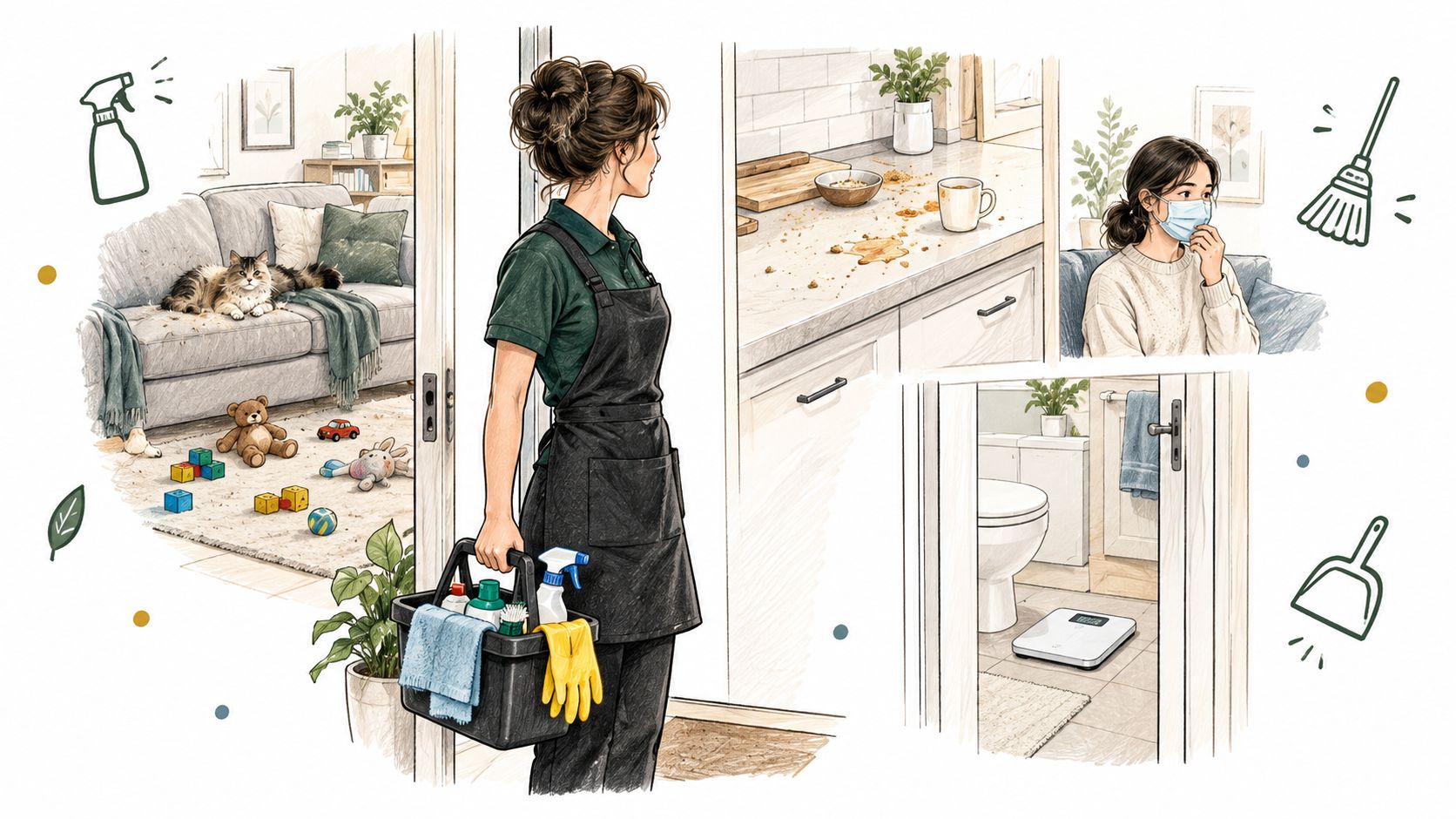
A cleaner arrives to find a home that looked manageable from the doorway. Inside, pet hair has gathered along the sofa, kitchen counters have a film of grease, bathroom fixtures show mineral scale, and an occupant mentions sensitivity to fragrance. Moving quickly from room to room won't solve those different problems safely or consistently. Professional results come from a controlled routine: clarify the work, choose a safe sequence, use the right tools, and check the finished surfaces.
The first decision happens before a bottle comes out of the caddy: what's included in this visit? A recurring maintenance clean, a deep clean, and a move-out service aren't interchangeable. Confirm which rooms and surfaces are in scope, whether appliance interiors are included, and whether the client has requested special treatment. Ask about pets, sensitivities, damaged finishes, and areas that shouldn't be moved or touched.
A doorway glance can't show every condition that affects the job. Clutter may hide the floor; a dusty ceiling fan can shed debris onto recently cleaned furniture; a bathroom's visible scale may need pre-treatment rather than harder scrubbing. Walk through the home, note surfaces and soil types, and flag hazards before bringing equipment into each room. If an item's finish or condition is uncertain, check with the client or supervisor instead of testing an unfamiliar product on a prominent spot.
Professional house cleaning is a controlled process for reducing soil, microbes, allergens, and chemical exposure, not making surfaces look tidy. OSHA notes that domestic-service workers, including housecleaners, may encounter hazardous chemicals, dangerous equipment, and injury risks from tasks done incorrectly. A professional routine accounts for those risks by reviewing product labels and safety information, ventilating rooms, using appropriate protective equipment, and never mixing incompatible chemicals. OSHA's guidance for cleaning-industry workers provides a useful foundation for those controls.
That distinction matters commercially, too. A clear walkthrough lets a cleaner distinguish standard work from extra labor before the appointment starts, rather than stretching the scope once work is underway. For help framing repeatable procedures, see cleaning industry standards for residential teams. Businesses looking to reduce waste can also explore this sustainable cleaning program for a small business when reviewing product and supply practices.
A reliable kit isn't a collection of the strongest chemicals available. It's a controlled set of tools and surface-compatible products that the team knows how to use. Keep general-purpose cleaner, appropriate bathroom and kitchen products, microfiber cloths, non-damaging brushes, a vacuum with attachments, and a mop and bucket organized and ready. Gloves and eye protection should match the product label and task.
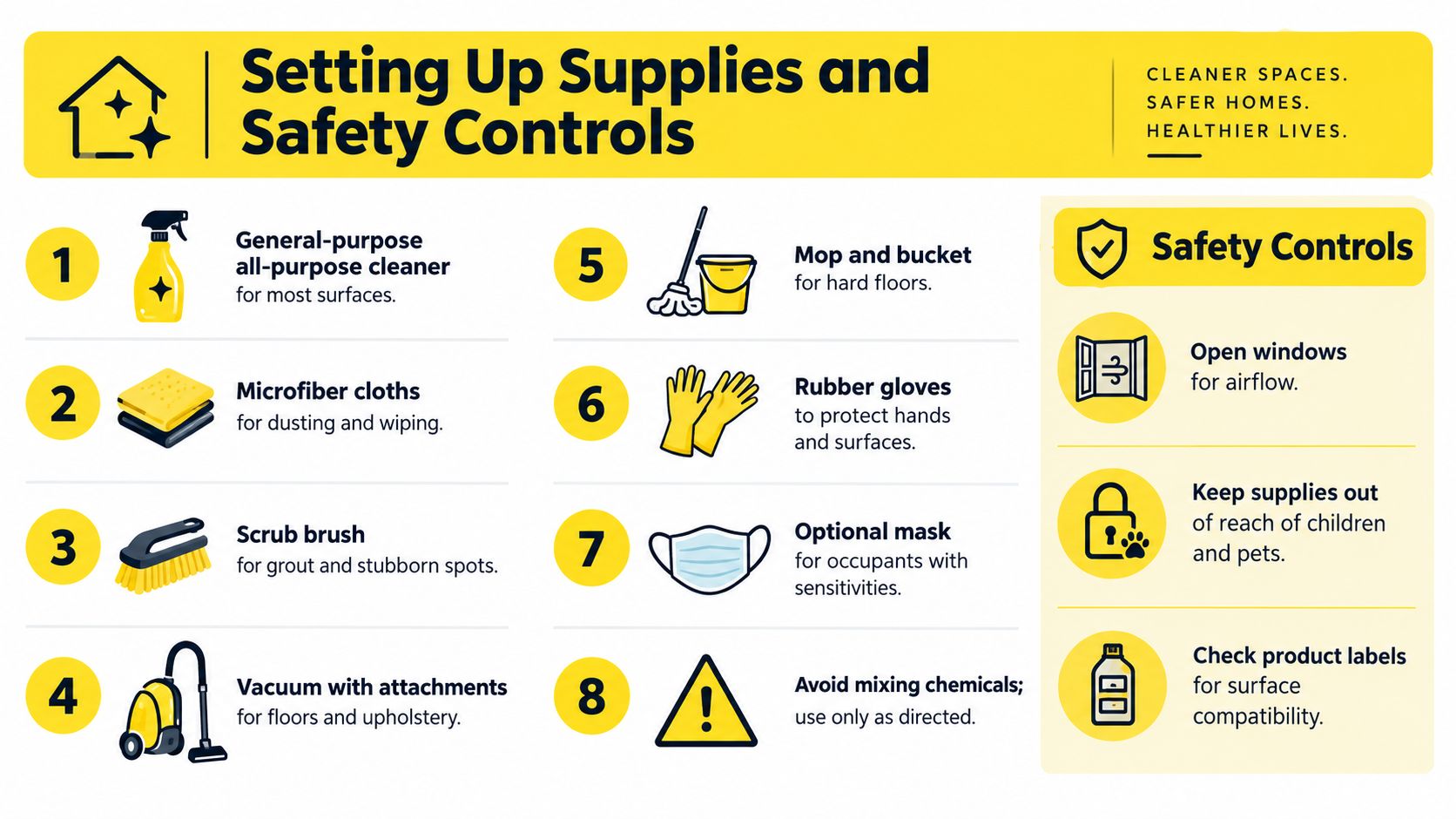
First, identify the material and the soil. A product suitable for a sealed countertop may be unsuitable for untreated wood, fabric, or a delicate finish. Read the label before use, confirm that it authorizes the intended surface, and follow its directions for application, ventilation, protective equipment, and rinsing. Don't assume that a stronger product will make a difficult job faster; the wrong chemistry can damage a surface or create avoidable exposure.
Separate tools by room. Color-coded cloths or clearly assigned cloths help prevent a bathroom tool from ending up on a kitchen counter. Replace contaminated cloths and mop solution rather than carrying soil into another room. Keep products in their labeled containers, and store the kit away from children and pets while working.
When a company's workers use disinfectants, detergents, or concentrated soaps, OSHA Hazard Communication requirements include a written program, chemical inventory, labeled containers, Safety Data Sheets, worker training, and appropriate PPE such as gloves or goggles. OSHA's Hazard Communication guidance for cleaning work outlines these employer responsibilities.
Cleaning and disinfection also need separate decisions. Remove ordinary soil with a cleaner first; use a disinfectant only when the situation warrants it and the product label permits it for that surface. Spraying a surface and wiping immediately doesn't establish that disinfection has occurred. For practical kit planning, use this residential cleaning supplies list as a starting point, then tailor it to your work and product instructions.
Before starting, check ventilation, PPE, labels, tool separation, and the agreed scope. That brief setup prevents a rushed chemical choice or an unplanned trip back to the vehicle once room work begins.
Order is a labor decision, not just a preference. Starting with a greasy kitchen and then dusting nearby rooms can leave the cleaner repeating work when airborne dust settles or a used cloth transfers soil. A professional sequence protects finished surfaces and avoids preventable rework.
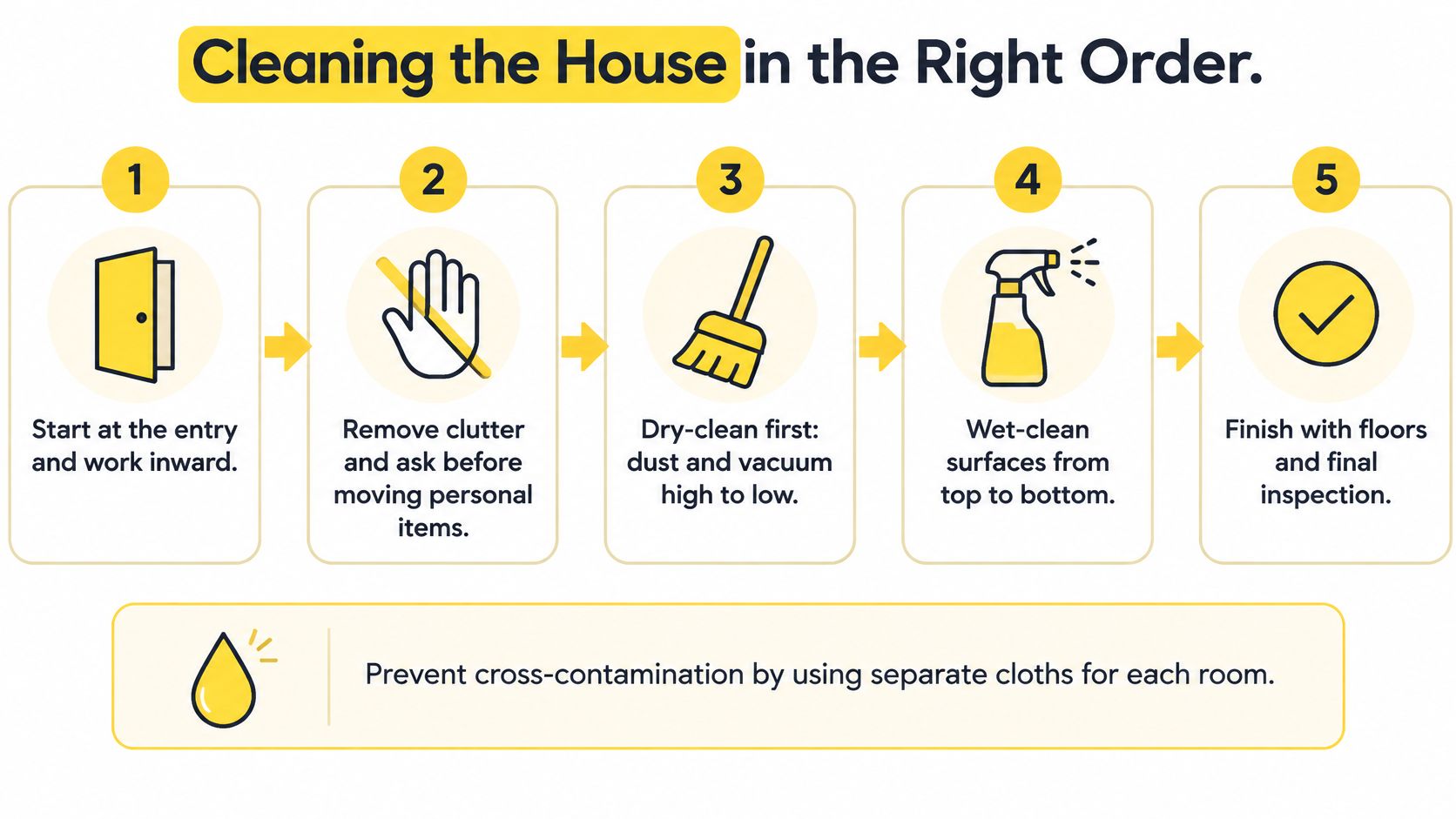
Begin at the entry and work inward. Remove only the clutter the client has authorized you to move; personal papers, medication, fragile objects, and valuables should stay put unless the client has given clear direction. Note special surfaces and soil before choosing where to begin. In general, work from less contaminated areas toward dirtier ones, and from high surfaces down.
Dry removal comes before damp cleaning. Dust shelves, fixtures, and other raised surfaces first, then vacuum floors and upholstery as appropriate. After that, damp-wipe surfaces and complete the room-specific work. Floors come late because they collect falling dust, crumbs, and debris from earlier tasks. If a two-bedroom home has a kitchen that needs attention, starting there before dusting the bedrooms can mean cleaning bedroom floors twice. A better route is to finish high-to-low work across the cleaner areas, tackle more contaminated kitchen or bathroom tasks with dedicated tools, and complete floors after overhead and surface work.
Cross-contamination is a sequencing problem as much as a product problem. Keep room tools separate, change a cloth when it's visibly soiled, and don't carry a toilet cloth to a sink or food-contact surface. If a job requires targeted disinfection, clean visible soil first, then follow the selected product's directions rather than treating a quick wipe as sufficient.
A repeatable schedule helps solo cleaners and teams hand off rooms without losing track of what's done. Use a cleaning schedule checklist for recurring work to define the route and responsibilities. The exact order may shift with the layout, but the working principle stays the same: prevent dust from settling on finished areas, keep dirty tools contained, and leave final floor care until the room's other tasks are complete.
Each room brings a different combination of soil, surfaces, and service expectations. A kitchen often needs grease and food debris addressed; a bathroom may have mineral scale and surfaces that call for careful product selection. Bedrooms and living areas tend to demand attention to dust, upholstery, pet hair, and the edges where debris collects. Scope determines which tasks are included, so don't assume every appliance interior, window, or piece of upholstery is part of a standard visit.
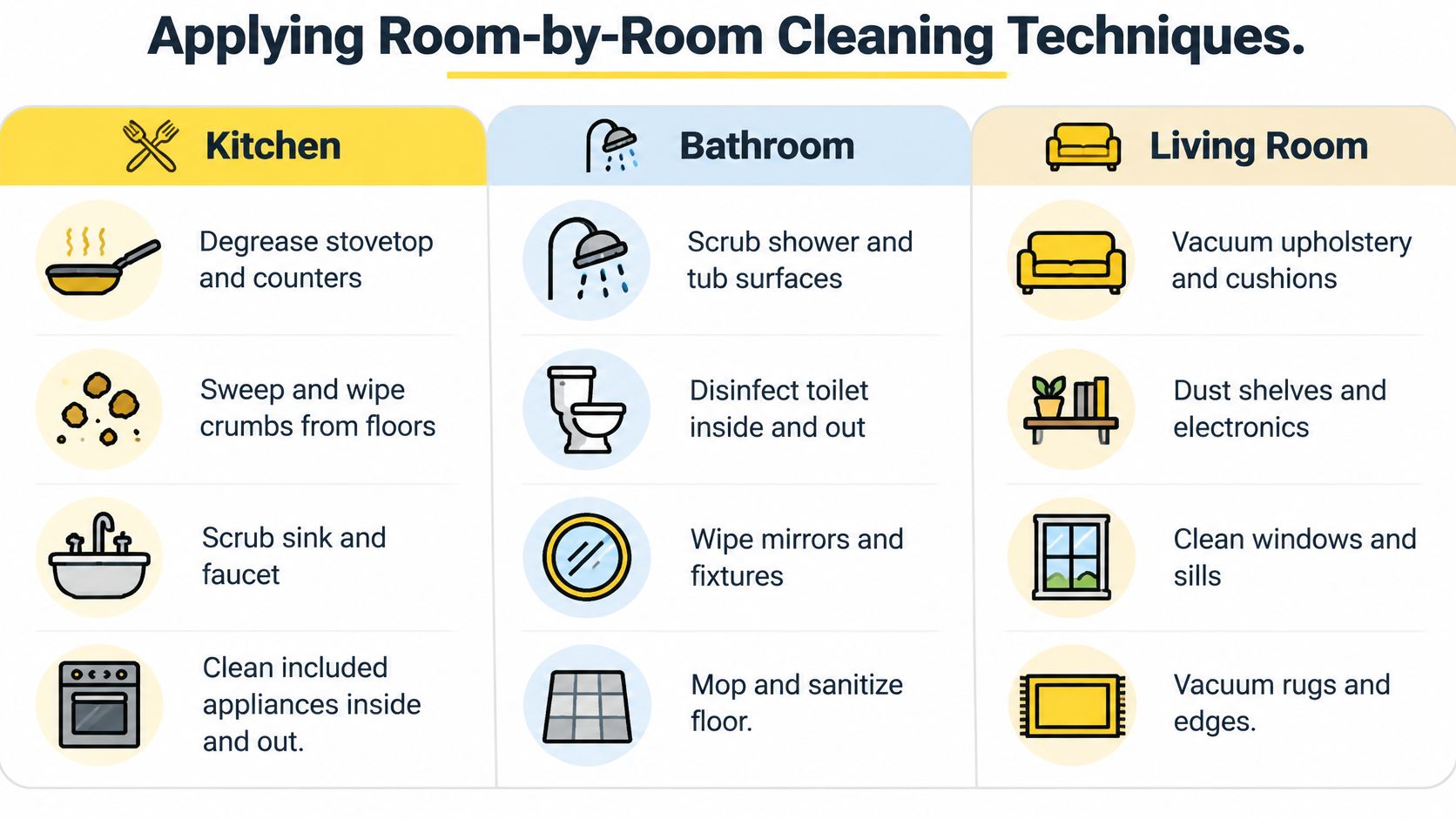
Treat the counter and sink as work surfaces, not just places to spray. Remove crumbs, address grease with a compatible product, and clean the sink and faucet without carrying bathroom tools into the room. Respect food-contact surfaces: follow product directions for any required wiping or rinsing before the surface is used again. Clean appliance exteriors as agreed; inside the refrigerator or oven should be explicitly scoped rather than assumed.
Bathroom soil often responds better to preparation than force. Pre-treat mineral scale and dried residue, allow the product to soften the buildup, and agitate with a non-damaging tool. Clean the surface before disinfection when disinfection is justified, then follow the label for the intended material and wet contact time. Keep toilet tools separate from sink and counter tools.
Dust shelves and electronics with a suitable cloth or attachment, and vacuum upholstery and rugs where the service includes them. Pet hair can cling to fabric and collect at rug edges, so allow for additional passes or a specialized attachment rather than promising a quick wipe will resolve it. Pay attention to frequently touched points such as handles and switches, in line with the agreed scope.
Porous materials, untreated wood, and damaged finishes need product-specific decisions. A chemical authorized for hard, nonporous surfaces may not be appropriate for cushions or other absorbent materials. EPA guidance emphasizes matching the product to its intended surface and following its directions for application and contact time; EPA's disinfectant product information is a reminder to verify the label rather than apply one method everywhere.
| Area | Main challenge | Professional technique | Completion check |
|---|---|---|---|
| Kitchen | Grease and food debris | Degrease compatible surfaces, clean crumbs and sink, and address only included appliance work | Counters are free of residue, and the sink and included surfaces are clean |
| Bathroom | Scale, dried residue, and contamination risk | Pre-treat, agitate with a suitable tool, and keep toilet tools separate | Fixtures are clean, with no missed edges or unwanted residue |
| Bedroom | Dust, fabrics, and personal belongings | Dust accessible surfaces, vacuum included upholstery, and leave personal items undisturbed | Surfaces and floor edges are checked without moving excluded items |
| Living area | Pet hair, upholstery, and high-touch points | Use suitable vacuum attachments, dust shelves, and address included touchpoints | Upholstery, rugs, and accessible surfaces meet the agreed scope |
A room checklist turns these differences into clear inclusions. It also gives the cleaner a way to flag delicate materials, excluded surfaces, and tasks that need a separate estimate instead of improvising at the point of service.
A professional routine needs room for judgment. Pet hair on upholstery may call for a vacuum attachment and an extra pass, not more spray. If a tool isn't lifting hair effectively, change the tool or technique before spending time repeating a failed pass. Heavy kitchen grease may also need pre-treatment and dwell time; aggressive scrubbing can damage a finish without solving the underlying problem.
Soap scum and mineral deposits call for a different response. Apply a product suitable for the surface, give it time to soften buildup, and use a non-damaging brush or pad. If the finish is fragile, cracked, or unfamiliar, stop and ask before proceeding. The same goes for cluttered surfaces: move only what the client has approved, and don't treat personal belongings as obstacles to clear automatically.
Dusty ceiling fans are a sequencing issue. Address overhead dust before cleaning lower surfaces and floors, and consider nearby furniture that may need attention afterward. In a poorly ventilated space, pause to improve airflow when possible and avoid unnecessary sprays that disperse product into the room. For occupants with sensitivities, confirm product restrictions rather than assuming that a fragrance signals cleanliness or effectiveness.
Disinfectant timing is another common source of false confidence. EPA guidance lists contact times ranging from 10 seconds to 10 minutes, depending on the product, so follow the product label rather than applying a universal dwell time. EPA's guidance on registered disinfectants and contact times explains why spraying and immediately wiping may not meet the instructions. Keep the surface visibly wet for the labeled interval, using the application method on the label.
Pause before escalating. If a product, tool, or surface response is uncertain, reassess the material, ventilation, and scope instead of forcing a result.
That pause can prevent damage and save labor. A job that needs a specialty treatment or has an excluded surface should be clarified with the client or operator, not folded into routine work.
An accurate estimate starts with the conditions that change labor. Room count alone won't explain a kitchen with heavy grease, a cluttered floor, extensive pet hair, or surfaces that need careful handling. Ask about the home's condition, surface types, ventilation, occupant sensitivities, and any illness-related request. Then distinguish the requested work from optional additions before the client approves the service.
Routine cleaning is maintenance work: remove everyday soil, dust, and debris from the agreed surfaces. Deep cleaning may involve buildup or additional tasks that need more preparation and attention. Targeted disinfection is different again. CDC guidance says routine cleaning with soap and water removes most germs in ordinary household conditions; disinfection is generally more appropriate when someone is ill, a medically vulnerable person has been exposed, or a sick person recently visited. CDC guidance on when to clean and disinfect supports explaining that distinction rather than treating disinfection as an automatic part of every visit.
For example, a maintenance clean may need a separate add-on when heavy grease changes the time and technique required. An illness-related disinfection request deserves its own scope and estimate, including the relevant surfaces, products, and product-label requirements. Don't add work without notice because the home appears dirtier than expected; tell the client what changed and get approval.
A useful estimate records the rooms and surfaces included, known constraints, requested add-ons, and work excluded from the service. It also gives customers a realistic expectation of what the cleaner will and won't do. For owners building a consistent process, this guide to estimating house-cleaning jobs can help structure that conversation.
As a business grows, service consistency depends on both customer information and staff preparation. Owners considering cleaning employee hiring can reference pipehirehrm.com for hiring context. The Estimatty blog and Pipehire HRM blog are also relevant resources for cleaning-business operations. Keep those resources separate from the customer's service decision: the estimate itself should describe the work plainly, with optional tasks identified as options.
A clean-looking room still needs a deliberate final check. Inspect high-touch points, edges, floors, and included glass under good lighting. Look for residue, streaks, and missed corners, and confirm that the team kept room tools separate and changed contaminated cloths or mop solution. A practical quality check includes CDC guidance on cleaning and disinfecting at home, including checking surfaces after the required contact time.
Record what was completed, which products were used, any required contact time, and any surface that was excluded or needs client follow-up. That record helps a supervisor understand what happened and helps the next cleaner maintain the service standard. It also keeps special requests from disappearing between the walkthrough and the final inspection.
Demonstrate how to read labels, select surface-compatible tools, separate cloths by room, and work through a room in the agreed sequence. Let new cleaners shadow an experienced team member, then observe their own work and give specific feedback. A checklist supports consistency, but it can't replace practice in recognizing fragile finishes, changing tools when they stop working, or asking before moving a client's belongings.
Visible cleanliness matters, but professional quality also depends on safe methods, clear scope, and a result the team can repeat.
Owners who standardize the routine make it easier to train staff, inspect work, and explain what each service includes. Use a cleaning quality assurance checklist to formalize those checks, then revisit it as the team encounters new surfaces and service requests. Clear procedures and accurate estimates beat relying on informal habits that vary from cleaner to cleaner.
Estimatty helps cleaning businesses capture customer details and deliver consistent estimates for residential cleaning services. If you're ready to standardize estimates and make it easier for prospects to request the right service, visit Estimatty.