October 18, 2026
What Is a CRM Integration and Why It Matters
What Is a CRM Integration. Learn what a CRM integration is, how it works for cleaning businesses, the methods behind it, and the security and data rules you

Monday, October 19, 2026
Learn the average charges for house cleaning in 2026, what drives pricing by home size and frequency, and how to set profitable rates
A standard professional house-cleaning visit in the United States typically costs about $118–$237, with an average near $175, before adjustments for home size, condition, and service frequency. Those averages help set expectations, but a defensible estimate comes from the work involved and the cost of delivering it locally.
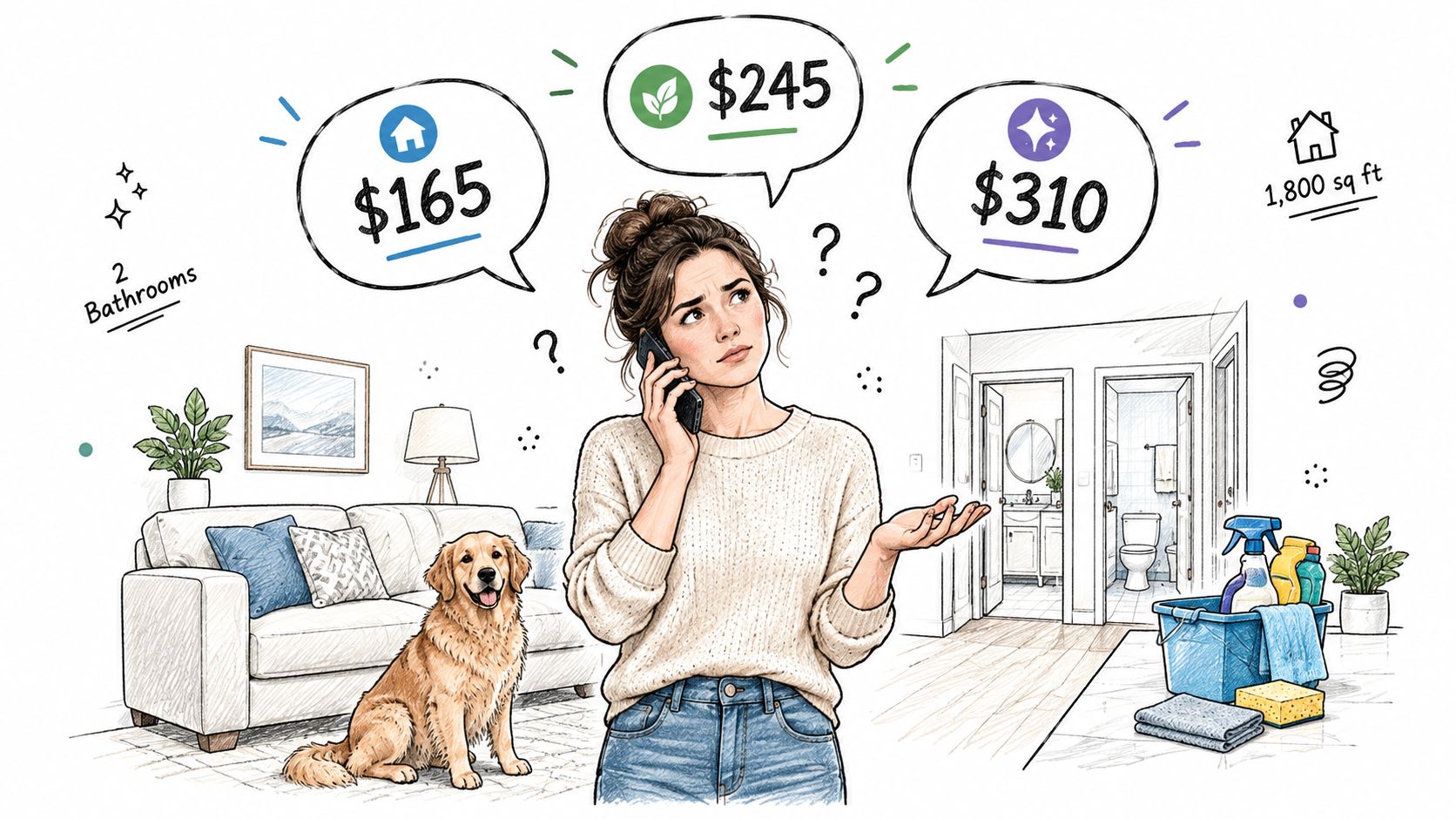
A homeowner with a 1,800-square-foot home, two bathrooms, a dog, and a first-time deep clean might be comparing several estimates right now. The numbers can differ because cleaners aren't necessarily pricing the same labor, scope, or business costs. The practical approach is to estimate local labor, account for the home's condition and complexity, then check that the result clears a sensible minimum.
A homeowner calls three local cleaning companies about the same 1,800-square-foot home, with two bathrooms, a dog, and a first-time deep clean. One sends an estimate for $165, another for $245, and the third for $310. The spread looks dramatic, but those amounts are an illustrative scenario, not a universal price list. The difference may come down to what each cleaner expects the job to involve.
One company may assume a relatively tidy home and include only routine tasks. Another may allow more time for pet hair, bathroom buildup, and detailed first-visit work. A third may include a larger team, travel, supplies, or a more extensive deep-cleaning scope. If the customer and cleaner haven't agreed on what's included, the numbers aren't directly comparable.
U.S. pricing data based on more than 90,000 customers places a standard professional cleaning visit at about $118–$237, with an average near $175 (Angi's house-cleaning price data). That's a useful benchmark for setting expectations. It can't tell a cleaner how much labor a particular home needs.
Square footage matters, but it doesn't tell the whole story. A home's layout, number of bathrooms, condition, pet hair, and requested tasks all change the time required. So does the difference between a maintenance clean and a first-time deep clean.
Practical rule: Compare estimates only after you've compared the scope, not just the total.
A repeatable method closes the gap between a national average and a customer-ready estimate: start with local labor costs, estimate hours based on size and condition, account for complexity, and check that the total clears a per-square-foot floor. That process gives the customer a reason for the number and helps the cleaner avoid pricing from square footage alone.
An estimate is a reasoned price expectation based on the details available so far. It may change if a walkthrough reveals heavy buildup, extra rooms, or tasks the customer didn't mention. A quote is a set price for a defined scope. If the scope changes, the price needs to be reviewed and agreed upon.
Using the wrong term creates avoidable friction. Calling an early estimate a fixed quote can leave a cleaner absorbing extra labor. Calling a carefully scoped, fixed price an estimate can make customers worry that the amount is open-ended.
In the first call or message, ask for the home's size, service type, number of bathrooms, current condition, pets, and requested add-ons. Then explain whether the number is preliminary or fixed. Industry guidance places standard visits around $60–$180 and deep cleans around $90–$300, with actual charges varying by home size and service intensity (HomeGuide's house-cleaning pricing guidance).
A clear line for an early-stage estimate could be: “Based on the details you've shared, this is an estimate for the listed tasks. We'll confirm the price if the home's condition or scope differs when we arrive.” For a firm quote, specify the rooms and tasks included, any excluded add-ons, and how a scope change will be handled.
Send an estimate while the prospect is still deciding. Once you've verified the scope, confirm the fixed price and what it covers. For a deeper comparison of the terms, explain the difference with this guide to proposals versus quotes.
A consistent policy protects both sides. Customers know what they're buying, and cleaners can raise a scope change before doing unplanned work.
A national band is a boundary check. If a 2,000-square-foot maintenance visit is bid at $120, the number is probably underpriced before payroll, supplies, and travel are loaded; if it lands at $520 for routine work, the scope had better include real complexity. The published ranges cited earlier are most useful when service type and square footage are read together.
| Home size | Standard cleaning range | Deep cleaning range |
|---|---|---|
| 1,000 sq. ft. | $100–$200 | $120–$250 |
| 1,500 sq. ft. | $150–$300 | - |
| 2,000 sq. ft. | $200–$400 | - |
| 2,500 sq. ft. | $250–$500 | - |
| 3,000 sq. ft. | $300–$600 | $360–$750 |
Deep-clean ranges are published only for 1,000 and 3,000 square feet; intermediate sizes are left open rather than interpolated.
A separate example shows how wide the floor can be: a home under 1,000 square feet can price near $70 when scope is light, while a heavy deep clean can reach $375 or more. Treat those endpoints as scope signals, then test them against your own per-square-foot floor and loaded labor rate.
The lower end is plausible when the home is maintained, bathrooms are few, pets are limited, and the visit is routine. The upper end is plausible when buildup, extra bathrooms, clutter, or higher local wages stretch labor time. A small home can still beat a square-foot calculation if travel, parking, or a minimum service charge applies.
For a regional comparison outside the U.S., this 2026 cleaning price guide shows how a single market publishes its own thresholds. Use published ranges to orient the conversation, then quote from verified scope, time on site, and local costs.
Averages answer what a typical visit might cost. They do not set your margin.
Two homes with identical square footage can require different amounts of work. For an estimate, the most useful question isn't how large the home is. It's what adds time, changes the scope, or raises the cost of delivering the service.
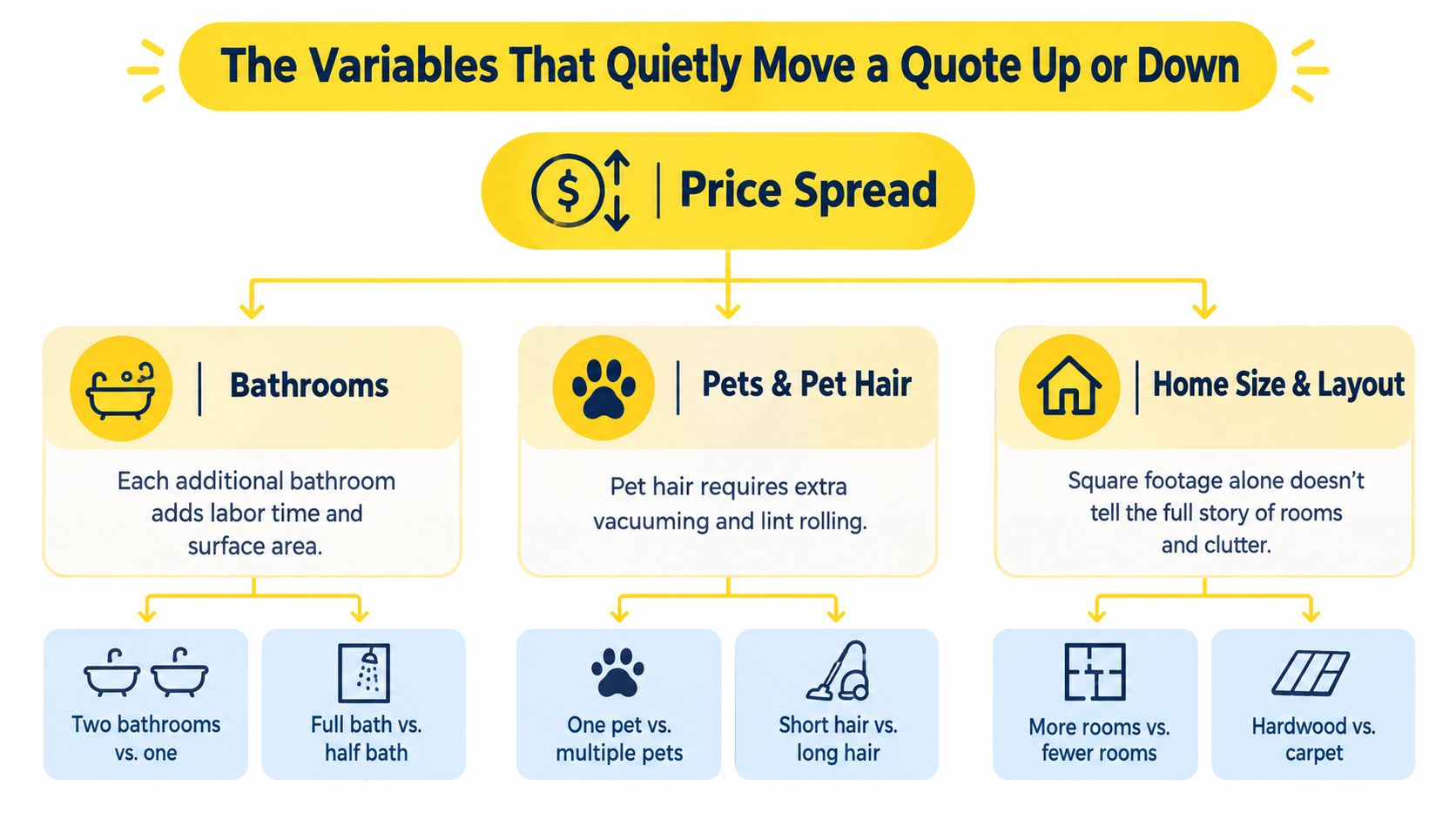
First assess condition and service type. A first-time deep clean with substantial buildup won't take the same effort as a routine maintenance visit. Next, look at the number and condition of bathrooms, then pets and pet hair, clutter, occupancy, and layout. These details can alter labor even when the listed floor area stays the same.
Location matters because wages vary. May 2025 median hourly pay for maids and housekeeping cleaners ranged from about $12.19 in Mississippi to $24.81 in Hawaii, more than double between those listed markets (state wage data). A national price reference may therefore miss the labor cost a business faces in its service area.
Surface mix matters, too. Carpet may hold pet hair, while some hard floors need different handling; multi-story layouts can add movement and setup time. Don't treat urgency or after-hours requests as ordinary scheduling when they disrupt a crew's route or require a different staffing arrangement.
Inside the oven, inside the fridge, interior windows, laundry, and linens are common scope questions. Ask about them individually and price them according to their labor and materials rather than assuming they fit within standard cleaning.
For every inquiry, collect the home size, bathrooms, pets, condition, cleaning frequency, surface types, layout, requested add-ons, and preferred timing. That checklist captures the details most likely to move the price. For customers comparing a maintenance service with a more intensive first visit, provide context using this guide to deep house-cleaning costs.
Recurring service can make scheduling more predictable and reduce buildup between visits. Those advantages don't automatically make each visit cheaper to deliver. A customer who books on a schedule may still have significant pet hair, high occupancy, demanding bathrooms, frequent changes, or a home that needs extra attention.
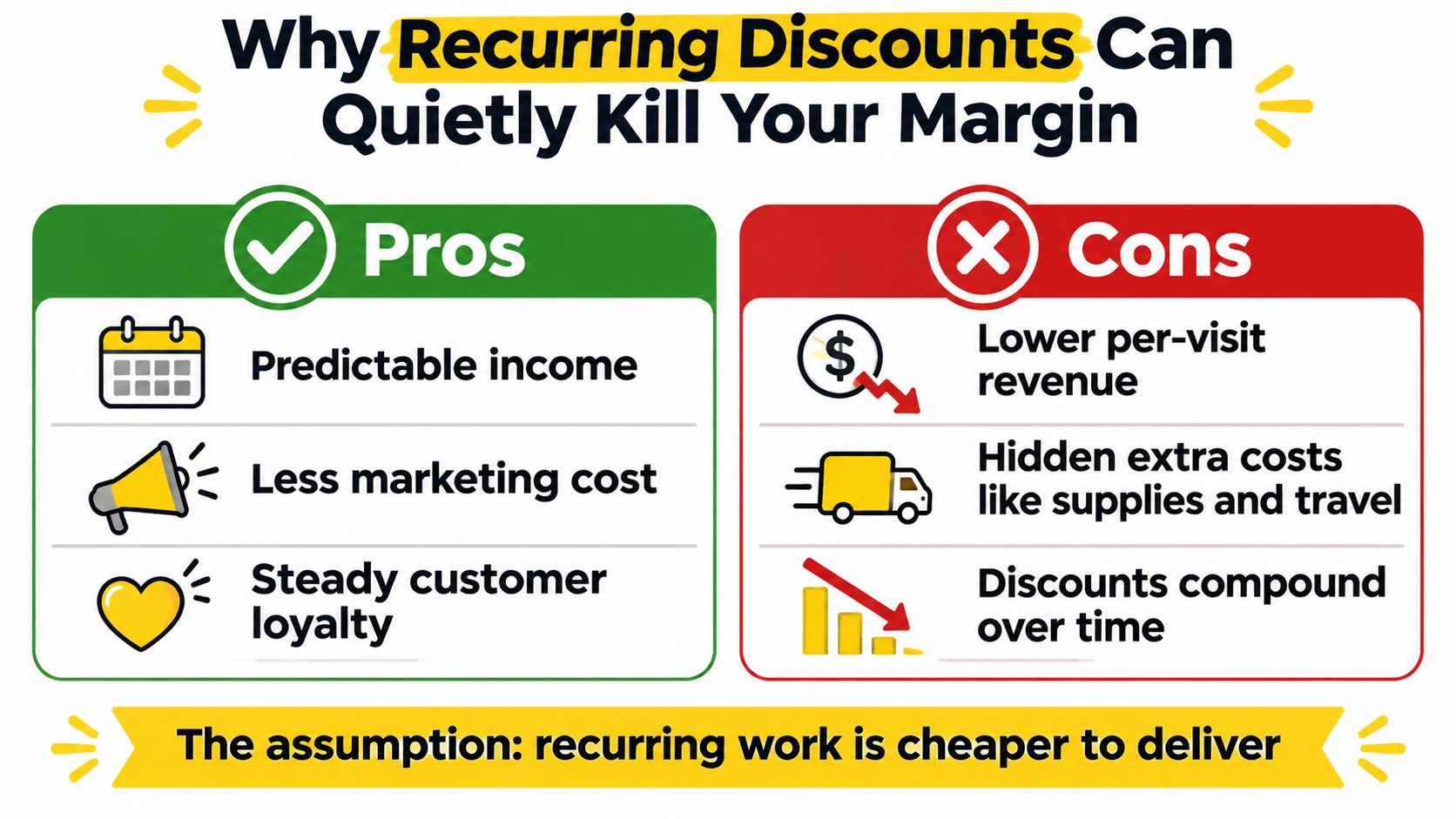
A recent industry summary reports that 68% of respondents cited inflation and material costs as leading price-increase drivers, while 52% cited labor costs (Jobber's cleaning-industry trends summary). Those pressures don't disappear because a customer books weekly, biweekly, or monthly. A discount can reduce the revenue available to cover them.
Before offering a lower per-visit price, check the expected labor hours, travel, supplies, cancellation risk, and likelihood of rework. A denser route or lighter workload may justify a lower price, but only if the savings are real and repeatable. If the customer's home takes just as long to service, a blanket discount may reward the booking pattern without reducing the cost.
Track each cadence separately. A weekly visit might be quicker than a one-time clean, while a monthly visit could involve more buildup. A discount that makes sense for one account may not work for another.
Predictable work is valuable. It still has to pay for the labor and operating costs required to deliver it.
Make discounts conditional on the factors that improve efficiency, such as a stable scope or a route that reduces travel. Recurring should mean reliable scheduling, not automatic underpricing.
A quote survives pushback when every line of it traces back to a cost you carry. Start from the wage floor: the U.S. median hourly wage for maids and housekeeping cleaners was $17.07 in May 2025 (Bureau of Labor Statistics wage data). From there, the rate you charge has to cover payroll taxes, insurance, supplies, equipment, travel, scheduling, administration, idle time between jobs, and profit.
That spread is bigger than it looks. At a $17.07 base wage, a loaded rate near $28 per hour turns a four-hour job into roughly $112 before materials and travel. Skip the loading step and the estimate leaks margin before anyone drives to the address.
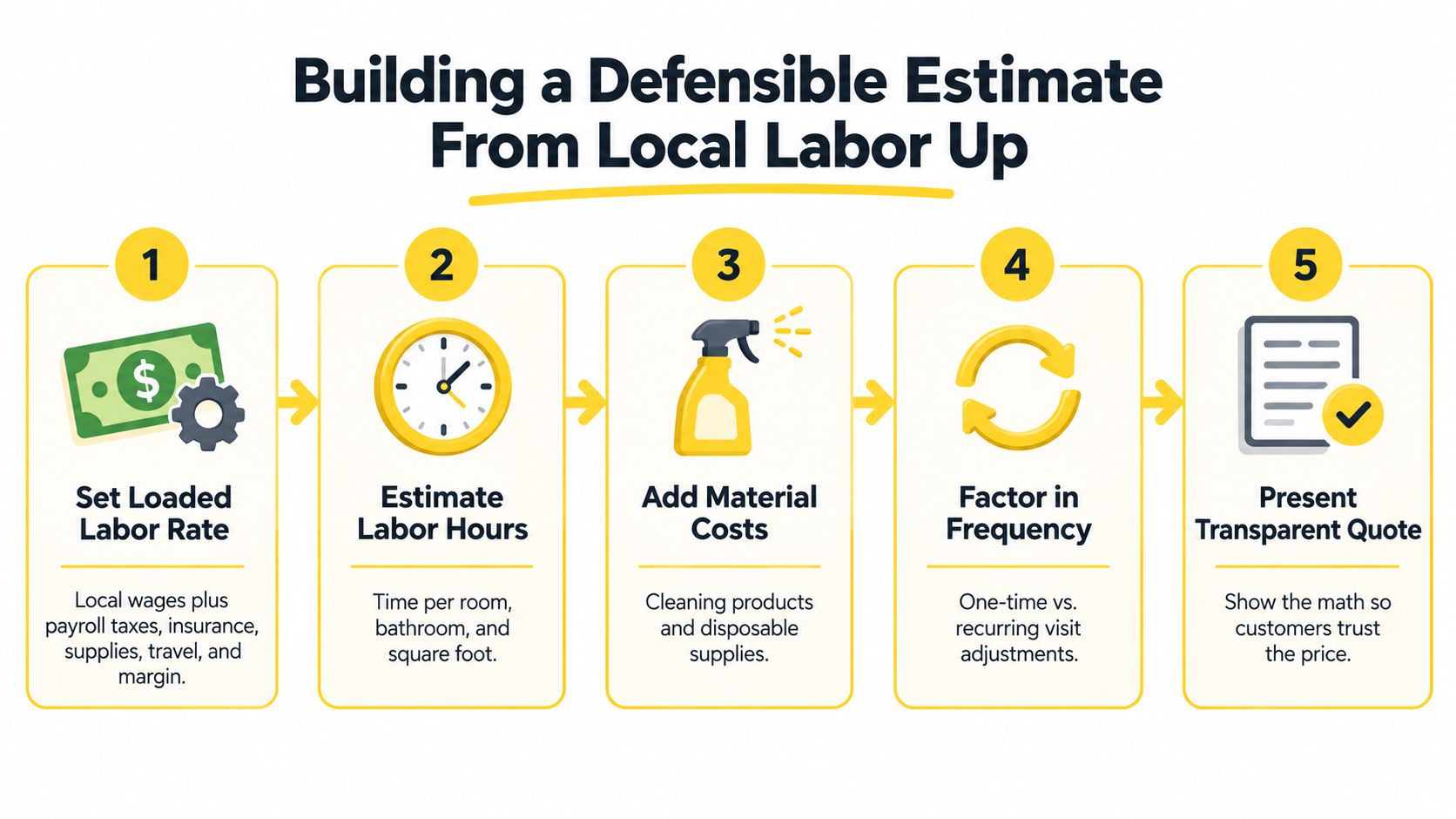
Set the loaded labor rate. Begin with local wages, then add the cost of employing and supporting the worker. Multiplying a cleaner's wage by estimated hours gives you a cost figure. The customer price sits well above it.
Estimate labor hours. Use square footage, room and bathroom count, layout, condition, and cleaning type to forecast crew time. Write down the assumptions behind each estimate so completed jobs can correct them.
Add complexity premiums and materials. Pets, clutter, first-time deep cleans, and add-on tasks all extend crew time. Price supplies and specialty work from your own operating costs, and charge a premium for heavy-condition jobs.
Include travel or a minimum-service charge. A small job still carries drive and setup time. Keep that cost visible on the estimate instead of letting the square-foot rate absorb it.
Check the total against a floor. Compare the result with your per-square-foot minimum and the relevant national bands. If the number lands below your floor, revisit the time, travel, and scope assumptions before the estimate goes out.
Take a 1,500-square-foot home with three bathrooms and two pets. There is no universal price for that home. Estimate the crew hours from its actual condition and service type, apply the loaded rate, add time and materials for pet hair and the extra bathroom work, include travel or a minimum charge, then compare the total with the market range for your area. Square footage sizes the job. Condition, complexity, and cadence price it.
For help documenting scope and assumptions so customers see what the estimate covers, review how GetBill handles estimates. To standardize the wage inputs behind every quote, work through this guide to calculating labor cost per hour.
An estimate built this way holds up when a prospect forwards a cheaper quote from a competitor. You can show what the number pays for instead of defending a price pulled from a national average.
A pricing method only works if the team applies it consistently. Leads arrive through websites, calls, and messages at different times, and a slow response can leave a prospect without a clear next step. Automation can collect the same job details each time and apply the same pricing rules your team uses.
An AI estimator for cleaning businesses can ask about square footage, surfaces, condition, service type, and urgency, then send an estimate by SMS or email. The value isn't a mysterious pricing trick. It's consistent intake: fewer estimates based on missing information and fewer differences caused by who answered the phone.
Estimatty is one example of an AI-powered web and voice estimator built for cleaning businesses. Its Matty agent captures job details and sends estimates by SMS and email; a team can then review the scope and finalize booking as appropriate. See how AI estimating software for cleaning businesses fits into a consistent estimating process.
Hiring affects the same cost model. For owners building or expanding a team, pipehirehrm.com is a related resource for cleaning employee hiring. Keep the wage assumptions behind your estimates aligned with the labor market and staffing plan.
Use this week to document your loaded labor rate by market, publish a size-and-service pricing matrix, write a clear estimate-versus-quote policy, and choose how estimates will reach prospects consistently. The $17.07 May 2025 national median hourly wage is a labor reference, not a customer price (Nue Career's cleaner wage reference). When your operating costs change, communicate the update clearly with a practical price increase notice. A defensible estimate starts with local costs, accounts for the actual work, and gives the customer a clear next step.
Estimatty helps cleaning businesses collect job details and send consistent estimates by SMS and email, including when a team can't answer immediately. Build your pricing rules into a faster estimating process and see how it works at Estimatty.