
October 22, 2026
How Do You Professionally Clean a House? a Room Guide
Learn how do you professionally clean a house with a room-by-room process, safety standards, quality checks, and team training tips.

Friday, April 24, 2026
Automate sales, standardize pricing, and boost conversions with ai estimates software cleaning businesses need. Get your complete 2026 guide!
.png)
A lot of cleaning businesses hit the same wall. The owner is on a job, the phone rings, a website lead comes in after dinner, or a commercial prospect wants pricing before the next morning. Nobody answers fast enough, nobody prices it the same way twice, and the job slips away.
That’s why ai estimates software cleaning matters now. It’s not just another app. It’s a shift from reactive selling to a system that captures demand, prices work consistently, and keeps your team from guessing.
The old pattern is painfully familiar. A prospect calls while your crew is in a deep clean, your office person is gone for the day, and the voicemail notification shows up too late. By then, the customer has already called the next company.
That’s not a marketing problem. It’s an operations problem.
The cleaning companies growing fastest aren’t just better at cleaning. They’re better at responding first, qualifying the lead, and getting an estimate out while the customer is still ready to buy. That’s why more owners are paying attention to tools built around AI-powered sales automation. The big win is simple. You stop relying on whoever happens to be available and start using a process that works after hours, on weekends, and during your busiest route days.
I've seen that significant damage comes from small delays. Not dramatic disasters. Just five missed opportunities in a week because the team was stretched thin and pricing had to wait until someone got back to the office.
Missed leads usually don’t announce themselves. They just disappear.
A modern estimator changes that rhythm. Instead of waiting for callbacks, the system can engage the prospect immediately, collect the job details, and send a professional estimate before the lead cools off. If after-hours call handling is part of your bottleneck, this guide on 24-hour phone answering for cleaning businesses is worth reading because it addresses the exact handoff most owners struggle with.
That’s the first real shift. You stop running a job shop built around interruptions and start building a sales engine.
Think of it as a digital sales assistant that never clocks out. It asks the same smart questions your best office person would ask, but it does it instantly and without skipping steps.
For cleaning businesses, that means the software can collect details like square footage, room count, service type, frequency, surfaces, urgency, and special requests. It can do that through a website widget, chat flow, or voice interaction. Then it applies your pricing rules and returns an estimate that matches how you sell.
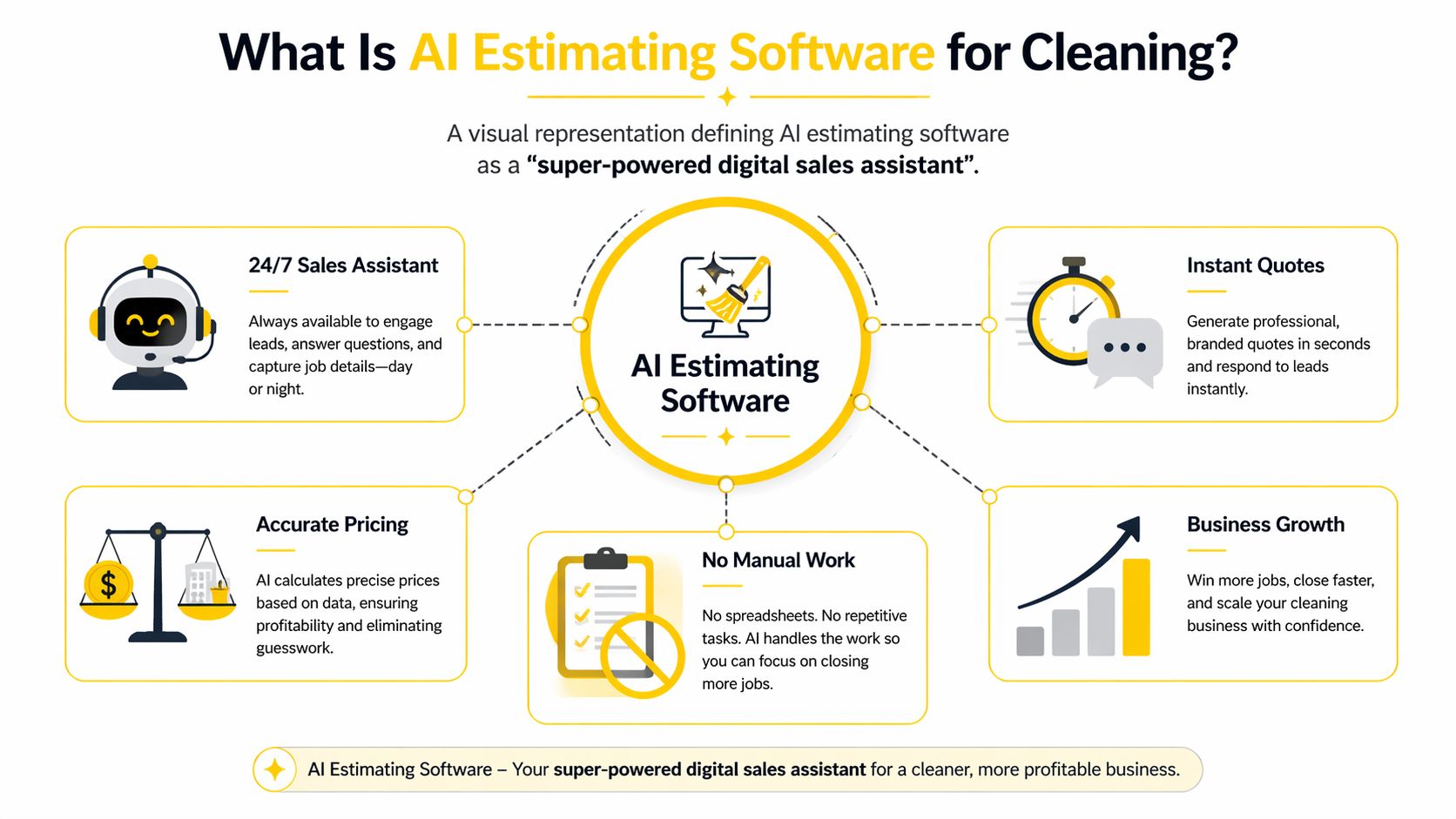
At a practical level, the system does four jobs:
Collects the right inputs
It asks for the information that affects price, not just a name and phone number.
Interprets messy customer responses
People don’t always speak in neat categories. They say things like “it’s a pretty big place” or “we need a move-out with appliances too.” Good software translates that into usable estimate inputs.
Applies your pricing logic
Your rates, minimums, add-ons, frequency discounts, and service differences drive the output.
Delivers the estimate fast
The customer gets an answer while they’re still engaged.
According to Express Analytics on AI data cleaning, AI data cleaning can deliver a 60-80% reduction in manual data cleaning time and produce ROI within 3-6 months, which matters because estimating systems are only as useful as the data they can process accurately.
A basic website form just collects contact info and creates more admin work. AI estimating software does more than that. It qualifies, organizes, and prices.
That’s why it helps to think of it less like a calculator and more like a trained front-desk sales rep that follows instructions perfectly. The rep doesn’t improvise rates. The rep doesn’t forget to ask about windows, inside fridge cleaning, or frequency. The rep doesn’t leave the lead sitting overnight.
Practical rule: If your current website asks people to “submit for pricing,” you’re still creating delay where speed should exist.
Cleaning is a strong fit for this kind of automation because the work has repeatable pricing logic. Even when jobs vary, most businesses already think in terms of:
That’s also why many owners exploring this space end up reading more about AI sales automation for cleaning services. The estimate itself is only one piece. The larger gain is building a workflow that sells even when nobody is available to answer manually.
A lot of cleaning companies hit the same ceiling. Leads are coming in, but pricing still depends on whoever answers the phone, who is checking email, or how rushed the office feels that day.
That setup keeps the business reactive. An AI estimator turns pricing into a system. Once rates, service rules, and add-ons are built into the workflow, revenue stops depending on memory and guesswork.
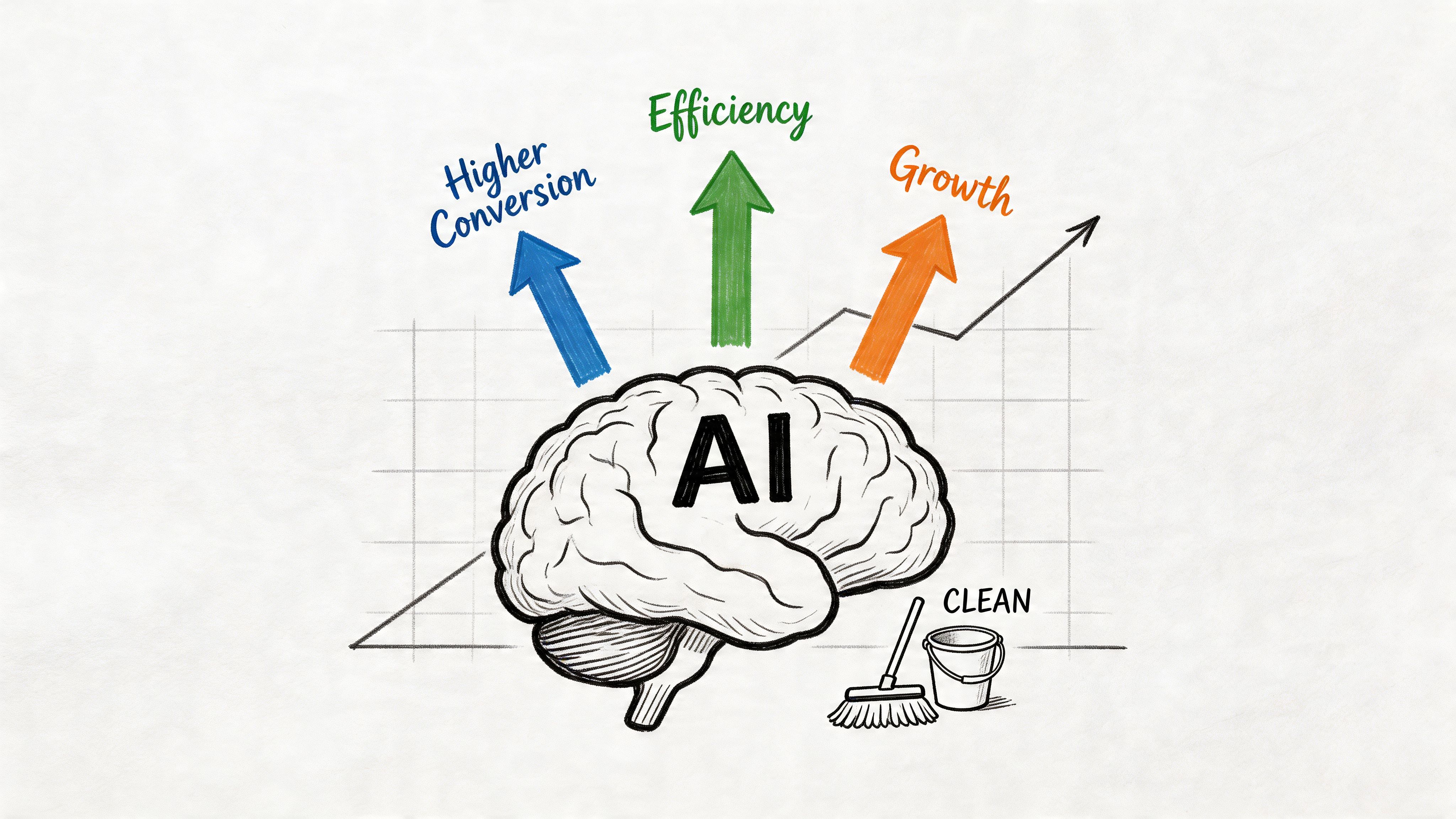
Speed matters because cleaning leads shop around. If someone requests a quote at 8:30 p.m. and your process waits until morning, you are giving another company a clean shot at that job.
Vendors in this category commonly position AI estimators as tools that can return pricing in under a minute, rather than requiring a manual back-and-forth through calls, texts, or spreadsheet review, as noted by ResponsiBid’s guide to AI quoting software. That gap changes conversion because the estimate arrives while the customer is still paying attention.
Fast quoting also improves owner discipline. Teams stop cherry-picking which leads get a quick reply and which ones sit until someone has time.
Here, the bigger financial change becomes apparent.
Gut-feel pricing creates small errors that stack up across the month. One team member remembers to charge for first-time condition. Another forgets to add inside fridge cleaning. Someone else trims the price because the caller hesitated. The result is uneven margins, confused customers, and no reliable way to coach the team.
A standardized estimating system fixes that by applying the same rules every time. You decide how square footage, condition, frequency, and add-ons affect price. The software follows that logic on every quote.
| Pricing approach | What usually happens |
|---|---|
| Memory-based pricing | Rates change based on who handled the lead |
| Spreadsheet-only pricing | Pricing can be accurate, but response time slows down |
| AI-driven estimates | The same pricing rules apply each time, and quotes go out immediately |
That shift is bigger than convenience. It is the difference between running a job shop and running a business with repeatable sales operations.
If you want a practical example, this case study on doubled sales after instant estimates shows what can happen when quoting stops being a bottleneck.
Add-ons are usually where cleaning companies improve ticket size without adding another full lead to the pipeline. But manual quoting makes those offers inconsistent.
When the estimator asks every prospect the same questions and presents the same upgrade options, oven cleaning, fridge interiors, windows, and recurring service upgrades get offered more consistently. That matters because customers often buy what is presented clearly in the moment.
There is another benefit owners notice after a few weeks. Once estimates follow a standard structure, lead and sales data become easier to trust. Then tools focused on AI-powered marketing analytics can help you see which channels bring in profitable jobs, which services close best, and where your quoting process is leaking revenue.
Here’s a short demo that helps visualize how this kind of workflow supports growth:
The main benefit is not speed by itself. Faster, standardized estimating gives you tighter margins, more consistent sales behavior, and a business that can grow without pricing chaos.
A cleaning estimator should do more than spit out a price. It should turn the way you already sell into a repeatable system your team can trust.
That is the actual dividing line.
If the software only collects a few details and produces a number, you still have the same business problems underneath. One estimator prices aggressively. Another forgets an add-on. An office admin promises a callback that never happens. The better tools replace gut-feel quoting with a standard process that runs the same way every time, whether the lead comes in at 2 p.m. or 10 p.m.
The first thing to check is channel coverage. Cleaning leads do not all come through one door. Some people want to call and explain the job. Others want to request service from your website after work, when your office is closed. If the tool only handles one path, you still need staff to fill the gap.
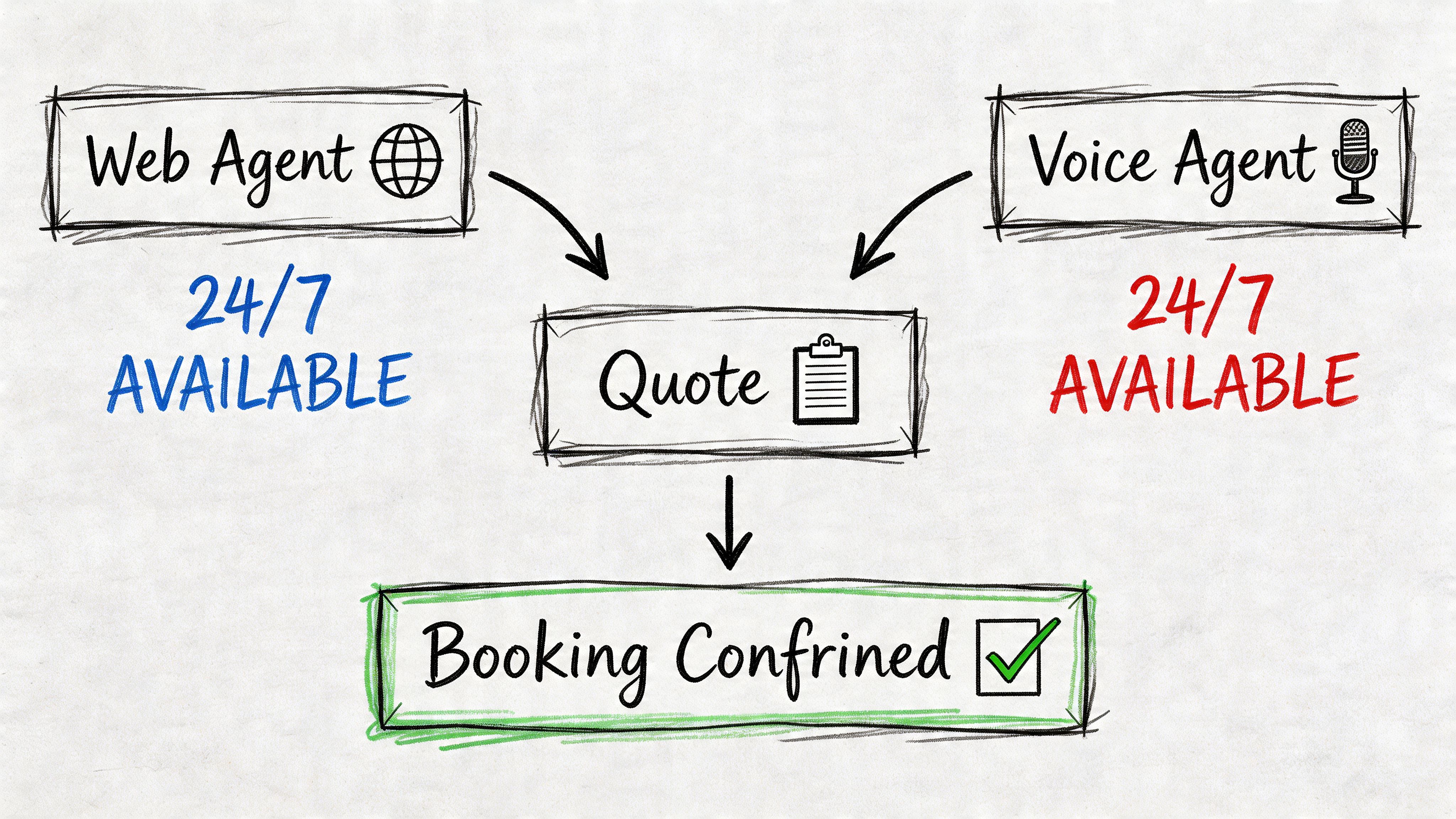
The best setups follow a simple operating sequence:
That consistency matters more than owners expect. Once pricing rules live inside a system instead of inside people's heads, the business starts behaving more predictably. Margins get easier to protect. Training gets easier. Sales performance becomes easier to measure because everyone is quoting from the same playbook.
Some features look good in a demo but do very little for day-to-day execution. These are the ones that actually change how the business runs.
Residential customers often prefer web forms late at night. Commercial prospects may still call and ask specific questions. Good estimating software handles both without forcing your office to re-enter information manually the next morning.
Cleaning companies price in different ways for good reasons. A small recurring house clean, a deep clean with heavy buildup, and a multi-suite office account should not run through the same logic. The software should support hourly, room-based, square-foot, package, and hybrid models, plus exceptions your team deals with every week.
Speed helps, but speed alone is not enough. The quote has to reach the customer while intent is still high, and your staff has to see what was requested without digging through notes. If the alert only says "new lead," someone still has to reconstruct the job before they can act.
An estimator should fit into the rest of your operation. If it connects with your CRM, scheduler, and automations through software integrations for cleaning workflows, you avoid the usual mess of copy-pasting lead details between systems. That is how estimating turns from a front-end tool into part of a real operating system.
As noted by Janitorial Manager’s review of AI use in cleaning operations, companies using AI for estimating and related workflows have reported gains in efficiency and stronger booking performance. The important takeaway is practical. Standardized intake and pricing reduce the wasted motion that usually follows manual quoting.
I would watch for four problems.
A good system feels routine. Leads come in. The same standards get applied. Quotes go out. The team works from complete information instead of memory, guesswork, and follow-up cleanups. That is the shift that helps a cleaning company stop operating like a reactive job shop and start running like a business built to scale.
Most owners assume setup will turn into an IT project. It usually doesn’t. Modern estimating tools are designed for operators, not developers.
The easiest way to approach implementation is to treat it like a pricing cleanup exercise first and a software project second. If your current rates are scattered across memory, texts, and old spreadsheets, organize that before anything goes live.
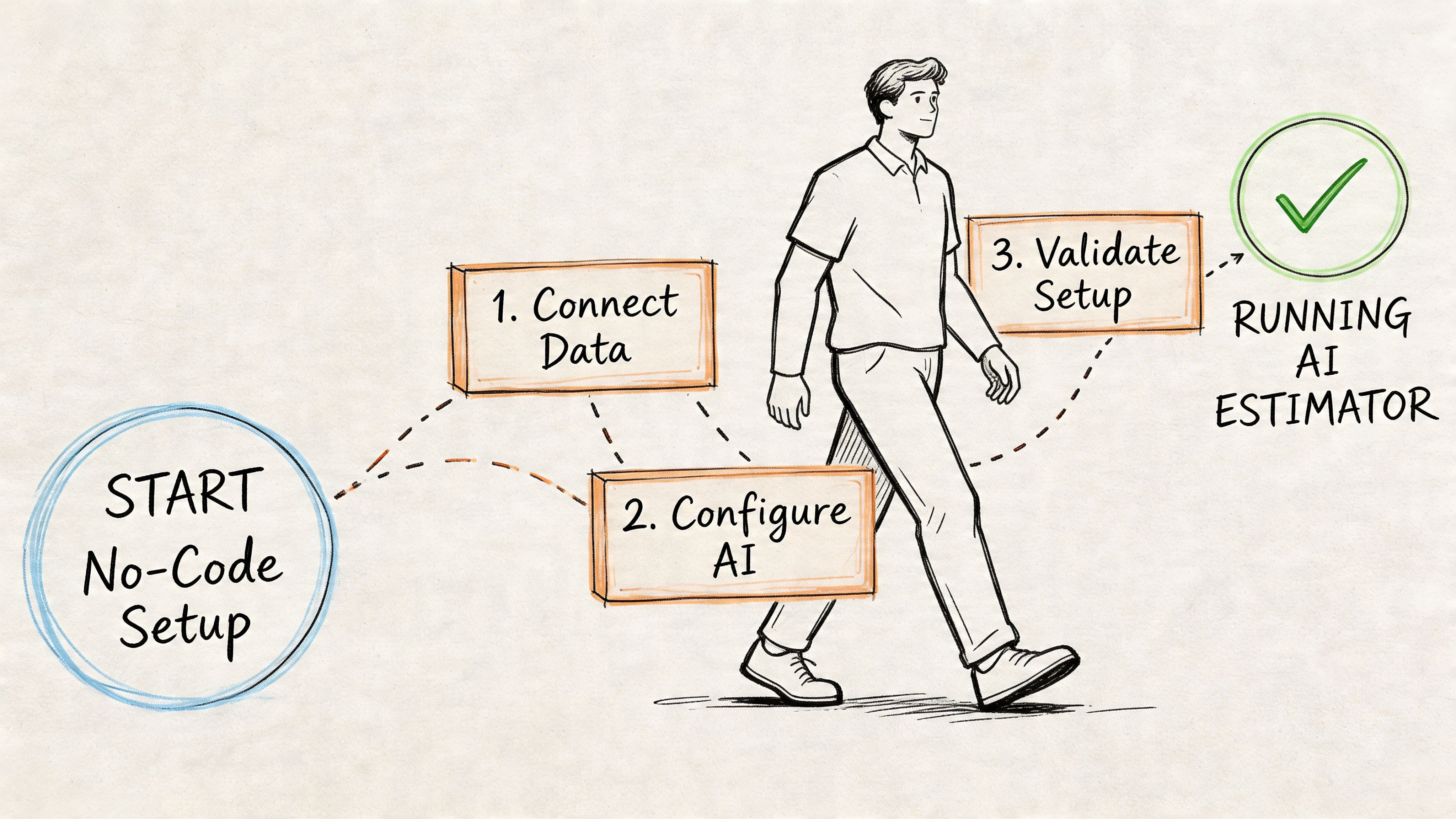
Write down the rules you already use, even if they’ve never been formalized well.
That usually includes:
Clean data is essential. A Forrester study summarized by OvalEdge on AI data cleaning found that 61% of organizations saw measurable improvements in data quality and error reduction after adopting intelligent automation. For estimating, that means bad historical data and inconsistent job labels can weaken the output before the tool ever goes live.
Once pricing logic is in place, the next step is simple deployment. Most tools use a copy-paste widget or a lightweight install process on your site. If you want a practical look at that shift, this article on moving from in-home estimates to online estimates covers the operational side well.
Then decide where you want the estimator to appear:
A standalone estimator helps, but connected workflows are where the system starts saving real time.
You’ll usually want it tied into:
One option in this space is Estimatty, which offers no-code setup, web and voice intake, SMS and email estimate delivery, and CRM or Zapier-style connection points for cleaning businesses.
Clean setup beats fancy setup. If your pricing logic is accurate and your notifications are useful, you’re already ahead of most manual estimating processes.
Don’t try to model every edge case on day one. Start with your most common residential jobs or your most repeatable commercial estimate type. Then review accepted jobs, declined jobs, and weird edge cases for a couple of weeks and tighten the rules.
That’s how you avoid the classic mistake of making the first version too complex to trust.
Buying the wrong estimator creates a new admin layer instead of removing one. The right way to evaluate software is to look at fit, not hype.
Some tools are built for broad home services and can be adapted to cleaning. Others are designed around how cleaning companies gather information, price work, and follow up. That difference matters because cleaning estimates depend on service condition, frequency, access, room type, and add-on logic that generic tools often handle poorly.
That sounds like a small distinction, but it affects everything from the question flow to how add-ons are handled. Residential and commercial cleaning don’t price the same way, and the software should reflect that.
If it only works on your website, you still have a gap. If it only handles calls, your late-night web traffic still goes nowhere.
You need to know whether you can edit service logic quickly. Rates change. Supply costs change. Your software can’t require a support ticket every time you need to adjust a minimum or add a new service.
Look at CRM sync, calendar options, team alerts, and follow-up workflows. A tool that lives alone creates double-entry and missed handoffs.
Software that works for five leads a week can break badly at fifty. Test for the business you want, not just the business you have today.
There’s also a staffing angle owners overlook. Once your estimating process gets tighter, more leads move through the pipeline, and your ability to hire and manage cleaners becomes part of the growth equation. If you’re thinking about that side too, resources like pipehirehrm.com and the practical hiring articles on get.pipehirehrm.com/blog are useful for building the team behind the sales engine.
The right estimator should make your business more consistent, not more complicated.
No. They handle repetitive front-end work. Your staff still matters for exceptions, follow-up, scheduling decisions, relationship building, and closing more complex jobs.
What changes is where your team spends time. Instead of answering the same pricing questions over and over, they can focus on higher-value conversations.
Usually, smaller companies feel the benefit fastest. Solo cleaners and small teams can’t afford to miss after-hours leads, and they usually don’t have a dedicated salesperson sitting by the phone.
That makes automation practical, not excessive.
They’re trustworthy when the pricing rules are solid and the inputs are clean. If your current process is already inconsistent, the software can force useful discipline because it makes you define your rates, service logic, and exceptions clearly.
For edge cases, most owners still review manually. That’s normal.
That’s exactly why you need to evaluate the pricing engine carefully. Residential package logic and commercial scope logic aren’t the same. A good system should let you treat them differently instead of squeezing both into one rigid template.
Most modern tools are much easier to launch than owners expect. The heavy lifting is usually deciding your rules, not installing the software.
If you can define how you already price work, you can usually get started without a developer.
Think in terms of lost jobs, delayed follow-up, and margin mistakes. One saved lead or one underpriced recurring account avoided can matter more than the monthly software fee.
That’s why many owners stop comparing these tools to generic software costs and start comparing them to missed revenue, callback labor, and the burden of hiring more admin help too early.
For broader operations and hiring questions, the blog at get.pipehirehrm.com/blog is also useful once lead flow starts increasing and staffing becomes the next bottleneck.
If you’re tired of missed calls, inconsistent pricing, and waiting until morning to send estimates, it’s worth looking at Estimatty. It’s built for cleaning businesses that want web and voice lead capture, instant estimates, and a more standardized sales process without adding another full-time admin layer.