October 20, 2026
How to Follow Up on a Quote and Close More Cleaning Sales
Learn how to follow up on a quote with timing, templates, and tactics that turn estimates into booked cleaning jobs. Practical advice for cleaning businesses.

Tuesday, April 21, 2026
Wondering how much do housekeepers charge? Our 2026 guide covers hourly rates, flat fees, and how to set profitable prices for your cleaning business.
.png)
TL;DR: Independent housekeepers commonly price in the $25 to $40 per hour range, while agency-run services often sit higher. Many cleaning companies also use a $0.15 per square foot benchmark as a starting point. Those numbers are only useful if they lead to a pricing system your team can repeat. Profit comes from adjusting the base price for size, condition, frequency, location, and add-ons, then turning that logic into a standard quoting process.
At 8:47 p.m., a prospect in a 2,400-square-foot home fills out your form and wants a price before booking with the next company on their list. Your office is closed. Your lead response tool sends back a number based on whatever rules you set months ago. If those rules are loose, outdated, or built on gut feel, you are either buying revenue with underpriced jobs or watching solid leads walk away.
I have seen this happen in growing cleaning companies over and over. The owner has one pricing instinct, the office manager has another, and field staff start casually quoting extras that never made it into the estimate. The result is predictable. Margins get thin, schedules get messy, and clients hear different numbers for similar homes.
For owners asking how much housekeepers charge, the better question is how to turn market rates into a pricing engine your company can use consistently under pressure. That is the shift from quoting jobs to building a business.
The biggest leak in most cleaning businesses isn't payroll or supplies. It's inconsistent estimating.
If you answer leads manually, your numbers change depending on who's answering, what time they call, and how rushed the conversation is. That means the same house can receive two different prices from the same company. Clients notice that. Teams feel it too, because bad pricing creates impossible schedules and resentful cleaners.

National wage data gives you a floor. In the United States, average hourly pay for housekeepers in 2026 ranges from $15.11 to $16.31, while the Bureau of Labor Statistics reported a mean hourly wage of $13.75 for maids and housekeeping cleaners as of May 2023, across 1,013,070 workers nationally according to PayScale’s housekeeper wage data. If your estimates ignore labor reality, you're not being competitive. You're subsidizing the job.
Practical rule: If two people on your team would price the same job differently, you don't have a pricing strategy. You have opinions.
A profitable system starts with a simple promise. Every lead gets the same estimate logic, every time. That's why owners who tighten their intake and pricing rules usually find hidden revenue fast. If you want a cleaner baseline before building your own model, this breakdown of cleaning service cost is a useful reference point.
Profitable cleaners stop treating pricing like a sales improvisation. They build a framework around labor, home size, service type, frequency, and add-ons. Then they use that framework every time.
That doesn't make you rigid. It makes you reliable.
A pricing model is not just a way to quote a house. It decides who absorbs the risk when the scope is wrong.
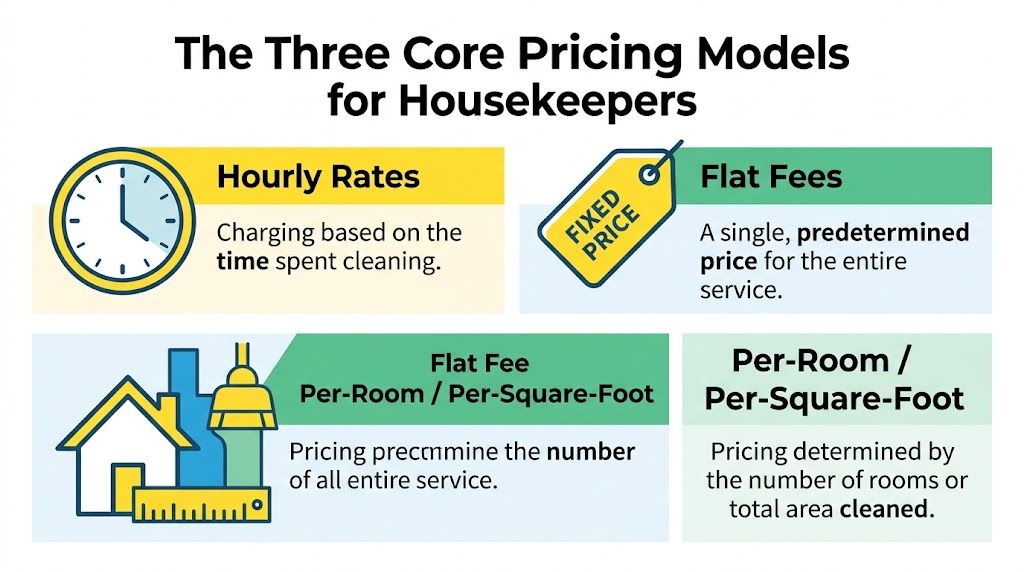
Owners who price well stop asking, "What do housekeepers charge?" and start asking, "Which pricing method fits this job, this client, and this level of uncertainty?" That shift is what turns random quoting into a system your office can repeat.
Hourly pricing works best when the home is a question mark.
Use it for first-time visits, heavy buildup, move-out work with unknown condition, post-event cleanup, or any job where the client's description is too vague to trust. If the labor can swing hard once your team opens the front door, hourly pricing protects the company from eating that miss.
The trade-off is simple. It protects margin, but it creates sales resistance. Clients like certainty. A timer feels open-ended unless your team explains the process well and sets a reasonable range before the visit.
Hourly also puts pressure on crew efficiency and communication. If the client sees four hours on one visit and six on the next, they want a reason. Without clear scope notes, hourly billing can make a good company look disorganized.
Flat-fee pricing is easier to sell because the client gets a number they can approve on the spot.
For recurring maintenance cleans, that matters. Your office can quote faster, your follow-up is cleaner, and your schedule fills with less back-and-forth. Once a home has been serviced and the true labor is known, a flat fee usually gives the best mix of client confidence and operational control.
The risk sits on your side of the desk. If intake misses pet hair, extra shower glass, a second living area, or dishes piled from three days ago, the quoted price stays fixed while labor climbs. Owners who lose money on flat fees usually do not have a flat-fee problem. They have a scope-control problem.
I tell owners this all the time. Flat rates only work when the work itself is standardized. If your team needs a tighter scope for first visits, use a documented professional deep cleaning checklist so the office, crew, and client are pricing the same job.
Flat fees sell the promise of certainty. Your intake process has to earn that promise.
Per-room and per-square-foot pricing gives owners the strongest internal estimating structure.
Clients may never see this math directly, and that is fine. They do not need the formula. Your office does. Square footage gives you a planning baseline. Bedroom and bathroom count help account for fixture load. Room count helps catch layout issues that square footage misses, especially in homes with bonus rooms, split levels, home offices, and long travel paths between cleaning zones.
This model works well as the engine behind your quoting system because it is easier to train, easier to audit, and easier to improve over time. If a certain home type keeps running over labor, you can adjust the formula instead of relying on whoever answered the phone that day.
The mistake is using square footage alone. Two 2,000-square-foot homes can price very differently if one is an open ranch and the other has three floors, five bathrooms, and heavy-use surfaces everywhere.
The best model depends on how much uncertainty you are carrying at the time of the quote.
| Pricing model | Best use case | Main strength | Main risk |
|---|---|---|---|
| Hourly | First visits, heavy-reset jobs, unclear scope | Protects margin when labor is unpredictable | Harder to sell and harder to keep consistent client expectations |
| Flat fee | Recurring maintenance and clearly defined work | Fast to quote and easy for clients to approve | Margin drops fast if intake misses the real scope |
| Per-room / per-square-foot | Standardized residential estimating systems | Repeatable, trainable, and easier to automate | Needs modifiers for layout, condition, and service level |
They use all three.
A strong pricing system usually starts with per-square-foot or per-room logic behind the scenes, uses hourly pricing when the home is too uncertain to lock down, and converts good recurring clients to a flat fee once labor is proven. That approach gives the client a clean quote while giving the business better control over margin, training, and forecasting.
That is how owners stop pricing from gut feel. They build one estimating engine, then apply the right output for the job in front of them.
A base rate is only useful if you know when to move it.
Most underpricing happens because owners treat every home like a clean box with a simple bedroom and bathroom count. Real houses aren't like that. Layout, condition, access, flooring, pets, and service frequency all change labor.
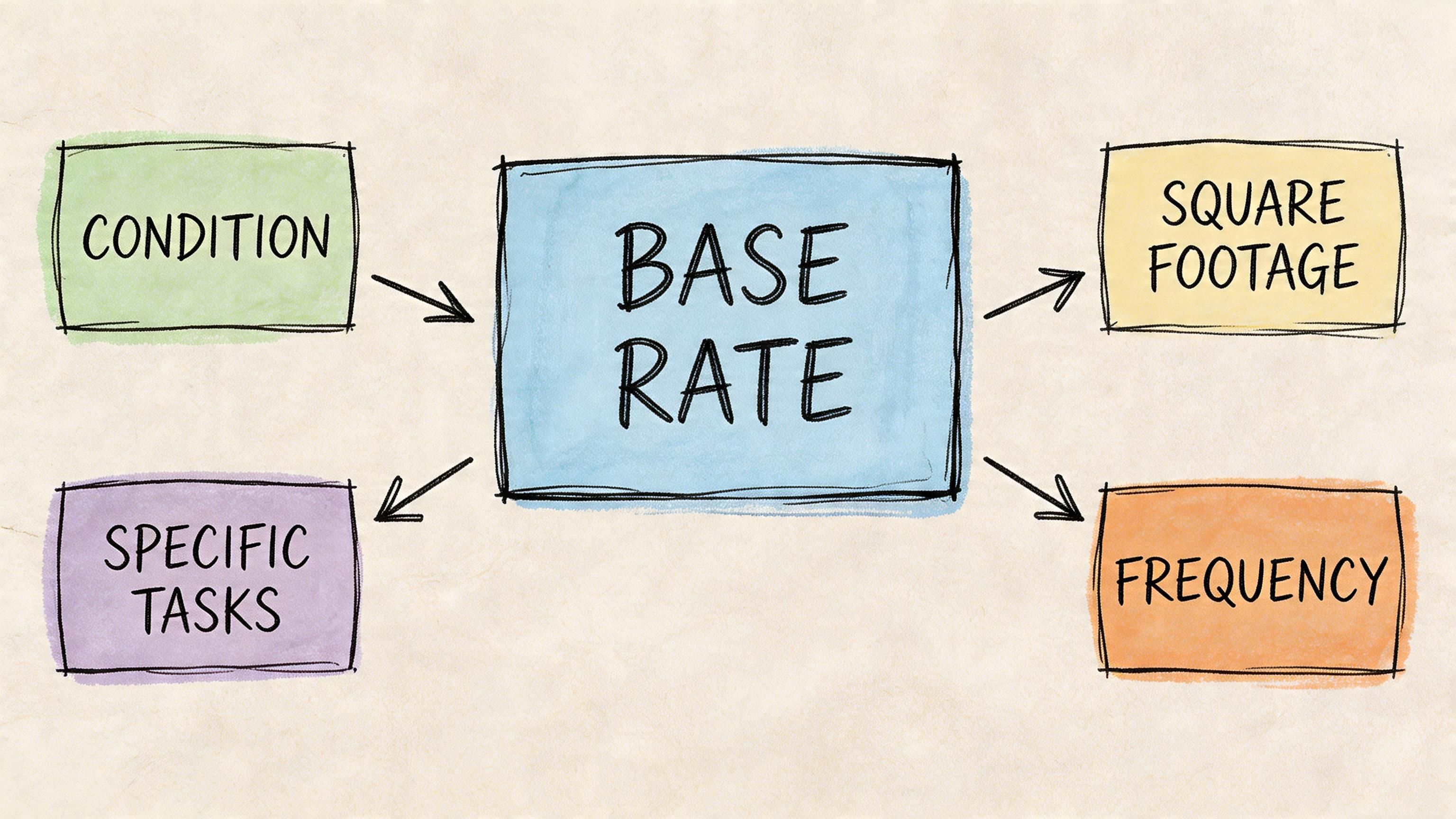
The first adjustment isn't the home. It's the market.
Housekeeper wages can vary sharply by geography. Median hourly wage ranges can run from $11 to $13 in lower-cost states like Arkansas to $18 to $22 in higher-cost markets like California or New York, based on Sparkly Maid’s U.S. maid wage breakdown. If you're using one national estimate template, you're either undercharging in expensive markets or leaving money on the table in cheaper ones.
That means your base estimate should be location-aware before you even ask about ovens, pets, or square footage.
Square footage matters because it helps forecast time. It doesn't tell the whole story.
A small home packed with clutter can take longer than a larger home with an open layout and minimal furnishings. Room count matters for touchpoints. Bathrooms and kitchens matter because they carry the most labor-intensive detail work.
Use a checklist at intake so your office isn't guessing:
Two homes of the same size can require very different labor.
First-time cleans are usually where owners undercharge the most. The client may say the home is "not too bad." Then your crew arrives to soap scum buildup, pet hair packed into corners, greasy cabinet fronts, and neglected baseboards.
If you don't price for condition, your cleaners end up paying for it with their time.
Fixed intake questions are helpful. Ask when the home was last professionally cleaned. Ask whether there is heavy buildup in kitchens or baths. Ask whether pets shed heavily or whether children are home throughout the day. Those answers affect labor more than a broad service label ever will.
A smart overhead model matters here too. If you haven't mapped labor burden, travel, supervision, and administrative time, review your own numbers against this guide on how to calculate overhead costs.
Clients often ask for a "standard clean" and then describe a deep clean.
That's not a difficult client problem. That's an intake problem. Your estimate system should separate basic maintenance work from reset work and detail tasks.
Watch this kind of operational thinking in practice:
A profitable pricing engine usually looks less like one number and more like a matrix. Start with your market base. Then add structured modifiers for labor drivers.
| Factor | Why it changes the estimate |
|---|---|
| Location | Labor and wage floor differ by market |
| Square footage | Sets the rough labor frame |
| Bathrooms and kitchens | Increase detail time |
| Home condition | Changes first-visit labor sharply |
| Pets and children | Add hair, mess, and re-soiling |
| Access and layout | Affects setup and movement time |
| Frequency | Repeat visits often reduce labor after reset |
When owners ask how much do housekeepers charge, the useful answer is this: they charge differently when they understand what specifically changes labor. That's why the best estimates aren't fast because someone is guessing well. They're fast because the business already knows which inputs matter.
A common pricing mistake looks like this. An owner quotes a low first visit to get the yes, throws in oven cleaning to be helpful, offers a recurring discount on the spot, and turns a good lead into a thin-margin account before the crew even arrives.
Base pricing gets attention, but add-ons and repeat service decide whether the account pays. Owners who rely on gut feel usually underprice both. They treat extras like favors and recurring service like a blanket discount instead of a controlled margin plan.
Service tiers should reflect how the home is maintained, not just how badly you want the job.
One-time deep cleans average $200 to $400, while recurring weekly service can fall to $90 to $180 per visit, according to Thumbtack’s house cleaning price guide. The useful takeaway for owners is not the headline number. It is the labor pattern behind it. Recurring work gets cheaper only after the first visit removes buildup and resets the home.
Price that reset as its own job.
If a prospect calls asking for biweekly service but the kitchen has grease buildup, the shower has hard water scale, and baseboards have not been touched in months, that first appointment is a deep clean. Calling it maintenance just to win the account creates problems on day one. The crew runs long, the client expects miracle results at a maintenance price, and your future visits start from a bad precedent.
A clear service ladder keeps everyone honest:
Profitable recurring work starts with a correctly priced first visit.
Add-ons work best when they are defined, timed, and priced before the quote goes out.
Inside oven cleaning, inside fridge cleaning, bed changes, cabinet fronts, interior windows, and similar extras should not live inside vague notes like "maybe if needed." That language kills margin because the field team usually interprets it as included. A pricing engine should treat each add-on as a labor block with a clear price and scope.
Clients also buy bundles more easily than disconnected line items. "Kitchen reset" usually sells better than asking, one by one, about the oven, fridge, and cabinet wipe-downs. The same goes for a "monthly detail rotation" on recurring accounts, where one extra task is attached to each visit at a set rate instead of getting negotiated every time.
| Service Tier | Description | Estimated Price |
|---|---|---|
| Standard Clean | Routine maintenance clean for a home already in decent condition | Custom estimate based on your base pricing model |
| Deep Clean | First visit or detailed reset with extra kitchen and bathroom labor | Usually higher than standard due to condition and scope |
| Recurring Clean with Add-Ons | Weekly or bi-weekly maintenance plus selected extras bundled into future visits | Lower per-visit estimate than one-time service, with add-ons preserved |
One practical rule helps here. Never bury add-ons inside the recurring discount. Show them separately, even if you package them.
If your team needs tighter standards on what belongs in a reset versus an add-on, this professional deep cleaning checklist for cleaning teams is a useful operating reference.
Recurring discounts make sense when repeat visits cut production time. They do not make sense as a reflex.
The same Thumbtack source notes market examples where recurring service is discounted by 20 to 40 percent compared with one-time cleaning. Many owners copy that spread without checking whether their own labor drops at the same rate. That is where margin leaks start. Weekly service may justify a stronger reduction because bathrooms stay under control and kitchen buildup never gets heavy. Monthly service often does not. The home has more time to slide, which means the discount needs to be smaller or the scope needs tighter boundaries.
Set rules your office can apply every time:
This is how owners stop selling "cheap recurring cleaning" and start selling stable, predictable service. The clients you want usually accept that structure because it feels organized and fair. The clients who push hardest for low recurring pricing usually create the most scope creep, the most complaints, and the weakest lifetime value.
Accurate estimates come from intake discipline, not sales talent.
When an owner says their team is inconsistent, the underlying cause is usually that nobody is collecting the same information in the same order. One person asks square footage. Another asks bedroom count. A third skips condition entirely and prices off instinct.
For residential cleaning, your estimate process should capture the inputs that affect labor:
If you want a simple analogy, think about how contractors calculate service costs in other industries. They don't price from a vague description alone. They gather scope, complexity, and delivery requirements first. Cleaning should work the same way.
Phone-only intake fails when the office is busy. Email-only intake fails when clients don't answer clearly. Text-only intake fails when you need structured data.
The issue isn't effort. It's consistency. If your process depends on whoever happens to answer the inquiry, you'll keep getting uneven estimates.
A better workflow uses a standard form or scripted sequence that collects the same fields every time, then maps them to your pricing logic. That can be done manually with a strong office process, or through tools built for cleaning businesses. One example is Estimatty’s cleaning estimate calculator, which is designed around cleaning-specific inputs like square footage, surfaces, urgency, and add-ons.
The fastest estimate isn't the one you rush out. It's the one your system already knows how to build.
A solid estimate flow usually follows this order:
| Step | What happens |
|---|---|
| Intake | Collect structured job data |
| Scope review | Confirm service type and condition |
| Pricing logic | Apply base rate plus modifiers |
| Add-on presentation | Offer relevant extras visibly |
| Frequency option | Show recurring path if fit is strong |
| Follow-up | Send written estimate and next step |
That approach cuts down confusion for both sides. The client sees a professional estimate. Your team sees the labor assumptions behind it.
Most owners don't need a more persuasive sales script. They need a system that prevents fuzzy intake from turning into bad numbers.
Revenue leaks almost always hide inside "small" estimating habits.
A lead asks for windows and you forget to include them. A first-time clean gets sold at maintenance pricing because the client says the house is "pretty clean." A team member gives a recurring discount without getting a recurring commitment. None of these mistakes looks dramatic on its own. Together, they flatten margin.
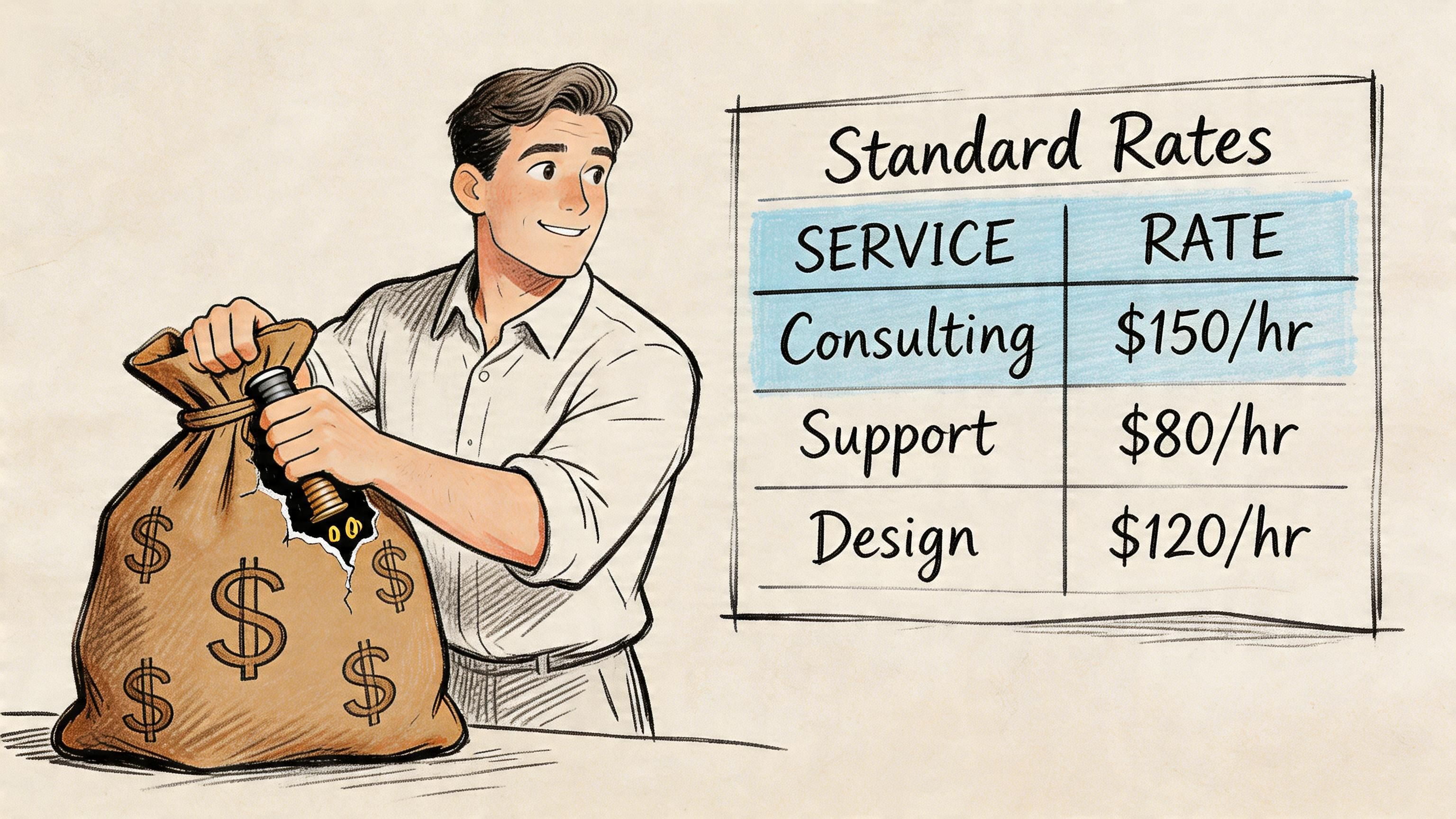
When owners ask how much do housekeepers charge, what they often mean is, "How do I stop undercharging without scaring people away?" The answer is standardized logic.
That means every estimate should come from the same framework:
Without those rules, your office and field team create their own pricing culture. That always gets expensive.
There's another side to pricing that owners sometimes avoid. You can only hold stronger rates if your team delivers the kind of experience clients trust.
Private home housekeepers can earn an average of $21.34 to $31.67 hourly, which is over 100% more than similar workers in hotels or hospitals, according to Care.com’s housekeeping cost guide. That premium reflects reliability, trust, and service quality in private homes. In practical terms, better hiring supports better pricing.
If you're building a reliable residential team, using hiring workflows from platforms like pipehirehrm.com can help structure vetting and follow-through, and the operational content at get.pipehirehrm.com/blog is worth reviewing if staffing consistency is one of your bottlenecks.
Higher rates are easier to defend when clients trust the people entering their home.
A business can survive on owner intuition for a while. It can't scale on it.
As soon as multiple people handle leads, scheduling, and service delivery, your pricing must live outside the owner's head. That's where written estimate rules matter. So do templates, service menus, intake questions, and approval boundaries.
A practical standardization process looks like this:
Document your current estimate logic
Write down how you currently price standard cleans, deep cleans, recurring visits, and extras.
Flag where jobs go sideways
Look for the patterns. First visits too cheap. Add-ons missed. Discounts given too early. Recurring estimates too low.
Turn judgment into rules
If pet hair always adds labor, that shouldn't stay a verbal reminder. It should become part of intake and pricing.
Train everyone on one estimate flow
If office staff, virtual assistants, and managers all handle inquiries, they need the same process.
Move from in-home estimates to structured remote estimating where possible
This approach helps many owners reclaim time and consistency. If you're working through that shift, this guide on how to transition from in-home estimates to online estimates is useful.
Some owners try to fix pricing by "charging more." That rarely sticks if the underlying system is still weak.
Others go the opposite direction and keep estimates vague until they can see the house in person. That slows response time, creates friction, and lets faster competitors win the lead.
The businesses that improve margin over time usually do something less dramatic. They make estimating boring. Same questions. Same rules. Same service definitions. Same add-on logic. That kind of consistency is what turns pricing from a constant judgment call into an operating system.
Don't race to discount.
First, confirm scope. Many price objections come from a mismatch between what the client thinks is included and what your team priced. Re-state the service type, frequency, and any add-ons. If needed, reduce scope before reducing price.
A better response is usually, "We can adjust the service package if you want to prioritize certain areas." That protects your rate integrity and keeps the conversation focused on outcomes, not just the number.
Your staffing model changes your cost structure, so it should affect your estimate logic.
If you operate with employees, your business carries more responsibility around scheduling, standards, and internal administration. If you lean on independent contractors or hybrid crews, your estimate structure may be more flexible, but quality control and customer experience must still stay consistent. The important point is this: don't copy another company's rate sheet unless your labor model looks like theirs.
If hiring is the weak point, clean up your recruiting and screening process before you try to push premium pricing. Better team reliability gives you more room to hold firm on estimates.
Start with jobs you've already completed successfully.
Look at your own recurring clients first. Identify homes where the condition is stable, the scope is familiar, and your team performs consistently. Those are the easiest accounts to convert from hourly to flat-rate service.
Then build flat rates from real labor history, not optimism. Keep a review rule in place so you can adjust if the scope changes. If a client adds rooms, shifts from monthly to occasional service, or lets condition slide, the estimate should change too.
Start flat-rate pricing where the work is predictable. Keep hourly pricing where uncertainty is still high.
If you're ready to replace gut-feel estimating with a consistent system, Estimatty gives cleaning businesses a way to collect scope details, send structured estimates, and standardize pricing logic across the team without relying on whoever happens to answer the phone.