October 19, 2026
Average Charges for House Cleaning in 2026
Learn the average charges for house cleaning in 2026, what drives pricing by home size and frequency, and how to set profitable rates

Friday, June 5, 2026
Get the ultimate list for your house cleaning business supplies. Our 2026 guide covers everything from starter kits to sourcing and inventory management.
You're probably staring at a shopping cart, browser tab, or supply shelf wondering where the line is between “ready to clean” and “wasting money.” That's a normal place to start. Most new owners buy too much of the wrong stuff, then realize halfway through the month that they're short on the items they use every single day.
Professional house cleaning business supplies aren't just a startup purchase. They shape job speed, results, safety, training, and margins. The business owner who understands that early usually runs tighter routes, sends cleaner estimates, and avoids the constant scramble of last-minute store runs.
The first real supply decision usually happens in a big-box aisle or janitorial catalog. You see degreasers, disinfectants, floor finishes, mop systems, scrub pads, vacuums, caddies, gloves, liners, sprayers, and specialty products for every surface imaginable. New owners often react in one of two ways. They either buy a bare-minimum kit that slows every job down, or they overbuy niche products that sit untouched.
The better approach is simpler. Build around repeat work. Residential cleaning lives on recurring use items, not flashy equipment purchases. Cloths, mop pads, trash liners, sprays, gloves, vacuum bags or filters, and replacement heads decide how smoothly your week runs.

The scale of the market explains why disciplined operators have room to grow. The global cleaning services market was estimated at USD 442.09 billion in 2025 and is projected to reach USD 770.76 billion by 2033 according to Grand View Research's cleaning services market report. For a house cleaning business, that growth points to steady demand for the recurring supplies, tools, and chemicals needed to service more homes.
A good supply system helps you:
A messy supply closet usually means a messy pricing model.
Owners sometimes think profitability comes later, after they get more clients. In practice, it starts in the tote, caddy, and storage shelf. If your kit is organized, repeatable, and built for the homes you clean, you'll operate like a business from day one instead of a side hustle trying to keep up.
A profitable cleaning kit is built in layers, not as one long shopping list. I organize supplies into four pillars because each one affects labor time, results, and replacement cost in a different way. That structure also makes it easier to tailor a kit for the home in front of you. A pet-heavy house, an allergy-sensitive client, and a home full of natural stone should not all get the same loadout.

If you want a closer look at product types and where each one fits, this guide to professional cleaning chemicals pairs well with a practical inventory plan.
Chemicals should solve specific problems, not fill shelf space. Residential teams usually need a tighter lineup than new owners expect. The goal is coverage, not variety.
A core set often includes:
The trade-off is simple. Fewer products make training easier and reduce mistakes, but going too lean can slow jobs if crews keep forcing one chemical to do everything. The right middle ground is a small core lineup plus a few specialty add-ons for homes with pets, odor issues, heavy soap scum, delicate stone, or fragrance sensitivities.
Tools do more for profitability than owners often realize. A good vacuum, a flat mop system, and the right dusting tools cut labor minutes on every visit. Over a full route, that matters more than saving a few dollars on cheap gear.
The standard setup usually includes:
Microfiber deserves its own rule set. Use color-coding, keep enough clean cloths and pads in rotation, and separate bathroom textiles from kitchen and general dusting textiles. That protects quality and keeps crews from cross-using the wrong cloth when they are rushing through a recurring job.
PPE protects your staff, but it also protects service consistency. If a cleaner gets dermatitis from repeated exposure or avoids a product because it irritates their hands, performance drops and call-backs rise.
Keep these on hand:
Field rule: If PPE is missing, uncomfortable, or the wrong size, the supply system is failing the cleaner.
This pillar also changes by client type. Homes with shedding pets, heavy dust, fragrance concerns, or post-illness cleaning requests may require a different PPE mix than a standard maintenance clean.
Consumables erode margins because they are used fast and reordered often. Owners notice the vacuum purchase. They miss the daily burn rate on liners, scrub pads, disposable gloves, paper products, and replacement mop pads.
Common examples include:
The strongest operators track consumables by job type. Deep cleans, move-outs, and homes with kids or pets usually burn through more pads, liners, and towels than a light recurring clean. Once you know that pattern, you can stock with more precision, price work more accurately, and avoid the expensive habit of overpacking every bag for every client.
These four pillars work together. Chemicals handle the soil. Tools reduce labor. PPE keeps crews safe and reliable. Consumables keep the job moving. Build each pillar around the types of homes you service, and your supply system becomes a profit tool instead of a pile of stuff.
A solo cleaner and a two-person team shouldn't carry the same kit. One needs portability and speed. The other needs duplication, backup stock, and cleaner handoffs between workers. Most generic supply lists fail precisely because they ignore how the job changes once you add people or serve homes with different surface mixes.
A smarter approach starts with the client profile. As noted in Housecall Pro's cleaning business supplies list, a major gap in many guides is failing to address how supply needs change with client type. A smart operator doesn't use the same kit for a pet-heavy home as for one with delicate natural stone. Matching supplies to the surface mix avoids damage, improves efficiency, and prevents over-stocking rarely used specialty products.
| Supply Item | Solo Cleaner Kit | Two-Person Team Kit |
|---|---|---|
| Vacuum | One versatile vacuum with core attachments | One main vacuum plus backup access plan |
| Flat mop system | One lightweight pole, base, and pad rotation | Two mop setups or one full setup plus spare pads for both cleaners |
| Microfiber cloths | Compact color-coded set for the day's route | Larger color-coded sets so both cleaners stay in separate zones |
| Chemicals | Tight lineup of core bottles in labeled spray bottles | Same core lineup, duplicated to avoid waiting or passing bottles |
| Gloves | Small daily carry plus vehicle backup | Multi-size stock for both team members |
| Detail tools | Scraper, grout brush, duster, small scrub pads | Duplicate hand tools most often used at the same time |
| Consumables | Minimal carry, restocked daily | Larger par levels in vehicle or supply bins |
| Caddy or bag | One portable caddy | Two caddies or divided zone kits |
A solo cleaner wins by reducing trips back to the car and limiting decision fatigue.
Focus on:
What usually doesn't work for solo operators is carrying too many specialty bottles. The caddy gets heavy, labels start looking similar, and setup time stretches on every job.
Once two people are in the same house, bottlenecks become expensive. If both cleaners need the same bathroom product, the same vacuum, or the same dusting cloth color at the same time, one person waits. That delay adds up fast even if it looks minor in the moment.
Two-person teams need:
If you're building staffing systems as you grow, this hiring guide for cleaning employees can help align supply planning with role expansion.
The fastest team isn't the one with the most products. It's the one where each person can work a full room without stopping to borrow a bottle or search for a pad.
Supply strategy then becomes profitable.
For pet-heavy homes, add:
For allergy-sensitive households, lean toward:
For delicate surfaces, adjust carefully:
The mistake here is buying every specialty product upfront. A better system is to keep your core kit lean and add a small specialty shelf based on actual demand patterns. That keeps your house cleaning business supplies useful, not bloated.
Where you buy your supplies affects cash flow, reliability, and brand position. Most owners end up using a mix, not a single source. That's usually the right move.
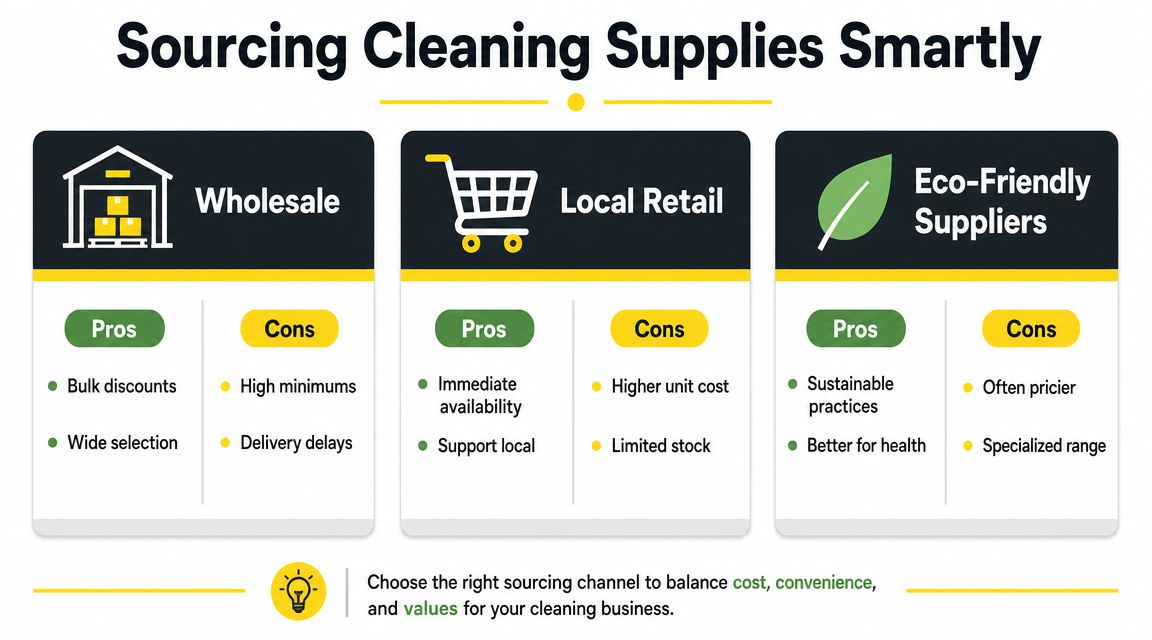
Wholesale makes sense when your usage is predictable. If you know you'll burn through the same gloves, liners, microfiber, and standard chemicals every month, buying deeper can stabilize costs and reduce reorder stress.
Pros and trade-offs:
Wholesale works poorly when a business is still testing service packages. You don't want shelves full of products your team barely touches.
Local janitorial stores and hardware suppliers help when speed matters. They're often the best option for replacement parts, emergency restocks, and seeing products in person before committing.
What local buying does well:
The downside is usually unit cost and limited selection in specialty categories.
A short visual breakdown helps when you're comparing channels.
Eco positioning can be a real business choice, but only if the products perform and fit your client base. Some clients care significantly about refill systems, lower-waste packaging, and ingredient profiles. Others care most about results and fragrance preference.
For owners evaluating greener sourcing, Fillaree's guide for eco-conscious businesses is a practical reference point for thinking through wholesale eco options without turning your supply room into a marketing exercise.
Buy eco products the same way you buy any other supply. Test dwell time, residue, scent acceptance, refill logistics, and cost control before rolling them across the whole route.
Most healthy businesses use a blend:
That mix gives you flexibility without losing control. The wrong move is trying to solve every supply need from one channel out of convenience.
A weekly clean and a first-time deep clean can land on the same route, but they do not pull from your supply kit the same way. Add a shedding dog, natural stone counters, or a client who wants low-scent products, and the material cost shifts again. If you price every home off labor alone, margin gets thinner on the jobs that ask the most from your supplies.
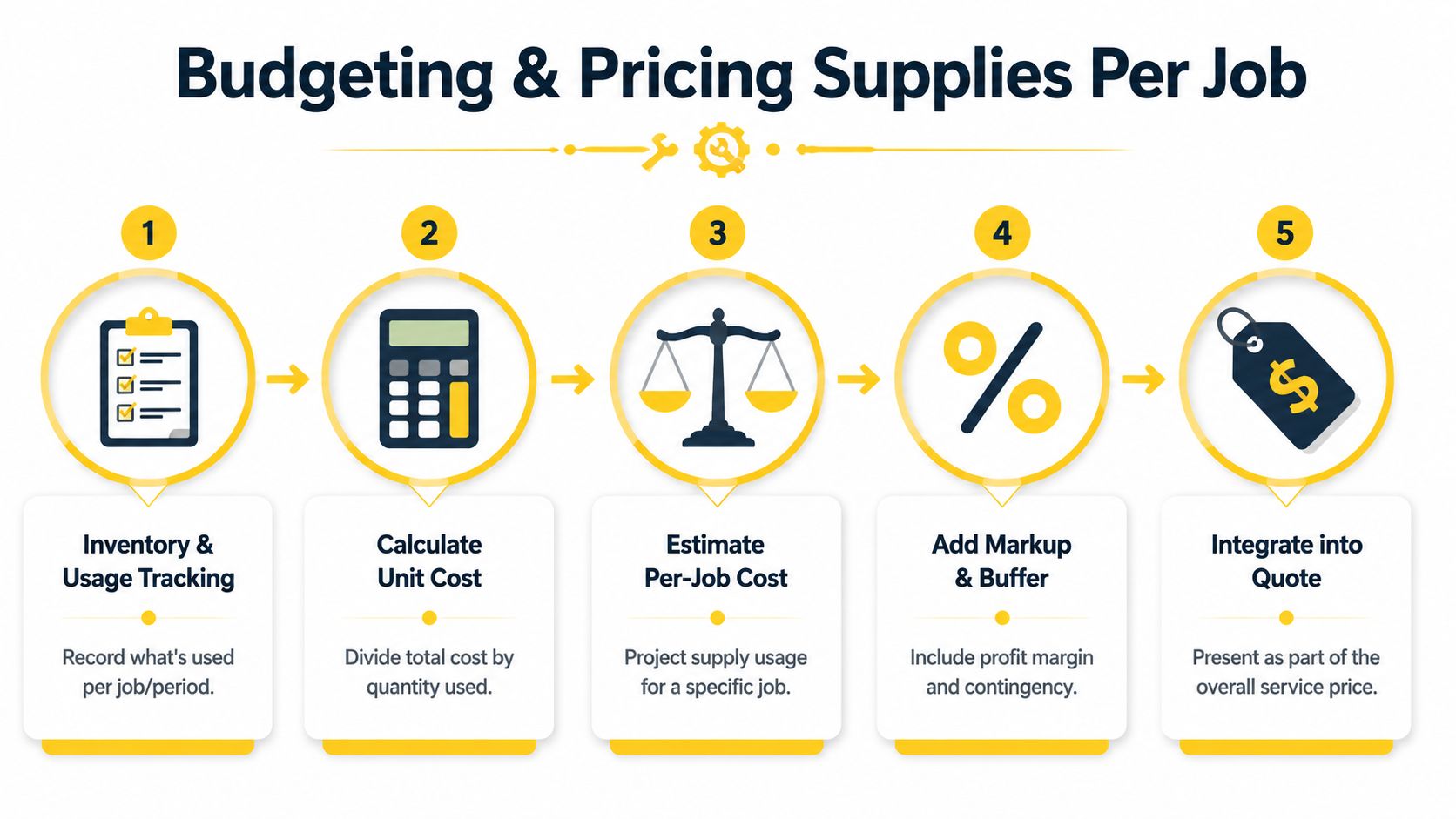
Supply budgeting works best when it matches how you sell and deliver service. I price supplies by service type and job condition, not by a flat monthly guess. That gives you a clearer view of which homes are easy to maintain and which ones steadily consume chemicals, pads, gloves, and vacuum wear.
A practical framework:
Start simple. A basic sheet with item, purchase cost, expected usage, and replacement cycle is enough to show where money leaks out.
Include the obvious consumables, but also track the items owners tend to ignore until profit is already slipping:
The point is not to itemize every rag on an invoice. The point is to recover the actual cost of delivering the service standard you promised.
Many cleaning businesses underbid. A pet home may need extra vacuum passes, lint rollers, deodorizing product, and faster filter replacement. An allergy-sensitive client may require a separate set of low-scent or hypoallergenic products and stricter cloth control. A home with delicate finishes can slow the job and force you into specialty cleaners that cost more and cover less area.
Those differences should show up in pricing.
If your current numbers cover labor and drive time but leave overhead too loose, use a practical overhead cost calculation guide for cleaning businesses to tighten the math behind your estimate.
The best estimate accounts for how the home will actually be cleaned, not how you hope the job will go.
Consistency matters. If your intake process captures square footage, flooring mix, pets, surface sensitivities, and client product preferences the same way every time, you can assign supply costs with far less guesswork. Estimatty is one example of a tool that helps standardize those job inputs. The value is not the software itself. The value is building a repeatable pricing process that does not depend on memory.
Treat supplies as controlled job inputs, just like labor hours and travel. Once you do that, you can price recurring maintenance cleans differently from first cleans, and you can protect margin on homes that require a customized kit.
That approach helps you:
Owners who measure house cleaning business supplies this way usually get two benefits at once. Service quality stays steadier because teams have the right materials for the home, and pricing gets more accurate because those material choices are built into the estimate from the start.
A cleaner grabs an unmarked spray bottle from the van, uses it on natural stone, and turns a routine visit into a damage claim. A different crew runs out of fresh microfiber halfway through the day and starts reusing soiled cloths to stay on schedule. Both problems look small in the moment. Both cut into profit fast.
Inventory control, chemical safety, and OSHA habits belong in one system because they affect the same outcome. Consistent work, fewer mistakes, and fewer expensive callbacks. They also matter more when you offer client-specific service. Homes with pets, fragrance sensitivities, delicate finishes, or short-term rental turnover standards require different products, different handling rules, and tighter restocking discipline.
The best inventory systems are built around what your crews clean, not a generic supply checklist. A recurring residential route burns through different items than a move-out team. An Airbnb turnover kit needs faster resets and tighter laundry flow than a home with allergy restrictions.
Start with par levels for the items that can stall a job or force a bad substitute. That usually includes bathroom cleaner, neutral floor solution, glass cleaner, gloves, trash liners, vacuum bags, microfiber, and backup sprayers. Then break those items into two buckets. Core stock goes on every job. Specialty stock only goes out when the work order calls for it.
That structure protects margin. You are not loading every team with stone-safe products, fragrance-free options, pet hair tools, or extra disinfecting supplies unless the home needs them.
For owners tightening up that process, this cleaning supplies list and inventory guide is a practical reference for organizing what belongs in the core kit versus the add-on bin.
Microfiber only works well when the rules are clear and enforced. Color-coding helps prevent cross-contamination. Separate storage for clean and dirty cloths keeps the system honest. Laundry standards matter too. If cloths are washed with too much detergent or fabric softener, they stop performing the way you paid for them to perform.
Keep the rules simple enough that a new hire can follow them on a rushed day:
As noted earlier in the article, professional cleaning companies that use microfiber well treat it as a repeatable process, not just a product purchase.
A cloth system protects both hygiene and labor efficiency. Without it, crews waste time second-guessing and owners absorb the cost of preventable mistakes.
Every bottle in the field should have a label. Every chemical in use should match a current Safety Data Sheet. Every technician should know which products need gloves, which fumes require ventilation, and which combinations are unsafe. That is basic operating discipline.
Store chemicals away from clean cloths, mop heads, and PPE. Keep dilution instructions where crews can see them. If you use concentrates, standardize the mix method so one technician is not making a stronger solution than the next. Overmixed product wastes money and increases risk on sensitive surfaces.
Training should cover real cleaning scenarios, not just a binder on a shelf. Show crews what to use in a pet-heavy home, what to avoid in a house with asthma concerns, and when to switch to a specialty product instead of forcing a general cleaner to do the job. That is how safety ties directly to service quality.
Short-term rentals need the same discipline, often on tighter turn windows. If that is part of your business, this guide on how to boost Airbnb reviews with cleaning is a useful example of how supply choices and process standards affect guest experience.
The strongest cleaning businesses don't treat supplies like a shopping errand. They treat them like an operating system. That shift changes everything from job speed to safety to how confidently you send estimates.
A lean core kit keeps daily work fast. A client-specific add-on system prevents damage and waste. Smart sourcing protects cash flow. Tracking supply cost per job keeps margins honest. Inventory rules and microfiber discipline keep the work professional when the schedule gets busy.
Pick one improvement and make it real:
Brand matters too. Clients notice when your tools look organized, your products fit their home, and your process feels deliberate. That's part of your market position, and this guide to branding for cleaning services connects that operational discipline to the way clients perceive your business.
If you also handle short-term rental turnovers, this practical piece on how to boost Airbnb reviews with cleaning is worth reading because supply choices in that segment directly affect guest experience, reset speed, and consistency.
For more practical ideas on operations, pricing, and growth, the blogs at estimatty.com/blog and get.pipehirehrm.com/blog are both worth keeping in your regular reading stack.
If you want tighter, more consistent estimates that reflect the actual cost of labor, surfaces, and supply use, Estimatty gives cleaning businesses a structured way to capture job details and send estimates without relying on memory or callback delays.