October 15, 2026
7 Anchorage House Cleaners: Pricing and Booking Tips
Compare seven Anchorage house cleaners by service type, estimate process, and booking ease, with tips for choosing a local team.
Thursday, July 16, 2026
Homeowners are asking ChatGPT and Google AI for a cleaner near them. Here's why your website is invisible to AI, and how to get recommended instead.
.png)
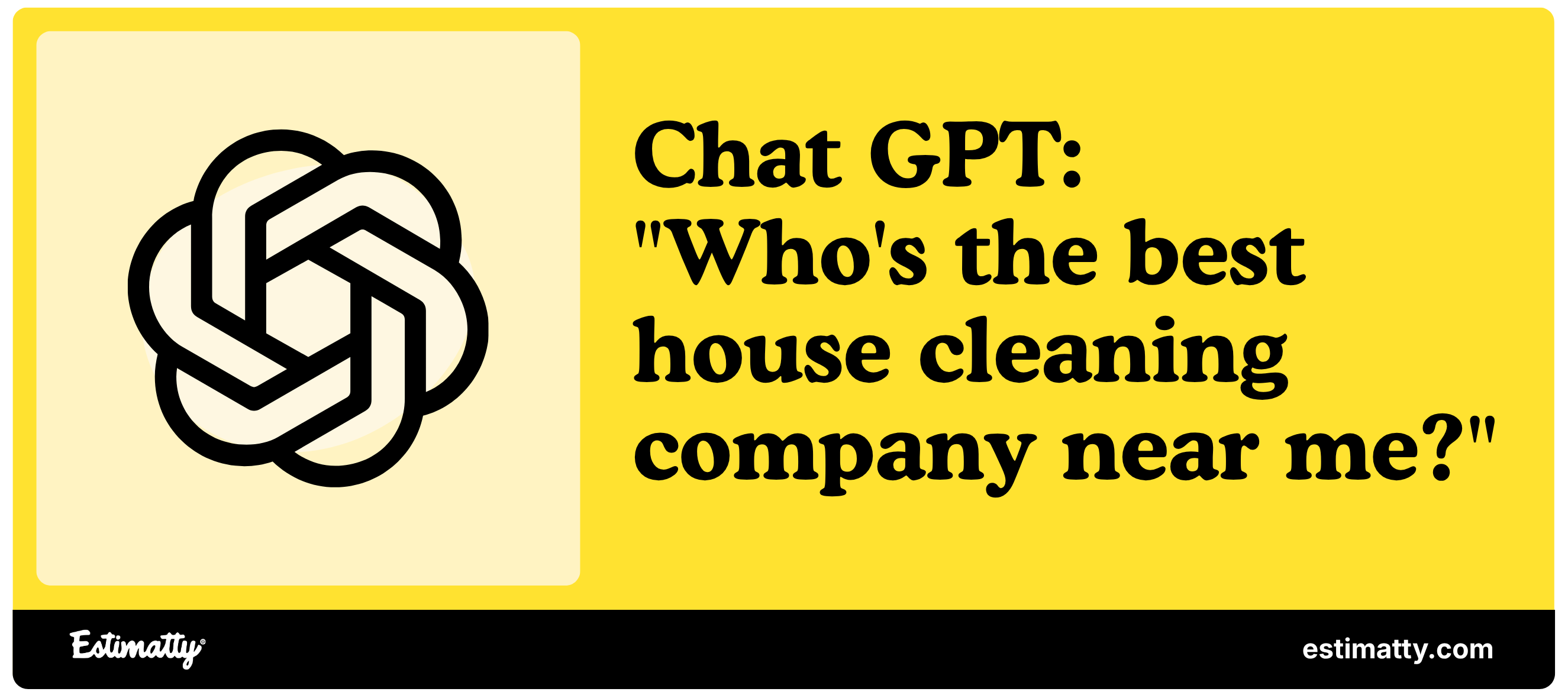
It's 9:47 on a Tuesday night. A homeowner two miles from you picks up her phone and asks ChatGPT: "Who's the best house cleaning company near me?"
She's not going to scroll Google. She's not going to fill out four estimating forms and wait. She's going to go with the first or second name the AI gives her. Nobody reads to number seven.
Three names come back. Yours isn't one of them. And it's not because your cleaning is worse.
It's because the AI literally could not read your website. If you want to get your cleaning business recommended by AI, this is the problem you have to fix first, and almost nobody knows they have it.
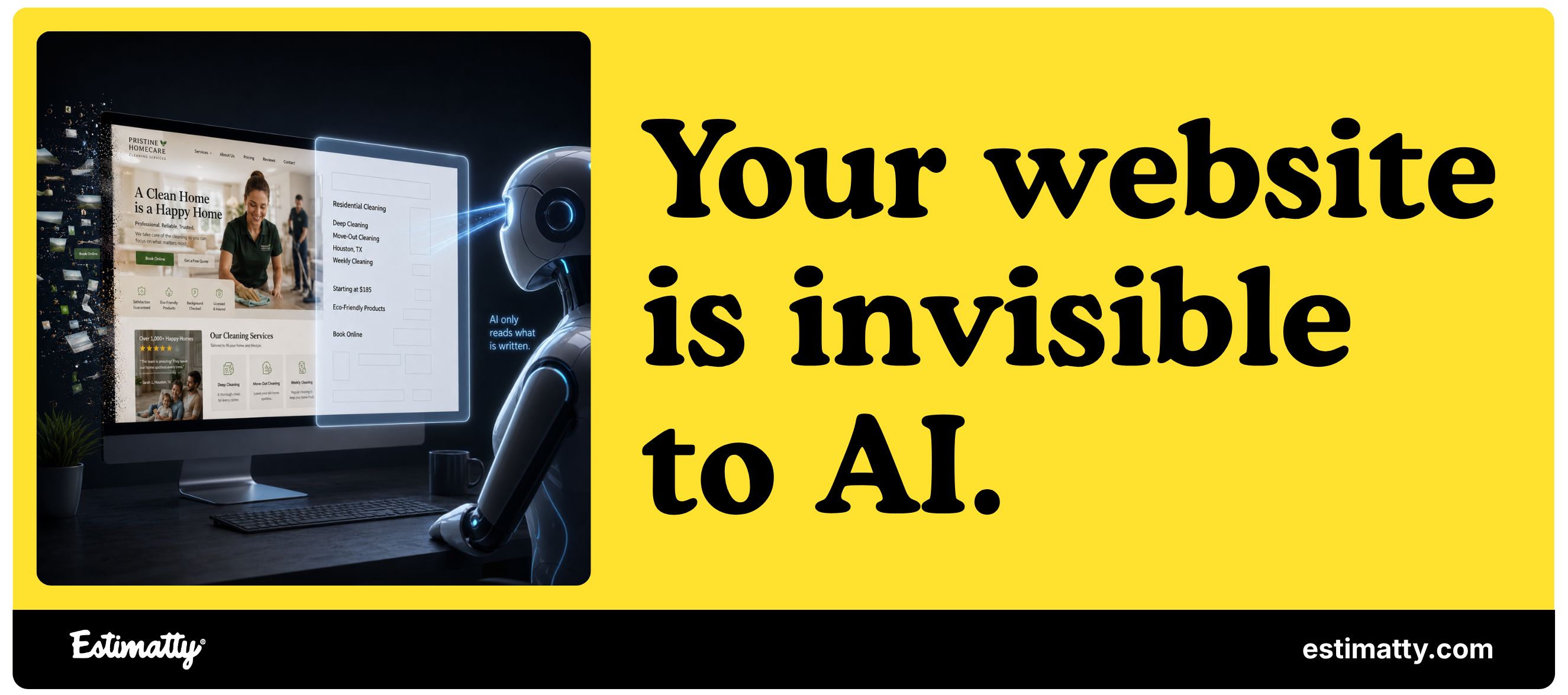
Here's the part that stings.
Before an AI assistant answers a question about your business, it does not see your page the way you do. The design, the warm photos, the five-star badges, the animations, all of it gets thrown out. What's left is the plain text. And the plain text is all the AI reads.
If your services, your city, and your prices aren't written there as plain text, the AI never had them. It can't recommend what it can't read. So it recommends the companies that spelled it out, or worse, it makes a guess and hands the homeowner to someone else.
And this isn't some small side door you can ignore. Homeowners now ask ChatGPT and Perplexity, or they read Google's AI Overview and never scroll down to the blue links at all. A whole buying channel is forming right now, and most cleaning companies are completely invisible inside it.
About 90% of them still hide behind a "contact us for a quote" form. To an AI, that page says nothing. No service it can name. No city it can match. No price it can quote. A business that can't be read is a business that can't be recommended.
And here's what makes it quietly brutal: you never see it happen.
There's no missed-call alert for a customer the AI simply never mentioned you to. No unanswered form to feel guilty about. Just a slow, silent leak. The feeling that you're working as hard as you ever have, your reviews are five stars, your work is genuinely good, and somehow the phone isn't ringing like it should. You run the math on your ad spend at 11pm and it doesn't add up, because the leak isn't in your ads. It's in a channel you didn't even know you were in, let alone losing.
That's the part that keeps you up. Not that you're bad at this. That you might be doing everything right and still quietly falling behind, with no way to see it.
Now picture the other version of that Tuesday night.
The homeowner asks the exact same question. This time the AI answers with your name, your city, your starting price for a deep clean, and a line about your 22 years in the business.
She didn't go looking for you. Your name came up. At 9:47pm. While you were asleep.
That's what a page written to be understood actually does. It isn't prettier than everyone else's. It's readable, by humans and by machines, and in 2026 that's the whole game.
This is exactly what the Estimatty AI Local Page is built to do. It's a complete landing page for your business, structured so ChatGPT, Perplexity, and Google's AI can actually read what you do, where you work, and what you charge.
A few things make it work, and each one maps to something the machine is looking for:
Want to see one that's already live? Here's a real cleaning company's page, published and public right now: a Dallas cleaning company's AI Local Page. Read it top to bottom the way a machine would. It says what they do, where they do it, and what every service starts at, all in plain words a homeowner and an AI can both follow. No form. No "we'll get back to you." Just answers.
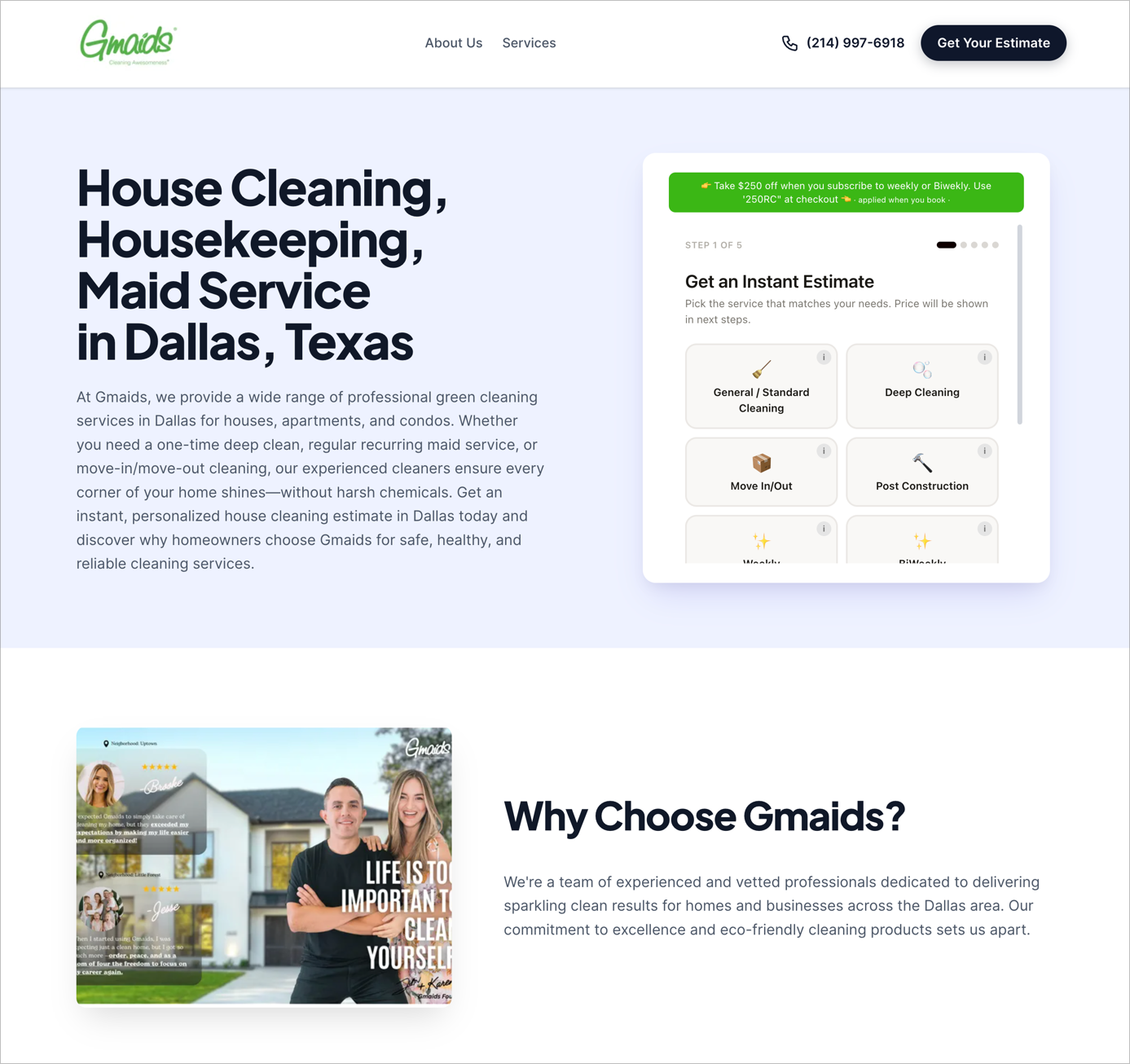
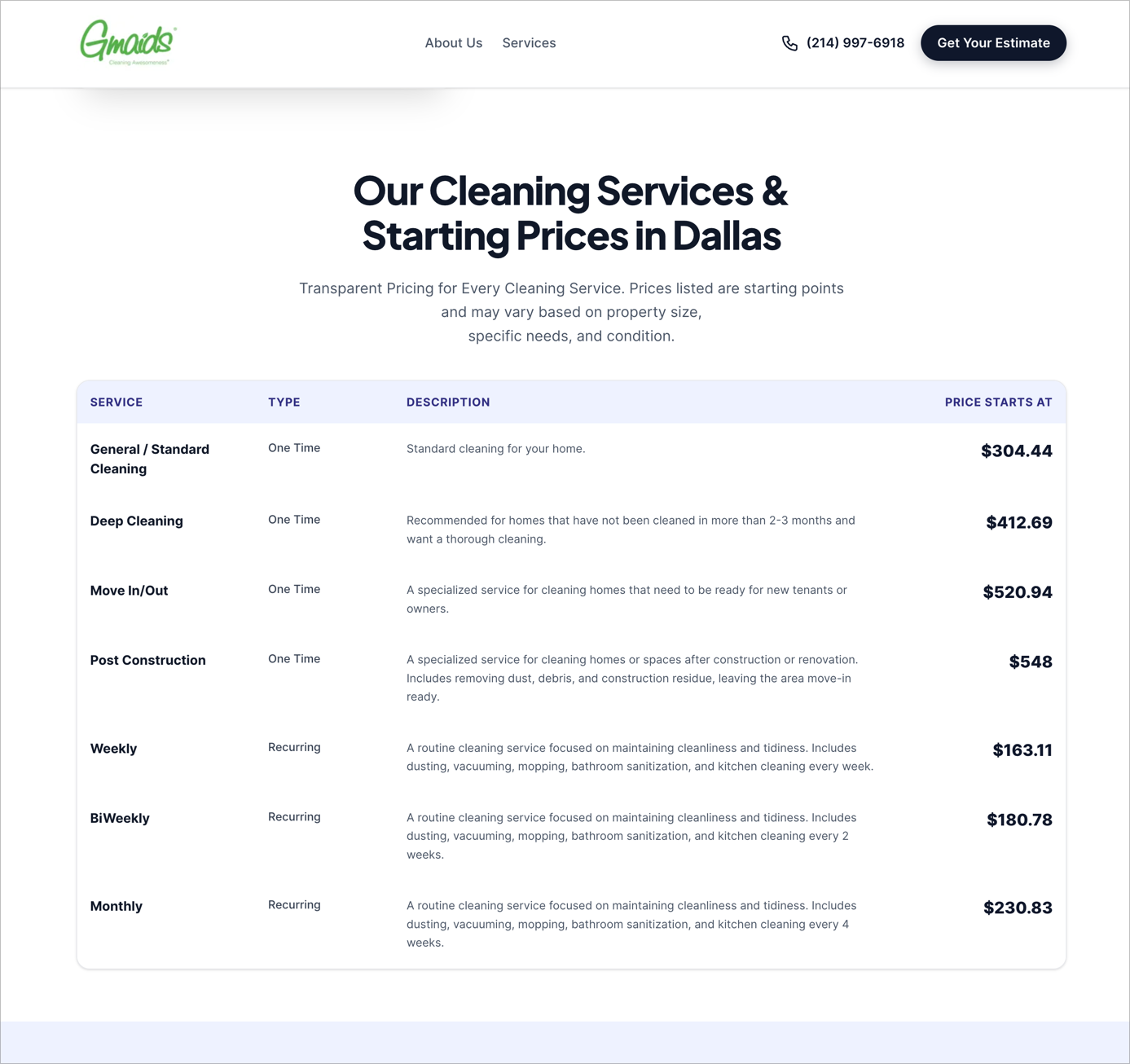
Then you publish, and you get a clean URL like that one. That link is the second half of the job. You drop it on your Google Business Profile, your Instagram bio, your paid ads, your Yelp. Every place it lives makes the AI more confident that when someone in your city needs a cleaner, you're the name that comes up.
Start with your Google Business Profile. If you only do one, do that one.
It isn't a web page. Nobody wakes up wanting a web page.
Strip away the mechanics and here's what a readable page actually buys you:
.png)
Picture next spring.
A homeowner in your city asks her phone for a cleaner. Your name comes up first, with your price and your years in business sitting right there in the answer. She books before you've had your coffee. It happens on a Tuesday you won't even remember, because you didn't have to be there for it.
The front door works without you now. You've stopped wondering whether you're losing leads, because you can watch yourself winning them. You get your evenings back. The business moves forward while you're at dinner, or asleep, or just not thinking about work for once.
That's not a fantasy. That's what happens when the machine can finally read you.
Now picture the other next spring.
Nothing dramatic. You're still good at this. Your reviews are still great. But the homeowners asking AI keep getting handed the same few names, and yours still isn't one of them. The faster, more visible companies quietly become the default in your town, one recommendation at a time. You stay busy. You just stop growing. And you never quite figure out why.
The only reason that first spring is even on the table is timing. Almost nobody has done this yet, so first still means first.
So this was never really a choice about an AI tool. It's a choice about which version of next year you want to be standing in.
You've spent 22 years earning the right to be the answer to "who should I hire." Don't let an algorithm skip you because your website never said so in words it could read.
Build a page the AI can actually read. Put your name where homeowners are already asking.