October 12, 2026
Cleaning Office Prices: A Practical Pricing Guide for 2026
Learn how cleaning office prices really work in 2026. Compare per square foot, hourly, and monthly models, plus tips to estimate and present winning quotes.

Sunday, July 12, 2026
Looking for a free estimating app? Discover the hidden costs of 'free' and learn what features your cleaning business truly needs to stop losing leads.

You're probably looking for a free estimating app because your current process is wearing you out.
A lead comes in after dinner. Another calls during a job. Someone fills out your website form at 10:30 p.m. and wants pricing now, not tomorrow. You miss the call, reply too late, and by morning the job is gone. That's not a marketing problem. It's a response-time problem, and for cleaning companies, that problem turns into lost bookings fast.
A lot of owners try to patch it with whatever “free” tool they can find. That instinct makes sense. But in this category, free often costs more than it saves.
You're on a ladder, under a sink, in the car between jobs, or finally sitting down to finish payroll. Then the phone rings. A homeowner wants pricing for recurring service, maybe a move-out, maybe a deep clean add-on, and they want an answer while they're still motivated to book.
You send them to voicemail because you can't stop what you're doing. Or you text back later with a rough number based on memory. Or you promise to send an estimate in the morning and hope they wait.
Most won't.
That's why so many cleaning business owners start hunting for a free estimating app. They want something simple that can answer leads faster than they can. They want fewer missed opportunities, less back-and-forth, and a process that doesn't depend on them personally catching every inquiry.

This shift isn't small. The global construction estimating software market was valued at USD 1.5 billion in 2024 and is projected to reach USD 2.62 billion by 2030, according to Grand View Research's construction estimating software market report. That's construction data, but the lesson applies directly to cleaning. Owners in service businesses are moving away from manual calculations because manual systems are slow, inconsistent, and hard to scale.
Cleaning companies feel this pain even more because most leads expect speed, not a site visit and a callback tomorrow.
If you're still pricing jobs from memory, scribbled notes, or a basic form that dumps requests into your inbox, you're making sales harder than they need to be. A better process starts with standardizing how you calculate rooms, square footage, condition, frequency, and add-ons. If you want a practical example, this cleaning estimate calculator guide shows what a more structured estimating workflow looks like.
A slow estimate doesn't just delay the sale. It hands the lead to the company that answers first.
The attraction is obvious.
That's the good part. The bad part shows up after you've built your workflow around the app.
Most free estimating apps aren't free in the way owners think. They're either a trial, a stripped-down freemium product, or a bare-bones tool that leaves the core work on your shoulders.
That distinction matters because setup time is expensive. Training your office manager, entering pricing rules, writing service descriptions, and adjusting workflows all take hours. If the tool falls apart after you've invested that time, you didn't save money. You wasted momentum.
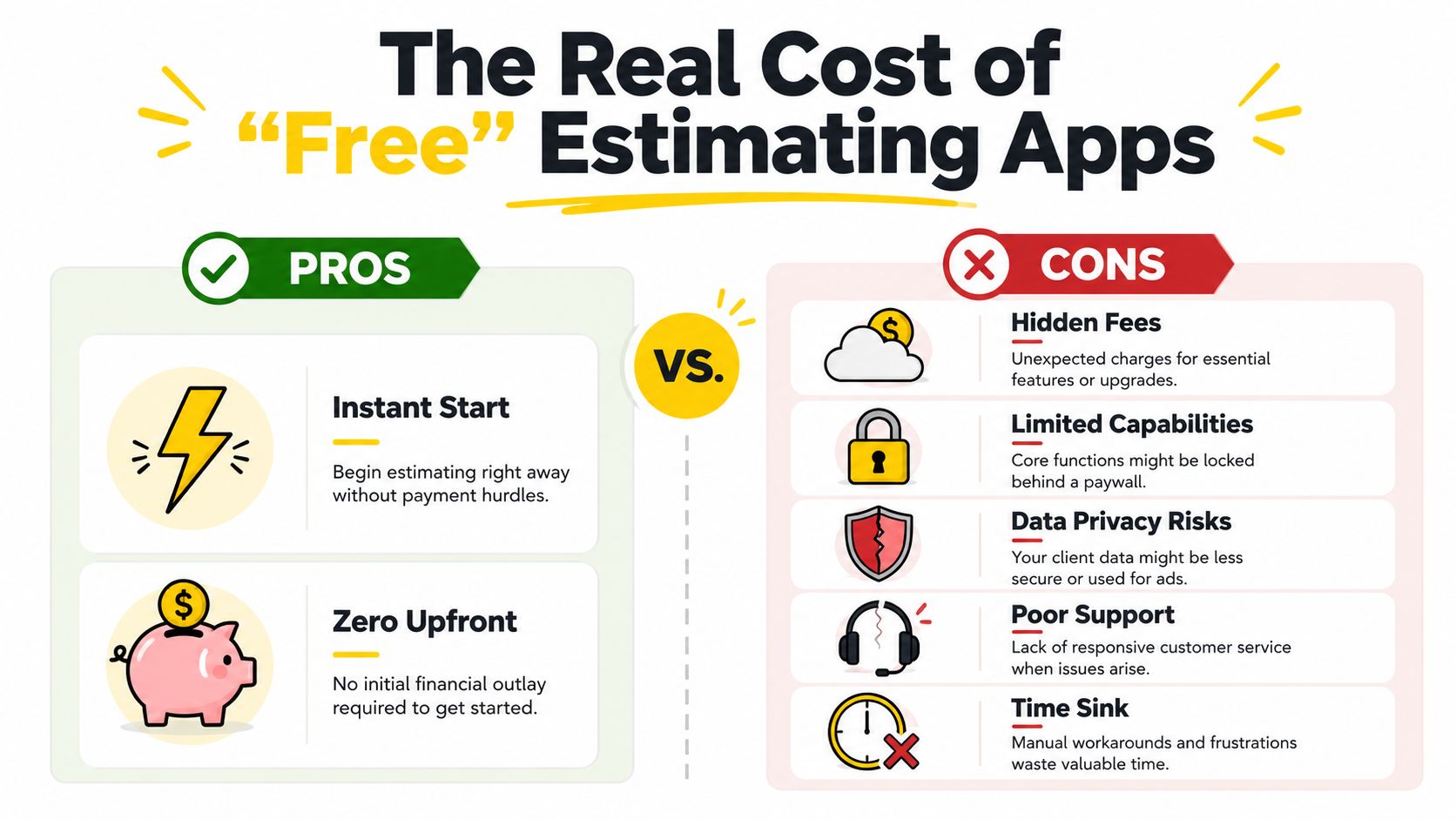
Here's what “free” usually means in the software market.
Free trial
This is the most common version. You get the polished interface, maybe the premium features, then the clock runs out. According to Build Vision AI's review of free estimating software, most professional free estimating platforms are limited-time evaluations that typically last 14 to 30 days. After that, small businesses often have to stop using the tool or start paying.
Freemium
You can stay on the plan, but the features you need are locked. Maybe you can send estimates, but can't automate follow-up. Maybe you can collect lead info, but can't customize pricing logic. Maybe branding removal, integrations, or SMS delivery all sit behind a paywall.
Free forever, but basic
These tools usually handle simple line-item entry and not much else. They don't solve inconsistent pricing, after-hours response, or team-wide standardization. They just digitize your manual process.
The core problem isn't paying for software. Good software should earn its keep. The fundamental problem is building your sales process around a tool that can't support how your cleaning company sells.
Practical rule: If a free estimating app still depends on you to manually review every request, it isn't fixing your bottleneck.
Owners make the same mistake with websites all the time. They pick the free or lightweight version first, then realize later that key business functions require more capability. The same logic applies when you're understanding Elementor versions for your site. Software tiers shape what your business can and can't do, and the cheapest option often creates the most friction.
If you're comparing lightweight tools, this roundup of the best free cleaning estimate calculator options is a useful starting point. Just don't confuse “available at no cost today” with “built for long-term growth.”
Use this quick screen before you set anything up:
If you can't answer those cleanly, the app isn't free. It's a temporary patch.
A basic estimating app feels productive because it replaces paper. That doesn't mean it protects profit.
In residential cleaning, the damage usually comes from two places. First, you respond too slowly. Second, your pricing changes depending on who answers, what mood they're in, or how rushed they feel. That combination leaks revenue every week.
According to Estimatty's residential cleaning data, businesses lose approximately 20 to 30% of potential revenue due to missed calls and delayed responses, and 62% of customers expect an estimate within 15 minutes and will switch to a competitor if they wait longer. That's the core issue right there. A generic free estimating app doesn't automatically solve speed. In a lot of cases, it just gives you a prettier place to be slow.
When someone is ready to ask for pricing, they're already shopping. They've probably visited more than one cleaning company. They may be comparing recurring service, a one-time reset clean, or urgent move-out help.
If your process looks like this, you're losing work:
That isn't a tech stack. It's a delay stack.
The second issue is underpricing. Owners often rely on memory or instinct when they're rushed. One customer gets charged based on square footage. Another gets charged based on bedroom count. A third gets a “friendly” number because the owner doesn't want to lose the job.
That kind of estimating doesn't scale. It also makes hiring harder because your team can't follow rules that only exist in your head. If you're still trying to tighten labor and margin control, this guide on how to calculate labor cost per hour is worth reading alongside your pricing process.
If two people in your company would price the same home differently, your system is costing you money.
A lot of free tools are really just digital forms with nicer buttons. They don't standardize your logic. They don't guide the customer through the right questions. They don't account for urgency, condition, service frequency, or profitable add-ons in a structured way.
So the owner still steps in. The admin still edits numbers. The customer still waits.
And the business still pays for that delay with lost jobs and thinner margins.
If you're shopping for a free estimating app, stop asking whether it can send an estimate. That's the wrong bar. Ask whether it can help you win profitable work without dragging you back into the process every time.
Recent 2024 to 2025 data shows AI-powered estimating tools reduce quote-to-book time by 76% and increase conversion by 34%, as discussed in this video on AI estimating workflow performance. The useful takeaway isn't hype. It's that speed and consistency matter, and tools built for automation outperform tools built for manual entry.
A serious cleaning business needs more than a contact form with prices attached.
| Feature | Why It's Critical | Meets Requirement? (Yes/No) |
|---|---|---|
| Custom pricing rules | You need logic for recurring service, one-time cleans, deep cleans, move-outs, and condition levels. | Yes/No |
| Add-on handling | Extras like ovens, fridges, windows, or inside cabinets should increase ticket value automatically. | Yes/No |
| Instant delivery by SMS and email | Fast delivery keeps the lead warm and reduces follow-up lag. | Yes/No |
| Website integration | Your app should work where leads already find you, not force them into a clunky side process. | Yes/No |
| Mobile-friendly customer flow | Homeowners request estimates from their phones. A bad mobile experience kills completion. | Yes/No |
| Team-wide consistency | Your office staff should produce the same estimate you would. | Yes/No |
| Calendar or CRM connection | Good systems reduce duplicate entry and handoff mistakes. | Yes/No |
| Lead capture with service details | You need square footage, room counts, frequency, condition, and notes in one place. | Yes/No |
| Follow-up support | If the prospect doesn't book immediately, your system should make next steps easier. | Yes/No |
| Easy setup | You don't need a month-long software project. You need something your team will actually launch. | Yes/No |
Some features sound nice but don't change the business. Others directly affect revenue.
Look for these first:
If you care about the mobile side of this decision, Bruce and Eddy on mobile app development is a useful read because it highlights the usability issues that make business apps feel smooth or frustrating on a phone.
The right app doesn't just calculate numbers. It removes hesitation for the buyer and guesswork for your team.
Here's a simple test. If a prospect asks for pricing at night, can your system collect the details, apply your rules, and send a usable estimate without waiting for you?
If the answer is no, keep shopping.
You can compare broader software options in this guide to the best cleaning app tools for service businesses. Use it as a filter, not a shopping spree. More features don't matter if the sales workflow is still manual.
A lead comes in at 8:47 p.m. The prospect wants a price tonight, checks your site on their phone, and is ready to book if the process feels easy. If your estimating setup still depends on you replying tomorrow, implementation is already costing you money.
Set this up like a sales process, not a side project. The goal is simple. Give buyers a fast answer, keep your pricing consistent, and stop making your team rebuild the same quote from scratch.
Start with your current quoting habits and turn them into fixed rules. Do not reinvent pricing during setup. That slows the project down and creates confusion.
Write down how you price the jobs you sell every week:
If your estimator lives in your head, your business has a bottleneck. Fix that first.
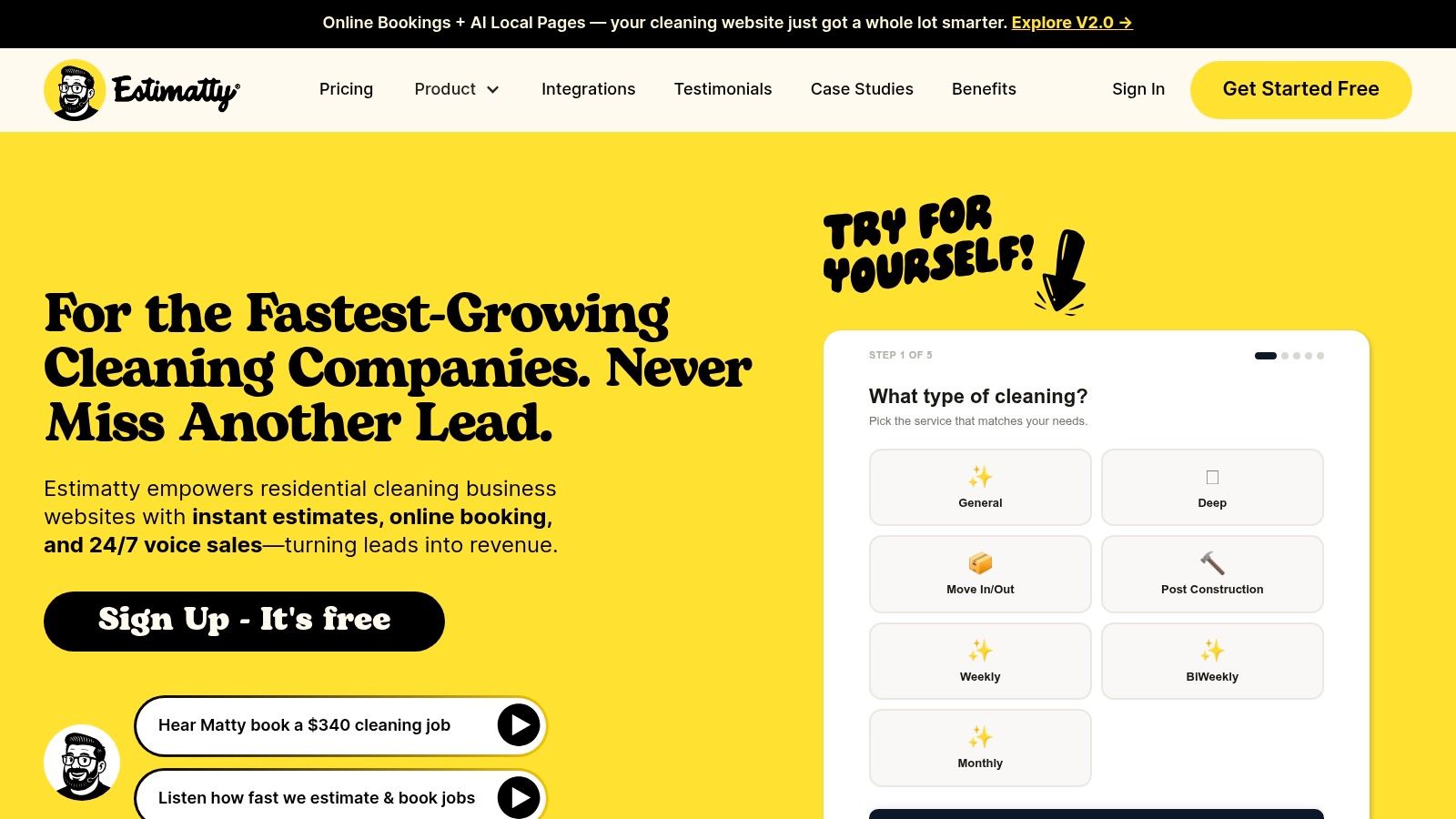
One purpose-built option, Estimatty, lets cleaning companies customize pricing, place a no-code widget on their site, and send estimates by web or voice interactions based on the rules the owner sets. If you want to see what that type of setup looks like, review this guide to AI estimating software for cleaning businesses.
Your estimating system should live inside your existing sales flow. Put it on your website, connect it to your inquiry path, and make sure it works well on a phone.
Keep the path short. Ask only for the details that affect price or qualification. Every extra field gives the prospect another reason to quit.
This also forces discipline on your side. Once the system is live, your team stops freelancing prices and starts following one process.
Run test requests before launch. Do it after hours. Do it from a mobile phone. Do it with a straightforward recurring clean and then with a messier job that needs exceptions.
Use these test scenarios:
Look for the weak spots fast. Missing questions, confusing wording, awkward price jumps, and delayed follow-up all reduce conversions.
A quick walkthrough helps if you want to see how a modern setup looks in practice.
Launch the simplest version that can price common jobs accurately and respond without manual effort. Every extra week spent “planning” is another week of lost estimates, slow follow-up, and leads cooling off.
At 8:30 p.m., a prospect requests a quote for recurring service. Your free app collects the form, sends a vague notification, and waits for someone to deal with it in the morning. By then, the prospect has already heard back from a competitor with a clear price and a booking link.
That is the true cost of free.
Owners get stuck on monthly software price and ignore the revenue leaking out of slow follow-up, inconsistent quoting, and missed add-ons. A free estimating app often saves a few dollars while costing far more in lost jobs and lower close rates. It keeps you busy instead of making you efficient.
A professional estimating system should earn its keep. It should answer instantly, apply your pricing rules the same way every time, account for service variations without manual math, and turn interest into booked work while your team is cleaning, sleeping, or off the clock.
Use this checklist:
AI automation matters because it fixes the expensive part of the process. It removes delay, cuts pricing drift, and gives prospects an answer while intent is still high. If you want a clear example of what that looks like, read this guide to AI estimates software for cleaning businesses.
You should also keep learning. Estimatty's blog covers practical ways to improve estimating, follow-up, and growth for cleaning companies. Hiring matters too, as noted earlier, because better estimating usually exposes staffing gaps fast.
The right system is the one that helps you quote faster, price correctly, and book profitable work without dragging the owner back into every lead.
If you are done patching your sales process with forms, callbacks, and rough pricing, take a look at Estimatty. It is built for cleaning businesses that want instant, consistent estimates through web and voice without making the owner chase every lead manually.