
October 12, 2026
Cleaning Office Prices: A Practical Pricing Guide for 2026
Learn how cleaning office prices really work in 2026. Compare per square foot, hourly, and monthly models, plus tips to estimate and present winning quotes.

Tuesday, April 14, 2026
Stop guessing. Find the best cleaning app to automate scheduling, estimates & payments. Our 2026 review covers top business tools, from CRM to AI estimators.
.png)
Most owners looking for the best cleaning app are stuck in the same spot. Leads come in from your website, text, voicemail, and Google Business Profile. Your team needs schedules, reminders, invoices, and follow-up. You also need fast estimates, because the first company to respond usually wins the job.
That’s why a simple top-10 list doesn’t help much. Cleaning businesses rarely run well on one app alone. They run on a stack. One system handles operations. Another handles instant estimates. Another helps with hiring. If you buy the wrong “all-in-one,” you usually end up paying for features you won’t use while still missing the one function that fixes your bottleneck.
The house cleaning app market is projected to grow from USD 0.33 billion in 2025 to USD 0.61 billion by 2033, according to house cleaning app market projections. That tracks with what owners already feel on the ground. Buyers expect mobile booking, recurring scheduling, and fast communication.
If you’re still piecing things together with paper notes, generic calendars, and slow follow-up, start with a system that fits how you sell and deliver work now. Then add specialized tools that provide an advantage. For example, if your team still sends manual pricing, it helps to review proven cleaning service quote templates so your estimates stay consistent until you automate them.
Below is the practical version. Not just “best cleaning app” in theory, but which apps make sense for solo cleaners, growing maid services, and multi-crew operations.
Jobber is the safe pick when you want one platform to run the day-to-day without fighting the software.
For cleaning businesses, that matters. A lot of field service apps were built for plumbers and electricians first, then stretched toward cleaning later. Jobber still feels broad, but its scheduling, invoicing, payments, and customer communication are polished enough that most cleaning companies can operate inside it without too many workarounds.
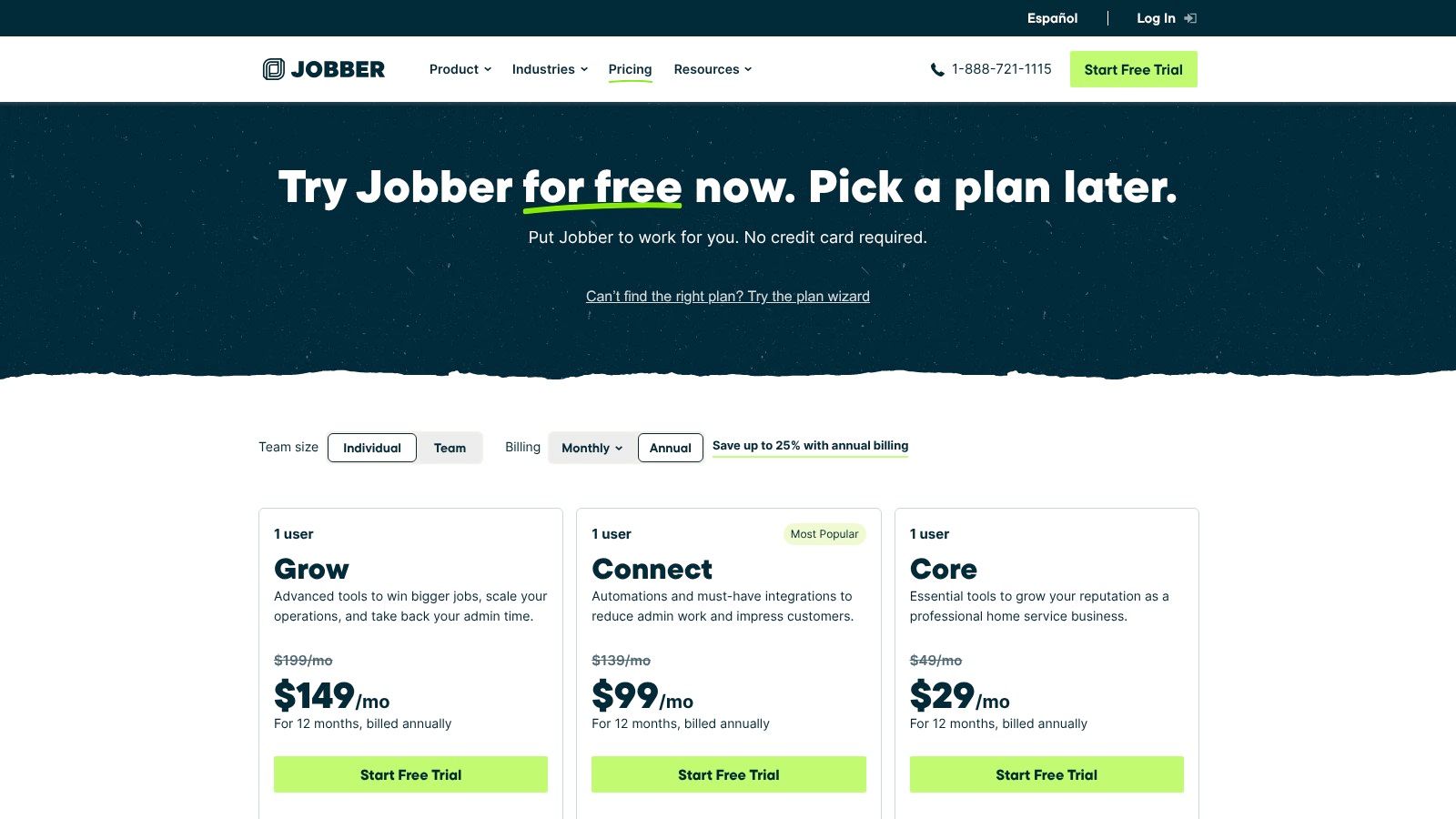
Jobber fits solo owners, admin-heavy small teams, and multi-crew companies that need structure fast. The online booking tools, customer hub, estimate follow-ups, route tools, GPS activity tracking, and QuickBooks Online sync cover the core workflow most cleaners need.
I like it most for businesses that need operational clarity more than niche maid-service logic. If you’re dispatching jobs every day and want fewer missed steps, it’s strong.
A few standouts:
If you’re comparing broad platforms, this roundup of best cleaning business software is a useful next step.
Jobber gets expensive when you start stacking add-ons. That’s the part owners miss during the demo. The base product is solid. The “nice, we need that too” extras can push your monthly cost up fast.
Practical rule: If your biggest problem is scheduling and invoicing, Jobber is a strong primary system. If your biggest problem is slow lead response, pair it with a dedicated estimate tool instead of buying every add-on inside your CRM.
It’s one of the best cleaning app choices if you want maturity, clear pricing pages, and a tool your office staff can learn without a long rollout.
Website: Jobber pricing
Housecall Pro tends to win owners who care as much about retention as they do about scheduling.
That’s its edge. Plenty of apps can assign jobs and send invoices. Fewer package in marketing, review management, recurring plans, proposals, and consumer financing in a way that feels connected. For cleaning companies trying to increase repeat business, that matters.
Housecall Pro works well for residential cleaning, carpet cleaning, and service businesses that sell recurring work. The visual price book and online booking setup can make your sales process cleaner. Email and SMS marketing tools also help keep old customers warm without building a separate stack right away.
The strongest fit is the owner who wants one app to handle operations plus customer follow-up.
What it does well:
Housecall Pro can feel affordable at first, then more layered once you realize some advanced capabilities sit behind higher tiers or add-ons. That doesn’t make it a bad choice. It just means you should buy it with a clear process in mind.
If you’re still figuring out your pricing model, this platform can expose the weak spots fast. Good software won’t fix messy service packages.
This is a good app for operators who already know how they sell. It’s less forgiving for owners who are still improvising their workflow every week.
Among best cleaning app options, Housecall Pro is strongest when you want marketing and operations under one roof and you’re willing to pay for that convenience.
Website: Housecall Pro pricing
Launch27 is for owners who want the website to do the selling.
A lot of maid service operators don’t need a giant field service platform first. They need a booking flow that converts. That’s where Launch27 still earns attention. It was built around residential cleaning and recurring service logic, and that focus shows up in the booking experience.
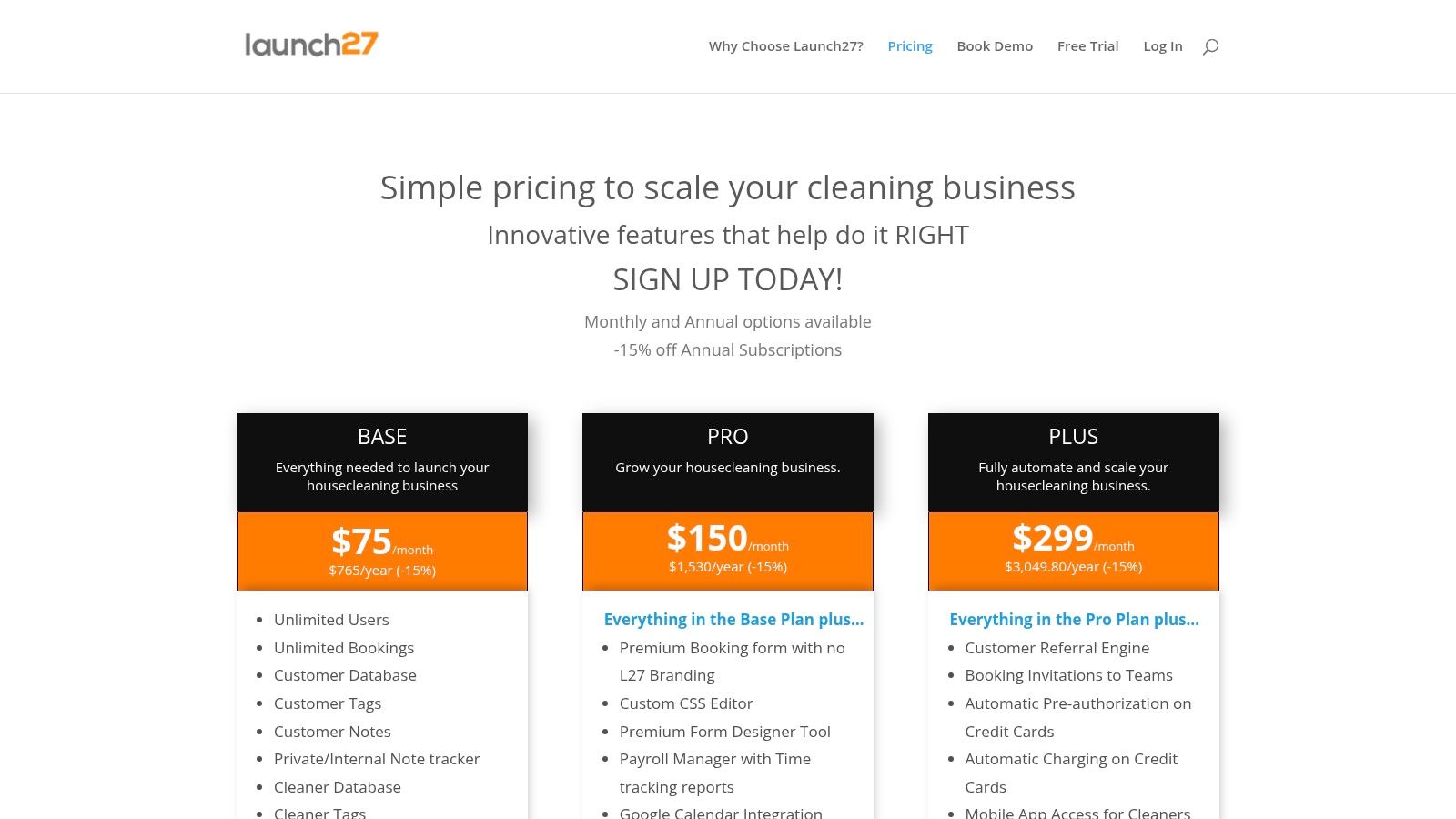
If your website is already getting traffic but too many visitors are dropping off, Launch27 is worth a hard look. The embeddable forms for WordPress, Wix, and Squarespace are useful, especially if you want one-step or two-step flows instead of a clunky contact page.
It also helps that all plans include unlimited users. For cleaning businesses adding office help, virtual assistants, or multiple team leads, avoiding per-seat pricing can keep things simpler.
Useful features include:
Launch27 isn’t the broadest ecosystem. If you want deep integrations and lots of adjacent business functions, Jobber or another larger platform may feel safer. Also, some branding controls and stronger form features are reserved for higher tiers.
Still, there’s a reason cleaning-specific software keeps getting attention. In consumer-facing booking, specialized usually beats generic. That lines up with broader market demand too. Schedule optimization holds a 38% share of the house cleaning app market in 2025, according to the earlier-cited market report, which tracks with the value of recurring scheduling and mobile-first booking in this category.
For the right owner, Launch27 is one of the best cleaning app choices because it helps the website become an actual booking channel instead of a brochure.
Website: Launch27 pricing
ZenMaid feels like software made by people who understand maid service headaches.
That sounds small, but it matters. Some platforms are technically capable and still annoying to use because the workflow assumes a different business model. ZenMaid stays closer to what residential cleaning owners need. Calendar views, dispatching, reminders, invoicing, online payments, and client communication are all there without a lot of extra clutter.
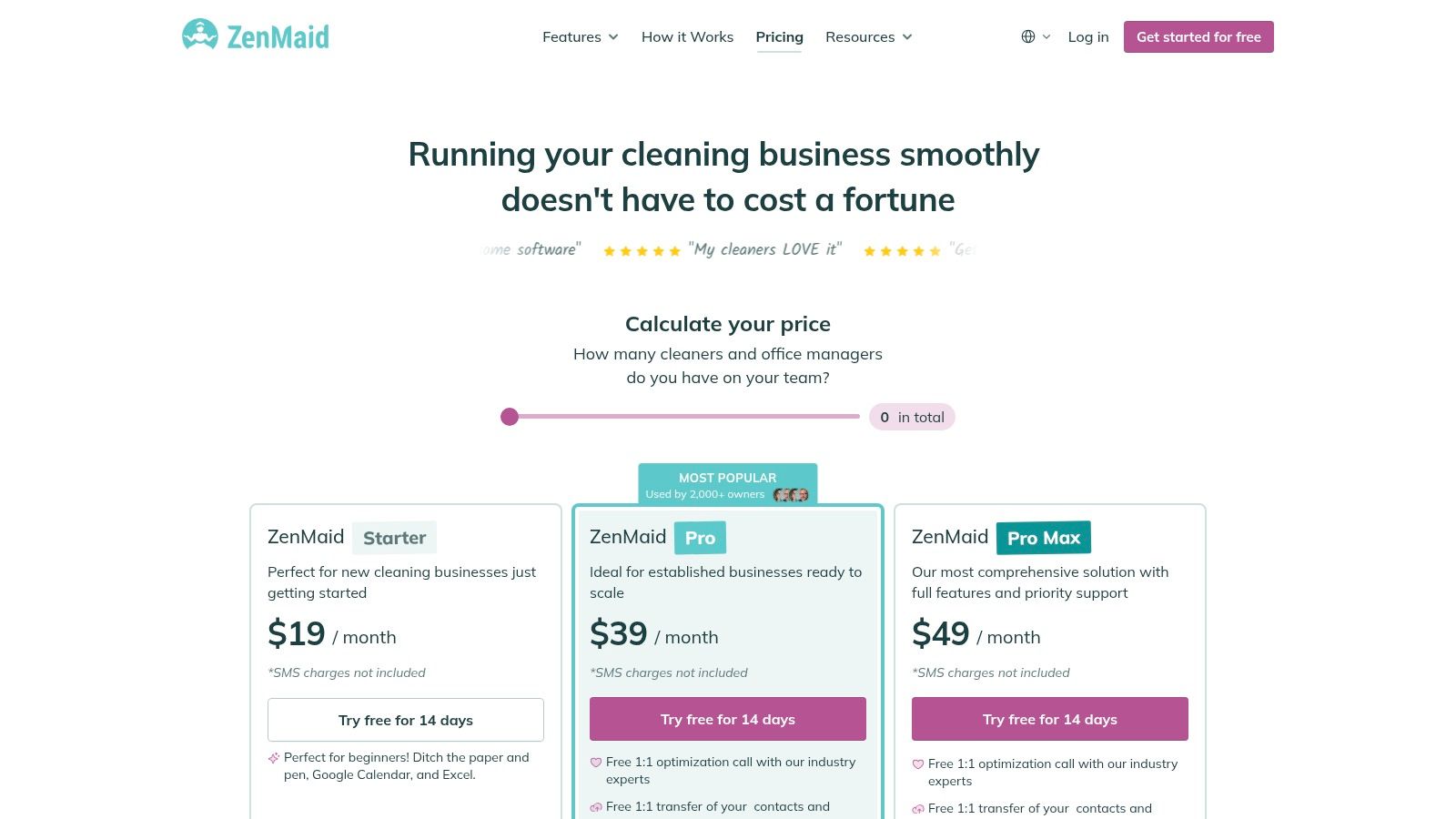
ZenMaid is a good fit for solo owners and small to mid-sized teams that want a cleaning-specific CRM without a heavy setup project. The onboarding is friendlier than a lot of bigger platforms, and the built-in templates for staff and client communication are practical.
It’s especially useful if your business is graduating from spreadsheets and text messages into a real system.
A few strengths stand out:
If your main decision is operational CRM versus specialized sales automation, this guide on the best CRM for cleaning business helps sort that out.
ZenMaid’s starter plan caps appointments, and some functions you may expect, like GPS tracking or broader integrations, aren’t available at the lowest level. SMS charges can also add up.
That said, I wouldn’t dismiss it for being simpler. Simpler is often better in cleaning. Teams don’t use complicated systems consistently.
Tody is often recognized as the top household chore app, and reviews note its indicator-based approach and support for over 45 languages in a consumer context, according to Camille Styles’ cleaning app roundup. ZenMaid is different. It’s built for running a service business, not organizing your home. That distinction matters when owners search “best cleaning app” and accidentally compare household apps with business software.
Website: ZenMaid pricing
MaidCentral is the app you buy when your cleaning company has already become operationally complex.
This is not the tool I’d hand to a brand-new solo cleaner. It’s better suited to established residential maid services with multiple crews, rotational deep cleans, payroll rules, scorecards, reporting needs, and a real office operation behind the scenes.
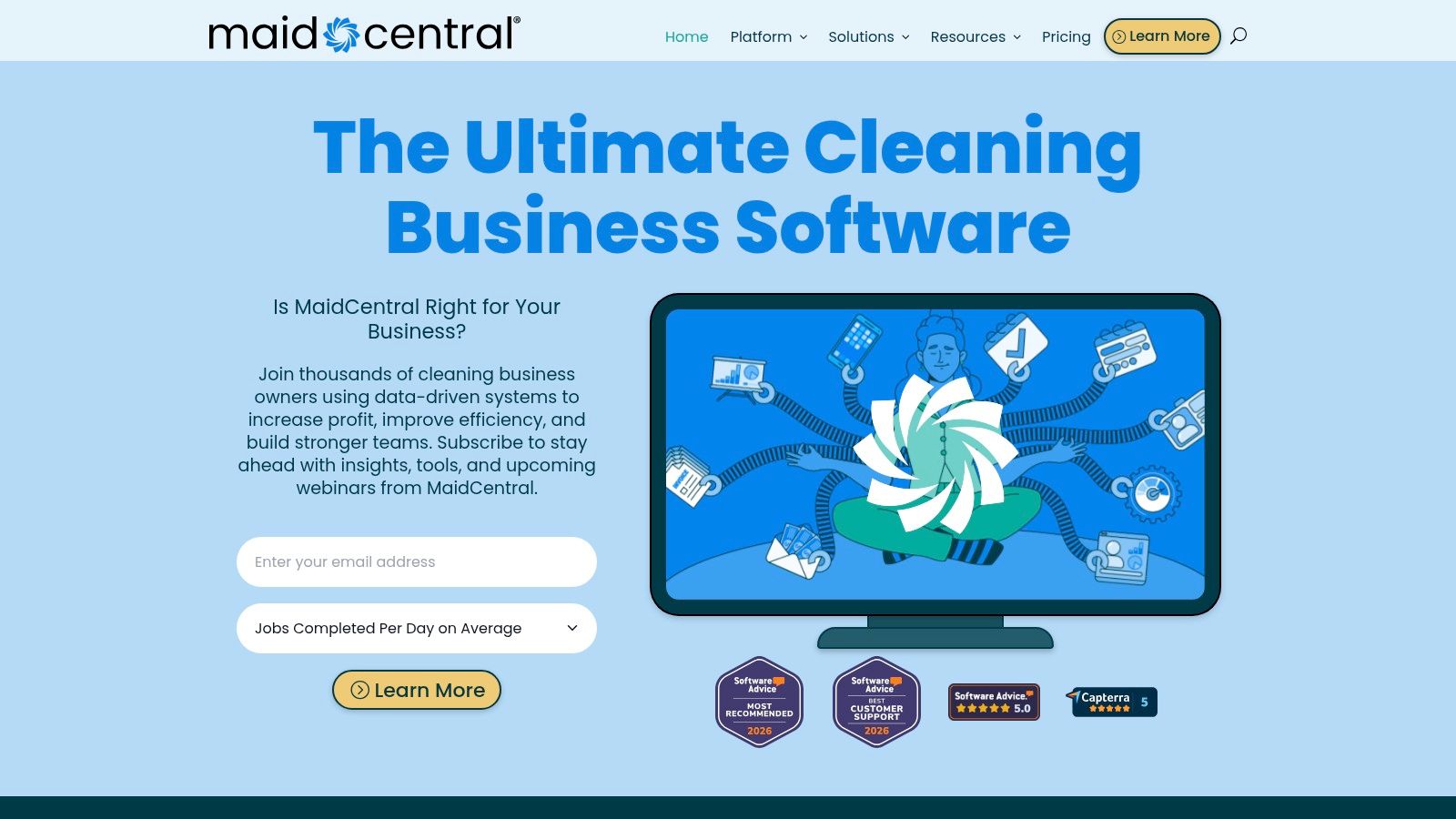
MaidCentral handles the messy parts of scaling a maid company. Rotational deep clean automation, scope-of-work management, batch invoicing, customer satisfaction tracking, integrated sales follow-up, pay rules, and detailed reporting all point to one thing. It was built for operators who need repeatable systems.
If you run one office with several teams, or multiple locations with standardized processes, this kind of depth can save real administrative pain.
What stands out:
For owners tightening crew utilization and recurring routes, this article on scheduling software for cleaning business is worth reading alongside a MaidCentral demo.
Pricing isn’t public, and onboarding won’t be as light as with simpler tools. That’s normal for software in this tier. The question isn’t whether it’s powerful. The question is whether your business is ready to use that power.
If your office still changes pricing manually, confirms jobs by memory, and handles complaints ad hoc, MaidCentral may feel heavier than helpful. Once you have stable processes, it starts making more sense.
For mature maid services, it’s one of the best cleaning app platforms because it handles scale better than lightweight booking tools.
Website: MaidCentral
BookingKoala sits in a very practical middle ground. It gives cleaning companies a website builder, booking engine, and CRM in one package.
That combo is attractive for owner-operators who don’t want to stitch together five tools just to start selling online. It’s not the deepest system in every category, but for many small businesses, “good in one place” beats “best spread across six subscriptions.”
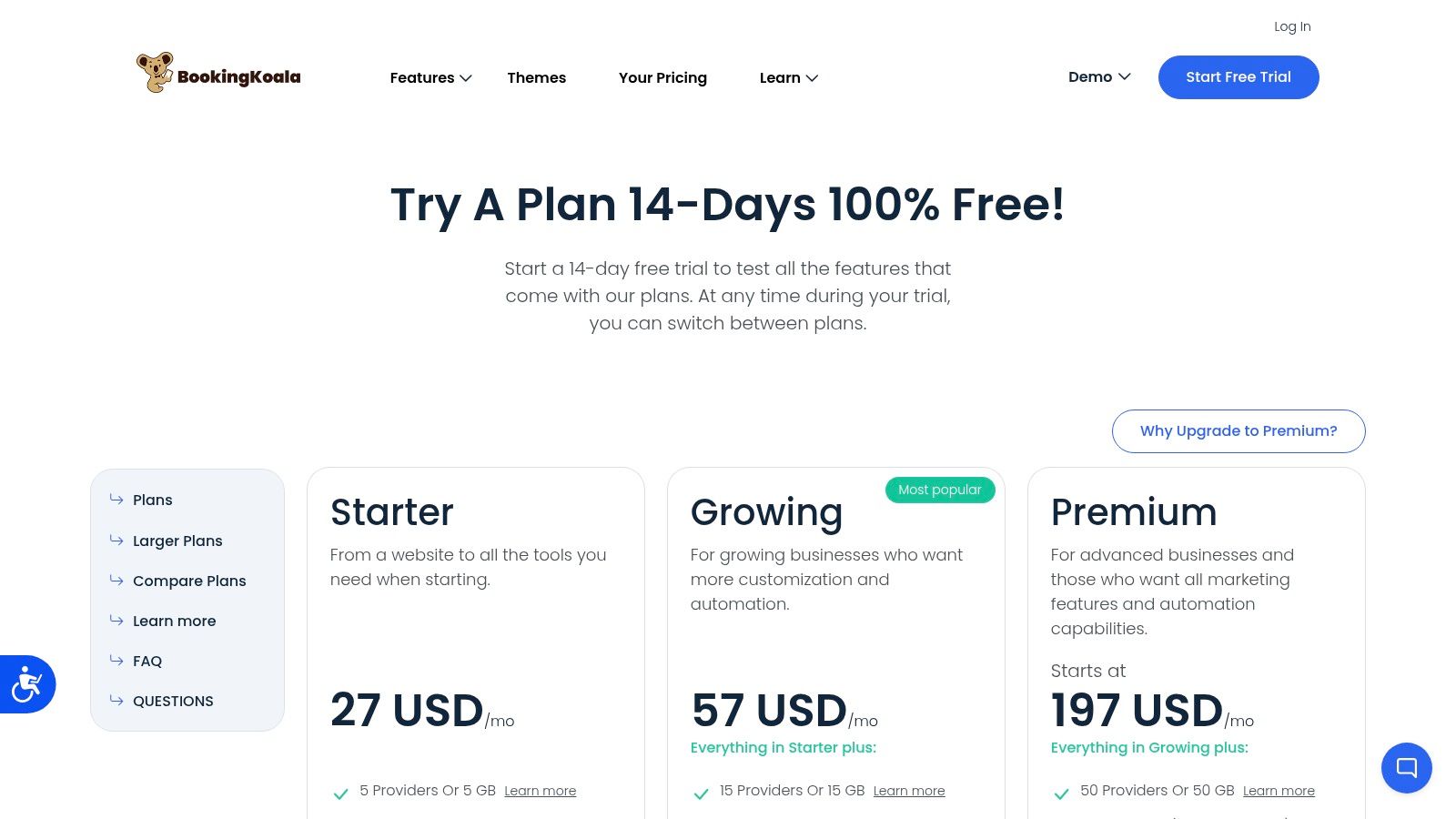
BookingKoala gives you one-step, two-step, or multi-step booking forms, smart scheduling, dashboards for customers and providers, GPS clock-in and clock-out, SMS notifications, and reporting. Premium plans also lean harder into built-in marketing campaigns and funnels.
That makes it useful for businesses that need to launch quickly with a decent front end and enough back-office control to manage providers.
A smart use case looks like this:
If your current process still relies on manual square footage checks and back-and-forth texting, an online cleaning estimate calculator can complement a system like BookingKoala well.
BookingKoala’s costs can scale with usage, providers, storage, and contacts. That’s not unusual, but it means your “starter” decision may not stay cheap as you grow. Advanced marketing features also require the Premium tier.
The broader market supports why these all-in-one booking systems keep growing. North America holds a 41% share of the house cleaning app market in 2025, according to the market projection cited earlier, and mobile-first convenience is a big reason. BookingKoala fits that expectation well.
If you want the best cleaning app for getting online fast and managing both clients and providers in one place, this one belongs on the shortlist.
Website: BookingKoala pricing
ServiceM8 is a strong option if your company runs on iPhones and iPads and you want something lean.
Some owners love that. Others won’t touch it because of the Apple-first bias. Both reactions are fair. ServiceM8 works best when your hardware, team habits, and expectations already align with its design.
ServiceM8 covers quoting, scheduling, invoicing, card payments, proposals, electronic forms, recurring scheduling, and online self-booking with instant pricing. It’s fast to use and less bloated than many bigger systems.
The credit-based pricing model can also feel more predictable than seat-based pricing if you’re managing jobs carefully and don’t want another per-user bill climbing in the background.
The upside is clear:
Android support is limited compared with the full iPhone and iPad experience. If part of your team is on Android, that matters. So do the plan job caps.
For managers who care about time tracking and cleaner accountability, pairing your FSM with a dedicated clock in app may still make sense, especially if your workflow goes beyond what one system handles comfortably.
There’s another reason mobile reliability matters more now. The mobile cleaner app market is valued at USD 0.62 billion in 2025 and projected to reach USD 1.73 billion by 2035, according to mobile cleaner app market analysis. Different category, same lesson. People want field tools that keep phones fast, responsive, and useful during real workdays.
ServiceM8 is one of the best cleaning app options when your company wants mobile speed and doesn’t need an oversized system.
Website: ServiceM8 USA pricing
Workiz is the app for owners who want communication built into the operating system.
Its phone and SMS layer is what makes it different. A lot of software says it helps with customer communication, but Workiz bakes in numbers, call flows, and two-way texting. That’s valuable if your office handles a lot of inbound calls and you’re tired of juggling separate phone software.
Workiz combines online booking, checkout, price books, integrated phone, messaging, proposals, automations, reporting, and financing options. There’s also a Lite plan, which gives very small teams a lower-risk way to test the system.
For cleaning businesses, that means you can centralize lead communication and field operations better than with software that treats calls like an afterthought.
The right buyer usually looks like one of these:
The pricing structure can feel layered. Phone capabilities and AI answering often come as add-ons, so you need to map your real monthly stack, not just the base plan.
That’s where specialized tools still matter. If your biggest sales problem is after-hours follow-up and consistent estimates, I’d rather see an owner use a focused estimator than assume the CRM alone will solve it.
Consumers spent nearly $40 million on storage cleaner apps in the last month reported by Appfigures in June 2025, with more than 1,500 apps across the App Store and Google Play in that broader category, according to Appfigures cleaner app revenue data. Different market, same business signal. People pay for tools that remove friction fast. Workiz sells on that same promise inside service operations.
Website: Workiz
FieldPulse is the flexible operator’s pick.
It isn’t the most cleaning-specific platform on this list, and that can be either a benefit or a drawback. If your business needs room to grow into multiple locations, layered workflows, dashboards, work orders, and add-on communication tools, that flexibility is useful. If you want a tool that already speaks maid-service language out of the box, it may feel too general.
FieldPulse offers scheduling, dispatch, job and project management, workflow automations, dashboards, QuickBooks sync, and multi-location management. Optional VOIP and AI dispatching add more capability if your operation grows into them.
This is a good fit for businesses that don’t want to switch systems every time they add a layer of complexity.
Why some owners choose it:
Because it’s more generalist, setup usually takes more thought. You need to define workflows well. That’s not a software flaw. It’s just the price of flexibility.
“Buy software for the company you can run well in the next year, not the company you daydream about in five.”
That rule applies here. If your office is disciplined, FieldPulse can be a smart long-term base. If not, a cleaning-specific CRM may get adopted faster.
The market data supports why automation-focused platforms keep expanding. Home use represents 64% of the house cleaning app market in 2025, according to the earlier market projection, which reflects how much recurring residential service still drives demand. FieldPulse can serve that market, but it needs a cleaner operator to shape the process inside the tool.
Website: FieldPulse pricing
Cleanetto is one of the more interesting niche plays because it doesn’t just focus on clients. It also pays attention to team operations and documentation.
That matters in cleaning. A lot of businesses struggle less with booking than with keeping cleaners aligned, onboarding new hires, and preserving standard operating procedures once the owner stops doing every job personally.
Cleanetto offers cleaner applicant intake, staff management workflows, client CRM and booking management, multilingual cleaner app notes, operations documentation, lead-source tracking, and built-in support resources.
That combination gives it a different flavor from mainstream field service suites. It’s less about being everything for every trade. It’s more about helping cleaning teams operate with less confusion.
Its strongest use case is a business that needs better internal consistency:
If hiring is your real bottleneck, software alone won’t fix it. Pairing operations tools with a dedicated recruiting process on platforms like pipehirehrm.com can make more sense than forcing your CRM to become an HR system.
Pricing isn’t public, and the ecosystem is smaller than the larger names on this list. That means fewer public comparisons and fewer third-party opinions. Some owners will prefer a more established vendor for that reason alone.
Still, smaller specialized tools can be the better answer when your pain is specific. In hiring-heavy cleaning businesses, a generic CRM often underdelivers because it was never designed to support workforce documentation and onboarding cleanly.
For owners who define the best cleaning app as the one that helps both clients and cleaners stay organized, Cleanetto is worth a serious look.
Website: Cleanetto docs
| Product | Core features | UX / Integrations | Target audience | Unique selling points | Pricing / Cost notes |
|---|---|---|---|---|---|
| Jobber | Online booking, quotes w/ add‑ons, route optimization, payments | Mature iOS/Android apps; broad integrations incl. QuickBooks | Solo cleaners to multi‑crew ops | End‑to‑end FSM for home services; clear plan limits | Visible per‑user pricing; growth features are paid add‑ons |
| Housecall Pro | Online booking, visual price book, marketing, recurring plans, financing | Strong marketing & review tools; QuickBooks Online/Desktop support | Cleaning & carpet businesses of various sizes | Robust customer retention/marketing toolkit built‑in | Tiered plans; add‑ons increase total cost |
| Launch27 | Embeddable booking forms, reminders, portals, referrals/gift cards | Booking‑first flow; unlimited users on plans; narrower integrations | Maid services focused on recurring residential cleaning | Purpose‑built for online booking & recurring workflows | Subscription tiers; Pro/Plus for branding removal & advanced forms |
| ZenMaid | Calendar/dispatch, automated email/SMS, booking forms, integrations | Low entry price; easy onboarding; maid‑specific workflows | Solo owners to small‑mid teams | Built by maid owners; simple setup and resources | Low starter price; Starter capped at 40 appts/mo; SMS costs extra |
| MaidCentral | Rotational deep clean automation, batch billing, CSAT, payroll, reporting | Enterprise‑grade with steeper learning curve | Established maid companies & multi‑location brands | Scales complex residential maid operations with advanced ops tools | Custom pricing, demo required |
| BookingKoala | Website builder + booking engine, dashboards, GPS clock‑in, reporting | Strong self‑serve website/SEO options; owner‑friendly | Owner‑operators growing into multi‑provider teams | All‑in‑one site + booking + CRM tailored to cleaning | Low starter price; cost scales with providers/storage/contacts; Premium for funnels |
| ServiceM8 (USA) | Instant online bookings, iOS app, electronic forms, pricebook | iOS‑first excellence; Android functionality limited | Teams standardized on iPhone/iPad | Fast, predictable job‑credits model; excellent iOS apps | Job credit plans (predictable vs per‑seat); caps apply |
| Workiz | Online booking/checkout, integrated phone & SMS, automations, reporting | Phone/SMS baked in; free Lite tier for testing/small teams | Small teams to growing businesses needing built‑in comms | Native phone/SMS and AI tools; free Lite plan available | Free Lite; paid tiers + add‑ons (phone/AI often extra) |
| FieldPulse | Scheduling/dispatch, work orders, automations, QuickBooks, VOIP add‑ons | Flexible modular setup; suitable for multi‑location; generalist toolset | Growing or multi‑location teams across trades (incl. cleaning) | Expandable modules so teams can scale without switching platforms | No public pricing, custom quote required |
| Cleanetto | Cleaner applicant intake, client CRM, multilingual notes, ops docs | Cleaning‑first UX with guided documentation; smaller ecosystem | Maid & cleaning companies focused on staff workflows | Purpose‑built staff onboarding and multilingual operations support | Pricing not publicly posted, contact vendor |
The best cleaning app usually isn’t one app.
That’s the decision most owners need to make first. Are you trying to solve operations, lead response, online booking, staff accountability, hiring, or all of the above? If you treat every problem like a CRM problem, you’ll overspend and still leave money on the table.
For pure operations, Jobber, Housecall Pro, FieldPulse, and ServiceM8 make sense when you need scheduling, invoicing, dispatch, and customer communication in one system. They’re strongest when your office already has a defined process and needs software to enforce it.
For cleaning-specific workflow, ZenMaid, Launch27, MaidCentral, BookingKoala, and Cleanetto generally fit better. They align more naturally with maid service realities like recurring home cleanings, team notes, customer preferences, and cleaner management. That usually means faster adoption.
But here’s the practical truth. Most cleaning businesses don’t lose growth because their scheduling app is terrible. They lose growth because leads come in after hours, pricing is inconsistent, callbacks take too long, and nobody answers right away.
That’s why a real cleaning tech stack often looks like this:
That structure matters because the market is moving toward convenience and automation. The house cleaning app market is projected to reach USD 0.61 billion by 2033 in the source cited earlier, and that growth reflects what customers already expect. Fast booking. Clear communication. Consistent service. Mobile convenience.
If you’re a solo cleaner, don’t overbuild. Pick a system you’ll use every day. A simple booking-first or cleaning-specific CRM is often enough to start. Add an estimate tool when speed becomes the bottleneck.
If you run a small team, focus on handoff points. How does a web lead become an estimate? How does that estimate become a booked job? How does that job get assigned, completed, and paid without someone manually pushing every step? The best cleaning app for you is the one that tightens those handoffs.
If you manage multiple crews or locations, standardization matters more than feature count. You need consistent pricing, repeatable workflows, reporting, and training. That’s where larger operational platforms or maid-service-specific systems start to pay off.
I’d also separate business apps from consumer cleaning apps. Household apps like Tody are useful for home chore management. They are not replacements for business software. Owners search the same phrase and end up comparing tools built for completely different jobs.
The strongest approach is simple. Choose one operational backbone. Then plug in specialized tools where they remove delay or inconsistency. That’s how you build a stack that helps you sell faster, manage cleaner teams better, and stop losing easy jobs.
If your software doesn’t help you answer faster, send better estimates, and run a tighter schedule, it isn’t the best cleaning app for your business. It’s just another login.
If fast, consistent estimates are the weak point in your stack, Estimatty is the tool to add next. It gives residential and commercial cleaning businesses an AI-powered web and voice estimator that responds instantly, captures job details, sends estimates by SMS and email, and helps convert more inquiries into booked work without adding office headcount.