September 21, 2026
Inside and Out Cleaning: A Practical Pricing Guide
Learn what inside and out cleaning really includes, how pricing works, and which add-ons actually pay off for residential and commercial estimates.

Friday, May 8, 2026
Unsure about sending a proposal vs estimate? Our 2026 guide for cleaning businesses breaks down the differences and shows you how to win more jobs.
.png)
A strong cleaning lead comes in. The client sounds serious, the scope sounds promising, and the first question hits your inbox fast: “Can you send pricing today?”
That's where a lot of cleaning companies lose control of the sale.
Some owners fire back a number too quickly and lock themselves into a scope they don't fully understand. Others disappear for a day or two while they build a polished proposal for a job that only needed a simple price. Both mistakes cost work. In cleaning, sales documents aren't paperwork. They shape how clients judge your professionalism, how fast you respond, and how much profit you keep after the job starts.
The proposal vs quote decision matters even more in cleaning because your jobs vary so much. A recurring residential clean, a move-out, a post-construction cleanup, and a multi-site office contract don't belong in the same sales process. If you use the same document for all of them, you'll either waste time or create risk.
A property manager emails about a large office that needs a new cleaning provider. The building has multiple restrooms, hard floors, glass partitions, and evening access requirements. You could reply in five minutes with a price. You could also spend half the day building a document that explains staffing, scope, workflow, and quality control.
Both options feel reasonable. Only one fits the job.
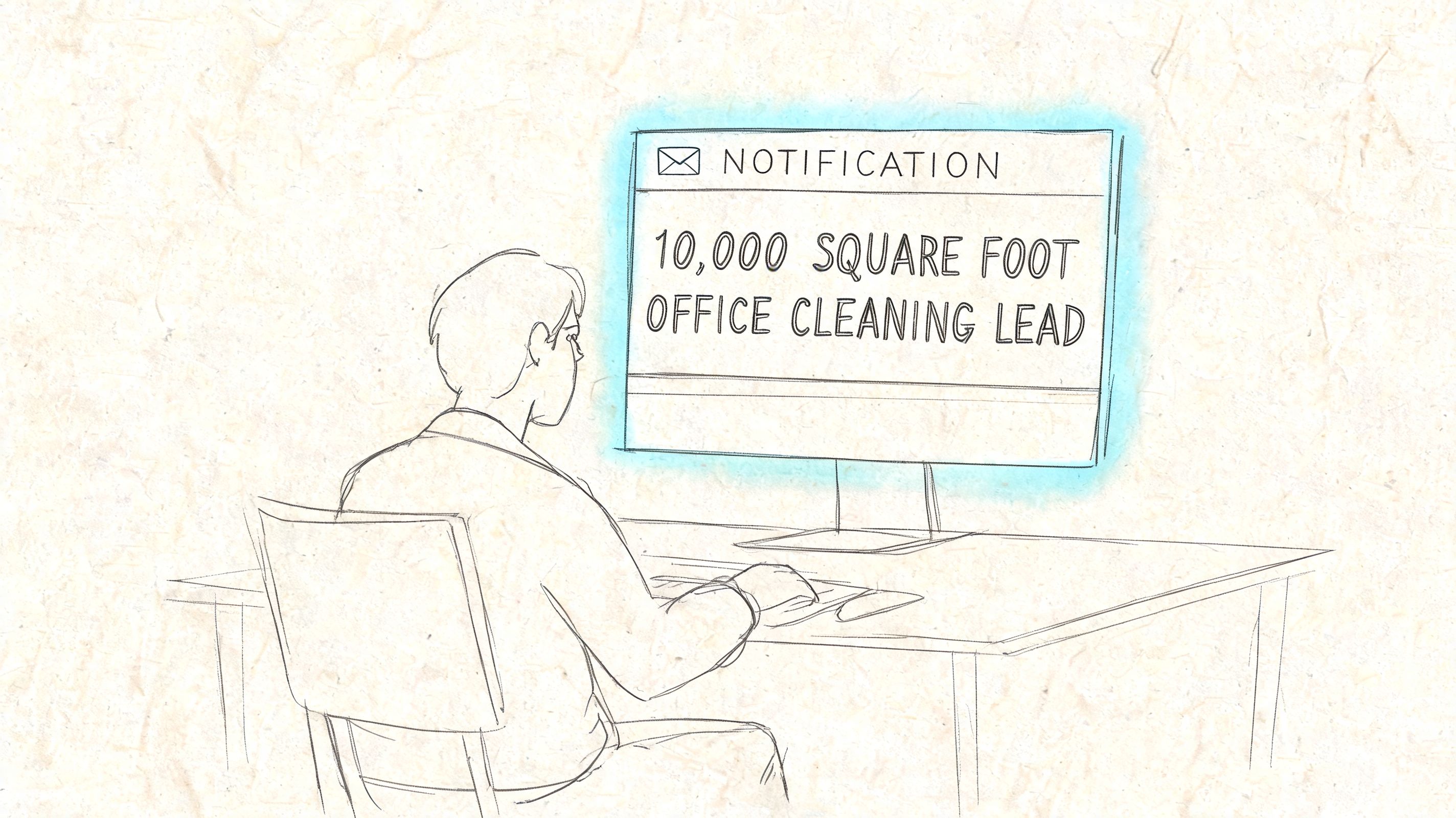
This is the proposal vs quote problem for cleaning companies. It's not academic. It shows up when a homeowner wants a same-day price for a deep clean, when a realtor needs a turnover service approved quickly, or when a commercial buyer asks for a formal bid package. The wrong response can make you look slow, vague, or careless before anyone discusses service quality.
Many owners also use the words loosely. In practice, smart cleaning operators often start with estimates, then move to quotes or proposals when the scope is clearer. That language matters because estimates leave room for discovery, while quotes and proposals carry different expectations. If you're tightening up your early-stage pricing process, this guide on how to estimate cleaning jobs is useful groundwork.
A fast answer wins simple jobs. A detailed answer wins complex ones. Trouble starts when owners swap those two.
At the simplest level, a proposal sells the client on your approach. A quote gives the client a price for a defined service.
That sounds obvious, but many cleaning businesses still blur the two. They send a quote when the client needs confidence. Or they send a proposal when the client only wants a number and a start date.
A proposal is your sales presentation in document form. It explains the client's problem, how your team will handle it, what makes your process credible, and why your price makes sense. It leads the buyer toward a decision.
A quote is a price tag. It lists what's included, what it costs, and often how long that price remains valid. It doesn't need a long narrative. It needs clarity.
According to industry analysis on estimate vs quote vs proposal differences, proposals typically run 5 to 20+ pages and cover the problem, solution, and qualifications, while quotes are usually 1 to 3 pages focused on line-item pricing. The same analysis notes that quotes often become binding once signed, while proposals function as persuasive tools before a formal contract.
If a homeowner asks for pricing on a standard recurring clean and your scope is already clear, a quote does the job. The client likely cares about price, frequency, and whether you can start next week.
If a medical office, school, or multi-tenant commercial property is evaluating multiple vendors, a quote alone is thin. You need to show how your team will handle surfaces, scheduling, communication, and service standards. That's proposal territory.
For cleaning operators trying to tighten the pricing side of the sales process, these practical examples of cleaning service quotes show where a direct pricing document works and where it falls short.
Use this filter before you send anything:
Practical rule: A quote answers “How much?” A proposal answers “Why us, and how will this work?”
The differences get clearer when you compare these documents through the lens of actual cleaning work. Residential one-offs, recurring maintenance, office contracts, and specialty cleaning all create different levels of risk.
Here's the fast comparison first.
AttributeProposalQuote or Instant EstimatePrimary purposePersuade the client and define valueState the price for a defined serviceBest fitComplex, high-value, commercial, first-time, or multi-stakeholder jobsStandardized, repeatable, lower-complexity jobsTypical contentScope, service approach, qualifications, timelines, pricing, termsLine-item pricing, service summary, timing, validityLengthLonger document with room for explanationShort document built for speedLegal positionUsually non-binding until accepted and signedOften binding once acceptedClient perceptionStrategic, consultative, premiumFast, direct, transactionalMain riskTaking too long on a simple leadUnder-scoping and inviting disputesBest operational useWhen you need to justify price and control scopeWhen you need quick approval and low friction
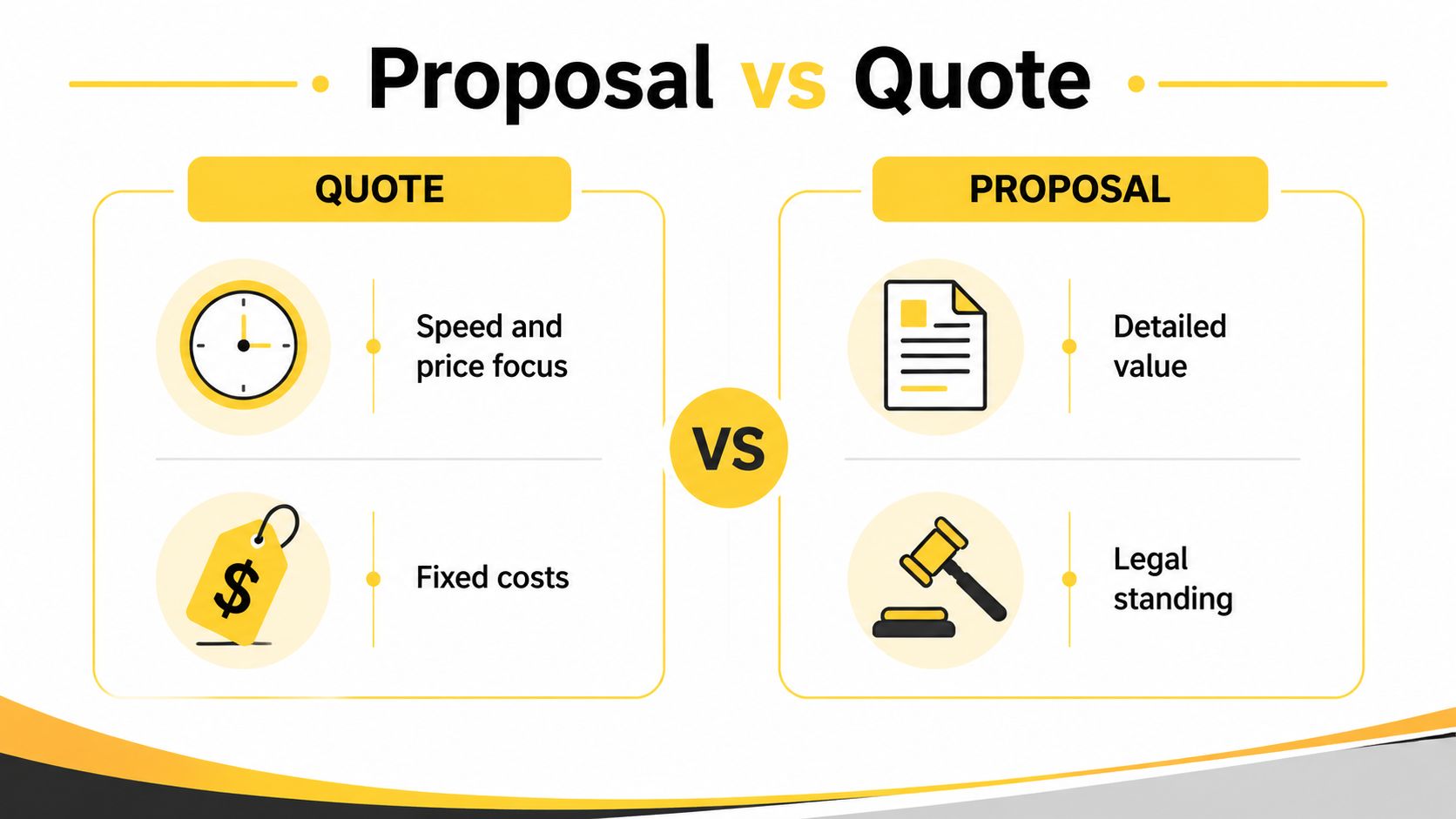
Cleaning work creates scope problems faster than many service businesses. A client says “standard office cleaning,” but that may include interior glass, breakroom appliances, carpet spotting, consumables, or day porter tasks they forgot to mention. A short quote on a messy scope can turn into margin loss.
By contrast, a proposal gives you room to define what's in and out. You can describe surface types, cleaning protocols, timing, site access, and acceptance standards. That protects revenue and makes later conversations easier.
According to Estimate Rocket's breakdown of estimate vs quote vs proposal, in cleaning services a quote is a fixed-price commitment, such as $250 for a standard house clean, and can be legally binding for a set period like 30 days. The same source says proposals integrate pricing with technical specs and ROI, and can boost win rates by 25% for complex bids over $1,000 by preventing scope creep.
Most bad document choices come from one of these habits:
If your sales document doesn't match the complexity of the job, the client notices it immediately.
This isn't about sounding more corporate. It's about protecting time and gross margin.
A simple quote helps you close straightforward work faster. A proposal helps you stop selling commercial cleaning like a commodity. Good operators know both tools. Better operators know when not to use them.
The right document depends on two things. First, where the buyer is in the decision process. Second, how much ambiguity is hiding inside the scope.
The normal pattern is straightforward. Clients often start by asking for estimates while they're exploring options. They ask for quotes when they're comparing concrete pricing. They need proposals when the project is bigger, riskier, or involves internal approval. That progression is explained well in TurboDocx's guide to proposal vs quote vs SOW, which notes that matching the document type to the customer's stage helps manage expectations and increase closing rates.
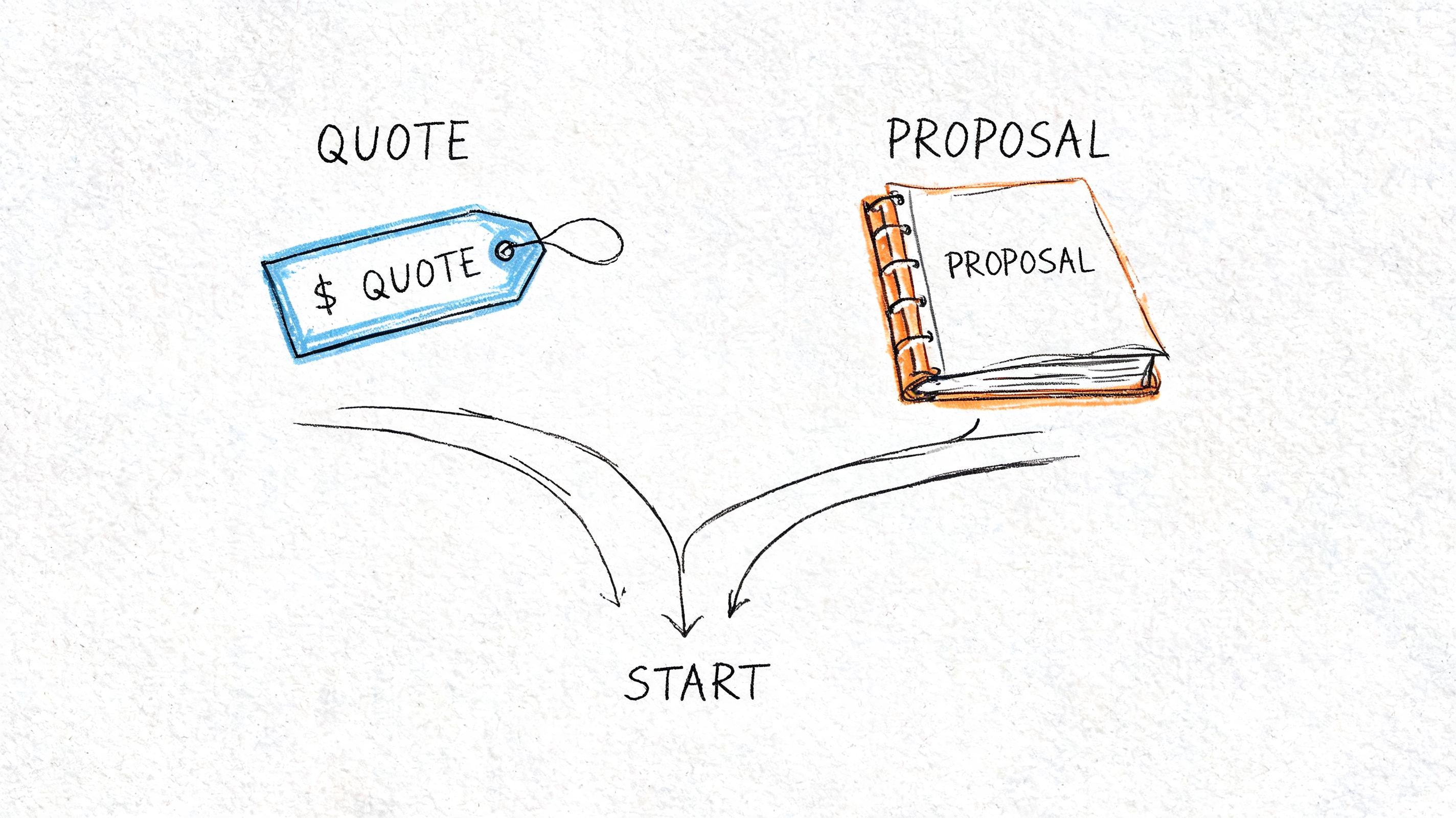
For many cleaning jobs, delay is the primary enemy. A slow response makes the client keep shopping.
Use a quote or estimate when:
If you're handling a lot of incoming calls and need a faster process, this guide to quote by phone for cleaning leads is practical.
Some jobs need more than price. The buyer wants proof that you understand the property and won't create headaches later.
A proposal fits when:
When the lead comes in, ask these questions:
If your answer leans toward standard, fast, and clear, send a quote or estimate.
If your answer leans toward custom, strategic, and multi-layered, build a proposal.
Send the shortest document that still gives the client enough confidence to say yes.
A sales document fails for one of two reasons. It's confusing, or it's harder to approve than the competing option.
Good estimates and quotes win because they're fast and easy to accept. Good proposals win because they reduce uncertainty. Different jobs, different mechanics.
Start with clarity. The client should understand the offer in seconds, not minutes.

Include:
A clean quote can sound like this:
“Based on the details provided, we're estimating service for standard cleaning of the home, including kitchens, bathrooms, floors, dusting, and surface wipe-downs. If approved, we'll confirm schedule availability and send final booking details.”
That wording matters. It stays clear without overcommitting before you've confirmed everything on site.
For more examples, this walkthrough on how to quote cleaning jobs gives a useful framework.
A proposal needs structure. If it reads like a long quote with extra paragraphs, it won't do its job.
Use this order:
If you want a broader business-writing reference outside cleaning, these X8 Web Design proposal tips are worth reviewing because they focus on structure and readability, not generic sales language.
A lot of decent proposals still lose because they bury the next step.
Use short headings. Keep pricing easy to find. Tell the client what happens after approval. Don't make them guess whether they should reply, sign, or schedule a walkthrough.
This short video is a useful refresher on building a proposal people can approve:
Field-tested advice: If a client has to email back asking what your document means, the document is doing extra work instead of closing work.
A lead comes in at 8:17 p.m. The client wants a post-construction clean for a 4,000 square foot home, asks for window tracks and garage dust, and wants pricing before tomorrow morning. Another prospect leaves a message about a small office that needs service three nights a week, but gives no square footage and no task list. If both inquiries sit until someone has time to write from scratch, one of them usually hires the faster company.
That is the primary problem behind proposal vs. quote in cleaning. The issue is not terminology. The issue is response time without losing scope control.
AI estimating helps solve that operational gap. For standard residential jobs and straightforward recurring work, it can collect the first details, apply your pricing rules, and send pricing direction fast. For larger commercial or specialty work, it can qualify the lead before your team invests time in a walk-through, a quote, or a full proposal. This guide to AI estimate software for cleaning businesses shows how that first step works in practice.
The payoff is different depending on the job type. In residential, speed wins a lot of work because the client is often comparing three cleaners who offer similar services. In commercial, speed still matters, but clean intake matters more. If the system captures frequency, facility type, floor mix, access rules, supply responsibility, and problem areas before anyone writes pricing, your numbers get tighter and your proposal gets easier to approve.
Owners who use AI well do not hand pricing over blindly. They set rules for what can be auto-estimated and what must be reviewed by a person.
A practical setup looks like this:
That last point matters more than many owners expect. I have seen companies improve lead response and then create a second problem by booking work they were not staffed to service well. Speed gets the job. Delivery keeps the account.
Automation also helps on the front end of demand generation. If you are improving both lead flow and lead handling, this guide on leveraging AI for Meta campaign management is a useful companion because it focuses on getting better inquiries into your pipeline in the first place.
For cleaning businesses, AI is not a substitute for judgment. It is a filter and a speed layer. It handles the repetitive first pass, pushes simple jobs toward approval faster, and gives your team cleaner information on the jobs that require human judgment. That is how you stop choosing between speed and accuracy. You build a process that uses both.
No. A quote is mainly a pricing commitment for a defined service. A proposal is a sales document that explains scope, approach, and value. If the client needs confidence in how you'll deliver, a proposal fits better.
Yes, but selectively. Most standard residential jobs don't need one. High-touch first-time cleans, large homes, specialty requests, or premium recurring service can justify a proposal if the client needs more explanation before approving.
For many cleaning businesses, estimate is the safer early-stage word because it leaves room to confirm scope. That's especially useful when the client gives incomplete details by phone, text, or web form. Once the scope is clear and you're prepared to stand behind a fixed number, a quote becomes appropriate.
Not if the scope is simple and the quote is clear. In fact, a long document for a straightforward job can feel inefficient. Professionalism comes from accuracy, speed, and clean communication, not page count.
They send price before they control scope. That shows up in underpriced one-time cleans, vague commercial bids, and recurring work with hidden extras. The second biggest mistake is moving too slowly on basic leads that only needed a clean estimate and a booking path.
Start with an estimate and say so directly. Clarify what assumptions you're using, then explain that final pricing depends on confirming the exact scope. That keeps the conversation moving without boxing you into the wrong commitment.
Usually not. Once the service pattern is established, a simple quote, estimate update, or service agreement is enough. Proposals make more sense at the beginning of the relationship or when the scope changes significantly.
If you're tired of losing cleaning leads while your team is busy, Estimatty helps you respond instantly with AI-powered estimates by web and phone, day or night. It gives residential and commercial cleaning companies a faster way to capture inquiries, standardize pricing, and turn more leads into booked jobs without adding front-office headcount.