September 21, 2026
Inside and Out Cleaning: A Practical Pricing Guide
Learn what inside and out cleaning really includes, how pricing works, and which add-ons actually pay off for residential and commercial estimates.

Sunday, May 10, 2026
Learn the 2026 requirements for a contractors license. Our guide helps cleaning businesses manage applications and avoid costly fines effortlessly.
.png)
Many cleaning companies encounter a similar obstacle at the same time. The phone rings, an office manager requests a post-construction cleanup, a builder needs pressure washing before turnover, or a property manager asks if your team can handle debris removal along with a few small repair items. The job looks profitable. Then the vital question shows up: are you still selling cleaning, or have you stepped into work that triggers contractor licensing?
That line is where many owners get exposed.
The problem isn't that cleaning operators ignore compliance. It's that most licensing guidance is written for general contractors, remodelers, or tradespeople. It doesn't explain what happens when a cleaning company expands from recurring service into renovation-adjacent work. That's where misunderstandings start, and that's where margin can disappear fast if you bid first and research later.
A standard house cleaning route usually doesn't raise contractor licensing questions. Expansion does.
The trouble starts when your service list grows faster than your compliance habits. One month you're cleaning kitchens and bathrooms. A few months later you're offering pressure washing, move-out touchups, post-construction cleanup, or chemical-heavy specialty work. Those add-ons can increase ticket size, but they can also change how regulators view your business.
For cleaning businesses, the biggest blind spot is service scope. The guidance most owners find online often treats all construction businesses as one category. It rarely explains when pressure washing, chemical carpet treatments, or HVAC duct cleaning may cross into work that triggers a state contractor framework, bonding, or insurance requirements, which is exactly the trade-specific gap highlighted in Procore's Oregon contractor licensing overview.
That matters because pricing depends on compliance. If a service requires licensing, your direct labor isn't the whole job cost anymore. Insurance, documentation, administrative review, permit coordination, and slower scheduling all start affecting your estimates.
Practical rule: The moment a cleaning service starts touching structure, systems, regulated materials, or project-management responsibility, stop assuming your normal business license covers it.
A lot of owners also underestimate the customer side of this issue. Commercial clients, builders, and property managers don't just buy the clean result. They buy risk transfer. If they think your company is operating outside the rules, they may pass on your estimate even if your price is strong.
Licensed positioning can open better work. It signals that your company can handle documentation, insurance review, and a more demanding client. That changes who will take your calls seriously.
If you work in California or serve clients there, LA Law Group's contractor advice is a useful read because it frames the business downside of operating without proper licensing from the client and legal perspective, not just the contractor perspective.
Insurance is part of that picture too. If you're sorting out where general liability fits before you expand services, this guide on liability insurance for a cleaning company is worth reviewing alongside your licensing research.
Licensing won't make a weak operation strong. But it does keep a growing operation from getting boxed out of larger, better-paying work.
Don't start with the question, "Am I a contractor?" Start with the job itself.
That's the cleaner way to make the call. Regulators usually care less about what you call your company and more about what your team is doing on site.
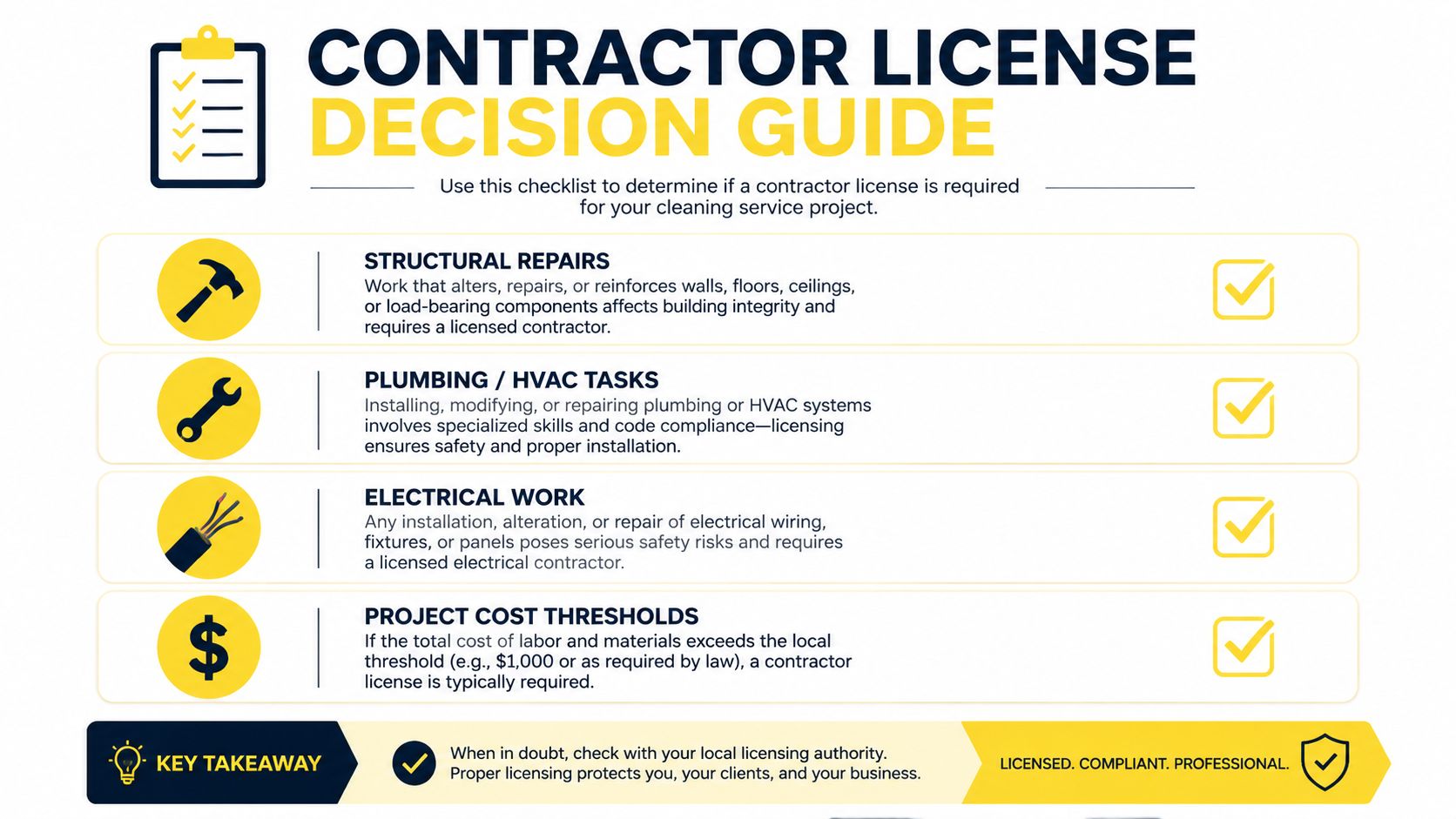
Use this checklist any time you add a service or review a larger one-time project:
Some cleaning services are more likely to create licensing questions than others.
| Service type | Lower-risk scenario | Higher-risk scenario |
|---|---|---|
| House cleaning | Recurring cleaning of occupied homes | Bundled with repair, alteration, or restoration tasks |
| Pressure washing | Simple exterior surface cleaning | Work tied to property restoration, damage remediation, or regulated improvements |
| Carpet cleaning | Routine cleaning | Chemical treatments or restoration-style work with broader remediation scope |
| Post-construction cleanup | Final dusting and surface cleaning only | Debris removal, touch-up work, lead-related protocols, or bundled completion tasks |
| Duct cleaning | Basic maintenance positioning | Any representation that suggests HVAC system service or repair |
This is why generic licensing articles mislead cleaning companies. They explain the contractor category, but not the service creep that happens inside a cleaning business.
If your estimate includes labor that changes, restores, installs, repairs, manages, or certifies anything beyond cleaning, pause and verify the local rule before you book it.
What works is building a service review habit. Every new add-on should go through the same filter: scope, project value, local authority, insurance impact, and paperwork impact.
What doesn't work is relying on customer language. If the client says, "It's just a quick cleanup," that doesn't protect you if the written scope includes repair-related tasks or regulated conditions.
A good operator separates services clearly. One estimate for cleaning. A separate process for anything that may fall into contractor or home improvement territory. That separation keeps sales clean and keeps your team from accidentally promising work your business isn't set up to perform legally.
A cleaning company usually feels the weight of contractor licensing right after it adds a higher-ticket service. The owner sells post-construction cleanup, pressure washing, or small punch-list work to increase revenue per job. Then the city or state asks for proof that the business can supervise that scope, carry the right insurance, and meet financial standards. That is the essential purpose of licensing. It screens for operators who can handle risk, not just sell work.
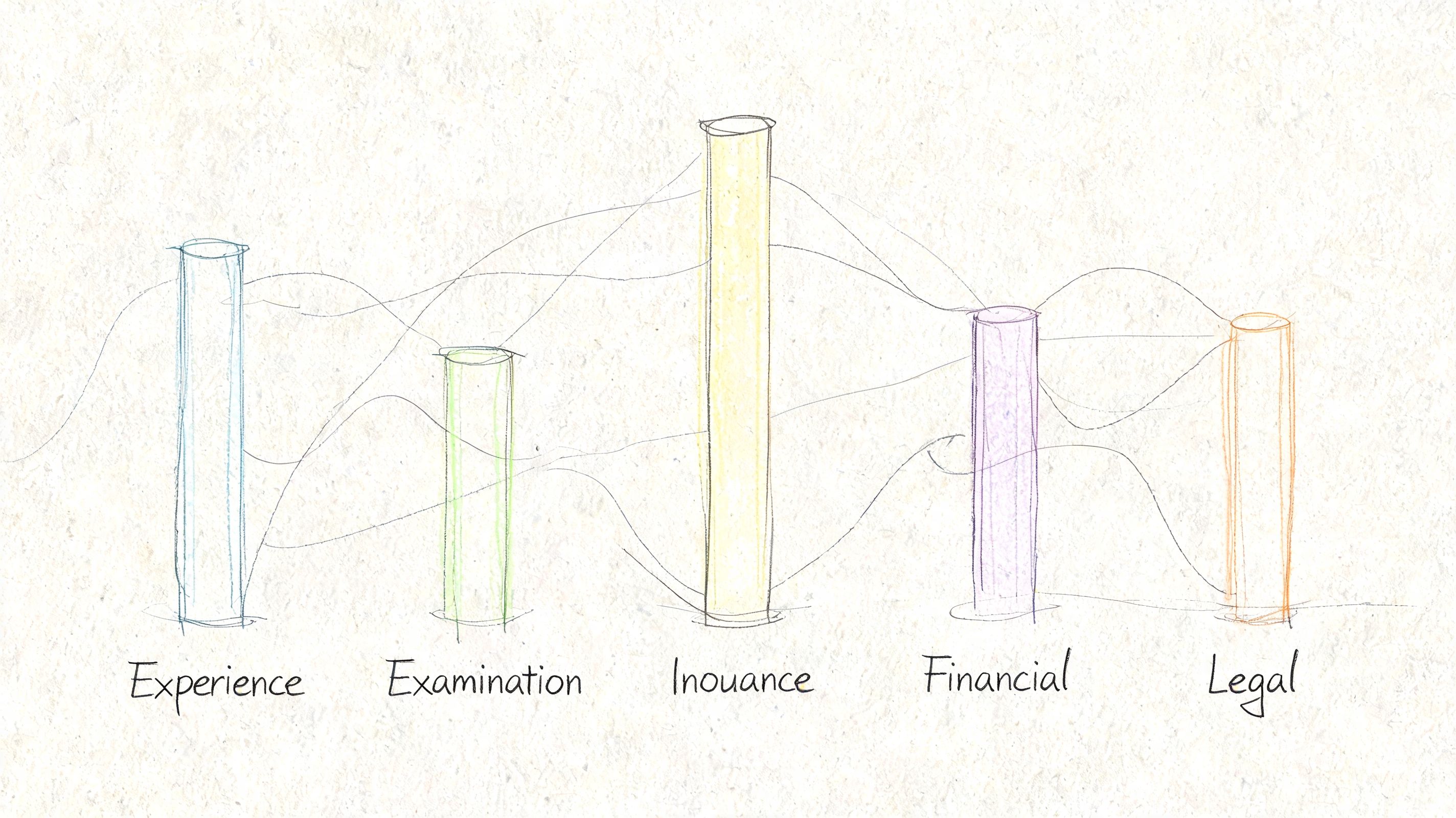
The first pillar is experience verification. Licensing boards often want to see that a qualifying individual has enough relevant field history to supervise the work being offered. For cleaning businesses, expansion creates friction. Years of recurring janitorial work may help your operations, but they do not always satisfy a board reviewing pressure washing, remediation-adjacent cleanup, or minor repair-related services.
The second pillar is the exam requirement. Many tests cover more than trade activity. They also cover business law, lien rules, contract obligations, and code awareness. Owners who prepare only for the technical side usually lose time on retakes or corrected applications. Owners who understand the legal side of the job tend to get approved with fewer delays.
The third pillar is insurance. This requirement affects cost, job eligibility, and how you structure your service menu.
In New York City, general contractor registration requires general liability insurance, workers' compensation documentation, disability paperwork, and specific filing standards that can trip up applicants who submit the wrong certificate format, according to the NYC Department of Buildings registration requirements. For a cleaning business, that matters because adding one regulated service line can force a full review of your coverage, classifications, and exclusions.
If you want a practical primer before you speak with your broker, this guide to essential policies for contractors is a useful starting point.
The fourth pillar is the bond. A bond does not protect your company the way liability insurance does. It protects the public or the licensing authority if your business fails to meet its obligations under the license. Treat bond cost as part of your access-to-market expense. If the margin on the new service line cannot support the bond, insurance upgrade, admin time, and exam prep, the expansion may be less profitable than it looks on the estimate.
The fifth pillar is background and entity review. This often includes ownership disclosure, tax status, business registration records, bank references, and sometimes fingerprints or background checks. Cleaning companies that grew quickly through word of mouth often run into problems here because the back office never had to be this disciplined before.
New York City also requires applicants to show financial viability through business banking records or a qualifying bank letter, as explained in the NYC Department of Buildings license and registration application resources. Requirements like that matter because they test whether the company can absorb payroll, materials, claim issues, or project delays without falling apart mid-job.
Paperwork quality matters more than many owners expect.
If your proposals describe one thing, your insurance class codes suggest another, and your crew is performing a third version in the field, licensing review gets harder fast. Clear scope language helps protect revenue and reduce compliance mistakes. That is why standardized cleaning service contracts become more valuable as you add services that edge into contractor territory.
The practical takeaway is simple. Contractor licensing rests on five pillars because regulators are checking five forms of business readiness: skill, knowledge, insurance capacity, financial backing, and operational discipline. A cleaning company that builds those systems early has more room to expand profitably and far less risk of winning work it cannot legally perform.
A cleaning company can run the same crew, the same equipment, and the same sales script in two nearby markets and still face two different licensing answers. That problem shows up fast once the work expands beyond routine janitorial service. Pressure washing, post-construction cleanup, debris removal tied to renovation, and small repair add-ons can push a cleaning scope into contractor territory in one city but not the next.
That is why generic contractor license guides miss so much for cleaning businesses. They usually focus on builders, roofers, and remodelers. They spend less time on hybrid scopes where a cleaning company is partly maintenance, partly specialty trade, and partly project support.

State thresholds and license categories vary enough to change your pricing, sales process, and service design. For residential work, Arkansas requires a license for projects over $2,000, while Louisiana sets the residential construction threshold at $75,000, according to NEXT Insurance's state licensing guide. A cleaning business that bundles labor, disposal, surface restoration, and minor repairs into one proposal can cross a threshold without realizing it.
New York creates a different kind of problem. Many contractor requirements are handled locally rather than through one statewide license path for general work. A company serving Westchester, Nassau, and New York City may need to check separate county or municipal rules, even if the service package looks identical on paper. The New York State Department of Labor's home improvement contractor information is a better starting point than a generic overview because it points owners toward the local structure behind these requirements.
The trade-off is straightforward. Standardizing your offer makes sales easier. Customizing the offer by jurisdiction lowers compliance risk.
Use a repeatable process and keep it tied to actual scopes sold in the field.
That last step saves time. Licensing staff can usually answer a scope question faster than they can interpret a broad business label.
Owners expanding office cleaning services into new territories often underestimate how often service creep starts the problem. A client asks for exterior washing, ceiling tile replacement after a leak, or final cleanup after a tenant improvement job. Sales says yes. Operations gets it done. Compliance catches up later.
The cleaner your service menu is, the easier this gets. If you are still building systems for expansion, this guide on how to start an office cleaning business is useful because it frames growth around service boundaries, staffing, and market entry discipline.
Multi-market work also creates tax and worker classification issues. If part of the work is subcontracted, keep those records tight alongside your licensing file. This guide to IRS reporting for independent contractors is worth reviewing because the same businesses that blur scope lines often blur contractor paperwork too.
The operators who stay profitable treat jurisdiction research like estimating. They keep a live list of markets served, document which services are allowed in each one, save answers from licensing offices, and review every new add-on before it reaches the proposal template.
Once you've confirmed the need for a license, treat the application like an operations project. The owners who struggle most are usually the ones who gather documents in random order and hope the board will connect the dots for them.
Start by organizing your business records before you touch the application itself.
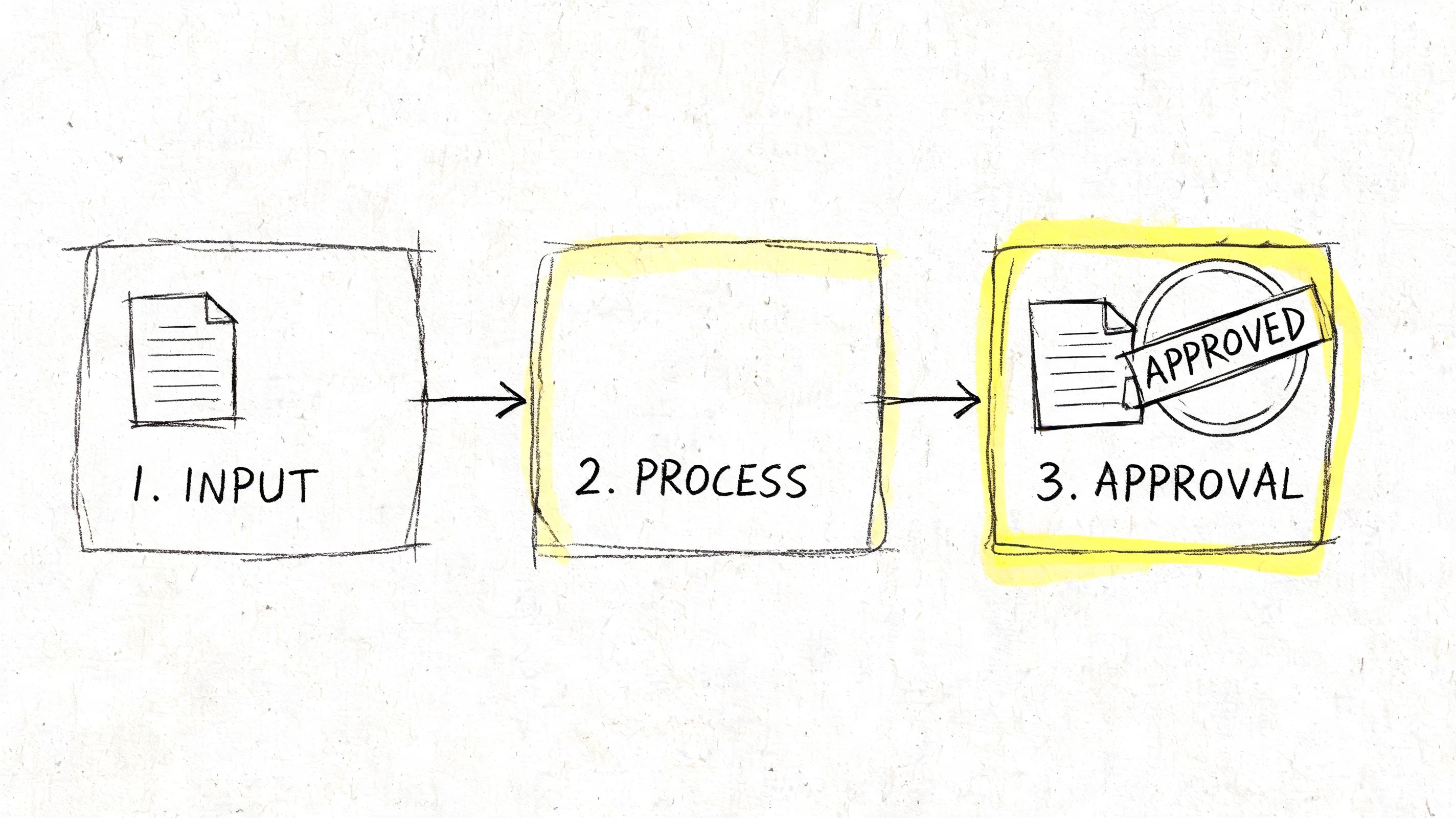
Before filing, make sure these basics match across every document:
This is one area where internal systems make a difference. If you're still building the business foundation, a practical starting point is this guide on starting a cleaning business, because many licensing delays come from basic entity and documentation issues, not from the exam itself.
A reliable sequence looks like this:
Confirm the correct license class
Don't guess. Match your service scope to the jurisdiction's definitions.
Gather proof of experience
This may include resumes, project histories, employer verification, or qualifying party documentation.
Schedule required exams
Book early if testing is required. Waiting until the rest of the packet is complete can drag out approval.
Secure insurance and bond documents
Ask your broker and bond provider for exactly what the authority wants, not a generic certificate set.
Complete background or entity disclosures
Ownership, addresses, prior business names, and legal disclosures need to be consistent.
Review the full packet before filing
Missing signatures, mismatched names, and outdated certificates are the usual reasons applications bounce back.
A lot of owners also overlook the staffing side. If your company is adding licensed or compliance-sensitive services, documented hiring and role clarity matter. That's where platforms like pipehirehrm.com become useful for organizing cleaning employee hiring, onboarding, and recordkeeping as the business matures.
A quick visual walkthrough can also help if you're trying to see the process in a more practical format:
Submitting isn't the same as being ready.
The businesses that get through faster usually do three things well: they keep a master compliance folder, they assign one person to own the application, and they answer board questions quickly. The ones that bog down tend to split tasks across too many people, use outdated insurance documents, or discover too late that their service description doesn't match the license they chose.
If you're pursuing the requirements for a contractors license because you're moving into bigger jobs, build the paperwork process the same way you'd build a larger account. Standardize it, assign ownership, and keep the file current after approval. Renewal problems usually start with disorganized first-time applications.
You land a profitable post-construction cleanup job, add pressure washing to the scope, agree to replace a few damaged trim pieces, and treat it like a bigger cleaning estimate. Then the client asks for your contractor license number, proof of the right insurance class, and the certification tied to renovation-related work. That is where a lot of cleaning companies find out they crossed into regulated territory without pricing, staffing, or paperwork built for it.
The cost of that mistake is rarely limited to a rejected job. It can mean reworking the contract, bringing in a licensed subcontractor, eating margin you already sold away, or explaining to a commercial client why your company cannot legally perform part of the scope.
The pattern is usually the same. A cleaning business grows into higher-value work before its compliance systems catch up.
New York City is a good example. For businesses performing work connected to renovation activity, licensing agencies can require related documentation and certifications as part of the approval process. Cleaning companies that pick up post-renovation projects often miss that detail because they are reading generic cleaning guidance instead of contractor and home-improvement rules.
Keep a compliance calendar, not just a renewal folder. The businesses that stay profitable in this category are the ones that review license scope before they sell the work, not after the client asks questions.
The primary value of licensing is not just staying out of trouble. It is protecting margin, qualifying for better clients, and giving your team a clear line between work you should self-perform and work you should subcontract.
That matters on the sales side too. Better marketing creates pressure to say yes to more jobs, but growth only pays if the work is scoped correctly and legally. If you are tightening both sides of the business, this guide on how to get more cleaning clients is a useful companion to the compliance work.
I have seen cleaning owners lose money not because demand was weak, but because they expanded into higher-risk services without adjusting licensing, estimates, and crew responsibilities. The fix is straightforward. Define which services stay under your cleaning model, flag which ones need a license or outside specialist, and train your sales process to catch the difference before the quote goes out.
A serious cleaning business reaches a point where speed alone stops being an advantage. Clean paperwork, correct licensing, and disciplined scoping are what let you grow without taking on avoidable risk.
If you want to turn more inquiries into consistent, well-scoped estimates without relying on callbacks and guesswork, Estimatty helps cleaning businesses deliver fast, standardized estimates around the clock so your sales process stays as professional as your operations.