September 21, 2026
Inside and Out Cleaning: A Practical Pricing Guide
Learn what inside and out cleaning really includes, how pricing works, and which add-ons actually pay off for residential and commercial estimates.

Monday, May 11, 2026
Create a professional invoice for cleaning services that gets you paid on time. Our guide covers templates, tax, payment terms, and automated workflows.
.png)
You finish a hard clean, load the last tote into the car, and then the actual drag starts. You still have to send the invoice for cleaning, explain a couple of add-ons the client requested on-site, and hope payment doesn't drift into next week or next month.
That gap between finishing the work and collecting the money is where a lot of cleaning businesses look smaller than they are. Not because they clean poorly, but because the billing feels improvised. A vague PDF, a text with a total, or a handwritten note can undo the professional impression you built in the home or office.
The fix isn't just a nicer template. It's a repeatable invoicing system that starts earlier, with a clear estimate, carries the same service details through the job, and ends with a clean invoice and an easy way to pay.
A weak invoice makes clients hesitate. A strong one closes the loop.
I've seen the difference between the two. One version looks like this: "House cleaning, $180, please pay by Friday." The client has questions, forwards it to someone else, asks what was included, and payment stalls. The other version lists the visit date, service details, due date, and payment method in one clean format. That one gets approved faster because nobody has to decode it.
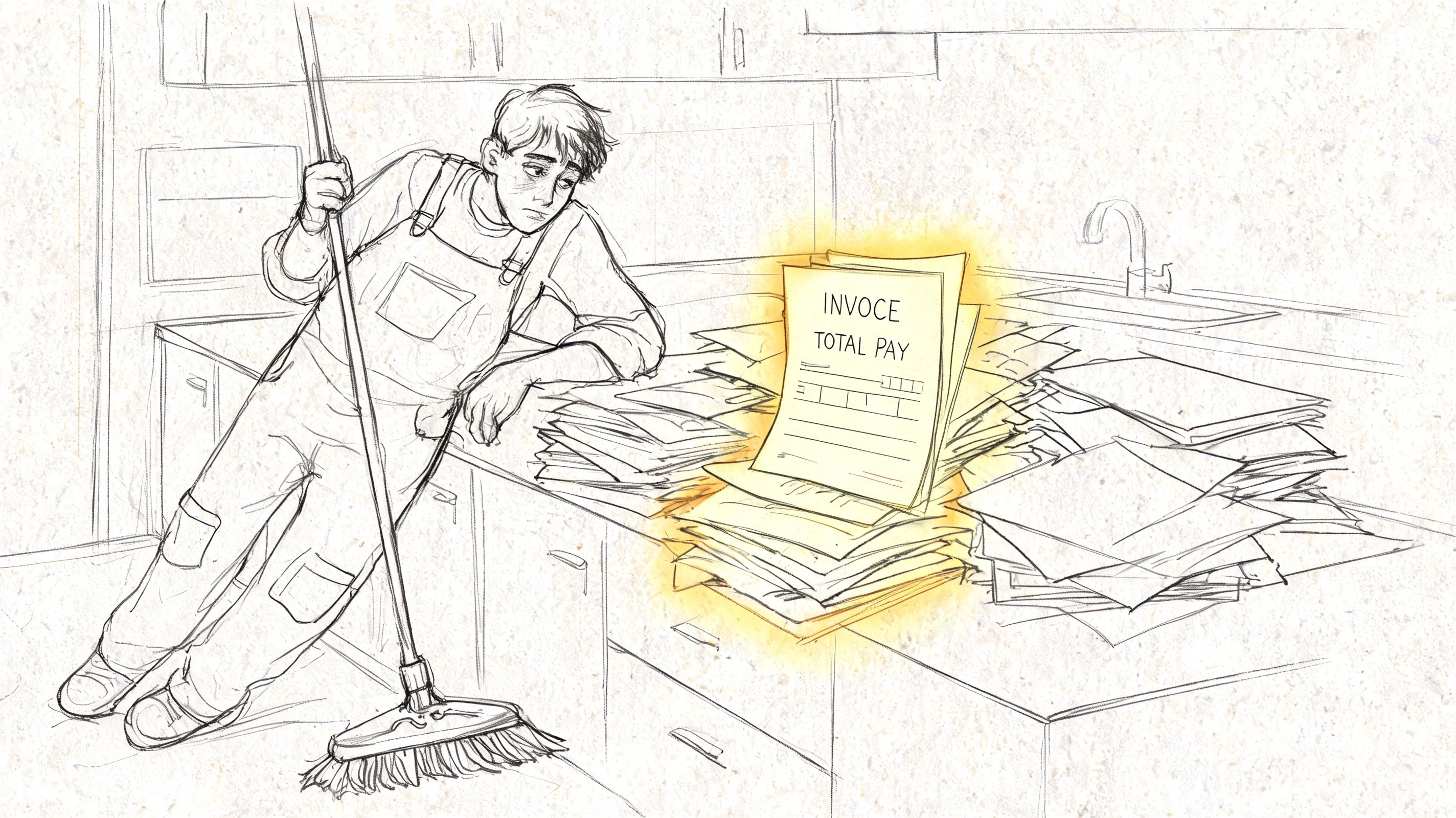
Clients don't separate your cleaning quality from your paperwork quality. If your service feels organized but your billing feels messy, they remember the friction.
That's why I treat the invoice for cleaning as the final service touchpoint. It tells the client, "We track our work, we bill clearly, and we run a real business."
If you're still tightening up your back-office process, these Start Right Now business operating tools are a useful reference because they frame invoicing as part of business operations, not just admin.
A professional invoice doesn't just ask for payment. It removes the client's reasons to delay it.
This matters even more with offices, property managers, and recurring residential clients. They want consistency. They want to match the invoice to the job without chasing you for details. They want records they can file.
That polished feel is often what separates a solo operator from a company that looks ready to grow. If you want to see what clients respond to when a business feels organized and trustworthy, the feedback on customer experiences with structured estimating and follow-up makes that point clearly.
A cleaning invoice doesn't need to be fancy. It needs to be complete.
According to FreshBooks house cleaning invoice guidance, a complete cleaning service invoice must contain a unique invoice number, invoice date, payment due date, client information, itemized services, a cost breakdown with applicable taxes, and clear payment terms, and that documentation is especially important for commercial clients handling tax and accounting procedures.
Some owners know these fields are required, but they don't always know why each one matters in practice.
Practical rule: If a client can ask "What is this?" about any part of your invoice, that field needs to be clearer.
| Field | Purpose |
|---|---|
| Unique invoice number | Lets you and the client track one specific bill without confusion |
| Invoice date | Shows when the invoice was issued |
| Payment due date | Removes ambiguity about when payment is expected |
| Your business details | Confirms who performed the work and who should be paid |
| Client information | Ties the invoice to the right person, property, or company |
| Itemized services | Shows exactly what was cleaned and billed |
| Cost breakdown | Makes subtotal, taxes if applicable, and total easy to verify |
| Payment terms | States when and how payment should be made |
A vague line item like "general clean" invites questions. Specific entries reduce them.
That's one reason it helps to understand line item importance beyond bookkeeping. In cleaning, line items are how you show scope, protect the agreed price, and keep add-ons from turning into disputes.
Use wording clients can recognize from the actual job:
Some invoice fields feel minor until a client pays late or questions the bill.
Unique invoice numbers matter because commercial clients often need them for filing, approvals, and internal accounting. If your invoice doesn't fit their process, you get pushed to the side.
Clear payment terms matter for the same reason. "Due upon receipt" and "Net 15" create very different expectations. Pick one deliberately and use it consistently.
If you're comparing software to manage these details cleanly, this breakdown of QuickBooks vs FreshBooks for service businesses is a practical place to start.
Pricing only feels complicated when the invoice doesn't match how you sold the job.
Most cleaning businesses bill one of three ways. They charge by the hour, by a flat rate for the job, or by square footage. The right model depends on the work, but the invoice has to make the pricing logic obvious.
The average hourly rate for a housekeeper in the United States is around $20 per hour, according to Invoice Maker cleaning invoice guidance. That baseline helps owners sanity-check hourly pricing and also build flat-rate jobs from labor expectations.
Here's how the three models usually look on an invoice for cleaning:
A lot of confusion starts because the invoice is built from memory instead of from the approved estimate.
If your original estimate was for a standard clean on a 3-bed, 2-bath home, keep that same structure when you invoice. Then add any approved extras as separate lines. For example, if the client added oven cleaning on-site, that shouldn't disappear into a bigger total. It should appear as its own item.
That continuity matters. It shows the final bill came from the agreed scope, not from guesswork after the job.
Tax treatment isn't the same everywhere. FreshBooks notes, as cited earlier, that sales tax generally isn't applicable to cleaning services in the United States because they're classified as services rather than products, though it varies by state, while businesses in the United Kingdom must charge VAT on cleaning services. Your invoice should reflect the rules where you operate.
The simple habit is this:
If you want a cleaner way to map service packages and add-ons before they ever hit the invoice, a structured cleaning service price list approach helps keep your billing consistent.
The fastest-paying cleaning companies don't treat invoicing as a separate task. They treat it as the last step of the sales workflow.
That means the estimate, the job scope, the completed work, and the invoice all use the same information. No retyping. No rebuilding the bill from notes on the passenger seat.
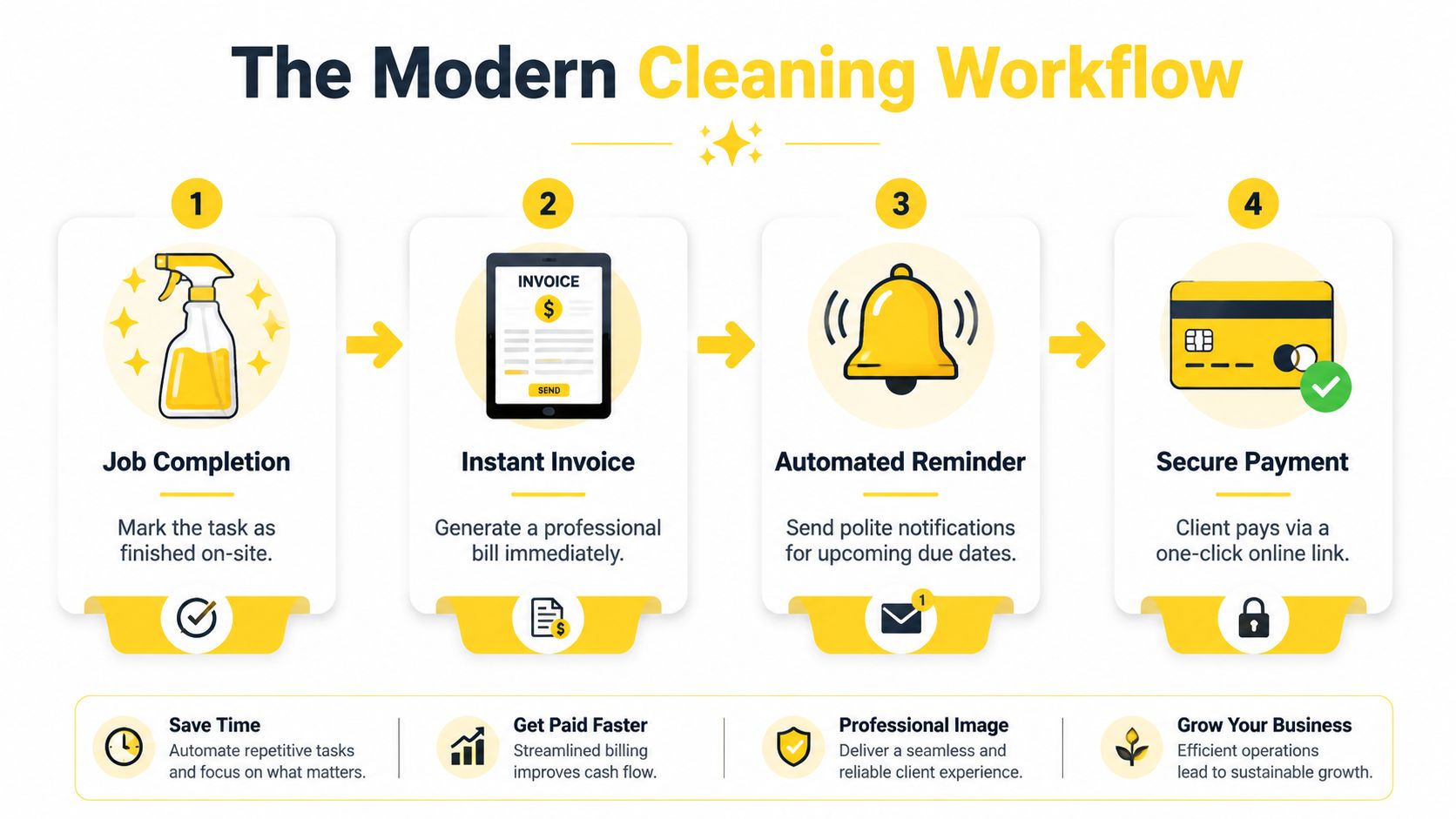
The cleanest process is straightforward:
Before leaving, note any approved add-ons, skipped areas, or changes. Poor invoices usually begin or are prevented at this stage.
Generate the invoice immediately
Send the invoice while the service is still fresh in the client's mind. The Paido commercial cleaning invoicing guide says businesses that automate invoicing and embed payment links achieve 14-day faster payment cycles on average and improve on-time payment rates from 62% to 85% compared with manual or paper-based methods, as detailed in their invoicing workflow analysis.
Include payment options inside the invoice
ACH, cards, and digital payment links remove the extra step of "I'll pay when I'm back at my desk." Friction is the enemy of fast collection.
Schedule reminders instead of relying on memory
The invoice should trigger follow-up automatically. If you're manually checking who paid, you're already behind.
A delayed invoice sends the wrong message. It tells the client payment isn't urgent because you didn't act like it was urgent.
A same-day invoice does the opposite. It links the completed work to an immediate, professional request for payment. That's especially effective when the bill pulls directly from the approved estimate, because the numbers don't surprise anyone.
One practical way to build that pipeline is to start with an AI-generated estimate and carry those job details into billing. Tools such as AI estimating software for cleaning businesses show how that handoff works. Estimatty, for example, captures service details during the estimate stage so the approved scope is easier to convert into a final invoice.
The less often your team retypes service details, the fewer billing mistakes you create.
Paper invoices get lost. Basic email totals create questions. Late-night invoicing after you've already forgotten the details leads to vague line items and awkward follow-up.
The modern workflow is boring on purpose. That's why it works. Job done, invoice sent, reminders scheduled, payment link clicked. Repeat.
Late payment usually isn't about one invoice. It's about an absent system.
Many cleaning owners wait too long because they don't want to sound pushy. That instinct is understandable, but it creates a worse outcome. The invoice ages, the client assumes delay is acceptable, and your cash flow gets squeezed.
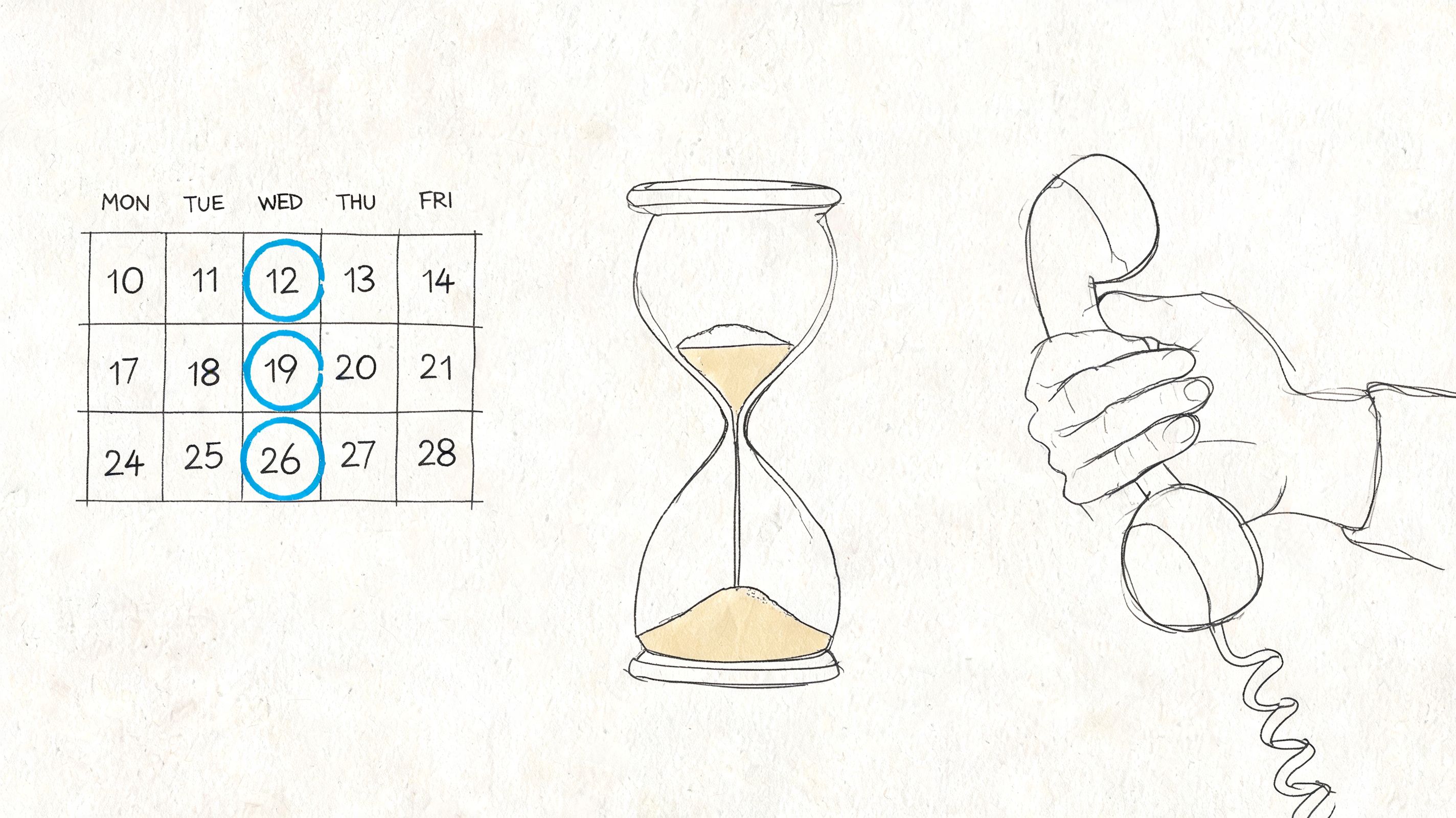
Adobe's business guidance points out that late payments are a major issue for service businesses, and for cleaning teams with tight cash flow, reducing payment cycles from 45 days to 15 days is critical to staying operational, as discussed in their cleaning invoice collection overview.
Don't improvise your collection process based on mood. Use a standard timeline.
If you chase late invoices casually, clients read that casually.
A lot of owners find that ignored invoices are really unclear invoices, weak follow-up, or too many payment steps. This guide on how to resolve ignored invoices effectively is useful because it focuses on the reasons clients stall and what to tighten.
Reminder after due date
Hi [Client Name], this is a reminder that invoice [number] for cleaning services at [property or service date] is now due. I've reattached it here for convenience. Please let me know if you need anything from me to process payment.
Firmer follow-up
Hi [Client Name], I'm following up on invoice [number], which remains unpaid. Please confirm the payment date or let me know today if there's any issue with the invoice so I can resolve it quickly.
A short visual recap helps if your team is building a repeatable follow-up habit:
Stick to the process. Reference the invoice number, service date, and terms. Keep emotion out of it.
If the client becomes defensive or difficult, document everything and communicate in writing. This guide to handling difficult customers without losing control of the process can help when billing friction starts spilling into the client relationship.
Use recurring invoices with the same service structure each cycle. Keep the line items consistent, then only adjust for approved extras, skips, or special requests. That consistency cuts back-and-forth and makes recurring clients easier to manage.
Don't argue from memory. Compare the final invoice to the approved scope and your job notes. If the client has a fair point, credit the disputed item and reissue the invoice cleanly. A revised invoice is better than a messy thread of partial agreements.
When a dispute is legitimate, fix the document fast. Clients trust businesses that correct paperwork without drama.
List the full service amount first. Then add a separate line that says "Less deposit paid" and subtract it from the balance due. That keeps the full job value visible while showing the client exactly how you arrived at the remaining total.
As your company grows, invoicing gets tied to staffing, scheduling, and accountability. If you're adding cleaners and formalizing team processes, resources like the Pipehire HRM blog at hiring and team management advice for service businesses are worth keeping on your radar.
If your invoice for cleaning still starts after the job is done, you're making payment harder than it needs to be. Build the process from the first estimate forward, keep the scope consistent, and make payment the natural final step. If you want to see how that kind of front-end workflow starts, Estimatty helps cleaning businesses generate AI-powered estimates that can feed a more organized sales-to-payment system.