October 24, 2026
Area of Service for Cleaning Businesses: How to Map Yours
Learn how to define and map your area of service for a cleaning business using drive time, travel fees and job minimums that protect profit.

Monday, April 27, 2026
Master dealing with difficult customers in your cleaning business. Discover a proven system for prevention, de-escalation with Estimatty, & client satisfaction.
.png)
A lot of cleaning owners don’t have a difficult customer problem. They have an inconsistency problem.
One day the customer gets one estimate over text. The next day someone on the team says something slightly different on the phone. A cleaner arrives with a different understanding of what’s included. By the time the customer sounds “difficult,” the business has already trained them to be cautious, defensive, or annoyed.
That matters because 82% of customers have left a company due to a bad customer service experience, and unhappy customers tell an average of 16 friends about their negative encounter, according to PATLive’s roundup of customer service statistics. In cleaning, where people are letting you into a home or facility, trust gets damaged fast and spreads even faster.
Dealing with difficult customers starts before the complaint. It starts with how you price, how you define scope, how you document what was promised, and how your team responds when something goes sideways.
In a cleaning business, “difficult” usually means one of three things. The customer feels surprised, the customer feels ignored, or the customer feels exposed to risk.
That’s why I don’t like treating every tough interaction as a personality issue. Some customers are demanding, sure. But many of the most stressful complaints trace back to a business blind spot: loose intake, vague estimates, weak service definitions, or no clear handoff between sales and operations.
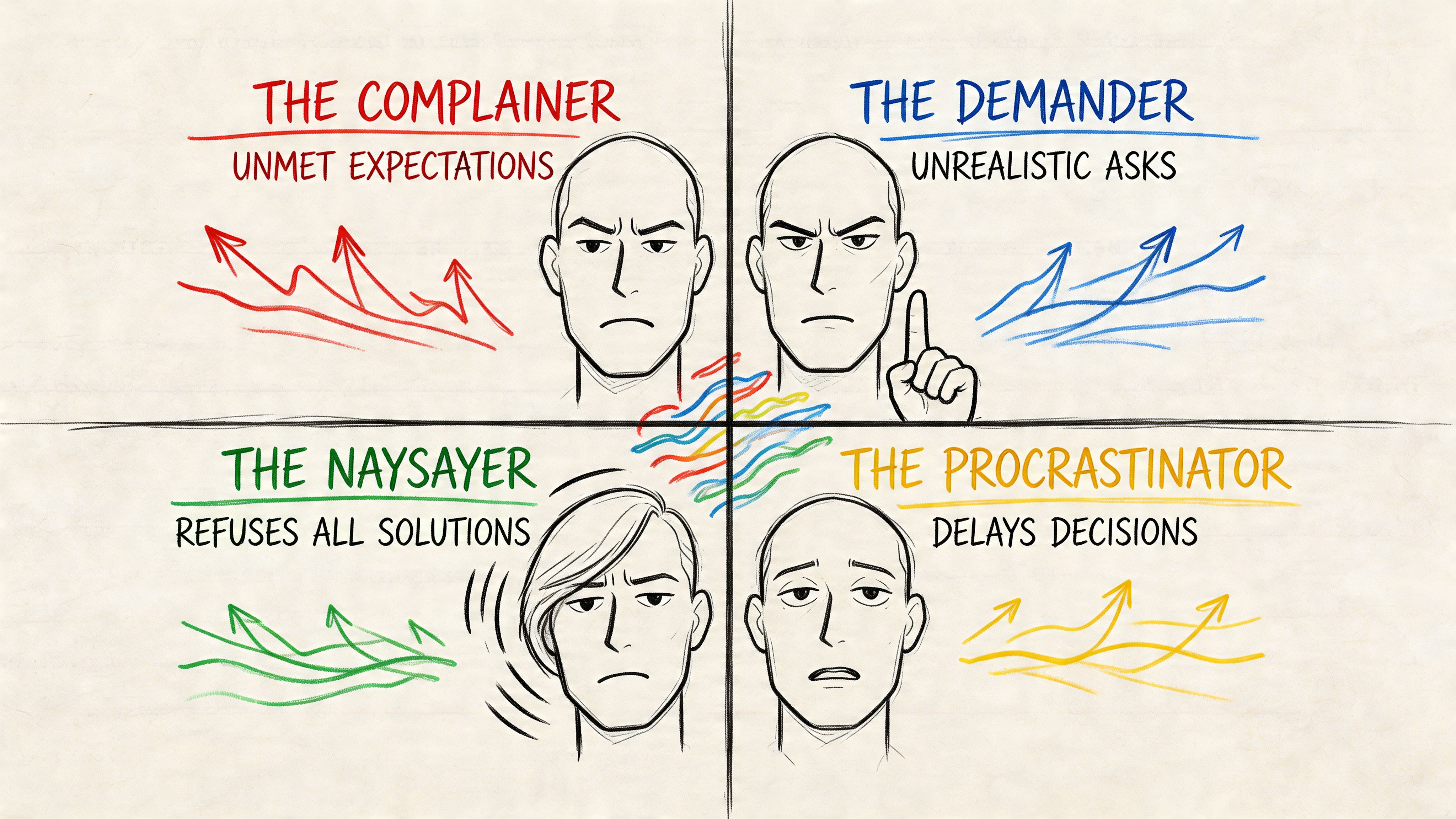
A few patterns show up over and over.
| Customer type | What they say | What’s usually underneath it |
|---|---|---|
| The Scope Creeper | “Can you also do the blinds, baseboards, and inside the fridge?” | They never understood what the standard service included |
| The Price Haggler | “That’s too high. Another company said less.” | They’re comparing unclear offers and testing your confidence |
| The Perfectionist | “I’m not happy with the result.” | They expected hotel-level detail without a written checklist |
| The Emergency Caller | “I need this handled right now.” | Urgency is real, but your process may not define response times |
| The Distrustful Prospect | “Why do you need all that information?” | They’ve been burned before and don’t trust vague intake |
None of these types are rare in residential or commercial cleaning. They’re normal. The mistake is acting like they all need the same response.
A scope creeper needs boundaries. A perfectionist needs specificity. A haggler needs a calm explanation of value and scope, not a rushed discount.
The most expensive conflict usually starts with an estimate that sounds clear to the business and vague to the customer.
If your team gives “ballpark” pricing without locking down square footage, surfaces, frequency, add-ons, or condition, you’ve planted the seed for an argument later. The customer hears one number. Your operations team sees a different job. Then someone has to deliver bad news.
Practical rule: If a customer is upset about price, timing, or quality, look for the missing definition before you look for the bad attitude.
This is also where safety and intake overlap. If your intake process misses clutter levels, pets, access issues, hazardous conditions, or unusual requests, you don’t just create customer tension. You put staff in bad situations. The intake side of dangerous cleaning job screening systems is really a customer service system too, because it prevents the “nobody told me that” moment on both sides.
Owners sometimes say, “That client was impossible.” Sometimes that’s true. But often the customer is reacting to uncertainty.
The customer who keeps repeating questions may not be trying to be difficult. They may be testing whether your company is organized. The one who pushes for exceptions may be checking whether your pricing is real or negotiable. The one who sends multiple texts after booking may be filling a communication gap you left open.
The better move is to diagnose the trigger:
When you can name the failure point, you can fix the system instead of arguing with the symptom.
That shift changes how you approach dealing with difficult customers. You stop asking, “How do I calm this person down?” and start asking, “What did my process fail to make clear?”
That’s the difference between reacting all day and building a company that generates fewer fires.
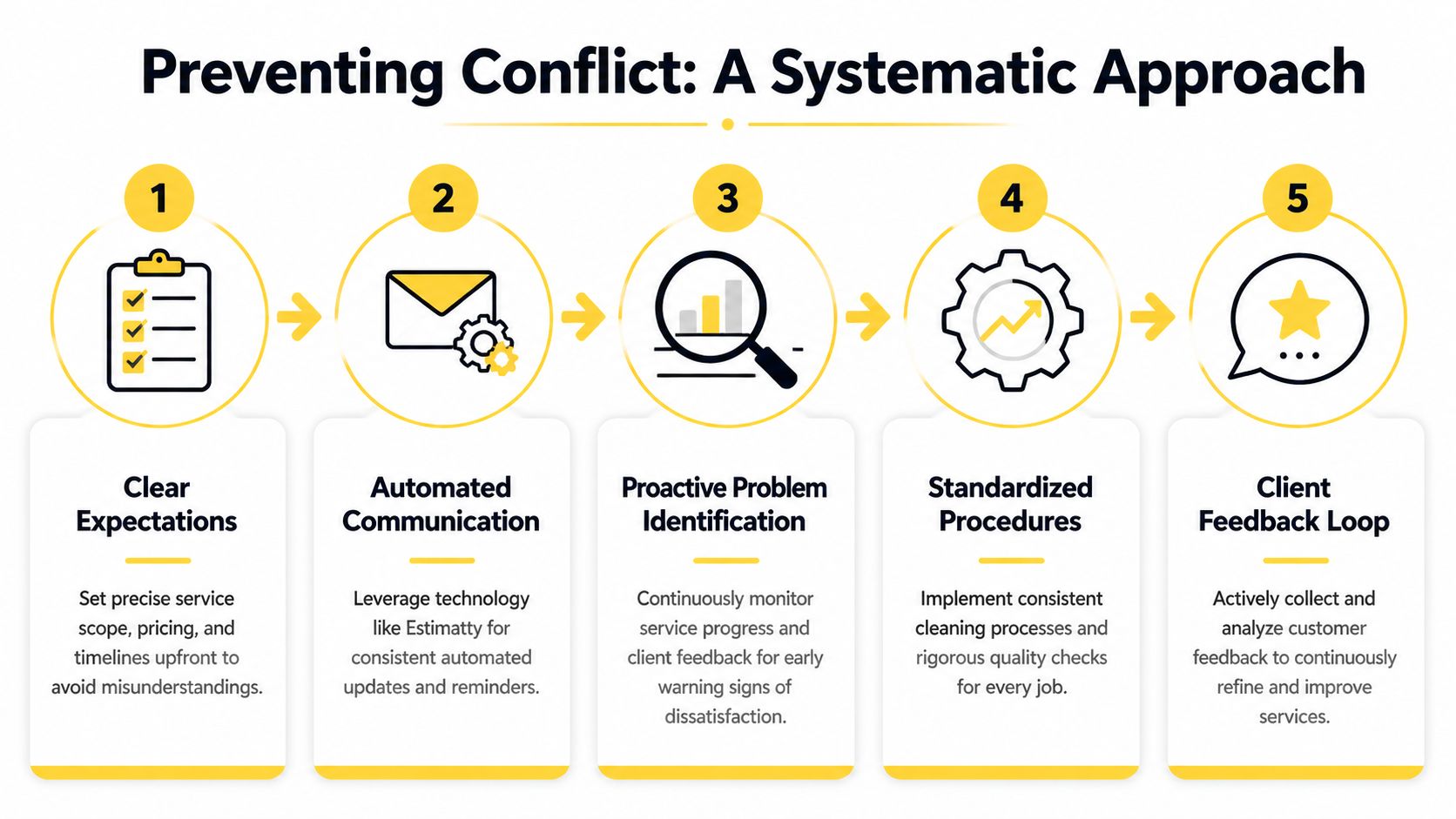
Most customer conflict in cleaning is preventable. Not all of it, but a lot of it.
The strongest way to reduce complaints is to make sure every prospect gets the same estimate logic, the same service definitions, and the same follow-up steps whether they contact you at noon or midnight. That’s where standardization stops being an admin exercise and becomes a sales and retention tool.
Research highlighted by Harvard PON’s discussion of difficult customers points to a gap many owners already feel in the field: cleaning businesses lose 31% of leads to pricing confusion, and firms with clear, automated protocols can cut escalations by 27% by setting expectations upfront.
If two people in your company would price the same job differently, you don’t have a customer service problem yet. You have a pricing control problem.
The fix is to build estimates from inputs, not moods. Use the same intake fields every time:
Property size
Collect square footage or another consistent size measure before giving an estimate.
Service type
Separate standard recurring cleaning, deep cleaning, move-in/move-out, and commercial work.
Condition variables
Ask about pets, number of bathrooms, floor type, buildup, and special attention areas.
Add-ons
List them individually. Inside oven, inside fridge, blinds, interior windows, laundry folding, and similar extras should never sit in a gray area.
Access and urgency
After-hours jobs, same-day requests, gate codes, parking issues, and limited access all need to be surfaced early.
When owners skip this structure, they create “gut-feel estimates.” Customers sense that immediately. They start negotiating because the number doesn’t feel anchored to anything.
A lot of customer anger comes from an unspoken sentence: “I thought that was part of the service.”
That’s why every cleaning business needs a service checklist that’s visible during intake, visible before booking, and visible to the team doing the work. Your standard clean should be defined in plain language. Your deep clean should be defined separately. Add-ons should be named individually.
A simple way to do this is to build an FAQ and checklist around the questions customers already ask:
That last point matters more than most owners think. It gives you a clean, professional path when the home is in substantially different condition than described. Instead of debating on site, your team can point to the stated policy.
Operational standard: If you can’t show the customer where a rule was communicated, don’t assume they accepted it.
The most useful automation isn’t flashy. It’s the basic communication that tired office staff forget to send.
Every estimate should trigger confirmation details. Every booking should trigger service reminders. Every completed job should trigger a follow-up request. Every complaint should create a note trail. If you want a practical breakdown of what belongs in that workflow, automating customer service for cleaning companies is worth reviewing because it focuses on reducing manual gaps, not just adding software.
A prevention system should include:
For the service side, it also helps to study how adjacent operators think about hygiene and presentation. I like the practical framing in WipesBlog's cleanliness strategies because it reinforces a useful point: customer satisfaction often rises when the service feels orderly before the first wipe hits the counter.
Owners often overinvest in apology language and underinvest in friction removal.
Apologies matter. But if your system keeps producing estimate confusion, unclear scope, and missed communication, your team will spend the week saying sorry instead of solving root causes. Prevention means fewer tense calls, fewer price disputes, and fewer jobs that start with suspicion.
The businesses that handle dealing with difficult customers best are usually the ones creating fewer avoidable misunderstandings in the first place.
Even with tight systems, some jobs will still produce friction. A cleaner misses an area. A customer thinks the estimate should have been lower. Something gets moved, scratched, or questioned. That’s normal.
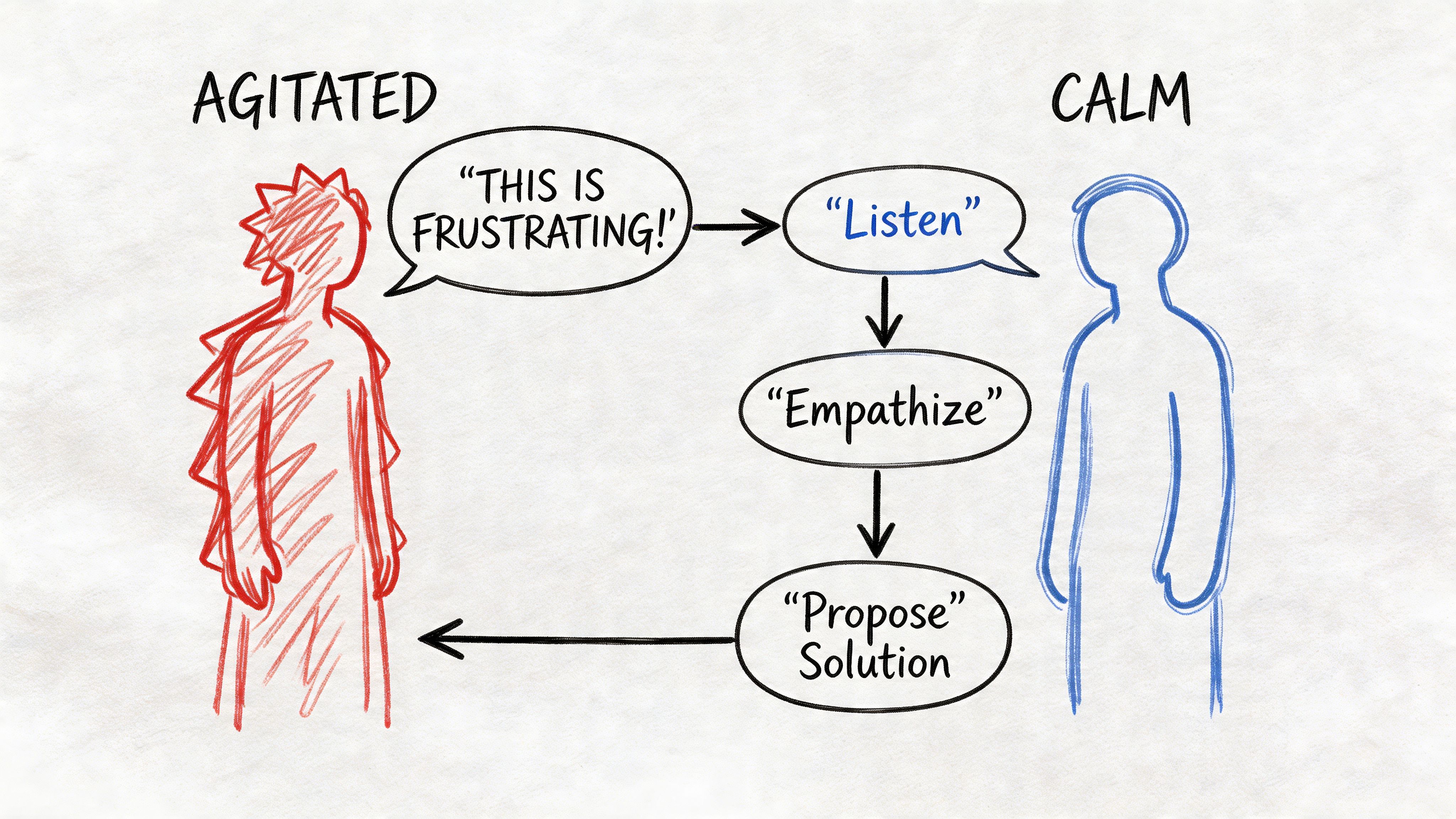
When that happens, the biggest mistake is improvising. The second biggest mistake is defending yourself too early. In a tense moment, the customer is listening for one thing first: whether your company is organized enough to handle the problem.
According to AmplifAI’s customer service statistics, poor customer experiences put $3 trillion in global sales at risk in 2026 as a projection, and 72% of customers view having to explain their problem to multiple people as a hallmark of poor service. In cleaning, that means a customer should never have to retell the whole story because your office, your receptionist, and your field team aren’t aligned.
A simple framework works well under pressure: Acknowledge, Align, Action.
Acknowledge the concern without arguing.
Align on the next step, not necessarily on blame.
Action with a clear timeline.
That sounds basic, but the wording matters.
Phone script:
“Thanks for telling me. I understand why that’s frustrating. I’m pulling up the job details now so I can fix this properly. I’m going to review the service notes and give you the fastest correction option we can offer.”
Text script:
“I’m sorry you’re dealing with that. I’m reviewing the job details now. Please send a photo of the area if you can, and I’ll reply with the next step as soon as I confirm the best resolution.”
Email script:
“Thank you for flagging this. I understand the concern, and I’m reviewing the service notes now. Please reply with photos of the area in question, and I’ll follow up with a specific resolution once I’ve checked the details with our team.”
Notice what these scripts do. They don’t deny. They don’t admit fault before review. They move the issue into a process.
Customers rarely calm down when you repeat the number louder. If someone says the estimate is too high, your job is to reconnect the price to scope.
Here’s a strong phone response:
“I hear you. Let’s walk through what this estimate includes so you can compare it fairly. The price reflects the property details, the service level requested, and the add-ons attached to the job. If you want, we can look at where to adjust scope instead of guessing on price.”
That approach protects your margins because it keeps the conversation grounded in inputs.
For text:
“Understood. The estimate is based on the service details we collected. If you want to lower the total, I can help you remove or change parts of the scope so you’re comparing like for like.”
A lot of teams lose control here by slipping into apology mode. They say, “Let me see what discount I can do.” That trains the customer to keep pushing.
Owners get emotional in these situations, especially if they trust the cleaner involved. Don’t let internal loyalty change your customer-facing process.
Use language like this:
“I’m sorry this was brought to our attention under these circumstances. I’m documenting the concern now and reviewing the job record with our team. Please send photos of the item and the area around it, and I’ll update you after that review.”
That keeps the response professional and preserves the facts. It also avoids two bad habits: blaming the cleaner instantly or dismissing the customer instantly.
If your business uses a receptionist layer or offloads first response, make sure they have enough context to keep continuity. A useful setup is a virtual receptionist workflow for small businesses that captures issue type, urgency, photos requested, and who owns follow-up. The customer should feel like one company is handling the issue, not three disconnected people.
A short list of phrases that make hard calls worse:
“That’s our policy.”
Use this only after you’ve acknowledged the concern and explained the next step.
“No one else has complained.”
The customer hears that as dismissal.
“My cleaner said they did it.”
That turns the exchange into a credibility contest.
“Calm down.”
Nobody calms down because they were told to.
This short video is useful because it reinforces the mechanics of staying measured during conflict.
A complaint doesn’t end when you reply. It ends when the customer sees progress.
If you say you’ll call back by 3 p.m., call back by 3 p.m. even if you’re still investigating. If you asked for photos, confirm receipt. If you promised to review service notes, tell them when that review is done.
The customer can tolerate a problem better than they can tolerate silence.
That’s the true skill in dealing with difficult customers. Not winning the exchange. Guiding it.
A lot of businesses create escalation problems by waiting too long or escalating too fast.
If the system keeps the issue with automation after the customer is clearly frustrated, the person feels trapped. If every complaint jumps straight to the owner, the owner becomes the customer service department. Neither model scales.
The handoff path has to be intentional. That’s especially true in AI-assisted workflows. An underserved issue flagged in Pollack Peacebuilding’s discussion of difficult customer handling points to 68% of firms using AI chat reporting higher churn from unresolved AI escalations. The lesson isn’t “don’t use AI.” The lesson is that AI without a clean human handoff creates more friction, not less.
The first tier should absorb routine questions and intake tasks well. That includes:
This works when the issue is informational and the customer’s tone is still stable.
It fails when the customer starts signaling distrust, urgency, or emotional frustration. If they repeat themselves, challenge accuracy, or ask for a person directly, the system should stop trying to “win” and move the conversation forward.
The second tier is a trained receptionist or office team member with authority to solve common problems. That person needs the full interaction history before speaking to the customer.
That means they should see:
If you’re building this kind of workflow, AI sales automation for cleaning services is relevant because the technology only helps when it passes usable context forward.
Decision rule: Escalate when emotion rises faster than information. If the customer is no longer asking for facts and is now demanding reassurance, a human should take over.
The owner or manager should enter only when one of these conditions is present:
Owners get into trouble when they jump into low-level complaints too early. It conditions staff to freeze and wait. It also teaches customers that pressure is the fastest path to top-level attention.
A better escalation path looks like this:
| Issue type | Best level |
|---|---|
| Basic service question | AI or automated self-service |
| Estimate clarification | Receptionist or office team |
| Missed area complaint | Receptionist with service notes |
| Damage concern | Manager or owner review |
| Refund outside policy | Owner or senior manager |
| Repeated unresolved frustration | Immediate human handoff, then management if needed |
A bad transfer sounds like this: “I’m going to send you to someone else.”
A good transfer sounds like this: “I’ve documented what happened, including the service date and your main concern, so you won’t need to repeat it. I’m connecting you with the person who can resolve this next step.”
That sentence alone lowers friction because it protects the customer from starting over.
The point of escalation isn’t to move the customer along. It’s to place the issue with the lowest level that can solve it, while preserving context all the way through.
Systems reduce chaos, but people still carry the brand. If your team gets flustered, defensive, or vague under pressure, the customer feels it immediately.
That’s why training for dealing with difficult customers isn’t soft skill fluff. It’s operational discipline. A calm response protects retention, online reputation, and field morale all at once.
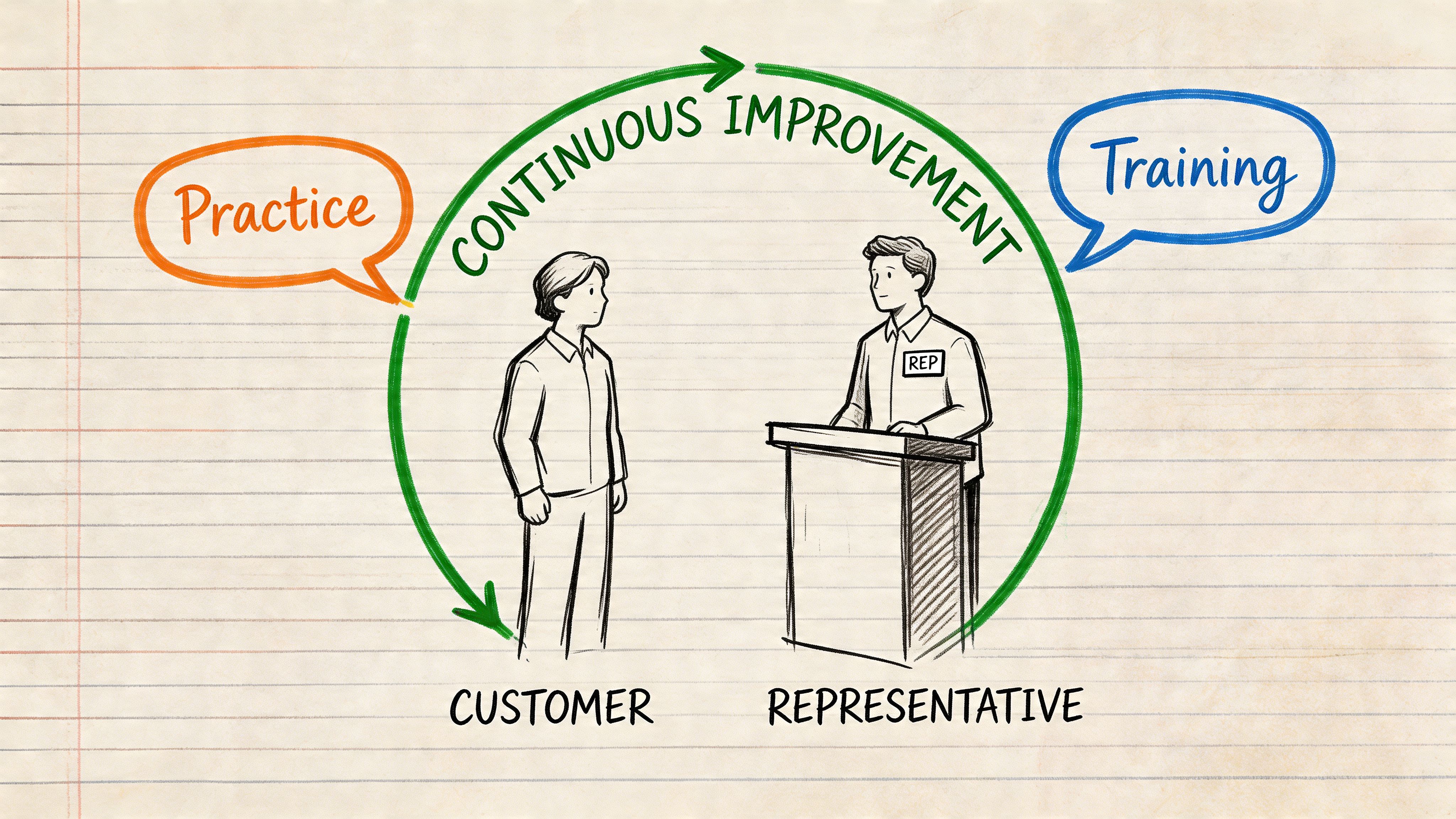
There’s a hard business case for it. Velaris’ customer success statistics article notes that peer learning sessions where teams review resolved cases can boost customer satisfaction by 28%, and companies that invest in data analytics and training see a 91% three-year ROI, primarily through client retention.
It's not lectures on “be empathetic” that teams need. They need practice saying the right sentence when a customer says, “Your cleaner broke something,” or “I was told this was included.”
Good drills are short and repetitive. Use situations from your own business:
The missed-detail drill
One person plays the customer who found uncleaned areas after service. The team member must acknowledge, request evidence cleanly, and offer the next step without sounding robotic.
The estimate challenge drill
The customer pushes back on price. The rep must explain scope without discounting by reflex.
The damage-report drill
The rep must document facts, request photos, avoid blame, and promise a follow-up time.
The angry text drill
Team members practice writing replies that are calm, short, and useful.
After each drill, ask two questions: What line helped lower tension? What line would have made this worse?
Peer learning works because staff hear how other people handled the same pressure. One receptionist might be excellent at slowing down an upset caller. Another might be strong at estimate objections. If they review those interactions together, good language spreads.
A simple weekly review can cover:
| Review item | What to look for |
|---|---|
| Complaint intake | Did we capture facts before reacting? |
| Tone control | Did the rep stay steady without sounding cold? |
| Policy use | Was the rule explained clearly and fairly? |
| Follow-up | Did we close the loop when promised? |
A resilient team isn’t the one that never gets complaints. It’s the one that handles them the same way on a Tuesday afternoon and a Friday night.
Some owners hire only for cleaning skill, then act surprised when customer issues get messy. Technical ability matters, but composure matters too.
When screening cleaners, office staff, or reception support, ask behavior questions that reveal judgment. Examples:
For field hiring, hiring cleaning employees effectively is a better lens than just filling shifts, because service consistency starts with who you put in front of customers. If you’re building out office support or admin help around service operations, this guide to strategic VA hiring for home service companies is also useful for thinking through role fit and communication responsibility. And if you want a hiring workflow built specifically around cleaning teams, pipehirehrm.com and the articles on get.pipehirehrm.com/blog are worth reviewing for process ideas.
Training fails when the employee has no room to solve anything.
Set clear resolution boundaries. For example, define what a receptionist can offer, what a field lead can approve, and what must go to management. People handle customers better when they know where their authority starts and stops.
Without that, they either overpromise or stonewall. Both create more callbacks.
If you only judge customer service by whether today felt busy, you’ll miss the pattern.
The better approach is to measure whether your team is resolving issues early, documenting them well, and feeding the lessons back into intake, estimating, and training. That’s how dealing with difficult customers becomes a management system instead of a daily mood.
The most useful service metric here is First Contact Resolution, or FCR.
FCR is calculated as:
Issues resolved on first contact / Total number of issues x 100
That sounds simple, but it tells you a lot. If customers keep needing a second or third interaction, something is usually weak in one of these places:
According to LearnExperts’ summary of customer success metrics, effective programs that achieve an FCR rate above 70% can prevent churn in 67% of cases and are correlated with 20-30% higher booking conversions in service sectors.
Don’t build a dashboard with twenty numbers you won’t review. Start with a short scorecard.
| Metric | Why it matters |
|---|---|
| FCR | Shows whether the first response is actually solving problems |
| Complaint type | Reveals whether issues come from scope, timing, damage, or communication |
| Time to first human response | Shows whether escalations are sitting too long |
| Repeat complaint rate | Exposes whether the same failure keeps happening |
| Post-resolution sentiment | Helps you judge whether customers felt handled well, not just processed |
The last one doesn’t need to be complicated. A short follow-up note after resolution can tell you a lot. If several customers say the team was polite but unclear, your tone is fine and your process is weak. If they say they got a solution but had to repeat themselves, your handoffs are broken.
Most businesses stop too early. They solve the individual issue, then move on.
A better habit is to ask, after every meaningful complaint, “What should change now?” Sometimes the answer is an updated service checklist. Sometimes it’s a clearer estimate field. Sometimes it’s a new receptionist script. Sometimes it’s a hiring issue.
Owner mindset: A complaint is expensive tuition. Don’t waste the lesson.
If you use a CRM, tag the root cause. If you use a simpler system, keep a weekly issue log. Review it with your team. Then update the documents customers see and the scripts staff use.
That loop is what creates improvement. Better intake reduces confusion. Better notes improve handoffs. Better training improves first-contact handling. Better measurement tells you whether the changes worked.
That’s how you stop treating difficult customers like random bad luck and start treating them like feedback on the strength of your operation.
If you want fewer pricing disputes, fewer after-hours lead leaks, and a cleaner handoff from first inquiry to booked job, Estimatty gives cleaning businesses a practical way to standardize estimates, capture job details instantly, and keep customer communication consistent around the clock.