September 29, 2026
Commercial and Residential Cleaning in 2026
Compare commercial and residential cleaning markets in 2026. Explore pricing, staffing, compliance, and how AI estimators streamline operations.
Monday, February 16, 2026
Learn how to automate customer service for your cleaning business. Get practical strategies and AI tools to convert more leads and boost revenue 24/7.
.jpg)
The fastest way to get your customer service working for you instead of on you is to put it on autopilot. Think about it: an AI-powered assistant that can engage a potential client the moment they show interest—whether it's 2 PM or 2 AM. This is how you stop leaving money on the table. It lets you capture every single lead by answering questions, collecting job details, and firing off a precise estimate in seconds.
No more lost revenue from missed calls or a slow email reply.
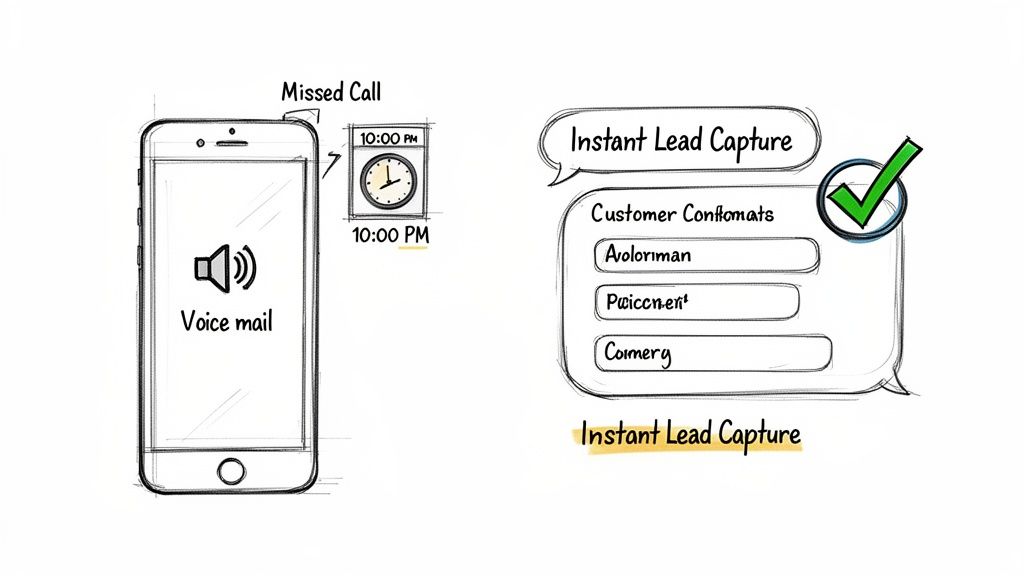
We've all been there. It’s 10 PM on a Friday night. A homeowner is fired up and ready to book a deep clean. They find your company, give you a call... and it goes straight to voicemail. You just lost a job you never even knew you had.
This happens every single day to cleaning business owners. Every missed call, every web form that sits unanswered in your inbox, is a customer slipping right through your fingers and landing in the hands of a competitor who was just a little bit faster. Learning how to automate customer service isn't a "nice-to-have" anymore; it's a core strategy for staying in business and actually growing.
Let's be honest, today's customers are impatient. They expect speed and they want convenience. When they're ready to buy, they don't have time to wait for you to call them back tomorrow morning. They want an answer now.
Without an automated system in place, your business is only "open" when you're physically available to pick up the phone or type out an email. This manual approach creates a massive bottleneck that suffocates your growth and hurts your bottom line. It's not just about the missed jobs, either. It’s about the inconsistent experience you're providing. One person gets a quick reply, another waits for hours. That's not a professional look, and it kills trust before you even get a chance to talk numbers.
The real problem is painfully simple: Your schedule doesn't always line up with your customer's urgency. Automation is the bridge that closes that gap, making sure you’re ready to win business 24/7, even while you sleep.
Now, imagine a system that never misses a call. One that never lets a website visitor leave without getting the info they need. That’s exactly what an AI-powered tool like Estimatty brings to the table. It's your always-on sales agent, ready to engage the second someone reaches out.
Instead of that cold, generic voicemail, customers are greeted by an intelligent assistant that actually helps them. It can:
This isn't about getting rid of the human touch. It's about perfecting that first impression to make sure you capture every single lead that comes your way. For anyone running a house cleaning business, this is a total game-changer.
The numbers don't lie. Recent data shows that 92% of organizations report generative AI improves their service quality, and 72% of customers stay loyal to brands that provide faster service. It's clear that speed wins.
This is where a well-oiled process comes in. Smart website optimization for lead generation funnels prospects right into your new automated system, creating a smooth experience from start to finish. This immediate, professional interaction frees you from being chained to your phone and lets you focus on what you're actually good at—running your business and managing your teams. By leaning into automation, you build a foundation for real, scalable growth. If you want to dig deeper into handling these inquiries, check out our guide at estimatty.com/blog.
To really see the difference, let’s compare the old way of doing things with an automated approach.
As you can see, the contrast is stark. The manual process is a constant battle against time, while automation gives you the power to be everywhere at once, ensuring no opportunity is ever missed.
Before you jump into any new tech, you need a game plan. A slick automation tool is totally useless if it just confuses your customers. The real goal here is to design an automated journey that feels personal and efficient, making potential clients feel like you've rolled out the red carpet for them from their very first click or call.
This is where you map out exactly how your automated system will talk to people. You're not just installing software; you're building a repeatable, five-star experience that makes a killer first impression.
First things first: where are you dropping the ball right now? You need to get brutally honest about where leads are slipping through the cracks. Take a minute and think about every single way a potential customer tries to get in touch.
For most cleaning businesses, the weak spots are pretty obvious:
Once you’ve identified the leaks, you can start plugging them with smart automation. The idea is to swap out those slow, manual touchpoints for instant, helpful automated ones.
Alright, now for the fun part: designing the actual conversations your AI assistant will have. This is where you pour all your real-world experience into a script that can qualify leads for you 24/7. Think about the go-to questions you ask every single new client to nail down an accurate estimate.
Your conversational flow is basically a guided path that smoothly takes someone from "just browsing" to "here's everything you need to book us." It has to feel natural, not like an interrogation.
A great automated conversation doesn't just collect data; it builds confidence. By asking the right questions in the right order, you show prospects that you're a professional who understands their needs, making them more likely to trust your estimate and your service.
Start by mapping out the absolute must-ask questions for any residential or commercial cleaning job.
See how each question flows logically into the next? You're guiding them, just like you would on the phone. This standardized process makes sure every lead gives you the exact info you need, which means no more guesswork and perfectly consistent estimates. The journey behind creating such a system is fascinating; you can read more about how a real cleaning team built their own 24/7 AI sales agent to perfect this process.
This blueprint becomes the brain of your entire system. By scripting these flows, you aren't just automating a few tasks—you're basically cloning your best salesperson and putting them on the clock around the clock.
Alright, you’ve got the blueprint, now let's talk about the tools for the job. You absolutely do not need a computer science degree to build a killer automation system. Thanks to a new wave of no-code platforms, you can stitch together the software you're already using into an intelligent workflow that practically runs itself.
Think of it like building with LEGOs. Each tool is a different block with a specific function. Your job is to snap them together in the right order to create something way more powerful than any single piece. This is how you build a customer service machine that feels like it was custom-made for your cleaning business, all without touching a line of code.
Every great automation system needs a powerful engine, and for a cleaning business, that engine's job is to get accurate estimates to potential customers instantly. This is non-negotiable. This is where a tool like Estimatty becomes the cornerstone of your entire setup.
Estimatty is built to be your digital salesperson, engaging leads on your website or over the phone the moment they show interest. It handles that initial back-and-forth and calculates pricing on the spot, freeing you and your team to focus on closing deals instead of just answering the same questions over and over. This is the first and most critical piece of the puzzle because it plugs the single biggest leak in your sales funnel: missed opportunities.
Now for the fun part. The real magic happens when you connect that core engine to the other software you use every day. This is where a connector tool like Zapier comes into play. Think of Zapier as the universal translator for all your apps, letting them talk to each other automatically based on simple rules you set.
Let’s walk through what this actually looks like in the real world:
This entire sequence happens in seconds. You've just turned a curious website visitor into a warm, qualified lead sitting in your pipeline, and you did nothing. This is how you scale without drowning in admin work. If you're still deciding on a system, we've put together a guide on finding the best CRM for cleaning business operations.
This visual breaks down the process of refining your customer journey—from spotting the weak points to scripting the conversation and finding those perfect upsell moments.
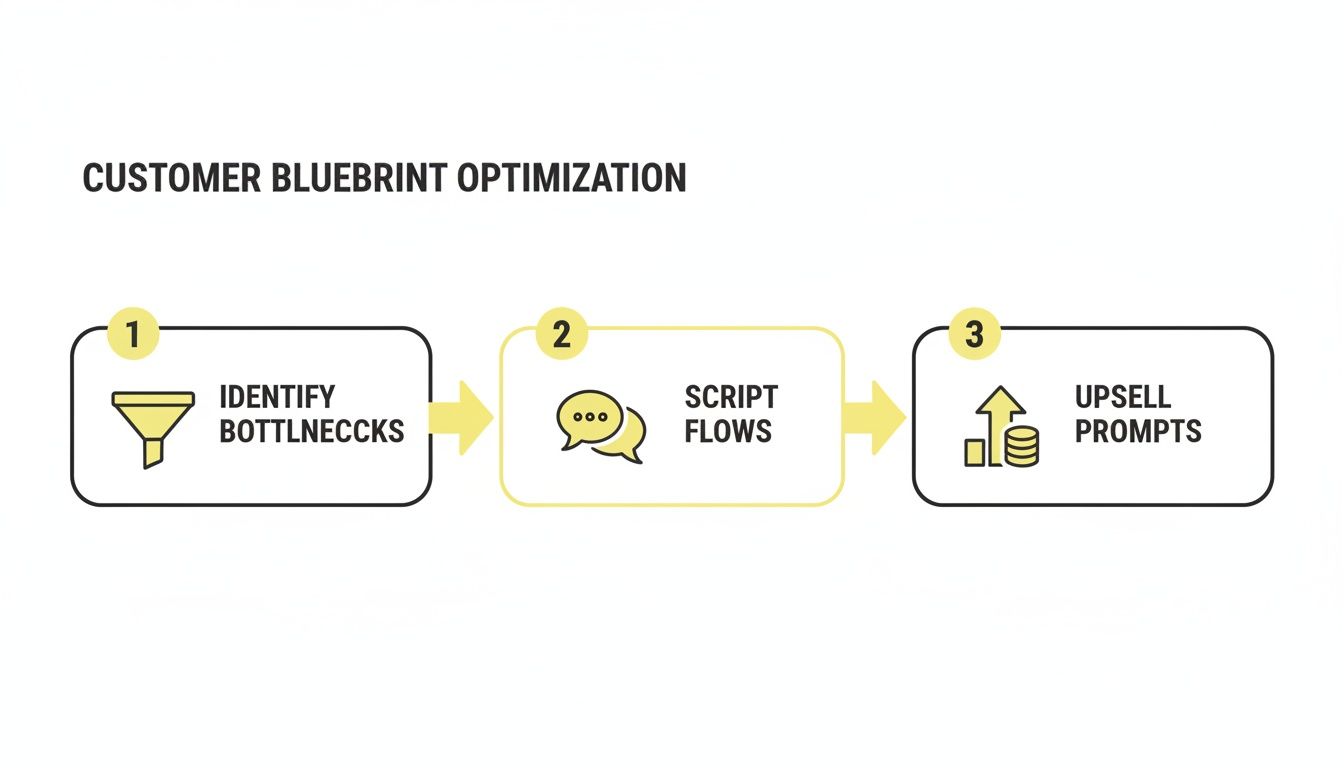
Following this logic helps you build an automated experience that feels smooth for the customer while making sure you capture the most value from every single interaction.
If you do this right, you’re going to run into a great problem: more booked jobs than you have people to clean them. This brings us to the final piece of your toolkit—a system for finding and hiring cleaning employees. As your automated sales engine starts filling the calendar, you’ll need a reliable team of high-quality cleaners to deliver on your promises.
Your automation toolkit isn’t just about the tech; it’s about building a sustainable growth model. The secret to scaling without chaos is pairing an automated customer pipeline with a streamlined hiring process.
This is why it's a smart move to integrate a hiring platform designed for our industry. A resource like pipehirehrm.com is built specifically for cleaning companies, helping you find qualified people who are ready to get to work. By planning for this growth from the beginning, you ensure that as your sales ramp up, your operations can keep pace. You're not just building a sales machine; you're building a business that can handle the success coming its way.
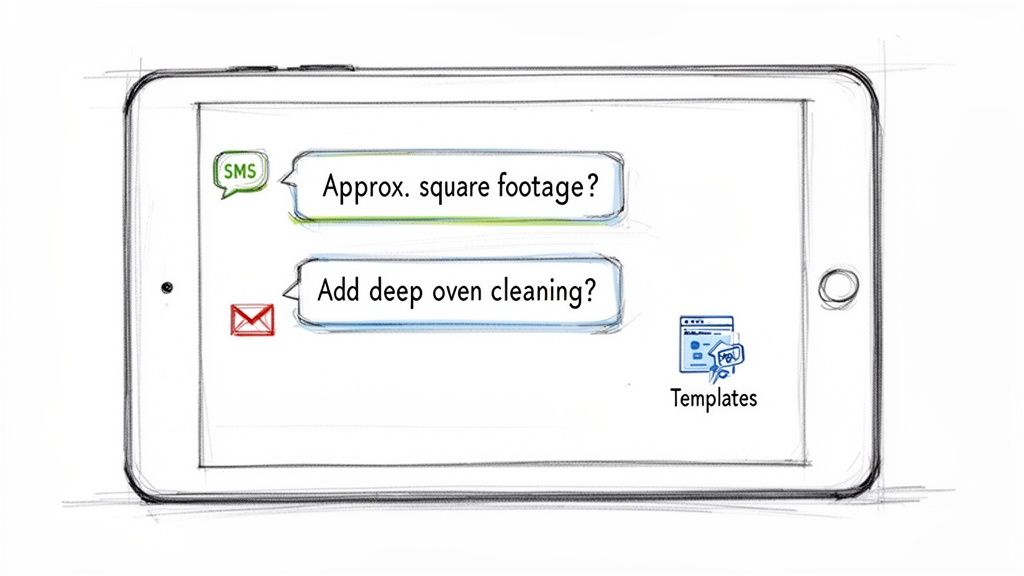
Let's be honest: the most sophisticated automation on the planet is useless if the words it speaks don't actually land with your customers. Your scripts are the very heart of your automated sales engine. They need to be sharp, clear, and effortlessly guide a potential client from "just looking" to "when can you start?"
This isn't about sounding like a robot. It's about distilling the best parts of your human sales pitch—your warmth, your expertise, your reassurances—into a system that works for you 24/7. Let’s walk through the essential scripts that will turn curious web visitors into paying customers.
Your first automated message is your digital handshake. It has one job: build instant trust and set the right expectations. In just a few seconds, you need to hit three key points: confirm who you are, state what you can do for them right now, and tell them how fast you'll do it.
Residential Cleaning Example:
"Hi there! Thanks for reaching out to SparkleClean Maids. I can get you a personalized estimate for your home cleaning in about 60 seconds. Just a few quick questions to get started!"
Why does this work? It’s friendly, it immediately names the company, and it sets a "60 seconds" expectation that screams efficiency. The customer instantly feels they're in the right place and that getting a price won't be a chore.
Once you've made a great first impression, your AI needs to get down to business. It must gather the exact information needed for an accurate estimate. The trick here is asking simple, direct questions that demand easy answers. Stay away from open-ended stuff that can confuse an automated system.
Think about how you'd ask these questions on a phone call and structure the flow logically.
This sequence is the backbone of effective customer service automation. It gets you the core data for your pricing formula without overwhelming the user with a wall of questions.
Here’s where automation truly shines. A well-programmed system can consistently offer upsells without ever sounding pushy or desperate. The perfect time to do this is right after gathering the basic info but just before delivering the final price.
This is your chance to increase the value of every single job that comes through your funnel.
Commercial Cleaning Upsell Prompt:
"We've got the details for your office cleaning. Many of our commercial clients also add our interior window washing service for a complete refresh. Would you like to include that in your estimate?"
This prompt is effective because it uses social proof ("Many of our commercial clients...") which makes the offer feel standard and valuable. It frames the upsell as a helpful suggestion, not a hard sell, making it a simple, low-pressure way to boost your bottom line.
Delivering an instant estimate is a huge win, but the job isn't quite done. You need to immediately follow up with an automated SMS and email. This provides a clear, written record of the estimate and gives them a powerful call-to-action to book right away. It's a professional touch that removes all friction.
SMS Follow-Up Template:
"Hi [Customer Name], here is your estimate from SparkleClean Maids: $195 for your one-time deep clean. You can book your service and lock in your spot right here: [Booking Link]. We look forward to making your home shine!"
This message is personal, it clearly restates the price, and the direct booking link makes it incredibly easy for them to say "yes." This kind of seamless experience is a game-changer for conversion rates. In fact, you can read a case study on how one company doubled its sales after implementing instant estimates and automated follow-ups.
Flipping the switch on your new automated system is a huge milestone, but it’s definitely not the finish line. Honestly, going live is just the beginning. The real path to growth comes from obsessively measuring what works, what doesn't, and fine-tuning your automated engine until it's a lead-generating machine.
True success isn’t just about turning the system on; it's about making it smarter over time. This continuous cycle of launching, measuring, and optimizing is how you transform a good tool into your company's most valuable asset.
You wouldn't send a brand-new cleaner to a job without any training, right? The same logic applies here. Before you unleash your system on real, paying customers, you need to put it through its paces. It's on you to run through every conceivable scenario to make sure your estimates are always spot-on and the customer experience feels seamless.
Put on your customer hat and test these common situations:
Think of this pre-launch testing as your safety net. It catches awkward phrasing, confusing questions, or pricing errors before a real lead ever sees them. This way, every interaction builds trust right from the very first click.
Once you’re confident in the system, it's time to bring your team into the loop. Your new automation isn't replacing your staff; it’s empowering them with a steady stream of warm, qualified leads. Their job shifts from cold outreach and endless phone tag to managing relationships with prospects who are already interested and have a price in hand.
Train your team on how to read and interpret the leads coming from the system. They need to understand what information the AI has already gathered and what their next step is. This creates a really smooth handoff where the customer feels supported by both smart technology and a real human expert. You’ll be surprised at the results; "we’re getting more leads from our current website traffic" is a common thing we hear from businesses that nail this transition.
Your team essentially becomes the closing crew. The AI does the heavy lifting of qualifying and quoting, and your people step in to provide that final personal touch that seals the deal.
You can't improve what you don't measure. To really understand if your automation is working, you have to track the numbers that directly impact your bottom line. Ignore the vanity metrics and zero in on the data that tells you if your system is actually making you money.
For me, the big three metrics to watch are:
This data-driven approach is what lets you make smart, unemotional business decisions. If conversions are low, maybe it's time to tweak your follow-up messages. If job values are smaller than you’d like, you can adjust your upsell prompts within the bot.
The opportunity for growth here is massive. By 2026, AI is expected to automate 10% of agent interactions, but there’s a huge 75% implementation gap in many industries. For cleaning businesses, this is a golden opportunity to get ahead of the curve, as 39% of companies are already using generative AI to improve customer communication.
Diving into automation can feel like a huge leap. I get it. I talk to cleaning business owners every day who worry if it’s too complex, too expensive, or if it will strip away the personal touch they've worked so hard to build.
Let's cut through the noise. We're going to tackle these common concerns head-on, so you can see this isn't about becoming a tech guru. It's about making a savvy business move to scale up without burning out.
Honestly, it’s the exact opposite. When you do it right, smart automation actually makes your service feel more personal. Think about it: it handles the tedious, repetitive questions instantly. A potential customer gets an answer in seconds, not hours. That speed makes a killer first impression, making you look incredibly professional and on the ball.
This frees you from the soul-crushing task of giving the same basic estimates over and over. Instead, you can invest your time where it truly matters—having real, meaningful conversations with people who are already warmed up, know the price, and are ready to book. You're combining high-tech efficiency with a genuinely human, high-touch approach.
Here’s the best part: you really don't need much at all. Modern tools, like Estimatty, were built specifically for business owners, not Silicon Valley coders. The whole setup is a straightforward, no-code process. You just plug in your services, your add-ons, and your pricing. It’s built to be intuitive right out of the box.
Getting it onto your website is as simple as copying and pasting a little snippet of code. If you can write a Facebook post, you can handle this. And connecting it to other tools you’re already using? That's done with platforms like Zapier, which uses simple "when this happens, do that" rules. You can literally have a powerful automation engine working for you in a couple of hours.
That's a deliberate choice, and it's a crucial one. We stick with the word "estimates" because the system generates a very accurate price based on the information the customer gives it—square footage, number of bedrooms, specific cleaning needs. This is all about managing expectations perfectly from that first click.
A "quote" can feel final, almost like a contract set in stone. An automated "estimate" gives the customer the instant ballpark they need to make a decision, while still giving you the wiggle room to adjust the final price if you show up and find something unexpected. It keeps things fair for everyone.
Getting a flood of new work and needing more hands on deck is the best problem you can possibly have. Your new automated system lands the clients, and the right hiring platform helps you find the amazing people to do the work. The trick is to use resources built for our industry.
I always point people toward a platform like Pipehire. It was designed from the ground up for cleaning businesses—helping you find, screen, and manage great cleaners. When you combine your sales automation with a smart hiring system, you're not just getting more jobs; you're building a sustainable business that can actually handle the growth. They've got some fantastic articles on their blog, which you can find over at get.pipehirehrm.com/blog.
Ready to stop letting leads slip through the cracks? Estimatty is like having an AI sales agent working for you 24/7. It engages customers the moment they land on your site, gives them an accurate estimate in seconds, and frees you up to build your empire.