September 29, 2026
Commercial and Residential Cleaning in 2026
Compare commercial and residential cleaning markets in 2026. Explore pricing, staffing, compliance, and how AI estimators streamline operations.
Friday, February 20, 2026
Discover google ads for cleaning business to drive leads, book more jobs, and optimize campaigns with proven strategies.
When you need new cleaning clients now, there’s no faster way to get in front of them than Google Ads. Forget marketing methods that take months to build momentum. A smart Google Ads campaign puts your business right in front of people actively searching for your exact services, and it can start delivering phone calls and booked jobs within days.
This isn't about just dabbling in paid ads; it's about building a predictable, scalable machine that brings you high-intent leads consistently.
Let's cut through the noise. SEO and social media are great long-term plays, but when you need to fill your schedule, paid search is your most powerful tool. The real secret is moving beyond simply running ads and adopting a strategic mindset. It's about learning how to turn every click into a profitable, long-term client relationship from the very first interaction.
Many owners see Google Ads as a confusing money pit, but it doesn't have to be. With the right approach, it's a clear path from initial setup to consistent revenue. You go from wrestling with the platform's complexity to generating a steady stream of leads that directly boost your bottom line.

When you nail this process, Google Ads stops being an expense and becomes one of the most reliable growth engines for your entire business.
Getting great results from Google Ads comes down to mastering a few key pieces. For a cleaning business, effective PPC Management for Small Business is less about getting tons of clicks and more about getting the right clicks from people who are actually ready to hire you.
You’ll primarily work with two types of ads:
Of course, a powerful ad campaign is just one piece of the puzzle. We cover more ground in our other guides on effective cleaning service advertising strategies which you can read at estimatty.com/blog.
I tell my clients all the time: a lead close rate of 20-30% is the gold standard for cleaning service leads from Google Ads. If you’re dipping below 15%, it’s a red flag. The problem is usually either poor lead quality (bad keywords) or you’re not following up fast enough.
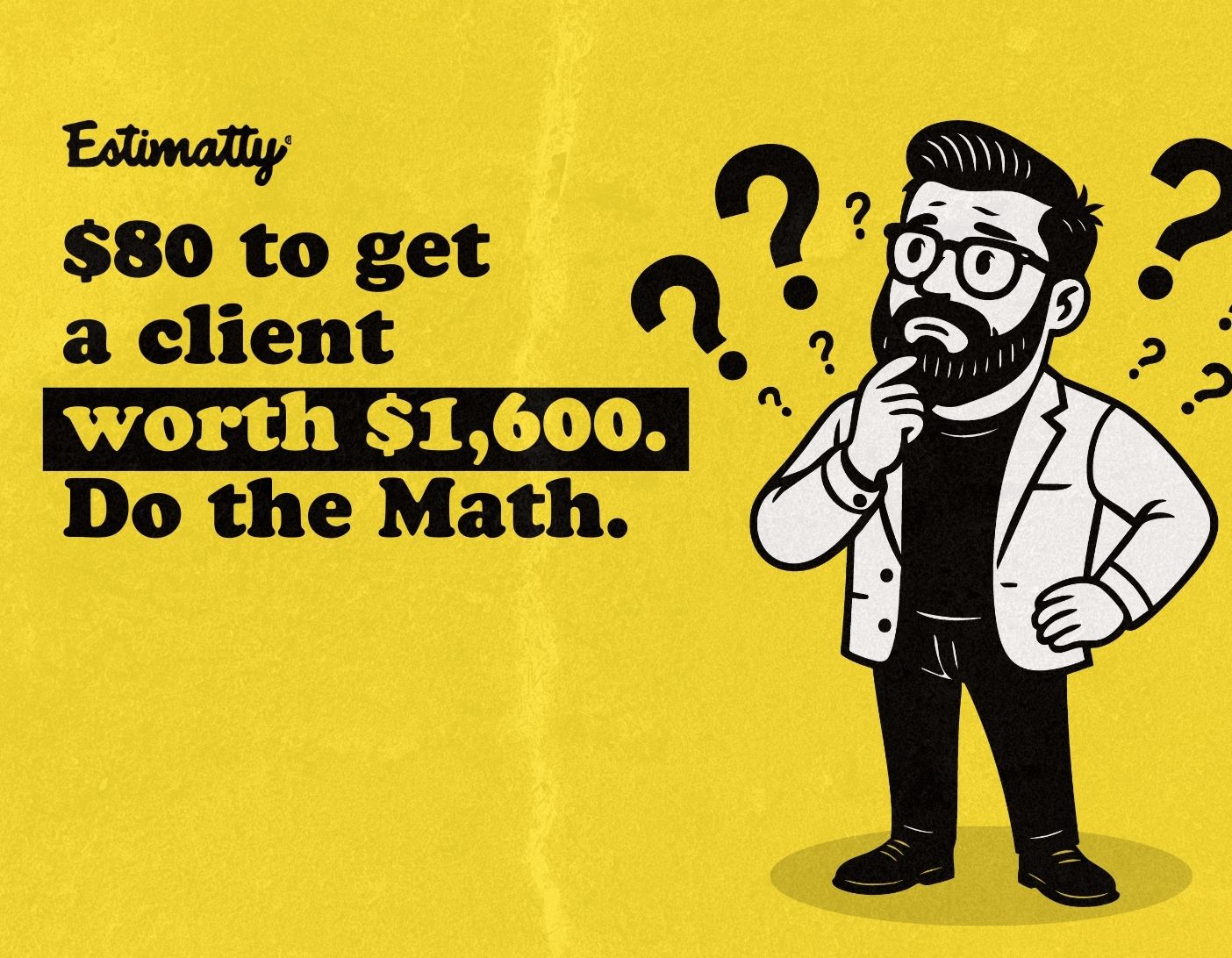
Let’s run the numbers. Say you pay $20 for a lead and you close 25% of them. Your cost to acquire a brand-new cleaning client is $80. If that single client brings in $1,600 over their lifetime, you can see why savvy owners pour a huge chunk of their marketing budget right here. This is exactly how you turn ads into a powerful revenue engine.

Alright, this is where the rubber meets the road. We're moving from strategy to action and building out your very first Google Ads for cleaning business campaign. This isn't just about clicking a few buttons; it's about methodically creating a digital salesperson that works for you 24/7, zeroing in on your most motivated customers.
The whole point here is to set up a structure that prevents you from burning through cash right from the start. We'll do this by making your account a mirror image of your actual services—like residential, commercial, or move-out cleaning—and then targeting the exact phrases your best customers are searching for this very minute.
This is the single most important rule: do not lump all your services into one giant campaign. It’s a classic beginner mistake, and it’s a costly one. A homeowner searching for weekly house cleaning has completely different needs and a different mindset than a facility manager who needs estimates for nightly office cleaning.
Think of each campaign as a dedicated file folder for one specific service you offer. This level of organization is what gives you pinpoint control over your budget, ad messaging, and who sees your ads.
For instance, your account structure might look something like this:
This clean separation ensures that when someone searches for help, the ad they see feels like it was written just for them. You wouldn't show an ad for office cleaning to a student trying to get their security deposit back, right?
Now that your campaigns are organized, it's time to load them up with the right keywords. The secret is to focus on high-intent keywords. These are the phrases people type when they’re ready to pull out their wallets, not just browse for DIY tips.
High-intent keywords almost always include two things: a word that signals a need for a service and a location.
When you combine these, you create powerhouse keywords that act like magnets for ready-to-book clients. A search for "house cleaning services in Boston" is infinitely more valuable than a generic search for "cleaning." You can dive deeper into finding these customers in our complete guide to advertising your cleaning business.
Just look at a recent standout case from a Calgary-based house cleaning company. They achieved an incredible 23% conversion rate by nailing their keyword strategy. With a modest ad spend of just over $2,000, they generated 32 new jobs from only 139 clicks. It’s powerful proof that targeting 'service + location' keywords is how you win the high-intent game.
Pro Tip from the Trenches: Get even more granular by creating tightly themed Ad Groups inside each campaign. For your "Residential Cleaning" campaign, you could have Ad Groups for "Deep Cleaning," "Weekly Housekeeping," and "Apartment Cleaning." Each gets its own unique keywords and ads, making your messaging hyper-relevant and boosting your performance.
Your budget dictates how many chances you get to show up, and your geographic targeting ensures those chances aren't wasted on people you can't even serve. Paying for clicks from a town two hours away is one of the fastest ways to lose money on Google Ads.
Start with a daily budget you're comfortable with. For a local cleaning business, somewhere between $20 to $50 per day is a solid starting point. It’s enough to get the data you need to make smart decisions without a massive financial risk.
Next, lock in your location targeting with precision.
Following this strategic process means your ads will hit the right people in the right places, setting you up for a successful launch. Once you see the data rolling in, you can increase your budget with the confidence that every dollar is working to bring you profitable new cleaning jobs.

Getting your campaign structure right is a huge win, but it’s your ad copy that does the real heavy lifting. A click is just a cost if it doesn't lead to a booked estimate or a phone call. Your ad is your digital storefront—it’s the very first impression you get to make on someone who is actively looking to hire a cleaning service right now.
This is where you have to shift your mindset. It's not just about being seen; it's about being chosen. Your ads need to be magnetic, speaking directly to a potential customer's pain point and making it impossible for them to keep scrolling.
Your headlines are 90% of the battle. They're the first—and often the only—thing a person reads. To win that precious click, your headlines must be absolutely packed with relevance and value. Forget vague, generic statements and start thinking like your ideal customer.
What are they really searching for? A fast solution to their messy house or office. They want to see trust signals, understand the next step, and feel like you "get it."
Here are a few powerful headline formulas I've seen work wonders in Google Ads for cleaning business campaigns:
Always, always try to include at least one of your main keywords in a headline. This creates a strong match with what the user searched for, signaling to both them and Google that your ad is the most relevant result. This can seriously improve your Ad Rank and even lower your costs.
If the headline is the hook, the description is what reels them in. This is your chance to build a quick case for why you're the best choice and nudge them toward taking action. You have very limited space, so every single word needs to earn its spot.
Focus on what makes you different—your unique selling propositions (USPs).
For instance: "Trusted, insured & bonded cleaners. We use eco-friendly products safe for pets & kids. Get your free, no-obligation estimate online in 60 seconds!" In just a few words, you’ve communicated safety, value, and an incredibly easy call-to-action.
A critical mistake I see all the time is listing features instead of benefits. Don't just say "we offer deep cleaning." Instead, try "Reclaim your weekend with our deep cleaning service." Frame your service as the solution that gives them back their time and peace of mind.
To give you a better idea of how this looks in practice, here are a few examples for different services.
This table shows how you can combine compelling headlines and descriptions for specific, high-intent keywords.
Notice how each ad speaks directly to the user's need and provides a clear next step. That's the key to turning a search into a paying customer.
Think of Ad Extensions as your secret weapon. They make your ads bigger, more informative, and far more clickable than your competitors'—and they don’t cost you a penny extra. Using them can give your Click-Through Rate (CTR) a serious boost.
For a cleaning business, a few extensions are absolutely non-negotiable:
By using these, your ad takes up more valuable real estate on the search results page, pushing competitors down and drawing the user's eye straight to your offer.
All the brilliant ad copy in the world is worthless if it sends traffic to a slow, confusing homepage. You absolutely need a dedicated landing page designed for one thing and one thing only: to convert that click into a solid lead.
This is where a tool like Estimatty becomes a true game-changer. Instead of making people fill out a clunky "request an estimate" form and then wait for a response, Estimatty engages them the second they land on your page.
An AI-powered estimator can deliver an accurate estimate in under 60 seconds, capturing the lead’s information while their interest is at its absolute peak. It works 24/7, turning website visitors into qualified leads long after your office has closed for the day. This instant gratification is what seals the deal—it removes the waiting and friction that sends prospects bouncing over to your competitor's site.
As you get deeper into optimizing your customer's journey, our article on AI sales automation for cleaning services might also be a great next read.

Getting your first Google Ads campaign live is a great first step, but it’s just the beginning. The real money is made in the optimization phase. This is where you roll up your sleeves, dig into the data, and start making the smart tweaks that turn an average campaign into a lead-generating powerhouse for your cleaning business.
This isn't about guesswork. It's about a relentless, data-driven process. By watching the right numbers and making small, informed adjustments, you can drastically improve your return on investment and consistently lower the cost of every single job you book.
The Google Ads dashboard can feel overwhelming—it's a sea of numbers and charts. To avoid getting lost, you need to know which metrics actually move the needle for a cleaning company's profitability.
Think of these numbers as the vital signs of your campaign's health:
Keeping an eye on these metrics isn't a "set it and forget it" task. It's a constant cycle of monitoring, testing, and refining to make sure every dollar you spend is working its tail off for you.
One of the quickest ways to burn through your ad budget is by paying for clicks from people who will never, ever hire you. That’s where your negative keyword list comes in—it’s your campaign’s bouncer, keeping the wrong traffic out.
For any cleaning business, this isn't just a good idea; it's absolutely essential. You need to be proactive about telling Google not to show your ads to people searching for:
"cleaning jobs," "maid hiring," "housekeeper positions""free cleaning tips," "DIY carpet stain removal""buy cleaning supplies," "wholesale microfiber cloths"Without a solid negative keyword list, you're literally paying to attract job applicants and DIY enthusiasts. I tell all my clients to spend 15 minutes every single week in their "Search terms" report. Find those irrelevant searches and add them as negatives. This simple habit can save you hundreds of dollars a month.
This single practice is one of the most powerful things you can do to improve your lead quality and slash your cost per conversion. You stop wasting money on tire-kickers and focus your budget exclusively on potential customers. Speaking of which, attracting the right client is only half the battle; responding quickly is critical. Learning how to automate customer service can give you a massive leg up on the competition.
How much you’re willing to pay for a click (your "bid") directly impacts your bottom line. Bid too high, and you kill your profit margins. Bid too low, and your ads will be invisible. Smart bid management is all about finding that profitable sweet spot.
For traditional search campaigns, it's often best to start with an automated bidding strategy like "Maximize conversions." Let Google's algorithm do the heavy lifting initially. Once you have a steady stream of data, you can start making strategic adjustments. For example, if you see that people searching on their phones are converting into booked jobs at a much higher rate, you can apply a positive bid adjustment to bid more aggressively on mobile devices.
This process of continuous refinement is how you evolve a campaign from just "good" into a truly great, profit-driving asset for your business.
Once your core campaigns are humming along and turning a steady profit, it's time to shift gears. You're no longer just playing the game; you're ready to dominate it. This is where you graduate from the fundamentals of Google Ads for cleaning business and start using advanced tactics that build a real competitive advantage in your service area.
These aren't day-one strategies. Think of them as the next level for the savvy business owner who has proven the model and is now ready to scale aggressively. It's about turning your ad spend into a powerful, market-capturing growth engine.
Think about how many people land on your website, start to request an estimate, and then—poof—they get distracted by a phone call or a new email. It happens constantly. Remarketing is your secret weapon to bring those high-intent prospects right back to you.
It works by showing targeted display or video ads to people who have already visited your site as they browse other websites or watch YouTube. Because they already recognize your brand, these ads are incredibly effective and come at a much lower cost than chasing down a brand-new, cold lead.
You can get really specific with your remarketing lists, too.
This approach keeps your brand top-of-mind and gives you a second, third, and even fourth chance to turn a visitor into a paying customer. It's a low-cost, high-return strategy that squeezes every last drop of value out of your website traffic.
While standard Search Ads are powerful, Local Services Ads (LSAs) are an absolute game-changer for building instant trust. These ads appear at the very top of Google's search results—often above everything else—and feature the coveted "Google Guaranteed" badge.
That badge isn't just a pretty icon. It’s a massive trust signal. It tells potential customers that Google has vetted and stands behind your business, giving them the confidence to pick up the phone. This can dramatically improve the quality of your leads.
Here's the best part: with LSAs, you pay per lead, not per click. You only spend money when a potential customer actually calls or messages you directly through the ad. It’s one of the most efficient ways to get your phone ringing with clients who are ready to book. Since cleaning is an inherently local service, learning to optimize your Google Ads for better local sales is essential for maximizing your profit.
Managing campaigns for a multi-location or franchise cleaning brand introduces a unique challenge: how do you maintain brand consistency while allowing for local flavor?
A great approach is to use a central "manager" account to oversee individual accounts for each location. This structure allows you to share critical assets like negative keyword lists and brand-approved ad copy across all your territories, ensuring a consistent message.
At the same time, each location-specific account should have its own budget, geographic targeting, and unique local promotions. This hybrid model gives you the best of both worlds: centralized brand control with the flexibility to win at the local level. For more advanced ideas on scaling your operations, you can find some valuable insights in our article on using an AI growth platform for service businesses.
As your Google Ads campaigns start flooding your business with new leads, a new—and wonderful—problem emerges: having enough great staff to handle all the work. This is where your advertising strategy must link directly to your operational strategy. After all, you can’t book jobs you can’t service.
Platforms like pipehirehrm.com are built specifically to help cleaning businesses find, hire, and manage qualified cleaning employees, making sure you can scale your team right alongside your lead flow. You can also explore hiring tips on their blog at get.pipehirehrm.com/blog.
Don't forget that the data from your Google Ads campaigns is a goldmine of business intelligence. Your search terms report tells you exactly what services people are looking for in your area. Seeing a surge in searches for "eco-friendly cleaning"? That’s a clear signal to feature those services more prominently on your website and in your ads.
The insights don't stop there. This data can inform everything from your hiring needs to your service offerings, creating a powerful cycle of growth.
If you're new to Google Ads, it's natural to have a few questions. In fact, most cleaning business owners I talk to have the exact same concerns. Let's tackle them head-on, so you can stop worrying and start investing your ad budget with the confidence of a seasoned pro.
When you're just starting out, a smart budget for a cleaning business falls somewhere between $500 and $1,500 per month. This isn't a huge upfront commitment, but it's enough to get the ball rolling and gather some real-world data on which keywords are actually driving business.
Based on what we see in the trenches with our clients, a monthly spend of around $750 can pull in roughly 10 to 12 high-quality leads. But don't get hung up on the total spend. The real magic happens when you see a positive return. Once you've got a profitable system, you can start scaling up your budget confidently.
Forget about vanity metrics. The only number that truly matters is your Cost Per Acquisition (CPA). If it costs you $80 to land a new cleaning client through ads, and you know that client is worth $1,600 over their lifetime, then spending more on ads isn't a cost—it's one of the best investments you can make.
Here’s the great thing about Google Ads: unlike SEO, you don't have to wait months to see something happen. The impact is almost immediate. You’ll start seeing clicks and traffic within just a few days of launching your campaign.
Think of the first week as pure data collection. By the end of the first 30 days, you should have a solid grasp of your initial cost per lead. But getting your campaign to a state of lean, mean, profitable-machine status? That takes a bit more time—usually around 60-90 days of consistent tweaking. This is when you'll be busy cutting out bad search terms, split-testing your ad copy, and really dialing in your bids.
Conversions. Always conversions. It's not even a fair fight.
Clicks feel good—they're a sign someone is interested. But they don't pay the bills. A conversion, on the other hand, is a real, tangible action that grows your business. This could be a phone call, a form submission, or an instant estimate requested through a tool like Estimatty.
Your entire Google Ads for cleaning business strategy needs to be obsessed with one thing: driving your conversion rate up and your cost per conversion down. A campaign with 100 clicks but only one lead is a failure. A campaign with just 20 clicks but five solid leads? That’s a home run. Focus on the actions that actually make you money.
Yes! You absolutely should run both. Think of them as a one-two punch for dominating the search results page, not as competitors for your budget.
Here’s why this strategy is so powerful:
Running both campaigns at the same time gives you maximum real estate. You can show up in the LSA box at the very top of the page and in the traditional ad section right below it. This power move effectively pushes your competitors down the page and doubles your chances of winning that customer. As you start landing all these new jobs, you'll need the team to handle them, which is where a platform like Pipehire becomes invaluable.
Ready to turn more of those expensive clicks into paying customers? Estimatty acts as your AI-powered sales agent, engaging website visitors 24/7 and delivering instant, accurate estimates in under 60 seconds. Stop letting valuable leads slip through the cracks and go to voicemail.
See how Estimatty can automate your sales process at https://www.estimatty.com.