October 24, 2026
Area of Service for Cleaning Businesses: How to Map Yours
Learn how to define and map your area of service for a cleaning business using drive time, travel fees and job minimums that protect profit.

Sunday, April 26, 2026
Boost loyalty & turn clients into brand advocates with our thank you referral ideas for cleaning businesses. Get templates, scripts & automation tips.
.png)
A client texts ten minutes after your crew leaves. “The place looks incredible. I already told my sister about you.” That is the moment most cleaning companies waste.
A happy client is ready to sell for you, but only if you give them a clear path. If the process is vague, the referral never happens. If the reward is confusing, they forget about it. If your follow-up is slow, the momentum is gone by dinner.
In a cleaning business, referrals close faster than cold leads because trust is already built. The job is not just to say thanks. The job is to turn that burst of client satisfaction into a repeatable system that brings in profitable work, keeps your schedule tight, and does not create admin headaches for your office.
That takes more than a generic “refer a friend” note at the bottom of an invoice. Strong referral programs use the right incentive for the right client, clear timing, and fast follow-up across email, text, and phone. If you want the operational side to run without your team chasing every lead manually, it helps to borrow a few ideas from automating customer service follow-up and client communication.
I have seen owners miss this by offering weak rewards, waiting too long to respond, or making customers ask what happens next. The better approach is simple. Pick a thank-you that fits your margins, explain it in one sentence, and deliver it fast. The options below cover what works in real cleaning businesses, including service credits, cash rewards, gift packages, VIP perks, tiered bonuses, public recognition, charitable donations, and automation through Estimatty.
A client finishes a great clean on Tuesday, texts her sister that night, and the sister books before the week is over. That is the moment to have a simple reward in place. Service credit works because the customer understands it fast and uses it on something they already want from you.
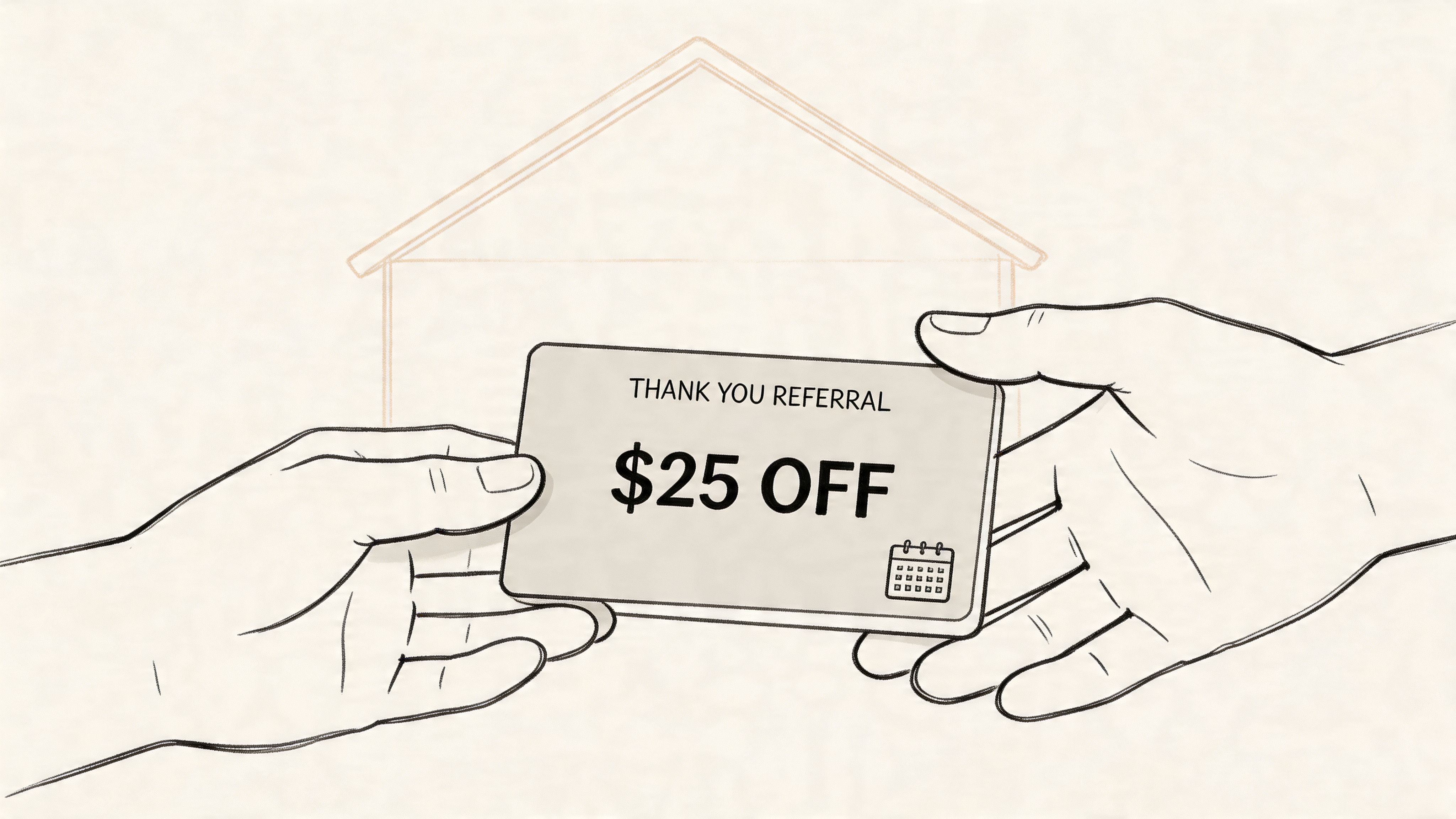
For cleaning companies, this option usually beats a random gift card. The value stays tied to your service, helps pull the next booking forward, and gives the customer one more reason to stay on the schedule. If you run recurring service, that matters. Full routes make this kind of thank you pay for itself more often than owners expect.
The best version fits in one sentence. “Refer a friend who completes their first cleaning, and get a credit on your next service.”
That wording does three jobs at once. It tells the client what to do, when the reward triggers, and where the credit applies.
I have seen owners lose good referrals by adding too many conditions. A customer should not need a front desk explanation, a follow-up email, and a note on the invoice to understand the deal.
A few guardrails keep the program profitable:
Practical rule: If your team has to explain the reward twice, simplify it.
Here, owners either make money or give it away. A small maintenance clean and a high-ticket deep clean should not always carry the same referral reward. If your average recurring job is healthy, a fixed credit can work well. If your pricing swings a lot, use a range and document it clearly for the office team.
For example, many cleaning businesses do well with a flat credit for standard residential work and a larger credit for premium recurring clients or high-value bookings. The point is not to sound generous. The point is to protect margin while still giving a reward customers remember.
Service credit also has an operational advantage. It keeps the thank you inside your billing flow instead of adding checks, cash apps, or gift fulfillment for your staff to manage.
The weak spot is consistency. The first few credits go out fast because the owner is watching. Then things get busy, somebody forgets to tag the referral, and the customer has to ask where their reward went. That kills trust.
Build the handoff into your workflow. Once the referred customer completes service, tag the referrer, apply the credit, and confirm it by text or email the same day. If your team needs a cleaner process for that, use a system based on automated customer service follow-up and client communication so the reward does not depend on somebody remembering it at the end of a long shift.
A past client refers a friend for a move-out clean. The job books fast, the invoice is strong, and a $25 service credit is meaningless because that client may never book again. Cash fits that situation better.
I’ve seen direct payouts work best when the referrer is valuable but unlikely to redeem an in-house reward. Former clients, real estate contacts, landlords, and one-time deep clean customers all fall into that bucket. A real cash amount gets their attention because it is simple. No expiration date. No confusion about how to use it.
The offer still has to match the math. A $250 payout can work on a high-value referral with strong lifetime value. It can also wreck a low-margin job if you copy that number without checking your actual acquisition cost. Before setting a cash reward, compare it to what you already spend to win a customer through ads, lead platforms, or canvassing. Estimatty breaks that down well in its guide on how to reduce customer acquisition cost.
Cash programs get sloppy when the office team is guessing.
Use a simple policy:
Fast delivery matters. If a customer has to chase your team for the reward, the referral feels like work.
One more point from the field. Cash does not need to mean generic. If you want the reward to feel more personal, package it with a handwritten thank-you card or let the client choose between cash and a thoughtful gift. For some households, a small premium gift lands better than a payout, especially if you know their style. That same mindset shows up in other gifting categories too, including meaningful presents for wives, where the item matters less than the fact that it feels chosen on purpose.
Cash gets results because it is clear. Use it on the right referral types, cap it where your margins stay healthy, and pay it fast. That is how you turn a thank you referral into a channel that produces revenue.
A client sends you a great referral, and three days later they get another automated discount email. That is forgettable. A well-chosen gift box gets a different reaction because it feels like someone on your team actually noticed what they did.
One of the best versions I have seen is simple. Send a bottle of wine with a cheese board and a handwritten card. It feels premium, photographs well, and gives the client something they will mention to a friend. That matters. A thank you referral works better when the reward creates a second conversation after the first referral.
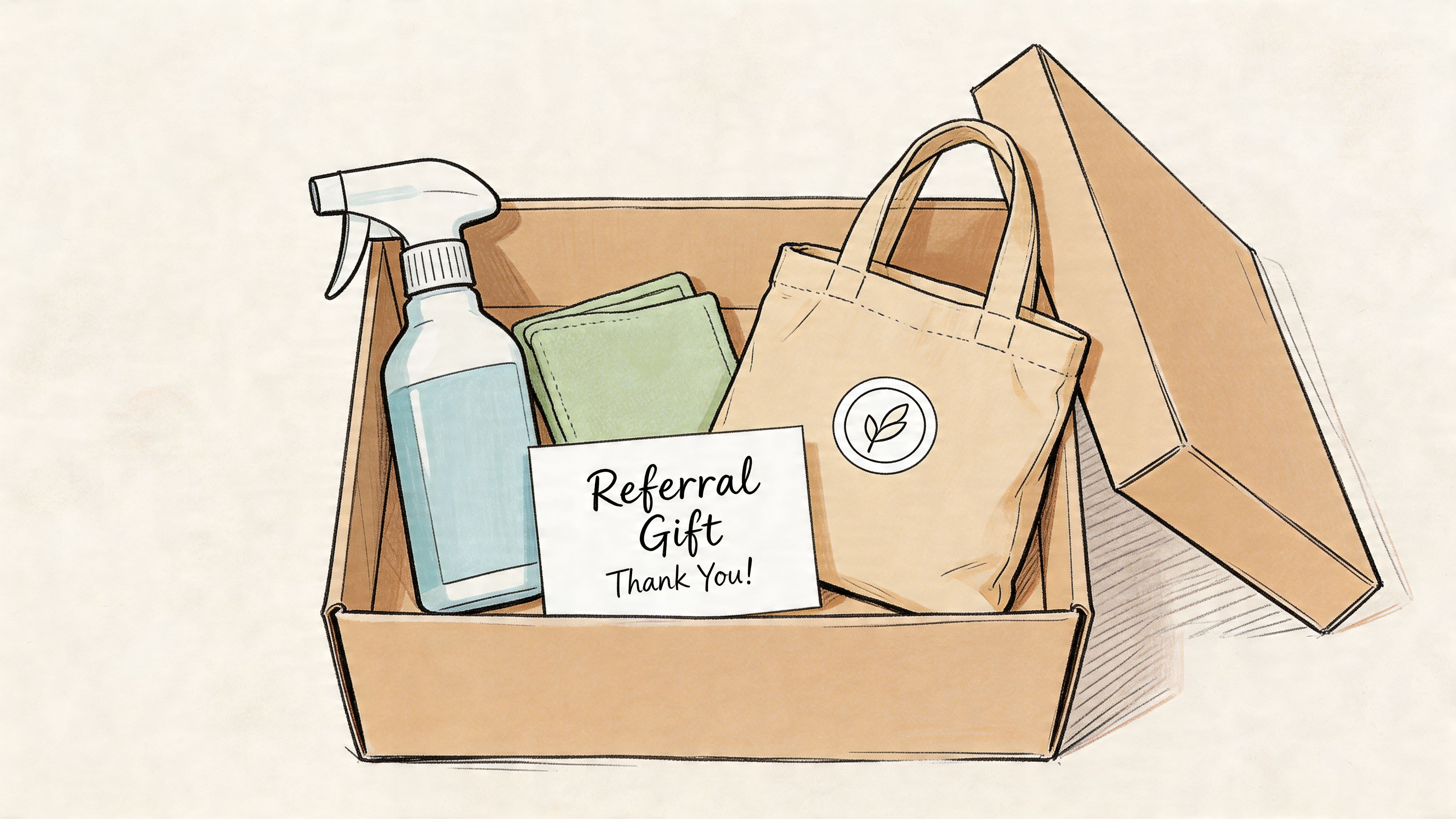
The gift has to fit the brand and the client.
A high-end residential customer should get something polished and useful. An eco-conscious household will notice whether the packaging and products match your cleaning style. A real estate partner may respond better to a gift they can keep on a desk or share with an office team.
Three details make the difference:
The point is not the dollar amount. The point is that it feels chosen on purpose.
Gift boxes cost more than a service credit, and they take more coordination. That is the trade-off. I would not send them for every one-time referral unless your margins are unusually strong.
Use them where the lifetime value justifies the extra effort:
This reward also works well when cash would feel a little flat. Some clients do not want a payout from a service business they like. They want to feel appreciated. A curated gift handles that better than a generic promo code ever will.
Seasonal rotation helps too. Keep two or three proven gift concepts on hand so your team is not inventing a new package every month. If you need ideas that feel personal instead of corporate, this roundup of meaningful presents for wives is a useful starting point.
One warning from experience. Do not send gifts that create hassle. Fragile items break, food gifts can conflict with dietary restrictions, and anything overly branded can look like leftover promo merchandise. The best gift package feels thoughtful, easy to enjoy, and worth talking about.
A client refers their neighbor on Tuesday. On Friday, they need a date change before a holiday weekend. If your office can say, “We’ll take care of you first,” that thank you carries real weight.
VIP perks work best for clients who care more about convenience than a $25 credit. In cleaning, access is valuable because your calendar gets tight at the exact moments people want help most. Spring rush, back-to-school, pre-holiday, move-outs. Preferred access feels special because it solves a real problem.
The best version is simple and specific. Offer a small set of perks your team can deliver without creating chaos.
Good options include:
The trade-off is operational. VIP rewards are cheap in cash terms, but they can create headaches if your process is loose. “Priority scheduling” means nothing unless the office knows exactly who qualifies, what they get, and how long the perk lasts. I’ve seen owners promise VIP treatment, then leave the team guessing. That turns a good idea into a customer service problem.
Write the rule in plain English. For example: one successful referral earns 60 days of first call on cancellations and preferred placement during high-demand weeks. That is clear. Your staff can honor it. Your client understands it.
This reward also pairs well with a stronger system. If you track referral sources, notes, and booking preferences in one place, your office can apply perks consistently instead of relying on memory. A CRM built for cleaning businesses makes that much easier once you have more than a handful of active referrers.
One caution. Do not call everyone a VIP. Reserve this for actual referral activity, premium recurring clients, or strategic partners who send business regularly. Scarcity gives the perk its value.
Used well, VIP access protects margin and strengthens loyalty at the same time. You are rewarding the behavior you want with convenience your client can feel.
A client sends you one great referral, gets thanked, and then goes quiet for six months. I see that pattern all the time with flat rewards. Tiers give that same client a reason to stay engaged after the first win.
This approach works especially well in cleaning. Happy recurring clients usually know people just like them. Neighbors. School parents. Coworkers. Once they have already vouched for your company and the referral went well, the second and third referral are much easier to ask for.
Three tiers is plenty for most cleaning businesses. More than that turns a referral program into homework.
A structure like this is easy to remember and easy for your office to manage:
The goal is steady momentum. Clients should always know two things: what counts, and what comes next.
That second part matters more than owners think.
If someone refers one friend and hears nothing until the next reward is earned, interest drops off. A quick progress message keeps the program alive. “You’ve sent 2 of 3 referrals needed for your next bonus” is often enough to trigger another introduction.
Your CRM becomes the control center at this stage. If referral counts sit in a spreadsheet, milestone rewards get missed, office staff make judgment calls, and clients stop trusting the program. A practical CRM for cleaning businesses helps you track attribution, trigger thank-you messages, and see who is close to the next tier without digging through notes.
I also like tiered programs because they create better follow-up opportunities. Each milestone gives you a natural reason to send a thank-you email, a text update, or even a quick call script for high-value clients. That is easier to automate than a vague “refer us anytime” message.
One trade-off. Tiers can attract bargain hunters if the rewards are too rich and your qualification rules are loose. Count only completed jobs that meet your minimum service value. State that upfront.
There is another side benefit. Clients who actively refer you are often the same clients who help with improving local SEO with review generation. That makes a tiered program more valuable than the reward cost alone. It can feed both referrals and trust signals if you ask at the right moments.
Done right, a tiered bonus program turns referral activity into a habit instead of a one-time favor.
Recognition works because some customers want status, not stuff. They like being seen as the person who always knows a great local business. If that sounds like your customer base, social praise can outperform a small discount.

The important caveat is permission. Never post a client’s name, photo, or story without asking first. But when they’re open to it, a “Referral Champion” spotlight in email or social can make them feel valued and encourage others to join in.
Keep the spotlight short and real. Share why they love the service, how long they’ve been a customer, or what they tell friends about your team. A bland “thanks for referring” post doesn’t move people. A mini story does.
Some strong formats:
Word-of-mouth and review generation often support each other. The same clients who proudly refer you are often willing to leave visible proof that others can trust.
Most cleaning companies struggle to post consistently. Referral recognition fixes that because the content is already there. You’re not making up random posts. You’re showcasing real customer relationships.
If your social channels need structure, Estimatty’s ideas for content ideas social media can help. Recognition content works best when it’s part of a regular rhythm, not a once-a-year burst.
Public praise doesn’t replace a reward. It multiplies the value of a reward when the right customer cares about visibility.
A charitable donation works best with a specific kind of client. They already refer you because they trust how you run the business, and they care where their dollars go. For that customer, a donation in their name can feel more meaningful than $25 off the next clean.
I’ve seen this work well for cleaning companies with a strong local identity, especially ones that talk openly about community work, green products, or family-owned values. If that positioning is already part of your brand, the referral thank-you feels consistent instead of forced.
The cause has to be easy to understand fast.
Local food banks, women’s shelters, school supply drives, neighborhood cleanup groups, and pet rescues usually connect right away. A vague national cause with no local tie gets ignored. A nearby organization your customer has heard of gets remembered.
A few details make this option stronger:
This reward is not universal. If your customers care most about practical savings, service credit or cash will usually outperform it. But if your best referrers talk about your company in values-based terms, this option can strengthen loyalty in a way discounts usually do not.
Presentation matters. Keep the language warm and plain. Do not turn it into a moral pitch, and do not make customers feel like taking a personal reward is selfish. The smart move is to offer donation as one track inside a broader referral program, then let the customer choose what fits them.
If you plan to automate referral follow-up later, build the donation option into the workflow from the start so your team does not have to sort it out manually. The team that built Estimatty explains that operational mindset well in the story behind Estimatty and how a cleaning team built a 24/7 AI sales agent.
The best version feels real, local, and specific. Customers can spot charity branding with no substance. They also remember a business that quietly follows through.
A customer sends their neighbor your way on Saturday afternoon. By Monday, nobody on your team has replied, nobody logged the referral, and the thank-you reward is still sitting in someone’s head instead of in a system. That is how good referrals get wasted.
Automation fixes the part that cleaning companies usually drop during busy weeks. Estimatty helps you respond fast, send estimates, track lead sources, and trigger follow-up without adding another admin task to the office. If your referral process depends on a rep remembering who referred whom, it will break the moment the phones get busy.
If you want the backstory, read the story behind Estimatty and how a cleaning team built a 24/7 AI sales agent.
The system needs to do four things well.
First, capture the referral source the moment the lead comes in. Second, send a thank-you right away so the referrer knows you saw it. Third, track whether the new customer books and completes the milestone you require. Fourth, trigger the reward without your staff having to chase it down manually.
That last part matters more than owners expect. A referral program sounds simple until your team has to cross-check texts, invoices, and names spelled three different ways.
Before the next paragraph, here’s the video version of the platform in action.
Use SMS for speed and email for recordkeeping. After an estimate request or completed job, send a short text that thanks the customer, reminds them of the reward, and gives them one clear way to refer someone. If they send a lead, log that source automatically in your CRM. When the referred customer books and completes the qualifying service, send a confirmation message and release the reward.
Keep the logic tight. One trigger. One reward rule. One message per step.
A simple workflow looks like this: completed job or estimate, thank-you SMS goes out, referred lead replies or books, referral source is tagged in the CRM, job is completed, reward message is sent, reward is issued. If you need to connect tools, use Zapier to pass the data between your forms, CRM, and messaging platform.
The mistake I see most often is overbuilding the process. Owners add too many reward types, too many exceptions, and too many manual approvals. Customers do not care how clever the workflow is. They care that you replied fast, kept your word, and made the reward easy to get.
The best automation feels personal to the customer and routine to your staff. That is when it starts producing revenue instead of creating office work.
| Referral Program | Implementation Complexity | Resource Requirements | Expected Outcomes | Ideal Use Cases | Key Advantages |
|---|---|---|---|---|---|
| 1. The Classic: Service Credit for Their Next Clean | Low, simple codes and CRM rules | Low–Moderate, discount cost, CRM/SMS setup | More repeat bookings; measurable ROI | Small–mid cleaning companies boosting retention | Easy to implement; builds loyalty; trackable |
| 2. The Motivator: Cash Rewards | Low–Moderate, payment flows and fraud checks | Moderate–High, cash payouts, bookkeeping, payment channels | Rapid customer acquisition and high motivation | Growing companies with healthy cash flow | Universally motivating; no service margin impact |
| 3. The Memorable Touch: Curated Gift Package | Moderate, sourcing and fulfillment processes | Moderate, inventory, packaging, shipping | Strong brand recall and shareable moments | Premium or eco-conscious cleaning brands | Memorable; high perceived value; ongoing brand exposure |
| 4. The Insider: Exclusive Access and VIP Perks | Moderate, operational rules and consistent delivery | Low–Moderate, capacity planning, staff coordination | Deeper loyalty and higher customer lifetime value | Established companies with operational capacity | Low direct cost; builds emotional loyalty and differentiation |
| 5. The Gamifier: Tiered Bonus Program | Moderate–High, tier tracking and milestone logic | Moderate, rewards budget, tracking/automation tools | Sustained referrals and scalable growth | Companies targeting long-term viral advocacy | Highly motivating; clear progression; scalable |
| 6. The Public Praise: Social Recognition & Shout-Outs | Low, content creation and scheduling | Low, time, social channels, occasional design | Increased social proof and community engagement | Community-focused companies with social presence | Very low cost; generates authentic marketing content |
| 7. The Giver: Charitable Donation in Their Name | Low–Moderate, vetting charities and reporting | Low–Moderate, donation budget, documentation | Strong brand affinity among value-driven customers | Values-driven and eco-focused cleaning companies | Builds emotional connection and positive PR |
| 8. The System: Automate Your Thank You with Estimatty | High, technical setup, dashboards, integrations | High, development, integrations, maintenance | Higher engagement, fewer admin tasks, actionable data | Tech-forward businesses seeking optimization | Transparent automation; real-time tracking; analytics |
A client texts a friend right after your crew leaves. The house looks great, the experience felt easy, and your company is fresh in their mind. That is the referral moment. If your thank-you process is slow, vague, or inconsistent, you waste it.
The cleaning companies that get repeat referrals usually do one thing well. They acknowledge the referral fast and make the reward easy to understand. Clients do not want a confusing program with fine print, delayed responses, or a reward they have to chase down. They want a clear reason to refer and proof that you noticed when they did.
That is why a thank you referral system needs to be practical, not clever. Pick a reward your margins can support. Decide when it gets triggered. Write the actual email, SMS, and call script. Then assign ownership so referrals do not sit in someone’s inbox for three days while the customer wonders if it counted.
Start small if you need to. A service credit is easy to explain and easy to fulfill. Cash works well when speed matters and you have enough margin. Gifts and VIP perks fit higher-value clients who stay with you longer. Tiered programs make sense once you already have steady referral volume. Public recognition and charitable donations work best when they match your brand and your customers care about them.
I have seen owners wait because they want the full program mapped out before they launch. That delay costs more than an imperfect first version. A simple system running this week will beat a polished system that never leaves the notes app.
As noted earlier, referral performance usually comes down to clarity, timing, and consistency. The gap between average programs and high-performing ones is rarely luck. It is follow-through. The owners who win here are the ones who thank people fast, track results, and keep improving the offer based on what customers respond to.
If you want a thank you referral system that runs on time, Estimatty helps your cleaning business capture leads, send instant estimates, automate follow-up, and keep referral opportunities from slipping through the cracks after hours.