September 21, 2026
Inside and Out Cleaning: A Practical Pricing Guide
Learn what inside and out cleaning really includes, how pricing works, and which add-ons actually pay off for residential and commercial estimates.

Saturday, January 31, 2026
Learn how to estimate cleaning jobs with confidence. Our guide covers proven pricing models, cost calculation, and tools to create profitable estimates.
.avif)
Let’s be honest: staring at a new job request and trying to pull a price out of thin air is a recipe for disaster. Getting your estimates right is more than just math; it’s the cornerstone of a profitable, reputable cleaning business.
A solid estimate does two things: it protects your profit margins and builds immediate trust with a potential client. Get it wrong, and you’re not just losing one job—you're potentially damaging your brand.
Before you can even think about creating an estimate for a price, you need a system. Moving beyond guesswork is what separates the pros from the amateurs. A sharp, accurate estimate is your best sales tool. It shows you know your stuff and that you value both the client's investment and your own team's time.
Think of it as building a strong foundation. You wouldn’t build a house on shaky ground, right? The same goes for your pricing. To really nail your numbers, you need a solid grasp of the entire cleaning maid services industry and where your business fits in.
The whole process boils down to three core actions: gathering the right information, understanding what the client really needs, and then calculating a fair price.
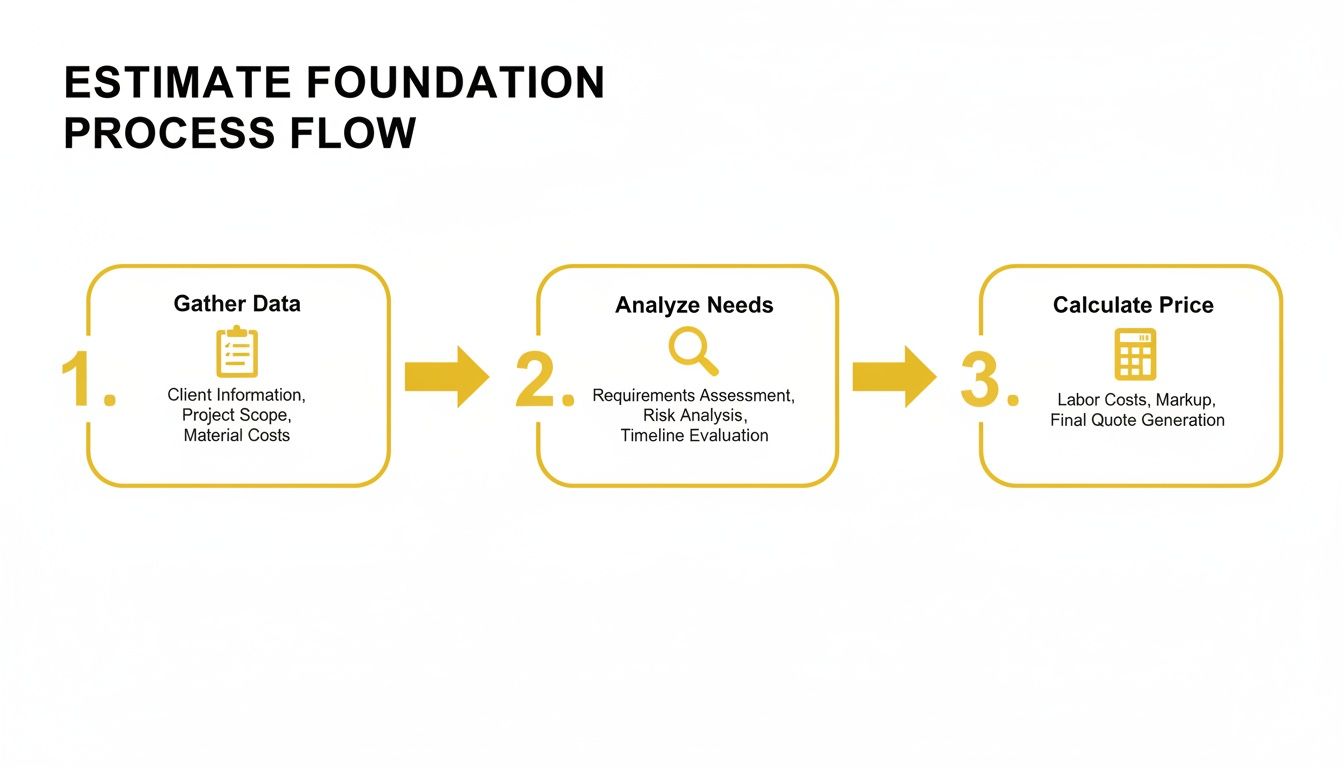
This simple workflow isn’t just a one-off trick; it’s the repeatable system you’ll use for every single estimate, turning a complicated task into second nature.
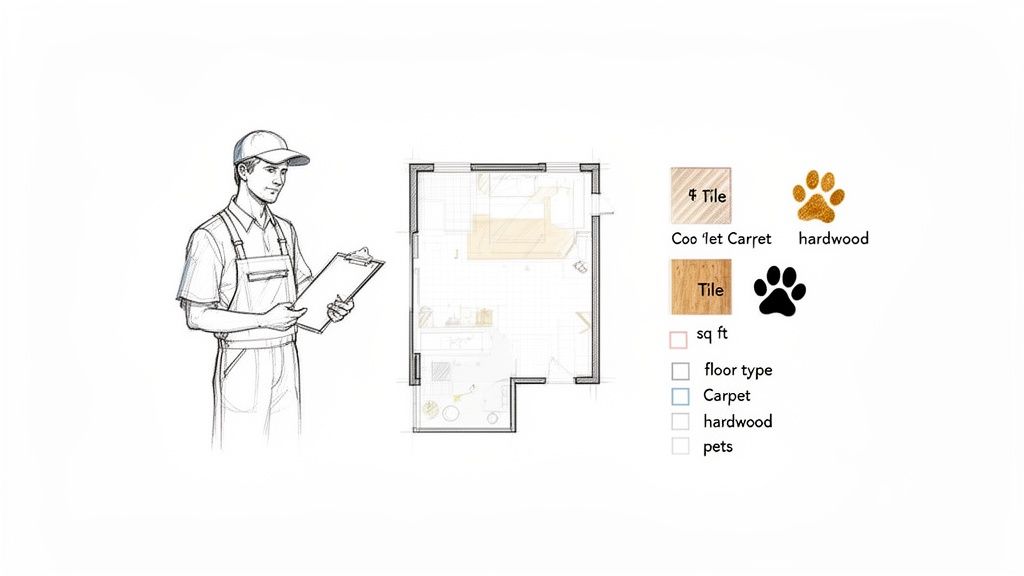
First things first, you need to play detective. Before you touch a calculator, you have to collect some essential details about the space. This isn't optional—it's the only way to ensure your estimates are consistent and accurate. The info you gather here directly impacts the time, effort, and supplies the job will require.
Make sure you get the specifics on:
Skipping this part is one of the most common—and costly—mistakes I see owners make. It’s how you end up taking on jobs that barely break even. A simple checklist can be a lifesaver here. Making this initial conversation smooth and professional is a huge part of learning how to get residential cleaning clients in the first place, which you can read more about at estimatty.com/blog.
My two cents: The difference between a profitable job and a financial headache almost always comes down to the quality of your initial information gathering. Never rush it. This is where you secure your margin.
Why all the fuss about accuracy? Because the global cleaning industry is on track to hit a staggering $442.09 billion by 2025. This isn't a small-time game.
Studies have shown that cleaners who rely on "gut feelings" to price jobs often overbid by as much as 18%, scaring away perfectly good clients. But underbidding is even worse—it's a fast track to burnout and business failure. Nailing your estimates is how you claim your piece of this massive market.
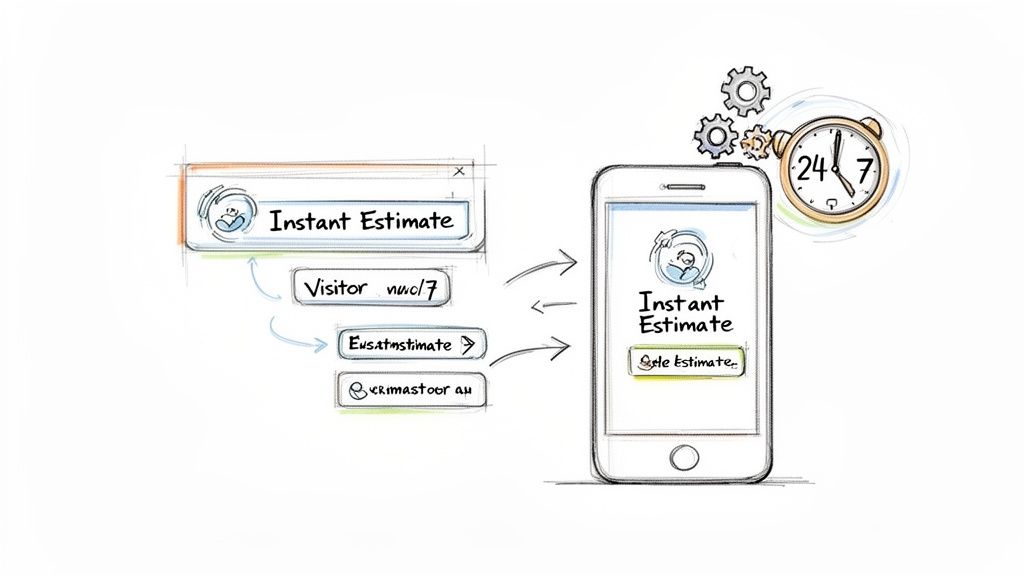
This is where a tool like Estimatty can be a game-changer. It automates that initial data capture and gives you an instant, professional estimate based on the rules you set. Imagine engaging potential customers 24/7 and sending out perfect estimates without lifting a finger. That's how you get ahead.
Alright, you’ve gathered all the critical details about the job. Now for the moment of truth: turning that information into a dollar amount. This is where your strategy really comes into play, and frankly, it's what separates the pros from the amateurs. Picking the right pricing model is a make-or-break decision that directly affects your bottom line and how clients see the value you bring.
Let’s walk through the three battle-tested models that nearly every successful cleaning business relies on.
There's no single "best" method here. The right approach changes with the job, your business goals, and the type of client you're talking to. Knowing the ins and outs of each will give you the confidence to craft compelling and, most importantly, profitable estimates.
Use this quick-reference guide to select the most effective pricing model for any cleaning job.
Each of these models has its place. The trick is knowing when to pull each one out of your toolbox.
Charging by the hour is your safety net. It’s often the smartest way to go, especially when you’re new to the game or staring down a job with a ton of question marks. This model guarantees you get paid for every minute your team is on-site, shielding you from nasty surprises like extreme clutter or grime that’s been there for a decade.
Think about a messy post-renovation cleanup. That's the perfect time for an hourly rate. You might set your price at $50 per hour for each cleaner. If the job takes four hours with one cleaner, the labor cost is simple and clean. You’ve eliminated the risk of underbidding a seriously tough job.
The flip side? Some clients get anxious. They worry that the job will be dragged out to pad the bill. An hourly model runs on trust and clear communication about how efficiently your team works.
Key Takeaway: Hourly rates are a financial lifeline for unpredictable jobs. Your main hurdle is building enough trust with clients so they're confident in your team's speed and work ethic.
When you're dealing with commercial spaces or big, empty houses, pricing per square foot is a fantastic way to standardize your estimates. It’s a transparent, scalable method that business clients absolutely love because of its predictability. As one of our customers put it, it's a great way to lock in a job quickly.
Here’s what that looks like in the real world:
This model is a champion of consistency, but it has a blind spot. Square footage doesn't always tell the whole story. A tiny, cluttered office with two kitchens and three bathrooms can take way longer than a massive, wide-open warehouse of the same size. You have to be ready to adjust your rate based on the density and type of space you're cleaning.
For residential clients, the flat-rate model is king. Homeowners love knowing the exact cost upfront—no ifs, ands, or buts. This approach sells your service as a complete package, which cleverly shifts the client's focus from how long it takes to the incredible value you provide.
To make this model profitable, you have to be a master estimator. You can’t just guess. A flat rate of $175 for a standard 3-bed, 2-bath home should come from careful calculations, not a number you pulled out of thin air. You need to know your average cleaning times inside and out, based on home size, condition, and the specific tasks on the checklist.
The biggest danger here is getting it wrong. If you create an estimate for a job thinking it’ll take three hours and it drags on for five, that loss comes straight out of your pocket. That's why this is a strategy for seasoned pros who have tracked their data and can confidently predict the effort a job will take. It’s high-risk, high-reward—but when you nail it, you create happy, loyal customers and a much simpler sales process.
An estimate that only covers your time on-site is a recipe for disaster. If you want to build a real, thriving cleaning business, your pricing has to reflect every single expense, both the obvious and the hidden. This is the shift you have to make from just working to actually building a profitable company.
Think of a solid estimate like a puzzle. Your true business costs are the corner pieces. Without them, the picture will never come together. Too many new owners just account for cleaning solutions and rags, completely forgetting the quiet costs that slowly eat away at their bottom line.
Overhead is all the stuff you pay for just to keep the lights on—whether you clean one house this month or one hundred. These expenses are relentless and easy to overlook, but you absolutely have to factor them into every single estimate you create.
Take a hard look at all the money you spend that isn't directly tied to a specific client’s property:
These recurring costs add up fast. If you ignore them in your pricing, you’re essentially paying to work for your clients instead of the other way around.
Direct costs are a lot easier to spot since they’re linked to a specific cleaning job. Even so, owners frequently miss a few key items that can seriously shrink their margins.
Beyond the obvious supplies, make sure you're including:
Understanding these costs is crucial, especially when you might walk into a complex or hazardous situation. Properly accounting for gear and training is a huge part of protecting your team from the unexpected. You can learn more about improving your intake system to better prepare for any job in our guide on what to do when a cleaning job turns dangerous.
Your biggest single expense will always be labor. Whether you’re a solo operator paying yourself or managing a growing team, calculating your fully loaded labor cost is the most critical step in creating profitable estimates. This goes way beyond just a simple hourly wage.
If you have employees, you have to add in costs like payroll taxes, workers' compensation, and any benefits you offer. A cleaner you pay $20 per hour might actually cost your business closer to $25-$28 per hour once you factor in all those extra expenses.
Hiring and managing staff can get complicated, which is why services like Pipehire exist—to help cleaning businesses find and manage their teams effectively. You can learn more about hiring great employees on the get.pipehirehrm.com/blog. But no matter how you source your people, you must know your true, all-in labor cost per hour.
Pro Tip: Figure out your "break-even rate." Add up all your monthly overhead and direct costs, then divide that by the total number of billable hours you plan to work. That number is the absolute rock-bottom minimum you have to charge per hour just to cover your expenses before making a single penny of profit.
Okay, once you have a clear picture of your total costs—overhead, direct job expenses, and fully loaded labor—you can finally add the most important part: your profit.
Profit isn't just "what's left over" at the end of the month. It's a specific line item you have to intentionally build into every single estimate.
A healthy profit margin for a cleaning business usually lands between 20% and 35%. This isn't about being greedy; this is the money that allows you to reinvest in better equipment, give your team raises, and actually grow the business.
Here’s a simple formula to pull it all together:
(Total Costs + Desired Profit) = Your Final Estimate
When you follow this method, you stop guessing and start pricing with confidence. You make sure that every job you book doesn't just cover its own costs but actively contributes to the long-term health and success of your entire operation. This strategic approach is how you learn to estimate cleaning jobs in a way that fuels real, sustainable growth.
Getting the price right is only half the job. The way you present your estimate is what closes the deal. It’s your first real chance to show a potential customer you’re a pro who they can trust. A well-crafted estimate isn't just a number; it's one of your most powerful sales tools.
Think about it: the delivery—whether you’re in their living room, on the phone, or sending an email—shapes their entire perception of your business. A sloppy, vague estimate hints at sloppy, vague work. But a clear, detailed, and professional estimate? That tells them you're a high-quality service they can count on.

Nothing beats an in-person walkthrough for nailing down the details and building an instant connection. This is where you spot the little things a client might forget to mention—the things that can eat into your profit margin if you’re not careful.
Go in with a plan. A systematic checklist ensures you don't miss a thing, because it's the small details that add up to big costs.
Walking the property with the client is a huge advantage. You can point these things out as you go, justifying your price by demonstrating your thoroughness before you've even started cleaning.
In this day and age, you have to know how to create an estimate for a cleaning job without ever setting foot on the property. Remote estimates are incredibly fast and efficient, but you need a solid process to avoid getting burned by miscalculations.
Your goal is to get the same level of detail as an on-site visit, just by using smart questions and a little tech. Don't just have a casual chat; guide the conversation with a clear script. Ask for the number of bedrooms, bathrooms, and flooring types. A real game-changer is asking the client for a quick video walkthrough from their smartphone—it’s the next best thing to being there yourself.
The single biggest mistake you can make with remote estimates is making assumptions. Protect yourself by always qualifying the estimate. I say something like, "Based on the details you've provided, the estimate is X, which we'll confirm with a quick look upon arrival." This saves you from nasty surprises.
Whether you send your estimate via email or a slick booking platform, the presentation has to be flawless. A simple text message with a price just won't cut it. Your estimate should be an itemized, easy-to-read document that clearly shows the value you’re bringing to the table.
A professional estimate template should always have these key pieces:
This level of detail doesn't just prevent confusion; it positions your company as a serious, professional operation. As you learn more about what it takes to double your sales with instant estimates, like some companies have at estimatty.com/blog, you'll realize just how critical this polished presentation is.
Relying on "gut-feel" estimates used to mean missing the mark on up to 40% of leads. Thankfully, technology has changed the game. Modern, data-driven tools can slash revenue leaks by 25% by making the process consistent. In fact, some cleaning businesses have seen a threefold increase in bookings from off-hours inquiries simply by providing instant, standardized estimates. To truly get ahead, it's worth looking into automated quote generation for trades—it’s a proven strategy for service businesses to win way more jobs.
If you’re still banging out every estimate by hand, you’ve already hit the biggest bottleneck in your business. It’s a fact. Manual estimating is a time-suck, it breeds inconsistency, and it absolutely will not scale. To break through that growth ceiling, the most successful cleaning companies I know have all embraced one powerful tool: automation.
Modern software can completely overhaul your sales process. We're talking about delivering instant, accurate estimates to potential customers around the clock—24 hours a day, 7 days a week. This isn't just about shaving a few minutes off your day; it's about fundamentally rewiring how you find and win new clients.
Picture this: It's 10 PM on a Tuesday, and a motivated homeowner lands on your website, ready to book a cleaner. What do they find? A "contact us" form that sends their info into a black hole until morning. By then, they've already clicked away and booked with a competitor who gave them an instant price. This happens all the time, and it’s a massive leak in your sales funnel.
Automation patches that hole for good. An AI-powered tool like Estimatty grabs that late-night visitor the second they arrive.
This immediate connection is gold. It captures high-intent leads that you would have otherwise lost forever. Instead of waking up to a cold lead in your inbox, you wake up to a warm one who already has an estimate in hand. It literally sends estimates for you 24/7, a game-changer you can read about in our case studies.
As you grow and hire staff, keeping your pricing consistent is a nightmare. If you give one price and your office manager gives another for the same job, it makes you look amateurish and erodes trust. Inconsistency is a silent profit killer—it either leaves money on the table or prices you right out of the running.
Automation becomes the single source of truth for your pricing. Every estimate is built on the exact same logic, so every potential client gets a fair and consistent price. Every. Single. Time.
It takes the guesswork and human error right out of the picture. This empowers everyone on your team, from seasoned managers to brand-new hires, to produce perfect estimates without needing years of industry experience. That kind of standardization is the foundation of any professional, scalable operation.
Beyond just saving time, automation actively makes you more money on each job. A smart estimating tool can be programmed to intelligently offer your most profitable add-on services at the perfect moment.
Think about it. When a client requests a standard cleaning for their 3-bedroom home, the system can automatically prompt them with high-margin extras they probably hadn't even thought of.
This kind of strategic upselling happens on every single estimate, boosting your average ticket price without you ever having to make an awkward sales pitch. When you automate how you estimate cleaning jobs, you’re not just building a more efficient business—you’re building a more profitable one. You're laying the groundwork to truly scale your cleaning empire.
Even when you've got your estimating process down to a science, you're going to get curveballs. A client asks for something unusual, a home is way messier than described, or you're trying to create an estimate for a job you can't see in person. This is totally normal. Getting good at this is all about building the confidence to handle whatever comes your way.
Think of this as your go-to cheat sheet for navigating those tricky, "what do I do now?" moments. We've compiled the most common questions we hear from cleaning pros just like you.
Let's face it, remote estimates aren't a novelty anymore; they're essential for a modern cleaning business. The secret to nailing them is having a rock-solid, repeatable process that gets you all the critical details without you having to drive across town.
Your best bet is a detailed online form or a scripted phone call that covers the non-negotiables: square footage, the number of bedrooms and bathrooms, flooring types, and—this is a big one—the date of the last professional clean.
To really cover your bases, don't be shy about asking for photos or a quick video walkthrough from their smartphone. It’s an easy way to get eyes on the actual condition of the home. Just be sure to include a simple disclaimer in your estimate, something like: "This price is based on the details you've provided and is subject to a quick confirmation upon our arrival."
Ah, the great debate. Do you show your prices upfront or make everyone call? The truth is, there's no single right answer, but there is a smarter way.
Putting a fixed price list on your site is tempting because it feels transparent and easy. But it's a huge gamble. You'll almost certainly underbid on jobs that are dirtier or more complex than your "average" home.
On the flip side, forcing every visitor to call or fill out a form creates a barrier. You'll lose those motivated, ready-to-buy customers who just want a number now. They’ll simply bounce to a competitor’s site that gives them an instant answer.
The most effective strategy is a hybrid one. An instant estimation tool like Estimatty offers the best of both worlds. It gives website visitors the immediate estimate they're looking for, but it's a custom estimate based on their specific inputs. You capture their lead info and give them a realistic price without being locked into a rigid, one-size-fits-all rate.
The absolute fastest way to run your business into the ground is by forgetting to factor in all your costs. I'm talking about overhead, travel time, insurance, and taxes. If you’re only creating estimates based on your labor and supply costs, you’re not just breaking even—you're actively paying to clean someone's house.
Another huge mistake is not providing a detailed scope of work with your price. Vague estimates are the number one reason for disputes later on. "Clean the kitchen" can mean very different things to you and your client. Spell it out.
Finally, inconsistency will kill your reputation. If you and your team leader give wildly different estimates for the same type of job, you look unprofessional and disorganized. You need a standardized system—whether it's a master spreadsheet or an automated tool—to ensure every estimate is consistent and profitable.
Key Takeaway: The top three estimating mistakes are ignoring overhead costs, providing vague service descriptions, and lacking price consistency. Solving these three issues is fundamental to building a sustainable business.
Raising your prices isn't about being greedy; it's a sign of a healthy, growing business that values its team and its quality of work. But how you communicate it makes all the difference in keeping your best clients.
First, give them a generous heads-up—at least 30-60 days is standard. Send a polite, professional email. Don't just spring it on them in an invoice.
In your message, start with gratitude. Thank them for being a loyal customer.
Then, briefly and positively, explain the "why." You don't need a detailed financial report, just something simple like, "To continue delivering the high-quality service you've come to expect and to support our amazing team..." This frames the increase around value, not just cost.
Clearly state the new price and the exact date it takes effect. Most reasonable clients get it; they know costs go up. When you connect the change to maintaining quality and taking care of your people (maybe you’ve even invested in better hiring platforms like pipehirehrm.com), the conversation goes a lot smoother.
Ready to stop losing leads and start closing more jobs? Estimatty is the AI-powered sales agent that delivers instant, accurate estimates to your customers 24/7, turning website visitors into booked jobs while you sleep.
Book your free demo today and see how Estimatty can transform your sales process.