September 21, 2026
Inside and Out Cleaning: A Practical Pricing Guide
Learn what inside and out cleaning really includes, how pricing works, and which add-ons actually pay off for residential and commercial estimates.

Friday, January 30, 2026
Use a house cleaning cost calculator to estimate pricing, streamline estimates , and turn visitors into booked jobs with automated, accurate estimates.
.jpg)
Tired of playing phone tag and losing potential customers who just want a quick price? A modern house cleaning cost calculator isn't just a widget; it's a powerful sales tool that replaces those slow, manual estimates with a 24/7 automated system. It grabs leads the second they hit your site, turning your website into a client-booking machine.
Let's face it: today's cleaning clients want answers now. Every hour you spend crunching numbers or waiting to call someone back is a potential job lost to a competitor who gave them an instant price. Moving from inconsistent, back-of-the-napkin estimates to an automated house cleaning cost calculator isn't a luxury anymore—it's how you stay in the game.
This is about a fundamental shift in how you capture and convert leads. An automated estimator works around the clock, so you never miss out, even when someone is browsing for a cleaner at 10 PM on a Sunday. It also standardizes your pricing, getting rid of those "gut-feel" estimates that almost always lead to underbidding and killing your profits.
The cleaning service market is blowing up, and customer expectations are rising right along with it. The global market for house cleaning is projected to skyrocket from around $372 billion in 2025 to a whopping $617 billion by 2033.
Despite this growth, many businesses are leaving money on the table. Industry veterans report that old-school manual follow-ups (phone calls, contact forms) can lose 40-50% of leads simply because they take too long.
This is exactly where a tool like Estimatty, which was actually built by people from the cleaning industry, can completely change your business. It turns your website from a simple brochure into your most effective sales agent. You can find more articles like this on the estimatty.com/blog.
Here’s a look at how a clean, simple interface can deliver an instant, professional estimate.
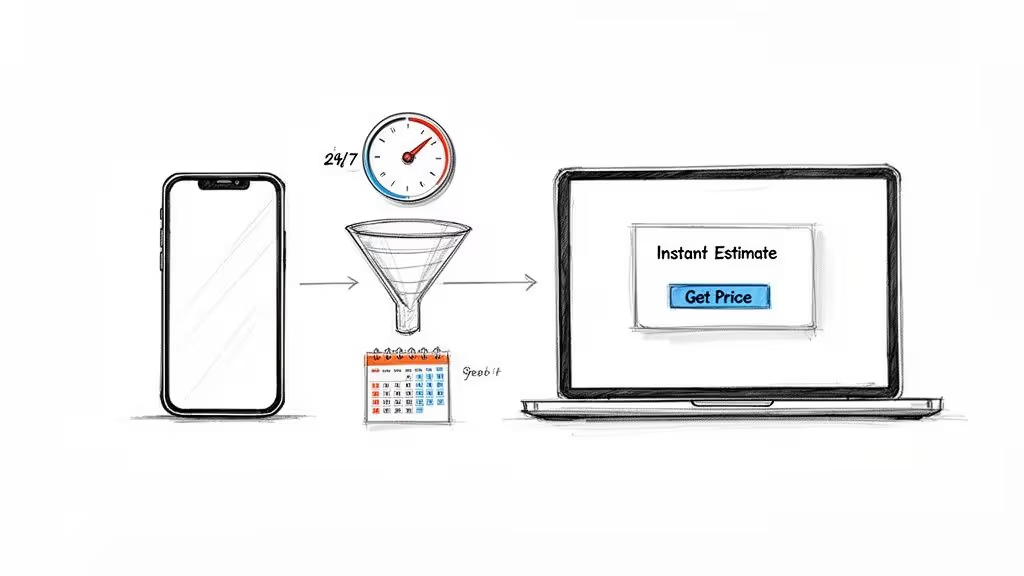
When a potential client gets an estimate that looks this good, this fast, it immediately builds trust and makes them want to book right away.
Think of a website without an instant estimator as a leaky bucket. You work hard to get traffic, but qualified leads just spill out before you even get a chance to talk to them. By providing immediate, accurate estimates, you plug those leaks for good.
The real power here is turning passive website visitors into genuine, qualified leads. The calculator pre-qualifies them on price, so the people who do contact you are serious and ready to book.
Businesses that make this one change see a massive difference. Here’s what you stand to gain:
A great house cleaning cost calculator does more than just spit out a number; it builds trust and closes deals. But its power comes directly from the information you ask for. To nail your pricing and deliver profitable, accurate estimates every single time, you have to capture the right details upfront.
These inputs are the foundation of your pricing strategy. They paint a clear picture of the job before your team ever grabs a mop, eliminating the nasty surprises that can tank your profit margins on a job.
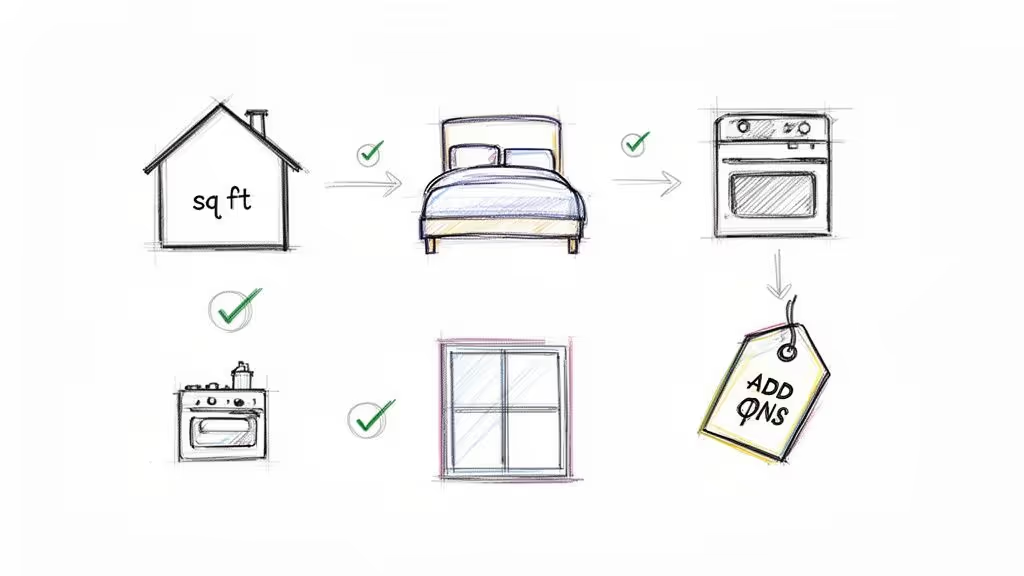
Let's break down the essential pieces of information your calculator absolutely needs to gather.
To build a calculator that works for both you and your clients, you need to collect specific, actionable data. The table below outlines the must-have inputs that form the core of any reliable cleaning estimate.
Getting these fields right means you're not just guessing—you're generating an estimate with data-backed confidence.
Everything starts with the size of the home. It’s the most fundamental data point because it gives you a baseline for the time and effort a standard clean will take. A tiny 1,000 sq ft apartment is a world away from a sprawling 4,000 sq ft house, and your price needs to reflect that from the get-go.
Of course, not every homeowner knows their exact square footage. A smart calculator anticipates this. You can add a little help text suggesting they look up their address on a real estate site like Zillow or check their local property tax records. It’s a small touch that removes a hurdle and keeps the customer moving forward.
While square footage gives you the big picture, the bedroom and bathroom count tells you where the real work is. Bathrooms are notoriously labor-intensive—all that scrubbing, disinfecting, and detailed work on tile, glass, and fixtures takes time. Kitchens are right there with them.
Think about it: two homes might both be 2,000 sq ft, but one is a 2-bed, 1-bath while the other is a 4-bed, 3-bath. That second job is going to take a lot more elbow grease, guaranteed. By using the bed/bath count as a multiplier in your pricing formula, you can precisely account for that extra workload.
Pro Tip: I like to think of square footage as the base of the estimate and the bedrooms/bathrooms as the critical modifiers. Getting both right is the key to avoiding underbidding on homes with more high-effort areas.
A standard clean is your bread and butter, but add-on services are your profit drivers. This is where a good calculator becomes a powerful sales tool, turning a simple price check into a significant upsell. A well-designed form is crucial here, as better intake systems protect your team and your bottom line.
Present these as crystal-clear, optional upgrades that customers can easily select.
Each of these should have a set price—either a flat fee (like $40 for an oven clean) or a variable rate (like $8 per window). Suddenly, your calculator isn't just providing an estimate; it's actively selling for you.
Finally, the best calculators understand that context matters. Not all cleanings are the same, and your pricing should be smart enough to adapt. This is about protecting your schedule while rewarding your best customers.
Build in some simple logic to handle different scenarios:
Let's be honest, "gut-feel" pricing is a recipe for disaster. To build a truly profitable cleaning business, you need a predictable, rock-solid pricing formula. This is the engine that powers your house cleaning cost calculator, and getting it right is the difference between simply guessing and actually growing.
A well-crafted formula does more than just spit out a number; it protects your margins and communicates the true value of your hard work on every single estimate. The core of your strategy will boil down to one of three main pricing models. Which one you pick really depends on your local market, the kinds of homes you service, and how you run your business.
First things first, you need to decide on the fundamental logic that will drive all your estimates. Let's walk through the most common approaches with some real-world numbers.
But no matter which model you lean into, remember that it's just the starting point. The real magic happens when you start layering in the variables unique to your business and your city.
Your pricing formula isn't just about the client's house; it's about the financial health of your business. You have to build in factors that cover your real costs and guarantee you're making a profit on every single job.
This is where a generic, off-the-shelf calculator falls flat and a customized tool really shines.
Your formula absolutely must account for:
Here's a painful truth for house cleaning owners: 70% of inquiries drop off when they don't get an instant price, costing businesses over $50K a year in lost jobs. In most major markets, standard cleans run $0.10-$0.25 per sq ft, but a good calculator prevents underestimating by 15-20%. And with 73% of buyers willing to pay more for fast, transparent service, you're just leaving money on the table if you're not using an estimator.
Trying to juggle all these variables by hand for every phone call or email is a fast track to burnout and costly mistakes. This is exactly why a tool like Estimatty is such a game-changer. It lets you implement this complex, multi-layered logic without needing to know a single line of code.
You just plug in your base rates, your multipliers for extra bedrooms and bathrooms, the flat fees for your add-on services, and your target profit margin. The system handles all the heavy lifting from there, making sure every estimate is standardized, professional, and profitable.
One of our users even told us how Estimatty texts them the square footage so they can lock in the job instantly, completely cutting out the frustrating back-and-forth.
At the end of the day, your pricing is only as good as the service you deliver. If you're promising a premium, accurately-estimated service, you need a team that can execute flawlessly. Sourcing reliable, professional cleaners through platforms like Pipehire (3 benefits of applicant tracking systems for cleaning services) is crucial for hiring cleaning employees. It ensures the quality of your work always matches the premium price your calculator generates, building a brand that clients trust and are happy to pay for.
Let's be honest: a powerful pricing engine is only half the battle. If your house cleaning cost calculator is confusing, clunky, or just looks unprofessional, visitors will hit the back button without a second thought. The design, the words you use, and the overall flow are what actually turn a curious browser into a paying customer.
A clean, mobile-first design isn’t a nice-to-have; it's a must. With over 60% of website traffic now coming from phones, your calculator has to look and work perfectly on a small screen. If a potential client has to pinch and zoom just to enter their home's details, you’ve already lost them.
The words you choose matter just as much as the design. It's time to ditch the cold, corporate jargon and start talking like a real person. Instead of a sterile heading like "Service Estimate Form," why not try something warmer, like "Let’s Find the Perfect Plan for Your Home!"?
This simple shift in language builds an immediate connection. It makes the whole process feel less like a transaction and more like a helpful conversation. You're not just some faceless company; you're a trusted expert helping them solve a problem.
Here are a few simple language tweaks I've seen make a huge difference:
That final button a user clicks is arguably the most important piece of real estate on the page. A generic "Submit" button is a massive missed opportunity. Your call-to-action (CTA) needs to be specific, create a little urgency, and clearly spell out the value they’re about to get.
You should absolutely experiment with different CTAs to see what clicks with your audience. Here are a few solid options:
Get My Instant Estimate - This one is great because it highlights speed and immediacy.See My Price Now - Perfect for focusing on transparency and giving them the answer they came for.Lock In My Cleaning Date - This is a more high-commitment option, but it works wonders for visitors who are ready to book on the spot.To really get this right, you'll want to dive into the principles of Conversion Rate Optimisation. It’s the art and science behind turning website visitors into actual clients.
Modern tools can do so much more than just spit out a number. Platforms like Estimatty, for example, are built to create a personalized, engaging journey from the moment a person lands on your site. You can even read the story of how a cleaning team built a 24/7 AI sales agent to tackle this very challenge.
By using AI-powered chat and voice, these tools can answer questions in real-time, guide users through the different options, and even naturally upsell add-on services. It transforms a boring, static form into a dynamic sales conversation that’s working for you around the clock.
The goal is to make getting an estimate feel effortless and reassuring. When a customer feels understood and valued during the estimation process, they’re far more likely to trust you with their home.
The experience doesn't end when they hit that final button. The last step is delivering a professional, easy-to-understand estimate that makes them say "yes." The best systems out there will immediately send a copy via both SMS and email.
This multi-channel approach ensures the client gets the information in the way they prefer. The estimate itself should be clean, carry your branding, and clearly itemize every service included in the price. And most importantly, it must include a big, obvious, one-click button to "Book Now," making it ridiculously easy for them to take that final step and get on your schedule.
An instant estimate is the perfect hook, but the real magic happens when your calculator plugs directly into the rest of your business. Your house cleaning cost calculator shouldn't be some isolated gadget on your website; it should be the engine that drives your entire client acquisition machine. This is what turns a casual price check into a scheduled job, often without you lifting a finger.
The goal here is to build a system that practically runs itself, saving you from endless hours of admin work. Think about it: when a potential customer gets their price, a whole chain of events should kick off, guiding them smoothly from initial interest to a confirmed booking.
This is what that journey looks like—a simple, powerful funnel that turns website visitors into paying customers.
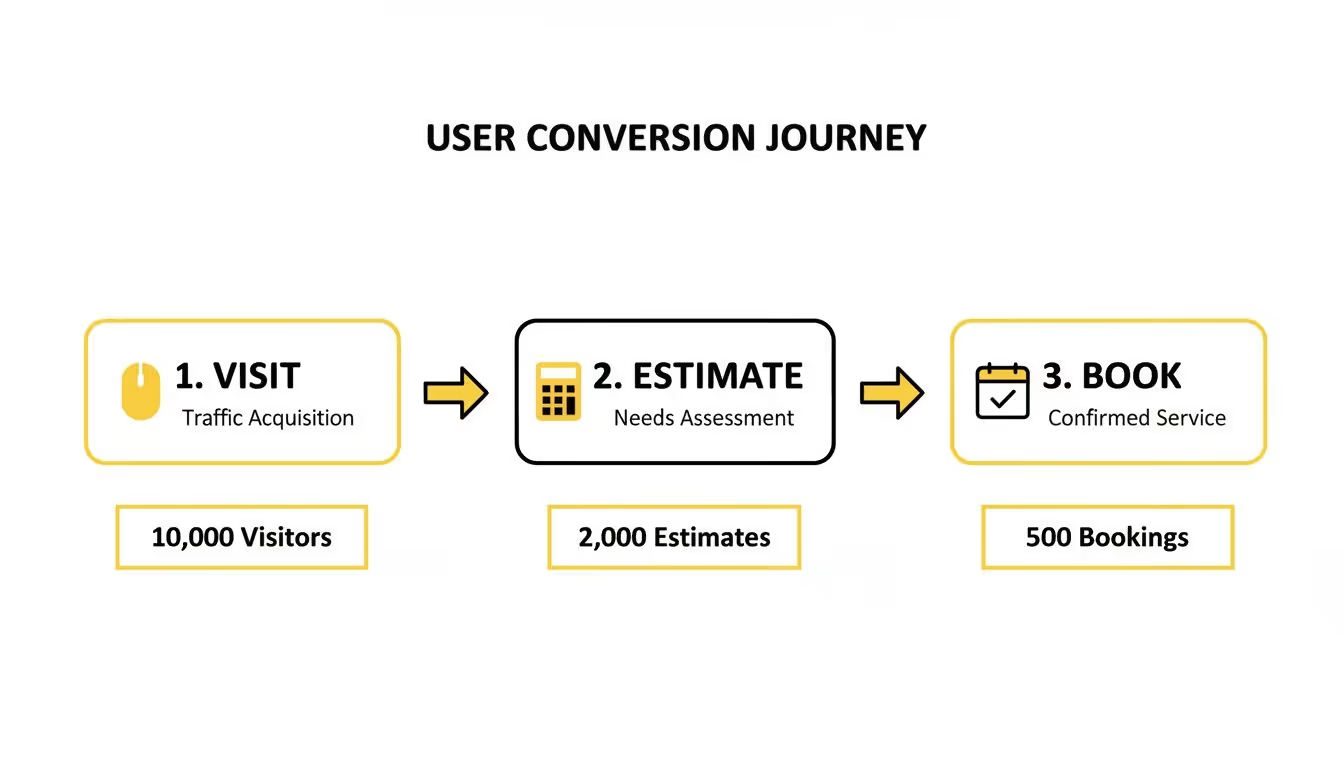
As you can see, that instant estimate is the critical bridge. It takes casual browsers and turns them into serious, qualified leads who are ready to book.
The moment someone requests an estimate is your golden opportunity. You have to act fast. The very first step is setting up real-time notifications. With a tool like Estimatty, you and your team can get an instant SMS or email alert the second a lead comes in. This lets you follow up in a flash while the client is still on your site and thinking about your services.
Speed is everything. The game has changed completely. Since 2019, online cleaning bookings have shot up by 40%, and a whopping 80% of consumers expect immediate answers. I see so many cleaning businesses without calculators struggle with inconsistent pricing, losing up to 25% of their potential revenue. A smart estimator that nails the details—square footage, special requests, urgency—can boost your bookings by 35% just by connecting leads directly to your team and CRM. You can dig into more data on the household cleaners market to see the trend for yourself.
Your calculator becomes a true powerhouse when it starts "talking" to the other software you use every day. This is where integrations create a hands-off system that ensures no lead ever falls through the cracks.
The ultimate aim is to kill manual data entry for good. Every piece of information a client gives you should automatically flow to the right place, from their contact details to their requested service date.
You can make this happen with a few key connections:
Tools like Zapier are a lifesaver here, letting you link your calculator to thousands of other apps without writing a single line of code. For example, you could create a "Zap" that takes a new lead from your estimator and immediately adds them to a follow-up email sequence in Mailchimp. It’s all about building an efficient, automated engine that works for you 24/7. And when it comes to managing your team, which is your most valuable asset, you can find great resources over at the Pipehire blog.
Thinking about adding an instant estimate tool to your site can bring up a lot of "what ifs." It’s a big step, and if you’re like most cleaning business owners I talk to, you’ve probably got some questions. Let's tackle the big ones I hear all the time.
This is hands-down the number one concern. How can you trust a machine to price jobs accurately and protect your bottom line? I get it. The last thing you want is to be locked into an unprofitable job.
The secret isn't in the calculator itself, but in the formula you build. A good tool lets you plug in the exact variables that drive your costs: square footage, number of bathrooms, specific surfaces, and, most importantly, your local labor rates.
You're not using some generic template. You're teaching the calculator your pricing. You can dial in your profit margin, add buffers for supplies, and set different rates for different types of cleans. This way, every single estimate reflects how your business actually operates.
Another huge worry is the setup. Many owners think they’ll need to hire a developer or spend weeks fiddling with code.
Let me put that fear to rest. Modern estimate tools are built for people like us—business owners who need things to just work.
You don't need to write a single line of code. Everything is handled through simple menus, dropdowns, and sliders. Honestly, you can get a powerful, professional-looking calculator up and running on your website in less than an hour. That’s a tiny time investment for something that will capture leads for you 24/7.
Don't just take my word for it. Plenty of cleaning companies have seen a huge difference. We've seen owners who are now getting more leads from their existing website traffic without having to pour more money into ads.
"Okay, but what happens when someone with a 6,000-square-foot mansion or a post-construction mess wants an estimate?" This is a great question. Does automation mean you lose control over those unique, high-value jobs?
Not at all. A smart calculator is your front-line soldier, not your general. It's designed to automatically handle the routine stuff—which is probably about 90% of your inquiries.
This frees up your time to personally connect with the clients who have complex or high-ticket projects. You can set rules within the calculator to flag jobs over a certain size or those with unusual requests, sending them directly to you for a manual estimate. It’s the perfect blend: efficiency for the everyday, and your expert touch for the exceptions.
You get to work smarter, giving every potential customer the right kind of attention. And when all those new leads mean you need to expand your crew, platforms like Pipehire are fantastic for finding reliable cleaning pros.
Ready to stop letting potential customers slip away? Estimatty gives you the tools to provide instant, accurate estimates that turn more of your website visitors into paying clients. Get started with Estimatty today!