September 8, 2026
How Much Should a House Cleaning Cost in 2026
How Much Should a House Cleaning Cost. Learn how much a house cleaning should cost in 2026, with real pricing ranges by home size, service type, and tips

Monday, August 3, 2026
Starting a power washing business in 2026? Get a step-by-step guide covering market research, legal setup, equipment, pricing, and scaling with Estimatry.
The U.S. pressure washing market brings in about $1.2 billion across 32,193 businesses, and residential work makes up nearly 70% of revenue. The trap is that competition is growing much faster than revenue, so speed, systems, and consistent estimates matter more than buying a machine and waiting for the phone to ring.
Starting a power washing business looks simple from the outside. Water, pressure, and a truck can get you into the field, but winning work in a crowded local market takes tighter positioning, faster response times, and a pricing process that doesn't fall apart when a lead sends photos instead of inviting you onsite. The operators who do well early usually aren't the loudest or the cheapest, they're the ones who respond fast and estimate cleanly.
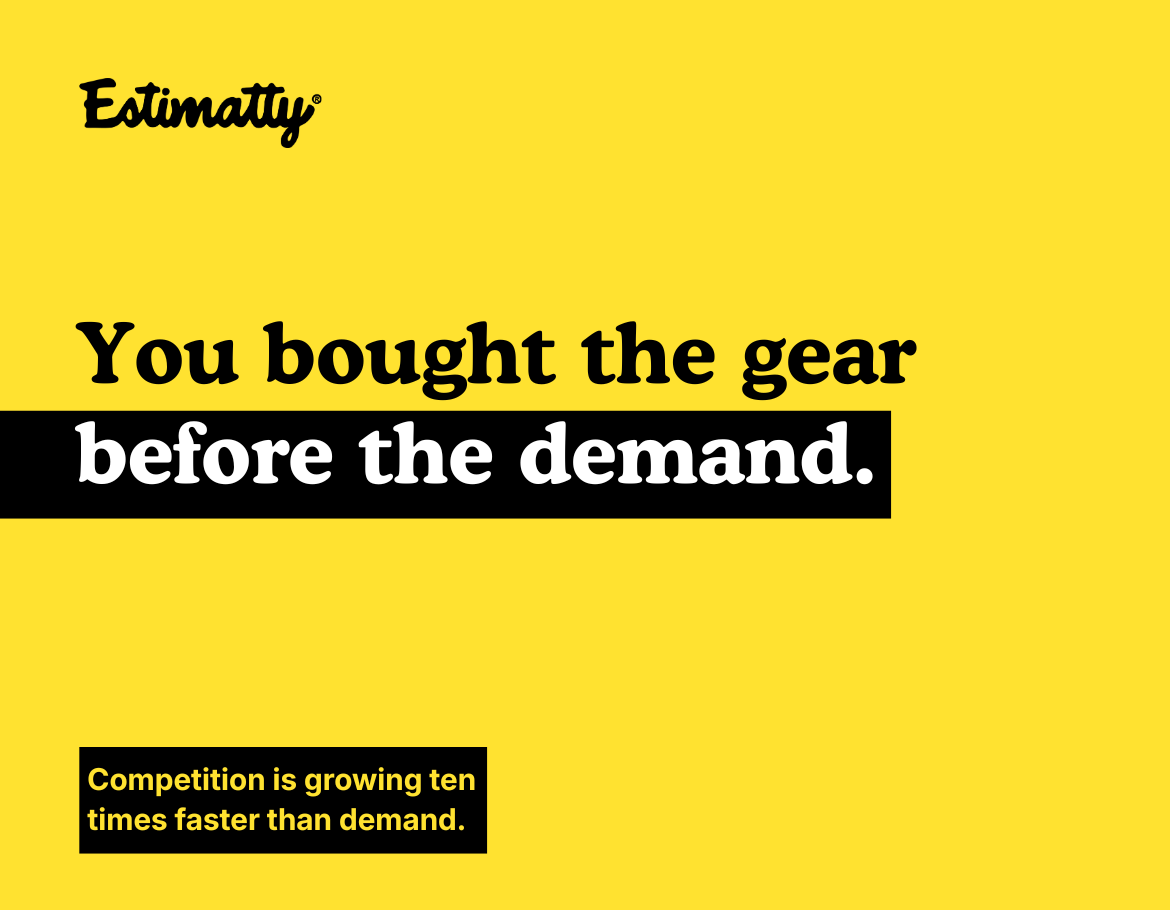
The U.S. pressure washing services industry is already large, but it's crowded enough that new owners need a real angle. According to IBISWorld-based reporting, the market generates about $1.2 billion in revenue and includes 32,193 businesses; the same coverage says revenue growth is only 0.6% CAGR while the number of establishments is rising at 5.8% CAGR. That gap tells you the hard truth, demand isn't exploding, competition is.
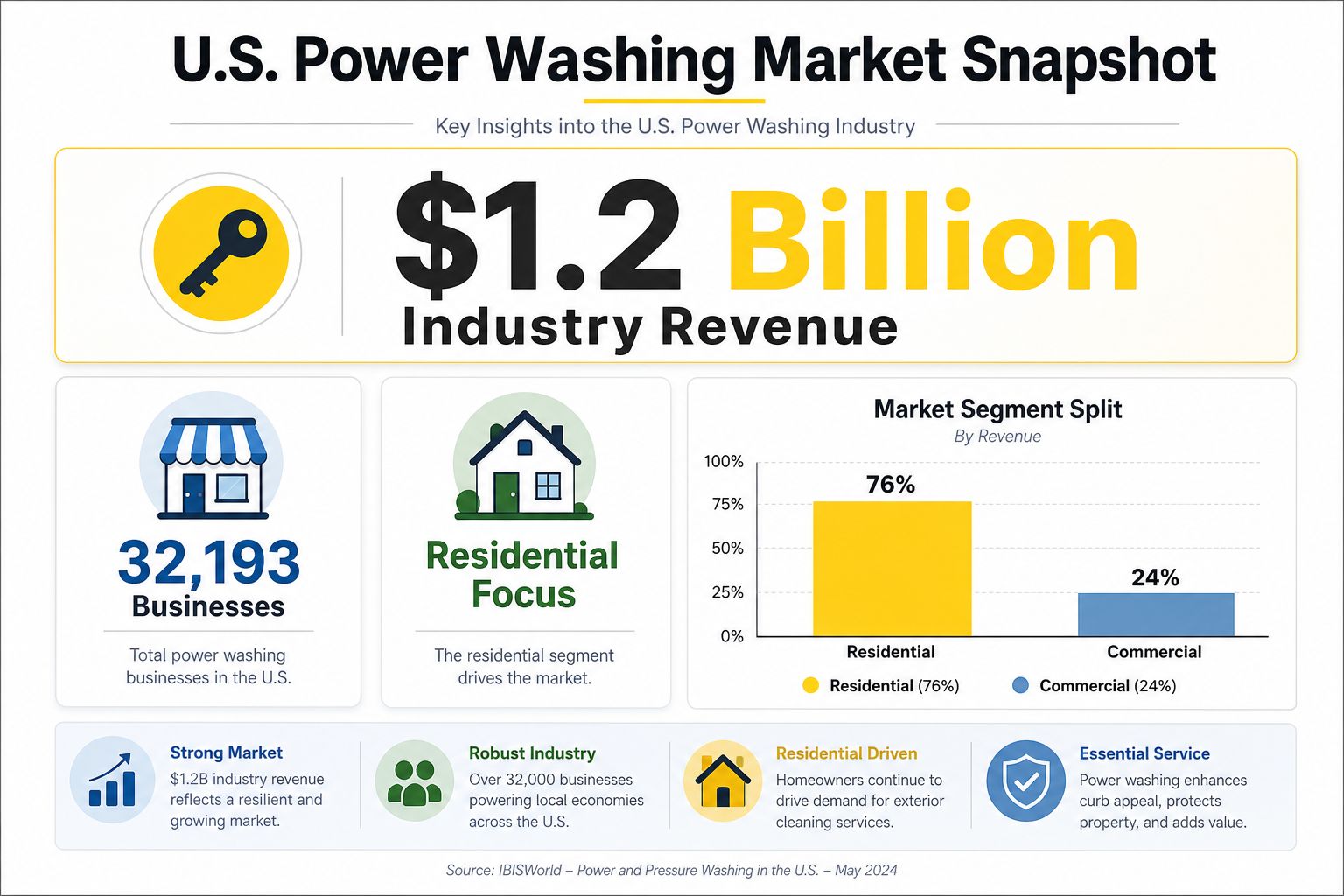
Because the residential segment accounts for nearly 70% of U.S. pressure washing revenue, most startups naturally begin by chasing homeowners first. That doesn't mean commercial work isn't worth pursuing later, it means your earliest systems should make homeowner lead capture fast, simple, and local. A clean website, quick estimate turnaround, and visible reviews usually matter more than trying to look like a giant before you've booked your first route.
A mature market rewards operators who look easy to hire. Homeowners often don't compare every detail, they compare responsiveness, clarity, and confidence. If one company answers in minutes and another replies the next day, the first one usually wins the estimate conversation.
Practical rule: in a crowded local service business, being first to reply is often more valuable than shaving a few dollars off the price.
That's why early positioning should focus on simple service promises, fast turnaround, and a tight service area rather than broad claims. If you want a useful outside reference for how a mobile service business can package its offer and presentation, the SwiftJet detailing walkthrough is a helpful example of how operators frame mobile convenience around customer trust.
The takeaway is straightforward. This business can work, but not because the market is empty. It works when you build a repeatable local system that turns interest into booked jobs faster than the next operator down the street.
Most beginners buy equipment first and then start looking for customers. That sequence feels productive, but it hides weak demand until money is already spent. A better move is to validate the area before you commit to the truck, the trailer, or even the full equipment stack.
Start with 2 to 3 target neighborhoods, not the whole city. Pick areas where driveways, siding, and fences visibly need cleaning, then list at least 10 potential jobs you can see from the street or identify from local listings. That gives you a small, concrete target set instead of a vague dream market.
Next, analyze 5 local competitors. Note what they clean, how they present their services, whether they emphasize house washing or flatwork, and how quickly they respond when you request information. You're not trying to copy them, you're looking for gaps in service mix, presentation, and follow-up.
The cleanest early growth usually comes from proving that a neighborhood already buys your kind of service, then showing up with a faster and clearer response than the existing options.
That's where pre-selling matters. Ask for enough detail to build a startup budget and legal setup before you spend heavily on advertising. If you can get a few serious conversations going early, you'll know whether the area supports your pricing before you've filled a garage with gear.
A useful internal reference for contractor lead flow is the Estimatty contractor lead generation guide, especially if you're thinking about how leads arrive before they ever become booked jobs. The practical lesson is simple, capture interest early, then shape your offer around what people are already asking for.
Pressure washing jobs are affected by travel, access, weather, and setup. Exact appointment times sound professional, but they can create unnecessary friction when one earlier job runs long or a driveway takes more prep than expected. Arrival windows absorb that reality and make your first reviews stronger because you're not forcing a promise you can't always keep.
That matters more than most operators admit. A missed expectation on job one can hurt your reputation before your equipment ever has a chance to prove itself. The market research phase is where you learn to sell reality, not fantasy.
A pressure washing business usually needs more than a truck and a business card. vcita notes that most states require a general business license, with fees ranging from $50 to over $500, and some jurisdictions add environmental permits, contractor licensing, specialist pressure washer licensing, and insurance requirements. The exact mix depends on location, but the pattern is consistent, compliance comes before scale.
| Requirement | Typical Cost Range | Notes |
|---|---|---|
| General business license | $50 to over $500 | Often required at the state or local level, and the fee varies by jurisdiction. |
| Environmental permit | Varies | May be required where runoff or wastewater is regulated. |
| Contractor license | Varies | Some areas require it, especially for certain commercial or specialty work. |
| Specialist pressure washer license | Varies | Not universal, but some jurisdictions require specific credentials. |
| General liability insurance | Varies | Often essential for both residential and commercial customers. |
| Vehicle, equipment, and workers' compensation coverage | Varies | Usually added as the business grows or hires help. |
Wastewater is the compliance issue that catches people off guard. StartPermit says discharging wash water to storm drains violates the EPA Clean Water Act Section 402 without an NPDES permit. Their guidance says operators should capture wash water with portable berms and wet vacuums, then dispose of it in a sanitary sewer cleanout or another approved facility.
That's not a paperwork detail. One bad runoff mistake can create a problem that costs far more than a cleaner setup ever would. It's also why you should know your local rules before you market hard, especially if you plan to clean driveways, commercial pads, or anything with chemical residue.
For funding and capital planning, the GoSBA Loans broker guide is useful context if you're deciding whether to bootstrap or borrow. Financing isn't mandatory, but it changes how fast you can move and how much cash you need to hold back for insurance, licensing, and legal setup.
If you want a more detailed licensing checklist, keep the Estimatty contractors license requirements guide handy while you call your local office. The smartest operators treat legal setup like part of the launch budget, not an afterthought.
Startup costs vary more than people expect. Independent industry summaries put typical startup costs for a pressure washing business at about $10,000 to $30,000, while leaner setups can begin around $4,500 to $7,500 if you already have a usable truck and only need the essentials. That spread is why it's risky to copy someone else's gear list without thinking about your own service area and job mix.
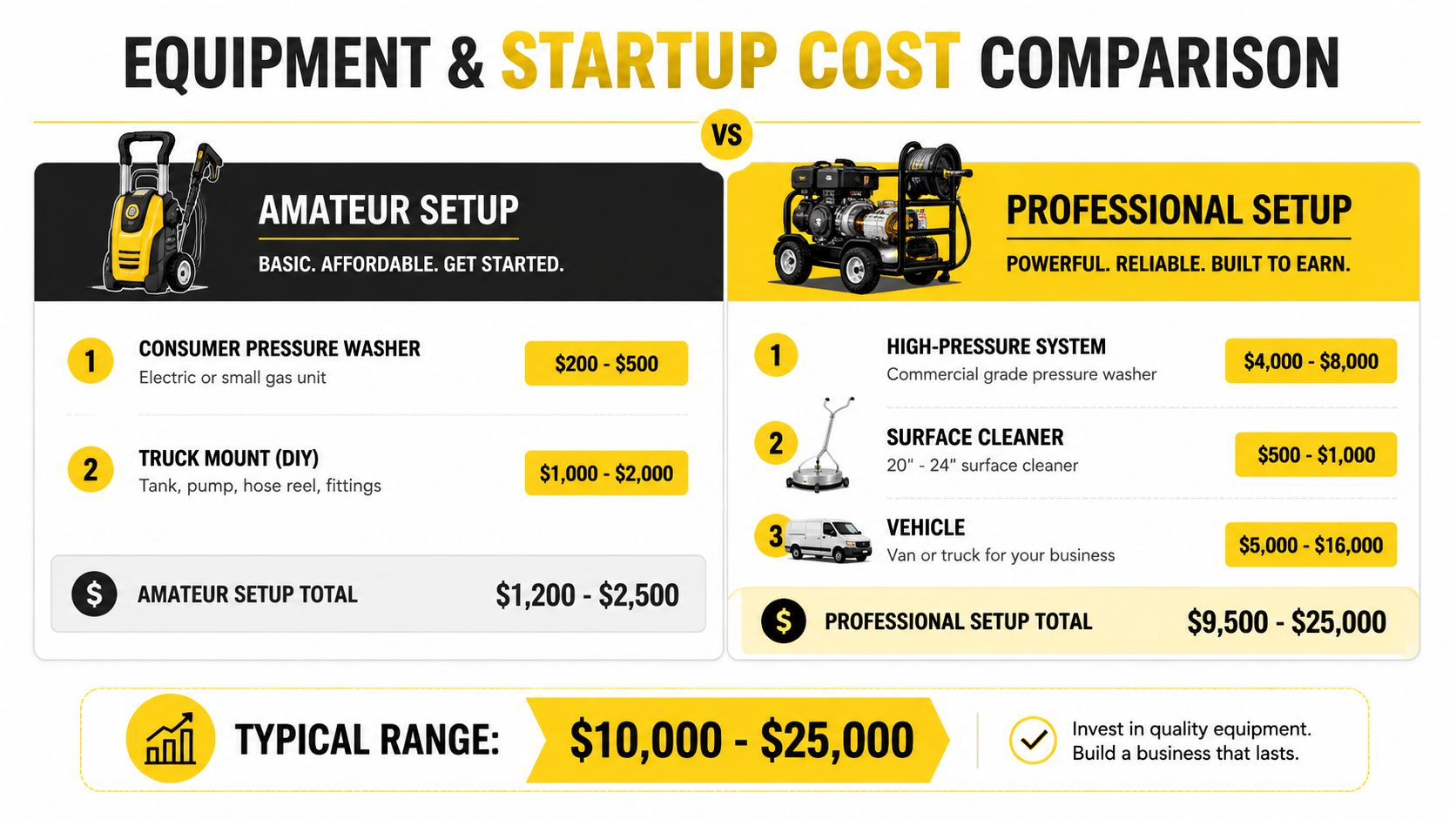
A practical benchmark is ~4 GPM equipment paired with a direct-drive pump and a basic residential/commercial kit. One source pegs equipment-only startup cost at about $1,600, including a surface cleaner, 100 ft garden hose, 100 ft pressure hose, reels, fuel cans, PPE, and house-washing tools. That setup isn't fancy, but it gets real work done.
Flow rate matters more than people think. 4 GPM moves water fast enough to improve cleaning speed on driveways and siding, while small consumer machines usually drag out every job and make you look underpowered. PSI still matters, but GPM is what helps you finish more work in less time.
Direct-drive pumps are attractive early because they keep cost lower. They're a practical choice for getting started, but they're generally less forgiving for heavy, all-day commercial use than other configurations. If you're only buying once, think about the jobs you want in six months, not just the first weekend.
The same source warns against starting the pump without a connected water source, which can damage it immediately. That sounds basic, but it's one of those beginner mistakes that can turn an otherwise cheap launch into a repair bill before you've made a dollar.
Job pricing data helps frame the investment. One industry source says average pressure washing jobs commonly fall between $250 and $500, and commercial pressure washing can average about $1,200 per job. Another report says U.S. pressure washing businesses averaged about $250,000 in annual revenue in 2023, with top performers exceeding $1 million.
Those figures don't guarantee anything, but they do explain why quote accuracy matters so much. Small pricing errors compound fast when the average job is only a few hundred dollars. If you underquote by habit, the business looks busy while cash stays tight.
The internal Estimatty cleaning business accounting guide is a good companion if you're building your first budget and trying to keep job costs visible. I'd also recommend watching the embedded walkthrough below if you want a visual refresher on setup logic and gear placement.
Most new operators lose money before they realize it. They reply slowly, they guess from photos, or they underprice because the lead sounds easy. The bottleneck isn't the washer, it's the estimate process.
A lot of beginner advice still assumes you'll drive to every property before giving a number. That works when volume is low, but it breaks down the moment leads start coming in from your website, phone, or social media. If every inquiry depends on a callback and a manual judgment call, your sales process turns into a queue.
That's where remote estimating becomes a real operational advantage. Estimatty is one example of an AI-powered estimator that can answer prospects on the web or by phone, capture square footage, surfaces, and urgency details, then send instant estimates by SMS and email. For a pressure washing business, that means you can handle early interest around the clock without waiting until morning.
Practical rule: if two operators clean at the same level, the one who responds first and estimates consistently usually books more work.
The point isn't automation for its own sake. It's quote consistency. If you price driveways, siding, roofs, and commercial flatwork from a clear framework instead of gut feel, you reduce callbacks and avoid the slow leak that comes from underquoting easy jobs.
Start by standardizing the information you collect at first contact. Ask for surface type, approximate size, access issues, stains, and timing. Then create pricing formulas that account for production time instead of just what the customer thinks the job should cost.
A simple workflow usually includes:
If you want a deeper look at software-driven estimation in cleaning services, the Estimatty AI estimates software guide covers the logic behind instant response workflows. For a new power washing business, that kind of system usually matters more than upgrading the machine one size at a time.
The best pricing systems don't just make you faster. They make you calmer. When every estimate follows the same logic, you stop improvising under pressure and start running a business that can scale.
A power washing business doesn't win through visibility alone. It wins when the right local customer finds you, trusts you, and can request an estimate without friction. Google Business Profile should be part of that system from day one, because businesses with complete profiles are more likely to be considered by consumers searching locally.
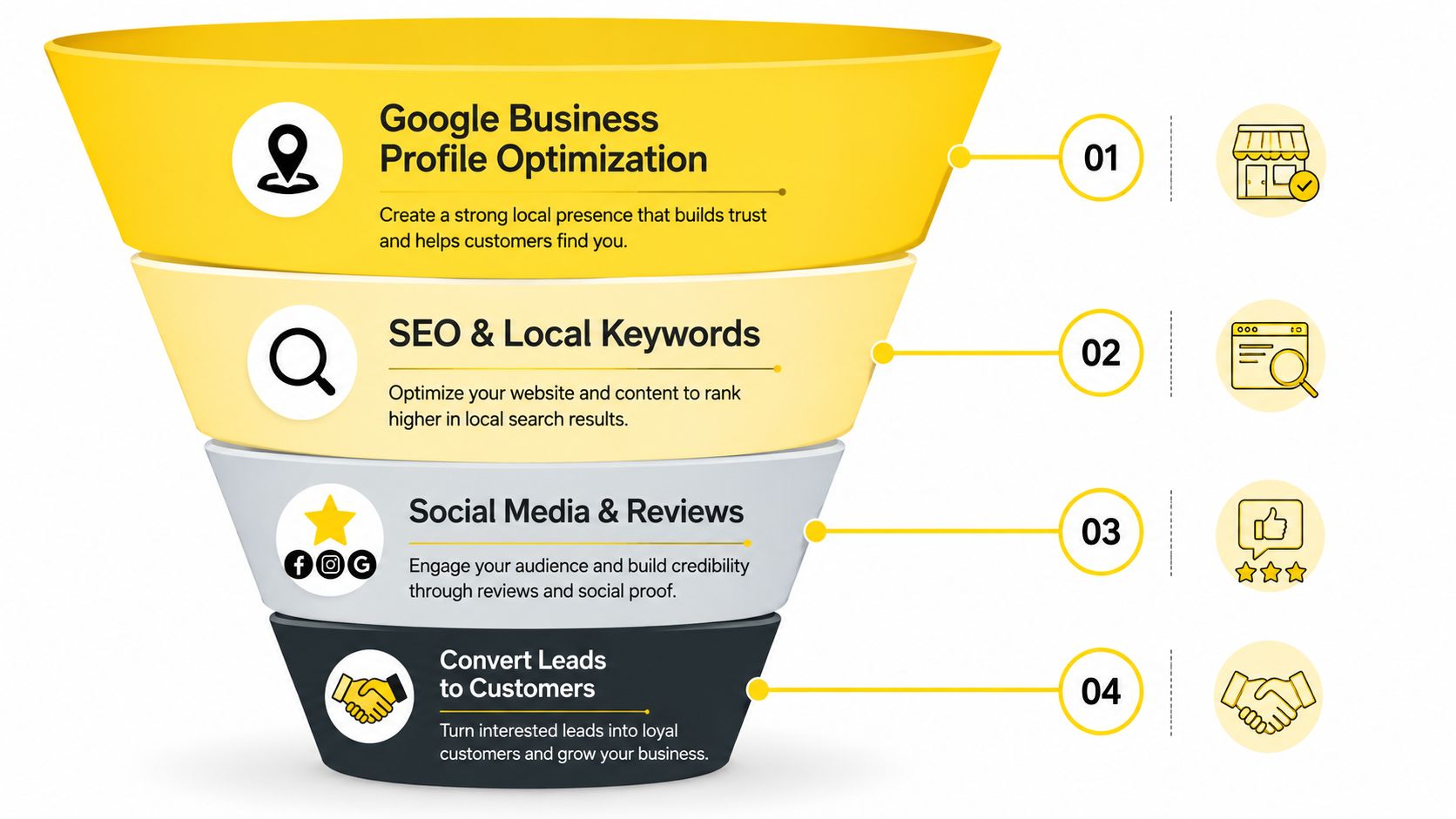
Local SEO gives you the long game. Service pages built around pressure washing, house washing, driveway cleaning, roof cleaning, and other specific jobs help searchers match their problem to your offer. Reviews then reinforce the decision, because homeowners want proof that you show up and finish cleanly.
Social media still matters, but mostly as proof and retargeting support. Before-and-after images, short job clips, and neighborhood posts help people see that you work in their area. The key is to use those posts to support conversion, not as a substitute for a real lead system.
For a useful source of marketing language ideas, the Dirt Cheap Product cleaning tips page can help you think about how service businesses frame their messaging. The exact words matter less than the clarity of the promise, because customers want to know what gets cleaned, how fast you respond, and what happens after they reach out.
The strongest local operators use a mix of channels. Google Local Services Ads, organic search, social content, and partnerships with property managers or real estate agents all serve different parts of the funnel. If one channel slows down, the others keep the calendar from going empty.
A better marketing question is not “which channel is best,” but “which channel produces leads I can answer fast and estimate consistently?” That's where digital-first operations and a responsive booking process pay off together. A polished local presence creates trust, and a strong estimate system converts that trust into booked work.
The Estimatty SEO cleaning business guide is worth a look if you're building a location-focused content strategy. The main idea is simple, visibility only matters when it feeds a response process that can close the job.
The fastest way to look bigger than you are is to run your schedule like a real business. Arrival windows, route planning, weather buffers, and clean handoffs make you look reliable even when the day shifts. Exact times usually create stress, while structured windows keep expectations realistic.
Every job should be planned around travel time, setup time, and cleanup time. If you don't account for all three, the day runs late and the last customer gets a rushed experience. Good operators don't just clean well, they protect the appointment chain that sits behind the work.
Quality control also needs a standard. Check edges, corners, siding transitions, and runoff before you leave. If you hired help, the crew should know what “done” looks like before the hose gets rolled up.
Hiring too early can be expensive, but waiting too long can trap growth. Some owners stay solo longer than they should because control feels safer, while others hire before they've built enough job flow to keep a crew busy. The right move depends on whether you're turning down work or just staying busy.
If you're evaluating cleaning crews through a hiring platform like pipehirehrm.com, look for people who can handle physical work, communicate clearly, and follow a repeatable process. The first hire should reduce bottlenecks, not create new ones.
Track a few numbers from the beginning:
Scaling works best when the business can repeat itself without reinventing every estimate, every route, and every handoff. Operators who standardize early usually scale with less chaos, because they already know how to quote, schedule, and deliver the same result in different neighborhoods.
If you're building a power washing business and you want to stop losing leads to slow callbacks, Estimatty can help you turn inquiries into estimates and bookings around the clock. Visit Estimatty to see how instant estimates, voice sales, and consistent pricing can fit into your operation from day one.