September 29, 2026
Commercial and Residential Cleaning in 2026
Compare commercial and residential cleaning markets in 2026. Explore pricing, staffing, compliance, and how AI estimators streamline operations.

Thursday, July 2, 2026
Get our free proposal for service template for cleaning businesses. Learn to customize, set pricing, & automate to close more deals in 2026.
Most cleaning owners know this cycle too well. A lead comes in, you stop what you're doing, piece together an estimate from memory, send over a price, and wait. Then nothing. No reply, no follow-up questions, no job.
The problem usually isn't just the price. It's that the document you sent didn't do enough selling.
A strong proposal for service template turns a basic estimate into a decision-making tool. It shows the client you understand the property, the work, the schedule, and the standards they'll get if they hire you. It also keeps your team consistent. That's a big deal when you're trying to grow without rewriting every proposal from scratch.
Most templates online are too generic for cleaning companies. They read like office paperwork. They don't sound like a real operator who knows how to price recurring service, handle add-ons, or set expectations before the first clean. Even worse, they treat the proposal like the first step, when in a modern sales process it should be the polished summary of information you've already gathered.
If your current estimate is just a line item and a total, you're making the client do too much work. They have to guess what's included, how often you'll show up, what happens next, and whether your company feels organized enough to trust with their home or facility.
That uncertainty costs jobs.
A more structured service proposal fixes that by removing unanswered questions before the client asks them. It also makes your business look more stable and more deliberate. According to Visme's service proposal guidance, a high-impact service proposal that explicitly defines milestones, timelines, and deliverables increases perceived professionalism and can boost win rates by up to 34%. In cleaning, that translates well. Clients want to know what gets cleaned, when it gets cleaned, and how you'll handle the work without surprises.
A price list says, "These are our charges."
A proposal says, "Here's how we'll solve your cleaning problem."
That difference matters whether you're pitching a weekly residential client, a move-out clean, or a recurring office account. Good proposals frame the investment around outcomes like reliability, clarity, and reduced back-and-forth. That's one reason many owners who sharpen their sales process also spend time studying broader positioning and follow-up systems, like this guide for home service businesses from Digital Skyrocket.
A reusable template also saves time. You stop rebuilding the same sections over and over. Your team stops improvising language. Your proposals start sounding like they came from one company with one standard.
Practical rule: If a client can reply, "What exactly is included?" after reading your proposal, the proposal wasn't finished.
The best proposal for service template isn't fancy. It's repeatable.
It should let you plug in client details, adjust service scope, swap schedule options, and send a polished document quickly. If you're moving away from kitchen-table pricing and toward a faster online workflow, Estimatty has a useful article on transitioning from in-home estimates to online estimates.
When owners make this shift, they usually notice something simple. Fewer prospects ghost them because the proposal answers the questions that used to stall the sale.
A winning cleaning proposal follows a clear sequence. Each section has a job to do. If one part is weak, the whole document loses force.
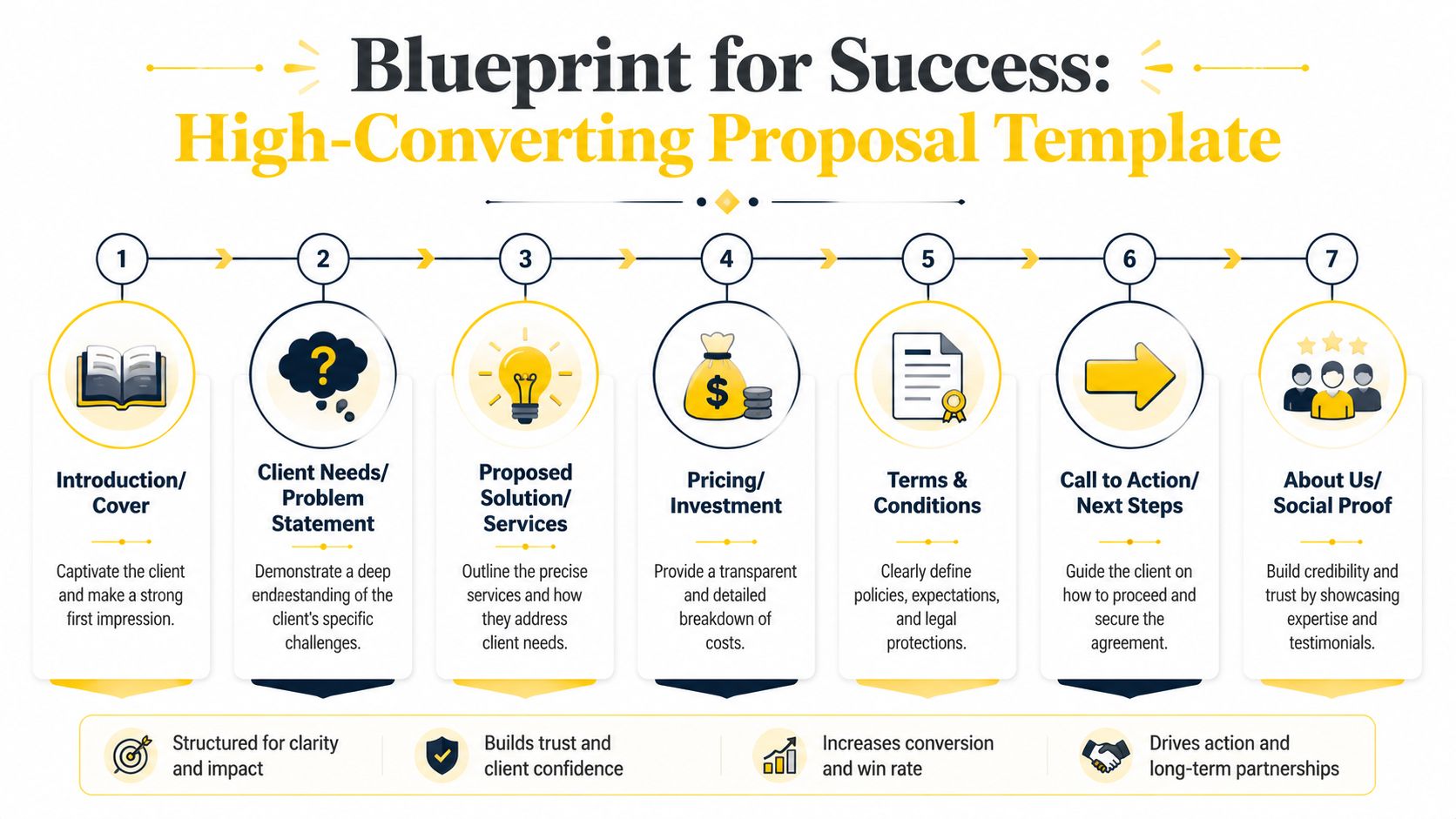
The first page should include your logo, company name, client name, property address if relevant, and the date. Keep it clean.
Below that, add a short title such as:
Residential Cleaning Service Proposal for the Johnson Home
Or:
Office Cleaning Proposal for Northside Dental
This page signals that the document was built for that client, not pulled from a random file folder.
Don't open with a wall of text. A few direct lines are enough.
Example:
Thank you for the opportunity to provide cleaning services for your property. Based on the information discussed, we've prepared a service plan designed around your space, preferred schedule, and cleaning priorities. This proposal outlines the scope of work, service frequency, investment, and next steps.
That note works because it does three things at once. It thanks the prospect, confirms you listened, and prepares them for what they're about to read.
Many cleaning companies often skip ahead too fast. They jump to pricing before they show understanding.
Write a short problem statement such as:
This section doesn't need to be dramatic. It just needs to prove you heard the details.
Your scope is the center of the proposal. Make it easy to scan.
For a house cleaning proposal, you might break it into rooms:
Kitchen
Wipe countertops, clean exterior appliance surfaces, sanitize sink area, clean stovetop, mop floor
Bathrooms
Sanitize toilet, tub, shower, vanity, mirrors, fixtures, and floors
Living areas and bedrooms
Dust reachable surfaces, vacuum carpets, mop hard floors, make beds if requested
For a commercial proposal, organize by zone:
If you want a starting point for the intake side of this process, Estimatty's article on estimate form templates is useful because strong proposals start with strong information capture.
Clients don't compare proposals line by line. They compare how confident each company sounds about the work.
Your proposal develops into more than a document. It becomes a plan.
Use a short section like this:
| Section | Example |
|---|---|
| Service frequency | Weekly, biweekly, monthly, or one-time |
| Preferred service window | Weekday mornings, evenings, or after-hours |
| Start date | Upon approval and scheduling confirmation |
| Deliverables | Completed cleaning visit based on listed scope |
| Communication | Service reminders, issue reporting, and update contact |
Then include a brief About Us section. Keep it grounded. Mention your cleaning focus, service standards, and what kind of team performs the work. If you're hiring and trying to keep fulfillment quality high, resources like the blogs at estimatty.com/blog and get.pipehirehrm.com/blog are worth following for operational ideas.
Close this section with social proof if you have it. A short testimonial, a note about specialized experience, or a sentence about your process helps. Just keep it truthful and specific.
Pricing gets easier when you separate math from presentation. First, determine your labor baseline. Then package the investment so the client can understand it fast.
For residential work, a practical starting point is the accepted benchmark from Cleaning 4 Profit's house cleaning estimating guide: 1.5 hours for every 1,000 square feet of living space. That gives you a mechanical way to begin instead of guessing from memory.
A 2,000 square foot home starts with a labor estimate of about 3 hours before you adjust for bathrooms, condition, pets, clutter, first-time depth, or add-on tasks.
Different clients respond to different pricing structures. The key is to pick one intentionally.
Here is a simple comparison framework.
| Pricing Model | Calculation | Estimated Price |
|---|---|---|
| Hourly | Labor based on 3 hours from the 1.5 hours per 1,000 sq ft baseline, then adjusted by your hourly team rate | Based on your hourly rate and job conditions |
| Flat Rate | Start from the same labor baseline, then bundle supplies, travel, overhead, and target margin into one total | Based on your standard service package |
| Per Square Foot | Use square footage as the starting estimator, then adjust for service level and room count | Based on your internal square foot formula |
The table is simple on purpose. Clients don't need your entire pricing engine. They need a number they can understand and a scope that supports it.
Inside the proposal, avoid one lonely line that says "Cleaning: total due." Break it down enough to make the number feel justified.
A strong investment section usually includes:
Optional add-ons are where many owners leave money on the table. Good examples include interior window cleaning, fridge interior cleaning, oven interior cleaning, baseboard detailing, or carpet spot work.
If an add-on takes real labor, give it its own line. Don't bury extra work inside the base package and hope the client notices your generosity.
A weak proposal invites negotiation because it looks uncertain. A strong one reads like a business decision.
That means your pricing should match the level of detail in your scope. If the proposal promises room-by-room service, your investment section should reflect a professional package, not a rough guess. If you need ideas for how to structure visible service packages, Estimatty's article on a cleaning service price list is a helpful reference.
One more practical point. Put your preferred package first if it's the one you most want to sell. Then list premium upgrades or maintenance options below it. That small ordering choice changes how clients compare the options in front of them.
A cleaning proposal without terms feels unfinished. It may win the job, but it leaves too much room for confusion once the work begins.
Clear terms don't make you look rigid. They make you look organized.
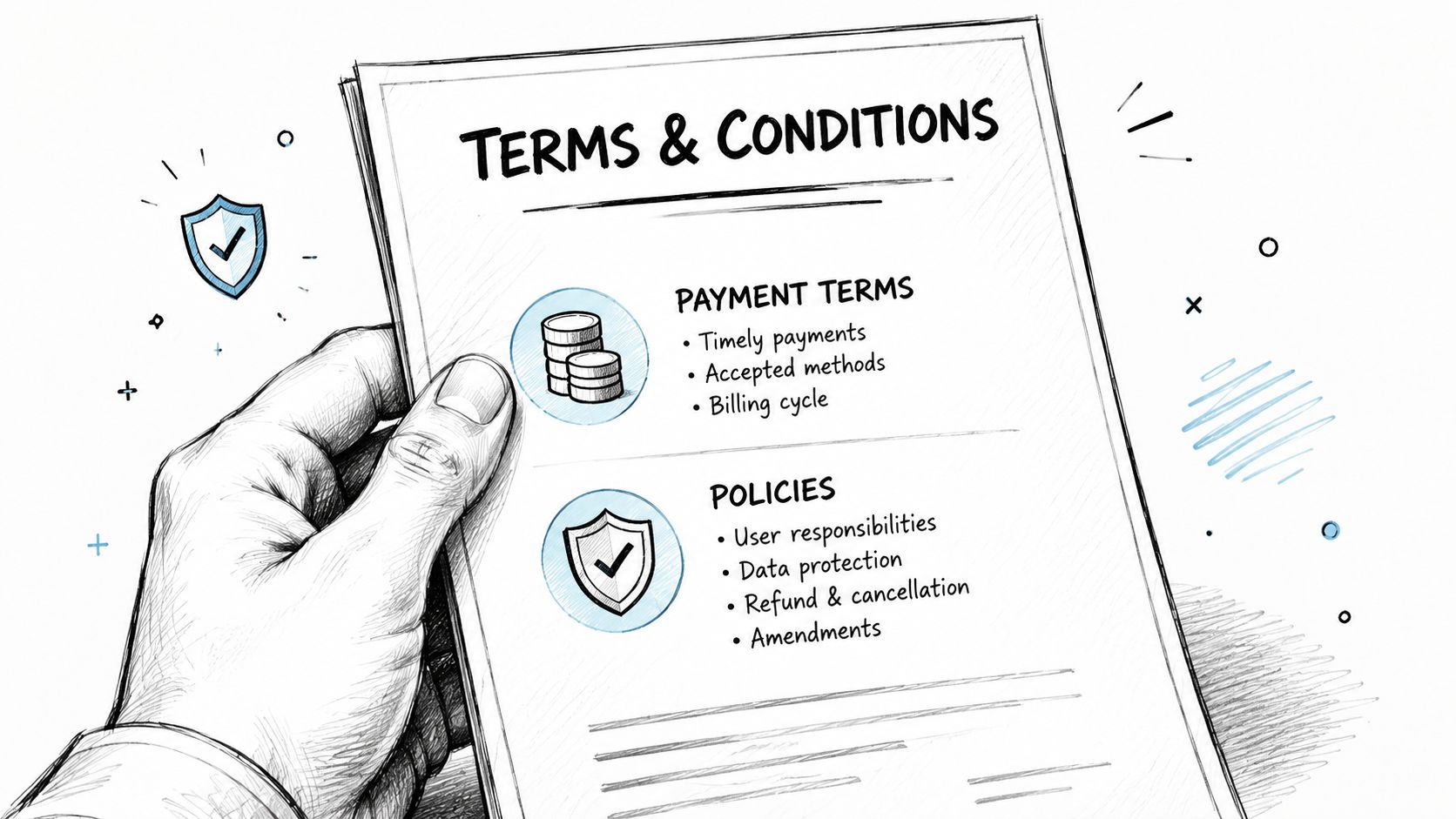
Most client disputes come from assumptions. The client assumes a certain payment timeline. You assume access will be ready. They assume rescheduling is easy. You assume add-on work needs approval.
Fix that in writing.
Include terms such as:
If you're using a formal agreement after proposal approval, this guide to cleaning services contracts can help tighten the wording.
Use plain English. Clients skim legal language, but they read simple statements.
Cancellations or schedule changes require advance notice. Missed appointments or lockouts may result in a service charge.
Additional services requested outside the approved scope will be scheduled or billed separately after client approval.
Payment is due according to the selected billing method and schedule listed in this proposal.
That kind of wording protects both sides without sounding hostile.
You can't promise consistent service if your staffing is unstable. That's why hiring affects proposal quality more than many owners admit. When your team is trained, screened, and dependable, your service promises are easier to keep.
For owners trying to strengthen that side of the business, pipehirehrm.com is worth knowing, especially if you're building a repeatable process for hiring cleaning employees who can deliver the standards your proposal promises.
Clients don't separate sales from operations. If the proposal sounds polished but the team shows up disorganized, trust disappears fast.
A good proposal can still stall if you send it poorly. Delivery matters. So does what you say in the email.
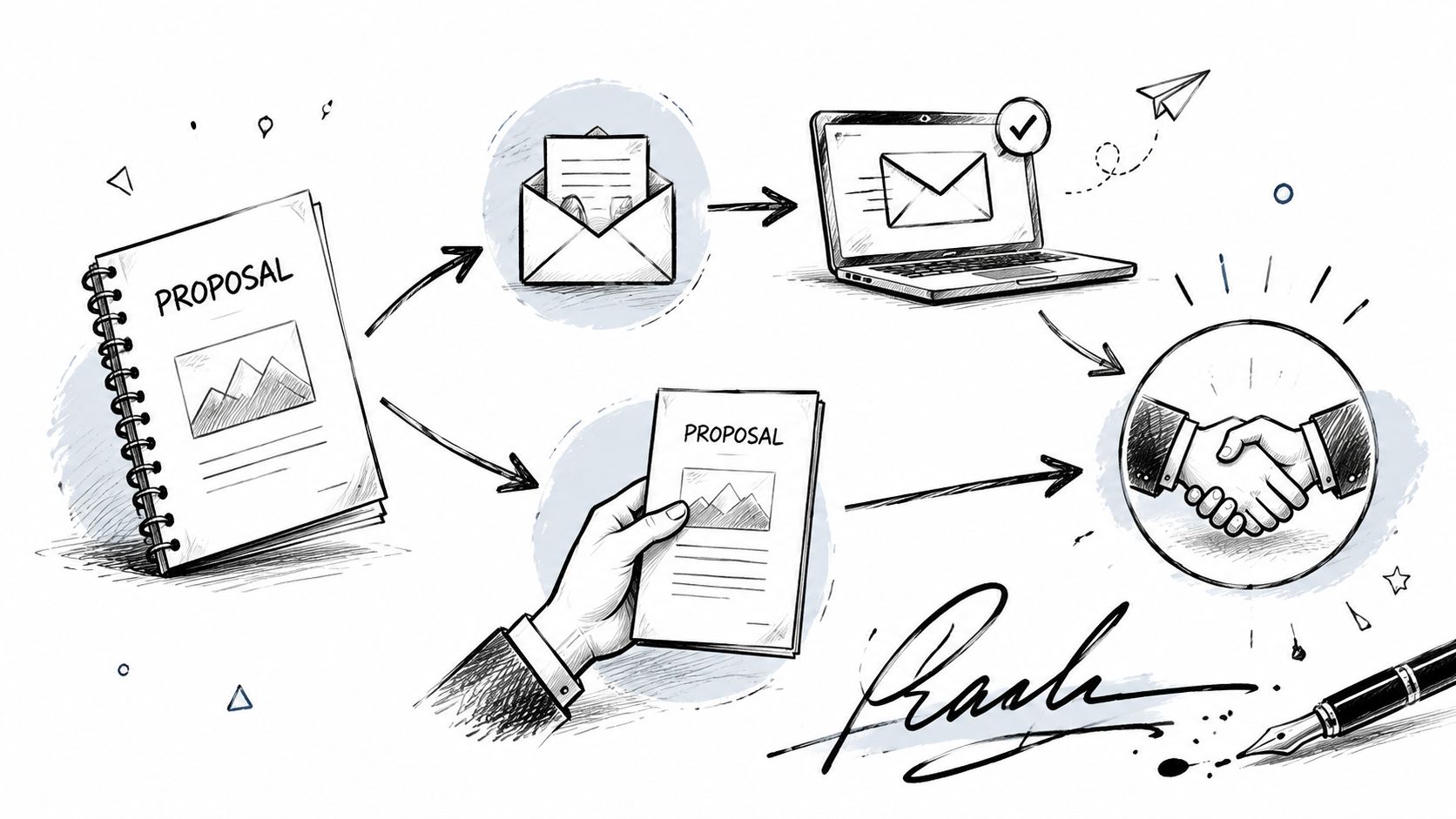
For many cleaning businesses, a PDF sent by email is enough. It's simple, familiar, and quick.
Proposal software can be better when you want version control, approval tracking, and built-in signatures. The trade-off is setup time and cost. If you only send a handful of proposals each week, PDF plus e-signature often does the job well.
What matters most is that the client can open the document, understand it quickly, and approve it without friction.
Most proposal emails are too vague. They say, "Attached is the estimate," and leave the rest hanging.
Use something closer to this:
Subject: Your Cleaning Service Proposal
Hi [Client Name],
Thanks again for the opportunity to provide cleaning services for your property. I've attached your proposal, which includes the recommended service scope, schedule, investment, and terms.
Please review it and reply with approval or any questions you'd like to discuss. If you'd like to move forward, I can confirm the next available service date and send the agreement for signature.
Best,
[Your Name]
[Company Name]
[Phone]
That email works because it's direct. It tells the client what's attached, what they'll find inside, and how to respond.
Send proposals while the conversation is still warm. The longer you wait, the more likely the client is to compare you only on price.
If the client has to print, sign, scan, and resend, you've added friction you didn't need. Digital signatures speed up the final step and make your company feel easier to work with.
A short explainer can also help if you're refining the handoff from proposal to agreement:
Keep your follow-up simple, too. If there's no reply, send a brief check-in. Confirm they received the proposal and ask whether they'd like to reserve a service date. You don't need a long sales sequence. You need a clear next step and a low-friction way to say yes.
The old cleaning sales process starts with a phone tag problem. A prospect reaches out after hours, leaves partial details, and waits for you to respond. By the time you call back, the lead may already be gone.
That gap is exactly why static proposal systems feel outdated. The strongest proposal now starts before the document exists.
When an AI estimator captures square footage, service type, urgency, surfaces, and client questions upfront, the formal proposal gets sharper. You're not building from scraps. You're assembling a polished recommendation from structured intake.
That matters because buyer expectations have changed. According to PandaDoc's professional services proposal page, citing the 2025 Cleaning Industry Trends Report, 72% of cleaning leads now expect instant, AI-powered estimates within 60 seconds in order to reduce callbacks and revenue leaks (PandaDoc).
This is the modern flow that works:
That setup is stronger than sending a generic document after a rushed call. It also reduces manual back-and-forth because the important details were captured first.
If you want a deeper look at that workflow, Estimatty's post on AI estimates software for cleaning is a good place to start. The ongoing articles at estimatty.com/blog and get.pipehirehrm.com/blog are also useful if you're tightening both sales intake and team operations at the same time.
A cleaning proposal should close a sale, not begin a guessing game. When your intake is structured and your proposal template is disciplined, you stop sending random estimates and start running a real sales process.
If you want a faster way to capture lead details, deliver instant estimates, and feed better information into your proposal workflow, take a look at Estimatty. It helps cleaning businesses respond around the clock and turn more inquiries into booked jobs.