
September 29, 2026
Commercial and Residential Cleaning in 2026
Compare commercial and residential cleaning markets in 2026. Explore pricing, staffing, compliance, and how AI estimators streamline operations.

Monday, August 17, 2026
Learn how to handle price objections in cleaning sales with proven scripts, empathy lines, and value-first strategies that convert estimates into booked jobs.

The most popular advice for handling a cleaning price objection is usually wrong: don't immediately defend the estimate, and don't immediately discount it. “That's too expensive” rarely gives you enough information to justify either response. It may signal a real budget limit, but it may also mean the prospect doesn't understand the scope, doubts the result, distrusts the provider, or is comparing your complete service with an incomplete alternative.
The strongest cleaning salespeople treat a price objection as a request for clarity. They slow the conversation down, identify what the prospect is evaluating, and then decide whether to reinforce value, reshape the service, or walk away. That approach protects your margin without pretending every lead is a fit.
Cleaning owners hear “too expensive” so often that the phrase can become a reflex trigger. A rep sees resistance and reaches for a discount before asking what the customer expected to receive. That habit turns a potentially useful conversation into a negotiation over a number neither side has properly defined.
An independent sales summary citing HubSpot Research reports that price is named as the primary reason for losing deals in 40% to 60% of cases, yet buyers surveyed separately attribute only 18% of those losses to price. The same summary says only 30% of B2B SaaS price objections reflect genuine budget constraints, while 70% relate to insufficient perceived value. The figures concern sales broadly, not residential cleaning specifically, but the lesson transfers well: an objection often describes the buyer's conclusion, not the underlying cause. (sales objection handling statistics)
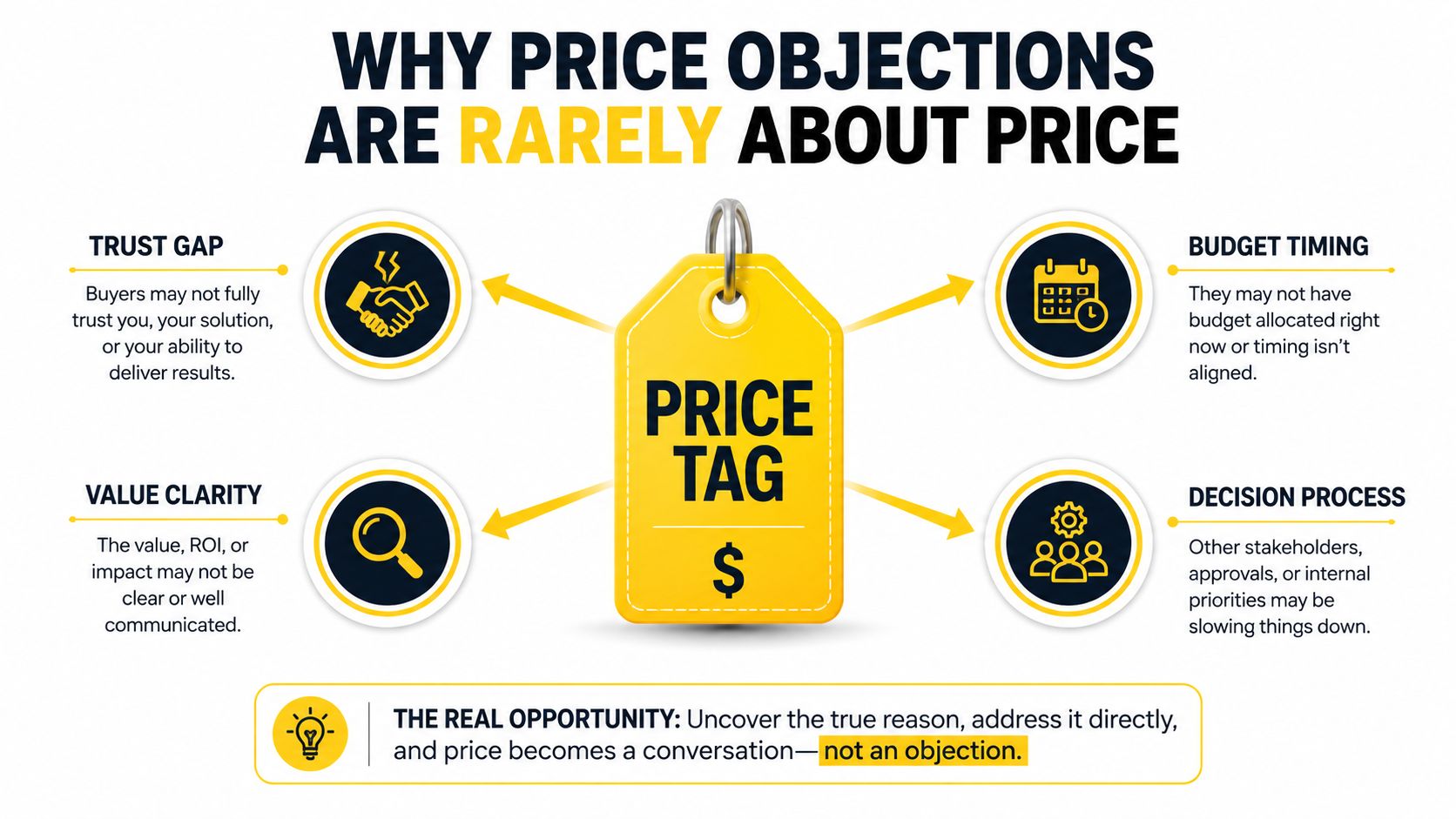
A homeowner may compare your estimate with a cheaper hourly rate without comparing the number of cleaners, expected duration, supplies, insurance, quality controls, cancellation terms, or included rooms. A move-out cleaning estimate may look high beside a recurring maintenance clean because the services solve different problems. An after-hours request may carry urgency that a standard appointment doesn't.
Ask one calm diagnostic question:
“When you say it's too expensive, are you comparing it with another estimate, or are you trying to stay within a specific budget?”
The answer separates comparison trouble from financial constraint. Follow with, “Would it help if I walked you through what's included?” That question gives the prospect a safe way to admit they're unsure about the scope.
Global price sensitivity makes this distinction more important. A 2024 BCG-related summary cited by IESEG says 70% to 90% of consumers worldwide describe themselves as value-conscious. BCG's 2021 definition of a price-sensitive consumer involved choosing the lowest-price option even when comparable products differed by less than 5%. (consumer price sensitivity and value-conscious behavior) When customers scrutinize every purchase, your estimate must make the comparison fair.
For owners building a clear pricing structure, reviewing pricing plans for SMBs in Latin can also help frame how recurring service levels and business costs are presented. The point isn't to copy another company's model. It's to make your own scope and trade-offs easier to understand.
A price objection is often a request for certainty, not an immediate demand for a lower total. After a prospect says the estimate is high, pause, acknowledge the concern, and ask a question that brings the underlying issue into view. A defensive explanation can make an uncertain buyer focus even more on the number.
The first possibility is value uncertainty. The prospect may not know whether the result will justify the spend. Ask, “What would make this service feel worthwhile to you?” If the answer involves consistency, pet hair, a neglected kitchen, or preparing for guests, connect the service to that outcome. Repeating the total will not resolve uncertainty about the result.
Scope confusion creates a different reaction. The customer may be comparing a basic clean with a detailed service, or an estimate built from different rooms and tasks. Ask, “Are you comparing the same rooms and tasks, or does the other estimate cover a different scope?” Then state the main inclusions and exclusions in plain language. A written guide to cleaning service estimates can support that explanation when the prospect needs a clearer view of how scope affects pricing.
Use the prospect's answer, not a memorized rebuttal, to choose the next move.
Competitor comparisons require a steady tone. Never insult a cheaper provider. Ask what the prospect liked about that estimate and what it included. A lower number may fit a smaller service, or it may leave important work undefined. Help the customer compare the decisions involved, including scope, expected result, timing, and responsibility for overlooked areas.
Timing can be genuine. A prospect may need to wait until payday, a move date, a landlord inspection, or a family event. If the need is real but the full service is not workable now, discuss a narrower scope or a later appointment. If the prospect gives vague answers, refuses to clarify, and keeps demanding a lower number, you may be hearing a brush-off rather than a solvable objection.
Confirm the diagnosis after responding: “If we adjust that part, would the estimate work for you?” If the answer is no, ask what else is holding them back. If they still will not identify a concern, stop chasing. Your team cannot solve a problem the buyer will not define.
The same diagnostic approach applies after an AI or automated estimate from Estimatty. Review the estimate's scope, then have a rep address the human concern behind the response. This video can help reps review objection-handling fundamentals before adapting their own language:
A live phone call gives you room to listen and ask follow-up questions. Chat requires shorter messages. Voicemail must create enough curiosity for a callback without dumping a full explanation into a recording. The structure stays consistent: acknowledge, clarify value, offer a next step.
On a phone call, don't rush to fill the silence. Say:
“I understand. Cleaning estimates can look different depending on the work included. Are you comparing us with another provider, or are you working within a specific budget?”
Once you know the concern, respond specifically. For a scope issue: “Our estimate includes the kitchen detail, bathrooms, bedrooms, and the requested priority areas. I can review those items with you so we're comparing the same service.” For a timing issue: “We can look at a narrower first visit or a different schedule if that better fits what you need.”
If the prospect texts, keep the message easy to scan. “Thanks for letting me know. Our estimate reflects the rooms, condition, and tasks you entered. Would you like me to show what's included, or would you prefer a simpler service option?”
After an automated estimate, the human follow-up shouldn't sound like a correction. It should sound like continuity: “I saw that you received the estimate. I'm calling to make sure the scope matches what you need and answer any questions before you decide.”
Website chat rewards directness. Use one question at a time:
“Happy to clarify. Is your concern the total estimate, or that you're unsure what the cleaning includes?”
If the visitor says a competitor is cheaper, answer: “That may be a different scope. If you send me the rooms and tasks included there, I can help compare them fairly. Would you like a basic service option or the more detailed scope you requested?”
Voicemail has one job, to earn a conversation:
“Hi, this is [name] from [company]. I saw your question about the cleaning estimate. The total depends on the rooms, condition, and detail work, and I'd be glad to review those items with you. Call or text me at [number], and I'll help you find the right service level.”
| Channel | Empathy Line | Value Pivot | Next Step |
|---|---|---|---|
| Phone | “I understand why you'd want to compare estimates.” | “The important difference is what each service includes and the result you need.” | “Can we review the scope together now?” |
| SMS | “Thanks for telling us. I'm happy to clarify the estimate.” | “It reflects the details submitted for your home and requested service.” | “Would you like the included tasks or a narrower option?” |
| Chat | “That's a fair question.” | “Cleaning services can differ by rooms, condition, and detail level.” | “Which part of the estimate would you like me to explain?” |
| Voicemail | “I'm following up on your estimate question.” | “I can walk through the work behind the total.” | “Call or text, and we'll review the best fit.” |
For more detailed phone language, the guide to handling a cleaning estimate by phone offers a useful reference point. Whatever channel you use, end with a concrete action. A vague “let me know” leaves the prospect and the rep without momentum.
Discounting feels productive because it changes the number immediately. In practice, an unprompted discount can weaken the buyer's confidence in the original estimate and teach them to wait for a concession. A source citing Gong research reports that offering an unprompted discount after a price objection decreases win rates by 17%. (psychology of price objections)
Loss aversion also changes how customers experience the decision. The same source says the pain of paying is roughly twice the pleasure of an equivalent gain. That doesn't mean you should manipulate the buyer. It means your estimate should make the cost of an unreliable or incomplete service visible, without exaggerating it.

A cleaning estimate should explain the work before presenting the number. Say, “We're pricing this around the current condition, the detail required in the kitchen and bathrooms, and the consistency you want from the recurring visits.” Then give the estimate. The prospect now has a reason for the amount.
Use concrete value language:
Only mention guarantees, insured teams, products, or flexible scheduling when those claims are true for your business. Never promise a feature just because it sounds persuasive. Trust is part of the value, and unsupported promises destroy it.
A practical framework for aligning what you promise with what you deliver appears in Wispra's sales promise model guide. Apply the same discipline to cleaning: describe a result your operation can reliably produce, then connect the estimate to the process behind it.
Your estimate presentation should follow this order:
A service proposal template for cleaning businesses can help standardize that sequence across reps. If the customer still says no after receiving a clear scope and a fair explanation, accept the decision. Protecting your margin and your team's time matters more than winning every inquiry.
A prospect may value the service and still reject the full estimate because the requested scope is larger than the immediate need. That isn't a reason to cut the price of the original service. It's a reason to offer a different service directly.
Start with a core clean that solves the primary problem. Then separate optional work such as oven cleaning, interior windows, inside cabinets, detailed baseboards, or move-in and move-out tasks. The customer can see which items drive the total and choose what matters most today.
Use a simple three-option conversation:
“Your requested service includes the full detail scope. If you'd rather keep the first visit narrower, we can focus on the bathrooms, kitchen, and living areas, then handle the remaining tasks during a later visit. We can also keep the full scope and remove optional extras. Which direction fits your priority?”
That phrasing preserves the value of the original estimate. You're not saying the work was overpriced. You're helping the buyer control scope.
Tiered options work best when each tier has a clear purpose:
Don't add tiers that differ only by vague labels. Spell out rooms, tasks, condition assumptions, and what isn't included. Customers accept choices more readily when they can understand the trade-off.
You can use cleaning add-ons and upsell tools to organize these options in your sales process. The tool matters less than the logic behind it. Every add-on should have a visible reason to exist, and the rep should recommend it only when it matches the customer's stated goal.
For a tight budget, change frequency or phase the work rather than reducing quality. A first visit can address the highest-priority areas, followed by a scheduled continuation. If the prospect demands the complete scope at an unsustainable price, say so plainly: “I don't want to promise a full service at a price that forces us to rush or omit the work. We may not be the right fit for this job.”
Individual scripts help new reps stay calm, but scripts alone won't reveal why estimates are lost. A cleaning business needs a feedback loop that captures the objection, identifies its category, records the response, and shows what happened next.
Start with a small shared vocabulary. Tag each lost or delayed opportunity as value, scope, trust, timing, competitor, or budget. Require the rep to add the prospect's actual words and the next action, not a vague note such as “price issue.”
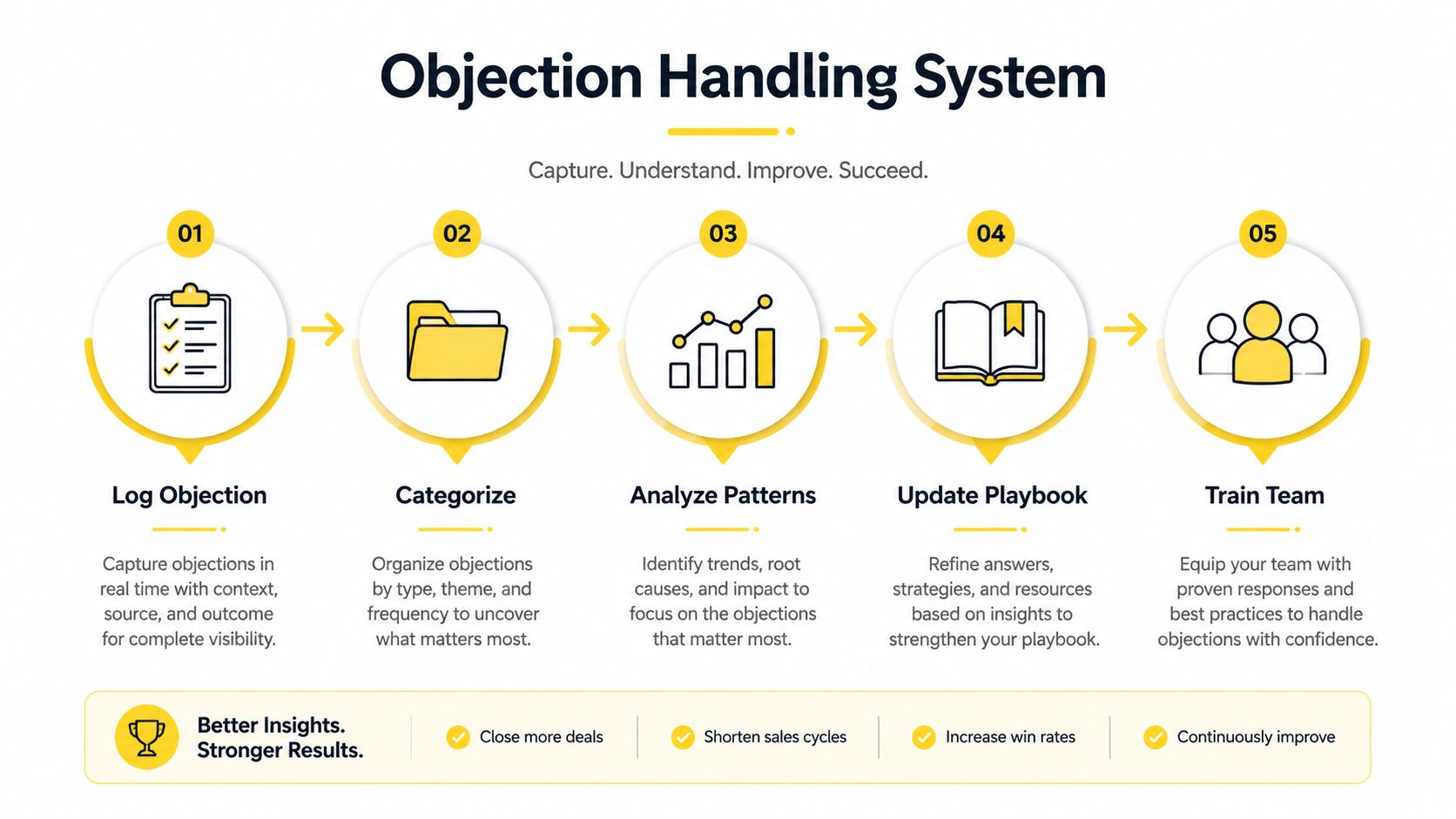
Review the objection log during a regular team meeting. Look for patterns such as price resistance appearing after estimates with unclear scope, trust concerns appearing when response times are slow, or competitor comparisons appearing when the estimate lacks a clear service summary.
A practical workflow looks like this:
Automation can reduce manual copying. Estimatty can collect home details, urgency, and requested service information, send estimates through SMS or email, notify the team, and connect with tools such as Zapier or a CRM. Its role is to standardize the intake and estimate process, while your team still decides how to handle exceptions, clarify scope, and qualify fit. For a broader view of the workflow, see AI sales automation for cleaning services.
Your CRM should record more than won or lost. Track whether the prospect received a scope explanation, requested a narrower option, asked for a callback, or stopped responding. Those distinctions help you improve pricing communication instead of lowering prices blindly.
Training should use your own calls. Have reps identify the first stated objection, the hidden concern, the question they asked, and the next step they secured. New hires can also be recruited with objection-handling expectations in mind. Resources from pipehirehrm.com can support hiring conversations for cleaning employees who need to communicate confidently with prospects.
The system should produce one clear decision: improve the explanation, change the offer structure, coach the rep, or walk away from a poor-fit lead. That's how objection handling becomes an operating discipline rather than a collection of clever replies.
Estimatty gives cleaning businesses an AI-powered web and voice estimator that captures service details, sends consistent estimates by SMS and email, and keeps lead response active after hours. Visit Estimatty to see how you can standardize estimate delivery, present clearer options, and give your team better information before the price conversation begins.