
September 21, 2026
Inside and Out Cleaning: A Practical Pricing Guide
Learn what inside and out cleaning really includes, how pricing works, and which add-ons actually pay off for residential and commercial estimates.

Saturday, September 19, 2026
Learn how a product pricing calculator works for cleaning businesses, key variables, examples and how to add an AI estimator that delivers instant estimates.
At 9:12 p.m., a homeowner lands on your site after putting the kids to bed. The kitchen is sticky, the bathrooms need help, and they want an answer tonight. They don't want to fill out a long form and wait until morning. They want to know the likely price, what's included, and whether you feel easy to work with.
Most cleaning companies lose that job before anyone on the team even sees the inquiry. The prospect clicks around, doesn't find a clear price path, and moves on to the next company that gives a fast, believable estimate. That's why a product pricing calculator matters so much in cleaning. It's not just math. It's the front door to trust.
A lot of owners think they have a lead problem when they really have a response problem.
The prospect came ready to buy. Then they hit a dead end. Maybe your site says “Call for pricing.” Maybe the form asks ten questions and promises a callback tomorrow. Maybe your voicemail picks up after hours. In cleaning, that delay feels bigger than it is. Buyers often choose the company that makes the next step simple.

When a prospect can't get a fast estimate, two thoughts show up right away:
That matters whether you clean houses, offices, post-construction sites, or move-outs. Residential buyers want convenience. Commercial buyers want consistency. Both want clarity.
If you're already investing in cleaning service lead generation, it makes sense to fix what happens after the click too. More traffic doesn't solve a pricing bottleneck. It just sends more people into one.
A strong product pricing calculator acts like an after-hours estimator that never gets tired. It collects job details, applies your pricing rules, and returns an estimate while the buyer is still paying attention.
Practical rule: If a prospect is ready to ask for price right now, your process needs to answer right now.
That doesn't mean every estimate has to be identical. It means your business needs a clear method. Good pricing systems help you respond faster without guessing, underpricing, or adding office headcount just to keep up.
A prospect asks for a move-out cleaning price at 8:30 p.m. You plug in hours, add a little cushion, and send a number. The job books, but after payroll, supplies, drive time, and card fees, that “good job” paid far less than it looked like on paper.
That is the core job of a product pricing calculator. It does not just add markup. It protects your estimate from missing costs, and it turns your price into something a buyer can trust.
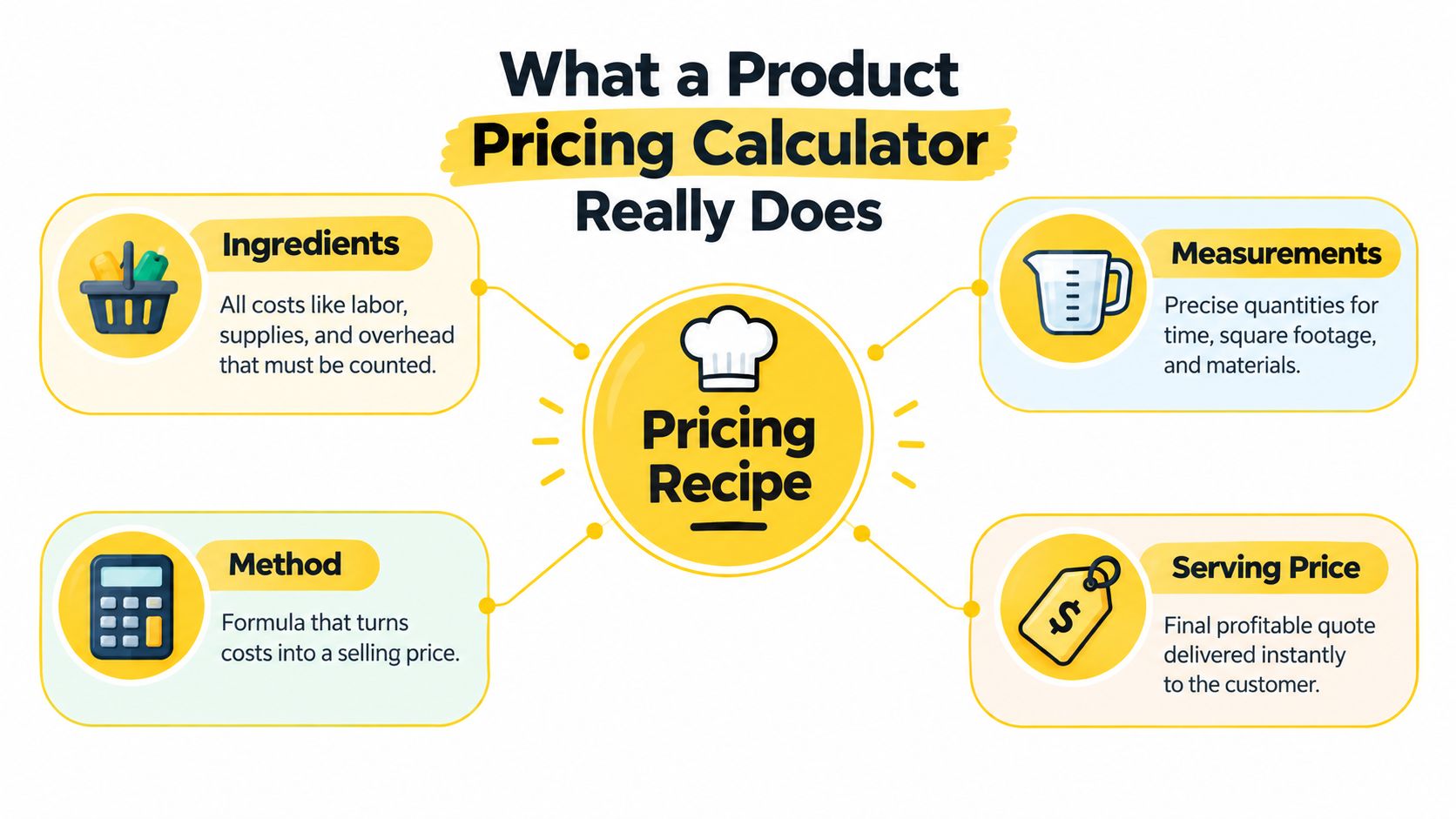
A cleaning estimate works like a recipe card. If the card only lists the main ingredient, you do not know the true cost of the meal. Pricing works the same way. The calculator starts by collecting the ingredients of the job, then applies a pricing rule to produce a selling price.
Two common methods show up in pricing tools. With markup, selling price equals cost × (1 + markup %). With margin-based pricing, selling price equals cost ÷ (1 − margin %), as explained in this overview of a product pricing calculator formula.
The difference matters more than many owners expect.
A job with a $10 cost and a 50% markup sells for $15. That same $10 cost needs a $20 selling price to produce a 50% margin. Margin is based on the final selling price. Markup is based on cost.
This trips up cleaning companies because the words sound close, but they answer different questions.
If you want one but calculate the other, your estimate can look profitable while leaking revenue.
The basic formulas are:
You can see those definitions in this profit margin calculator reference.
For a cleaning business, the calculator should produce more than a number. It should create a number you can explain.
That is the part many owners miss. Buyers do not only compare price. They compare confidence. A lowball quote with fuzzy logic feels risky. A clear all-in estimate feels safer because it shows the job was thought through. That trust can raise conversions even when your price is not the lowest.
A useful calculator pulls in the whole job. For cleaners, that usually means labor, supplies, travel, equipment wear, admin time, payment processing, and any special service add-ons. When those pieces are built into the estimate, you stop using price to patch over guesswork.
If you want to see how those rules can be turned into a faster front-end estimator, this guide to AI estimate software for cleaning businesses gives a practical next step.
Owners usually don't lose profit because one big cost was missed. They lose it because five small things never made it into the estimate.
That's why a product pricing calculator has to start with complete inputs. Before you apply markup or margin, you need the total cost.
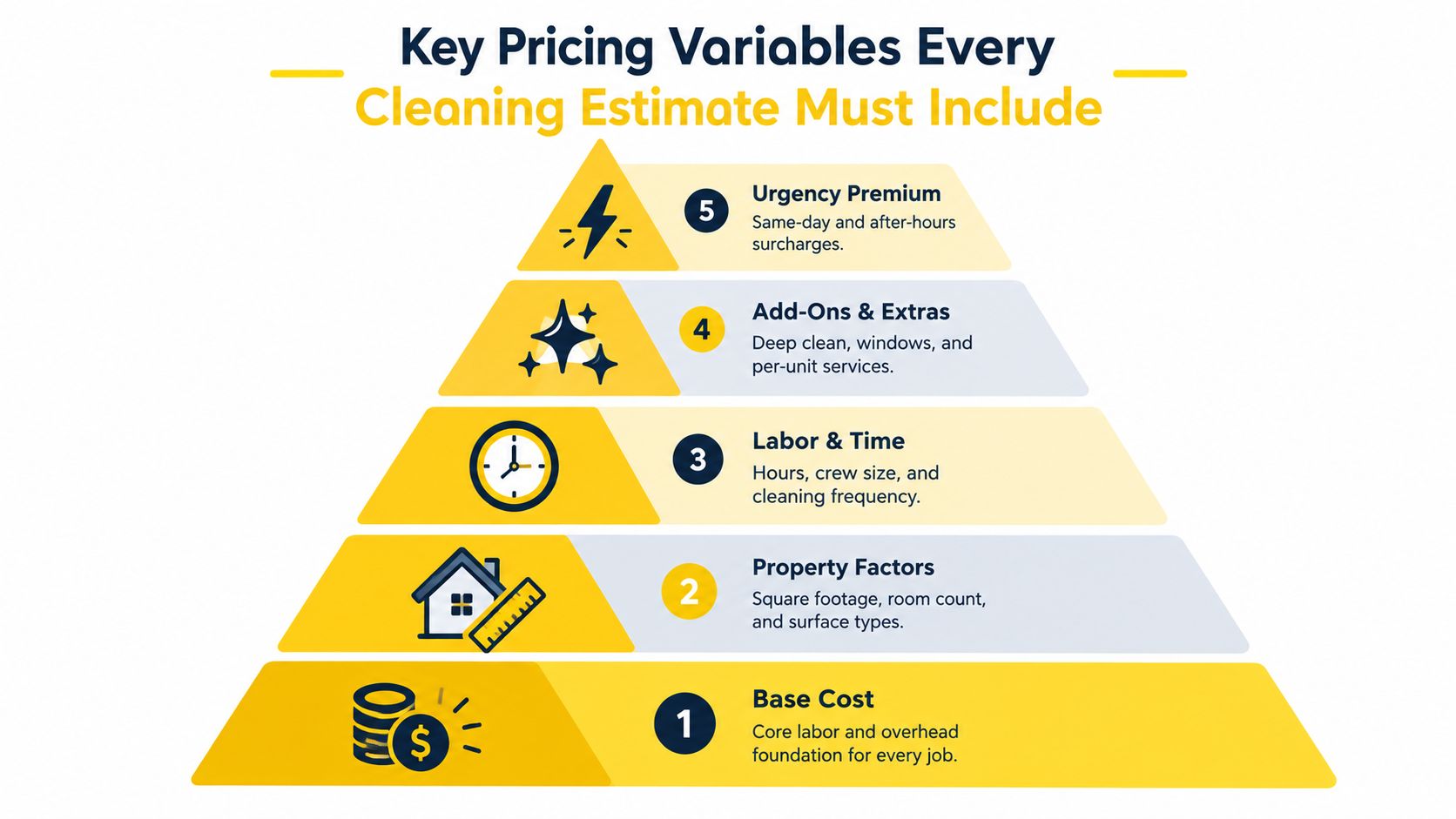
For cleaning companies, the most common pricing variables include:
A more detailed calculator can first convert base cost into total cost by adding per-unit extras, then price by margin with price = total cost ÷ (1 − margin/100) or by markup with price = total cost × (1 + markup/100), as explained in this pricing calculator method.
Cleaning businesses also run into a less obvious issue. They mix unlike measurements and don't notice the leak.
One estimator prices by square feet. Another thinks in bedrooms and bathrooms. A commercial job gets entered by labor hours. A floor-care add-on comes from a supplier sheet using a different unit basis. If all that lands in one shared field, nobody can prove what the final estimate was built from.
If you can't trace a price back to the original unit and conversion, you don't have a pricing system. You have a guess with a calculator attached.
A technically reliable calculator should keep original input data separate from normalized pricing logic. In quoting systems, the safer pattern is to preserve the original supplier row, then apply a second normalization layer that records source unit, source price, conversion method, and a confidence score for each line item, according to this technical summary on dynamic pricing calculator design.
Here's a practical audit checklist for cleaning estimates:
For labor specifically, this guide on how to calculate labor cost per hour is worth reviewing before you lock in pricing rules.
A quick visual walkthrough helps here:
In cleaning, language matters because language sets expectations.
An estimate is an approximate price. It gives the customer a clear range or likely total based on the information available. A quote is a fixed-price offer that becomes binding once accepted. One business reference also notes that estimates may vary by about 10–15% in practice when scope is uncertain, according to this explanation of quotes vs estimates.
Most cleaning jobs have moving parts. The client may understate buildup, skip key details, or forget add-ons until your crew arrives. If you call every early-stage number a quote, you create pressure on your team to honor a fixed price even when the scope changes.
Estimate language protects both sides. The customer gets clarity. Your company keeps room to adjust when the job differs from the intake.
A lot of buyers say they want the cheapest option, but their behavior says something more specific. They want a price they can understand and trust.
Recent consumer research found that 88% of respondents say all fees should be included in advertised pricing, and 56% say providers are not transparent about pricing, according to this consumer trust survey on all-in pricing. That lands squarely in cleaning. A low starter number followed by extra charges for supplies, deep buildup, or timing feels slippery, even when those charges are legitimate.
Call it an estimate, show what's included, and explain what could change. Buyers usually respond better to honest structure than to a suspiciously low starting number.
If you want to sharpen the wording around offers, scope, and client expectations, this comparison of proposal vs quote helps clarify where each document fits.
The lightbulb usually turns on. Once you see the same cleaning job priced with markup and with margin, the difference stops feeling abstract.
A more detailed calculator can compute a recommended price from unit cost and a desired profit margin using recommended price = unit cost ÷ (1 − desired profit margin), and it can also derive break-even price as (fixed costs ÷ sales volume) + variable cost per unit, according to this product pricing calculator explanation.
Let's use easy numbers so the method stays clear.
Scenario one: Standard recurring house clean
Total cost is $100.
At a 50% markup, price = 100 × 1.5 = $150.
At a 50% margin, price = 100 ÷ 0.5 = $200.
Scenario two: Deep clean with add-ons
Total cost is $160 after adding extras.
At a 50% markup, price = 160 × 1.5 = $240.
At a 50% margin, price = 160 ÷ 0.5 = $320.
Scenario three: Commercial rush job
Total cost is $240 after urgency and special scheduling are included.
At a 50% markup, price = 240 × 1.5 = $360.
At a 50% margin, price = 240 ÷ 0.5 = $480.
| Service Scenario | Total Cost | Markup Price | Margin Price | Profit |
|---|---|---|---|---|
| Standard recurring house clean | $100 | $150 | $200 | $50 at markup price, $100 at margin price |
| Deep clean with add-ons | $160 | $240 | $320 | $80 at markup price, $160 at margin price |
| Commercial rush job | $240 | $360 | $480 | $120 at markup price, $240 at margin price |
First, a bigger selling price isn't automatically "too high." It may reflect the margin target you wanted.
Second, missing just one fee can bend the whole result. If you forget to include a special supply cost or rush adjustment in total cost, both your markup price and your margin price start from the wrong base. The math can be perfect and the estimate can still be wrong.
Third, you can work backward too. Once you know your final selling price and total cost, you can calculate both markup and margin using the formulas covered earlier. That makes estimate reviews much cleaner when you're checking whether a service type is really profitable.
A calculator on paper helps your office. A calculator that talks to prospects helps your schedule.
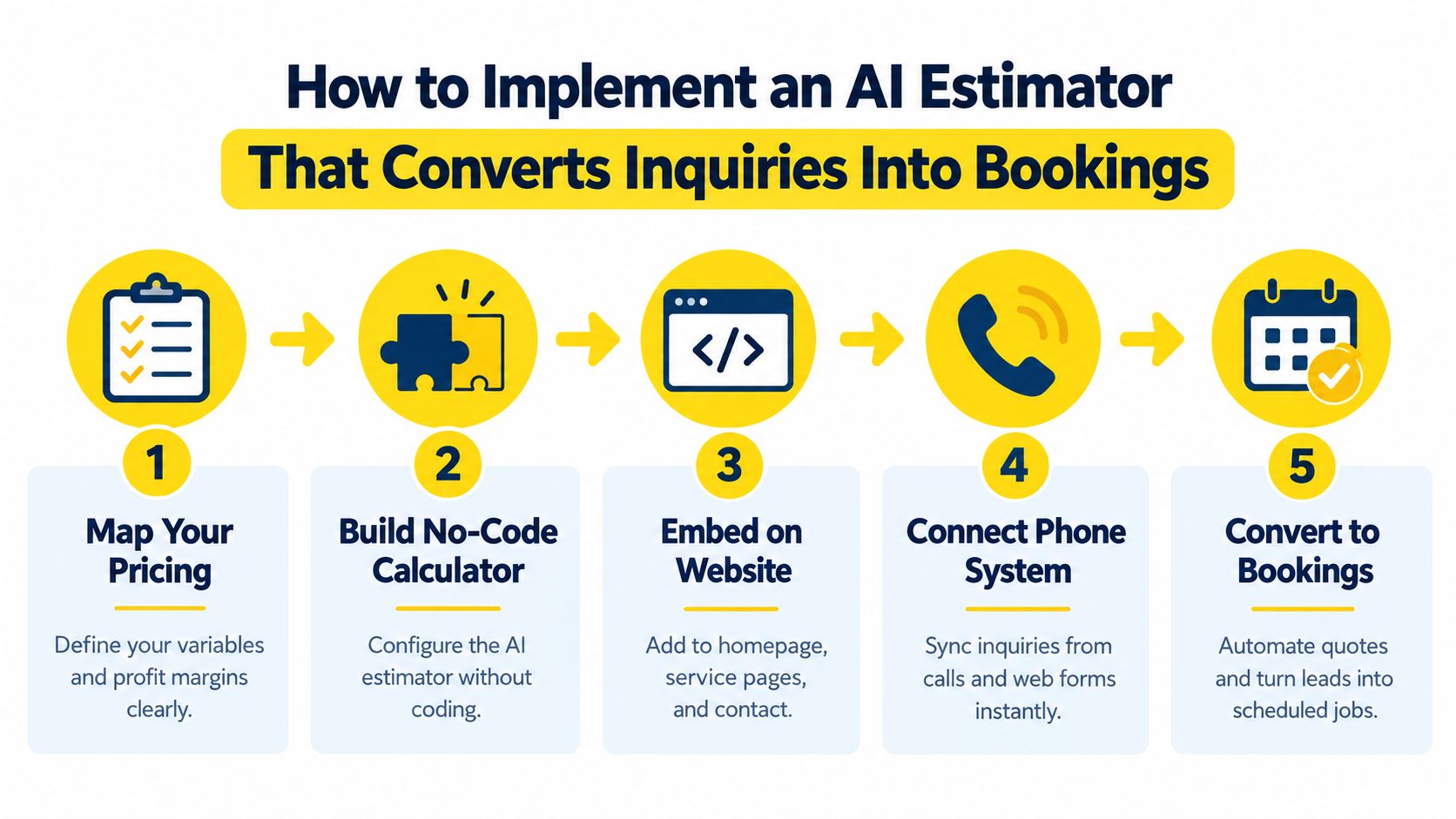
The practical goal isn't just faster math. It's to capture inquiry details, apply your rules instantly, send the estimate, and alert your team while the customer is still engaged. That's the difference between a pricing worksheet and a booking system.
Independent technical summaries report that quote-to-order conversion rates often increase by 10–20% after quote-to-cash integration because speed and pricing accuracy reduce buyer friction. The same source notes that revenue leakage from pricing errors, unauthorized discounts, unbilled services, or contract non-compliance can average 3–7% of revenue in fragmented organizations, according to this summary on a pricing calculator with dynamic pricing logic.
For a cleaning company, the takeaway is simple. Fast estimates matter, but speed without rules can just automate underpricing. Your setup should include:
Here's a clean rollout sequence:
One option in this category is Estimatty, which provides an AI-powered web and voice estimator for residential and commercial cleaning businesses. It captures job details, returns estimates in under a minute, sends them by SMS and email, and can connect through Zapier or a CRM.
If you're thinking bigger than just a widget and want to understand where AI belongs across home service operations, this AI adoption playbook from Prometheus Agency gives useful strategic context. For sales workflow ideas, this article on how to use AI in sales is a solid companion read.
When inquiry volume rises, staffing pressure rises too. That's where operations and hiring meet pricing. If you need help building the team behind the estimates, pipehirehrm.com is worth knowing for cleaning employee hiring support.
A homeowner asks for pricing at 8:40 p.m. They are comparing three cleaners before bed. One company replies the next morning with, “Starting at $149.” Another sends a clear estimate that shows what is included, what can change on arrival, and how to book in two clicks. The second company often wins, not because the price is lowest, but because the buyer can trust what they are buying.
That is the job of a product pricing calculator. It does more than produce a number. It helps a prospect feel safe saying yes. In cleaning, that trust matters because a vague estimate creates friction twice. First at the buying stage, where people hesitate. Then after the job, where surprise charges lead to complaints, discounts, or lost repeat work.
If you want steady growth, treat your estimator like a front desk rep that never sleeps. It should answer fast, explain the price clearly, and hand you clean data you can improve week by week. A simple two-week rollout keeps that from turning into a big project.
Days 1 to 3: publish a minimum version
Days 4 to 7: tighten trust signals
Days 8 to 10: track the numbers that matter
Days 11 to 14: plug the leaks
A calculator becomes a growth tool when it shortens the path from inquiry to confidence. It also gives you a cleaner way to coach your team. Instead of debating prices from memory, you can review patterns from real estimate activity and adjust the rules. That is how pricing starts behaving less like guesswork and more like a well-stocked supply closet. Everything has a place, and nothing important gets missed.
For a broader look at how estimators fit into sales, follow-up, and operations, see this guide to an AI growth platform for service businesses.
Estimatty gives cleaning businesses a web and voice AI estimator that turns after-hours inquiries into fast, consistent estimates based on your pricing rules. If you want a product pricing calculator that helps you answer faster, protect margin, and book more cleaning work without relying on gut-feel pricing, visit Estimatty.