
October 22, 2026
How Do You Professionally Clean a House? a Room Guide
Learn how do you professionally clean a house with a room-by-room process, safety standards, quality checks, and team training tips.

Tuesday, June 9, 2026
Is a cleaning business profitable? Explore 2026 data on startup costs, margins, & key strategies to achieve high success. Get insights now!
Yes, a cleaning business can be profitable. Typical residential cleaning profit margins are 10% to 28%, and a basic residential operation can start for about $2,000 to $6,000.
That's the simple answer. The more useful answer is that two cleaning businesses can operate in the same city, sell similar services, and end up with very different profits because one owner runs tight systems and the other leaks money through slow follow-up, messy pricing, and manual estimates.
A lot of articles stop at the headline numbers and leave it there. That's not how owners experience profitability. Profit doesn't come from being in a “good industry” alone. It comes from turning demand into booked work, pricing jobs consistently, controlling labor drift, and making sure the estimate process doesn't choke your sales pipeline before the crew ever touches a mop.
That's where many owners get fooled. They think competition is the problem. Often it isn't. Internal friction is the problem. A lead comes in after hours. Someone forgets to reply. Another prospect gets a rough ballpark from one employee and a different number from someone else the next day. A recurring customer asks for an add-on, but nobody updates scope clearly. The business stays busy, but the margin gets thin.
If you're asking, is a cleaning business profitable, the honest answer is yes, but only when you build it to be profitable.
The industry gives you a good starting position. Startup costs are relatively low. You don't need heavy equipment, a warehouse full of inventory, or a complicated operating footprint to begin. That's why so many owners can get moving quickly and start generating cash flow faster than in many other service categories.
But low startup cost is not the same thing as automatic profit.
The owners who do well usually get a few basics right early:
If you don't do those things, a cleaning company can stay busy and still feel like it's dragging.
Practical rule: Busy is not the same as profitable. Full schedules can hide underpriced work, unpaid admin time, and sloppy sales handling.
A lot of new owners also underestimate the office side of the business. They think the work is cleaning. The work is partly cleaning. The business is pricing, scheduling, collecting, hiring, training, and protecting margin every day. If your books don't show that clearly, fix that first. This guide on cleaning business accounting basics is a good place to tighten the financial side before you try to scale.
The strongest cleaning businesses don't rely on hustle alone. They remove friction. They make it easy for prospects to ask for service, easy for the business to send an estimate, and easy for the customer to say yes.
The weak operators usually do the opposite without realizing it. They create delays, exceptions, and confusion. That's what eats profit.
The numbers are attractive enough to bring people into the industry. They're also simple enough to misread.
According to an industry summary cited by Aspire, a basic residential cleaning business may start for about $2,000 to $6,000 in supplies, insurance, and licensing, residential cleaning businesses are reported to operate at 10% to 28% profit margins, and one-person cleaning businesses are commonly estimated to earn around $35,000 to $50,000 annually. The same summary notes some averages closer to just under $56,000 per year for one-person operators in some cases, which reinforces that solo models can produce real income when managed well (cleaning business profitability data from Aspire).
That tells you the lane is real. It doesn't tell you how to stay in it.
Here's a practical planning view based only on the verified figures.
| Cost Item | Estimated Cost (Solo Operator) | Notes |
|---|---|---|
| Supplies, insurance, and licensing | $2,000 to $6,000 | Basic residential startup range reported by Aspire |
| Startup capital for a smaller cleaning business | $5,000 to $15,000 | Broader startup range depends on model and market |
| Residential profit margin | 10% to 28% | Operating margin range reported in industry summaries |
| One-person annual earnings | $35,000 to $50,000 annually | Common estimate for solo operators |
| Higher solo average reference | Just under $56,000 per year | Reported average in some summaries |
A table like this is useful for planning, but not for running the company day to day. Owners get into trouble when they treat industry margin ranges as a guarantee instead of a benchmark.
A cleaning business with low fixed costs can still underperform if the owner guesses at pricing, loses hours to windshield time, or spends too much unpaid time chasing incomplete inquiries.
That's why overhead discipline matters. If you haven't mapped your real non-cleaning costs yet, review how to calculate overhead costs before setting prices. You need to know what the business must carry every week whether one job gets booked or twenty do.
Another often-missed factor is employment structure. Once a business adds staff, payroll administration, compliance, and benefit design can affect margin quality. If you want a broader look at that side of the equation, this piece on optimize service business gross margin with PEOs is worth reading.
Industry averages are a map, not a rescue plan. If your estimate process is weak, even healthy benchmark margins won't save you.
Profit looks different at each stage of a cleaning business. The math changes, but the bigger shift is operational. What worked when you were solo often breaks once you have employees, multiple calendars, and a pipeline of incoming leads.
The solo cleaner has one major advantage. Simplicity.
You control quality, you know the customer, and you can often keep overhead lean. The verified numbers already show why this model appeals to so many owners. One-person cleaning businesses are commonly estimated to earn around a solid annual income, and startup can stay relatively modest if you begin with residential work and a tight service area.
The downside is obvious. You are the estimator, cleaner, scheduler, customer service rep, and collector. If you're cleaning all day, estimates pile up. If estimates pile up, sales slow down. That's where solo operators start feeling capped even when demand is healthy.
Once you hire help, your earning potential can improve because you're no longer limited to your own labor hours. But the business also gets less forgiving.
Now you need clean handoffs. You need documented scope. You need consistency in what was promised during the estimate and what the crew delivers. If those two don't match, you create callbacks, refund requests, and staff frustration.
A common trap at this stage is that the owner is still doing all sales manually while also managing cleaners. That works for a while, then breaks fast.
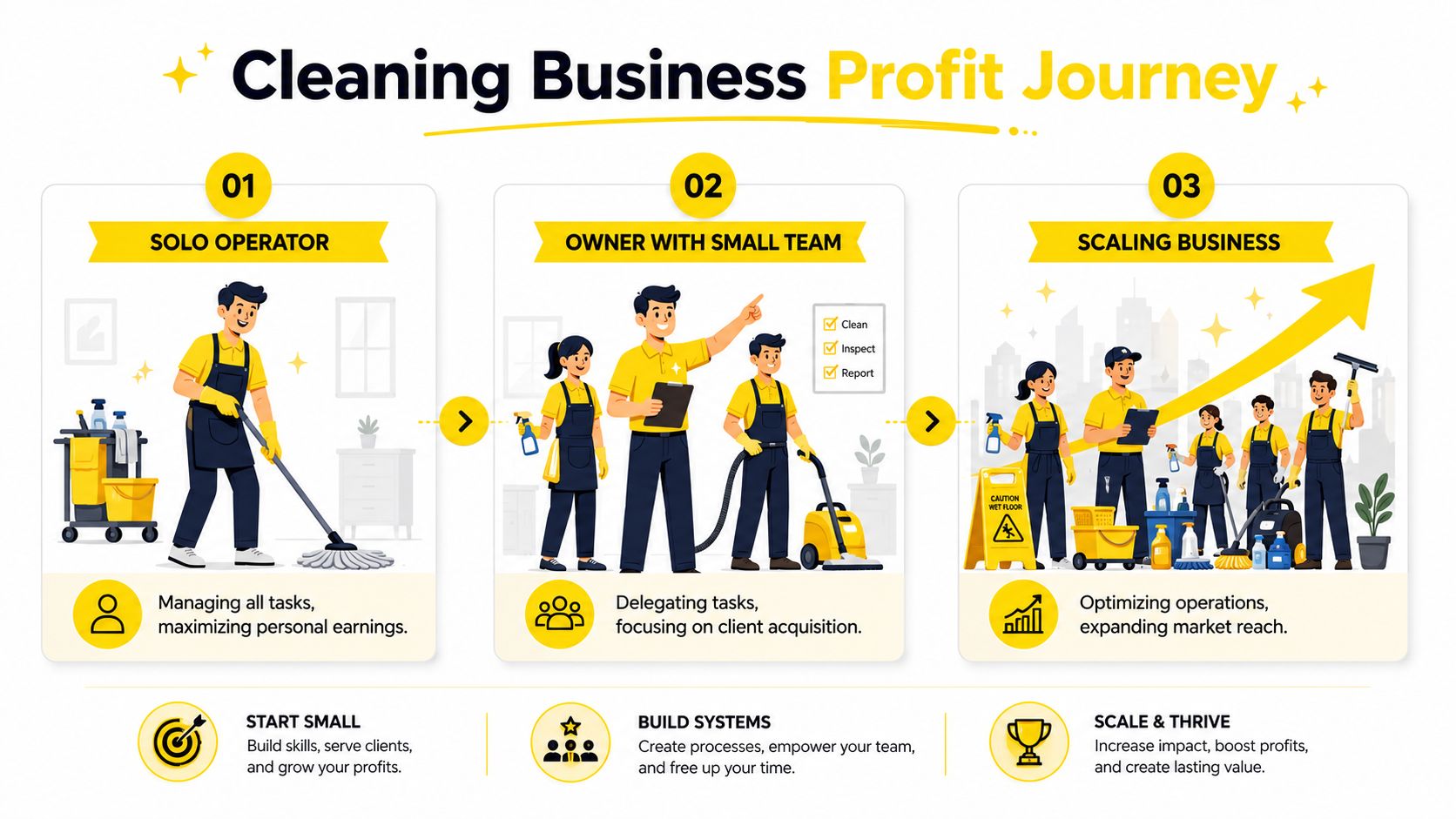
A scaling company stops running on memory and starts running on systems.
That means:
At this level, weak hiring causes just as much damage as weak pricing. If you're building a team, resources like the articles on pipehirehrm.com and the hiring content on get.pipehirehrm.com/blog can help owners put structure around recruiting, screening, and retention.
| Stage | Main strength | Main risk | Profit lever |
|---|---|---|---|
| Solo operator | Low complexity | Owner bottleneck | Fast estimates and disciplined scheduling |
| Small team | More service capacity | Miscommunication and labor waste | Clear pricing, scope control, better delegation |
| Scaling business | Repeatable growth | Systems breaking under volume | Automation, hiring process, standardized operations |
The businesses that grow profitably don't just add clients. They add control.
Most margin damage in cleaning doesn't come from a bottle of chemical or a stack of microfiber towels. It comes from small operational mistakes repeated every day.
The biggest one is friction in the sales process.
MaidThis points out that existing coverage of cleaning business profitability often highlights idealized margins such as 7% to 10% for healthy residential setups or 10% to 28% in more efficient operations, but usually doesn't show how estimate inefficiency can erode those margins. The same source notes that speed to lead strongly influences booking outcomes, yet most “is it profitable” content skips that issue entirely (analysis of cleaning business profitability blind spots).
That lines up with what experienced owners already know. Slow estimates cost jobs.
A prospect visits your site in the evening. They want a price now. If they have to wait until tomorrow afternoon for a callback, you've already made the buying process harder than it needed to be.
That lost revenue never appears on a profit and loss statement as “missed from slow response.” It just shows up as lower conversion and thinner schedules.
One team member prices by room. Another uses square footage loosely. The owner “makes exceptions” based on instinct. This is how businesses accidentally train their market to expect random numbers.
The result is ugly:
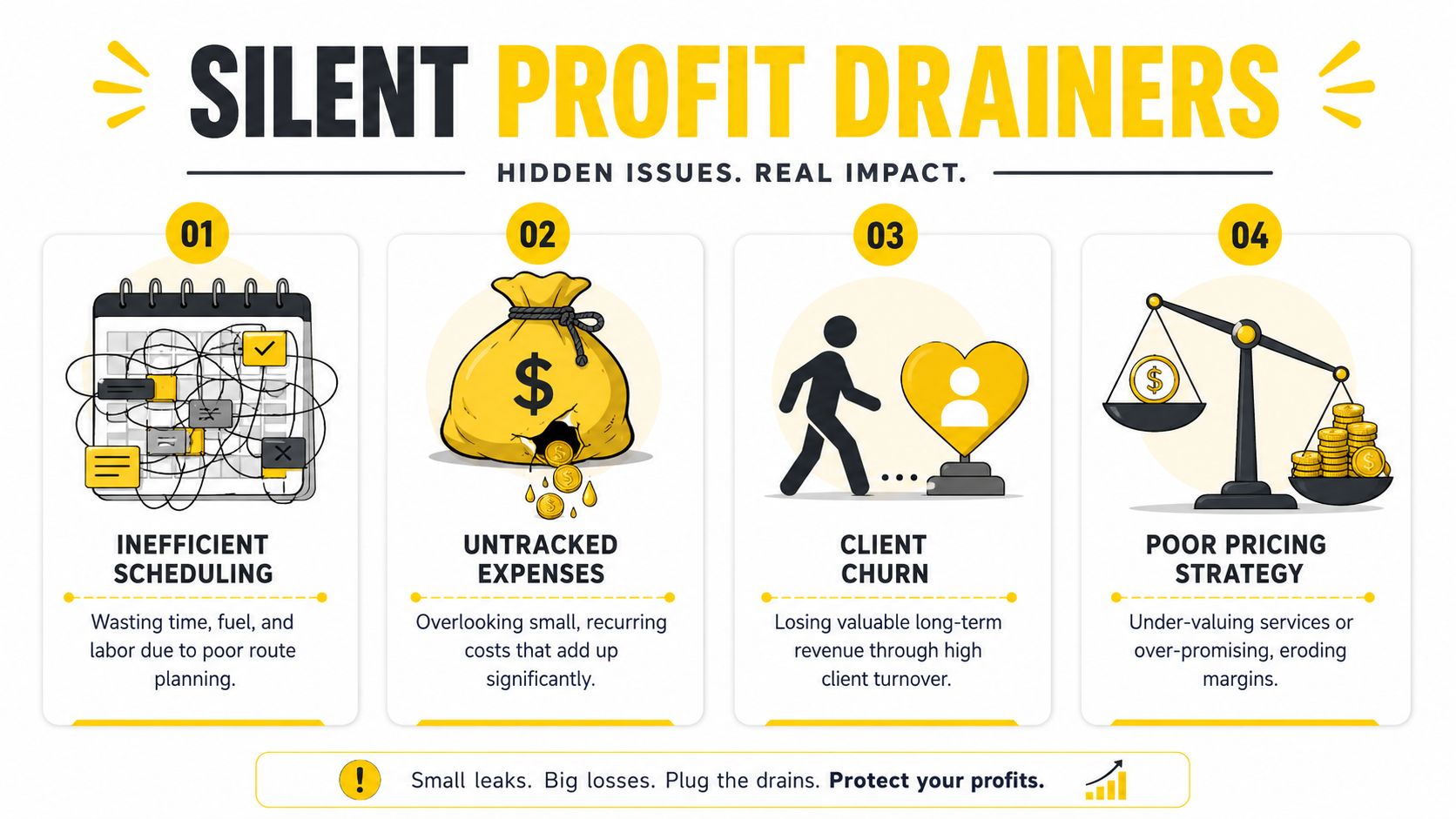
Owners tell themselves they'll call leads back between jobs. Sometimes they do. Sometimes they don't. When the business gets busy, follow-up is the first thing to slip.
The cleaning company that answers cleanly and consistently usually beats the company with the slightly lower price.
That's why customer acquisition cost has to be viewed through an operational lens, not just a marketing one. If you're paying for attention but mishandling inquiries once they arrive, you've built a leaky bucket. This article on how to reduce customer acquisition cost gets into that problem from the sales-efficiency side.
Another hidden killer is saying yes too loosely.
A customer asks for “just a little extra” in the fridge, baseboards, or inside windows. The office doesn't update the estimate. The cleaner does more work than planned. The business bills the original number anyway. That's not customer service. That's margin giveaway.
The strongest operators define what's included, what costs extra, and when a recurring clean is no longer a standard recurring clean.
If your margins feel stuck, don't start by slashing supply costs. Instead, focus on areas that offer the greatest impact. Pricing discipline, estimate speed, scope control, and retention usually move the needle more.
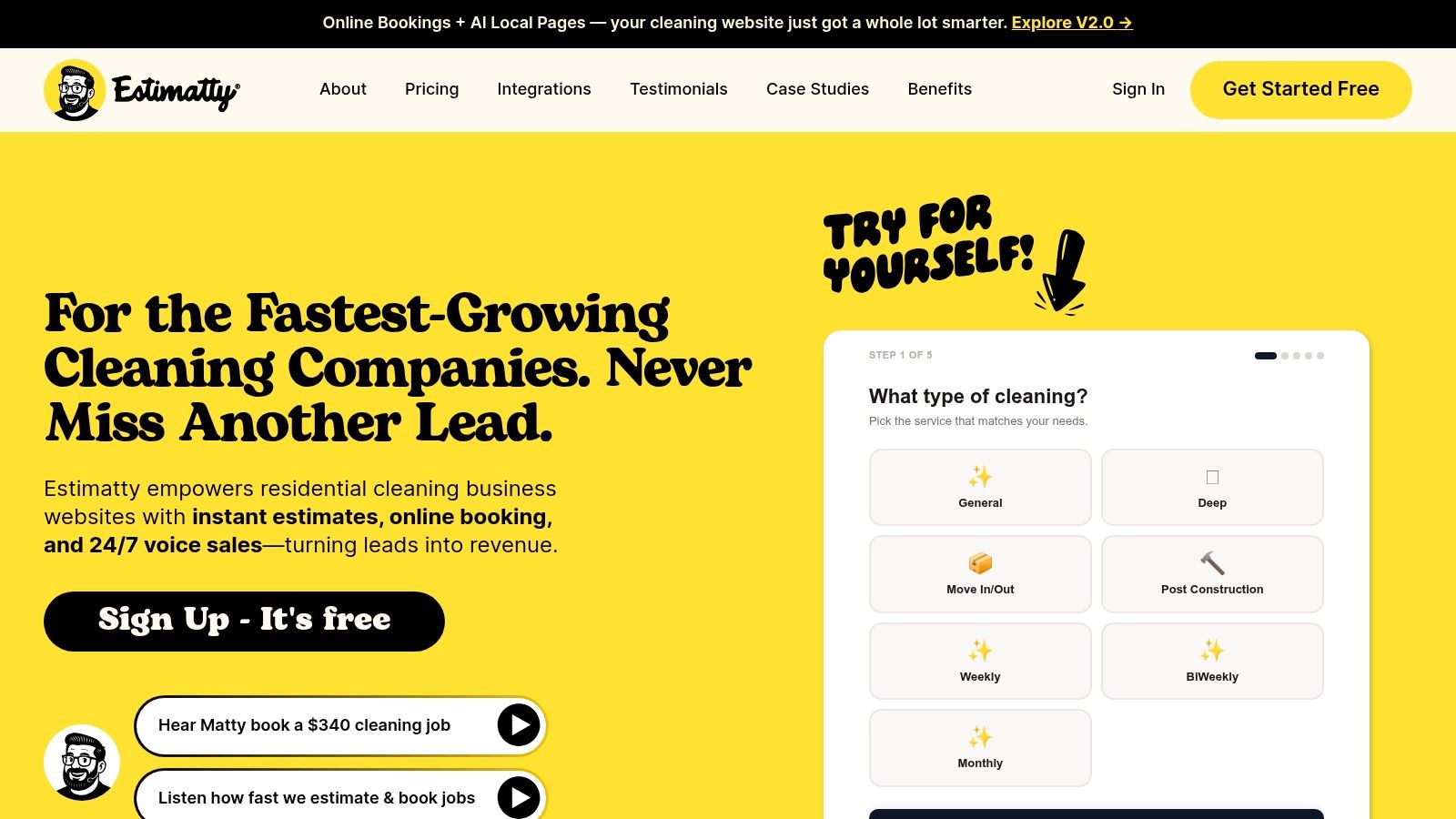
A modern estimator can also remove a lot of admin drag at the front end.
Many owners try to grow before they can price consistently. That's backwards.
Your estimate process should account for service type, condition, frequency, and add-ons in a repeatable way. If two people on your team can't arrive at roughly the same estimate for the same job, your pricing system isn't ready.
Use a written pricing framework. Then pressure-test it against your labor reality. If the service promise and the field execution don't match, fix the framework.
For owners tightening this up, how to price cleaning services is a useful starting point.
Not every service should be sold as a custom one-off.
Stronger operators usually do better with a clear menu:
That reduces confusion for the customer and protects your team from under-scoped jobs.
A margin problem is often a staffing problem wearing a pricing costume. If cleaners move slowly, miss checklist items, or churn out quickly, you'll spend more on rework and owner intervention.
That's where a hiring system matters. Owners building a dependable team can learn a lot from pipehirehrm.com and the practical recruiting content at get.pipehirehrm.com/blog. Better hiring won't fix a bad estimate process, but it will stop labor inconsistency from wrecking otherwise good jobs.
Field note: The cheapest job on paper often becomes the most expensive one when your team walks into a badly scoped home.
This is the part many owners resist until they're overwhelmed. Then they wish they had done it earlier.
A tool like Estimatty can handle instant web and voice estimates for cleaning businesses, capture lead details, and send consistent pricing without waiting for someone in the office to be free. That matters because delayed and inconsistent estimates are one of the most preventable profit leaks in the business.
If you want a broader small-business view on margin improvement, this guide on how to increase profit margins is also a useful companion read.
A quick demo helps show what this looks like in practice:
Automation matters in cleaning for one reason above all others. It protects speed and consistency when the owner is busy.
Most sales loss in this industry doesn't happen because a competitor launched some brilliant campaign. It happens because no one answered quickly, no one sent a clear estimate, or the response depended on who picked up the phone.
A good automation stack helps with four things:
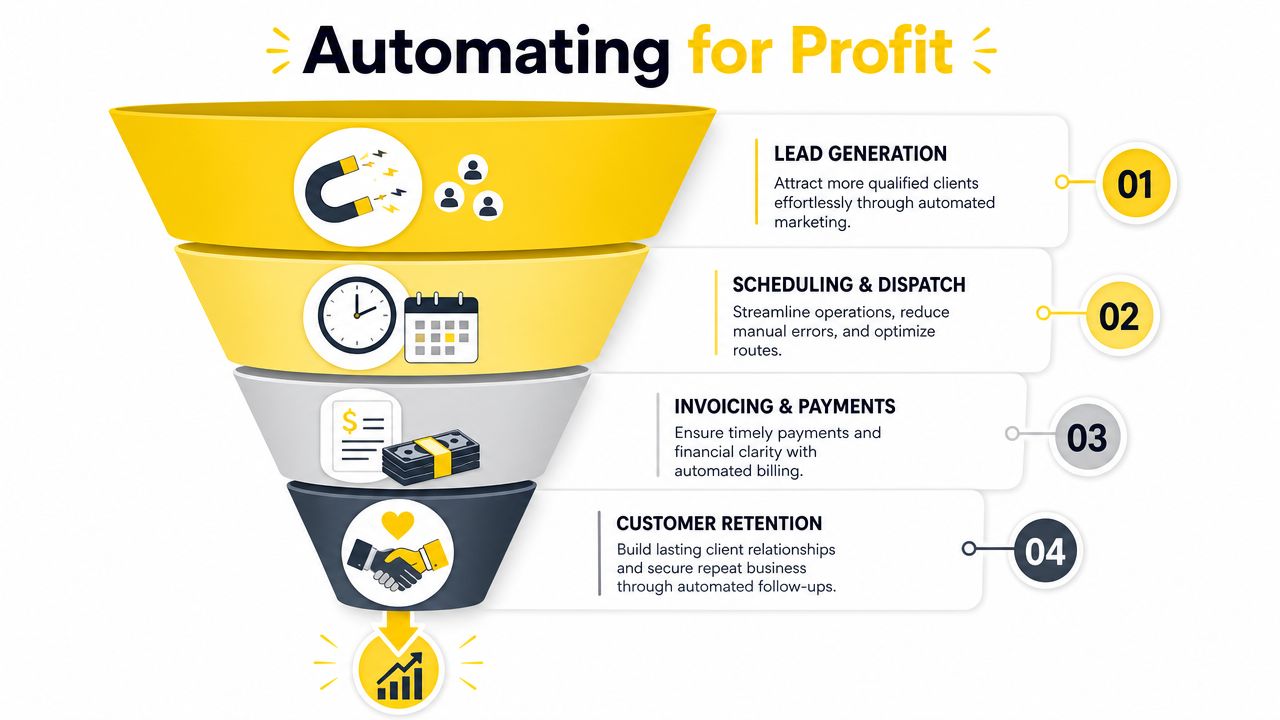
That doesn't replace operational judgment. It gives your business a system that works when you're unavailable.
A solo cleaner might get away with handling everything manually for a while. A growing team usually can't. The larger the schedule gets, the more damaging small delays become. One missed estimate becomes several. One unclear scope becomes crew confusion. One forgotten callback becomes a dead lead.
Automation also creates cleaner data. You can see what prospects ask for, what add-ons come up often, and where your estimate process gets stuck. That helps you improve pricing rules over time instead of relying on memory.
For owners thinking through this shift, the content on AI sales automation for cleaning services is worth reviewing. The practical value isn't hype. It's fewer dropped leads, cleaner sales handling, and more owner time for staffing, quality control, and growth.
Yes, it can be. But the profitable version of a cleaning business is not the one that just gets busy first. It's the one that removes friction early.
The opportunity is real because the business can start without a massive upfront investment and the margin potential is healthy when operations stay disciplined. What separates solid companies from exhausting ones is how they handle the unglamorous parts. Estimates, scope, staffing, follow-up, retention, and overhead control decide whether the owner builds income or builds a job that never lets go.
If you're starting small, keep the model simple and standardize pricing before you add complexity. If you're growing a team, clean up hiring and make sure what sales promises is exactly what operations can deliver. If you're already established but margins feel thinner than they should, look at your estimate process before blaming the market.
That's the part many owners miss. A cleaning business usually doesn't lose profit in one dramatic mistake. It loses profit in dozens of little delays and inconsistencies.
Build the business so it responds fast, prices clearly, and delivers consistently. That's what turns cleaning from a hustle into an asset. And if team growth is your next bottleneck, the hiring resources on get.pipehirehrm.com/blog are worth keeping in your toolbox.
If you want to reduce estimate delays, standardize pricing, and capture leads when you're off the clock, take a look at Estimatty. It's built for cleaning businesses that want a faster, more consistent way to turn inquiries into booked work.