October 20, 2026
How to Follow Up on a Quote and Close More Cleaning Sales
Learn how to follow up on a quote with timing, templates, and tactics that turn estimates into booked cleaning jobs. Practical advice for cleaning businesses.
Sunday, July 19, 2026
Find the best sales enablement platform for your team. Our 2026 guide ranks top 10 tools: pros, cons, pricing, & advice for service businesses.
.png)
A rep is five minutes from a proposal call, asks for the latest pricing deck, and gets three different versions in Slack. The manager says use the newest one. Marketing says one slide is outdated. The rep sends something anyway.
That kind of mess shows up everywhere. New hires copy whatever process the loudest rep uses. Follow-up depends on memory. Coaching turns into opinion because nobody can see which content, talk tracks, or call behaviors move deals forward.
A sales enablement platform fixes the operating problem behind all of that. It gives sales one place for approved content, a clearer onboarding path, and buyer engagement data that can be tied back to pipeline. The main benefit is consistency. Top performers keep their edge, and everyone else stops reinventing the job.
For service-based businesses, the need looks a little different than it does in enterprise SaaS. A commercial cleaning company, HVAC operator, or residential service team usually does not need a huge enablement department or a six-month rollout. They need reps to respond fast, quote the same way every time, and hand work from inquiry to booking without dropped details. In those cases, the best setup is often a focused enablement platform paired with specialized workflow tools. If quoting discipline is part of the problem, it also helps to review the best CRM for cleaning businesses so your sales process and job workflow stay connected.
That is also why this guide does not treat every buyer the same. Some teams need content governance, certification, and enterprise analytics. Others need enough structure to stop lead leakage and make instant estimates easier to deliver. If local demand is part of your growth plan, this guide also pairs well with smart local SEO for home service pros.
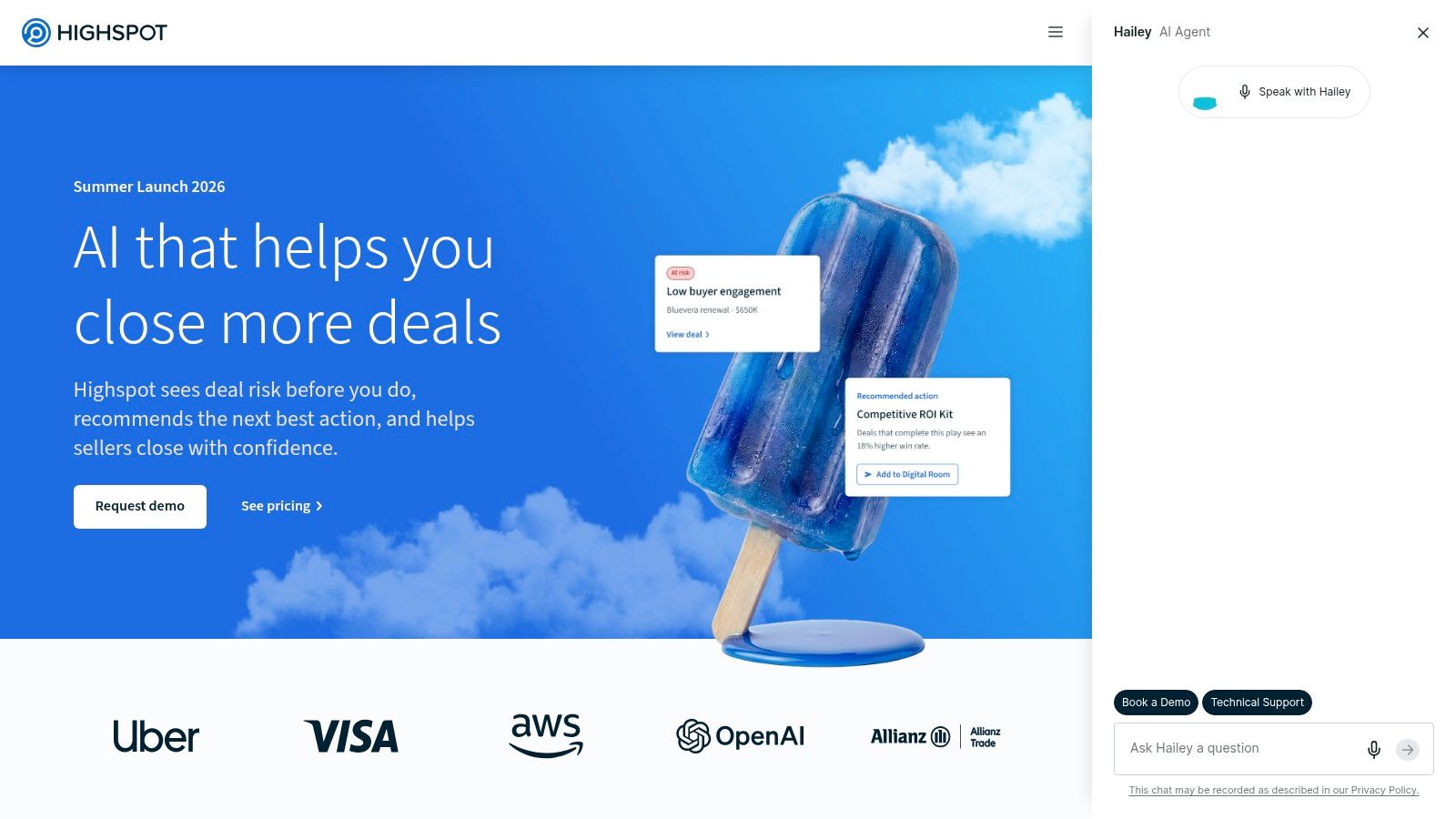
A familiar sales ops problem looks like this. The rep has a live buyer call in 10 minutes, asks for the latest deck in Slack, gets three different versions, then sends one that legal replaced two weeks ago. Highspot is one of the few platforms that solves that specific mess well, because content control is the product's core job.
Highspot works best for teams that already feel the cost of bad content discipline. Reps need one place to find approved material, managers need usage visibility, and revenue operations needs content activity tied back to pipeline. Highspot connects those pieces better than a lot of platforms that treat content, guidance, and analytics as separate modules.
Highspot is a strong fit when you need order, accountability, and usable reporting:
I have seen Highspot perform especially well in organizations with multiple product lines, regional sales teams, or approval-heavy content workflows. In those environments, the value is not just cleaner storage. The primary gain is fewer rep workarounds and more consistency in what reaches buyers.
Practical rule: Buy Highspot when content sprawl is already slowing deals down. If you only have a small library and a simple sales motion, the platform can feel heavier than you need.
The trade-off is implementation discipline. Someone has to own taxonomy, permissions, shelf life rules, CRM mapping, and content audits. If that ownership is fuzzy, reps stop trusting search results and go back to asking coworkers for files. At that point, you are paying for structure you are not enforcing.
For service businesses, that trade-off matters even more. A commercial cleaning company or residential service operator usually does not need enterprise-grade enablement as the first system to fix. They need faster quoting, cleaner handoff from lead to booking, and repeatable sales motions for field reps. In that setup, Highspot can still help, but usually as a second-layer system after the operational workflow is stable. Teams in that category should look at an AI growth platform for service businesses alongside enablement software, especially if the sales process depends on quick estimates, follow-up speed, and local territory coverage.
My recommendation is simple. Choose Highspot if your main problem is content governance at scale. If you run a service-based business, pair that kind of enablement with software built for estimating, scheduling, and job conversion, or start there first.
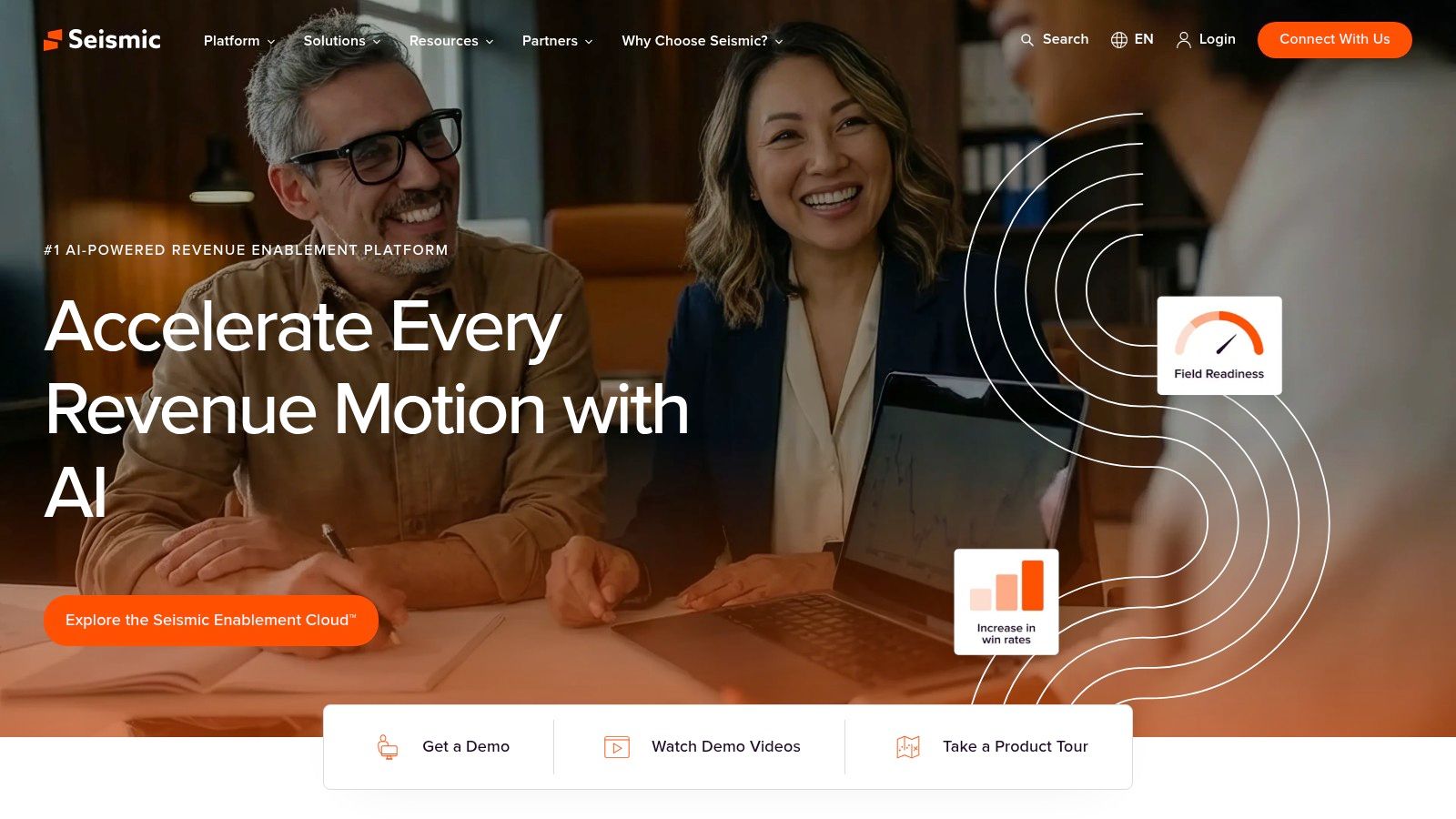
A common Seismic scenario looks like this. Marketing has one version of the deck, sales has three more, compliance needs approved language, and frontline managers want coaching tied to what reps send. Seismic fits that kind of environment better than lighter enablement tools because it connects content control, rep guidance, training, and buyer engagement in one system.
Seismic is a strong choice for organizations with layered sales motions, multiple stakeholders, and real approval requirements. I usually recommend it when revenue operations needs one platform that can support governance across regions, teams, and customer segments, not just a better place to store collateral.
The product stands out in a few areas:
The trade-off is clear. Seismic needs ownership.
Someone has to define taxonomy, approval flows, lifecycle rules, and what “good usage” means by team. Without that operating discipline, the platform turns into an expensive content repository with training modules attached. I have seen that happen more than once.
This is why Seismic tends to work best for enterprises and upper mid-market teams with dedicated enablement or revenue operations support. The software can handle a lot. Your team still has to configure it well, maintain it, and enforce adoption through managers.
Service businesses should be especially careful here. A commercial cleaning company, janitorial franchise, or residential service operator may like Seismic's control and polish, but the first bottleneck is often elsewhere. Quote turnaround, lead response time, territory routing, and follow-up consistency usually matter more than enterprise content governance. If your website is producing leads but conversion is weak, start by fixing the handoff and follow-up process with a system built for turning website visitors into booked customers.
My recommendation is straightforward. Choose Seismic when sales enablement is a cross-functional operations problem and leadership is ready to staff it properly. For service-based businesses, pair that kind of enterprise platform with specialized automation such as Estimatty, or start with the service workflow layer first if speed-to-estimate and job conversion are the primary constraints.
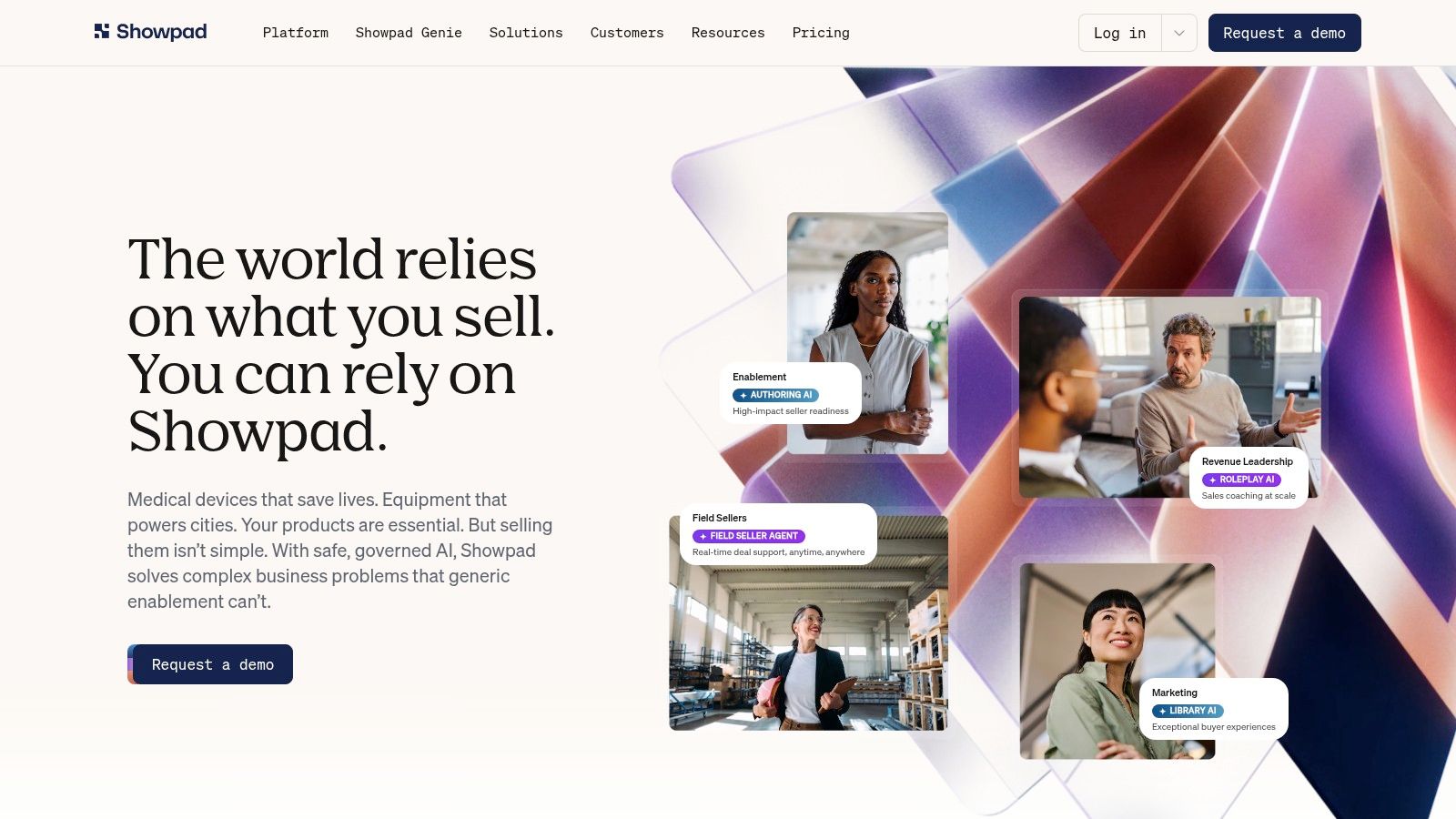
A rep is walking into a facility walkthrough with spotty cell service, five minutes to prepare, and a buyer who wants proof that your team can handle multi-site work. That is the kind of sales motion where Showpad usually earns its keep.
Showpad is one of the better fits for teams that sell in the field, across branches, or in hybrid environments where reps bounce between phone, laptop, and tablet. The interface is practical, and that matters more than many buying committees admit. If reps cannot find the right case study, product sheet, or talk track in a few taps, they stop trusting the system.
Showpad is strongest when the core enablement problem is access and rep execution, not just content storage.
Its main advantages are clear:
I also give Showpad credit for making packaging easier to understand than some enterprise alternatives. Procurement still needs to work through scope, seats, and services, but budget conversations are usually less opaque.
Showpad is easier to like than it is to operationalize well.
Teams still need clear content owners, expiration rules, and manager reinforcement. Otherwise, reps use the homepage, search a few keywords, and ignore the rest. In practice, that means your best content can still go unused if nobody is accountable for keeping it current and tied to the sales process.
This matters a lot for service businesses. A commercial cleaning company or residential service operator may have estimators, outside reps, call center staff, and branch managers all speaking to the same buyer in different ways. Showpad can bring consistency to presentations, proof points, and sales playbooks. It will not fix slow quote follow-up, weak lead routing, or delayed responses to inbound requests.
That is why I usually see the best ROI when service businesses pair Showpad with workflow automation built for their operating model. If your team needs stronger rep guidance in the field and faster response to inbound demand, combine enablement with AI sales automation for cleaning services. If your website traffic is decent but too many visitors bounce without converting, tighten that part of the funnel with guidance like how to convert website visitors into customers.
My recommendation is simple. Choose Showpad when rep usability, mobile access, and field execution are bigger priorities than deep enterprise complexity. For service-based businesses, it works best as the rep-facing layer, with a specialized system like Estimatty handling speed-to-response, estimate workflows, and conversion follow-up.
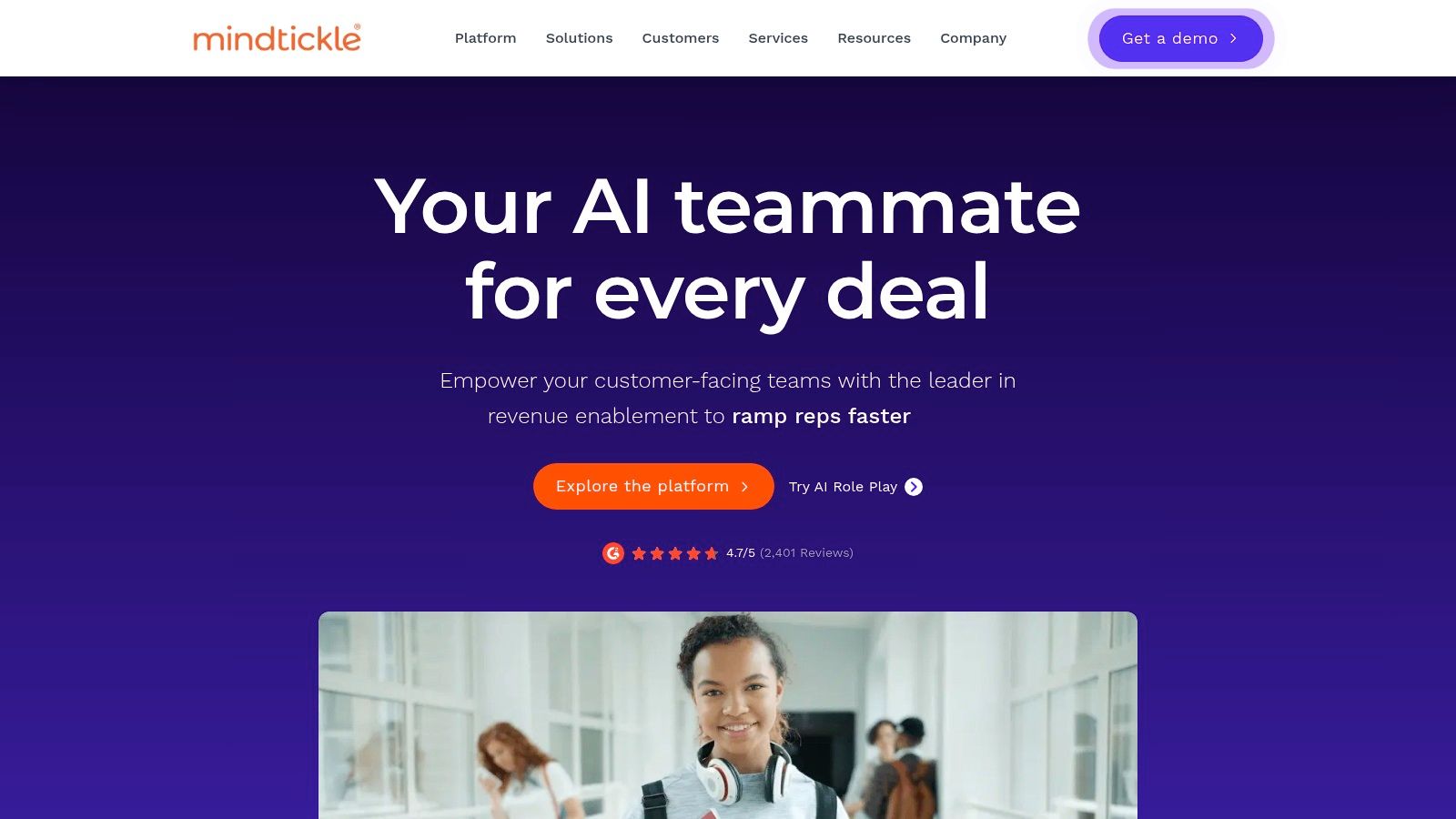
A common failure point shows up right after hiring. New reps finish training, managers assume the message is clear, and three weeks later every call sounds different. Discovery is inconsistent, pricing gets explained three different ways, and managers are stuck giving one-off feedback. Mindtickle is built for that problem.
I usually recommend Mindtickle when leadership needs rep readiness, not just content distribution. The platform is strongest when onboarding, certification, coaching, and call review need to tie back to a defined selling motion. Teams that already have decks, talk tracks, and case studies but still struggle with execution tend to get more value here than they would from a content-first system.
Mindtickle fits best in organizations that want sales behavior to become measurable and repeatable.
The trade-off is straightforward. Mindtickle works best when someone owns the program design. If your managers do not coach consistently, the software gives them a framework, but it does not replace manager discipline.
That is why I would not start here for a very small company trying to fix basic speed-to-lead issues. A residential cleaning company with five salespeople usually needs tighter follow-up, better estimate workflows, and clearer handoffs before it needs formal certification paths. For that stage, I would focus first on response speed and process automation, then add readiness tooling as the team grows.
Mindtickle becomes much more compelling for service businesses once there are multiple branches, inside sales roles, estimators, or booking teams. At that point, inconsistency gets expensive. One location qualifies well, another skips key questions, and close rates start to vary for reasons nobody can explain. Pairing a readiness platform with specialized automation is often the better move. If you are mapping that stack, this guide on how to use AI in sales is a practical starting point.
My recommendation is simple. Choose Mindtickle when your real problem is rep consistency, manager-led coaching, and ramp quality. For commercial and residential cleaning businesses, it makes the most sense after the sales process exists and needs enforcement, while a tool like AI sales automation for cleaning services handles faster response, quoting flow, and follow-up execution.
Allego is one of the better consolidation plays in this category. If your stack has started to sprawl into separate tools for learning, coaching, content, video selling, and digital sales rooms, Allego makes a credible case for pulling those functions back under one roof.
That matters because many teams don't have a single sales enablement platform. They have a patchwork.
According to Mutiny's buyer guide to sales enablement tools, most B2B sales teams deploy two to four enablement tools simultaneously to cover content generation, content management, training, and conversation intelligence. Allego's pitch is clear. Replace more of that stack with one governed platform.
Here are the practical strengths:
One of Allego's more buyer-friendly positioning points is that AI is included for all customers rather than treated as a separate fee line. I like that model because it avoids the awkward moment where a vendor demos AI heavily, then prices it as an add-on later.
The trade-off is contract structure. Multiyear terms are common, and quote-based pricing means you need to be clear on module usage, service levels, and adoption support before signing.
If you want a platform that can simplify the stack, Allego deserves a real look. If you're a service business, though, don't confuse tool consolidation with funnel optimization. Consolidating training and content doesn't solve delayed estimates or missed after-hours leads. That's where specialized workflows matter, and practical automation guides like how to use AI in sales become more relevant than another broad suite.
Bigtincan is a broad revenue enablement platform that tends to make more sense than people expect, especially for teams with field reps, partner channels, or a lot of variation across sales motions. It isn't always the flashiest product in a shortlist, but it covers a lot of ground.
I pay attention to Bigtincan when a company says, "We don't sell one way." That usually means channel, partner, field, and direct teams all need slightly different workflows.
Bigtincan brings together content management, coaching, training, analytics, and engagement capabilities in one system. The mobile-first and offline angle is real, not just a slide in the sales deck, which helps teams that operate outside perfect office conditions.
Its practical advantages include:
Bigtincan is a platform for organizations with mixed motions. If every seller works the same way, its breadth may feel like more than you need.
The main downside is complexity. Feature breadth is useful only if someone owns platform design, admin standards, and content governance. Otherwise, users feel the weight of the system before they feel the benefit.
I also wouldn't recommend it for a very small operator looking for the best sales enablement platform on a tight budget. It's better suited to companies that need configurability more than simplicity.
Mediafly earns its place when value selling matters more than raw content volume. If your reps need to justify a purchase with a business case, not just send collateral, Mediafly is worth serious consideration.
That's a different use case from classic enablement. The rep isn't asking, "Where's the deck?" They're asking, "How do I help the buyer defend this decision internally?"
Mediafly combines content, learning, and value-selling tools such as ROI and TCO calculators. In practice, that means a sales team can move from storytelling to quantified justification without leaving the platform.
I like Mediafly for teams selling more complex services or solutions where buyers need financial framing. The platform can reduce the handoff friction between marketing claims and seller proof points.
The broader market trend supports this kind of specialization. The global sales enablement software market is projected to reach $10.8 billion by 2028, growing at a 14.2% CAGR from 2023, according to 360Learning's analysis of sales enablement platforms. That growth reflects demand for AI-driven pricing automation and real-time prospect engagement, which overlaps with Mediafly's value-oriented positioning.
If you're a very small company, Mediafly may be more platform than you need. It makes the most sense when business-case selling is central to the sales process, not occasional.
For service businesses, there is an interesting overlap here. A cleaning business may not need enterprise ROI modeling, but it does need pricing consistency and fast buyer-facing estimates. That is still value selling, just applied in a simpler, operationally tighter way.
SalesHood is one of the more practical platforms for mid-market teams that want guidance, playbooks, training, and buyer-facing experiences without a massive implementation cycle. It often appeals to teams that want enablement to look more prescriptive and less like a blank canvas.
That matters more than people think. Some organizations don't need endless flexibility. They need a platform that helps them launch a program fast and keep it repeatable.
SalesHood combines a content hub, guided selling, playbooks, training, pitch practice, peer learning, and digital sales rooms. The built-in AI assistant also helps teams accelerate content and program creation.
Its real advantage is operational clarity. Admins don't have to invent every workflow from scratch. Managers can put reps through structured practice without buying a separate coaching product.
I also like SalesHood when the CRO wants a stronger line between enablement activity and revenue outcomes. That's usually what drives the shortlist in the first place. Leadership doesn't want another content portal. They want evidence that the system is changing rep behavior.
Quote-based pricing can still put it out of reach for smaller teams, and the surrounding ecosystem isn't as vast as the largest enterprise vendors. For some buyers, that's fine. A simpler ecosystem can mean fewer distractions.
If your team wants prescriptive rollout and faster deployment, SalesHood deserves more attention than it often gets.
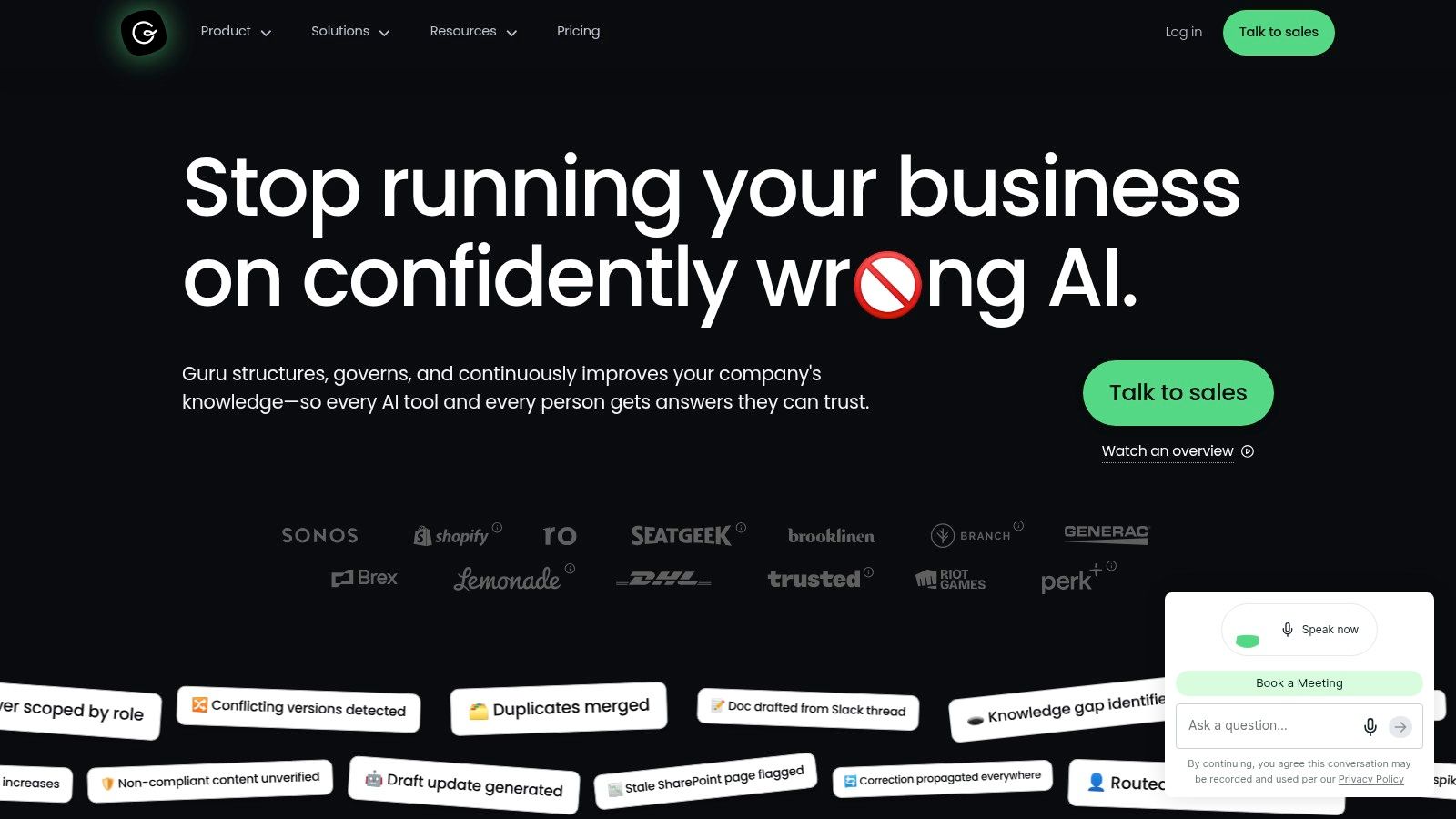
Guru isn't a full sales enablement suite, and that's exactly why it's useful. When the core problem is "nobody knows the current answer," Guru can solve it faster than bigger platforms with broader promises.
I use Guru mentally as a governed knowledge layer. It surfaces verified answers where reps already work and keeps those answers current through verification workflows.
Guru is strong at:
This tool is especially practical for teams that aren't ready for an enterprise suite but still need consistency. The best sales enablement platform isn't always the biggest one. Sometimes it's the one that removes the most common failure point first.
If reps keep asking the same questions in Slack, start with Guru before you buy a giant platform.
Guru won't replace deep coaching, digital sales rooms, or content performance analytics. It's a complement, not a category killer. But as a first step, it can create order quickly.
For service businesses, this can be especially valuable when office staff, estimators, and operators all need the same approved answers around pricing logic, service scope, and staffing policies. If hiring is a bottleneck too, resources from pipehirehrm.com and the related blogs at estimatty.com/blog and get.pipehirehrm.com/blog are useful companions to a cleaner internal knowledge setup.
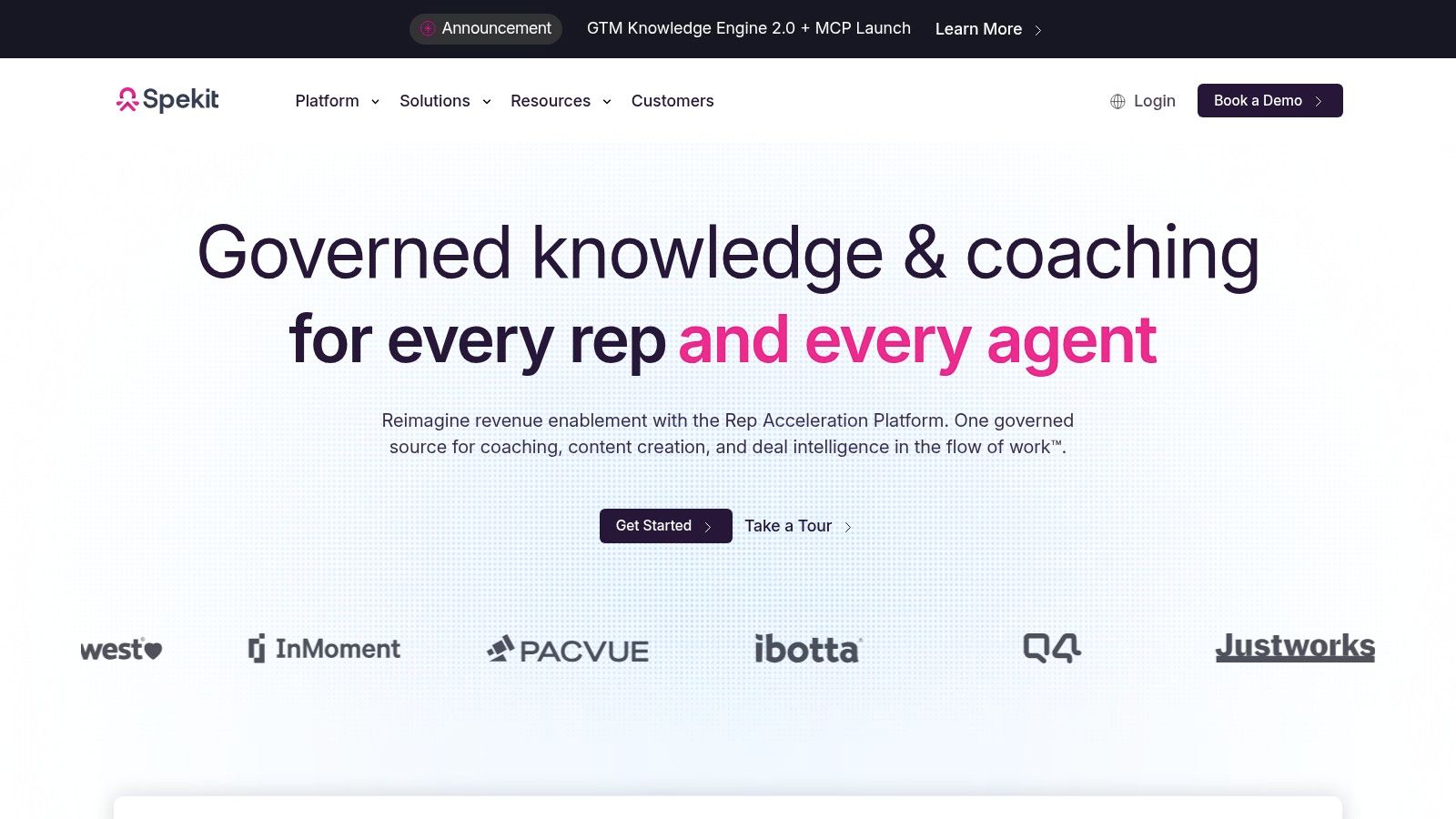
A rep updates an opportunity in Salesforce, hits a required field, and stops because the process changed last week. If the answer lives in a training deck or buried Slack thread, adoption slips fast. Spekit solves that specific problem well by putting guidance inside the tools reps already use, including Salesforce, HubSpot, and email.
That matters more than it sounds. Teams follow process changes more consistently when the instruction appears at the exact moment they need it.
Spekit is a practical fit for teams that need faster process adoption and fewer rep mistakes, especially after a CRM cleanup, stage redesign, or messaging change.
It stands out in a few areas:
I would choose Spekit when the main problem is execution inside the system, not a lack of content volume. It helps teams use the process they already designed.
Spekit does not replace a full content management platform, a serious coaching product, or a buyer engagement layer. If your team needs content governance across large libraries or formal readiness scoring, this will feel narrow.
That narrowness is also the point. Spekit is strongest when you want fewer workflow errors, cleaner CRM data, and less enablement delivered through one-off training sessions.
For service businesses, especially commercial and residential cleaning companies, that can be a smart trade-off. Estimators and sales reps often need fast prompts around service scope, pricing logic, add-ons, and handoff rules while they are building quotes or updating records. Pairing Spekit with specialized estimating automation such as Estimatty can produce better ROI than buying a heavier enterprise suite too early. One tool reinforces the process inside CRM. The other speeds up buyer-facing estimate creation. For lean teams trying to improve consistency without adding headcount, that is a practical stack.
| Platform | Core features | Best for / Target audience | Unique selling point(s) | Pricing & setup |
|---|---|---|---|---|
| Highspot | AI-assisted content guidance, digital sales rooms, content governance, CRM integrations | Enterprises and regulated orgs needing governance and measurable adoption | Deep analytics tying content use to outcomes; strong Salesforce/HubSpot integrations | Quote-based; mid-to-upper tier pricing; implementation effort required |
| Seismic | Content automation, AI (Aura), digital sales rooms, advanced analytics, broad integrations | Large, complex or regulated enterprises at scale | High-scale analytics and content automation for enterprise workflows | Quote-based, tailored pricing; heavier rollout |
| Showpad | AI core (Genie), content organization, offline/mobile support, CRM integrations | Field and hybrid sales teams needing mobile/offline access | Strong mobile UX and offline capability; clear package-based plans | Public plan tiers available; cost rises with advanced features |
| Mindtickle | Onboarding, continuous training, skills coaching, conversation intelligence, buyer enablement | Teams prioritizing ramp time, coaching rigor, and assessment-driven readiness | Readiness-first approach with strong coaching and assessment tools; AWS Marketplace offers | Quote-based; mid-market/enterprise focus |
| Allego | LMS/LXP, coaching, reinforcement, DAM, video selling, digital sales rooms | Organizations wanting to consolidate enablement tools into one platform | AI included for all customers; video selling + packaged success services | Per-user, usually multiyear contracts; quote-based pricing |
| Bigtincan | Content/DAM, readiness, engagement, analytics; mobile-first and configurable solutions | Field, partner/channel teams and verticalized sales motions | Highly configurable; strong partner/channel and offline support | Enterprise-style quoting and packaging; public pricing not listed |
| Mediafly | Content management, learning, value-selling tools (ROI/TCO calculators) | Teams focused on value selling and business-case-driven deals | Built-in ROI/TCO calculators to support value conversations; services for adoption | Custom/quote-based pricing; enterprise deployments |
| SalesHood | Content hub, guided selling/playbooks, training, peer learning, AI assistant | Mid-market teams seeking fast, prescriptive enablement rollouts | Prescriptive, templatized rollouts with clear linkage to revenue metrics | Quote-based subscriptions with tiered options |
| Guru | Verified knowledge cards, governance workflows, searchable answers, integrations | Teams needing a governed knowledge layer to surface answers in workflow | Fast time-to-value as centralized knowledge; transparent seat-based plans | Published seat-based plans (lower-tier available) |
| Spekit | In-app contextual guidance, AI-assisted search, adoption analytics, learning paths | Organizations driving change management and process adoption inside apps | Delivers just-in-time help where reps work (Salesforce, HubSpot, email) | Per-user subscription; procurement often quote-based |
A rep gets a lead at 8:17 p.m. The prospect wants pricing tonight, asks for proof that your team can handle the job, and will likely contact two competitors before morning. If your process still depends on someone finding the right deck, rewriting the same email, and guessing at the estimate, the platform is not the problem. The system is.
The best sales enablement platform is the one that fits the way your team sells. In practice, that usually means fast access to current content, clear coaching, and fewer handoff errors between marketing, sales, and operations. Big feature lists matter less than adoption. If reps do not trust the content, managers do not coach to the same standard, or pricing still happens in spreadsheets, the software will sit there while the old habits keep running the business.
For larger teams, the buying decision usually becomes a trade-off between breadth and focus. Highspot and Seismic make sense when content governance, approvals, and coordination across departments are the hard part. Mindtickle earns its place when manager consistency, ramp time, and readiness are the bigger issue. Showpad and Bigtincan are better fits when mobile access and field usage matter every day. Allego, Mediafly, SalesHood, Guru, and Spekit are often the right answer when the goal is narrower, such as better coaching, stronger value selling, governed knowledge, or in-app process adoption.
Service businesses should evaluate these platforms differently.
A residential or commercial cleaning company rarely has the budget, staff, or patience for a long enablement rollout. Pressure points are usually speed to lead, quoting consistency, after-hours response, and clean handoffs from inquiry to scheduled work. That changes what “best” means. A platform can look excellent in an enterprise demo and still be the wrong choice for an owner-operator or a lean revenue team.
That is why operational fit matters as much as classic enablement features. Best CRM Software's review of cleaning business CRMs notes that Jobber stands out for cleaning companies because it standardizes quoting workflows, sends estimates by SMS and email, and supports workflow automation through Zapier. For service operators, that kind of workflow support often produces value faster than a heavier suite built around formal enablement programs.
The same logic applies to ROI. Enterprise buyers often measure enablement success through content usage, ramp time, and coaching coverage. Service-based businesses usually feel the return in faster estimates, more consistent pricing, and fewer lost leads after business hours. If quoting is the conversion point, that is where the stack should get tighter first, as noted earlier.
That is also why communication format still matters. Reps and owners need short, clear explanations they can send fast, especially when a prospect wants to understand scope or pricing without booking a long call. If that part of your process is weak, learn how to create engaging sales videos.
If you run a cleaning business, pair enablement software with the systems that remove manual quoting work. Keep Guru or Spekit in the mix if your team needs faster answers and process consistency. Use Highspot or Seismic only if you have enough content volume, approval complexity, and cross-functional coordination to justify the overhead. For many service companies, the smarter stack is lighter. CRM, simple enablement, and estimate automation usually beat an expensive all-in-one rollout that takes months to configure.
If you're running a residential or commercial cleaning business, Estimatty is the practical layer most generic sales enablement platforms miss. It answers prospects instantly on your website or by phone, captures job details, and delivers accurate, consistent estimates by SMS and email in under a minute, so you don't lose leads after hours or rely on gut-feel pricing. For owners who want more booked jobs without adding headcount, it's one of the clearest ways to turn inquiry volume into a repeatable sales system.