
September 20, 2026
How Much Does a Deep House Cleaning Cost? 2026 Guide
How much does a deep house cleaning cost in 2026? Get complete pricing insights, factors affecting rates, and money-saving tips in this guide.

Monday, September 21, 2026
Learn what inside and out cleaning really includes, how pricing works, and which add-ons actually pay off for residential and commercial estimates.

Your phone rings before the first crew has even loaded towels. The caller says they need an inside and out cleaning before family arrives this weekend, and they want a number right now. If you answer with a flat price before you know the condition, the access, and what “outside” means to them, you're volunteering to lose money.
Most owners don't have a cleaning problem here. They have a scope problem. Inside and out cleaning sounds simple to the customer, but it's one of the easiest services to underprice because buyers use one phrase to describe five different job types. Some mean a deep residential reset. Some mean move-out detail. Some mean interior cleaning plus porches, entry glass, and outdoor furniture. A few mean “make the whole property look guest-ready” and expect hidden surfaces to count.
That's why I treat inside and out cleaning as an estimating system, not a checklist. If your intake, scope lines, and add-ons are tight, you'll price faster, protect margin, and stop having awkward day-of-job arguments with clients who thought the garage, window tracks, and appliance interiors were “obviously included.”
At 8:47 a.m. on a Tuesday, a homeowner calls and says, “I need an inside and out clean before my in-laws get here on Saturday. Can you give me a price?”
A newer owner hears urgency and starts guessing. An experienced owner starts sorting the job in their head. Not the cleaning. The estimate logic.
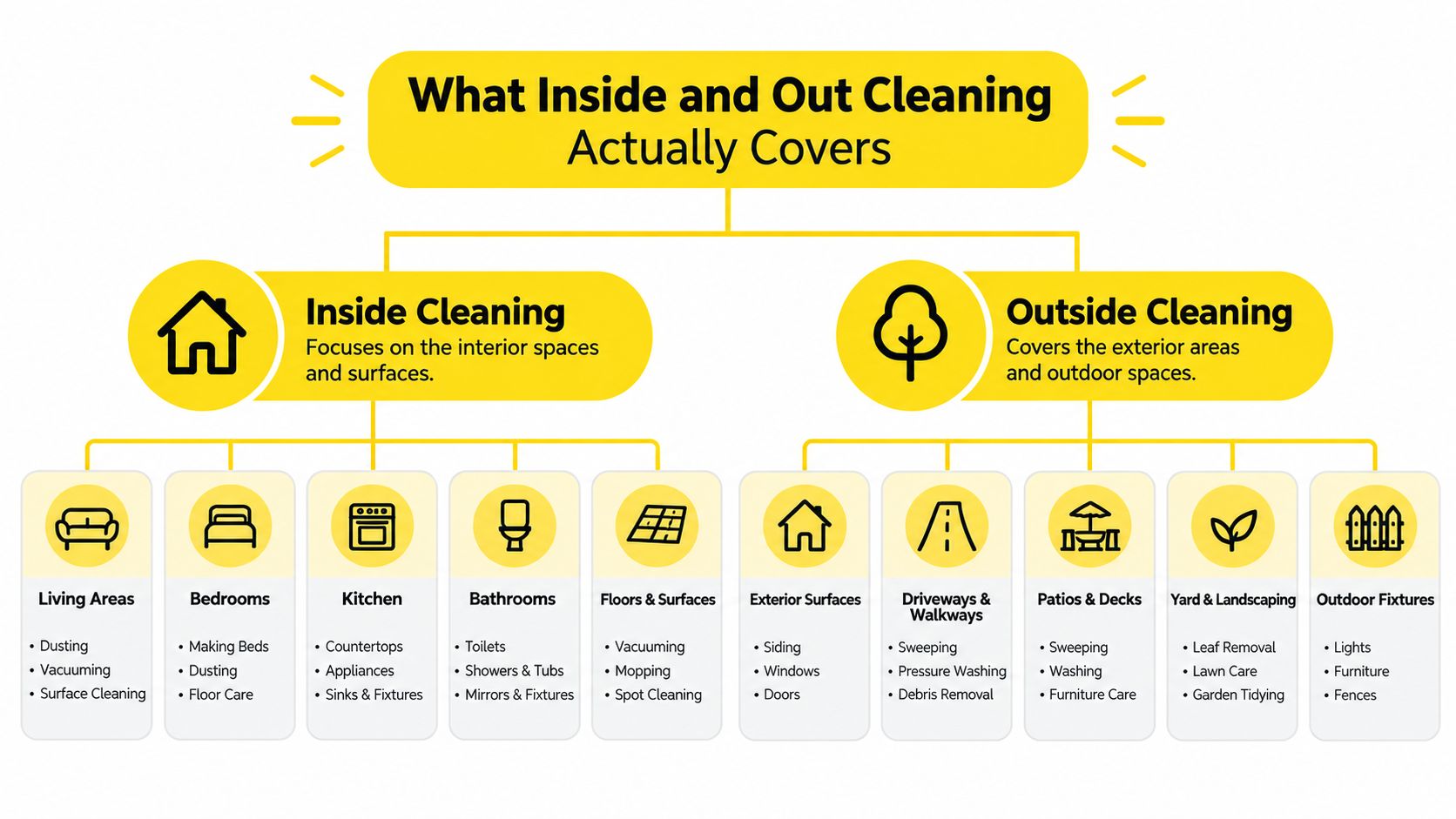
First question. What does “inside and out” mean to this customer? Some people mean the inside of the house plus front entry glass and a swept porch. Others mean siding, patio furniture, garage, bins, window exteriors, and every cabinet interior. If you don't define that in the first minute, the client defines it for you later.
I'm not just hearing words. I'm listening for the cost drivers.
Practical rule: If the client asks for a number before they've described condition, last clean date, pets, and the exact exterior areas, give a range only after you narrow the scope.
I'd rather spend one extra minute asking sharp questions than lose half a day to unpaid labor. My minimum intake for inside and out cleaning is simple:
If the caller can't answer cleanly, ask for photos. A short photo review closes a lot of pricing gaps before your team ever drives over.
This is also where staffing matters. If you're growing and need people who can follow a written scope, build that hiring pipeline before the busy season hits. The team at pipehirehrm.com has useful hiring content for cleaning operators who need tighter recruiting and screening.
Inside and out cleaning isn't a vibe. It's a written scope. If you don't define it at three levels, you'll keep selling one job and delivering another.
Start with this structure:
Interior detail scope
This covers the rooms customers live in every day. Floors, counters, bathrooms, visible dust, fixtures, trim, touchpoints, and selected detail work.
Exterior presentation scope
This covers the outside areas that affect first impression. Entry glass, porch, front door, patio, accessible outdoor surfaces, and guest-facing exterior touchpoints.
Concealed-surface inclusions
Inside and out cleaning separates itself from routine service. Cabinet interiors, appliance interiors when included, window tracks, behind fixtures where reachable, and neglected buildup areas.
A lot of owners blur this with standard maintenance cleaning. That's a mistake. A provider checklist from Properly Services makes the distinction clearly: standard cleaning covers surfaces and visible dust, while deep cleaning adds built-up grime and can include appliance and cupboard interiors. It also notes that oven interiors are excluded from standard cleaning but included in deep cleaning in the same checklist table (house cleaning service checklist).
Move-out standards are a good reality check because they force scope into plain language. One published scope-of-work document explicitly requires kitchen appliances, the inside and outside of cabinets and pantry, and windows and tracks, which shows how broad “inside and out” can become once a client expects inspection-level cleaning (move-out cleaning scope of work).
If you need a strong process example outside residential work, this cafe cleaning programme guide is worth reading because it shows how tightly operators define task frequency and inspection standards when sanitation and presentation both matter.
Don't just promise tasks. Define what “done” means.
A useful way to tighten this for your team is to build your own version of a professional deep cleaning checklist and then split it into standard, deep, and inside-and-out packages. That one decision cuts down most client confusion.
Owners get in trouble when they talk about inside and out cleaning in one lump. Break it apart. Interior tasks and exterior tasks behave differently, take different tools, and create different disputes.
Your estimate should show two separate task groups, then a third column for gray-zone clarifications. That's where you catch the arguments before they happen.
| Interior Tasks | Exterior Tasks | Clarify Before Quoting |
|---|---|---|
| Kitchen counters, cabinet faces, sink, stovetop exterior | Front door, entry glass, porch sweep | Are appliance interiors included? |
| Bathroom fixtures, mirrors, toilets, showers, tubs | Patio or deck sweep and wipe-down | Does patio furniture count? |
| Floors, baseboards, reachable vents, switch plates | Outdoor furniture, bins, railings | Are bins empty and accessible? |
| Ceiling fans, light fixtures, visible dust removal | Cobweb removal at entry points and eaves reachable from ground | Any high-access ladder work? |
| Window interiors, sills, tracks if included | Exterior glass on accessible doors and lower windows | Interior windows only, or both sides? |
| Cabinet interiors and drawers if included | Garage threshold or exterior-facing storage fronts | Does the garage count as interior, exterior, or excluded? |
The biggest fight areas are always the same. Windows, garages, patios, and appliance interiors. If you leave those implied, the client hears “yes” and your crew hears “not included.”
For interiors, don't let crews spray disinfectant everywhere just because the job is a deep reset. CDC guidance is plain: cleaning comes first with soap or detergent and water, then disinfect only high-touch surfaces when needed. It also states that if a surface is visibly dirty, it should be cleaned before disinfection, and disinfectants need to stay wet for the full labeled contact time (CDC home cleaning and disinfecting guidance).
Clean first. Disinfect selectively. If your crew skips the first part, they're doing chemistry theater, not professional cleaning.
Exterior scope should stay practical. Entry areas, visible soil, reachable cobwebs, guest-facing glass, and seating areas are fair game. Broad chemical spraying outside usually isn't.
If you price exterior glass separately, keep your structure consistent with your other field services. This guide to window cleaning price per square foot is a useful model for separating glass work from general cleaning labor so you don't bury it inside a vague package price.
Square footage matters. It just doesn't matter enough by itself. Owners who price inside and out cleaning on size alone usually miss the two variables that eat margin fastest: buildup and density.
Here's the framework I use when I review a job:
Here's the practical point. A same-size property can land at very different totals once those inputs change. The market content collected by More Client Playbook notes that deep cleaning typically costs 50% to 100% more than standard cleaning, with U.S. deep-cleaning estimates around $0.18 to $0.30 per square foot and an average one-time carpet-cleaning budget of about $215.90 (cleaning industry statistics 2026). That's enough to prove the point: if you're still using one flat per-foot number for every inside and out job, you're underestimating the messy ones and overcomplicating the easy ones.
| Pricing Variable | Impact on Estimate | Typical Dollar Swing | Notes for Quoting |
|---|---|---|---|
| Square footage | Raises base labor | Low to high | Use as a starting point, not the final answer |
| Moderate vs heavy buildup | Raises labor and chemical use | Moderate to high | Kitchens and bathrooms drive this most |
| Appliance interiors included | Adds detail time | Moderate | Price separately when possible |
| Window tracks and sills | Adds hand-detail labor | Low to moderate | Great add-on if photos show buildup |
| Exterior scope beyond entry | Adds setup and outside labor | Moderate to high | Define each area by name |
| Access issues | Slows team speed | Low to high | Stairs, gates, clutter, upper glass |
| Recurring customer history | Lowers uncertainty | Low to moderate | Easier if last service condition is documented |
A quick labor refresher helps here:
The global cleaning economy is large enough that better pricing discipline isn't optional. The global household cleaners market was estimated at USD 170.47 billion in 2026, up from USD 162.93 billion in 2025, and is projected to reach USD 213.76 billion by 2031 at a 4.63% CAGR (household cleaners market analysis). That kind of sustained expansion rewards operators who standardize estimating instead of winging it.
If your team still struggles to turn labor assumptions into a reliable estimate, this breakdown of how to calculate labor cost per hour is the right place to clean up the math before you touch package pricing.
Most upsells fail because owners pitch random extras instead of logical finish-work. Inside and out cleaning gives you a better opening. The customer is already paying for a reset. Your job is to show them which hidden areas will still look unfinished if you skip them.
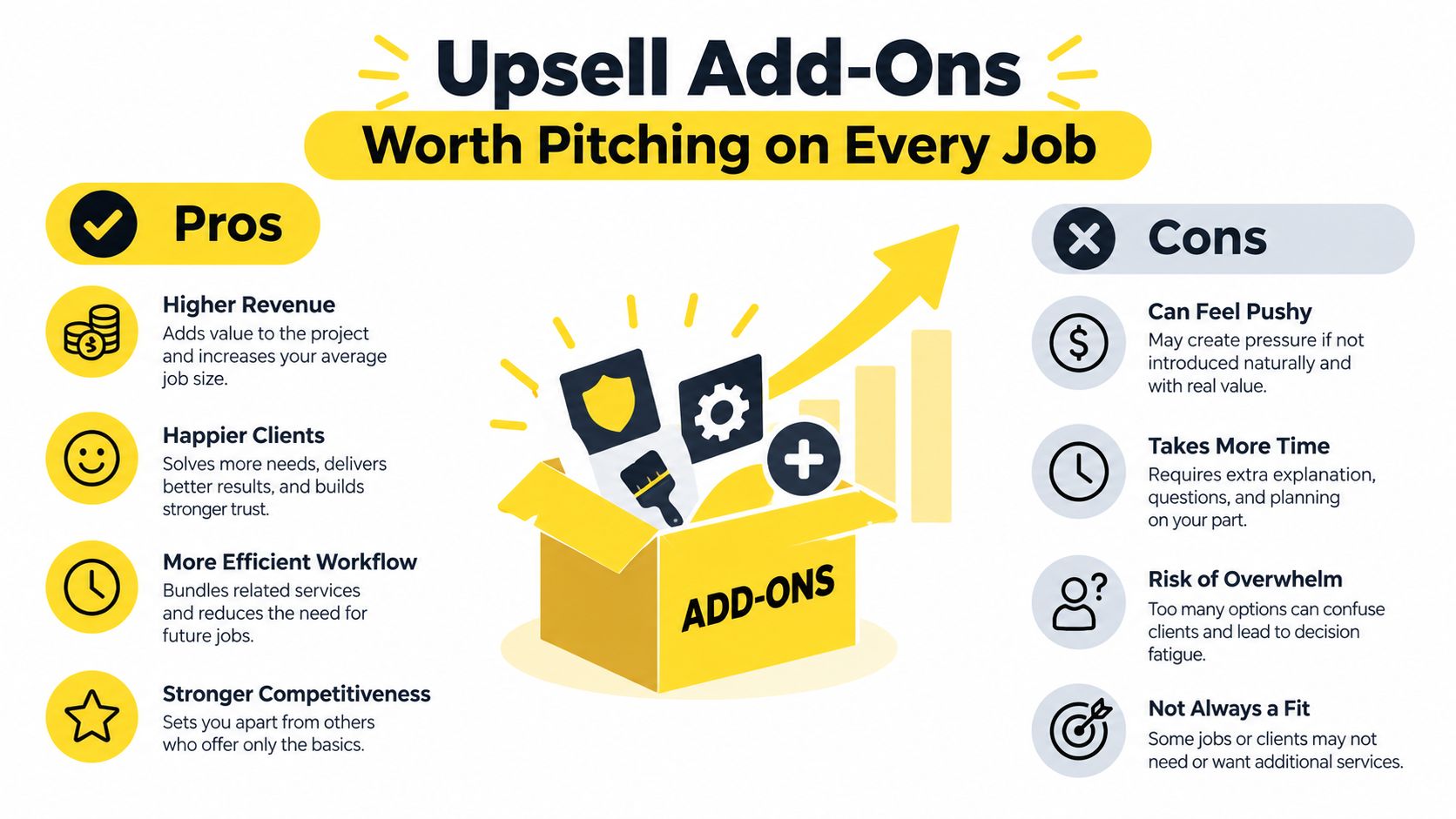
Oven interior should be offered early, during the first estimate conversation. Clients already know ovens hold grease and baked-on residue. They also know it takes effort. That makes it an easy yes when the kitchen is a priority zone.
Refrigerator interior works best when the customer is preparing for guests, moving, or doing a seasonal reset. Pitch it as a completion item, not a luxury item. A clean kitchen with a dirty fridge interior still feels half-done.
Window track and sill detailing converts well when photos show visible buildup. This is one of those details customers notice after the crew leaves because they open a window and suddenly see the dirt line you didn't touch.
Exterior pressure washing of siding, walkways, or entry glass belongs in the conversation when the visible curb appeal is poor and you already have an exterior visit scheduled. Don't bury this inside basic outside cleaning. Separate it clearly because the tools, setup, and risk are different.
A strong upsell doesn't sound pushy. It sounds like a warning about what will still look unfinished if they skip it.
Bundle two add-ons if they share setup and labor flow. Don't discount the whole kitchen or whole exterior just to get agreement. The bundle should reflect saved transition time, not reduced value.
One more point. Use the same chemical rules you'd expect from any serious operator. If your techs are selling detail work, they also need to know where a degreaser belongs, where a neutral cleaner is safer, and where disinfectant doesn't replace actual soil removal. This guide to professional cleaning chemicals is a good reference for tightening those decisions.
I'm going to keep these simple on purpose. Clients don't need a novel. They need a clean scope, labor assumptions, optional add-ons, and a total they can approve.
Client summary: Single-family home, 1,400 sq ft, moderate buildup, no pets, inside and out cleaning focused on kitchen, baths, floors, front entry, back patio, and accessible glass.
| Line Item | Light Residential 1,400 sq ft | Heavy Residential 2,800 sq ft | Small Commercial 1,600 sq ft |
|---|---|---|---|
| Interior cleaning labor | 5.5 labor hours | 11.5 labor hours | 5 labor hours |
| Exterior cleaning labor | 1.5 labor hours | 3.5 labor hours | 2 labor hours |
| Materials and disposables | Standard set | Heavy-use set | Commercial-use set |
| Kitchen appliance exterior | Included | Included | Breakroom exterior only |
| Cabinet faces and spot interior detail | Included | Included | Limited storage fronts |
| Bathroom full detail | Included | Included | Restroom full detail |
| Entry glass and porch | Included | Included | Reception glass included |
| Patio or outdoor seating area | Included | Included | Back patio included |
| Optional oven interior | Separate add-on | Separate add-on | Not included |
| Optional refrigerator interior | Separate add-on | Separate add-on | Not included |
| Optional tracks and sill detailing | Separate add-on | Separate add-on | Separate add-on |
| Subtotal | Itemized in estimate | Itemized in estimate | Itemized in estimate |
| Taxable add-ons | If selected | If selected | If selected |
| Total | Final total after options | Final total after options | Final total after options |
Estimate structure
This is the kind of estimate where you keep the language tight and the scope visible. No guesswork.
Client summary: Family home, 2,800 sq ft, three kids, two pets, heavy kitchen buildup, multiple bathrooms, larger patio, higher touchpoint density.
This job should not be priced like a larger version of estimate one. It's a different labor profile.
A clean client-facing estimate might read like this:
If the house has kids, pets, and visible buildup, stop apologizing for the higher estimate. The labor is real. Price it.
Client summary: Office, 1,600 sq ft, reception glass, breakroom, two restrooms, small back patio. Client wants a quarterly inside and out cleaning rotation.
Commercial inside and out cleaning should look structured, not domestic. The scope should read by area and frequency. That lines up with how commercial cleaning professionals define scope at the task, area, and frequency level. Cleaning Services Authority also notes that scope typically includes all surfaces, all cabinets interior and exterior, all fixtures, and often window interiors when written properly (cleaning service scope of work definitions).
A quarterly estimate should include:
For recurring commercial work, I'd send this as a structured estimate with service notes, not a one-line price. The clearer the scope, the easier it is to renew and expand later.
One more market signal matters here. The house cleaning services market was valued at USD 16.27 billion in 2025 and is projected to reach USD 35.84 billion by 2033, implying a 9.17% CAGR (house cleaning services market outlook). In a growing service market, the operators who send clear estimates fastest usually capture more of the demand.
You do not need perfect pricing to win more inside and out jobs. You need fast, defensible pricing with controlled scope.
Most one-time buyers aren't comparing your labor model. They're comparing how easy you are to buy from. If your response takes too long because you're trying to build a custom fixed number from scratch, the lead cools off or books the cleaner who answered first.
This is the rhythm that works:
That approach protects everyone. The client gets speed. You keep room for condition-based revisions. And your crew doesn't inherit unpaid surprises.
| Response Time | Lead Conversion | Estimate Variance | Risk Owner |
|---|---|---|---|
| Immediate to very fast | Usually strongest | Moderate until scope is confirmed | Shared |
| Same day but delayed | Often weaker | Lower on paper | Owner if assumptions were hidden |
| Fully fixed after long review | Slower decision cycle | Lower before visit, higher if scope was wrong | Mostly owner |
A fixed price that ignores hidden buildup isn't precision. It's false confidence. For inside and out cleaning, I'd rather send a well-structured estimate quickly, then tighten it after photos or a short call.
If you want that speed without relying on whoever happens to answer the phone, tools can help. AI estimates software for cleaning shows how owners are using automated intake to capture square footage, urgency, surfaces, and add-ons before the lead drops off. Estimatty is one option in that category. It handles web and voice inquiries, collects job details, and sends estimates without making the client wait for office hours.
Write these down and stop treating inside and out cleaning like a loose add-on service.
A detailed tenant-cleaning requirement document puts the hidden-surface issue in plain language. It states that all cabinets and drawers need to be wiped down inside and out and that the toilet must be cleaned inside and out, around and behind (tenant cleaning requirements). That's the level of clarity your pricing should match.
There's also still a buyer education gap around what deep cleaning really includes, especially around neglected areas, acceptance standards, time, and risk scope. Tidied's write-up on what deep cleaning usually misses in buyer expectations is a good reminder that customers often don't know how broad detail cleaning can get until the invoice arrives.

If you want inside and out cleaning estimates to go out faster and with less guesswork, Estimatty gives cleaning businesses a way to collect scope details, surface needs, urgency, and add-ons through web and voice conversations, then send structured estimates right away. It's built for the exact problem most owners have here: too many inbound leads, too much inconsistency, and too much revenue leaking between the first call and the booked job.