September 29, 2026
Commercial and Residential Cleaning in 2026
Compare commercial and residential cleaning markets in 2026. Explore pricing, staffing, compliance, and how AI estimators streamline operations.
Monday, July 6, 2026
Learn how to improve customer engagement for your cleaning business. Use AI, SMS, & personalization for actionable steps to convert more leads.
A cleaning lead comes in at 8:47 p.m. The customer wants a move-out clean before the weekend, checks your site, calls once, gets voicemail, and leaves. By morning, that job usually belongs to the company that answered first.
That's the actual customer engagement problem in cleaning. It's not abstract brand affinity. It's missed calls, slow replies, inconsistent estimates, and follow-up that happens too late to matter. Most advice on how to improve customer engagement talks about personalization and omnichannel messaging in broad terms. Useful ideas, but they often ignore the first moment that decides whether a lead ever becomes a customer in the first place.
For cleaning businesses, engagement starts when someone wants pricing now. If you don't meet that moment, the rest of your funnel never gets a chance.
Cleaning owners usually think about engagement after the booking. Review requests, reminder texts, loyalty offers, referral asks. Those all matter, but they come second. The first engagement event is the estimate request.
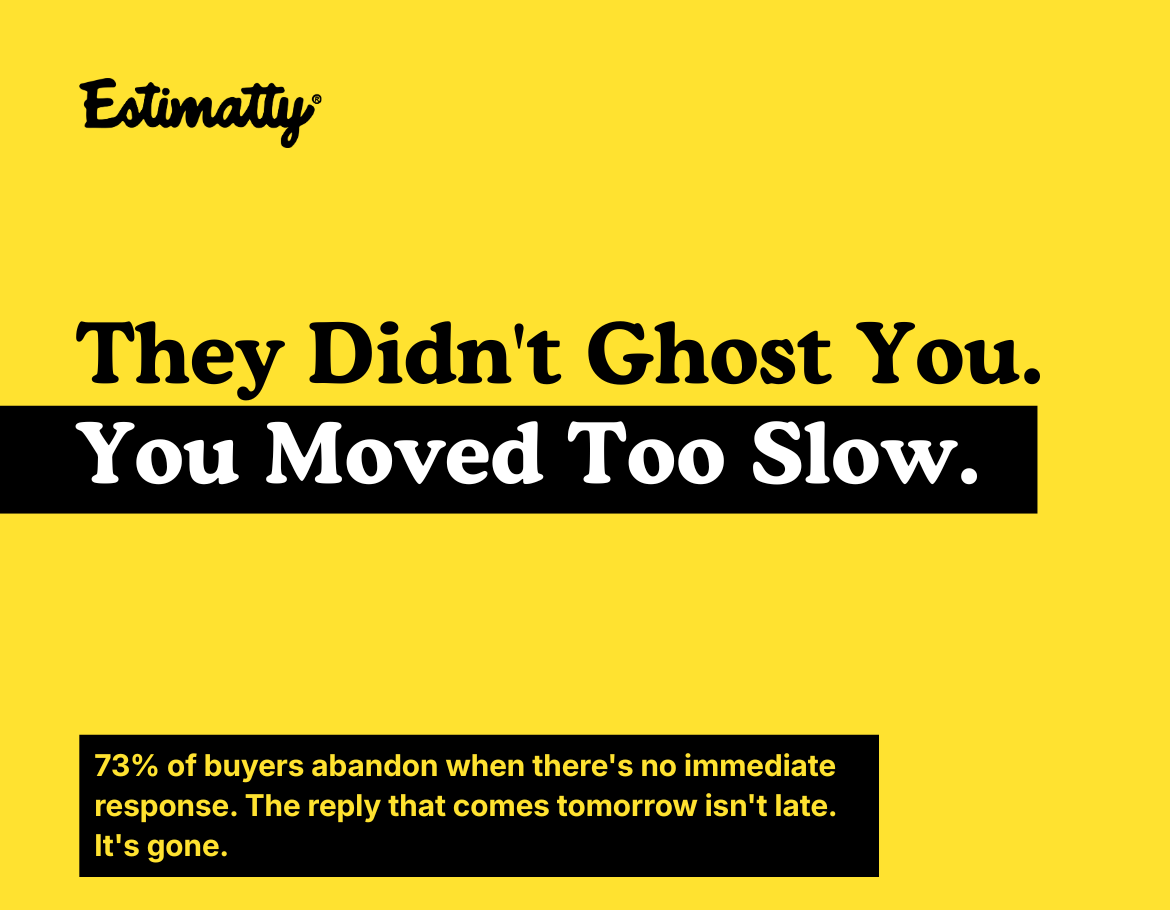
Most articles miss that point. They focus on generalized tactics while skipping the service-business reality that people shopping for cleaning want speed and clarity. Data cited by Dacadoo's discussion of customer engagement says 73% of customers abandon inquiries when they don't receive immediate responses or pricing estimates, and 60% prefer AI agents that provide consistent quotes within under 60 seconds over human delays. For a cleaning company, that's not a marketing detail. It's the difference between a full schedule and wasted ad spend.
A lot of owners already know they need better response times. Where they get stuck is choosing the wrong fix. They add a contact form. They ask office staff to check messages faster. They try to remember who asked about deep cleaning versus recurring service. The process still breaks after hours, on weekends, and during busy stretches.
The usual playbook says to show up on more channels. That's fine as far as it goes, and resources on multi-channel engagement strategies can help you think through SMS, email, and call coverage. But more channels without fast estimate delivery just spreads the same delay across more places.
Here's what works instead:
Practical rule: In cleaning, customer engagement starts before trust. Speed creates the chance to earn trust.
That's why businesses that want stronger retention and better booking rates need to fix the front end first, then improve the rest of the journey. If your current process still depends on office hours, handwritten notes, or callbacks, your engagement strategy has a hole in it.
If you want the back end to improve too, this guide on improving customer satisfaction in cleaning is worth pairing with your engagement system. The two go together. Fast first contact gets the booking. A reliable service experience keeps the customer.
The old setup is simple. A website form collects name, phone, and “Tell us about your home.” Then somebody on your team calls back later, asks the same questions again, gives an estimate, and hopes the customer still cares.
That system leaks leads every day.
Real-time engagement converts better because it removes waiting. According to VWO's customer engagement statistics, customers who visit online stores using live chat are 20% more likely to convert. Cleaning buyers behave the same way in practice. When someone lands on your site with a cleaning need, immediate interaction keeps momentum alive. Slow forms kill it.
A useful AI web or voice estimator doesn't just greet people. It qualifies, prices, and routes.
At minimum, it should collect:
That turns your website from a brochure into a sales desk.
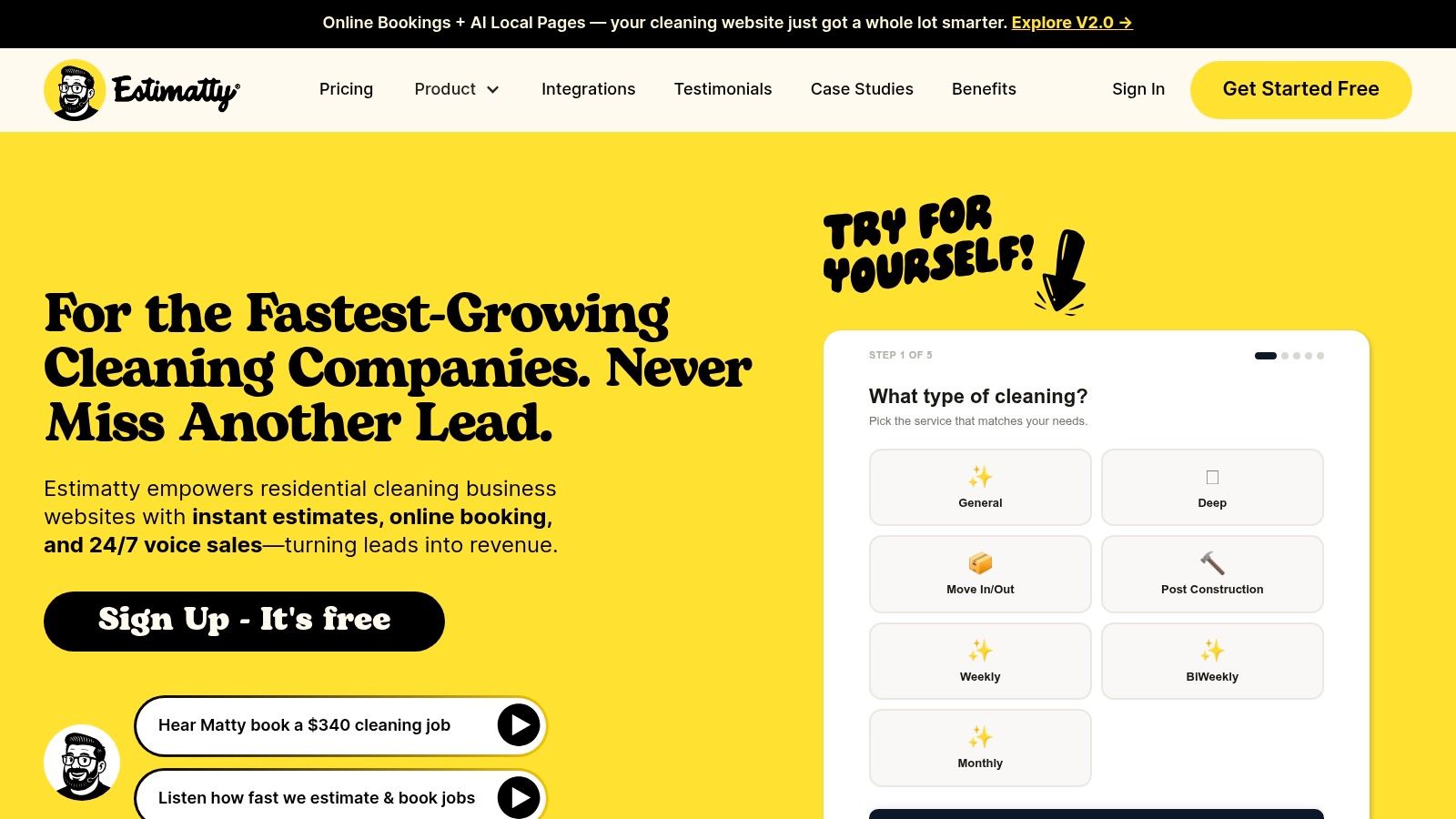
One option in this category is Estimatty, which sends instant estimates by web and voice, captures job details, and notifies your team in real time. If you're comparing implementation help across tools, a specialist AI automation agency can also be useful when you need broader workflow setup beyond the estimator itself.
Here's the trade-off most owners need to hear plainly.
| Approach | What happens in practice |
|---|---|
| Contact form only | Leads pile up overnight and staff re-qualify every inquiry manually |
| Voicemail after hours | High-intent callers move on before your office opens |
| Manual phone pricing | Estimates vary by team member and follow-up gets delayed |
| Automated estimator | Prospects get immediate answers, and your team receives warmer leads |
A lot of owners resist automation because they think it will feel cold. Usually the opposite happens. Customers feel ignored by silence, not by a fast estimate that answers their question.
If the buyer has to wait for basic pricing, they assume the rest of your service will move slowly too.
There's also an operational benefit. Standardized estimates protect your margins. Your office doesn't have to guess. Your field team doesn't have to fix bad expectations later. Your sales process becomes consistent enough to scale.
For businesses still depending on callbacks to catch missed inquiries, this guide to a 24-hour phone answering service for cleaning companies helps show where live answering and automation can complement each other.
A short product walkthrough helps if you're evaluating how this flow looks in practice:
Stop thinking of after-hours leads as “messages.” Treat them as active buying moments. The companies that improve customer engagement in cleaning don't wait to engage until staff is available. They build a process that engages first and hands off second.
That single change tightens the entire funnel.
Getting the estimate out fast is step one. The next mistake many cleaning companies make is sending the estimate and going quiet. That silence costs bookings because customers still need a nudge, a reminder, or a reason to trust your process.
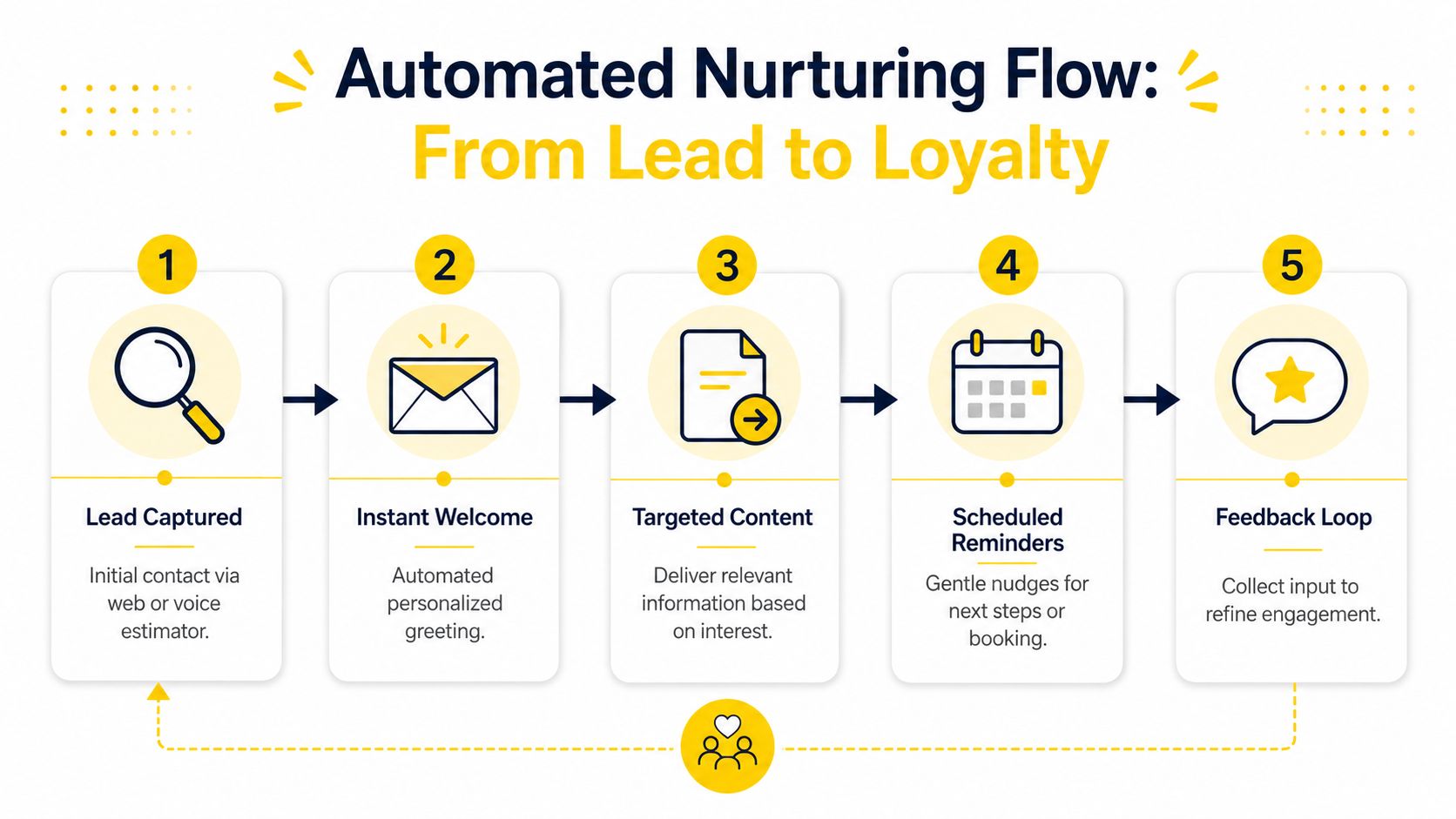
The strongest follow-up systems don't blast the same message to everyone. They use captured details to make each text or email feel timely and specific. According to Moxo's customer engagement strategy breakdown, implementing omnichannel personalization driven by real-time CRM data increases customer engagement rates by 34% and boosts conversion by 27%. The practical takeaway for cleaning is simple. If your system knows the customer asked about a deep clean next Tuesday, your follow-up should sound like it knows that.
Use a short sequence across SMS and email. Don't overcomplicate it.
SMS template
Hi [First Name], thanks for reaching out about your [Service Type]. Your estimate for [Property Type] has been sent. If you'd like, we can help you lock in a time for [Preferred Date].
Email template
Subject: Your cleaning estimate
Hi [First Name],
Thanks for requesting an estimate for your [Service Type]. Based on the details you shared for your [Property Type], we've sent your estimate.
If timing matters, reply to this email or text us back and we'll help you schedule the best opening for [Preferred Date].
Best,
[Company Name]
This message works because it confirms the request, reflects the service type, and gives a clear next step.
Relevance matters. Don't send a vague “just checking in.”
SMS template
Hi [First Name], following up on your estimate for [Service Type]. If you're still comparing options, I can answer any questions about timing, service details, or scheduling.
Email template
Subject: Questions about your cleaning estimate?
Hi [First Name],
I wanted to follow up on the estimate we sent for your [Service Type]. If you're deciding between options, reply with any questions about the service, scheduling, or what's included.
We've found that customers are much more likely to book when the next step is easy, not when they have to restart the conversation.
Thanks,
[Company Name]
You don't need a hard sell. You need a low-friction prompt.
Field lesson: The best follow-up sounds like help, not pressure.
SMS template
Hi [First Name], we're holding your estimate details for [Service Type]. If you'd like to book, reply with your preferred day and we'll take it from there.
Email template
Subject: Ready when you are
Hi [First Name],
Your estimate is still on file for [Service Type]. If you want to move forward, send over the day that works best and we'll help with the scheduling.
Best,
[Company Name]
Use only the details the customer already gave you. Service type, timing, home size, urgency, and recurring interest are enough. You don't need to sound overly clever. You need to sound organized.
A practical setup looks like this:
If you want a deeper look at how AI can trigger these actions inside a real cleaning workflow, this article on AI sales automation for cleaning services is a practical companion. For a broader technology view, the Recepta.ai AI solutions guide is also useful when you're comparing customer service automation approaches.
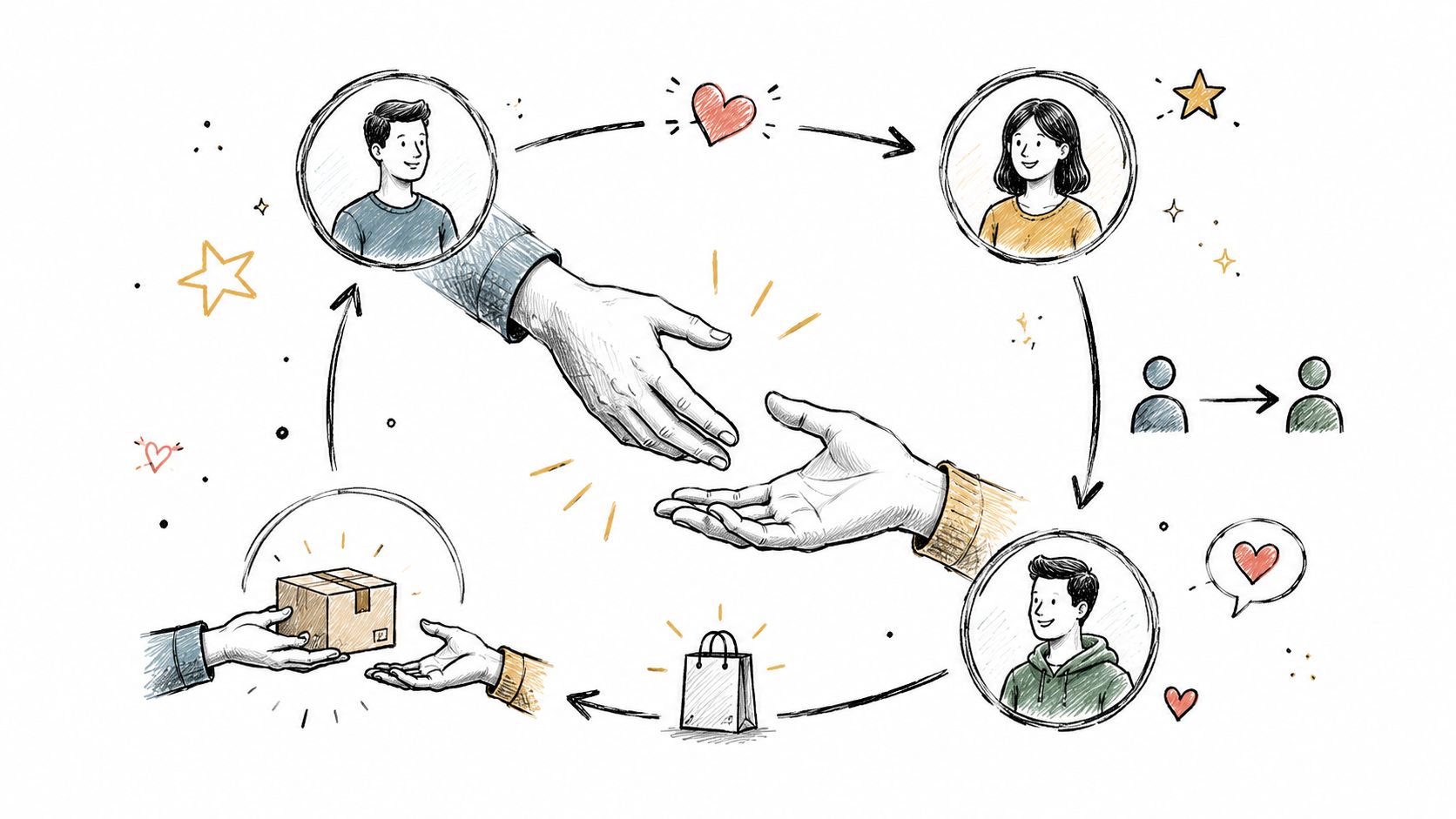
A booked job shouldn't be the end of engagement. It should be the start of a longer customer relationship.
The owners who grow steadily don't rely on finding a brand-new customer every day. They turn one clean into recurring service, add-ons, referrals, and reactivations. That takes timing more than persuasion.
A customer books a deep clean. A few days before the appointment, you send a short message asking if they want to add oven cleaning or interior fridge cleaning. That doesn't feel pushy if it matches the job they already booked.
A recurring customer finishes their second or third clean. That's the right time to suggest a frequency adjustment or a targeted add-on, not on the very first interaction when trust is still thin.
Cleaning businesses often overbuild loyalty programs. They create rules nobody remembers, then wonder why customers ignore them. Simpler wins.
According to TimeTap's loyalty and engagement analysis, gamified loyalty programs with tiered rewards increase repeat purchase rates by 45% and customer retention by 33%. The same source notes that successful programs use CRM-integrated feedback loops and real-time reminders. In plain terms, customers respond when progress is visible and the reward makes sense.
A cleaning version can be straightforward:
Customers don't stay loyal because you invented a clever rewards system. They stay loyal because the system is easy to understand and tied to real value.
A strong referral program removes work from the customer. Don't just say, “Send friends our way.” Give them the message, the timing, and the reward.
For cleaning companies, a referral offer should include a discount on the next cleaning or a gift card for each successful referral, and it should come with pre-written posts or messages that make sharing easy. That basic structure works because clients don't have to figure out what to say.
A simple referral text can be:
“Thanks for choosing us. If you know someone who needs help with house cleaning, I can send you a quick referral message you can forward. You'll receive your referral reward after their first completed service.”
If you want examples of referral wording and timing, this guide on thank-you referral messaging for cleaning businesses is useful.
For local cleaning, engagement isn't limited to your existing customer list. Neighborhood Facebook groups, Nextdoor, and local community networks can bring in recurring clients when you show up consistently and pair that visibility with frequency discounts and smart upsells. Those channels work best when you sound helpful and local, not polished and corporate.
Automation shouldn't trap a lead in a machine. It should prepare your team to take over cleanly.
The handoff matters most when a customer is warm, has an estimate in hand, and wants reassurance before booking. If your staff picks up without context, they ask repeated questions, slow the conversation, and break the smooth experience the automation created.
A proper handoff should send your office or sales team the essentials immediately:
That gives the staff member a running start.
A strong workflow usually looks like this:
Warm leads need a different script than cold calls. The customer already knows your price range. They usually need clarity, confidence, and scheduling help.
A better opening is: “Hi Sarah, I saw you requested an estimate for a move-out clean and were hoping for Friday. I can help you get that booked.” That's far better than, “Can you tell me what you're looking for?”
If your handoff process is still scattered across texts, sticky notes, and inboxes, put it into one system. A cleaning-focused service industry CRM workflow makes it much easier to keep sales, scheduling, and customer records aligned.
Good automation exposes weak staffing fast. If your team is inconsistent on the phone, slow to respond, or unclear about service standards, better lead capture won't solve the whole problem.
That's where hiring and training come in. For cleaning businesses building a stronger front-office and field team, pipehirehrm.com is worth knowing about, and the hiring content on get.pipehirehrm.com/blog is useful when you're trying to build a dependable crew that can protect the customer experience after the lead comes in.
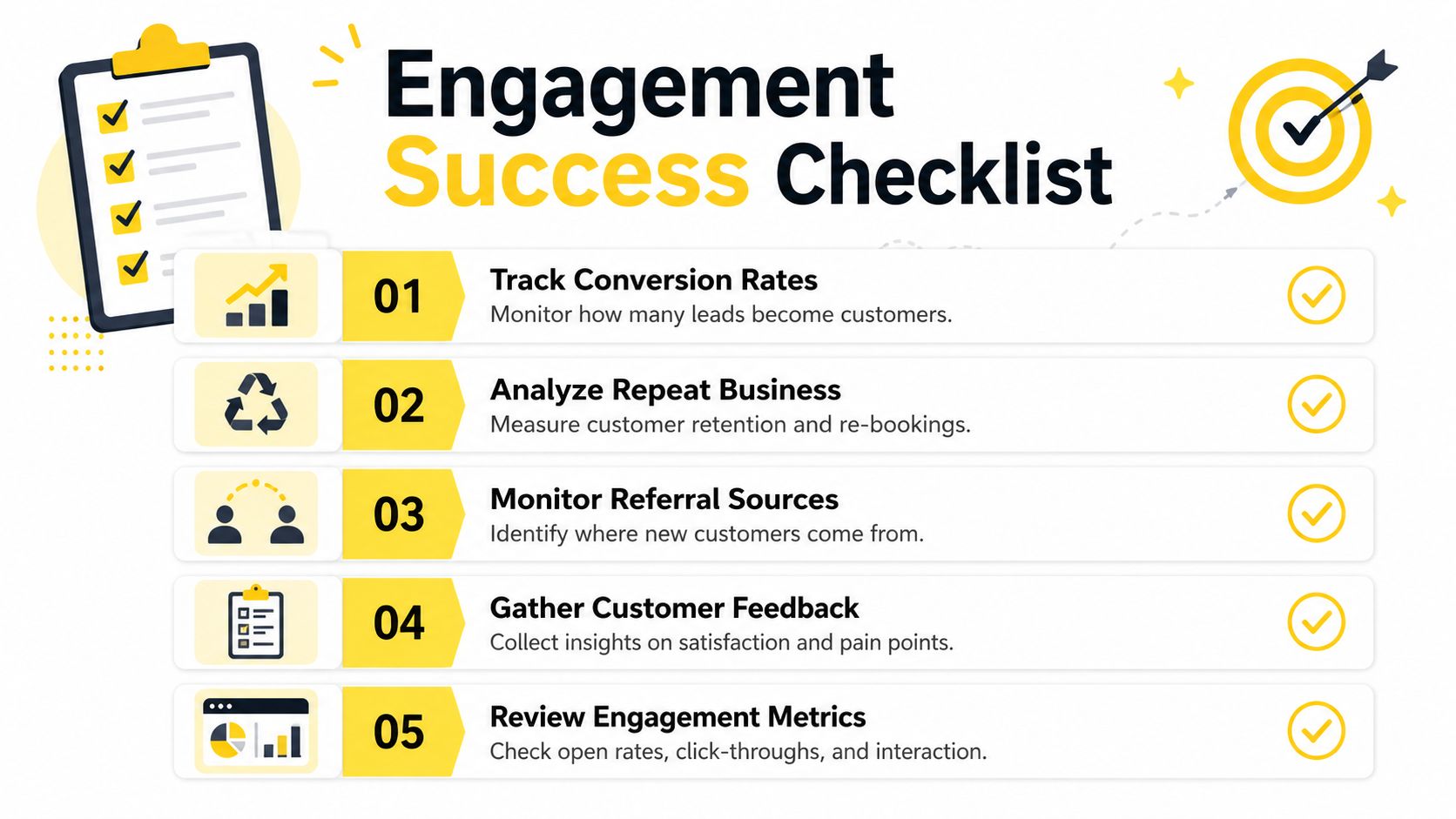
If you want to know how to improve customer engagement, start by measuring the parts that change bookings, retention, and customer sentiment. Skip vanity metrics unless they help explain those outcomes.
The point isn't to build a complicated dashboard. The point is to see where leads stall, where customers come back, and where the service experience weakens.
According to Listen360's guide to measuring customer engagement, a Net Promoter Score of 50+ is considered strong, and a Customer Satisfaction Score of 80%+ indicates satisfied customers. The same source notes that companies that automate estimates and offer 24/7 availability consistently hit CSAT targets above 80%.
For a cleaning business, I'd watch five things first:
| Metric | What it tells you | What to do if it slips |
|---|---|---|
| Lead capture rate | Whether inquiries are being collected consistently | Check after-hours coverage, call routing, and web estimator visibility |
| Estimate-to-booking conversion | Whether your pricing and follow-up are working | Review estimate clarity, timing, and follow-up wording |
| Repeat booking rate | Whether service delivery creates loyalty | Tighten service quality and rebooking reminders |
| Referral source mix | Whether happy clients are actively sending new business | Strengthen referral asks and timing |
| CSAT and NPS | Whether customers are satisfied enough to stay and recommend | Review complaints, crew consistency, and communication gaps |
This part gets skipped because owners think surveys need to be formal. They don't. They need to happen.
For cleaning companies, quarterly satisfaction surveys through tools like SurveyMonkey or Google Forms are a practical way to catch problems early. Short post-service surveys are just as important because they help you resolve issues before a customer disappears without explanation.
Use feedback in three places:
A survey only matters if someone reads it, tags the issue, and changes the process.
You don't need to rebuild your whole customer journey at once. Test one variable at a time.
Try:
The goal is simple. Keep what moves customers forward. Cut what adds noise.
Use this as your operating list:
The cleaning companies that grow without chaos usually aren't doing magic. They're doing the basics with speed, consistency, and enough automation to keep leads moving when the office is closed.
If you want a cleaner way to handle instant estimates, after-hours engagement, and automated follow-up, take a look at Estimatty. It's built for cleaning businesses that want to capture more leads, standardize pricing, and keep the booking process moving without adding more manual admin.