September 29, 2026
Commercial and Residential Cleaning in 2026
Compare commercial and residential cleaning markets in 2026. Explore pricing, staffing, compliance, and how AI estimators streamline operations.

Saturday, July 4, 2026
Unlock how to get commercial cleaning leads. Our 2026 playbook reveals proven outbound, inbound & automation strategies to fill your pipeline.
You've probably felt this already. The phone rings while you're on a job, a facility manager fills out your form after hours, or a property manager asks for pricing and then disappears before you can get the estimate out. Meanwhile, another cleaner gets the meeting because they replied faster, sounded more organized, or seemed to specialize in that kind of building.
That's the key challenge with learning how to get commercial cleaning leads. It isn't just about getting more names into a spreadsheet. It's about attracting the right buyers, responding in a way that builds confidence, and protecting your margins while you grow.
Most cleaning companies waste time in one of two places. They either market too broadly and end up chasing low-fit accounts, or they generate interest but lose deals in the handoff between inquiry, estimate, follow-up, and close. The operators who win long-term commercial work usually do both parts well. They target tightly, and they run a process.
The fastest way to burn marketing budget is to say yes to everyone. “We clean anything” sounds flexible, but in practice it creates weak messaging, sloppy estimating, and a sales pipeline full of mismatched prospects.
Commercial cleaning gets easier when you choose who you want to serve. Not every account is equally profitable. Some buildings are simple to service, easy to retain, and well matched to your crew. Others look attractive on paper but create constant scope creep, after-hours drama, and pricing pressure.
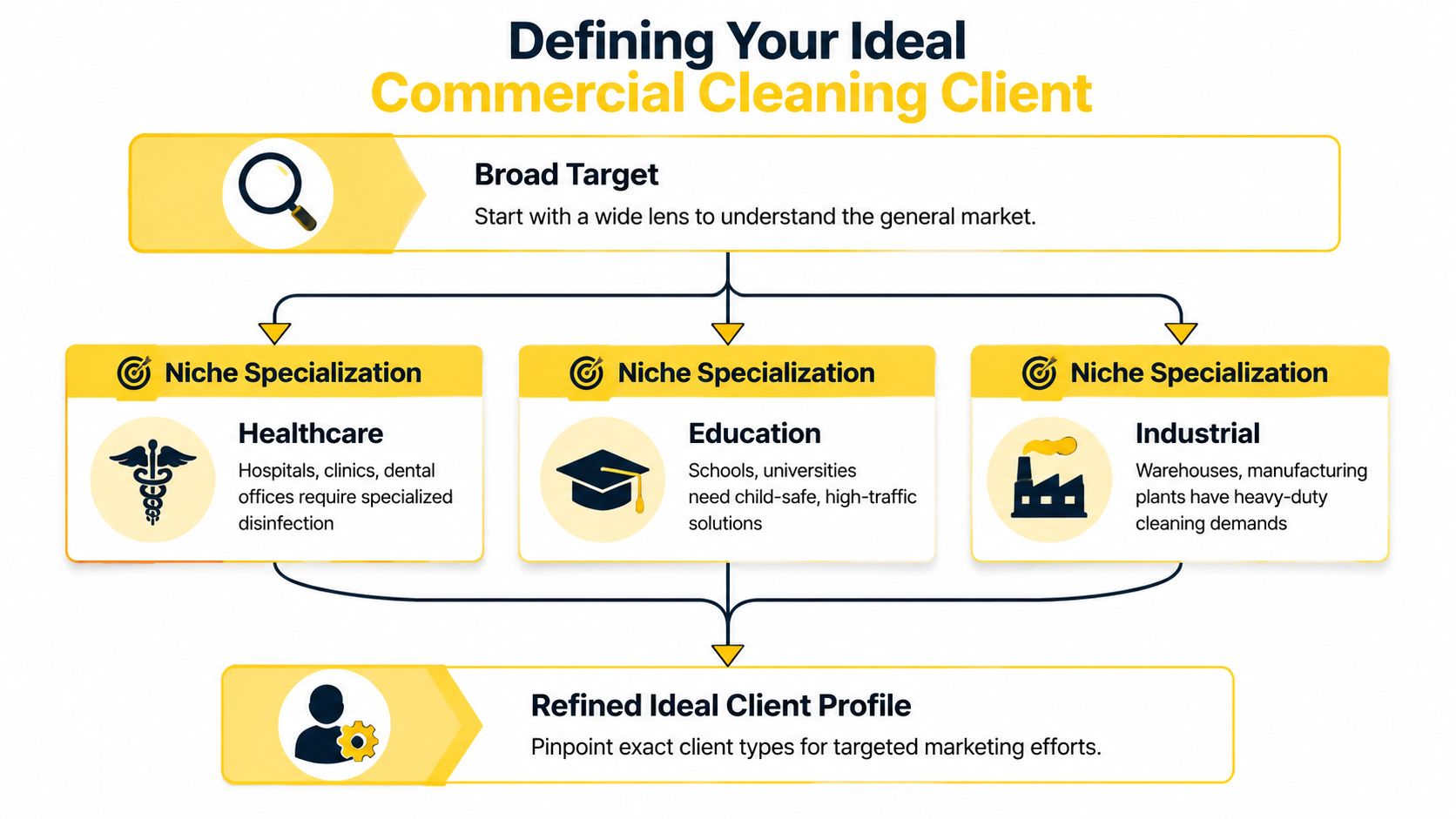
“Commercial cleaning” is a category, not an audience. Medical offices buy differently than private schools. Warehouses care about a different standard than law firms. A dental office manager will ask different questions than a property manager overseeing mixed-use buildings.
If you want better leads, build an ideal customer profile around a narrow slice of the market:
A focused profile improves everything downstream. Your website copy gets sharper. Your outreach sounds more relevant. Your estimates become more consistent. Your crew scheduling gets cleaner too.
Practical rule: Specialize by pain point, not by vanity. The best niche is the one your team can service profitably and repeatably.
Start with the buildings already around you. Look at the business parks, school networks, medical corridors, industrial strips, and mixed-use developments in your service area. Then ask three blunt questions.
Branding and positioning matter more than most owners realize. If your company presents itself like a generic local cleaner, you'll attract generic price shoppers. If you present clear specialization, buyers assume competence faster. This cleaning branding guide is worth reviewing if your current message still sounds interchangeable.
Not every prospect is worth chasing today. Some are just browsing. Others are already leaning toward a switch. You'll save time if you learn to spot intent before you send outreach or invest in a site visit.
A practical resource for this is Reachly's buying signals guide. The useful takeaway isn't theory. It's learning how to notice moments like leadership changes, expansion, tenant turnover, complaints about current vendors, or signs that a facility's standards have slipped.
When you understand who you want and why they might change vendors, figuring out how to get commercial cleaning leads becomes much less random. You stop chasing every building and start pursuing accounts that fit your business.
Outbound works when you need momentum now. You're not waiting for Google to send leads. You're identifying likely buyers, contacting them directly, and creating your own pipeline.
The mistake most cleaning companies make is treating outbound like spam. They scrape a list, blast a generic pitch, and wonder why nobody answers. Commercial buyers don't respond to “just checking if you need cleaning.” They respond when the message sounds informed, specific, and easy to act on.
A solid campaign usually starts with a niche. Say you target small medical offices and professional office suites in one part of town. You open LinkedIn Sales Navigator, search for facility managers, office managers, operations managers, and property managers, then match those people with buildings you can realistically service.
The first message shouldn't sell your whole company. It should show relevance.
A message that works better sounds like this:
Noticed you manage properties in the north business corridor. We work with teams that need dependable after-hours cleaning without constant rework or missed communication. If you're reviewing vendors this quarter, happy to share how we scope offices to avoid surprises in the estimate.
That message does three things. It shows you know who they are, it names a common frustration, and it offers a next step that feels low pressure.
Cold email still works for commercial cleaning, but only if it respects the buyer's time. Your subject line should be plain. Your body should be short. Your ask should be easy.
Here's a structure I like:
A follow-up a few days later can be even shorter:
If you want a broader frame for outbound process, Ascendly Marketing's definitive guide to B2B lead gen is useful because it reinforces a basic truth. Channel choice matters less than message relevance, list quality, and follow-up discipline.
Commercial cleaning is still a relationship business. Some of the best leads come from people who already influence building decisions but don't clean buildings themselves.
Build referral relationships with:
Your paid ads can support outbound too, especially when a prospect checks you out after receiving your email or LinkedIn message. If your visibility is weak, fix that fast. These ad strategies for cleaning services can help you show up more professionally when buyers search your brand after first contact.
Outbound doesn't fail because the market is saturated. It fails because too many owners contact the wrong people with the wrong message and quit after one touch.
Outbound is active pursuit. Inbound is asset building. One gives you control today. The other compounds over time if you do it correctly.
A lot of owners get this backwards. They treat inbound like “set up a website and wait.” That isn't a strategy. A real inbound system turns your digital footprint into a screening tool that attracts the right commercial prospects and pushes poor-fit ones away.
A strong Google Business Profile often becomes the most impactful local asset because buyers use it as a trust checkpoint. They search your company name, your service category, or your city plus service. If your profile looks neglected, your website says one thing, and your reviews don't line up with your niche, you lose confidence before anyone contacts you.
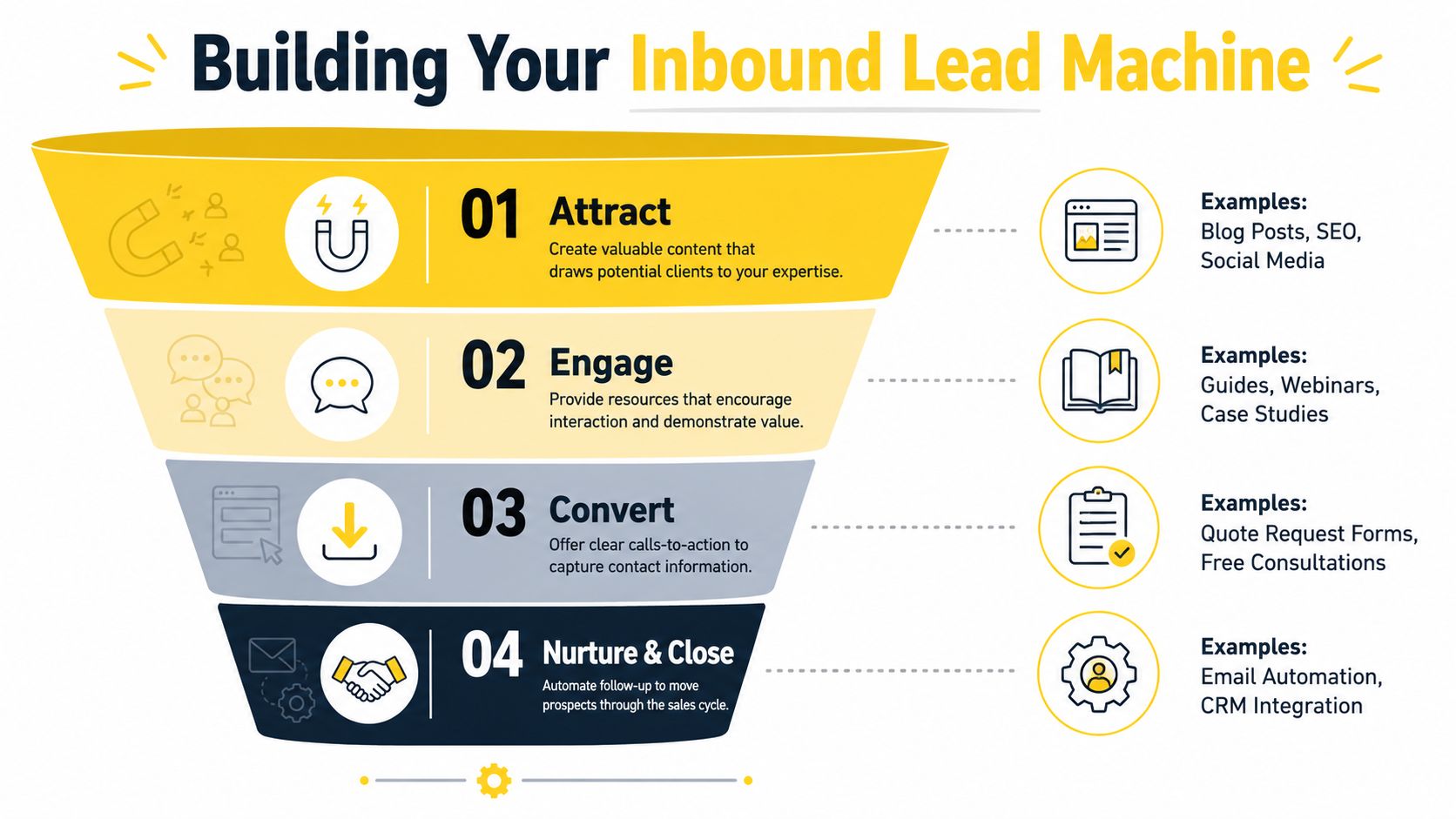
Outbound gives you speed. Inbound gives you efficiency and trust. A facility manager who finds you through local search, reads a niche service page, sees relevant reviews, and submits a request is usually easier to qualify than a cold prospect who has never heard of you.
That's why I tell cleaning companies to think in layers:
| Asset | What it does | What usually goes wrong |
|---|---|---|
| Google Business Profile | Captures local intent and validates legitimacy | Incomplete categories, weak photos, no recent activity |
| Service pages | Matches searches to specific needs | One generic “services” page for everything |
| Blog content | Builds topical relevance and answers buyer questions | Writing for homeowners instead of commercial buyers |
| Paid search | Covers gaps while organic visibility grows | Sending traffic to weak landing pages |
Your Google Business Profile needs to match reality. Use the right service descriptions. Add photos that reflect commercial work, not just residential images. Make sure your service areas, hours, phone number, and website all line up across the web.
Then build website pages around actual commercial use cases. “Commercial cleaning” alone isn't enough. Create pages for office cleaning, medical office cleaning, school cleaning, industrial cleaning, or whichever niches match your ideal profile. Each page should explain scope, service fit, and what kind of facility you serve best.
For content ideas, it helps to look at what buyers ask before they hire. The content examples on Estimatty's cleaning SEO blog and the broader editorial approach on estimatty.com/blog are useful models because they center practical buyer questions instead of fluffy keywords.
Your website shouldn't act like an online brochure. It should move a visitor toward contact with as little friction as possible. That means clear buttons, simple forms, direct service pages, and a visible path to request an estimate.
This walkthrough is useful if you want a visual break before tightening your pages and funnel.
The best inbound setup doesn't try to convince everyone. It helps the right prospect qualify themselves quickly.
Paid search and local service ads can sit on top of this foundation, but don't use ads to compensate for a weak offer. If your landing page is vague, your form is clunky, and your message looks generic, paid traffic just burns money faster.
When owners ask me how to get commercial cleaning leads consistently, I usually answer with a less exciting truth than they expect. Build a local search presence that looks credible, sounds specialized, and makes it easy to request an estimate. Then keep publishing useful content so your business becomes easier to find and easier to trust.
Most cleaning companies don't have a lead problem. They have a response problem.
A prospect calls after hours. Nobody picks up. Someone fills out a form on Sunday. The office replies Monday afternoon. A property manager asks for pricing, and the estimate sits in a draft folder because the owner is out doing walkthroughs. By the time the response goes out, the buyer has already heard back from two competitors.
That old way costs jobs. It also creates inconsistent estimating, because one person prices from memory, another prices from instinct, and someone else prices just to win the account. The result is a messy mix of slow replies, uneven margins, and avoidable confusion.
Manual estimating feels personal, but it often creates friction the buyer can feel right away.
Common problems show up fast:
Commercial buyers read slow response as disorganization. They may never say that out loud, but they act on it.
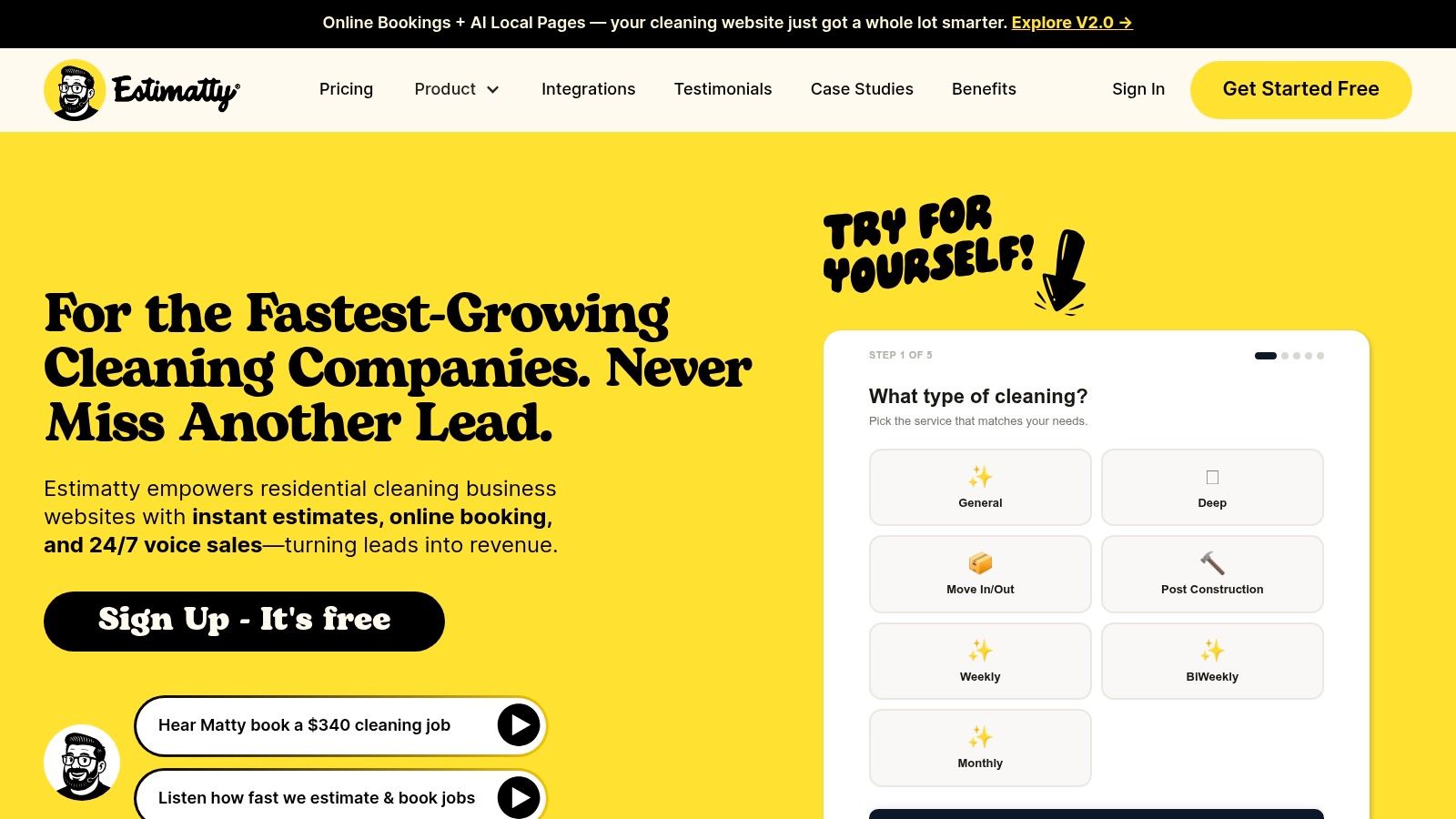
A better system captures the lead immediately, asks qualifying questions, applies standardized pricing logic, and sends a professional estimate without waiting for office hours. That's how you reduce lead leakage and create a smoother buyer experience.
A modern setup should handle:
| Function | Old way | Better way |
|---|---|---|
| First response | Voicemail or delayed callback | Instant engagement on web or phone |
| Qualification | Owner asks questions manually | Structured intake every time |
| Estimate delivery | Sent later when someone is free | Sent right after prospect details are captured |
| Team notification | Buried in inboxes or texts | Immediate alert for follow-up |
This is also where communication systems matter. If your phones, CRM, and lead capture tools don't talk to each other, your process breaks in the middle. If you're evaluating that side of the stack, Hosted Telecommunications' integration solutions offer a practical example of how connected phone and CRM workflows can reduce dropped conversations and messy handoffs.
Operator mindset: Fast matters, but consistency matters more. A fast bad estimate is still a bad estimate.
Before you automate anything, lock down your pricing logic. Define service categories, scope assumptions, add-ons, frequency adjustments, and what triggers a site visit. If your estimating process lives only in the owner's head, no tool will fix it.
Once the logic is standardized, automation becomes useful. It can capture square footage, surfaces, urgency, building type, contact details, and service needs. It can send the estimate by SMS and email, notify your team, and keep every inquiry moving even when nobody is sitting at the front desk.
If you want to see how that kind of workflow fits cleaning sales specifically, this article on AI sales automation for cleaning services is worth reading. The core idea is simple. You shouldn't need more headcount just to stop leads from slipping through the cracks.
Commercial contracts rarely close on the first touch. Buyers compare vendors, wait on approvals, revisit budgets, and get pulled into internal delays. If your follow-up is random, you'll lose deals to companies that stay visible longer.
Most bad follow-up falls into one of two camps. Either it's too passive, with vague “checking in” emails, or it's too aggressive, with repeated asks that add no value. The middle ground wins.

Use a simple cadence like this after you send an estimate.
Day 0
Day 1 or 2
Day 3 or 4
Day 7
The second week is where a lot of cleaners disappear. Don't.
Day 10 to 14
Day 21
Follow-up should reduce decision friction. It shouldn't create inbox noise.
If you want your reminders and confirmation messages to feel tighter, this appointment reminder email template resource can help sharpen the tone.
The discipline matters more than the script. Put every estimate into the same cadence. Track replies. Adjust messaging based on the niche. A school administrator and a warehouse manager won't respond to the same angle, but both respect clear, useful follow-up.
The right lead strategy depends on the stage of the business. A solo operator needs to maximize their efforts. A small team needs repeatability. A multi-location company needs control across a wider footprint.
Treating all three the same is one reason growth gets messy.
If you're still owner-operated or close to it, your best channel is usually hyper-local trust. You don't need to be everywhere. You need to become visible in a narrow service area and a narrow type of account.
Focus on:
What to avoid? Overbuilding. Don't try to run every platform, every ad channel, and every social network. At this stage, complexity steals selling time.
Once you have a few employees, the constraint changes. It's no longer just lead volume. It's owner bandwidth. You can generate interest, but if every estimate, callback, and follow-up still depends on you, growth stalls.
A small team usually benefits most from these moves:
| Priority | Why it matters | What to implement |
|---|---|---|
| Standardized estimating | Protects pricing consistency | Clear service packages and estimate rules |
| Basic CRM discipline | Keeps inquiries from being forgotten | Lead stages, reminders, follow-up tasks |
| Targeted outbound | Creates proactive pipeline | LinkedIn outreach and direct email to decision-makers |
| Hiring readiness | Supports delivery capacity | Ongoing recruiting before you're desperate |
This is also when staffing starts affecting sales. If your close rate improves but you can't crew new accounts, growth turns into stress fast. That's where hiring systems matter. For cleaning-specific recruiting ideas, pipehirehrm.com and the articles on get.pipehirehrm.com/blog are useful places to look when you need a steadier flow of applicants.
Larger operators need a different playbook entirely. The biggest risk isn't a lack of activity. It's inconsistency between locations.
Strong multi-location growth usually depends on:
Scale breaks where standards are fuzzy. If one branch sells one way and another branch scopes differently, margin problems show up later in operations.
At this stage, paid search, local landing pages, and targeted account outreach can all work well, but only if the sales process is standardized first. Otherwise you just multiply inconsistency.
The best answer to how to get commercial cleaning leads changes as you grow. The common thread is simpler. Use the channels your business can support operationally, and don't add marketing volume until your estimating, follow-up, and staffing can handle it.
Stop relying on memory and mood. Accurate commercial estimates come from a standardized estimating system. Define what's included, what changes pricing, when a walkthrough is required, and how add-ons are handled.
If two people in your company would price the same building differently, your system isn't ready. Clean that up first. Then make sure every estimate request captures the same core details before anyone prices the work.
Track the few metrics that tie marketing to profit, not vanity. The useful ones are:
Look at these together, not in isolation. A channel that brings in lots of inquiries may still be poor if the accounts are low quality, hard to service, or price-sensitive.
Sometimes, but carefully. Bought leads can help fill short-term pipeline gaps or test a niche. They can also waste time if they're shared widely, poorly qualified, or outside your best service radius.
Use them as a supplement, not a foundation. If your business depends on bought leads forever, you usually end up trapped in a margin squeeze.
That's the right problem, but it becomes expensive if you wait too long. Build recruiting into your growth plan before the sales pipeline is full. Good hiring takes time, especially if you need reliable staff for night work, access-sensitive buildings, or specialty cleaning.
If you want hiring support specifically for cleaning teams, pipehirehrm.com focuses on that area, and get.pipehirehrm.com/blog has useful reading on attracting and managing cleaning employees as your client base grows.
Outbound can create conversations quickly if your targeting is tight and your message is relevant. Inbound takes longer because you're building local authority and visibility. Both work better when your follow-up and estimating process are already disciplined.
That's the part many owners miss. Marketing doesn't fix operational sloppiness. It amplifies it.
If you want a faster, more consistent way to capture inquiries and send professional cleaning estimates without chasing every lead manually, Estimatty is built for exactly that. It helps cleaning businesses respond around the clock, standardize pricing, and turn more website and phone inquiries into booked work without adding office overhead.