September 21, 2026
Inside and Out Cleaning: A Practical Pricing Guide
Learn what inside and out cleaning really includes, how pricing works, and which add-ons actually pay off for residential and commercial estimates.

Wednesday, June 17, 2026
Launch or scale your cleaning services for seniors. This guide covers packages, safety, pricing, and marketing to this growing, high-value market.
.png)
Aging is the reason this market matters. The World Health Organization projects that by 2030, 1 in 6 people globally will be age 60 or older, rising from 1 billion people in 2020 to 1.4 billion, and reaching 2.1 billion by 2050. It also projects that the number of people aged 80 and older will triple between 2020 and 2050 (WHO figures cited here). For cleaning business owners, that changes the conversation. Senior-focused service isn't a side offer. It's a long-horizon demand category tied to aging in place, mobility limits, and the need for recurring household help.
A lot of owners approach cleaning services for seniors the wrong way. They sell generic house cleaning with a softer tone and assume that's enough. It isn't. Families aren't just buying clean counters. They're buying reliability, lower household stress, clear boundaries, and confidence that the person entering the home understands safety.
The operators who win in this segment build a service around trust, scope control, and easier buying. They define what cleaners do, what caregivers do, how staff are trained, how hazards are handled, and how family members can get fast estimates without chasing callbacks.
The senior market is more durable than many owners realize. A younger family may pause service during a move, a job change, or a budget squeeze. Older clients and their adult children are usually looking for consistency. Once a schedule works and trust is established, they tend to value continuity over shopping around.
That matters operationally. Senior cleaning often fits daytime hours better than evening-heavy residential demand. It also tends to align with repeat visits instead of one-off jobs, which gives owners a more stable route calendar and fewer gaps to fill.
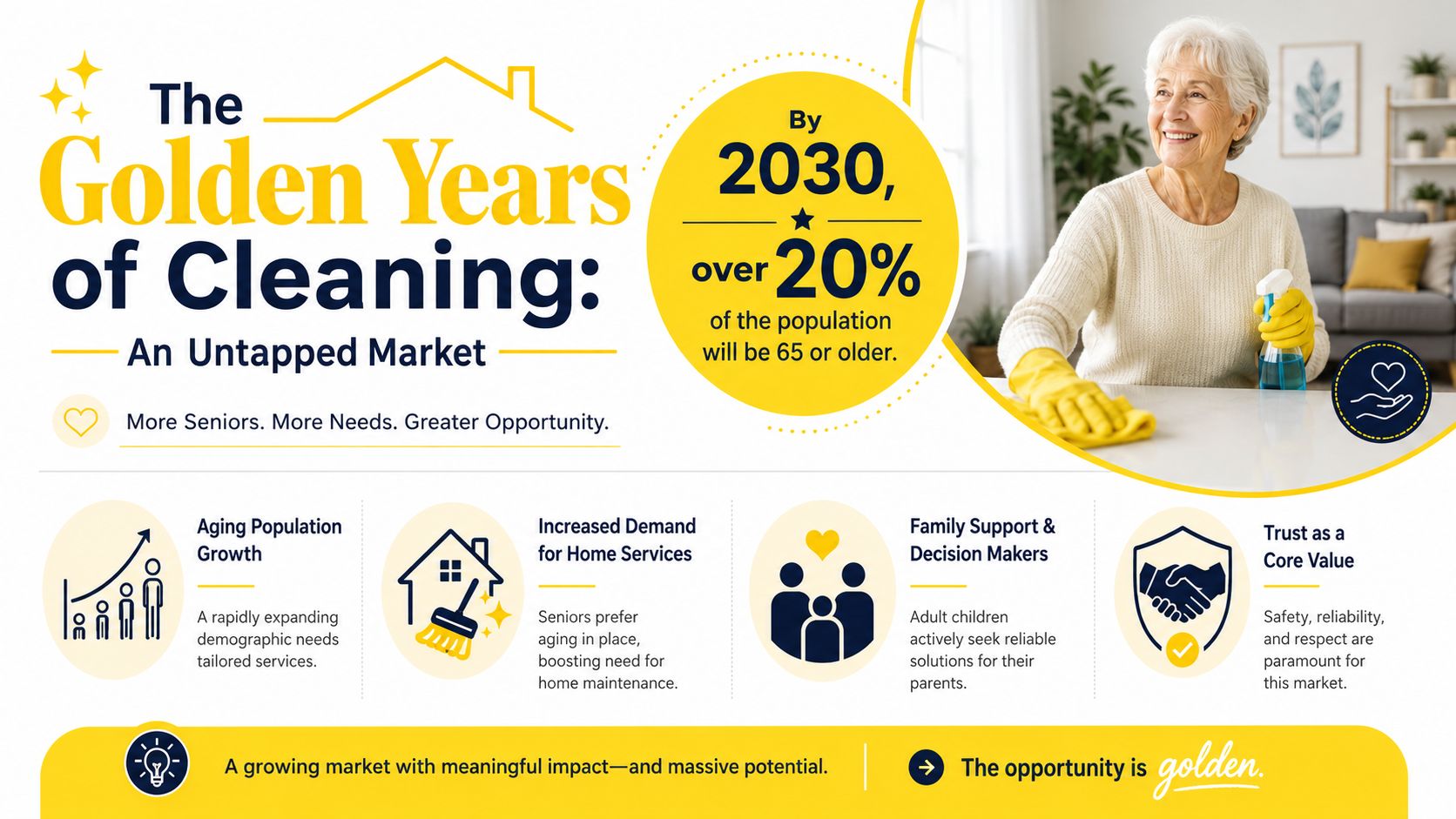
Cleaning services for seniors sit at the intersection of home maintenance and aging support. That creates a different buying process from standard house cleaning.
Usually, at least two audiences are involved:
A generic “we clean homes” message misses all three.
Practical rule: If your offer sounds identical to what you sell a busy two-income household, your senior offer isn't differentiated yet.
The businesses that make this segment work don't just add “senior cleaning” to a service page. They adjust the entire service model.
They create recurring maintenance packages. They train staff to notice hazards. They write scope language carefully so no one confuses a cleaner with a caregiver. They also tighten intake and estimating, because family members comparing providers often make decisions quickly. If you're evaluating whether this niche supports stronger margins and recurring revenue, this breakdown of cleaning business profitability is a useful lens for the unit economics.
There's also a strategic advantage in positioning. Many competitors either stay too broad or drift into home-care language they aren't qualified to own. A focused cleaning company can sit in the middle: more specialized than a general maid service, but still disciplined about staying on the cleaning side of the line.
Most owners underprice or underspecify this category because they describe everything as “light housekeeping.” That's too vague. It creates bad expectations, messy handoffs, and avoidable liability. A better move is to package around outcome, visit rhythm, and scope boundaries.
A solid benchmark is already out there. Weekly or bi-weekly cleaning is commonly treated as the standard for maintaining safe homes for seniors, hourly rates typically range from $25 to $50, and recurring service can save customers about $425 to $875 per year versus occasional deep cleans (senior cleaning benchmark). That tells you two things. First, this is usually a maintenance sale, not a sporadic rescue sale. Second, families are cost-aware and respond to predictable recurring plans.
I usually recommend three distinct tiers so buyers can self-sort without confusion.
| Package Tier | Frequency | Core Tasks | Ideal For |
|---|---|---|---|
| Safe & Tidy | Weekly or bi-weekly | Dusting accessible surfaces, vacuuming, mopping, bathroom cleaning, kitchen wipe-down, bed linens, trash removal | Seniors who need steady upkeep and safer day-to-day living |
| Comfort & Health | Weekly or bi-weekly | Everything in Safe & Tidy plus laundry support, more detailed bathroom and kitchen attention, prioritized high-use rooms | Seniors with more limited mobility or families who want closer oversight of home condition |
| Deep Clean & Declutter | One-time, then optional maintenance | Reset cleaning, targeted decluttering, neglected-area cleaning, prep for recurring service | Homes that need a fresh baseline before maintenance can work |
These tiers are easier to estimate, easier to train, and easier to explain on a website.
For owners refining package pricing, this cleaning service price list guide is helpful for turning broad services into clearer line items and minimums.
The nature of client requests often presents difficulties for many companies. Families often ask for things that sound simple but move into homemaking or care support. That's especially common when mobility, memory issues, or fall risk are involved.
A cleaner can usually handle environment-focused tasks such as:
A cleaner should not drift into caregiving functions such as supervision, medication help, transfers, bathing support, or cognitive cueing.
If a family needs someone to do the cleaning and also monitor the client's safety during the visit, that's usually not a cleaning-only sale.
Put this in plain English during intake and in writing after the estimate:
That level of definition protects your staff and makes families trust you more, not less.
Falls, confusion, and scope mistakes create more problems in senior cleaning than poor dusting ever will. Owners who want this segment to work need a field system that protects the client, protects the technician, and gives the office a clear record when a family asks for more than cleaning.
That starts before arrival. The estimate process should identify trip hazards, blocked exits, fragile routines, pets underfoot, and any condition that makes a standard residential workflow unsafe. A home that needs cleaning plus active supervision is not a routine recurring account. It is a higher-liability job that may need a referral partner, a revised scope, or a decline.
Guidance on helping seniors clean points to a practical order of work: reduce clutter tied to movement first, then clean the space (senior home safety guidance). Loose rugs, crowded walkways, and hard-to-reach daily items are not cosmetic issues. They affect whether the client can move safely after your team leaves.
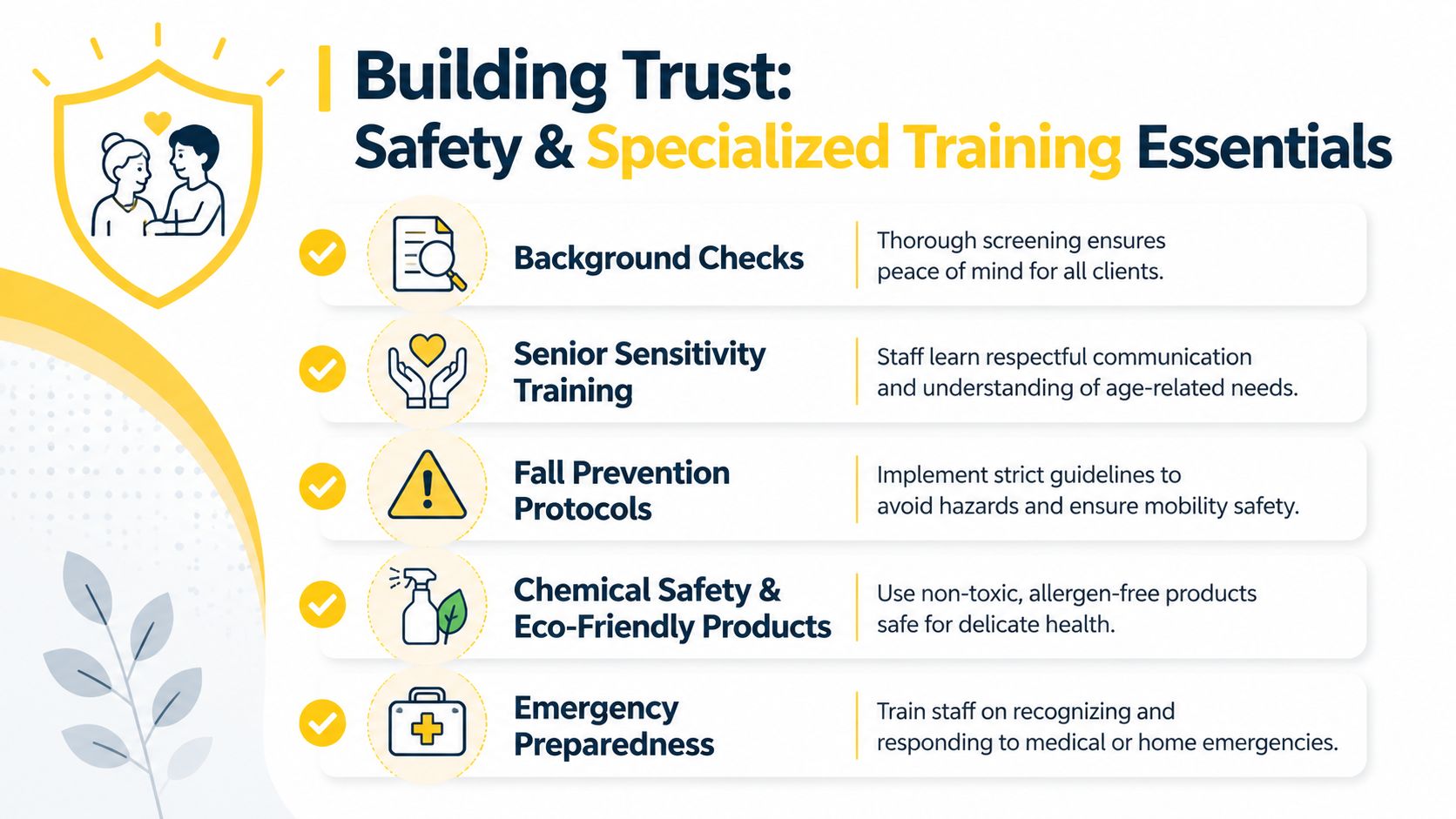
Senior jobs need a repeatable arrival routine. I tell cleaning companies to treat the first five minutes like a safety check, not a social warm-up.
A sparkling bathroom does not help if the floor is slick and the grab path is blocked.
Senior cleaning is not just residential cleaning with softer branding. It requires restraint, patience, and judgment. The wrong technician may clean well and still create liability by agreeing to tasks outside scope, speaking carelessly with family members, or missing signs that a job should be paused.
Screen for calm communication and decision-making, not just speed. Background checks and references matter, but scenario questions are where weak hires show themselves. Ask what they would do if a client asks for help getting out of a chair, if a son asks them to sort pills, or if clutter blocks the only exit. You want people who know when to stop, call the office, and document what they found.
Training should be short, repetitive, and tied to actual field decisions. Long manuals do not fix bad judgment in the home.
Use recurring drills on these points:
The office side matters just as much as technician behavior. Better intake prevents bad dispatches. This article on dangerous cleaning jobs and better intake systems lays out how to catch risk before a crew walks into the wrong situation.
One more business reality. Families in this segment pay close attention to trust signals after the visit, not just before the sale. Consistent follow-up and documented service quality make review generation easier, and that matters because adult children often compare cleaners by reputation. If you want a practical process for that, this Guide to increasing Google reviews is useful.
Well-run senior cleaning companies train for one outcome above all: leave the home cleaner, leave the client safer, and leave no confusion about what your team is there to do.
Families rarely search for cleaning services for seniors in a calm, orderly frame of mind. More often, an adult child notices the house slipping, sees clutter after a visit, or realizes a parent is no longer safely managing the bathroom or kitchen. They open several tabs, compare a few companies, and try to answer one question fast: who can help without making this situation worse?
That buyer doesn't want fluffy copy. They want specifics.

One of the biggest gaps in the market is confusion over cleaning-only help versus homemaking or home-care support. Families often don't know whether they need a house cleaner or a caregiver who can assist with safety-related chores (this light housekeeping page reflects that confusion). If your marketing explains that difference plainly, you separate yourself immediately.
Your homepage or service page should answer these questions without forcing the reader to call first:
That kind of clarity converts. It also filters out poor-fit inquiries.
This niche responds well to local trust networks. A polished ad campaign won't replace relationships with people who already guide family decisions.
Useful referral sources often include:
When you meet referral partners, don't pitch “top-to-bottom cleaning.” Pitch your process. Explain your scope boundaries, your hazard-first workflow, and when you refer out to home-care agencies.
Families trust operators who know where their service stops.
A strong senior service page should read differently from a generic house cleaning page. Use real service language, list common tasks, explain exclusions, and show how estimates work. Feature trust markers that matter to families, such as insured operations, screened staff, and clear communication.
Reviews matter more here because this is an emotionally loaded purchase. If you want a practical system for collecting more of them, this Guide to increasing Google reviews gives a straightforward process you can adapt after recurring visits.
This video is also useful context for owners thinking about how families evaluate service providers.
Don't market yourself like a medical provider if you aren't one. Don't promise “care” when you mean cleaning. Don't hide exclusions in fine print. And don't make adult children wait two days for a response after they finally decide to ask for help.
The companies that grow here communicate relief without overpromising.
Senior cleaning inquiries often come in after business hours. The adult daughter who noticed her father's kitchen isn't safe anymore isn't necessarily calling at 11 a.m. She may be searching at 10 p.m. after work, comparing providers, and trying to line up help before the next visit. If your website says “fill out this form and we'll get back to you,” you're asking a stressed buyer to wait when they're least willing to wait.
That's where automation matters. Not generic chat. Structured intake that can gather the right details, explain scope, and deliver a usable estimate.
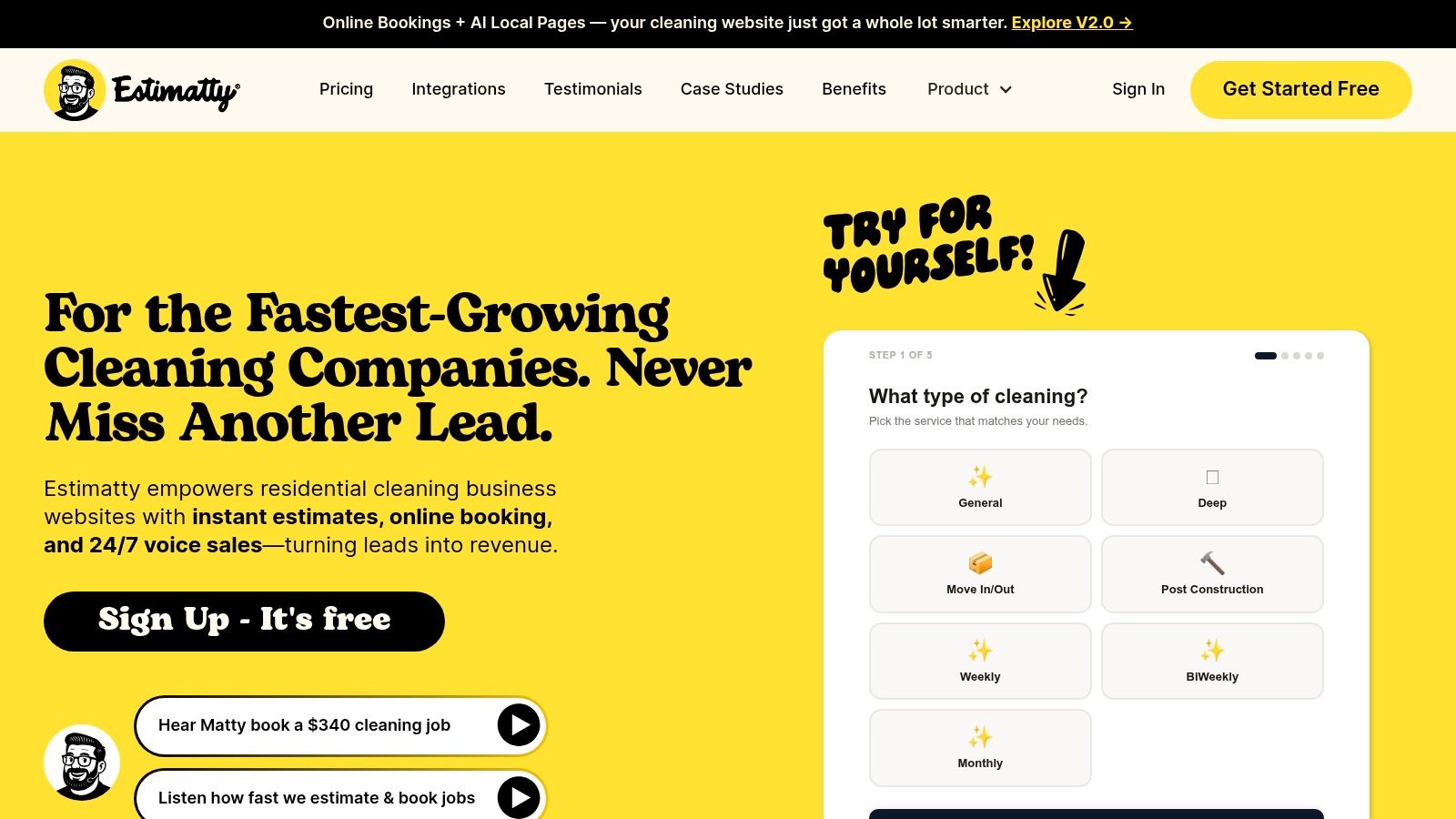
A senior-focused sales flow should collect more than square footage. It should help qualify the job and reduce back-and-forth for the office.
Useful intake points include:
That kind of intake makes your estimates more accurate and your callbacks more productive.
This buyer segment rewards the company that makes it easy to take the next step. Fast response doesn't just feel professional. It reduces uncertainty in a category where buyers are already carrying emotional load.
On the practical side, an automated estimator can:
Estimatty is one option built for cleaning companies. It places an AI estimator on your site and phone flow so prospects can get estimates, answer intake questions, and trigger follow-up without waiting for office hours. If you want the specifics, this guide to AI estimates software for cleaning companies covers how the workflow functions.
They rely on voicemail. Or they ask prospects to submit too little information, which forces the office to start over later. Or they use a generic contact form that doesn't separate a straightforward recurring clean from a high-risk first visit in a cluttered home.
In this market, slow intake creates friction and bad-fit bookings. Structured automation creates cleaner handoffs.
Senior cleaning gets more profitable when you stop treating it as a one-off residential niche and start building referral infrastructure around it. The companies that win here are not the ones with the longest task checklist. They are the ones families, discharge planners, and community coordinators trust to stay inside scope, document clearly, and show up consistently.
A common sticking point is the cleaner versus caregiver question. Families often ask for help that sits in the gray area between housekeeping and personal support. If your company cannot explain that line in plain language, referrals stall and risk goes up.
Public programs add another layer. Families want to know whether any cleaning-related help is available through local aging networks or Medicaid-style in-home support, but eligibility rules and service definitions are often hard to interpret from public pages alone, including resources such as Missouri's in-home services page. A cleaning company that can explain the difference between private-pay cleaning, homemaker support, and home-care services becomes easier to trust.
Growth in this segment comes from becoming the safe recommendation. That means learning how local referral sources describe household help and where your service fits.
Start with a few practical conversations:
This work pays off because referral partners do not want vague vendors. They want a company that knows what it will clean, what it will not do, and when a household needs a home-care agency instead.
Owners usually think about compliance after an incident. In the senior market, that is late.
Your paperwork and field systems need to answer practical questions before the first visit. What happens if a technician is asked to help someone bathe, lift a box of medications, or decide what can be thrown away? How is a fall hazard documented? Who gets notified if a client appears confused, distressed, or unable to safely remain alone? Those are operating questions, not legal theory.
Review service agreements, intake forms, incident logs, and staff scripts together. Train crews to decline out-of-scope requests politely and escalate concerns to the office the same day. If you are tightening the risk side of your operation, this guide to liability insurance for cleaning companies is a practical starting point.
Hiring discipline matters too. Senior-focused service breaks down when staffing is inconsistent, rushed, or poorly documented. As noted earlier, operator-focused HR resources can help you build better systems around screening, onboarding, and accountability without turning cleaners into caregivers.
A final point. Scaling this segment does not mean saying yes to every request. It means using clear packages, referral relationships, tighter documentation, and strong intake rules so the right jobs close faster and the wrong jobs get redirected before they become liability problems.