September 21, 2026
Inside and Out Cleaning: A Practical Pricing Guide
Learn what inside and out cleaning really includes, how pricing works, and which add-ons actually pay off for residential and commercial estimates.
Wednesday, August 12, 2026
You could never tell which ads brought cleaning bookings. Three things shipped that close the loop from ad click to charged card.
.png)
Shipped August 2026. Three releases that connect your ad spend to the money that actually lands in your account.
Two lines from a cleaning company's campaign report. These numbers are made up, but you have seen versions of both:
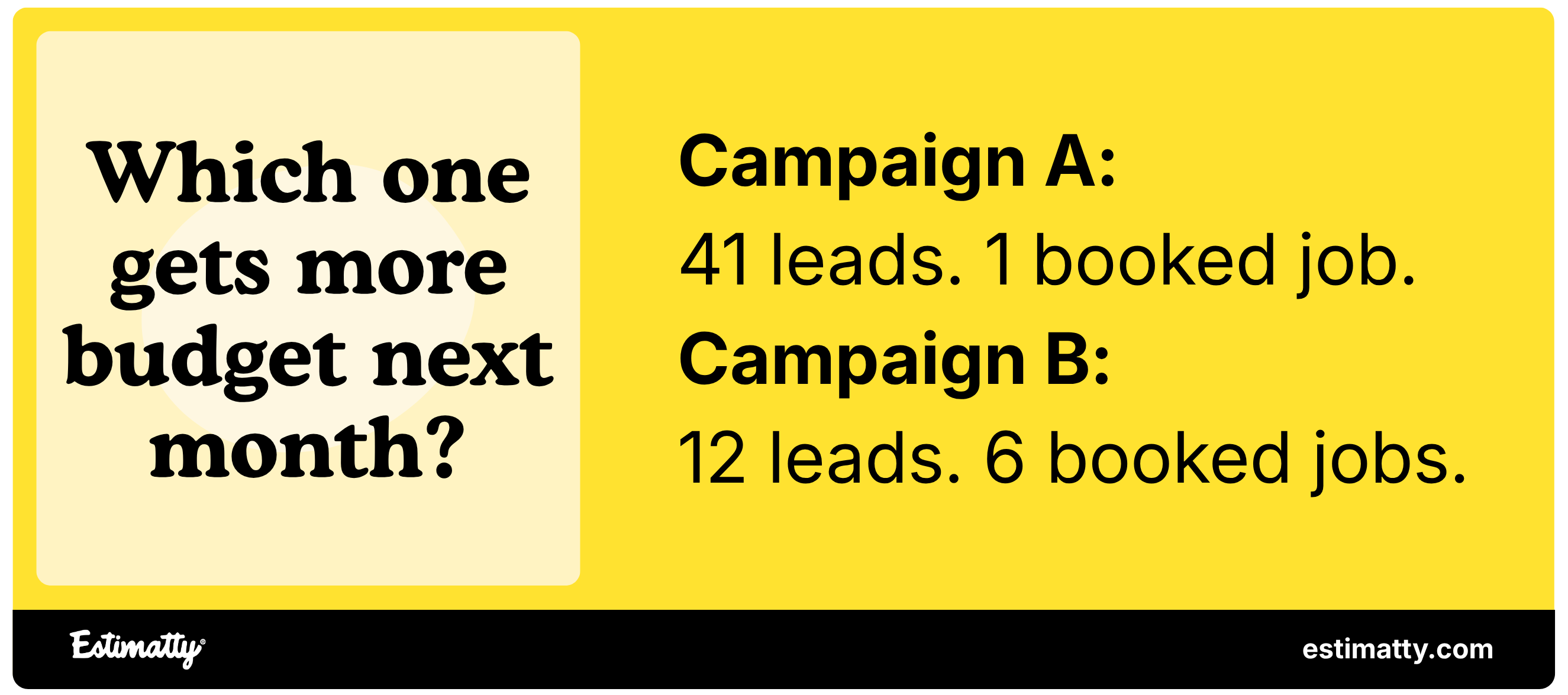
Campaign A: 41 leads. 1 booked job.
Campaign B: 12 leads. 6 booked jobs.
Which one gets more budget next month?
Easy. Now here is the uncomfortable part. Until recently, almost nobody running a cleaning business could see that second number. You could see leads. You could not see jobs. So the decision that should take four seconds took a guess instead, and the guess usually funded Campaign A, because Campaign A looked busier.
That is the gap these three releases close.
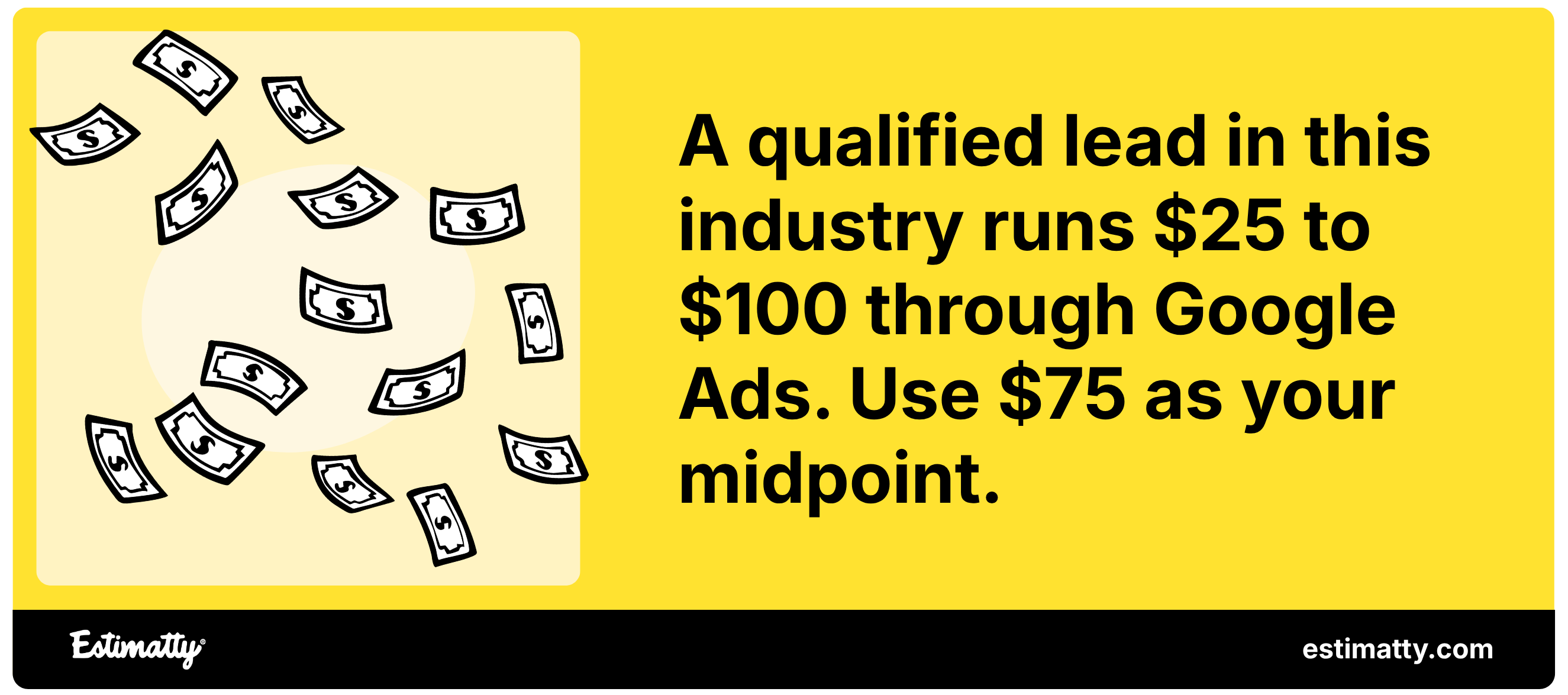
A qualified lead in this industry runs $25 to $100 through Google Ads. Use $75 as your midpoint.
Campaign A: 41 leads at $75 is about $3,075 spent to produce one job. With customer lifetime value sitting between $3,000 and $4,000, that campaign roughly broke even. On a good day.
Campaign B: 12 leads at $75 is $900, and it produced six jobs.
Same month. Same budget. Wildly different businesses hiding behind the word "leads."
But the wasted spend is not even the worst part.
The worst part is what your ad platform learned while you were not looking. Google optimizes toward whatever you told it a conversion is. If you told it a conversion is a form fill, it went out and found more people who fill out forms. People who fill out forms at 2am and never answer. People outside your service area. Telemarketers. Bots.
Your campaign did not fail. It succeeded, enthusiastically, at the wrong job.
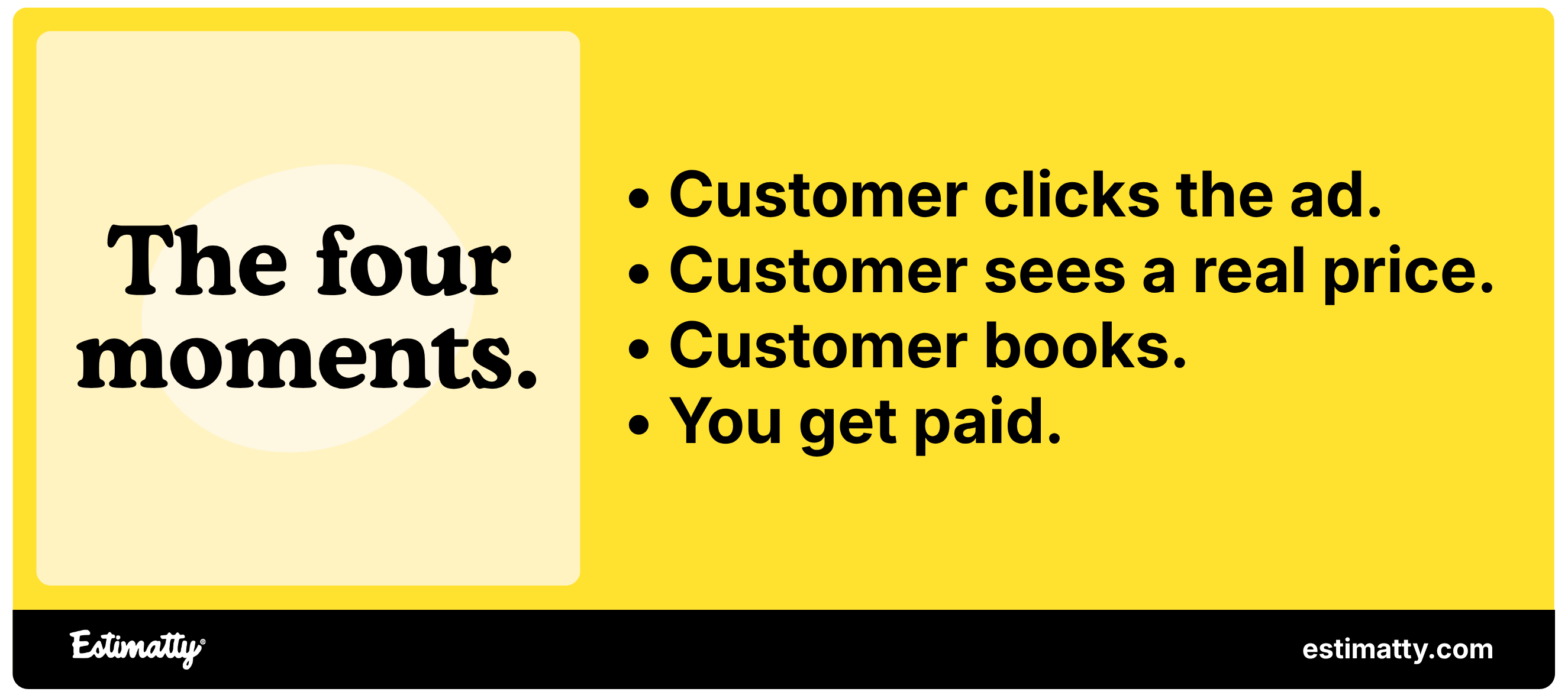
There are four moments in a cleaning customer's life, and almost every business loses track between them.
Customer clicks the ad. Your ad platform sees this and nothing else.
Customer sees a real price. She picks her service, enters her home details, and a number appears. This is where she stops being a visitor.
Customer books. She picks a date, submits her address, and her card gets authorized. Not charged, held. Which is the difference between a booking and a maybe.
You get paid. The job gets done, you mark it complete, and the card already on file gets charged. No invoice. No "just following up on that payment" text at 9pm.
Estimatty now fires a named signal at each of those moments and carries the campaign that started it all the way through to the charge.
Which means your ad platform is no longer optimizing toward intent. It is optimizing toward revenue, and it is remarkably good at finding more of whatever you point it at.
Here is what is live.
What you can do now: point Google, Meta, or TikTok at the moment somebody actually put a card down.
Time to value: flip one toggle, paste one platform ID. Most cleaning businesses only need Google Tag Manager.
How to connect your ad platforms
.png)
What you can do now: open one screen and know where your money went, in plain English.
Time to value: nothing to set up. Campaign data attaches itself to every lead automatically, so the dashboard is already populated the first time you open it.
How to read your campaign dashboard
What you can do now: stop chasing payment for work you already finished.
Time to value: most owners set their hours and payment method once and never touch them again.
Bookings: turn a request into a paid job
Most marketing reports measure intent. Clicks, form fills, quotes sent. Every one of those numbers is a guess dressed up as data, because a quote is not money until somebody pays it.
When the click, the booking, the card, and the campaign all live in the same record, you are not looking at what your ads might be worth. You are looking at what they actually paid you.
That is a different kind of confidence. You are not setting your ad budget from a forecast. You are setting it from your revenue.
Eliana had the traffic. That was never her problem.
People found her site, looked around, and left without booking, and she had no way to tell whether that was an ad problem, a website problem, or a pricing problem. So she did what everyone does. She spent more on ads, because ads are the lever you can actually pull.
The traffic was fine. The gap was between the click and the calendar, and nobody was standing there.
You do not have a lead problem. You have a conversion gap, and no amount of extra budget closes it. Only visibility does.
.png)
You do not need to rebuild your marketing this week. You need one campaign report that shows bookings next to leads, and then you need to look at it.
Everything else is follow-through.