September 21, 2026
Inside and Out Cleaning: A Practical Pricing Guide
Learn what inside and out cleaning really includes, how pricing works, and which add-ons actually pay off for residential and commercial estimates.

Friday, September 18, 2026
Learn how to ask for referral the right way for your cleaning business with proven scripts, timing, and templates that turn happy clients into steady referrals.
A client just watched your team finish a deep clean. The floors look brighter, the kitchen smells fresh, and the customer says, “I'm thrilled with how this turned out.” That person may already know a neighbor, friend, landlord, or office manager who needs a cleaner. If you thank them, collect payment, and leave without asking, the referral often never happens.
Learning how to ask for referral business is less about finding a clever phrase and more about choosing the right moment, naming the right prospect, and removing every unnecessary step. Cleaning clients usually don't need convincing that your service has value. They need a clear prompt while that value is still fresh.
A happy cleaning customer doesn't experience your service as an abstract marketing promise. They experience a team entering their home or workplace, handling a real problem, and producing a visible result. When that customer recommends you to someone they know, the new prospect receives more than your business name. They receive borrowed confidence.
That trust transfer explains why referrals remain such a powerful acquisition channel. Nielsen-cited findings report that 89% of consumers trust recommendations from people they know more than any other advertising channel, while industry summaries say referrals can influence 20% to 50% of purchasing decisions globally (referral marketing statistics from Extole). For a residential cleaner, that might mean a neighbor recommending you after seeing a client's home. For a commercial company, it could be a property manager mentioning your crew to another building owner.
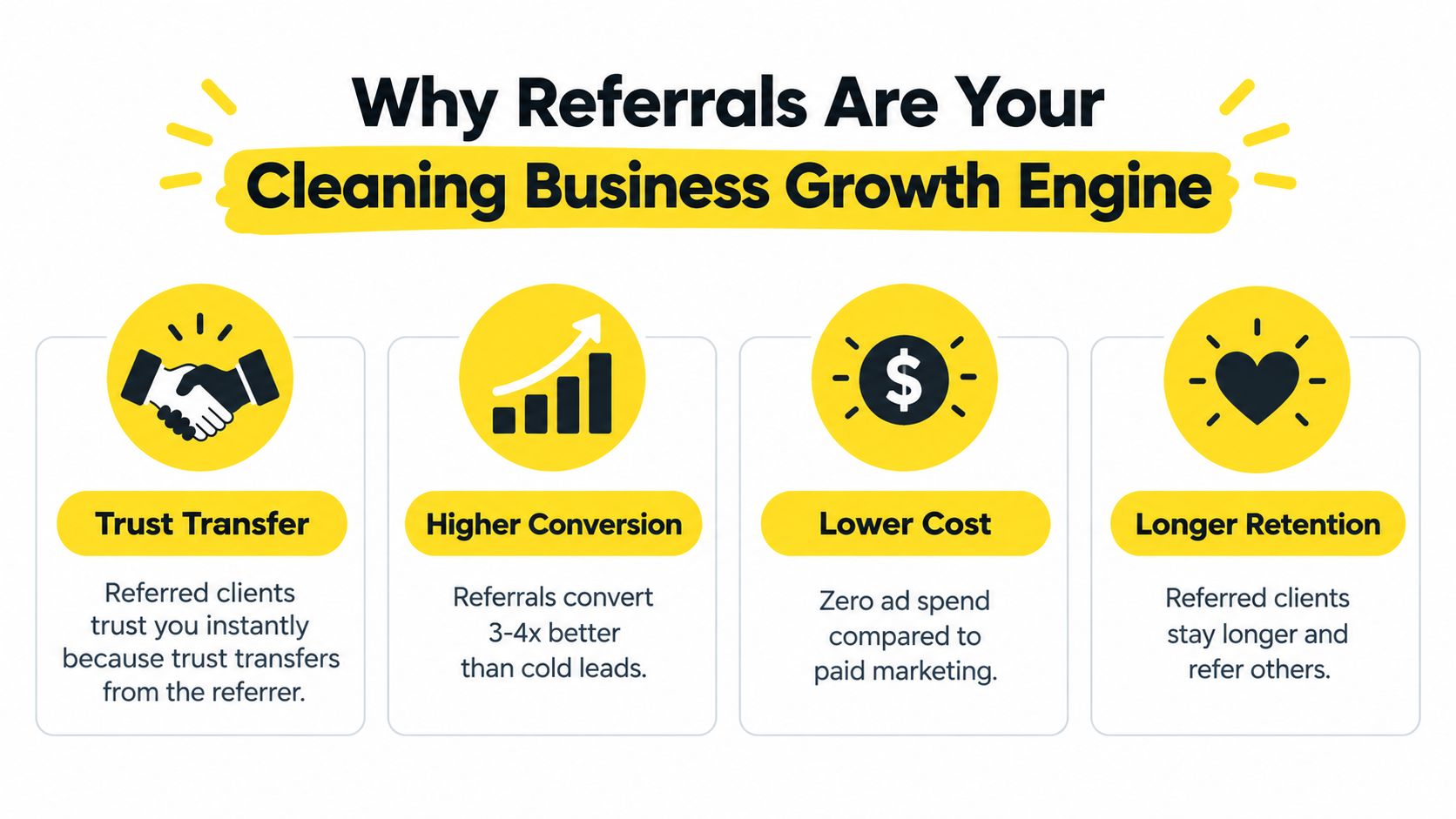
Many operators assume good work will automatically create word-of-mouth. It can, but customers are busy. They may intend to mention you and then move on to the next task. One recent referral summary reports that 83% of customers want to give a referral, but only 29% do, which reveals a large gap between goodwill and action (referral marketing statistics from TrueList).
Your ask closes that gap. It tells the customer what kind of person you serve, gives them a simple way to introduce you, and creates a reason to act now. “Please tell everyone about us” is easy to ignore. “Do you know a busy homeowner who needs recurring kitchen and bathroom cleaning?” gives the customer something specific to consider.
Referral-led prospects also tend to enter the conversation with useful context. They may already know your service area, cleaning style, and approximate fit because the referrer explained it. That can shorten the sales conversation and reduce the skepticism attached to unfamiliar advertising.
The strongest cleaning businesses don't treat referrals as lucky surprises. They add the ask to a post-estimate, post-clean, review, or customer-care workflow. You can find broader operational ideas in this guide to growing a cleaning business, but the field rule is simple:
Practical rule: If a customer has just expressed satisfaction, don't thank them silently. Ask for one specific introduction while the result is still visible.
Keep the request human. Don't pressure customers to recommend you to people who aren't a fit, and don't ask during a complaint or rushed departure. A referral is a judgment call that affects the customer's credibility, so your message should help them make that judgment comfortably.
Timing matters more than repeating the same request. A customer who is delighted at 10:00 a.m. may be distracted by lunch, work, or school pickup later in the day. Train your team to recognize success moments and ask close to the moment of satisfaction.
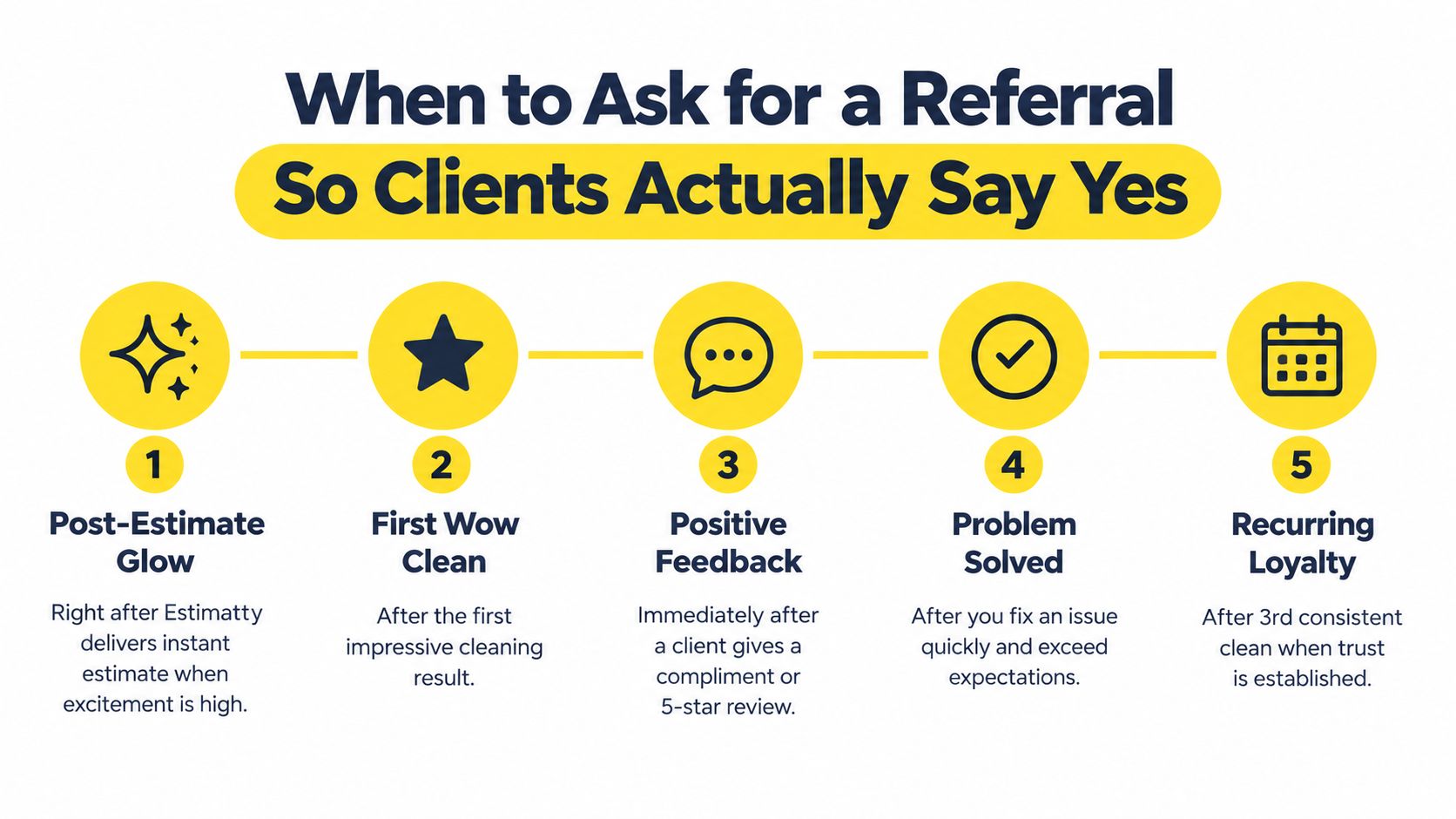
An estimate conversation can create its own moment of excitement, especially when the customer receives clear pricing quickly and understands what happens next. If a prospect tells you the process was easy, says the estimate makes sense, or books immediately, you can ask for a referral without making the interaction awkward.
Try this:
“I'm glad the estimate was straightforward. If you know another homeowner who wants clear pricing and dependable cleaning, would you feel comfortable forwarding them our contact details?”
Use estimates, not quotes, in your customer-facing language for Estimatty. The wording keeps the conversation consistent and sets a clear expectation about what the prospect receives.
The best post-clean moment comes after the customer has seen the result. Ask when they point out a spotless area, compliment the technician, send a happy message, or approve the completed job without concerns. A short SMS sent soon after the team leaves can capture that satisfaction without interrupting the customer's day.
Don't ask while the crew is still fixing missed areas. First resolve the issue, confirm the customer is satisfied, and then wait for a separate positive signal. Asking during a problem makes the request feel self-serving.
A compliment or five-star review is an obvious opening. Thank the customer first, then invite a relevant introduction. A customer who says, “You saved us before the move-out inspection,” may know another landlord or renter under similar pressure.
A solved complaint can also become a referral moment, but only after you exceed the original expectation. If a supervisor responds quickly, sends the right team back, and confirms the correction, the customer may remember the recovery positively. Use this customer churn resource to think about the service failures that prevent these moments in the first place.
Train staff to watch for these signals:
Consistent staffing creates more opportunities for these moments. Businesses using pipehirehrm.com can discuss cleaning employee hiring and coverage as part of building a dependable operation, but the referral ask still belongs after the customer experiences the service quality directly.
A good referral message has four parts: a genuine thank-you, a specific person or situation, a short reason to choose you, and one easy action. Writing usually works well because the customer can read, forward, or copy the details when convenient. Industry guidance recommends using a text message, LinkedIn message, or email based on the formality of the relationship (referral communication guidance from Upwork).
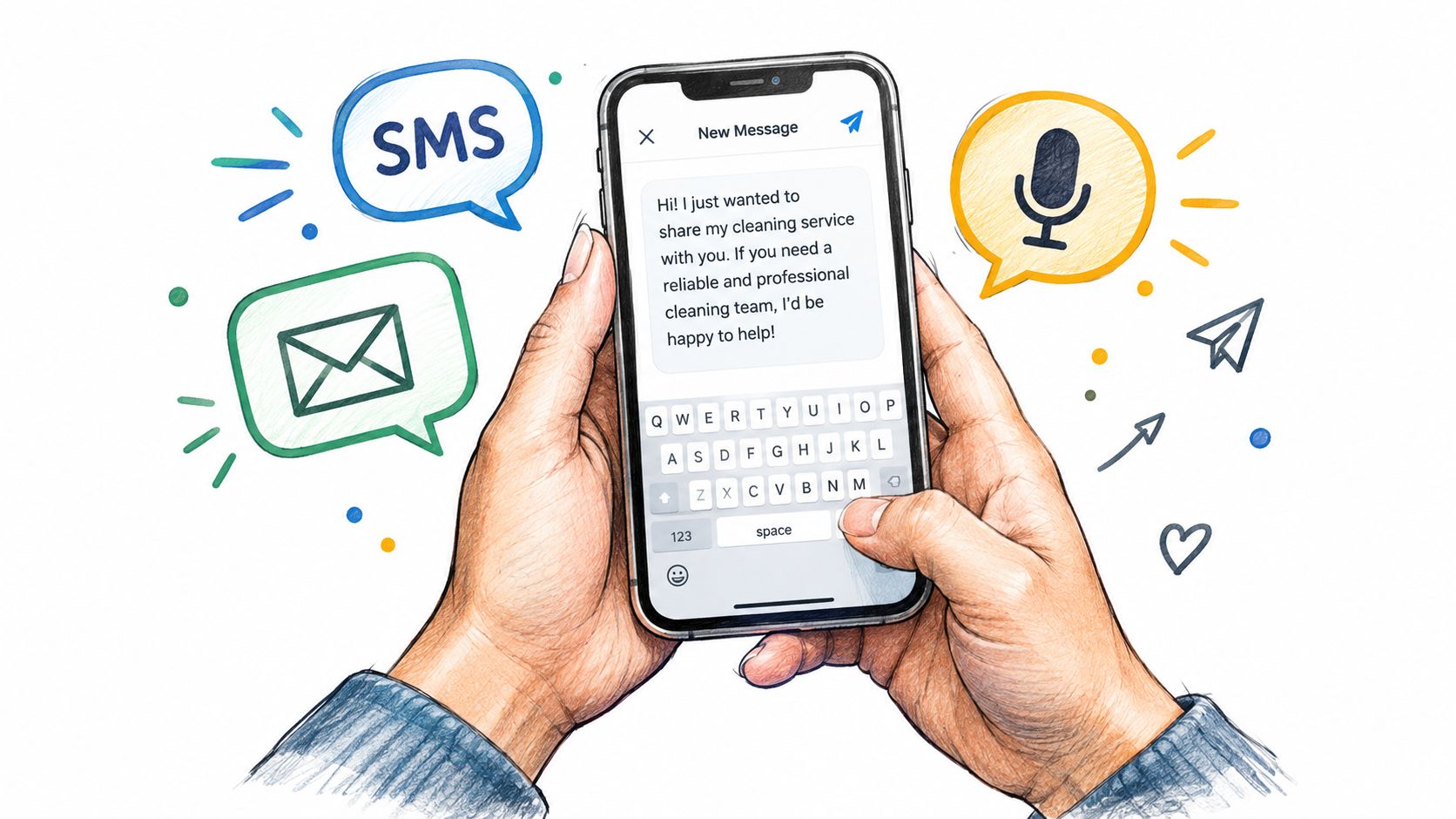
Keep a text short enough to understand at a glance. Personalize the first sentence with the service or result so it doesn't feel automated.
“Hi [Name], thanks again for trusting us with your [home/deep clean/move-out clean]. If you know a neighbor or friend who needs dependable [recurring/deep/move-out] cleaning, would you forward them this message? They can contact us here: [link]. We'd be happy to help.”
For a customer who gave a compliment, make the connection even more direct:
“Your message made our team's day. If someone you know has been looking for help keeping their home under control, you can send them our details here: [link]. Thanks for thinking of us.”
The request names the type of person and gives the client one task, forwarding the link. Guidance from career and referral sources consistently supports being specific about the role, contact, or situation rather than asking vaguely for “any referrals” (specific referral request guidance from Indeed).
Property managers, office administrators, and real estate professionals often prefer a more structured note. Add enough detail for them to decide whether your company fits their contact.
Subject: Could we help someone in your network?
Hi [Name],
Thank you for choosing us for [property/service]. We specialize in [service area or cleaning type], with clear estimates and straightforward scheduling.
If you know a [property manager/homeowner/realtor/office administrator] who needs dependable cleaning, would you be comfortable forwarding this email or sharing our contact link? [link]
No pressure if nobody comes to mind. We appreciate your continued trust.
Best,
[Name]
For follow-up wording, a concise appointment reminder email template can help your team maintain a consistent, professional communication style without making every message sound identical.
A spoken ask works best when it sounds like part of the conversation, not a sales pitch delivered at the door.
“I'm glad you're happy with the clean. We're building our schedule with more clients like you. Is there a friend, neighbor, or colleague who might need this kind of help? If someone comes to mind, I can text you a simple link to pass along.”
For a commercial client, replace “friend” with a relevant business contact:
“If another property manager in your network needs reliable janitorial coverage, would you be comfortable introducing us by email? I'll make it easy and send over the details.”
Give customers a graceful way to decline. “If someone comes to mind” removes pressure, while the specific contact type helps them search their memory. A vague “Do you know anyone?” forces the customer to do more thinking and usually ends the conversation.
Use a written link after a voice ask so the customer doesn't need to remember your phone number or search for your website. Estimatty can send estimates by SMS and email after a prospect provides details, which keeps the next interaction organized and immediate.
Residential customers respond to warmth and convenience. Property managers need clarity about service scope, response time, and who should contact your team. In both cases, avoid exaggerated promises and don't ask the client to write your entire sales message.
Your referral copy should answer three questions quickly:
A referral incentive should recognize a useful introduction, not pay customers to praise your company. Cleaning margins differ by service, so choose a reward that fits your average job value, labor cost, and schedule capacity. A reward that creates extra work or erodes profit will not support steady growth.
Keep the offer easy to understand. A next-clean discount, free fridge or oven add-on, small gift card, or donation to a local cause can all work. The supplied campaign concept includes $25 off the next service for both the referrer and friend, free fridge or oven cleaning, and a $10 local charity donation per referral. Treat these amounts as examples, then test the option your margins can support.
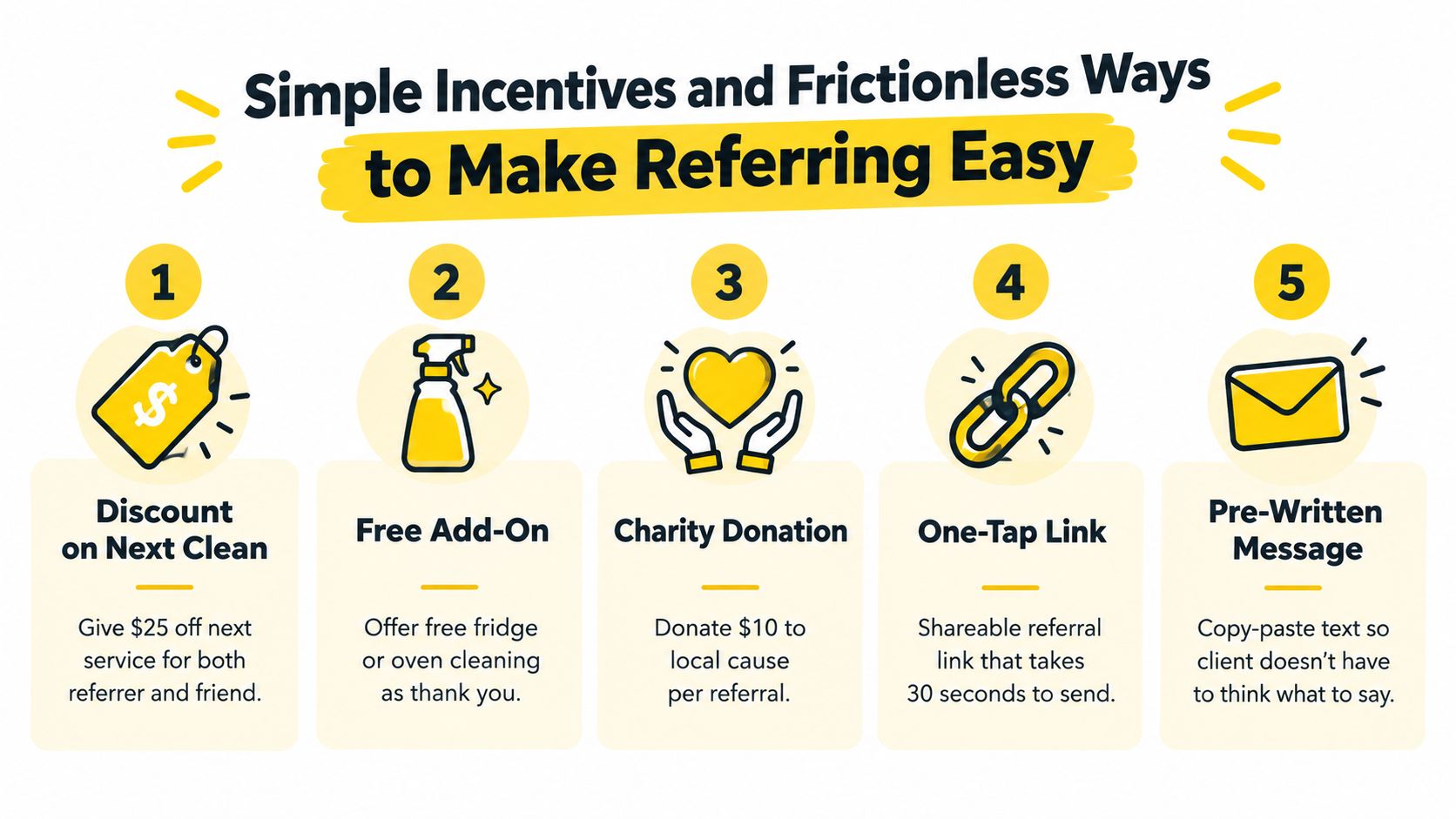
A discount suits recurring residential customers because it applies to a service they already expect to book. A free add-on can preserve cash flow when your team is already at the property and has capacity. A charity donation fits customers who value local impact more than personal savings.
State the conditions in one or two sentences. Explain when the reward applies, whether the referred customer must book, and how your team will identify the introduction. If the rules require a customer to decode the offer, they can stop before sharing it.
Customers rarely want to write a recommendation from scratch. Give them a message they can copy:
“I use [Business Name] for [service], and they've been great. You can contact them here if you need cleaning: [link].”
Make the next action available with one tap or scan. Put the referral link in the thank-you SMS, add a QR code to a leave-behind card, and use the same destination in your email signature. Industry summaries report that email accounts for 33% of referral shares and social media accounts for 28%. That supports offering digital sharing options when customers are ready to act.
Use the same terms throughout the process. If Estimatty handles intake, call the next step an estimate, state what information the prospect should provide, and show where to request it. A referred friend should know whether to submit a service address, choose a cleaning type, or wait for a call.
For handoffs and automation, a Zapier CRM integration guide can help connect referral forms, customer records, notifications, and follow-up tasks. The useful result is straightforward: customers share quickly, while your team records the referral source without making the prospect repeat the story.
A client can be happy with the clean and still forget your referral message. Keep the follow-up short, useful, and limited. The goal is to make sharing easy without turning a personal relationship into a campaign.
Send thanks as soon as the client agrees to share, whether or not they have introduced anyone:
“Thanks for being willing to share our details. We appreciate your support. Here's the link so it's easy to forward: [link].”
For a client who has just praised the service or left a 5-star review, use a related message:
“Thank you for the kind feedback. If someone you know needs cleaning, you can forward this link: [link]. We appreciate the recommendation.”
A follow-up message can support the thank-you process. Use this referral thank-you message guide to keep the wording consistent across SMS and email.
If the client has not shared anything, send one gentle reminder 3 days later:
“Hi [Name], I'm sending the referral link again in case someone came to mind after our last message: [link]. No pressure at all, and thank you again for recommending us.”
Then stop asking for that referral. Make the final contact useful instead. Share a seasonal cleaning checklist, confirm an upcoming recurring appointment, or ask whether the recent service met expectations. A customer-care message protects the relationship even when no lead arrives.
A spreadsheet or CRM record should show:
These measures show more than a list of names. In hiring, referrals convert from applicant to hire at roughly 4x the rate of job-board candidates, with average time-to-hire around 29 days versus 55 days for job-board applicants (referral hiring benchmarks from InsideTrack Jobs). Another recruiting source states referral candidates are 3 to 4 times more likely to be hired than non-referral candidates (employee referral facts from Recruiter.com). These figures describe hiring, not customer acquisition, but they support tracking referrals in both staffing and sales.
Set aside a brief weekly block to review who received an ask, who shared, which referrals booked, and which customers need thanks. Celebrate referrers privately with a personal note, and publicly only with permission.
When a referral books, tell the original customer:
“Your introduction booked a cleaning appointment. Thank you for connecting us. We'll take good care of them.”
Coordinate referral outreach with timed review request triggers, but keep the two requests separate. A client should not feel asked to complete several marketing tasks at once.
You can also review workflow ideas on Estimatty's blog and adapt them to your team size. The workable system is the one your office can run consistently.
Don't wait for a perfect referral campaign. Start with five customers who recently praised a clean, booked recurring service, left a strong review, or complimented your communication. Send a personal message that names the kind of person you want to meet and includes a link they can forward.
Use this seven-day routine:
The essentials are straightforward. Ask at the happy moment. Be specific. Make the referral easy to pass along. Follow up once. Then track what happened so your team can improve the workflow instead of relying on memory.
Instant estimates can create an early confidence moment, while reliable staffing helps your company deliver the consistent service that earns future recommendations. A referral ask won't repair weak operations, but strong operations often go under-recommended because nobody asks.
“Happy customers already carry the trust. Your job is to give them a clear, easy way to share it.”
Add the referral request to every suitable post-estimate, post-clean, and post-review workflow this week. After a few cycles, your team will know which moments produce the most introductions, which message sounds most natural, and which incentive fits your margins.
Estimatty gives cleaning businesses a 24/7 web and voice estimator that captures job details and sends consistent estimates by SMS and email, helping you create a professional first impression worth referring. Visit Estimatty to see how instant estimating can fit into your referral and booking workflow.