
October 10, 2026
How to Increase Qualified Leads for Cleaners
Learn how to increase qualified leads for your cleaning business. Discover AI estimators, speed-to-lead tactics, and scoring strategies that book more jobs.

Monday, August 24, 2026
Master how much to charge for pressure washing with a proven pricing framework. Covers job factors, pricing models, add-ons, and AI-powered tools.
A homeowner calls while you're loading hoses into the truck. They want the driveway, siding, back patio, and maybe the deck cleaned before the weekend. You know the property is large, but you haven't seen the access points, the stains, or the water source. If you blurt out a number based on a quick guess, you may win a job that loses money, or lose a good customer with a price that feels disconnected from the work.
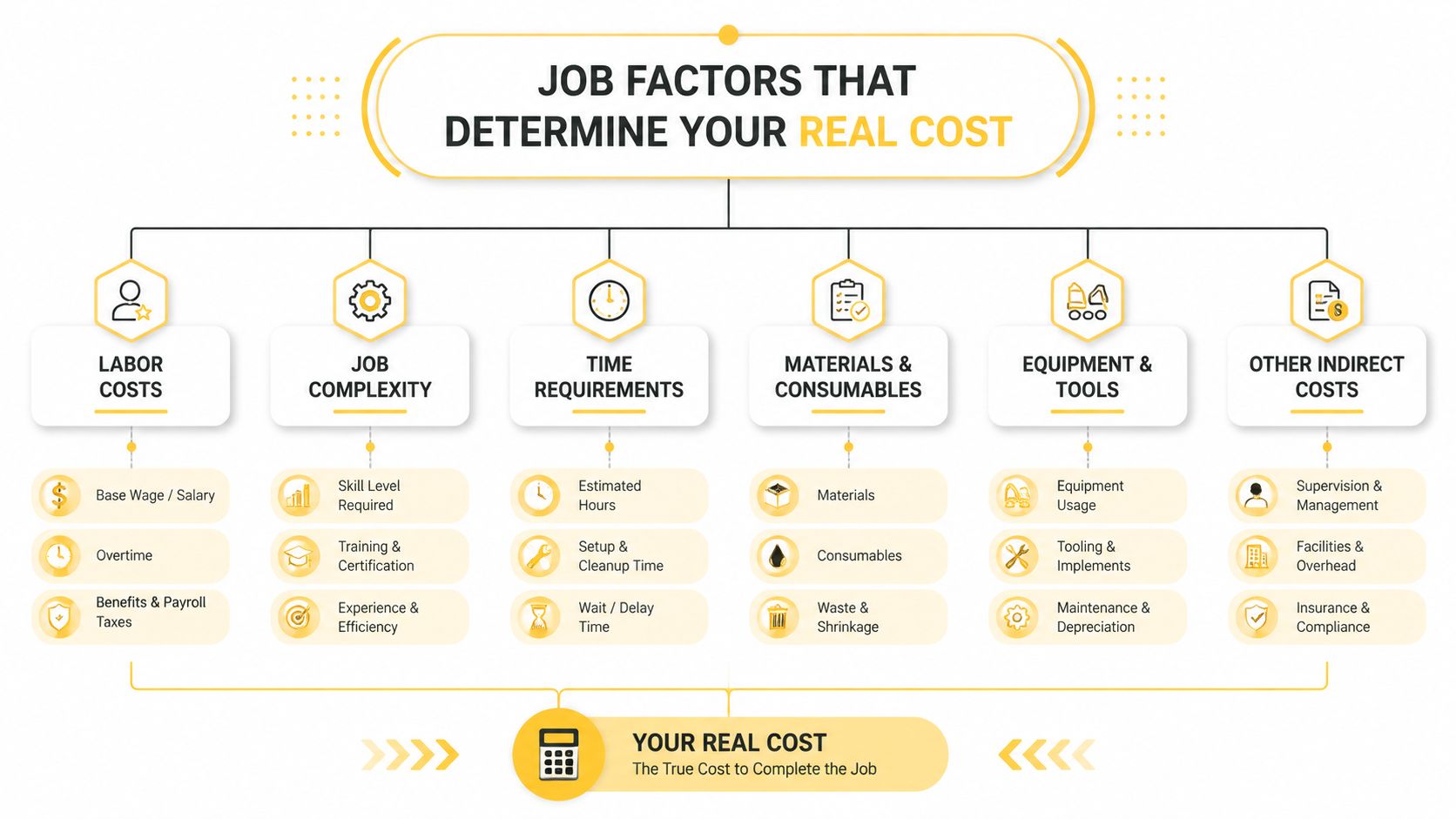
The practical answer to how much to charge for pressure washing starts with a repeatable estimate, not a single national average. Square footage matters, but so do contamination, surface risk, height, travel, chemical use, wastewater handling, and the time your crew spends preparing and packing up. This 2026 guide shows how to combine those variables into estimates that customers can understand and your business can profit from.
A contractor who guesses usually makes one of two errors. They quote too low because the job looks small from the street, or they quote too high because they're trying to protect themselves from unknowns. Neither approach creates dependable income. The first sacrifices margin, while the second creates unnecessary price objections.
A driveway covered in light dust is not the same job as a driveway with embedded oil, heavy algae, limited parking, and a long hose run. A small deck can take more care than a much larger concrete area because wood requires slower work, controlled pressure, preparation, and attention to grain damage. A rate table can provide a starting point, but it can't see those conditions.
A low estimate often feels like a sales win until the work begins. You arrive, discover oxidation, move equipment through a narrow side gate, spend extra time managing runoff, and finish much later than planned. The customer pays the agreed amount, but your labor, fuel, chemicals, equipment wear, and unpaid travel consume the expected profit.
That pattern also creates friction. If you raise the price after starting, the homeowner may feel misled. If you absorb the work, you teach yourself and your crew that difficult jobs should be completed at ordinary rates. A written estimate that identifies assumptions before work begins is more professional than an improvised adjustment at the property.
For regional context, the Phoenix pressure washing cost guide can help contractors compare local expectations, but local context still needs to be adapted to the actual property. Your own labor cost is another essential input, and this guide to calculating labor cost per hour provides a useful foundation for separating productive labor from overhead.
Practical rule: A rate is only useful when it reflects the time, risk, and resources required to deliver the promised result.
Start with your break-even cost. Include labor, payroll burden where applicable, fuel, water, chemicals, equipment maintenance, insurance, software, marketing, travel, and the time spent estimating and communicating. Then estimate production time based on contamination and access, not square footage alone, and add your target margin.
One expert pricing methodology recommends 20% to 40% profit margins and uses the formula Final Price = Break-even Cost ÷ (1 − Target Margin), as explained by Housecall Pro's pressure washing pricing guide. The same method supports minimum service fees, which protect small jobs from becoming unprofitable trips.
A 900-square-foot driveway can take longer than a larger, open surface when gates, parked vehicles, heavy oil, or distant water access slow production. Price the conditions that consume labor and equipment time, not just the area shown on a measuring app.
A broad 2026 benchmark from Thumbtack's power washing pricing data places house washing at about $0.08 to $0.47 per square foot. Its examples range from $190 to $291 for homes under 1,000 square feet and $550 to $834 for homes in the 4,000 to 5,000 square foot range.
Use those figures as a starting reference, not as a finished estimate. Measure the exterior surfaces, separate walls from concrete and wood, and avoid using the home's interior square footage as its exact cleaning area. Estimatty's guide to starting a power washing business also helps frame equipment, operating, and pricing decisions before you set a service area.
Materials determine method, production speed, and risk. A 2026 pricing table from 2026 pressure washing pricing guide provides service-category comparisons, but your estimate still needs to identify the actual surface and cleaning method.
Concrete often tolerates stronger cleaning than wood. Wood may require testing, lower pressure, careful rinsing, and more preparation. Siding may need soft washing rather than high pressure, while roof cleaning adds fall, material, and runoff concerns. A driveway rate should not automatically apply to a roof or delicate deck.
Loose dust may rinse away quickly. Oil, oxidation, embedded organic growth, and old stains can require pretreatment, dwell time, repeated passes, or specialized handling. Oxidation removal can also create a result that is difficult to guarantee, so define what the service includes and avoid promising complete stain removal when discoloration may be permanent.
Record these conditions during the estimate:
Two-story homes can run 30% to 50% more for ladder work and added time, according to guidance summarized by MakeWash. That same guidance identifies wastewater handling and oxidation removal as cost drivers often missed in basic estimates. Put each adjustment into the estimate before work begins, so the customer sees a clear scope instead of an improvised charge at the property.
The right pricing model depends on how predictable the job is. Per-square-foot pricing gives customers a clear measurement, hourly pricing protects uncertain labor, and per-job pricing makes the buying decision easier. Each model works when matched to the work. Each fails when applied blindly.
| Pricing Model | Best For | Limitations | Profit Protection |
|---|---|---|---|
| Per square foot | Straightforward concrete, siding, and repeatable surfaces | Can underprice contamination, access, and delicate materials | Add surface-specific rates, minimum fees, and complexity adjustments |
| Per hour | Exploratory work, stain treatment, restoration, and uncertain conditions | Customers may worry about an open-ended final cost | Set an estimated time range and a clear scope before starting |
| Per job | Residential estimates where the customer wants a fixed total | Requires accurate production and setup assumptions | Build the fixed price from break-even cost, time, risk, and add-ons |
This model is efficient when the surface is easy to measure and the cleaning process is consistent. Concrete driveways and sidewalks often fit well, especially when contamination is ordinary and access is simple. Independent 2026 pricing guidance places residential pressure washing broadly around $0.08 to $0.50 per square foot, with common surfaces often clustering around $0.15 to $0.40, as shown in Taskrabbit's pressure washing cost guide.
The danger is assuming every square foot carries the same workload. Wood decks, roofs, heavy mold, oxidation, and difficult access can make a simple area calculation misleading. Use a base square-foot rate, then add explicit adjustments for conditions that increase production time or risk.
Hourly billing protects you when the scope can't be assessed confidently in advance. It fits restoration, specialty stain work, and jobs where the customer wants an honest effort rather than a guaranteed visual outcome. Explain what the hourly rate covers, including labor, equipment, chemicals, and setup, then provide a practical estimate of expected time.
The weakness is perceived uncertainty. Homeowners usually want to know their likely total before approving work. You can reduce that concern by defining a not-to-exceed amount for the agreed scope, or by using hourly billing only for additional work discovered after the base service begins.
A fixed project price is usually easiest for homeowners to compare. It also gives your team a clear revenue target. But the model only protects profit when your estimate accounts for the same variables that hourly billing would reveal.
A useful decision test is simple. Choose per square foot for predictable surfaces, hourly for uncertain restoration, and per job when you can confidently define the scope and production time. Contractors who work across residential and commercial properties can also review how R.E. and Sons Landscaping contractors present service considerations across broader field-service work.
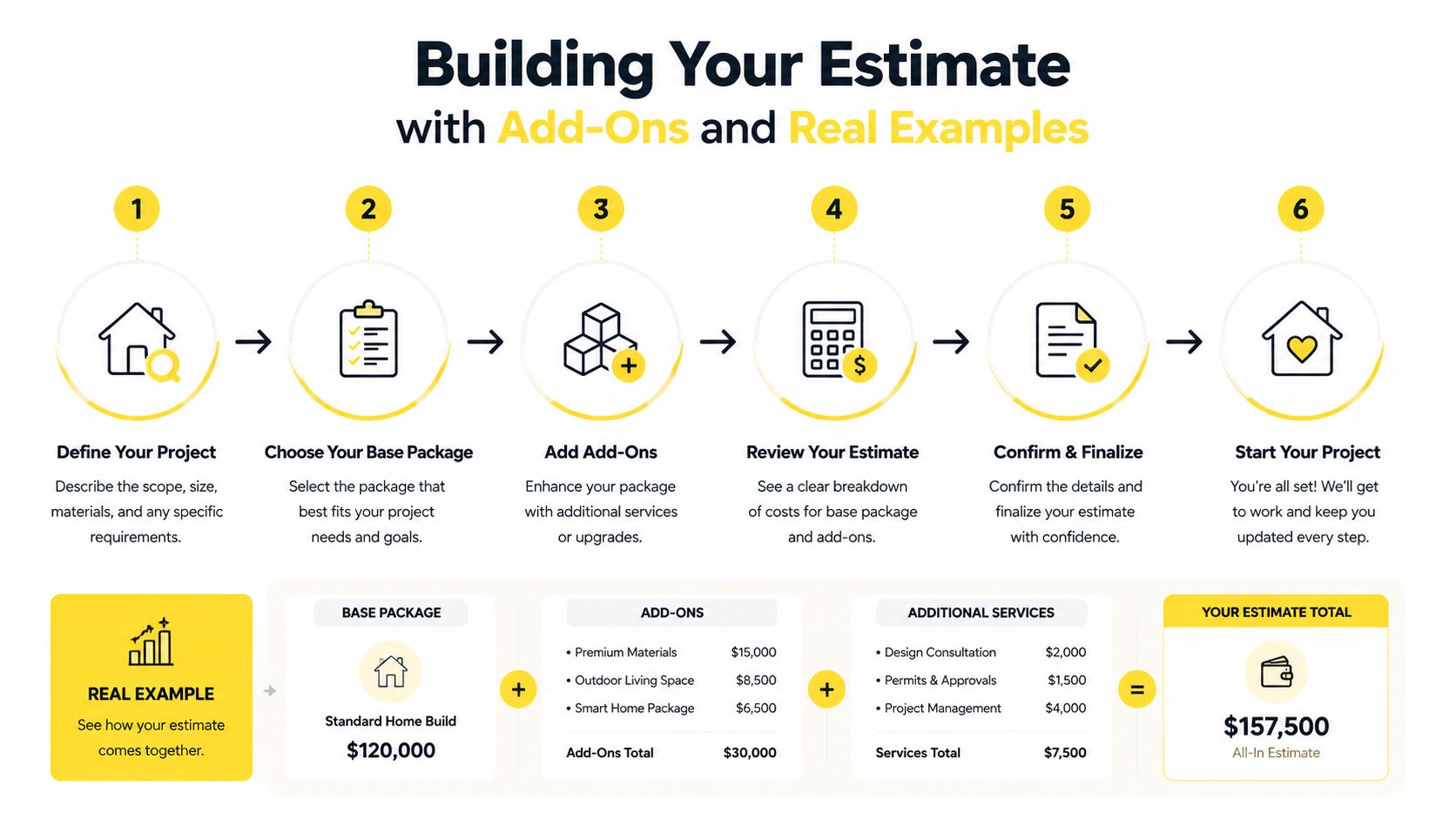
A customer approves an estimate more readily when the price shows what changes the work. Build the quote from a defined base service, then list adjustments for access, surface condition, compliance, and travel. Unexplained charges create more resistance than clearly priced extra work.
Record the surface, measured area, cleaning method, contamination level, access conditions, and expected production time. Calculate your break-even cost and apply the margin formula described earlier. The base estimate should cover the work you can inspect and define before special conditions change the process.
Use separate add-ons for items such as:
Access difficulty and wastewater requirements can turn a quick-looking job into a slow, expensive one. Price those conditions before the crew arrives, rather than absorbing the cost after the customer approves.
Keep discounts separate from operating costs. A repeat-customer discount should reflect lower selling and scheduling friction, not remove the labor and materials required to complete the work. Volume work can support a better rate when setup and travel are shared, but check the total route economics first.
These examples show the cleaning portion only, using the stated surface ranges. Add labor, travel, compliance, and other line items from your break-even calculation.
Example one, a simple concrete area: Suppose a sidewalk and driveway measure 1,000 square feet. At $0.15 to $0.30 per square foot for concrete, the cleaning line is $150 to $300. If access is easy and contamination is ordinary, choose a rate within that range that supports your costs, then apply your minimum service fee if needed.
Example two, a vinyl-sided home: A 2,000-square-foot measured siding area at $0.10 to $0.20 per square foot produces a base cleaning line of $200 to $400. Two stories, restricted access, oxidation, or additional treatment should appear as separate lines. That format shows the customer why the price changes and protects your margin when production slows.
Example three, a wood deck: A 300-square-foot deck at $1.00 to $3.00 per square foot produces a cleaning line of $300 to $900. An accessible deck with light soil may fit near the lower end, while heavy buildup, careful preparation, and delicate restoration work support a higher position within the range.
For organizing service categories, use this cleaning service price list framework. It provides a practical structure for presenting base services and add-ons consistently across estimates.
Watch the following walkthrough for another visual approach to organizing an estimate.

A proposal should remove uncertainty before the customer has to ask. State what will be cleaned, which method you will use, what is excluded, and which site conditions could change the price. Clear scope also makes hidden cost drivers, such as difficult access, oxidation removal, travel time, and wastewater handling, visible instead of leaving them inside an unexplained total.
Use a short proposal structure:
Line items make trade-offs easier to explain. A customer can see whether a higher total comes from extra labor, access time, specialty treatment, or compliance work, rather than assuming the base cleaning rate is inconsistent.
When a prospect says, “Another company is cheaper,” explain the scope difference without criticizing the competitor: “That may be a fair price for their listed service. My estimate includes the siding treatment, setup, and access conditions we discussed. I've separated the items so you can compare the work, not just the total.”
If the customer asks for a discount, protect the work being removed: “I can reduce the total by removing the deck treatment, but the same scope still requires the same preparation and labor.”
When someone wants an immediate number without details, say: “I can give you a preliminary estimate after confirming the surfaces, access, and condition. The final estimate will reflect the actual work rather than a generic rate.”
Automated estimation can collect square footage, surfaces, and urgency before follow-up. Estimatty's proposal template guidance can help standardize the information customers receive, while a team member confirms unusual conditions, clarifies scope, and books the work.
The most expensive assumption is that a square-foot rate automatically protects profit. It doesn't. A rate only works when the job conditions resemble the production assumptions behind it.
A contractor may use one rate for siding, concrete, decks, and roofs because the spreadsheet is easier to manage. That approach ignores the verified 2026 range showing wood decks at $1.00 to $3.00 per square foot, while vinyl siding is around $0.10 to $0.20, according to AirQuote's pricing table. The fix is to create surface-specific categories and define the method attached to each category.
A lightly soiled driveway and an oil-stained driveway may have identical measurements but very different workflows. Breasy's 2026 pressure washing guidance places complex work, including multi-story homes with heavy mold buildup, toward the upper end of the $0.08 to $0.50 per square foot range. Record soil level during the intake and charge for treatment time instead of hoping pressure alone will solve the problem.
Small jobs still consume communication, travel, loading, setup, cleanup, and payment processing. A minimum service fee prevents a short appointment from producing a negative contribution after those fixed tasks. It also gives customers a clear explanation when a small area costs more than a simple area calculation suggests.
A hose carried through a narrow property, a parking detour, or a second trip to resolve water access can erase margin without appearing on the invoice. Add those conditions before approval, and state the assumption plainly.
A discount is not harmless if it reduces the money available for labor and overhead. Calculate the profitable price first, then use a discount only when a real efficiency exists, such as adjacent properties, bundled setup, or a repeat visit that reduces selling effort.
Profitable pressure washing estimates follow a sequence. Capture the property details, separate surfaces, assess contamination, evaluate access and travel, identify compliance requirements, calculate break-even cost, select the pricing model, and present add-ons as visible line items.
Use per-square-foot pricing for predictable work, hourly pricing for uncertain treatment, and fixed project pricing when the scope is clear. Keep minimum fees in place, document assumptions, and review completed jobs against estimated time so your production library improves instead of relying on memory.
Consistency beats heroic quoting. An AI estimator can collect customer details and produce standardized estimates while your team handles exceptions, technical questions, and booking conversations. The AI estimates software guide for cleaning businesses offers a useful starting point for deciding where automation belongs in your workflow.
Start with the next inquiry. Ask for the surfaces, measurements, condition, access, water availability, urgency, and location before you discuss the final price.
Estimatty helps cleaning businesses collect job details and deliver consistent estimates through web and voice conversations, including information such as square footage, surfaces, and urgency. Visit Estimatty to see how you can standardize pressure washing estimates, respond outside business hours, and give your team cleaner information before the customer books.