September 21, 2026
Inside and Out Cleaning: A Practical Pricing Guide
Learn what inside and out cleaning really includes, how pricing works, and which add-ons actually pay off for residential and commercial estimates.

Tuesday, June 16, 2026
Wondering how much should I charge for cleaning? Our 2026 guide helps you calculate rates, factor overhead, & create estimates for profit.
.png)
You finish a residential clean, load the last tote back into the car, and do the math in your head. The customer was happy. The house looked great. But after gas, supplies, texting back and forth, driving time, and the hour you spent sending the estimate the night before, the job barely paid.
That's the moment most cleaning owners start asking, How much should I charge?
A lot of people answer that question the wrong way. They ask a few competitors, browse local Facebook groups, pick a number that sounds reasonable, and hope it works. That approach usually creates two problems at once. You either price too low and stay busy but broke, or you price too high without understanding why your number should hold.
Profitable pricing for residential cleaning has to come from your business model first, then your market position, then your estimating process. If you build it in that order, your prices stop feeling random.
Most cleaning owners don't start with a spreadsheet. They start with urgency.
A friend asks if you clean houses. A neighbor wants a move-out clean. Someone from Facebook messages you for a deep clean and asks for a price right away. You throw out a number based on what feels fair, what the house sounds like, or what someone else in town seems to charge. Then you do the work and realize the number looked better before the job happened.
That cycle wears owners down fast. Residential cleaning has too many hidden costs for gut-feel pricing to hold up for long. Travel time eats margin. First-time cleans take longer than expected. Customers leave out details. You spend unpaid time answering questions, rescheduling, buying supplies, and fixing small issues that never show up in the original estimate.
A lot of owners think the safest move is to stay close to local competitors. That sounds practical, but it skips the part that matters most. Your costs may not match theirs. Your standards may be higher. Your route density may be worse. Your team may be newer, slower, or more experienced.
Practical rule: If you don't know your own break-even rate, competitor pricing can push you into undercharging without you realizing it.
That's why “what do others charge?” is only a secondary question. The first question is whether a job supports your labor, overhead, and profit goals.
If you're building or tightening a residential cleaning company, it also helps to read broader expert cleaning business advice from EndureGo Tax, especially around setting up the business side properly before volume increases your mistakes.
Pricing isn't just how you win work. It's how you protect the business.
Good pricing lets you hire without panic, buy better supplies, fix mistakes without destroying the week, and take on recurring clients without subsidizing them. Bad pricing does the opposite. It creates a full calendar with weak margins and constant stress.
The goal isn't to guess better. The goal is to build a system that tells you, before you send the estimate, whether the job makes sense.
If you want a real answer to how much should I charge, start with costs. Not market gossip. Not instinct. Not what a cleaner in another suburb posted online.
Your break-even rate is the minimum your business must recover before profit even starts.
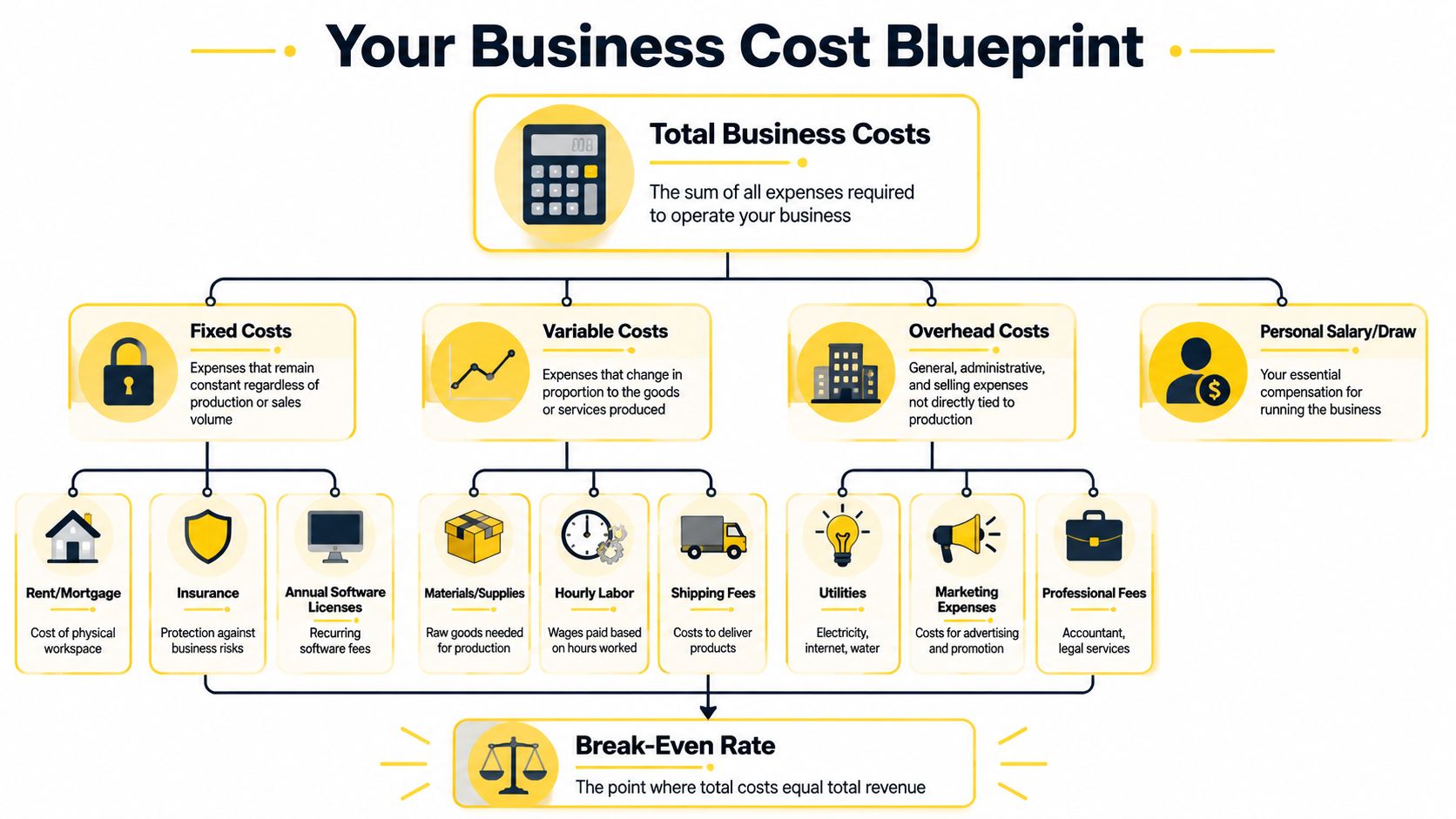
Residential cleaning owners often count only visible job costs. That leaves out the exact items that destroy margin.
Include these categories:
If you need a clean framework for organizing overhead before you build prices, this walkthrough on how to calculate overhead costs is a useful operational reference.
One of the most useful pricing principles for service businesses is this formula: Hourly Rate to Break Even = Total Annual Costs / (Total Hours – Non-billable Hours), as explained in this pricing breakdown.
That second half matters. Non-billable hours change everything.
The same source shows a practical example. With 1,800 actual working hours and a $68,025 true employment cost, the implied rate is $37.80 per hour before non-billable time is considered, but the required charging rate rises to $47.90 per hour after accounting for non-billable work. In that example, a rate of $54.67 was needed for 1,420 paid hours per year to match the income target, which shows how badly service businesses can undercharge when admin time, holidays, and unpaid tasks are ignored.
For a residential cleaning business, that gap often comes from:
If you're growing a team, staffing quality affects pricing more than people think. Better hires shorten training time, reduce callbacks, and make flat-rate pricing safer. That's one reason owners often use resources like pipehirehrm.com when they want a tighter hiring process for cleaning employees.
Work through it in this order:
List annual business costs
Pull everything into one number. Use your profit and loss statement, bank transactions, payroll records, and software subscriptions. If your books are messy, this guide for Australian business owners from Everglow Prosperity is a solid refresher on how to read the core report behind these calculations.
Estimate real annual working hours
Don't use a perfect calendar. Use the hours you can work across the year.
Subtract non-billable time
During this step, most cleaning businesses get honest for the first time.
Divide total annual costs by billable hours
That gives you the break-even labor recovery rate.
Add target profit after break-even is clear
Don't skip straight to profit before your base is accurate.
A trade-industry pricing guide makes this same point bluntly. It argues that asking what others charge isn't enough because owners need to account for fixed overhead, indirect labor, non-billable time, equipment replacement, taxes, and target profit before setting a rate. In its example, those inputs produced a break-even rate of $65.31/hour and a final rate of $76.83/hour after a 15% net profit target in that business model, as shown in the labor-pricing guide.
A cleaning company that knows its break-even rate can reject bad-fit jobs calmly. A company that doesn't know it tends to accept work that looks busy and pays poorly.
A cleaner prices a first visit at a flat fee based on a quick phone call. The client forgot to mention two bathrooms full of mildew, toys across every floor, and a kitchen that has not been reset in months. What looked profitable on paper turns into a long job with weak margin.
That is the choice between hourly and flat rate. You are deciding where the risk sits, with your business or with the client.
Hourly pricing works best when the scope is still uncertain. Flat rate works best when the work is repeatable and your production time is predictable. The right model depends less on what other cleaners in town charge and more on how reliably you can estimate labor on that type of job.
Use hourly pricing when you do not trust the inputs yet.
That usually means first-time cleans, move-outs with limited photos, homes with clutter, post-renovation dust, or any inquiry where the client keeps changing priorities during the estimate. In those situations, billing by the hour protects your labor recovery rate because you are charging for actual time spent instead of guessed conditions.
Hourly pricing also makes sense when:
The trade-off is customer friction. Some clients get uncomfortable when they cannot predict the final invoice. You also need clean time tracking and a clear explanation of what your team can realistically complete in a set number of hours.
Flat-rate pricing is stronger once the work is consistent.
Recurring residential service is the clearest example. If you know the home's size, condition, visit frequency, pet situation, and add-ons, you can price the outcome instead of the clock. Clients usually prefer that because the number is easy to budget, and your team is not forced into constant conversations about time.
Flat rate also creates upside when your systems improve. If your crew gets faster through better routing, checklists, training, or equipment, the invoice stays the same and the margin improves. That only works if your estimate was built on real job data, not optimism. If you want a practical benchmark for structuring fixed prices by home type and service level, this guide on house cleaning rates is a useful comparison.
| Factor | Hourly Rate | Flat Rate |
|---|---|---|
| Best use case | First-time cleans, uncertain conditions, variable scope | Recurring cleans, repeatable scope, stable homes |
| Risk to cleaner | Lower risk if scope expands | Higher risk if estimate misses details |
| Customer preference | Less certainty | More certainty |
| Upside from efficiency | Limited, faster work may lower invoice | Stronger, efficiency improves margin |
| Admin complexity | Requires time tracking and explanation | Requires stronger estimating discipline |
| Dispute potential | Customers may question hours | Customers may question scope |
| Good fit for add-ons | Easy to bill if work expands | Better when add-ons are pre-priced clearly |
If the home is unpredictable, charge for time. If the scope is stable, charge for the result.
Many cleaning businesses end up using both models. That is usually the most practical setup. Charge hourly for the first clean or any job with condition risk, track the actual labor carefully, then convert that client to a flat recurring rate once you have seen the property and know how long the work really takes.
Your break-even rate tells you the minimum. Your final price has to do more than keep the lights on. It has to support growth, absorb mistakes, and fit the kind of cleaning company you want to run.
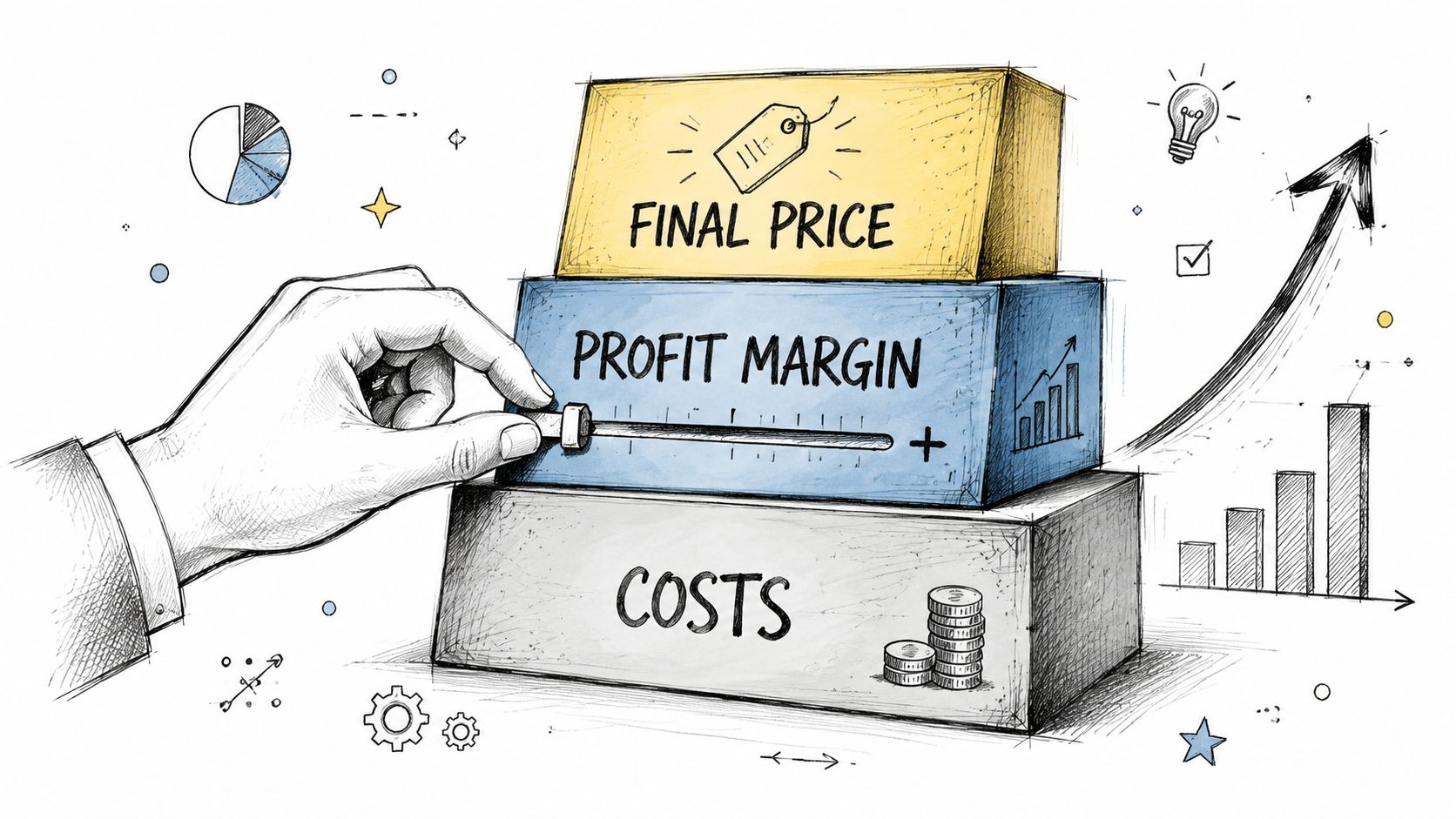
A lot of cleaning owners “take whatever is left” after wages and supplies. That isn't pricing. That's survival mode.
Set profit on purpose. Once your cost base is clear, decide what margin your business needs to justify the work, fund replacements, and give you room to improve operations. If your final number feels high, don't rush to cut it. Check whether the issue is pricing or positioning.
Your customer isn't only comparing dollars. They're comparing trust, responsiveness, consistency, ease of booking, communication, and whether they believe you'll do what you said.
You should still look at local competitors. Just don't let them dictate your number.
A service pricing guide notes that businesses should compare their prices with the range of competitor prices in the market before deciding whether to charge more or less, and it adds that companies that have never analyzed their pricing can often achieve a 10–15% revenue increase by making the right adjustments, according to Better Proposals' pricing guide.
That matters in residential cleaning because local markets usually contain three very different sellers:
If you offer fast replies, insured teams, clear checklists, dependable arrival windows, and polished communication, you don't need to sit at the bottom of the market. Charging the same as the cheapest operator often means you're giving away value your customer is already willing to pay for.
The easiest way to lift average ticket value isn't always raising the base clean. It's pricing optional work properly.
Think in terms of tasks that create obvious customer value:
A customer may hesitate over a higher base price but still say yes to a clearly described add-on that solves a visible problem. That's why your menu matters. A structured cleaning service price list helps you separate standard scope from premium tasks instead of letting small extras accumulate on the job.
The strongest pricing position in residential cleaning is not “cheapest.” It's “worth it.”
A profitable pricing model still fails if your estimating process is sloppy.
A lot of residential cleaning companies build decent internal pricing rules, then lose money because each estimate is handled differently. One person rounds down to win the job. Another forgets travel. Someone else misses add-ons, underestimates condition, or replies too slowly and loses the lead anyway.
The old workflow usually looks familiar. A prospect calls after hours. You miss it. They fill out a form with partial details. You follow up later, ask more questions, piece together the scope from text messages, and send a number when you finally get a gap in the day.
That process creates three problems:
Inconsistency
The same house can receive different estimates depending on who handles it.
Delay
Customers often book the company that responds first with a clear, confident estimate.
Margin leakage
Quick guesses tend to leave out indirect costs and scope details.
Cost-estimating guidance recommends using a three-point estimate, meaning optimistic, most-likely, and pessimistic scenarios, to build a more realistic price range. It also identifies incomplete scope definition, optimistic productivity assumptions, and missing indirect costs as common causes of pricing error, as explained in this estimating resource.
That maps perfectly to residential cleaning. If you assume the home is average, the access is easy, and the customer's description is complete, you'll underprice a chunk of your jobs.
The fix is to turn your pricing logic into a repeatable system. Every estimate should ask for the same core inputs, apply the same rules, and present the result in the same format.
That means standardizing things like:
When you do that, your team stops inventing prices in real time.
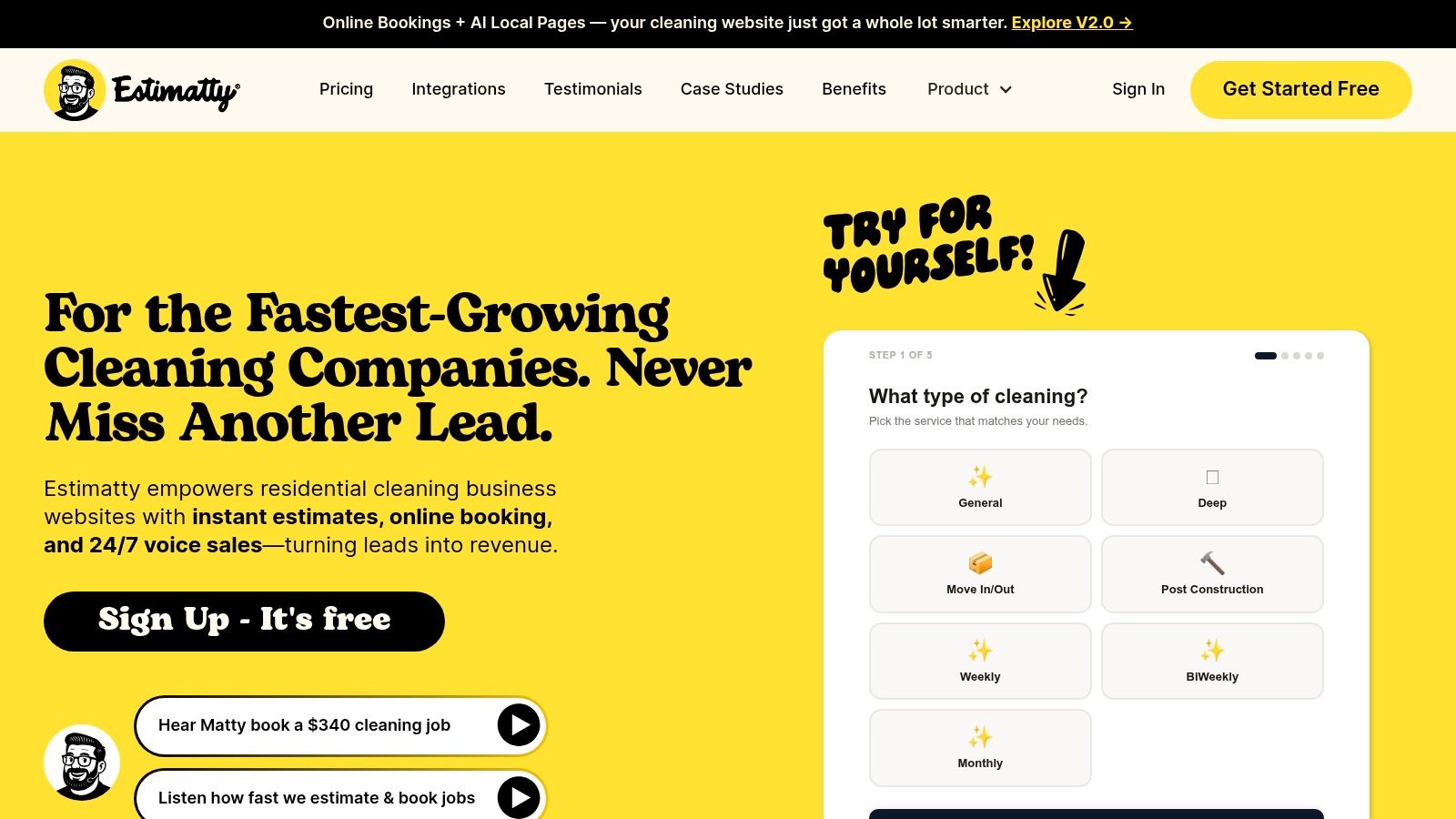
One option for this is Estimatty's cleaning estimate workflow, which is built around standardized intake and instant estimates for cleaning businesses. The practical value isn't magic. It's consistency. A system like that applies your pricing rules the same way every time, whether the lead comes in during business hours or after hours.
A strong estimate doesn't just show a number. It shows that you run a real business.
Include:
Customers trust estimates that feel organized. Owners trust systems that keep pricing aligned with reality. You need both.
A lot of owners realize their pricing is off on a Friday afternoon. The schedule is packed, the team worked hard all week, and the bank balance still feels too tight for how much work went out the door. That usually means the problem is not production. It is pricing.
Rate changes should come from your numbers, not from a vague sense that everything costs more now. If your business has a real pricing model, built from labor, overhead, travel, supplies, and target profit, rate reviews become a normal management task instead of a stressful guess.
A price increase is usually justified before owners act on it. Watch for patterns like these:
I review rates whenever one of two things happens. Costs changed enough to squeeze margin, or actual job times started drifting away from the assumptions in my pricing model. Both are measurable. Both need action.
Start with the jobs you already do. Pull a sample of recurring cleans, first-time cleans, and any specialty work. Compare estimated time to actual time, then compare collected revenue to your target hourly production rate or flat-rate margin.
That process shows where the problem lies. Sometimes every service needs a small increase. Sometimes only deep cleans, one-time jobs, or low-frequency recurring clients need to move. A broad increase sounds simple, but targeted changes usually protect retention better.
Avoid random percentage bumps just because other service businesses raise prices that way. Cleaning pricing works best when the increase ties back to your own cost structure and profit goal. If payroll went up, adjust enough to preserve labor margin. If your route density improved, you may not need to raise every zone equally. If callbacks dropped and efficiency improved, you may be able to hold some rates and raise only the work that still runs long.
Review pricing on a set schedule. Quarterly works well for many cleaning businesses. At minimum, review whenever wages, insurance, supply costs, or fuel shift enough to change your break-even math.
Customers do not need a long defense. They need a clear notice, enough lead time, and a professional explanation.
Use simple language like this:
Starting with your next service cycle, our rates will be updated to reflect current operating costs and the time required to complete your service to our standards. Your service details will remain the same, and we're sending advance notice so you have time to review the update and ask any questions.
Keep the message direct. State the effective date. Mention whether the scope is unchanged or whether the price reflects a scope update. For recurring clients, send notice early enough that it feels respectful, not abrupt.
If you want examples, timing guidance, and formatting ideas, this cleaning service price increase notice guide is useful.
Profitable owners do not set rates once and hope they hold for years. They check job-level margin, actual labor hours, route inefficiencies, and repeat services that regularly run over plan. Then they update the model and apply those changes consistently.
That discipline matters more than any single increase. It is how a cleaning business stops pricing from the gut and starts pricing from the numbers.