
October 7, 2026
A Quote on Consistency and Success for Cleaning Businesses
Discover a powerful quote on consistency and success tailored for cleaning professionals, with practical tips to apply it to marketing and teams.

Saturday, October 3, 2026
Compare 10 Housecall Pro alternatives for cleaning businesses, including features, pricing signals, pros, cons, migration tips, and Estimatty.
The most popular advice about a Housecall Pro alternative is also the least useful: choose the platform with the longest feature list. Cleaning businesses don't all run the same operation. A solo cleaner needs fast estimates and simple payments. A residential company may need recurring routes, cleaner messages, and easy rescheduling. A phone-heavy business needs someone to capture inquiries after hours, while a growing commercial operator may prioritize permissions, dispatch visibility, and accounting integrations.
The right choice depends on the bottleneck you need to remove. The field service software market is already large and expanding, with one market summary valuing it at USD 5.2 billion in 2021 and projecting USD 29.9 billion by 2031 (Mobisoft Infotech market summary). Buyers also have strong usability expectations. G2 reports ease of use at 91% and ease of setup at 90% across its field service management category (G2 field service management category).
This list compares ten viable Housecall Pro alternatives for cleaning businesses by workflow fit, implementation effort, pricing structure, and limitations. Estimatty is the specialized option for 24/7 web and voice estimate automation, while the other platforms focus more heavily on scheduling, dispatch, customer management, payments, and back-office operations.
Jobber is the closest like-for-like Housecall Pro alternative for a cleaning company that wants one approachable system. It combines online booking, estimates, scheduling, invoicing, deposits, payments, reminders, and follow-ups without forcing a small team into an enterprise-style implementation.
The mobile experience suits owners who move between sales, customer communication, and field work. Jobber also offers a broad integration marketplace, which helps connect accounting, marketing, and communication tools as the business grows. Product and price list management can support standardized services and add-ons, with a Home Depot product and pricing lookup add-on available for businesses that need it.
Jobber works well for residential cleaning companies with recurring bookings, a small office function, and several service types. An owner can create a service, send an estimate, schedule the work, collect a deposit, and automate reminders from one workflow. Its documentation and onboarding resources reduce the training burden for cleaners and office staff.
Practical rule: Choose Jobber when adoption speed matters more than deep customization.
The trade-off is cost control at scale. Add-ons and additional users can raise the total bill, while advanced reporting may require workarounds or connected tools. Before switching, map every current Housecall Pro automation and integration, then confirm which Jobber plan includes each one. For a detailed comparison with ZenMaid, use this guide to compare Housecall Pro, Jobber, and ZenMaid.
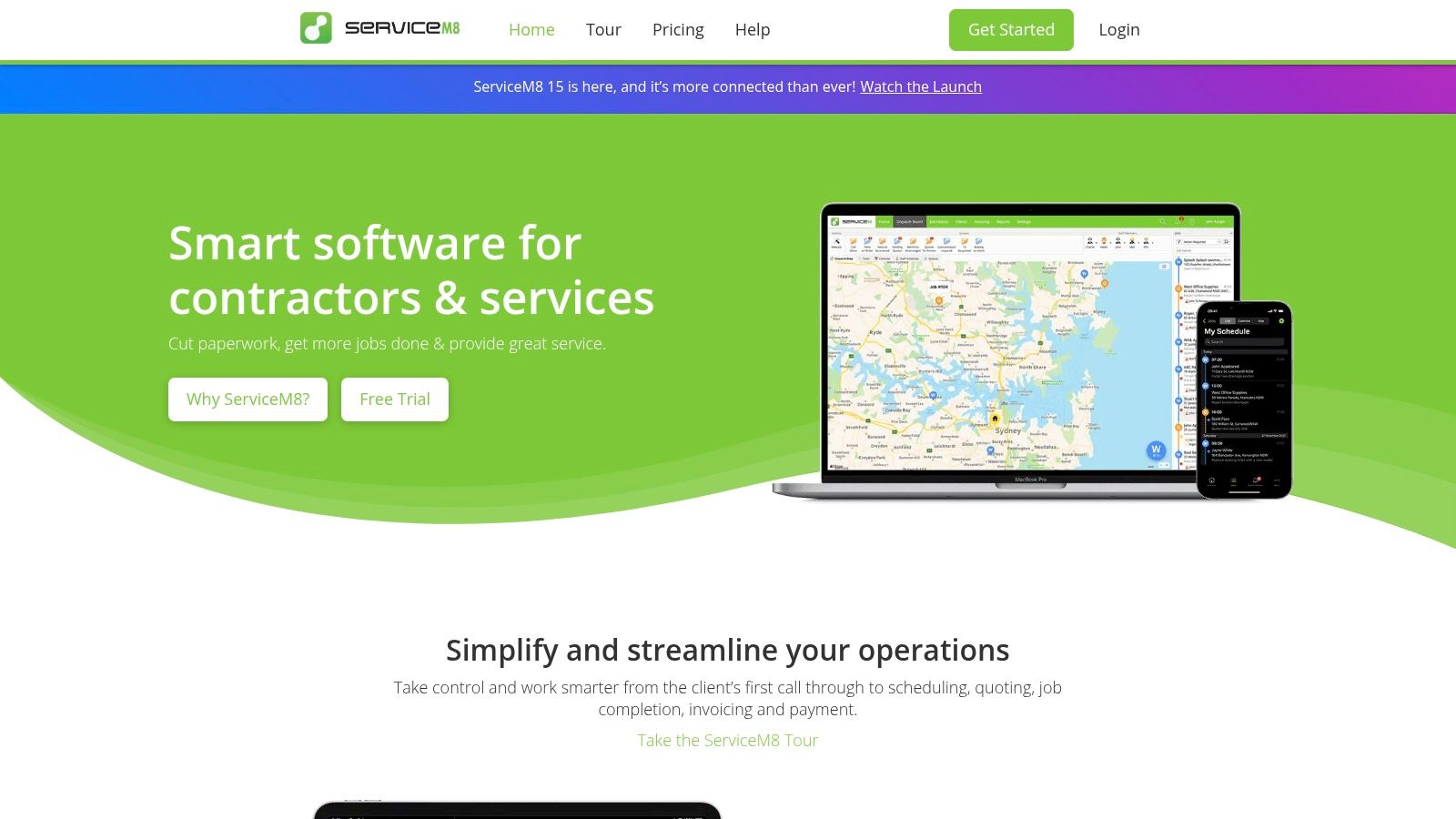
ServiceM8 is the strongest choice for a cleaning company whose field team uses iPhones or iPads. Its design is mobile-first, so cleaners can open job cards, complete checklists, fill out digital forms, update status, and collect payment without relying on a bulky office workflow.
The platform supports booking, estimates, invoicing, online payments, and customer communication. Tap to Pay on iPhone is useful when a cleaner needs to collect payment on site, while automations can send confirmations, reminders, and follow-ups. CarPlay support adds convenience for teams that spend much of the day driving between homes.
ServiceM8 emphasizes jobs, SMS, and add-on usage rather than traditional per-user pricing. That structure can work well when you have several field workers and don't want every cleaner treated as a separately billed seat. It also makes the cost easier to evaluate against job volume and messaging needs.
The limitation is platform fit. ServiceM8 has historically centered on iOS, and Android functionality is more limited. Accounting and payment integrations may also be narrower than those offered by larger generalist suites. Test the exact phone models your cleaners use before migration, not just the office administrator's device.
For an iOS-led cleaning team with straightforward recurring schedules and strong on-site workflows, ServiceM8 is a better operational fit than a feature-heavy system that your crew won't use consistently.
Workiz stands out when phone calls drive the sales process. It combines online booking, scheduling, dispatch, estimates, invoicing, payments, service plans, and a built-in phone system. Genius Phone provides call tracking and phone functionality, while AI answering can help capture inquiries when staff can't answer.
That matters for cleaning companies that sell more than a basic recurring clean. A prospect may ask about carpet cleaning, window cleaning, junk removal, deep cleans, or an ongoing maintenance plan. Workiz gives the office a place to organize those service variations, approve estimates, manage payments, and follow up without stitching together a separate phone platform.
Workiz's strongest advantage is the connection between communication and operations. Calls, customer details, estimates, and job activity can stay within the same system, while QuickBooks integration and automations reduce duplicate entry. Field staff also get a solid mobile experience for job updates and customer information.
The downside is pricing clarity. Per-seat costs and optional modules can become significant as the team expands, and some plans or discounts are sales-quoted. Request a written proposal that separates core software, phone features, AI answering, payment fees, and additional users.
If your biggest leak is unanswered calls rather than poor dispatching, evaluate Workiz on its phone workflow first.
Workiz is the right Housecall Pro alternative for a cleaning business with active phone sales, add-on services, and plans to build a more structured sales operation.
FieldPulse is designed for operators who need more control over job templates, forms, permissions, and job costing than a basic cleaning CRM provides. It supports scheduling, dispatch, estimates, invoices, payments, item catalogs, custom forms, and QuickBooks Online integration.
For a cleaning company that also handles maintenance, light construction, turnover work, or commercial projects, that flexibility can be valuable. You can create standardized forms for inspection, completion notes, supply usage, or property access. Role-based seat types also help separate office permissions from field access.
FieldPulse is feature-dense for its market position, but that density creates implementation work. An owner must decide which forms are mandatory, which employees can approve changes, how job costs are categorized, and which statuses trigger customer messages. A simple residential cleaning company may find that setup excessive.
Pricing isn't consistently published, so compare the total cost of office seats, field seats, payments, integrations, and onboarding. Don't evaluate the platform from a demonstration alone. Build a sample workflow from a new inquiry through estimate approval, recurring scheduling, cleaner completion, invoice, and payment.
For a practical explanation of mobile workflows, see field service mobile software for cleaning operations. FieldPulse is the better choice when standardized delivery and operational control matter more than instant deployment.
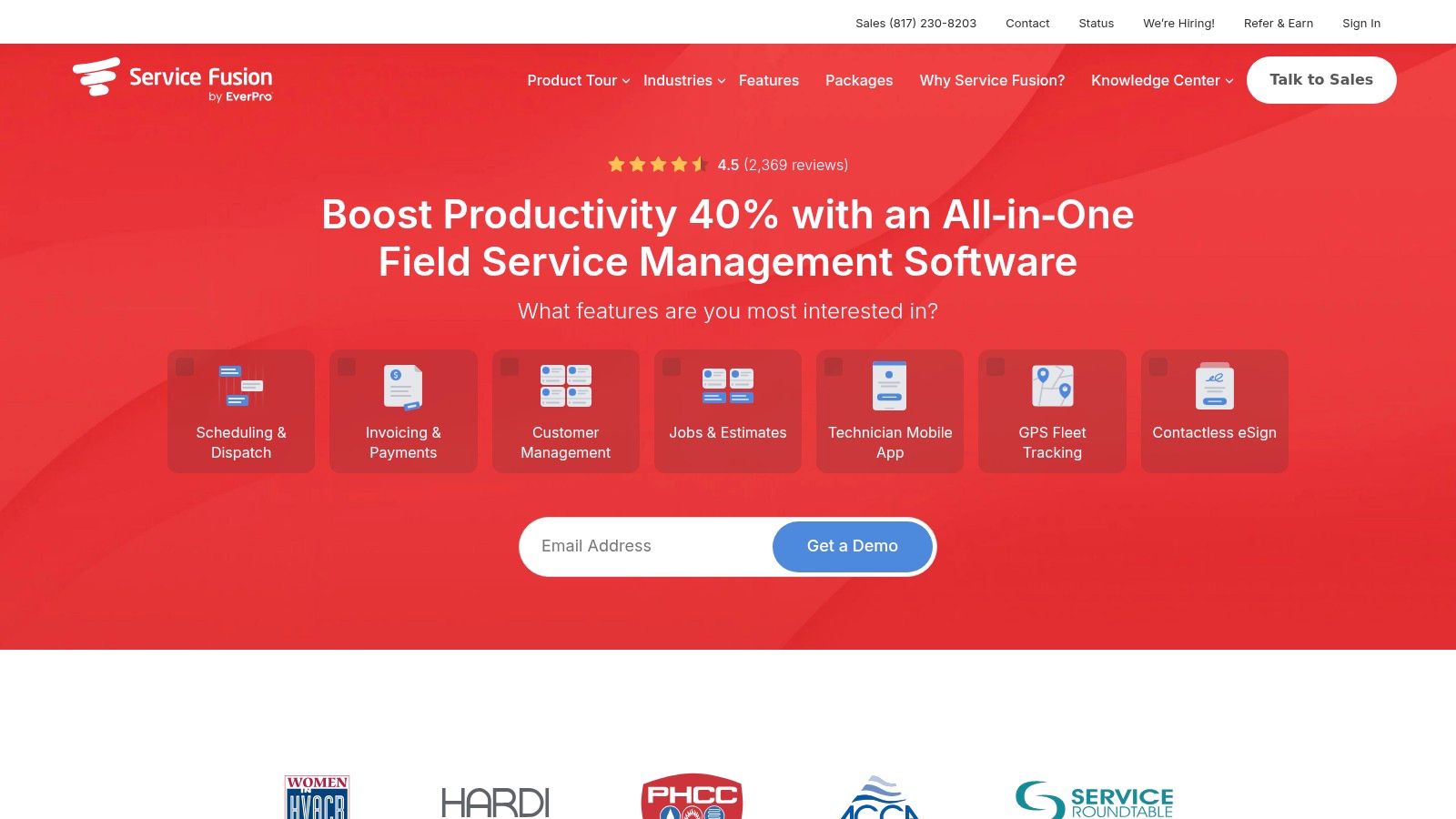
Service Fusion suits a cleaning company that has outgrown a starter app and needs broader dispatch and back-office control. It covers estimates, jobs, scheduling, time tracking, route optimization, customer messages, SMS, invoicing, reporting, QuickBooks connections, and integrated payments through FusionPay.
The platform becomes more useful when several teams work across a wider service area. Dispatchers can manage routes and job timing while office staff handle customer communication and billing. That makes it a sensible Housecall Pro alternative for a growing operation that needs more than recurring appointment management.
Service Fusion's strength is also its main cost. You won't get the full benefit by importing customers and immediately sending the first job to a cleaner. The business needs to configure service types, payment workflows, route rules, statuses, communication templates, and accounting connections.
Pricing is typically quote-based, and public tiers, promotions, and inclusions can change. Ask the sales team to document implementation, training, payment processing, user access, and any required add-ons in the proposal.
Migration advice: Don't switch during your busiest booking period. Configure the new workflow, test it with real but low-risk jobs, and give dispatchers time to practice exception handling.
Choose Service Fusion when your core problem is operational complexity across scheduling, dispatch, payments, and reporting, not just the need for a cleaner booking form.
ZenMaid is the most direct replacement for cleaning businesses that want software designed around maid-service workflows. It handles recurring cleanings, cleaner assignments, scheduling views, automated client and cleaner messages, online booking, payments, and mobile access for office and field roles.
The advantage is not an unusually broad feature list. It's the reduced need to translate generic field-service concepts into cleaning operations. Recurring residential schedules, team assignments, cleaner communication, and customer reminders are central to the product rather than custom projects layered onto a contractor platform.
ZenMaid makes sense when the business primarily sells residential cleaning and wants the office to spend less time coordinating changes. Stripe and Square support payment collection, while automated SMS and email can keep clients and cleaners informed about upcoming work.
Pricing uses a staff-count calculator, and higher tiers add cost as more user roles are included. That structure is easy to understand for a small team, but it can become less attractive when a company adds many cleaners, part-time workers, or contractors. Compare the cost of office users, field users, payment processing, and any integrations before committing.
Businesses evaluating ZenMaid alongside other cleaning tools can review the ZenMaid integration options. Choose ZenMaid when recurring cleaning coordination is the main workflow and non-cleaning trade features aren't a priority.
Launch27 is the best Housecall Pro alternative for a cleaning business that wants its website to do more of the selling. Its embeddable booking forms can calculate instant pricing, collect service details, and move a visitor toward a scheduled cleaning without requiring a phone call first.
That front-end focus separates Launch27 from broader field service platforms. Multi-location and ZIP-code pricing controls help operators manage different service areas, travel rules, and market-specific rates. Customer, team, admin, and cleaner portals create a practical handoff after a visitor books.
Launch27 works particularly well for recurring residential cleaning, website conversion, and multi-city operations. Stripe, Square, Twilio SMS, and QuickBooks integrations extend the workflow without requiring a complete replacement of every business system.
It isn't a full operational command center. Job costing and deeper field-service controls are narrower than what you get from FieldPulse or Service Fusion, and advanced requirements may depend on external integrations. Owners should decide whether Launch27 will be the primary system or the booking layer connected to another platform.
Conversion priority: If visitors leave because they can't see a price or book immediately, fix that website workflow before buying deeper dispatch features.
For cleaning companies that win business through website traffic and instant pricing, Launch27 is a focused choice. Review the available Launch27 integrations for cleaning businesses before deciding how it will connect to your current stack.
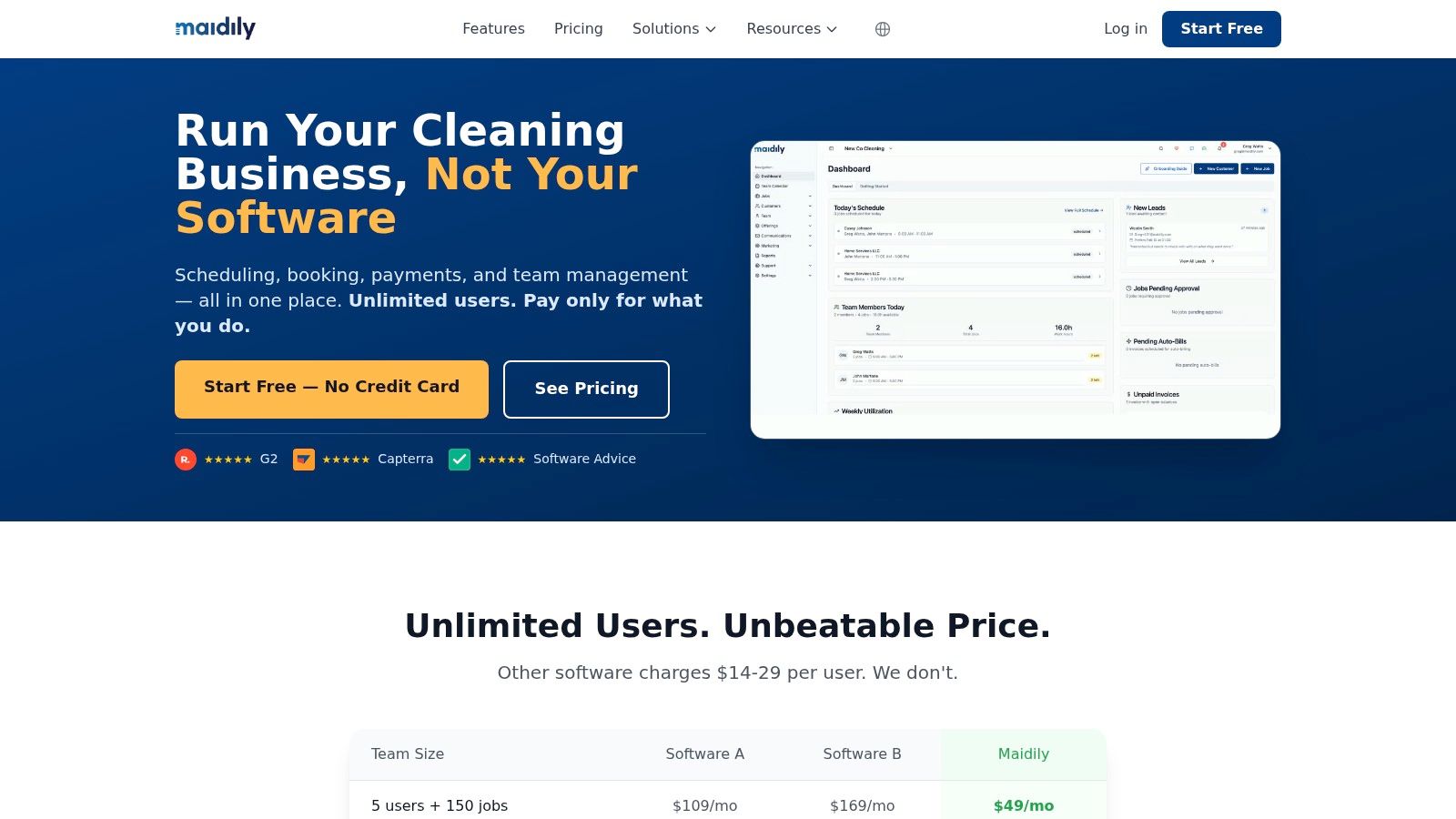
Maidily is a strong fit for residential cleaning companies that use contractors, part-time cleaners, or seasonal workers. Its pricing is based on monthly jobs rather than per-seat access, and unlimited users make it easier to add staff without turning every new cleaner into a separate software-cost decision.
The platform includes online booking, scheduling, invoicing, payments, recurring schedules, two-way messaging, QuickBooks integration, reporting, and team location tracking on higher tiers. That combination covers the core cycle from booking to cleaner coordination and payment.
Usage-based pricing can be more predictable than per-user pricing when the workforce changes often. It can also create a different risk. Lower tiers have job caps, and additional job packs may be needed when demand rises. A company with volatile seasonal volume should model its busiest period, not only its average month.
Maidily's smaller ecosystem may matter if your business depends on specialized marketing, accounting, or lead-management connections. Confirm API access, integration availability, and reporting depth before migration. Test how recurring services, reschedules, cancellations, add-ons, and partial payments appear in the system.
Maidily is the practical recommendation for a cleaning business that wants cleaning-specific workflows and broad staff access without paying for every cleaner as a separate seat.
ServiceMonster is a mature option for cleaning companies that want operations, marketing, and reputation management in one environment. It has particular relevance for carpet cleaning, window cleaning, and related services, where route planning, lead follow-up, reviews, and repeat business all influence profitability.
Core workflows include lead and customer management, estimates, jobs, route optimization, invoicing, payments, QuickBooks integration, and mobile access. Marketing and reputation tools can help reduce the number of separate systems an owner manages when the business is actively building local visibility.
ServiceMonster's depth is useful for a company moving beyond basic house cleaning. It can support multiple service lines, larger crews, and more deliberate marketing operations. A manager can connect customer history to follow-up and review activity instead of treating each completed job as the end of the relationship.
The interface may feel more utilitarian than newer products, so user adoption deserves attention. Marketing tools and reputation features can also increase monthly spend. Request a complete package that separates core field operations from optional marketing modules.
ServiceMonster is the right choice when cleaning-related growth services, routing, and reputation management matter as much as scheduling. It isn't the best fit for an owner who wants the smallest possible setup and no additional configuration.
Markate is a straightforward Housecall Pro alternative for solo cleaners and small teams that want estimates, scheduling, invoicing, payments, online booking, reminders, and client communication without a long implementation project.
Its mobile apps, customer portal, text and email reminders, review requests, time tracking, expense tracking, team management, and routing tools cover the practical needs of a lean operation. Optional website and marketing services give owners a way to add support without immediately assembling several separate vendors.
Markate uses a transparent base structure with per-employee pricing, which makes it easier to understand the relationship between team growth and software cost. That can suit a small business that wants to start with a limited staff and expand carefully.
The trade-off is depth. Markate has fewer advanced enterprise features and reporting capabilities than larger field-service suites. Marketing and website add-ons can also fragment the bill and create another decision about which vendor owns the website, leads, and customer data.
Choose Markate when ease of adoption is more important than complex permissions, advanced analytics, or a large integration ecosystem. It gives a small cleaning business a practical operational foundation without requiring the heavier setup associated with FieldPulse or Service Fusion.
| Product | Core features | Best for / Target audience | Unique selling points | Pricing & scalability |
|---|---|---|---|---|
| Jobber | Quotes, scheduling, dispatch, invoicing, integrated payments, automations | Cleaning, lawn care & residential SMBs needing full FSM | Approachable UI; large integrations & strong onboarding | Per-user/add-ons can raise cost; scales with ecosystem |
| ServiceM8 | Mobile-first booking, job cards, digital forms, iOS Tap to Pay, automations | Small field teams that use iPhone/iPad | No per-user fees; polished native iOS experience | Bundled usage (jobs/SMS) pricing; limited Android features |
| Workiz | Online booking, price book, invoicing, payments, built-in phone & AI answering | Cleaners offering add-on services (carpet, window, junk) | Built-in call/phone system; flexible upsell modules | Per-seat and add-on costs may add up; some quote pricing |
| FieldPulse | Scheduling/dispatch, job costing, custom forms, item catalogs, role-based seats | Multi-service cleaning companies needing deeper job templates | Strong job costing & custom forms; flexible seat types | Often sales-quoted; richer setup and implementation time |
| Service Fusion | Quotes, dispatch, time tracking, route optimization, integrated payments | Growing teams outgrowing starter apps; mid-size ops | Broad back-office capability; FusionPay integrated | Quote-based pricing; recommended implementation/training |
| ZenMaid | Cleaning-oriented scheduling, recurring jobs, automated client/cleaner SMS/email, online payments | Maid and residential cleaning businesses focused on recurring work | Purpose-built for cleaning workflows; affordable entry tier | Entry-level affordable; extra user roles increase monthly cost |
| Launch27 | Embeddable booking forms with instant pricing, customer portal, zip-based pricing | Maid services and sites wanting fast online booking & conversion | Fast path to “instant estimate + book”; multi-location pricing rules | Focused feature set; relies on integrations for advanced needs |
| Maidily | Online booking, scheduling, invoicing, two-way messaging, usage-based plans | Owners with many contractors/part-timers or seasonal staff | Unlimited users included; transparent job-based pricing | Job-count caps on lower tiers; overages sold in packs |
| ServiceMonster | CRM, routing, quotes, invoicing, marketing & reputation tools | Carpet, window and growth-focused cleaning pros | Deep vertical experience; built-in marketing/review tools | Marketing add-ons add cost; UI is more utilitarian |
| Markate | Estimates/invoices, online booking, client portal, reminders, routing | Solo cleaners and small teams seeking simple operations | Straightforward setup; transparent base pricing; optional website services | Transparent base + per-employee pricing; modular add-ons available |
There isn't one universal best Housecall Pro alternative for cleaning businesses. The right decision follows the work your team performs every day and the point where customers or staff currently get stuck.
Choose ZenMaid when recurring residential cleanings, cleaner assignments, and automated customer communication are the center of the operation. Choose Maidily when you use many contractors, part-time cleaners, or seasonal workers and want unlimited users with usage-based pricing. Both are better fits for cleaning-specific recurring workflows than a general platform that requires extensive customization.
Choose Launch27 when your website should show instant pricing and convert visitors into booked cleanings. Its embeddable booking forms, location rules, and customer portals suit businesses that want to reduce friction before a lead reaches the office. Choose ServiceM8 when your field team is iPhone-led and needs fast mobile job cards, checklists, forms, and payment collection.
Choose Jobber for approachable all-around operations. It gives a small residential service business a clear path from estimate to schedule, invoice, payment, and follow-up. Choose Workiz when phone-heavy sales and add-on services drive growth. Its built-in phone tools, AI answering, service plans, and payment workflow address a lead-response problem that many scheduling systems leave outside the platform.
Choose FieldPulse when you need custom forms, job costing, role-based access, and support for mixed-service work. Choose Service Fusion when dispatch, route management, time tracking, payments, and back-office reporting have become too complex for a starter application. Choose ServiceMonster when marketing, reputation management, routing, and cleaning-related growth services deserve a place beside daily operations. Choose Markate when you want a straightforward setup for a solo business or small team.
Estimatty belongs in a different category. It can serve as a specialized alternative or complement when the main gap is 24/7 web and voice lead response, standardized estimates, SMS and email delivery, and automatic capture of cleaning details such as property size, surfaces, and urgency. A cleaning company can use a field-service platform for scheduling, dispatch, payments, and customer history while using Estimatty as the front-end layer that responds to website visitors and callers before a staff member becomes available.
Don't migrate by copying software settings one screen at a time. Treat the switch as an operations project:
A staged migration helps you avoid becoming the bottleneck. It also reveals whether the replacement improves recurring bookings, estimate delivery, crew coordination, payments, add-ons, and after-hours lead capture before you shut down the old workflow.
Estimatty gives residential and commercial cleaning businesses a 24/7 web and voice estimator that captures job details, delivers consistent estimates by SMS and email, and alerts your team when a prospect is ready. Visit Estimatty to add automated lead response to your Housecall Pro alternative or connect it to the operational system you already use.