
October 10, 2026
How to Increase Qualified Leads for Cleaners
Learn how to increase qualified leads for your cleaning business. Discover AI estimators, speed-to-lead tactics, and scoring strategies that book more jobs.

Saturday, August 22, 2026
Remove hard water stains on faucets with home remedies and commercial cleaners. Diagnose, clean, prevent, and upsell pro services that actually last.

You wipe the bathroom sink on Sunday, then notice a white, crusty ring hugging the faucet base by Thursday. The spout looks spotted, the handle feels gritty, and the fixture seems older than it is. That residue is usually mineral scale, not failed cleaning.
Removing hard water stains on faucets takes more than grabbing the strongest bottle under the sink. The right method depends on the mineral deposit, the faucet finish, and how long the cleaner stays in contact with the surface. Use the wrong combination, and you can trade limescale for a permanently dull coating.
A faucet can look clean after wiping, then show a white ring a few days later. Each splash carries dissolved calcium and magnesium. Once the water evaporates, those minerals remain as a chalky film commonly called limescale or scale deposits. Culligan explains how water hardness leaves mineral residue after evaporation.
Chrome and brushed nickel reveal the problem quickly because their smooth or directional finishes catch every dried ring. Matte, coated, or oil-rubbed finishes can hide residue longer, but they still need finish-safe care. Repeatedly letting droplets dry also gives deposits more time to bond, making aggressive scrubbing more tempting and more risky.
The first signs usually appear in places that stay wet longest:
A light daily dry-down with a soft microfiber cloth removes water before evaporation leaves a bonded mineral film. This simple instruction is safer than repeated hard scrubbing, and it gives cleaning crews a practical prevention step to leave with clients.
For recurring service, keep a finish-safe cloth, a small soft brush, and manufacturer care guidance in the regular cleaning supplies list. Document the faucet finish in the Estimatty estimate, then price restoration separately when scale has dulled the surface. Prevention protects the fixture, while a clear add-on gives clients a reason to approve skilled follow-up work.
A white ring under the spout is usually a water problem, while a sticky handle may point to soap or body oils. Mineral deposits typically leave a white or gray, chalky film at splash points, around the spout opening, and near the faucet base. Soap scum looks cloudy, greasy, or smeared. Rust tends to show orange, brown, or reddish coloring and may come from nearby metal or water-contact components.
The stain's location helps confirm the diagnosis. Evaporated droplets leave rings beneath the spout and around the base. Residue along handle seams often contains soap or oils. A colored mark that remains after a finish-safe mineral treatment may indicate rust, coating damage, or etching, so applying stronger acid is the wrong next step.
Water hardness is commonly reported as mg/L or ppm as calcium carbonate. These ranges help explain why mineral staining becomes more visible as hardness increases. American Water's hardness guidance lists these classification ranges.
| Hardness Class | mg/L Range | Stain Likelihood |
|---|---|---|
| Soft | 0–60 | Lower likelihood of visible scale |
| Moderately hard | 60–120 | Occasional spotting may appear |
| Hard | 120–180 | Noticeable faucet deposits are expected |
| Very hard | Above 180 | Heavier buildup is more likely |
Readings in the 121–180 mg/L range fall where faucet scale should become noticeable. Readings above 180 mg/L are classified as very hard. That reading does not identify every mark, but recurring white deposits are more likely to come from the water than from inadequate wiping.
Choose the least aggressive cleaner approved for the faucet finish. Test it on a hidden area or discreet edge, follow the recommended contact period, then wipe with a soft cloth. Mineral residue should soften or lift without changing the finish's color or sheen. No change means you should stop escalating and inspect for rust, soap film, coating failure, or etching.
Finish determines the removal path. Chrome may tolerate an approved mineral treatment, while brushed, matte, coated, or specialty finishes can show altered sheen or texture after the same product. Record the finish, test result, and approved method in your cleaning quality assurance process. That record stops one cleaner from repeating a successful chrome procedure on a coating that requires different care. It also gives cleaning businesses evidence for a separate restoration estimate when the faucet needs more than routine cleaning.
A reliable removal process is controlled, gentle, and repeatable. Before touching the faucet, check the manufacturer's care instructions. Vinegar can loosen mineral deposits, but it isn't automatically safe for every polished, plated, brushed, coated, or specialty finish. Culligan's faucet guidance outlines the finish-checking and rinse-and-dry workflow.
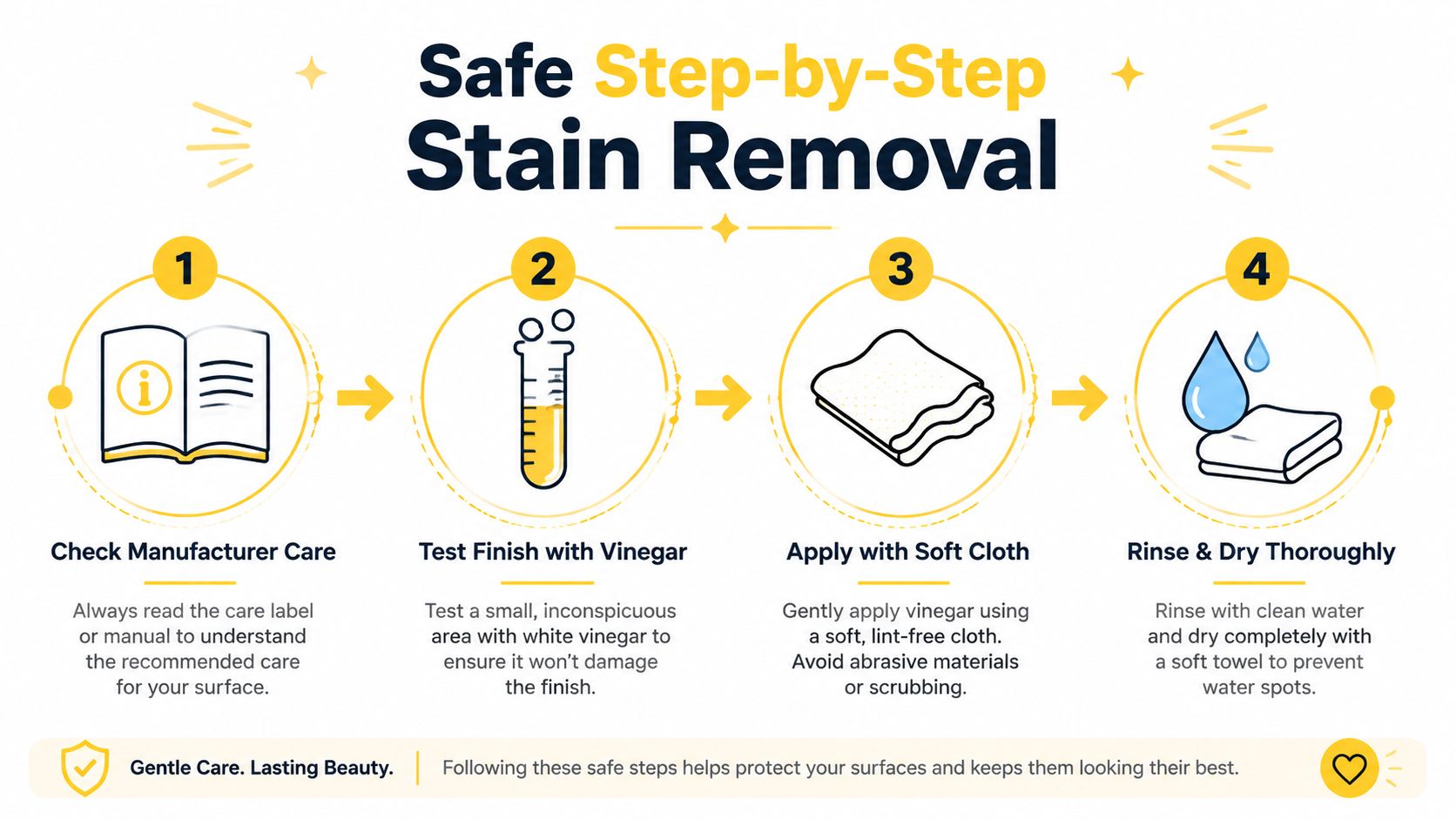
Practical rule: A short, approved treatment followed by thorough rinsing is safer than leaving acid on a finish until the scale disappears.
For a clogged aerator, remove the part carefully and separate its components if the design allows. Soak the aerator parts in vinegar for about 15 minutes, rinse every piece, and reassemble it. Don't force a stuck aerator with tools that can scratch or deform the housing.
Avoid abrasive pads, abrasive powders, blades, and harsh scale removers. They may remove the deposit while also scratching polished metal, dulling plating, or damaging a specialty coating. A soft toothbrush can help around seams, but pressure should stay light.
Before treating a client's fixtures, make this sequence part of your professional deep cleaning checklist. If a household is also investigating recurring scale across sinks, showerheads, and appliances, point them toward practical advice for choosing a filter while making clear that filtration and softening address different water concerns.
Use the video below as a visual complement to the written process, but always follow the fixture manufacturer's instructions first.
Vinegar is useful for minor mineral spotting when the manufacturer permits it. It's accessible, inexpensive, and gentle enough for some compatible finishes when properly diluted and used for a short period. Its weakness is control. Many people leave it on too long, use an unapproved strength, or assume that a method suitable for chrome is safe on every faucet.
Citric acid can also loosen limescale, and it avoids the lingering vinegar odor. Treat it with the same caution as any acidic cleaner, however. “Natural” doesn't mean harmless to plated, coated, or specialty surfaces, and the faucet maker's care instructions still control the decision.
Commercial descalers make more sense for heavier buildup when the label specifically approves the faucet material and finish. They can work faster, but stronger chemistry increases the cost of a mistake. Test in a hidden area, follow the label exactly, and rinse thoroughly.
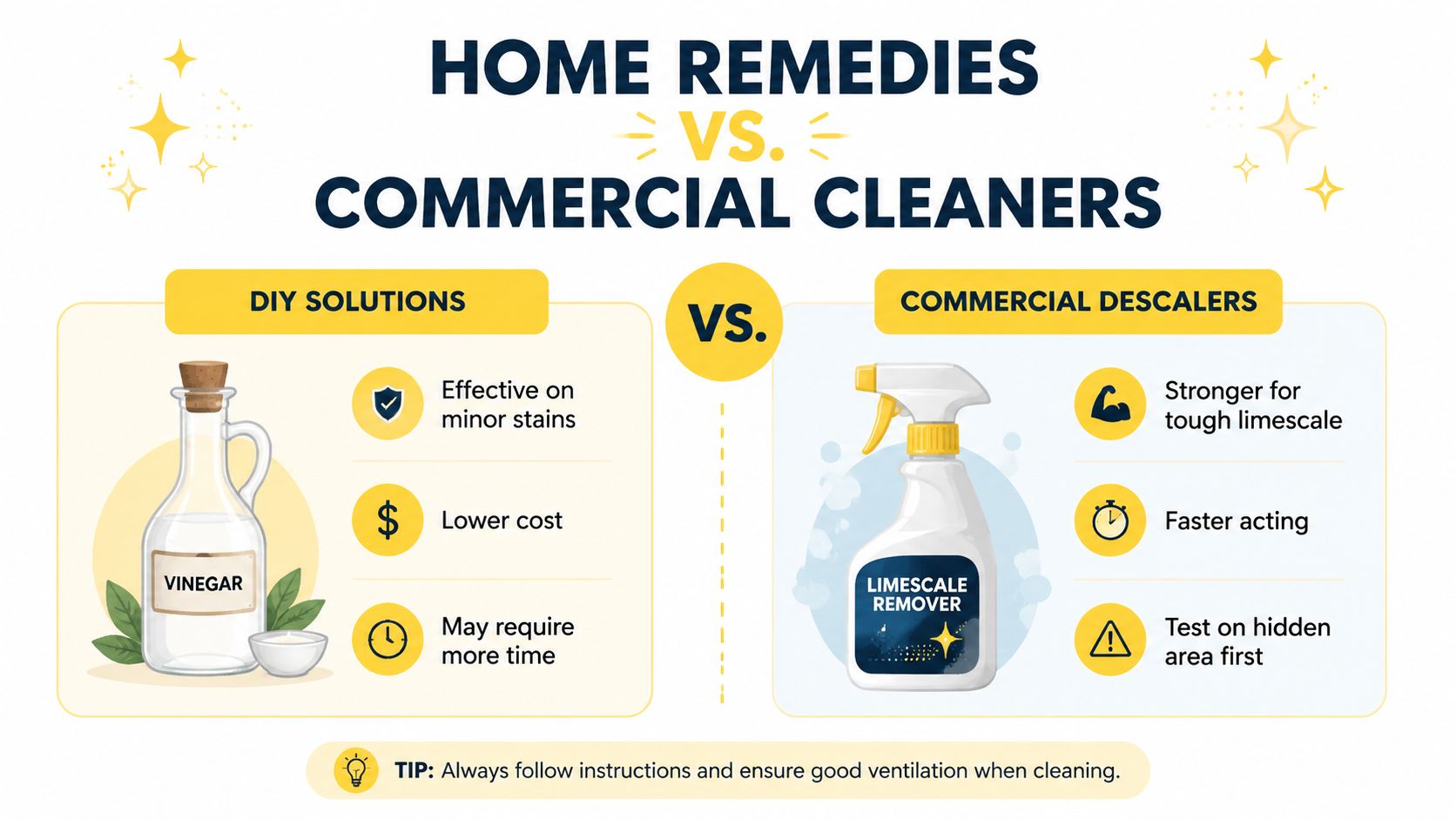
Independent cleaning guidance warns that abrasive pads and harsh scale removers can damage polished, plated, coated, or specialty finishes, and that safe removal isn't universal across chrome, brushed nickel, brass, and matte black. Review finish-safety considerations for new and specialty faucets.
For additional limescale context, a resource such as Ring Hot Water limescale help can help homeowners understand why deposits return. Cleaning operators should also standardize approved products in their professional cleaning chemicals inventory instead of letting each technician improvise.
The cleanest faucet is usually the one that never lets a wet mineral film dry in place. Give homeowners a simple schedule that fits real life, and give crews a routine they can complete without turning every visit into a restoration project.
Recurring stains are a different problem from a neglected faucet. If deposits return quickly despite consistent drying and approved cleaning, test the household water or review local water-quality information. Cleaning dissolves what is already on the surface, but it doesn't change the mineral content arriving at the tap.
About 85% of U.S. homes are affected by hard water, according to industry guidance, making recurring scale a common household maintenance issue rather than an unusual defect. Hardness comes from calcium and magnesium, and excessive hardness can cause scale in aerators and other plumbing components. Review the relationship between hard water, aerator scale, and softeners.
A whole-house softener addresses the underlying cause by changing the water chemistry. It won't replace cleaning an existing crust, but it can reduce the continual supply of hardness minerals that creates new deposits. Homeowners comparing local options can use this resource on how to fix hard water issues in San Antonio as a starting point for evaluating professional help.
Faucet descaling works well as a finish-safe add-on because the need is easy to see. A client may not request “aerator maintenance,” but they will recognize a white ring around a premium kitchen faucet or a crusted bathroom spout. Package the service around visible outcomes, such as faucet descaling, aerator cleaning, and final polishing, while clearly excluding coating repair or replacement.
Start with a quick inspection. Identify the finish, photograph the deposit, and separate removable mineral scale from damaged plating, rust, or etching. Then present an estimate that explains the approved method, expected access, and any limitation. Use “estimate,” not “quote,” when communicating the proposed price and scope.
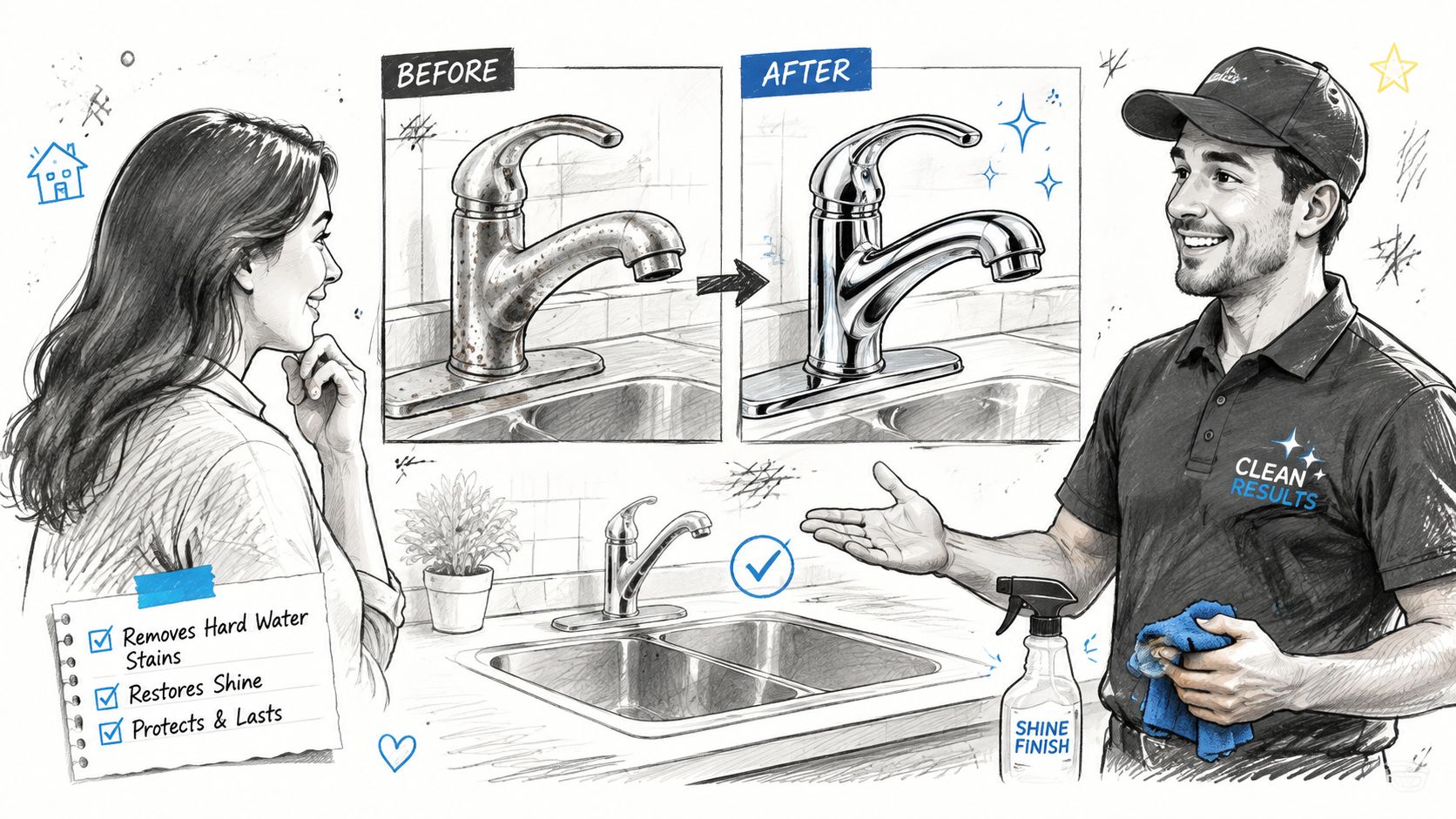
A strong offer can include:
Send the estimate while the client is still engaged, then record the finish and approved process for the assigned cleaner. For pricing structure and package ideas, review this deep cleaning price list. When demand grows, use pipehirehrm.com for cleaning employee hiring and consult estimatty.com/blog and get.pipehirehrm.com/blog for additional operational playbooks.
Finish-safe restoration can increase the value of an existing visit without requiring a separate sales appointment. It also reduces callbacks because the crew has a documented process instead of relying on improvised scrubbing.
Estimatty helps cleaning businesses send consistent, instant estimates for services such as faucet descaling, capture job details, and keep inquiries moving outside business hours. Visit Estimatty to turn visible cleaning add-ons into clear estimates and booked work.