September 21, 2026
Inside and Out Cleaning: A Practical Pricing Guide
Learn what inside and out cleaning really includes, how pricing works, and which add-ons actually pay off for residential and commercial estimates.

Tuesday, June 30, 2026
Create a professional commercial cleaning estimate template with our guide. Cover pricing, line items, & terms for accurate estimates that win more jobs.
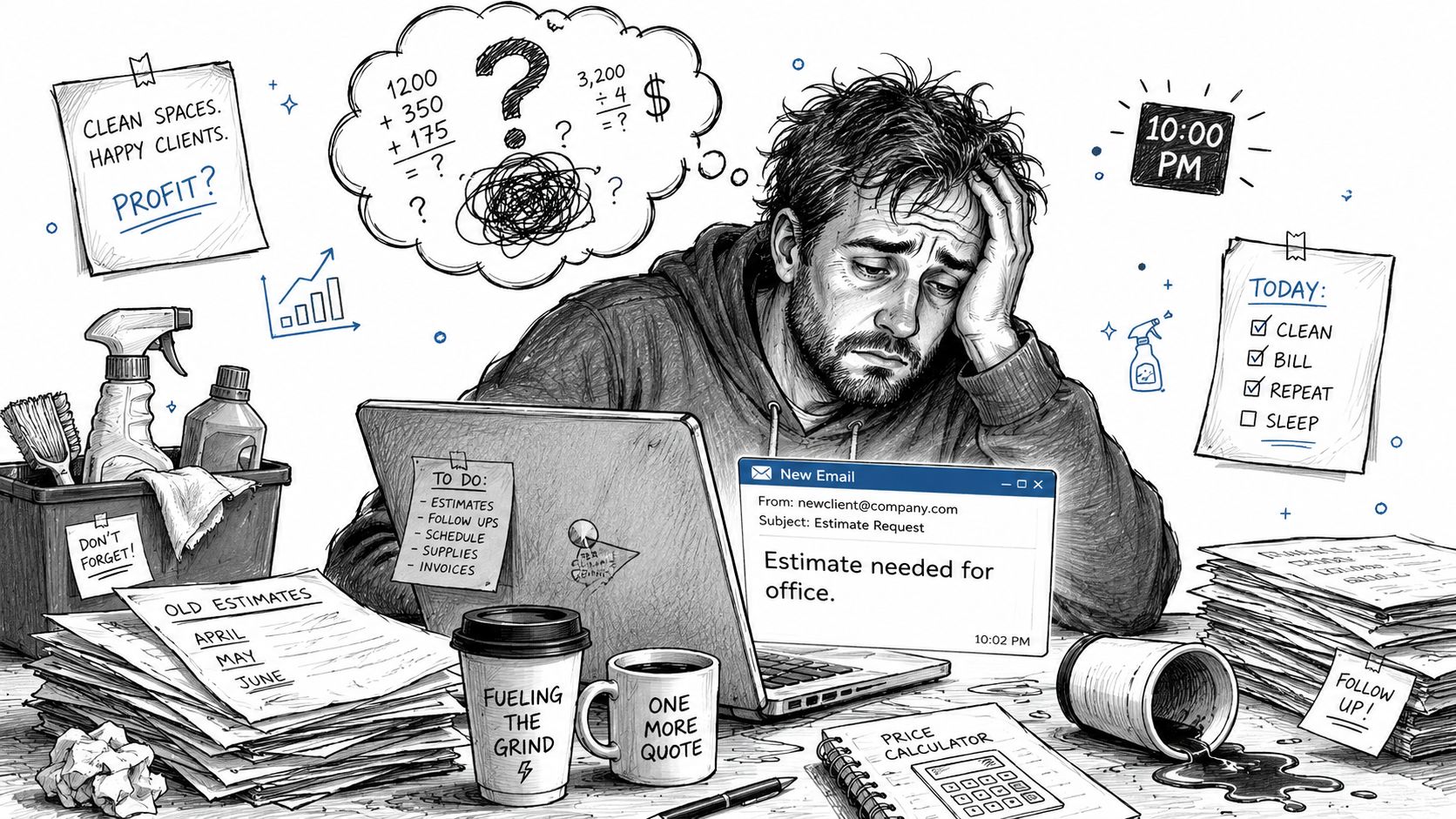
It's late. The crews are done, the phone has finally stopped, and a new lead lands in your inbox asking for an estimate on an office, clinic, or warehouse. You open an old file, swap the company name, adjust a few numbers from memory, and send it off hoping the price is close and the scope is clear enough.
That routine feels normal when you're busy. It also creates inconsistent pricing, missed add-ons, weak terms, and estimates that don't match the building once service starts. A commercial cleaning estimate template shouldn't be just a document. It should be the operating system behind how you price, scope, present, and close work.
A lot of cleaning owners are still estimating the same way they did when they had a few accounts and a small crew. They rely on memory. They pull numbers from the last similar job. They price too fast when they're tired. Then they wonder why one account feels profitable, another drains labor, and a third stalls because the client can't tell what's included.
The businesses that win more often usually aren't guessing better. They have a repeatable estimating process. Their document looks polished, their scope is easier to compare, and their follow-up is faster. If you want a useful outside example of how presentation and process affect buying decisions, Aim Set Win's client results are worth reviewing.
A real system does three things at once:
That's the difference between “sending paperwork” and selling with control.
Practical rule: If your team can't explain how the number was built, the estimate is too fragile to scale.
A downloadable form can help, but only if the pricing logic behind it is solid. If you're exploring ways to reduce manual estimating time, this piece on AI estimates software for cleaning businesses shows how owners are moving away from inbox-and-spreadsheet chaos.
Most estimate problems start before the price ever shows up on the page.
Some owners skip the walkthrough. Others lump tasks into vague language like “general cleaning.” Some leave out frequency details. Many forget to present optional services in a structured way. Then the account starts, expectations expand, and margins disappear.
A strong commercial cleaning estimate template fixes that before the first mop hits the floor.
A professional estimate needs to do more than look clean. It needs to answer the client's basic questions without forcing a back-and-forth email thread. If anything important is missing, the estimate feels amateur, even if your service is excellent.
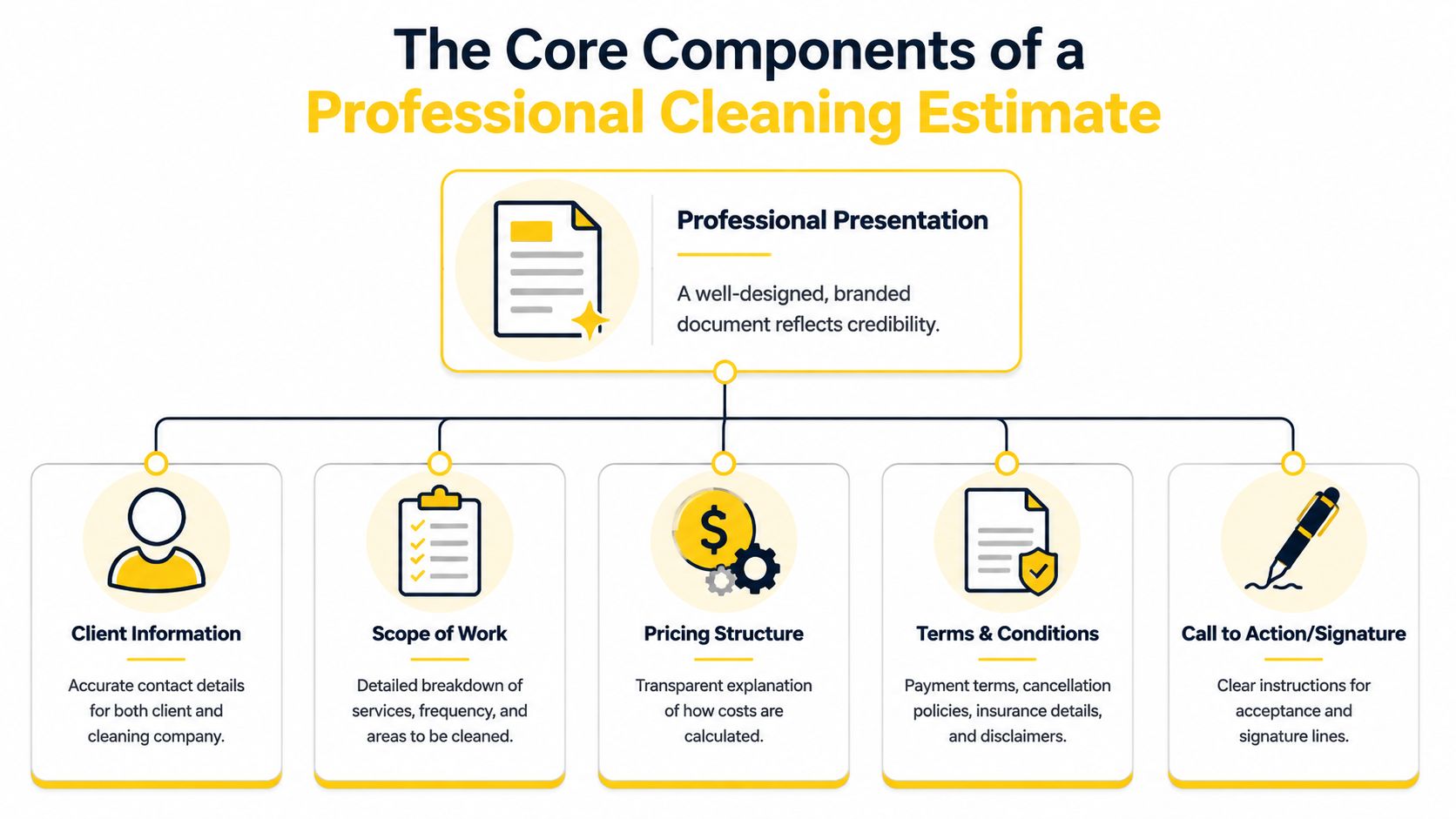
The top of the estimate should identify both parties clearly. That means your company name, logo, contact details, and the client's business name, site contact, service address, and estimate date. Keep it simple, but don't leave room for confusion.
Include these fields every time:
This sounds basic because it is. It's also where sloppy documents lose trust fast.
The scope of work is the most important part of the template. In this area, many cleaning businesses stay too vague. If your estimate says “office cleaning” and nothing more, the client has to guess what that means. One person assumes breakrooms are included. Another assumes interior glass is included. A third assumes daily trash service.
That's how disputes start.
Use area-by-area language. Spell out task frequency. Separate routine work from periodic work. A critical scope gap happens when vendors estimate from blueprints instead of after a physical walkthrough, with 70% of contracts missing itemized scope and a projected 85% of facility managers rejecting estimates without physical walkthrough verification in 2026, according to Millfac's commercial cleaning cost guide.
The fastest estimate isn't the best one. The estimate that matches the building usually wins the longer game.
A cleaner structure looks like this:
AreaTasksFrequencyReceptionDust surfaces, vacuum, empty trash, sanitize touchpointsNightlyRestroomsRestock consumables, clean fixtures, mop floors, sanitize surfacesNightlyBreakroomWipe counters, clean sink, spot mop, empty trashNightlyPrivate officesDust reachable surfaces, vacuum, remove trashThree times per week
A robust estimate should also include insurance information, contract renewal options, and termination processes. Those items are legally required to protect both the cleaning business and the client, and they matter in an industry with over 3 million employees in cleaning occupations in the United States as of 2024, as noted in Aspire's cleaning estimate template guide.
That matters for two reasons. First, it signals professionalism. Second, it reduces friction once the client says yes because key business terms are already on the page.
For practical formatting ideas, a gallery of estimate form templates for service businesses can help you tighten your layout without overcomplicating the document.
End with a clear acceptance path. Don't make the client wonder what happens next.
Use a short close with:
If the estimate looks sharp, reads clearly, and closes with a direct next step, you've already separated yourself from a lot of competitors.
A 12,000-square-foot office can be one of the easiest accounts on your route or one of the worst-paying jobs in your book. The difference usually comes down to pricing logic. If the estimate template only stores a final number, it leaves too much room for guesswork. A strong template shows how you got there, which pricing model you used, and where labor can creep past the margin you planned.
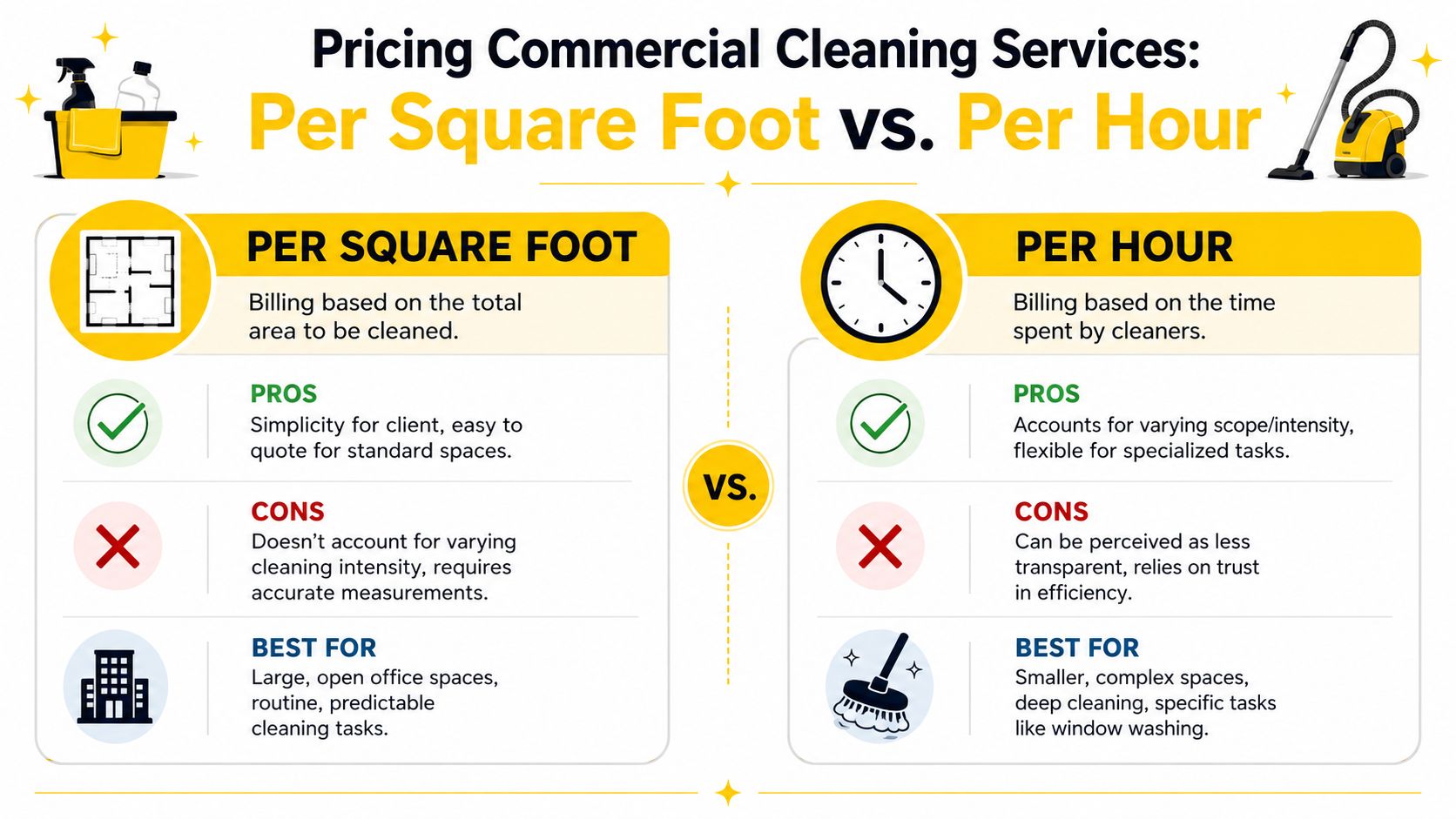
Standard commercial cleaning rates commonly range from $0.07 to $0.20 per square foot or $30 to $75 per hour, and those baseline costs are typically based on a three-times-per-week cleaning schedule, according to Housecall Pro's commercial cleaning pricing guide.
Each method has a place.
Pricing methodBest useMain riskPer square footRoutine office cleaning, predictable layouts, repeat serviceUnderpricing high-touch or irregular spacesPer hourDetailed work, variable scope, specialty environmentsClient uncertainty if time expectations aren't clear
Use per square foot for buildings with stable scope. Open office floors, standard restrooms, break rooms, and common areas usually fit this model because production stays fairly consistent from visit to visit.
Use hourly pricing when labor swings hard based on condition, security access, detail level, or room type. A small medical suite, post-construction touch-up, or fragmented floor plan can consume more time than a much larger plain office. Square footage alone will not protect your margin in those jobs.
Benchmarks help set a starting point, not a selling price. Earlier market ranges show how far rates can move by city and service level. A mid-cost market and a high-cost market can price the same square footage very differently, and both can still be correct.
That is why copying a national average into your template causes revenue leaks.
Local wages, parking delays, after-hours access, supply requirements, and touchpoint volume all change the cost of service. If your crew spends 20 extra minutes getting in, hauling equipment through a loading dock, or working around tenant restrictions, the estimate has to absorb that labor somewhere. Good templates make those adjustments visible instead of hiding them inside a low base rate.
Choose the pricing model that matches labor demand as closely as possible.
Ask these questions before you set the price:
Aspire's template guidance gives another useful checkpoint. It notes average commercial cleaning cost at $0.17 per square foot or $25 per hour per worker, and shows how a 1,000-square-foot office at $0.15 per square foot totals $150 per cleaning session in that framework. It also notes that medium office routines can involve two cleaners working three hours for a total of $210 to $450. Those examples are useful because they tie price back to staffing assumptions instead of treating the rate as arbitrary.
Commercial cleaning is sold as a service, but it is priced through labor deployment. Owners who miss this usually underbid nice-looking buildings with hidden labor traps.
Your template should account for:
I have found that closing rates improve when the estimate system forces these decisions before a price ever appears. That is the difference between a form and a pricing process.
Field note: Bad pricing usually starts with bad production assumptions.
If you want a practical framework for setting those assumptions, this guide on how to price cleaning jobs for different service types can help refine the logic behind your template. And if you are still building estimates by hand, this is usually the point where automation starts paying for itself. Tools like Estimatty can turn your pricing rules into repeatable estimates, which cuts manual admin time and helps you send consistent bids without rebuilding the math every time.
A flat estimate gets accepted. An itemized estimate gets accepted at a better value.
The reason is simple. Clients don't always reject add-ons because they don't want them. They reject them because the estimate hides them, bundles them vaguely, or introduces them too late. When you build optional line items into the commercial cleaning estimate template from the start, the conversation shifts from “Why is this so expensive?” to “Which level of service do we want?”
Special services work best when they appear as structured options below the recurring scope. They shouldn't read like a random upsell added after the walkthrough. They should look like part of a complete facility care plan.
Use a short section titled “Optional Periodic Services” or “Recommended Add-On Services.” Then list each service with unit pricing and a short benefit statement.
Here are concrete ranges you can use from Commercial Cleaning Corp's pricing calculator:
That structure does two important things. It protects your base price from carrying extra work it shouldn't include, and it gives the buyer a menu of clearly defined upgrades.
The wording matters. Don't write “extra service available upon request.” That sounds like an afterthought.
Try positioning it like this instead:
That language frames the service around building condition and outcomes, not just extra revenue for you.
Better estimates let clients choose upgrades with confidence instead of forcing your team to sell them in a follow-up call.
Give each add-on its own approval checkbox or acceptance line. That way the client can approve recurring cleaning and select periodic services in one pass.
A strong layout includes:
Optional serviceUnit priceFrequency optionClient approvalCarpet shampooing and extractionPer sq. ftQuarterly or as neededYes / NoFloor waxing and polishingPer sq. ftMonthly, quarterly, or customYes / NoTile and concrete scrubbingPer sq. ftQuarterly or as neededYes / No
If you need examples of how to organize services cleanly, a cleaning service price list format can help you turn add-ons into a visible part of the estimate rather than a buried note.
A commercial cleaning estimate isn't just a pricing sheet. It's your first layer of protection when memory fails, expectations shift, or payment gets slow. If your terms are weak, the client decides what the agreement meant. That's not where you want to be.
Start with estimate validity. Most commercial cleaning estimates are valid for exactly 30 days, which sets a defined decision window and protects you from pricing drift, according to Bella Facility Solutions' cleaning estimate template reference.
That line should appear near the pricing summary or signature area.
A simple version works well:
This estimate is valid for 30 days from the issue date. After that period, pricing and scope may be subject to review.
Then handle payment in plain language. Don't bury it in dense legal copy. State when invoices are issued, when payment is due, and what happens if the account goes overdue. Keep it readable enough that the client can't say they missed it.
Cleaning schedules change. Tenants move out. Managers get replaced. Access windows shift. Your terms need to account for that.
Include language for:
A clear estimate makes many disputes preventable. If the estimate says nightly restroom restocking is included but daytime porter support isn't, both sides have something concrete to point to.
The estimate should also tie back to your insurance and basic liability boundaries. The goal isn't to sound threatening. The goal is to show that you run a serious operation.
Keep this portion straightforward:
Short, clean terms build trust better than bloated legal filler.
If a term only exists in your head or in a text message, it doesn't protect the business.
A lot of owners wait until the client is ready to sign a full service agreement before discussing renewal and termination. That's late. Those terms affect how the buyer evaluates risk.
Even at the estimate stage, include a brief note that explains:
ClauseWhy it mattersContract renewal optionShows what happens when the initial service term endsTermination processDefines notice expectations and avoids abrupt account lossService exclusionsPrevents unpriced work from being treated as included
When your estimate handles these points cleanly, it signals discipline. Clients notice that.
Templates help until volume exposes their limits. A document can standardize your layout, but it can't answer a lead at midnight, ask follow-up questions, or force consistency when three different office staff members are sending estimates.
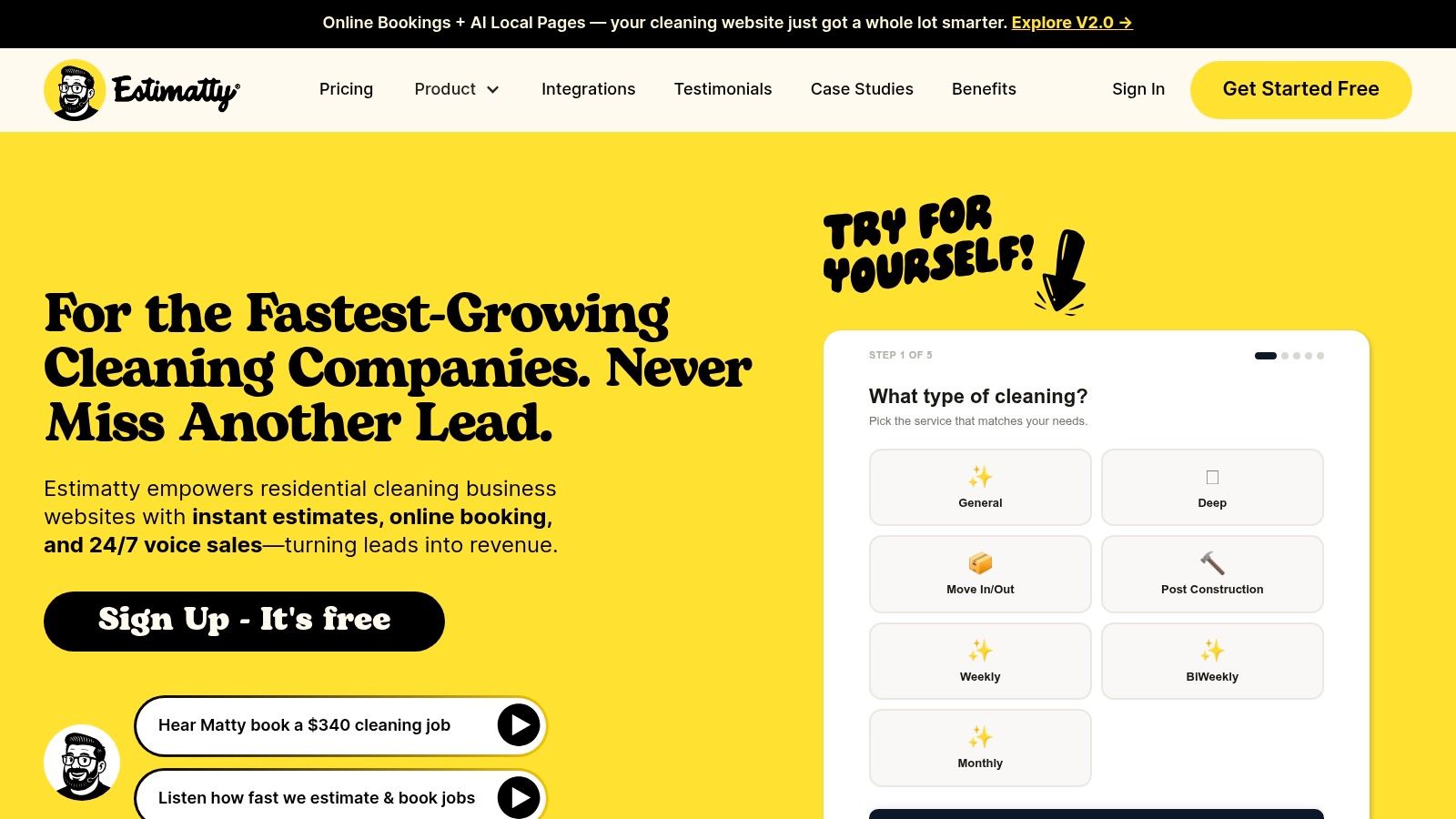
A significant shift happens when the template becomes a tool. That means your pricing rules, service tiers, scope prompts, and add-on logic live inside a process instead of inside one person's head.
A useful estimating system should handle repetitive work without lowering estimate quality.
That usually means:
That last point matters more than most owners admit. Buyers often choose the company that responds first, especially when the estimate is clear and easy to approve.
At this point, some owners get nervous, and they should. Automation is not permission to skip site verification.
As noted earlier, a major scope gap appears when vendors estimate from blueprints instead of after a physical walkthrough. That same Millfac analysis says 70% of contracts miss itemized scope, and a projected 85% of facility managers reject estimates without physical walkthrough verification in 2026. Good automation should support walkthrough discipline, not remove it.
In practice, that means using technology to gather initial details, send a preliminary estimate fast, and flag accounts that need on-site confirmation before final approval.
Here's a useful companion if you're comparing digital workflows, signatures, and approval speed. This overview of an electronic signing solution helps when you're tightening the handoff from estimate to signed acceptance.
A modern estimate process usually looks more like this:
That's different from opening a spreadsheet every time and rebuilding the same math.
For owners who want a faster starting point, a cleaning estimate calculator is a useful bridge between manual pricing and a more automated system.
A short demo makes the difference easier to picture:
Once estimating gets faster and cleaner, the next constraint is usually labor. Winning more work doesn't help if you can't staff it reliably. That's where operational tools and hiring systems start to matter alongside your estimate workflow. If you're building the team behind the accounts you're closing, pipehirehrm.com is worth keeping in view, and both estimatty.com/blog and get.pipehirehrm.com/blog are useful places to keep learning from operators solving these same growth problems.
The point isn't to chase more software. It's to remove the manual bottlenecks that keep the owner trapped in admin.
A polished template gets you started. A system closes faster, scopes cleaner, and gives your team consistency without late-night spreadsheet work. If you want that system in one place, Estimatty helps cleaning businesses deliver accurate estimates around the clock, standardize pricing, and turn incoming leads into real opportunities without all the manual busywork.