September 8, 2026
How Much Should a House Cleaning Cost in 2026
How Much Should a House Cleaning Cost. Learn how much a house cleaning should cost in 2026, with real pricing ranges by home size, service type, and tips

Friday, July 31, 2026
Find the perfect sample job posting for your cleaning business. Get 6 ready-to-use templates for technicians, supervisors, sales reps, and more.

Staring at a blank page while you need cleaners, estimators, and office support right now? That pressure is real. A weak sample job posting brings in people who skim, apply late, ghost after the interview, or can't handle the pace of a cleaning operation. A strong one does the opposite, it screens for fit, sells the work transparently, and gives serious candidates a reason to respond quickly.
In cleaning, the best postings don't read like corporate filler. They sound like the job, show the schedule, explain the tools, and make it clear how your company runs. That matters even more in a market that moves fast, because the labor picture changes quickly, and openings are a real-time signal of hiring pressure and demand, not a static list on a page, as the Bureau of Labor Statistics shows in its JOLTS series (BLS JOLTS release). If your hiring process still relies on vague copy and slow follow-up, you're losing the people who could help you scale.
One more reason this matters, job-posting data has matured into a useful economic signal. Indeed's hiring-lab tracker uses February 1, 2020 as a baseline, where 101 means postings are 1% higher than that point, and the company says its postings data aligns well with vacancies, hires, and new-hire wages in a 2024 analysis (Indeed hiring-lab job postings tracker). For owners, that's a reminder to write postings that are clear enough for humans and structured enough to support modern hiring systems.
A strong cleaning technician posting has to do two jobs at once. It should attract someone who can clean well and someone who can handle customers, timing, and the little details that make jobs profitable. In a modern cleaning business, that usually means the technician also needs to understand pricing flow, add-on services, and the way tools like Estimatty reduce back-and-forth by standardizing estimates and booking details.
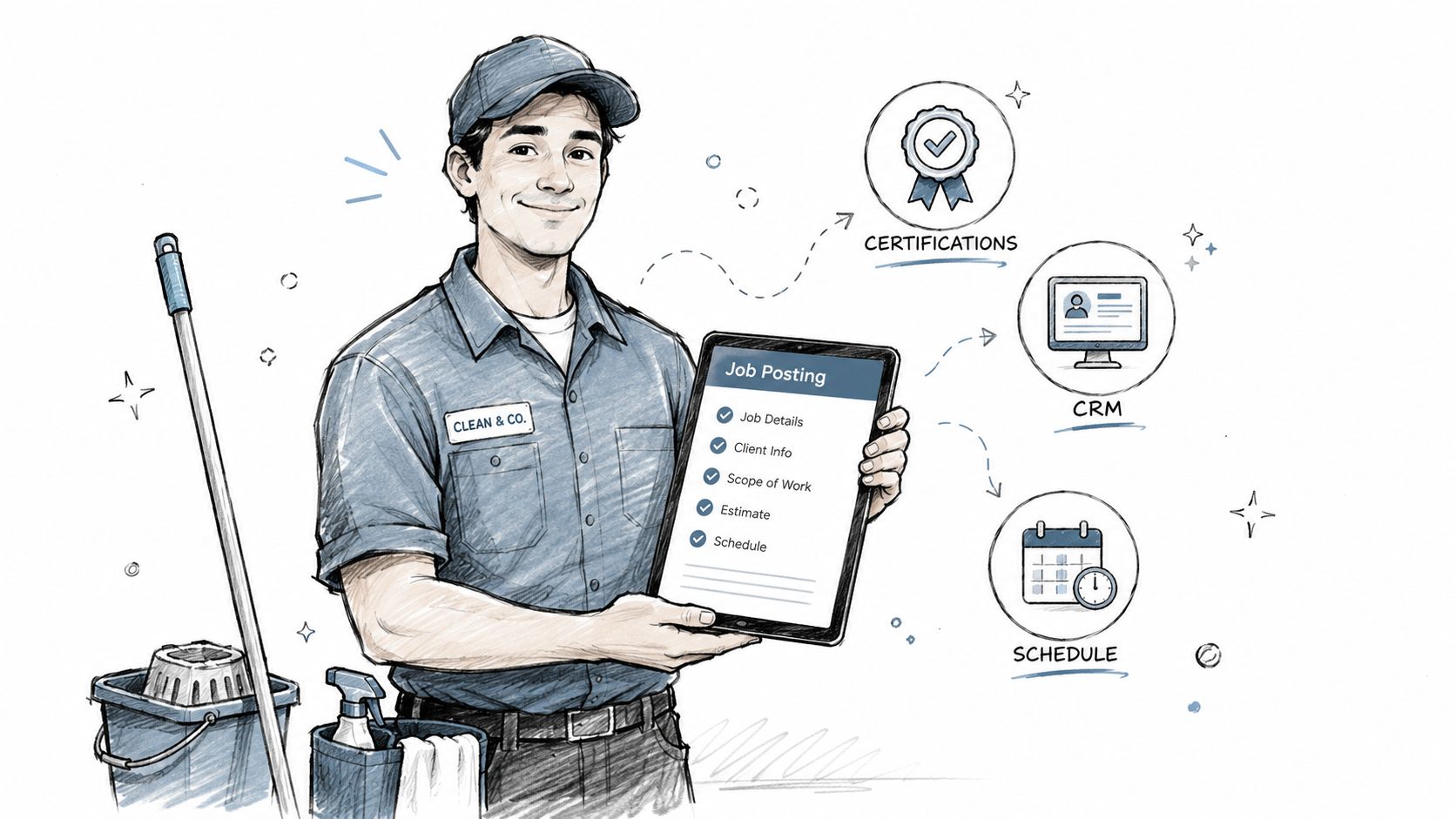
A posting like this works best when it spells out the day-to-day in plain language. The University of Wisconsin recommends clearly identifying screening criteria before finalizing the post, including the required education, experience, skills, and certifications (UW HR posting guidance). The Oregon Department of Administrative Services also advises plain language, short sentences, active voice, and a 7th- to 8th-grade reading level for job postings (Oregon DAS job postings guide). That's the right standard for cleaning roles, because the best candidates often move fast and don't want to decode corporate jargon.
Practical rule: Write the post so a good cleaner can tell, in one read, whether they can do the job and whether the schedule works for them.
Use short sections for duties, equipment, customer communication, and certification requirements. St. Olaf College's guide recommends postings around 250 to 300 words, says shorter postings receive more applications, and caps posts at no more than 7 bullet points total (St. Olaf job postings guide). That's a useful benchmark if you want the posting to stay readable on a phone.
A practical cleaning technician version should also include growth. Mention advancement into team lead work, quality control, or training support. If your company runs evenings, weekends, or a 24/7 service model, say so plainly. Reliability sells, and serious cleaners want to know the business has enough volume to keep them busy.
For duty definitions, an internal role outline like the one in Estimatty's cleaner responsibilities guide can help you tighten the wording and avoid vague filler, especially if your teams handle both homes and commercial accounts: duties of a cleaner.
Independent cleaners don't want a job ad that reads like a trapped employee role. They want autonomy, flexibility, and enough structure to feel supported without being micromanaged. That's why a 1099 posting should lead with independence, then explain the systems that make the work easier, including how Estimatty can help with estimates, customer details, and booking flow.
The strongest version of this template is direct about schedule control. Say whether the contractor can choose routes, accept or decline jobs, and build a personal client base. If you hide that information, good operators assume the role isn't flexible. The better pitch is simple, you bring the work style and standards, and the company brings the platform, leads, and support.
A useful way to frame the opportunity is around professionalism, not hustle language. Cleaning contractors want to know what standards they'll be held to, what equipment they need, and what protections are required. That includes insurance, background checks, and whether supplies are theirs or yours. A clean, specific post lowers friction because it answers the questions contractors usually ask in the first call.
People who already clean on their own are looking for control. If the posting feels controlling, they'll move on.
Lead with the things that matter most to a contractor. That means scheduling flexibility, direct customer interaction, and the chance to grow a stable book of work. If you offer starter training, say that too, especially if you want to recruit newer cleaners who are serious but still building confidence. The right balance is support without overpromising.
This is also where real-world tone matters. A contractor post should sound like a working relationship, not a corporate career site. If you're using modern systems, mention them plainly. A line such as “We use technology to organize customers, estimates, and scheduling so you can focus on the work” tells contractors that your company is organized, and it does it without drowning them in software jargon.
A sales or estimating role in cleaning is different from a generic sales job. The person isn't just selling a service, they're helping customers understand what the work involves, what add-ons make sense, and why your company feels easier to trust than the next one. That's why this posting should make the revenue connection obvious from the first paragraph.
The best angle is to show how technology supports the rep without replacing them. Estimatty can handle fast initial estimate flow, then the representative steps in to build trust, answer edge-case questions, and close the sale with a human touch. That combination matters because customers still want reassurance before they book recurring cleaning, deep cleaning, move-out work, or commercial service.
Use a structure that sounds like a real revenue role. Spell out what the rep owns, lead follow-up, consultation calls, estimate reviews, upsell conversations, and conversion tracking. The case-study guidance in the brief points toward a before/after funnel that tracks lead-to-qualified-to-close conversion, pipeline by segment and stage, retention or churn by cohort, and capacity bottlenecks, which is a practical way to measure a role like this (Chris Beals hiring case studies guide). That logic belongs in the posting because good candidates want to know how performance will be judged.
You can also borrow the clarity of a real sales narrative. Problem, solution, result. That same framework is recommended in case-study guidance, and it works here because estimating staff want to know the challenge they're walking into, the tools they'll use, and what success looks like (Indeed case study guidance). Keep the post concise enough to stay readable, but detailed enough to show the earning path and the support structure.
The rep is not there to repeat what software already knows. The rep is there to turn interest into a booked customer.
If your cleaning company uses Estimatty, say that the estimating system gives speed and consistency while the rep handles the relationship and the close. Then point them to thought leadership or process content on your blog so the role feels modern, not administrative. For a direct example of the estimate workflow, this internal resource fits naturally: how to estimate cleaning jobs.
Operations and scheduling roles attract a different kind of candidate. These people want to run the machine, not just work inside it. In a cleaning business, that means coordinating crews, reducing chaos, protecting margins, and making sure the schedule matches the actual workload. A good sample job posting for this role should make those responsibilities feel concrete, not abstract.
The Oregon guidance on plain language is useful here because operations copy can get bloated fast. Short sentences, clear headers, and plain verbs help candidates understand what they'll own (Oregon DAS job postings guide). The University of Wisconsin also says postings should outline both qualifications and the benefits or opportunities the candidate gains, so don't just list scheduling software and CRM experience, show what the role gets to improve (UW HR posting guidance).
This is the best place to talk about process improvement. A strong operations manager post should mention on-time completion, customer satisfaction, revenue per job, and the systems they'll use to keep those numbers healthy. If Estimatty helps reduce admin burden and tighten estimate accuracy, say that plainly. Candidates in this lane want proof that the company values systems, not fire drills.
Add a short line about follow-up discipline. In cleaning, revenue leaks often happen when estimates don't get followed up, scheduling slips, or handoffs are sloppy. This role should own the fix. The point isn't to overload the candidate with every pain point in the business. It's to show that you know where the operational drag lives and that the job exists to remove it.
A strong opening can sound like this, “You'll manage scheduling, service coordination, and process improvements for a growing cleaning team.” That's enough to set the tone. Then you can show the software stack, growth path, and training support without making the ad feel stuffed. For a practical reference on workflow and scheduling systems, this internal link belongs here: scheduling software for cleaning business.
Team lead and crew supervisor roles are where a lot of cleaning businesses either build stability or create turnover. Experienced cleaners step into leadership when they feel respected, trusted, and paid like people who carry real responsibility. A good posting should reflect that reality instead of framing the role like a slightly bigger cleaning shift.
Start with leadership, not just labor. The candidate needs to know they'll coach a team, protect quality standards, and help keep customers happy. The posting should also make it clear they'll be part of the company's growth path, not stuck in a dead-end title. That's especially important if you want to promote from within and build a leadership bench as you expand into more crews or more locations.
This is a strong place to tie in profitability awareness. If supervisors use Estimatty or similar tools to understand pricing and job margins, they can make better calls in the field. That helps them explain why timing, crew size, and add-on work matter. It also gives them a better sense of how quality and efficiency connect to business results.
Use a few concrete expectations instead of a long wall of text. For example, list team productivity, customer satisfaction, and quality scores as the metrics that matter. Then spell out that the role includes coaching new hires, checking work quality, and helping the team follow company systems. If you want better applicants, make the leadership path visible. People who are already good at the job often want to know what comes next.
Good supervisors don't just finish jobs, they keep the next three jobs from going sideways.
If you can support schedule flexibility, say so. Supervisors often carry more life logistics than entry-level cleaners, and that matters when they decide whether to apply. For a manager-focused perspective that fits this role, the internal resource here works well: tips for managers.
A cleaning company's customer service role should read like a real front-line job, because that is what it is. The posting needs to describe someone who can handle the calls and messages software cannot resolve on its own, including the awkward customer, the last-minute reschedule, the service recovery conversation, and the booking call that needs good judgment. Estimatty's AI-assisted front end, including the Matty agent, can handle first contact and basic estimates, which leaves the representative to manage the higher-value interactions that call for empathy, calm follow-through, and clear decision-making.
This role often fits people who want customer contact without a standard office routine. If you offer remote work or evening coverage, say it early. Candidates who need non-standard schedules want to know the job fits their life, not the other way around. A strong posting also explains how AI and humans work together, because applicants want to know whether software supports the role or replaces the parts they are good at.
The clearest postings spell out escalation. Say which situations move from the AI layer to the human layer, such as complex scheduling changes, upset customers, special access instructions, and service exceptions. That level of detail cuts down on back-and-forth and helps you attract people who like structured support work. It also filters for candidates who can stay steady when a conversation turns tense.
Response speed matters in cleaning, and the job posting should show that plainly. A missed call can become a lost booking, and a delayed reply can send a prospect elsewhere. That is a business issue, so the ad should frame the representative as part of the revenue engine, not just an administrative helper.
If you want hiring systems that fit that kind of front-desk work, pipehirehrm.com blog is a useful reference for employee management ideas. For a practical look at how a virtual front desk fits a small service business, use virtual receptionist for small business.
| Template | Implementation complexity | Resource requirements | Expected outcomes | Ideal use cases | Key advantages |
|---|---|---|---|---|---|
| Comprehensive Cleaning Technician Job Posting Template | Moderate–high (detailed role + tech expectations) | HR time, training, CRM/estimating tools, regular updates | More qualified, tech-capable hires; fewer mismatches | Modern cleaning companies and franchises using Estimatty | Clear expectations; attracts tech-savvy candidates; reduces hiring errors |
| Solo Cleaning Operator / Independent Contractor Job Posting Template | Low–moderate (contract terms, compliance) | Onboarding docs, contractor management, minimal payroll overhead | Scalable workforce, entrepreneurial applicants, lower fixed costs | Small businesses, solopreneurs, seasonal or variable demand | Flexibility for workers; low employer commitment; easy scalability |
| Sales or Estimating Representative Job Posting Template | Moderate (commission design + AI/tool integration) | Sales training, CRM/estimating software, commission plans | Higher conversion and revenue, better upsells | Companies scaling revenue with AI-assisted estimating | Revenue-aligned hiring; higher earning potential; leverages AI |
| Operations Manager / Scheduling Coordinator Job Posting Template | High (systems coordination, reporting, process design) | Experienced manager, software/admin rights, analytics tools | Improved efficiency, reduced revenue leakage, optimized scheduling | Multi-location or rapidly scaling cleaning businesses | Direct operational impact; process improvements; profitability focus |
| Cleaning Team Lead / Crew Supervisor Job Posting Template | Moderate (people management + QA duties) | Leadership training, scheduling tools, QA processes | Consistent service quality, stronger teams, less owner oversight | Growing teams, franchises promoting technicians to supervisors | Career path for staff; quality control; improved team cohesion |
| Customer Service Representative / Virtual Receptionist Job Posting Template | Moderate (multi-channel + AI handoffs) | Remote infrastructure, CRM/chat/phone systems, shift coverage | 24/7 customer support, fewer callbacks, better issue resolution | Businesses with high contact volume or 24/7 service models | Flexible hours; hybrid human-AI workflow; efficient customer handling |
A good sample job posting starts with the role, but the win comes from how you customize it. The University of Wisconsin says to clearly identify screening criteria before the posting is finalized, and the Oregon guide pushes plain language, short sentences, and a readable structure (UW HR posting guidance, Oregon DAS job postings guide). That combination works in cleaning because it respects how candidates read, which is usually fast and on a phone.
Pay transparency matters too. Handshake's posting guidance says jobs in states including California, Colorado, Washington, New York, Illinois, the District of Columbia, Hawaii, Maryland, Minnesota, Vermont, Massachusetts, and Virginia must include pay on the post when the job is located there or performed remotely from those jurisdictions (Handshake job posting guidance). Even where pay disclosure isn't legally required, cleaning companies often get better applicants when they state the range up front, because it cuts wasted conversations and builds trust.
W2 versus 1099 also needs to be handled carefully. A W2 employee role usually works best when you want control, consistency, and training investment. A 1099 contractor setup fits better when you want flexibility and independent operation. Don't blur the two just to make the role sound attractive. Candidates can tell when the job is structured like employment but described like contractor freedom, and that mismatch creates turnover.
Post where the right people look. Industry-specific sites like pipehirehrm.com make sense for cleaning companies, and so do your own career page, local groups, referral channels, and school or hiring platforms when relevant. For shortlisting, focus on the basics first, work history that matches the role, schedule fit, communication style, and whether the candidate can handle the service level your business promises. The shortlisting of candidates playbook is a useful companion if you want a tighter review process.
A job posting is a sales pitch, but it's also a filter. The cleaner, estimator, or coordinator you want is usually the one who can read your ad, understand the job, and picture themselves succeeding in it. Make that decision easy.
If you're ready to turn your job postings into a hiring system, Estimatty can help you respond faster, standardize estimates, and reduce the lead drop-off that hurts growing cleaning companies. Visit Estimatty to see how AI-powered estimates, instant follow-up, and cleaner handoffs can help you book more of the right jobs while you hire the right people.