September 8, 2026
How Much Should a House Cleaning Cost in 2026
How Much Should a House Cleaning Cost. Learn how much a house cleaning should cost in 2026, with real pricing ranges by home size, service type, and tips

Sunday, June 14, 2026
Explore the essential duties of a cleaner for residential & commercial jobs. Learn how to price, schedule, and execute tasks for client satisfaction.
Ever finish a job and realize you underpriced the hardest parts by a mile? Most cleaning owners have. The walkthrough felt simple, the client said “just basic cleaning,” and then your team hit greasy kitchen fronts, soap-scummed shower glass, pet hair packed into carpet edges, and trash rooms that needed more than a quick bag swap.
That problem usually starts with a shallow understanding of the duties of a cleaner. If you treat the work like a generic checklist, your estimates come out soft, your schedule gets tight, and your margins disappear. If you define each duty clearly, you can price with more confidence, staff more intelligently, and sell add-ons without sounding pushy.
Cleaning is also more demanding than many clients realize. For maids and housekeeping cleaners, the work is overwhelmingly physical. The U.S. Bureau of Labor Statistics notes that in 2025 these workers spent 95.2% of the workday standing and 98.6% of the workday reaching at or below shoulder level. That matters when you're building service scope, labor expectations, and route density.
A cleaner's role also reaches beyond wiping surfaces. Standard occupational descriptions repeatedly include making beds, replenishing linens, cleaning rooms and halls, vacuuming, dusting, disinfecting restrooms, restocking supplies, reporting issues, and keeping carts stocked, as reflected in this housekeeping cleaner occupational description. In real business terms, every one of those duties has labor cost, risk, and client value attached.
If you're building a service company instead of just selling hours, that's the lens to use. Each duty below can function like its own profit center. Done right, it sharpens estimates, improves execution, and helps you decide what belongs in the base package and what should be priced separately. If you also offer exterior glass, don't ignore the liability side of window washing insurance for contractors.
A crew walks into a site that looked simple on the walkthrough. Ten minutes later, they are switching from dust mopping sealed concrete to spot-treating sticky vinyl near a breakroom, then hand-detailing edges where a machine cannot reach. That is how floor work burns margin. It looks routine until the surface mix, soil load, and access issues show up in real time.
Floor cleaning is one of the clearest profit centers in a cleaning business because clients see it fast and crews spend real labor on it. Good floor work protects retention. Bad floor work creates callbacks, longer job times, and pricing headaches on recurring accounts.
Square footage helps, but it never prices the whole job. Open commercial space with light traffic can move quickly. A smaller home with rugs, pet hair, dining chairs, and greasy kitchen lanes can take longer than the bigger property. The profitable estimate separates production cleaning from detail work and restoration.
Ask these questions before you quote or assign staff:
At this stage, owners either protect margin or give it away. If the estimate says "mop floors" and the site needs vacuuming edges, removing gum, burnishing high-traffic lanes, and hand-cleaning around fixtures, the crew ends up donating labor.
Estimatty helps when you build the quote around measurable variables like floor type, square footage, traffic level, and service level. Then pricing reflects the work instead of a rough room count. On the staffing side, PipeHireHRM is useful for defining who can handle routine maintenance versus machine work, finish care, or detail-heavy restoration. Those are different labor profiles, and hiring as if they are interchangeable creates quality problems.
Practical rule: Price mixed-surface floors as separate tasks. Maintenance cleaning, deep scrubbing, and specialty treatment should each stand on their own.
Floor services also create clean upsell paths. Entry mat rotation, grout detail, low-moisture carpet edge work, burnishing, and periodic machine scrubbing all belong in review conversations with the client. That improves results and raises ticket value without sounding pushy, because the recommendation is tied to wear patterns the client can see.
A client can walk past a decent floor job and still leave happy. A bathroom does not get that grace. One water spot on the faucet, residue around the toilet base, or odor near the drain can wipe out the value of everything else your crew did.
That is why bathroom work needs its own scope, labor plan, and pricing model. A half-bath used by office staff is a different job from a primary bathroom with etched glass, hair product buildup, hard-water scale, and damp corners that need extra attention.
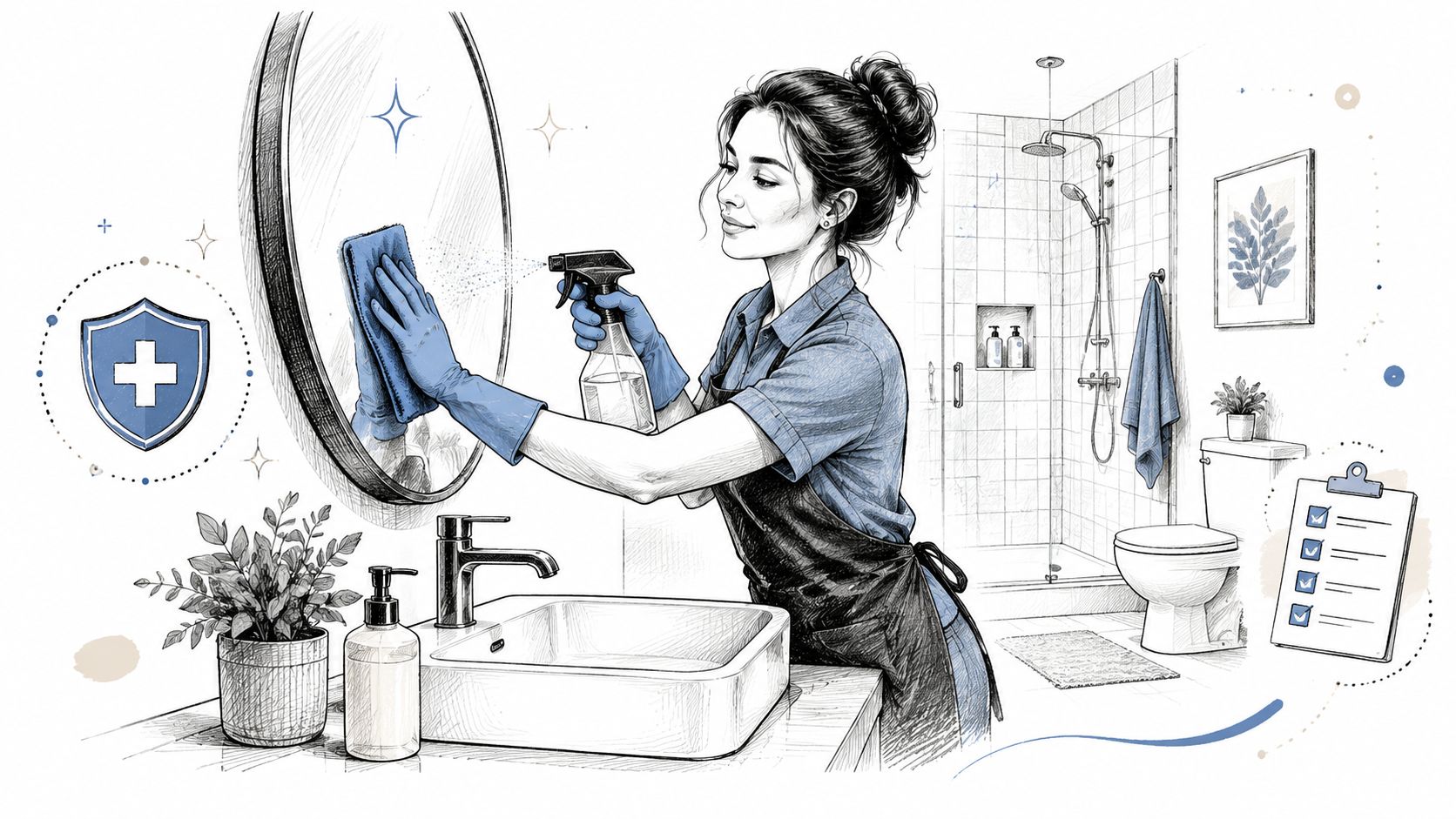
Owners lose margin here when they sell “bathroom cleaning” as if it were one task. It is a cluster of detail work. Toilets, sinks, mirrors, shower doors, tubs, fixtures, counters, splash zones, corners, and touchpoints each take time. Restocking paper goods or soap adds another service layer. Mold staining, heavy soap scum, or post-renovation dust can change the job again.
I price bathrooms in service levels, not by room count alone:
That structure protects profit and helps the client see why one bathroom may cost more than another. It also gives Estimatty better inputs. Glass shower panels, tile surface area, buildup level, and restocking requests are measurable factors. If you skip those variables, the quote looks clean on paper and bleeds time in the field.
Staffing matters just as much. A newer tech can usually handle a refresh clean. Deep detail work and buildup removal need stronger product knowledge, better sequence control, and more patience. PipeHireHRM becomes useful when you define those labor profiles clearly instead of sending every cleaner into every type of bathroom and hoping the result is consistent.
Chemical use is a real trade-off in bathrooms. Stronger disinfectants can speed up some tasks and create problems if the room has poor ventilation, reactive surfaces, or untrained staff. If bleach is part of the process, crews need written handling rules and a set order of operations. The Guide for Australian workplace bleach safety is a practical reference for training and safe use.
Bathrooms also create easy upsell paths that clients understand fast. Shower glass restoration, grout detail, hard-water treatment, consumables restocking, and periodic deep sanitization are easy to justify because the client sees the difference immediately.
Practical rule: Price bathrooms by condition, fixtures, and risk level. “One bathroom” is not a usable production unit.
Kitchens make or break perceived value. A client can forgive a missed dust edge faster than a greasy hood, smeared backsplash, or crumbs packed around a toaster. Kitchen work is visible, detailed, and full of surfaces that react badly to the wrong product.
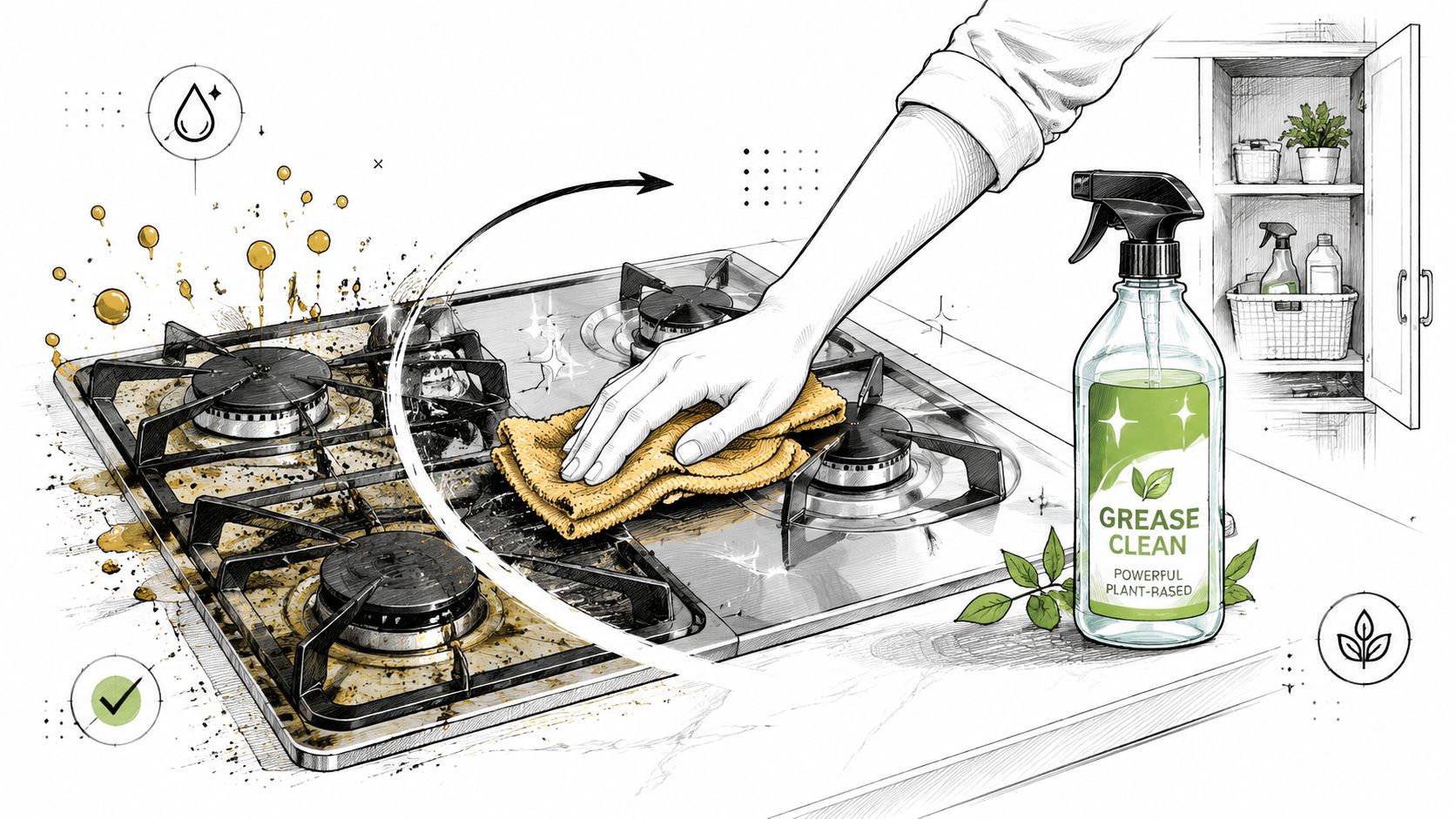
In residential cleaning, cooking habits matter more than square footage alone. A large kitchen with light use may clean faster than a compact one where someone fries food every night. In move-in and move-out jobs, interiors of cabinets, appliance fronts, oven grease, and refrigerator seals quickly turn a “standard clean” into detail work.
When I review missed-margin jobs, kitchens are near the top. The reason is simple. Owners hear “clean the kitchen” and assume counters, sink, and floor. Clients often mean counters, sink, stovetop, microwave, cabinet fronts, backsplash, exterior appliances, spot-cleaned walls, and degreasing around handles.
A cleaner should separate kitchen services into clear levels:
That structure protects your estimate and makes upsells easier because the client can see the difference in labor. It also helps staffing. New hires often need product training here because stone counters, stainless steel, painted cabinets, and glass cooktops all punish guesswork.
This short demo is useful for thinking about kitchen task framing and service conversations:
For Airbnb and turnover work, kitchen detail often carries more value than the bedroom because guest reviews punish obvious food-area neglect. If you use Estimatty for intake, ask about cooking frequency, appliance count, and whether cabinet fronts or inside-appliance cleaning are included. Those details separate a fast estimate from a callback-filled one.
Dusting looks easy from the outside. In practice, it's where quality control lives. Anyone can wipe the middle of a table. Skilled cleaners catch the shelf edges, lamp bases, baseboards, fan blades, blind slats, picture frames, and the top of the refrigerator the client hasn't looked at in months.
This duty also changes by environment. In residential work, décor density and sentimental items slow the job. In offices, desk policies and electronics matter. In post-renovation cleaning, dusting becomes containment and sequencing more than simple surface care.
Bad dusting spreads particles around and leaves clients sneezing an hour later. Good dusting follows a path, usually top to bottom, with the right cloths and enough changes to avoid smearing grime from one room to the next. The tool set matters. Microfiber, extension dusters, step stools, and separate cloth systems for delicate surfaces aren't optional if you want consistency.
A few practical rules make dusting profitable instead of annoying:
One reason this matters commercially is that the role of cleaners keeps expanding beyond visible cleaning. The Bureau of Labor Statistics projects about 366,600 openings per year for janitors and building cleaners over the 2024 to 2034 period, and current role expectations increasingly include inspections, reporting maintenance defects, equipment handling, and supply support. For owners, that means dusting isn't just a wipe-down duty anymore. It's part of how staff observe property condition and flag issues before the client does.
A cleaner who notices dusty vents, loose trim, and a water spot forming under a windowsill delivers more value than a cleaner who just wipes what's at eye level.
Vacuuming is recurring revenue because it repeats often, clients understand it, and neglected carpets show fast. It's also one of the clearest examples of why the duties of a cleaner should be separated into maintenance versus corrective work. A weekly pass through low-pile carpet isn't the same service as pet-hair extraction from stairs or stain treatment in a rental turnover.
Carpet care starts with the vacuum itself. Cheap residential machines slow crews down and leave edges dirty. Commercial-grade vacuums with strong agitation, hose tools, and reliable filtration make a visible difference, especially in bedrooms, traffic lanes, and under furniture lips where debris builds up.
You need separate language in your estimate or you'll blend two different jobs into one underpriced line item.
Pet homes are the classic margin trap. Hair wraps around brush rolls, clings to upholstery, and gathers along baseboards. If intake doesn't ask about pets, your estimate is guessing. The same applies to move-ins where drywall dust or construction residue has settled into carpet fibers.
For clients asking how to maintain rugs between professional visits, this guide on deep cleaning area rugs at home can support the conversation without overpromising what your standard service includes.
Vacuuming also sells well when positioned around comfort and upkeep, not just appearance. Families with kids, allergy-sensitive households, and short-term rental owners all care about how the room feels underfoot and how clean it appears in daylight. If you use Estimatty, carpet square footage, rug count, stairs, and pet status should all feed the estimate before the first site visit.
A cleaner finishes a solid visit, then loses the client's confidence at the dumpster. A leaking bag in the hallway, recycling tossed into general waste, or an overflowing breakroom bin left behind will undo a lot of good work. Trash removal looks simple on the estimate, but in practice it affects labor time, liability, and whether the client feels the service was handled professionally.
This duty also has direct pricing value. Emptying a few bathroom and desk bins is routine maintenance. Hauling heavy kitchen waste, breaking down boxes, sorting recycling, clearing garage overflow, or separating donation items during a move is different work with different labor and disposal demands. If you price all of that under one generic line item, margin disappears fast.
Strong crews do more than pull liners and walk out. They replace bags, watch for leaks, control odors, spot contamination in recycling, and leave the collection area clean. Clients rarely praise trash removal out loud, but they notice every miss.
The primary trade-off is speed versus control. A rushed crew can clear bins quickly and still create call-backs if drips hit the floor, food waste sits in the wrong container, or building rules get ignored. In offices, clinics, and multi-tenant properties, that creates more than inconvenience. It creates complaints, extra labor, and risk.
Set the scope clearly:
This section is a profit center when you scope it correctly. Estimatty should reflect bin count, overflow volume, recycling requirements, stair carries, and disposal distance instead of burying all waste handling inside a flat cleaning price. That gives the client a clear reason for the number and protects your labor target.
Staffing matters too. If you hire through PipeHireHRM, the job description needs plain language. “Trash removal” is vague. “Lift bags safely, replace liners, sort approved recyclables, report restricted materials, and clean residue around bins” gives applicants and supervisors something actionable.
There's also an easy upsell here. Clients dealing with odor, cluttered utility areas, or chronic breakroom overflow often need a scheduled waste reset, not just basic bin service. Package it separately, train for it, and your crew stops treating trash as an afterthought. Your business gets a cleaner handoff, fewer complaints, and better margins.
Window and glass work is one of the most visible duties of a cleaner because the result is either obvious or disappointing. There's no hiding streaks in afternoon sun. The upside is that clients immediately see the difference, which makes this one of the easiest premium add-ons to sell.
Interior glass often belongs in recurring service. Exterior windows, high-reach panes, storefront runs, and ladder work should be scoped separately. That's where many owners undercharge. They bundle mirrors, shower glass, sliding doors, French panes, and second-story exteriors into one price, then wonder why the crew ran long.

Glass cleaning needs clear boundaries before the job starts. Count panes, note access, ask whether tracks and frames are included, and separate interior from exterior work. Commercial clients usually understand this quickly. Residential clients often assume all visible glass is part of the same service unless you explain otherwise.
Useful distinctions include:
This duty also ties directly to risk. Ladder safety, footwear, tool choice, weather judgment, and insurance all matter more here than in standard room cleaning. If your crews do any exterior work beyond easy reach, document the process and price accordingly. Clients buying appearance care for storefronts, offices, and vacation rentals will often pay for this separately when you explain the scope in plain terms.
Clean glass is one of the fastest ways to make a property look better without changing anything else. That's why it should be sold as a defined service, not a vague extra.
Laundry is one of the most underestimated duties of a cleaner because it sounds simple and becomes time-heavy fast. Strip beds, inspect linens, start loads, manage drying time, fold, remake beds, and suddenly a routine cleaning visit turns into a choreographed turnaround. In vacation rentals and short-term stays, linen handling often matters as much as the cleaning itself.
Not every client needs it, which is exactly why it should be offered as a defined add-on instead of casually bundled into every package. A sheet change is not the same thing as full laundry service. Towel refresh for an Airbnb isn't the same thing as stain treatment, folding, and closet organization for a family home.
If you include laundry by default, you're inviting margin leaks. If you separate it clearly, it becomes a service clients can choose based on convenience.
Here's the simplest structure:
Vacation rental owners usually understand this right away because guest readiness depends on it. Residential clients may need more education. They often assume “make the beds” includes whatever laundry is necessary to make that happen. Your estimate should state whether fresh linens must be left out, whether on-site machine time is included, and what happens if dryers run long.
Linen handling also rewards process discipline. Label closets, standardize fold styles, note fabric sensitivities, and separate whites from mixed loads without improvising. If you're scaling staffing, this is another area where hiring for reliability and routine-following matters more than personality alone. PipeHireHRM-style role definition helps because laundry-heavy accounts need people who can track sequence, not just wipe surfaces well.
| Item | Implementation complexity | Resource requirements | Expected outcomes | Ideal use cases | Key advantages |
|---|---|---|---|---|---|
| Floor Cleaning and Maintenance | Medium–High, surface-specific methods and equipment operation | Vacuums, mops, floor buffers, cleaners by surface; staff training | Durable, visually clean floors; pricing tied to sq ft; recurring revenue | High-traffic homes, offices, post-construction, retail | High-frequency service; easy sq ft pricing; upsell sealing/polishing |
| Bathroom Cleaning and Sanitization | High, disinfection protocols and careful detail work | EPA-approved disinfectants, PPE, grout tools, ventilation awareness | Hygienic, sanitized bathrooms; premium-priced; high client satisfaction | Residential bathrooms, medical offices, post-construction, rentals | Commands premium margins; visible hygiene benefits; recurring demand |
| Kitchen Cleaning and Degreasing | High, heavy soils and appliance detail require skill | Degreasers, specialty cleaners, appliance tools, surface-safe products | Grease-free, sanitary surfaces; high perceived value and transformation | Busy family kitchens, restaurants, move-in/out, vacation rentals | Premium pricing; many upsell opportunities (oven, hood, appliance detail) |
| Dusting and Surface Cleaning | Low–Medium, technique-sensitive but straightforward | Microfiber cloths, extendable dusters, polishers, ladders | Reduced allergens, tidy surfaces; baseline expectation for clients | Routine residential and office maintenance, seasonal deep cleans | Quick to perform; scalable; immediate visible improvement |
| Vacuuming and Carpet Care | Medium, equipment choice and stain protocols matter | Upright/commercial vacuums, HEPA filters, extractors, stain treatments | Improved air quality, maintained carpets, recurring revenue | Carpeted homes, offices, rentals, pet-owner households | High-frequency service; easy sq ft pricing; add-on deep cleaning |
| Trash Removal and Waste Management | Low, simple procedures but safety considerations | Trash liners, bins, sanitizers, disposal logistics, PPE | Decluttered spaces and odor control; improved cleanliness perception | All property types, events, post-renovation, commercial offices | Quick value-add; minimal training; supports eco-friendly messaging |
| Window and Glass Cleaning | Medium–High, technique and safety for streak-free results | Squeegees, microfiber, water-fed poles, safety gear for exterior work | Clear, high-impact visual results; premium add-on service | Residential exterior/interior, storefronts, high-rise offices | Dramatic before/after results; differentiator; premium pricing |
| Laundry and Linen Handling | Medium, fabric care and logistics increase complexity | Washer/dryer access or off-site service, detergents, stain removers | Fresh linens, higher guest satisfaction; strong add-on revenue | Vacation rentals, hospitality, busy families, turnovers | High perceived value; improves reviews; premium add-on opportunity |
The duties of a cleaner aren't just a job-description list. They are the moving parts of your business model. When owners stay vague about floor care, bathrooms, kitchens, glass, trash, dusting, carpets, and linen handling, they usually create the same problems over and over. Soft estimates, rushed crews, inconsistent service, and clients who think every extra task should be included.
The fix is operational clarity. Define each duty in plain language. Decide what belongs in your standard clean, what belongs in a deep clean, and what should always be treated as an add-on. Write those rules down, train to them, and use them in sales conversations. Clients don't need jargon. They need clear scope, consistent execution, and an estimate that matches the work that happens on site.
That clarity also improves profitability because it changes how you sell. Instead of offering “house cleaning” as one broad promise, you start selling specific outcomes. Clean, streak-free glass. Sanitized bathrooms. Degreased kitchens. Managed waste. Guest-ready linens. Those are easier to estimate, easier to delegate, and easier for clients to understand. They also create natural upsell paths without making your company sound pushy or vague.
Staffing improves when duties are systemized too. Hiring gets easier when the role is specific. Training gets faster when each task has a standard. Accountability gets better when crews know what “complete” looks like. If you're building a team, platforms like pipehirehrm.com can help you turn loose job ads into more structured hiring workflows. For ongoing operations and sales process ideas, the content on Estimatty's blog and PipeHireHRM's blog is a practical place to keep refining the system.
Estimates are where all of this comes together. A strong estimate protects margin before the crew ever drives out. It asks the right questions, captures the full scope, and separates standard work from specialty labor. That's where a tool like Estimatty can fit, especially for cleaning businesses that want more consistent estimate intake for common services like standard cleans, deep cleans, bathrooms, kitchens, and other task-based work.
If you want to grow, stop thinking of cleaner duties as a generic checklist. Treat them as service units you can price, train, schedule, and improve. That's how a cleaning company gets more predictable. It's also how owners stop leaving money on the table.
If you want a faster way to turn service scope into consistent estimates, Estimatty is built for residential and commercial cleaning businesses that want to capture job details, send estimates quickly, and standardize how common cleaning tasks are priced.