September 8, 2026
How Much Should a House Cleaning Cost in 2026
How Much Should a House Cleaning Cost. Learn how much a house cleaning should cost in 2026, with real pricing ranges by home size, service type, and tips

Sunday, August 2, 2026
Boost bookings with customer financing solutions for cleaning services. Compare BNPL, third-party loans, and in-house plans, and learn how to launch them.
You already know the scene. A prospect likes the clean, the turnaround, and the professionalism, then goes quiet the second the price lands in the inbox. That's not always a lost sale. In cleaning, it's often a financing problem disguised as a price objection.
Customer financing solutions are not a gimmick for big-box retail. They're a close-rate tool for service businesses that sell trust, speed, and repeat work. The businesses that treat financing like part of the estimate process usually book more jobs, while the ones that hide it at the bottom of the proposal mostly waste it.
The cleaning owner's mistake is thinking financing only matters for large-ticket retail jobs. It matters any time a customer likes the outcome but hesitates on the upfront spend. That happens on move-out cleans, deep cleans, post-renovation work, and commercial contracts where the buyer wants the job now but needs a different payment rhythm.
The market has already moved past “nice to have.” McKinsey estimated that U.S. outstanding balances originated through point-of-sale installment lending reached $94 billion in 2018, were expected to exceed $110 billion in 2019, and accounted for about 10% of all unsecured lending; McKinsey also said those balances had more than doubled between 2015 and 2019. The CFPB later reported that the five BNPL lenders it surveyed originated 180 million loans totaling $24.2 billion in 2021, up from 16.8 million loans and $2 billion in 2019 (McKinsey).
That growth matters to a cleaning operator because the buyer psychology is the same. A homeowner sees a quote for a whole-home clean, pauses, and looks for a softer entry point. A facilities manager sees a quarterly contract, likes the operational plan, then stalls on cash timing or budget approval. Financing turns that stall into a payment decision instead of a lost lead.
| Metric | Value | Period |
|---|---|---|
| U.S. outstanding POS installment balances | $94 billion | 2018 |
| Expected U.S. POS installment balances | More than $110 billion | 2019 |
| Share of all unsecured lending | About 10% | 2018 |
| BNPL loans originated by five surveyed lenders | 180 million | 2021 |
| BNPL loan volume | $24.2 billion | 2021 |
Most operators don't need a lecture about consumer credit. They need a decision framework. Which financing model fits your ticket size, which vendor won't choke your approvals, and which setup protects margin on a cleaning job? That's the useful part.
AI sales automation for cleaning services
The right financing model depends on ticket size and how fast the buyer needs to say yes. In cleaning, there isn't one universal answer, because a $250 deep clean, a $650 move-out clean, and a $5,000 commercial contract live in different worlds. If you pretend they're the same, you'll choose the wrong offer and blame the wrong problem.
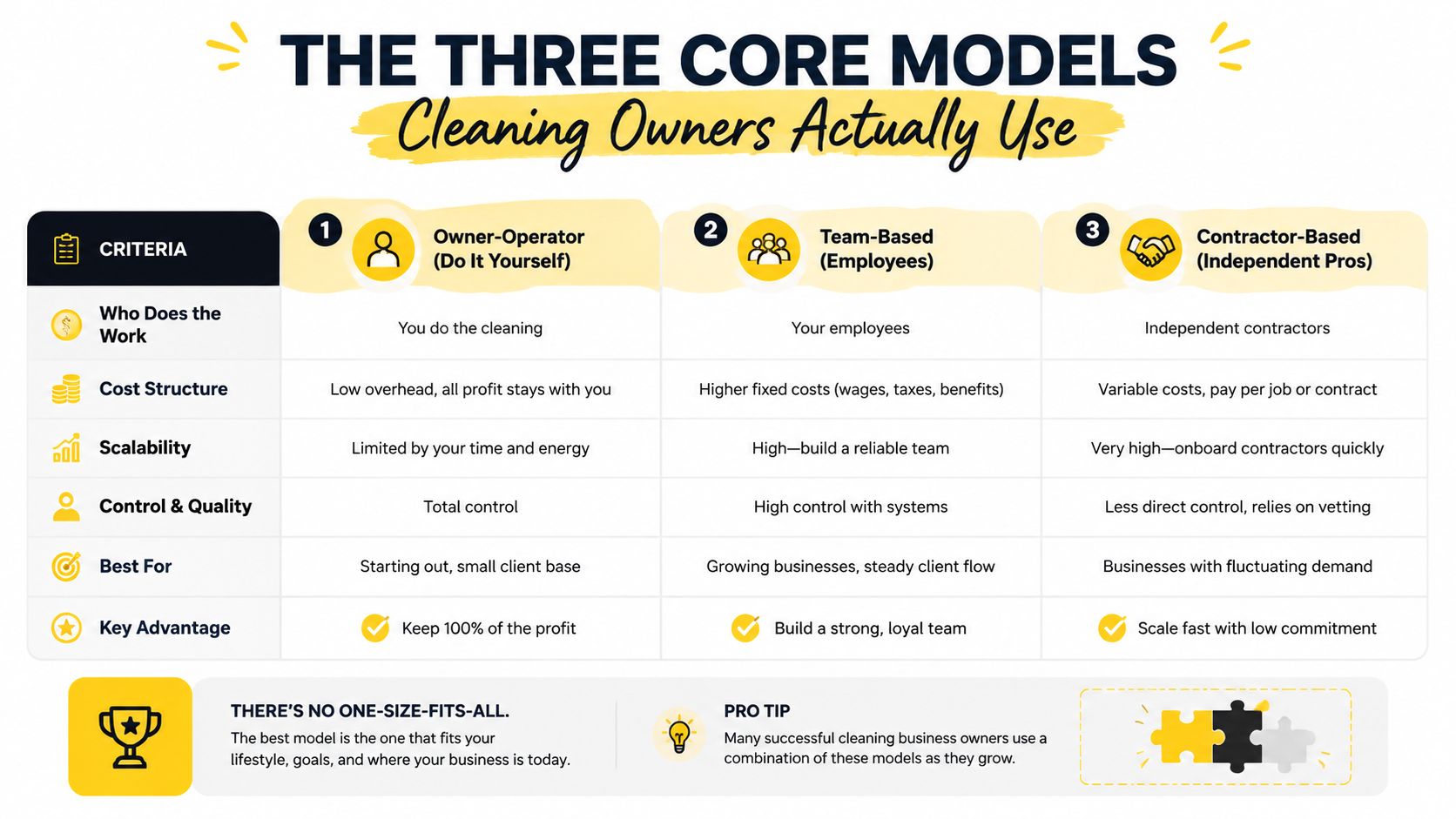
BNPL works best when the customer is already near the finish line and just needs a payment shape that feels safer. It's useful for smaller residential jobs where the buyer wants immediacy and doesn't want to think like a borrower. The CFPB defines BNPL as a loan or line of credit repaid in fixed installments, often through a point-of-sale flow, and notes that most BNPL loans are short-term and typically repaid over a few weeks to a few months (CFPB BNPL report).
That structure is fine for a one-off clean, but it's not always the best fit for recurring service revenue. If you're selling a quarterly or monthly cleaning contract, the customer may care more about schedule stability and service quality than short-term installment convenience. BNPL can still help, but it shouldn't be the only lever you have.
Third-party lenders make more sense when the ticket is high enough that the customer expects a formal financing decision. They're better for larger deep cleans, remediation-style work, and commercial jobs where the prospect wants structured terms instead of a soft payment plan. McKinsey notes that modern consumer-finance models are moving toward real-time, customer-level underwriting and preapproval scorecards because those mechanics help lenders surface the right offer faster (McKinsey).
Practical rule: if the job feels like a budget conversation, use a lender. If it feels like a convenience conversation, keep the offer simpler.
In-house plans are blunt instruments, but they can work for repeat commercial accounts or long-term residential clients. They're best when you know the customer, know the collections risk, and can control the contract language tightly. QuickBooks describes the mechanics clearly, the customer applies, the finance partner presents terms, the customer repays on schedule, and the provider pays the business upfront minus a fee. That's the cleanest version of the external model, and it's why many operators still prefer a third party over carrying the credit risk themselves (QuickBooks).
| Model | Best ticket | Approval friction | Fee to you | Cash-flow timing |
|---|---|---|---|---|
| BNPL | Lower to mid tickets | Low when embedded well | Usually visible in the discount or merchant cost | Often fast |
| Third-party installment lender | Mid to higher tickets | Higher, but manageable | Usually higher than a simple card fee | Usually upfront after funding |
| In-house payment plan | Trusted repeat accounts | Low for the customer, high for your team | Hidden inside collections risk | Slow, unless managed tightly |
The ugly truth is simple. Most cleaners don't need more financing options. They need one offer that matches the average ticket and doesn't turn the office into a collections department.
Shop financing vendors like you're buying close rates, cash flow, and fewer dead leads. A polished demo means nothing if the lender keeps rejecting good prospects or forces your office to babysit a clumsy application flow. For a cleaning business, that kind of friction kills bookings and wastes sales time.
Start with approval performance, because that is where the program lives or dies. Merchant survey data from RetailDive showed weak approval performance across merchants, with only 12% reaching approval rates of 80% or above, while 29% sat below 60%; the same survey later reported an average approval rate of 58%, with 45% of retailers below 60% and only 2% above 80%. If a vendor will not tell you where your offers land, or how often the lender says yes on real cleaning jobs, keep moving.
Ask for the numbers that affect bookings, not the sales pitch.
That last point matters more than vendors admit. If they push collections work back onto your office, the financing “solution” turns into a support burden. That is a bad trade for a cleaning company where the margin on the original job is already tight.
If the lender cannot fit into the way you already quote jobs, it is the wrong lender. Cleaning owners need a fast handoff from estimate to payment option, not a separate financing tab nobody remembers to use. Your service-business stack should support the sales motion, not interrupt it, so compare the vendor against the workflow you already run in comparing financing vendors against your service business software stack.
If your estimator or sales rep has to explain the financing twice, the offer is too clunky.
Press for plain-English answers on fees, settlement timing, cancellation handling, and what happens if approval rates drop. If the vendor talks only about “flexibility” and “conversion lift” but will not discuss operational edge cases, they are not selling a program. They are selling a headache.
Financing has to show up before the buyer hardens around the total price. If you wait until after the estimate is delivered, you've already framed the conversation as a sticker shock event. That's the wrong timing for a cleaning sale.
The best workflow puts the payment option inside the estimate-to-proposal handoff, right where the customer is still comparing choices. If you're using AI estimates software for cleaning, the estimate should not just show price. It should show the path to booking, with a financing option presented as part of the decision, not as a separate task.
The sequence should be simple. The estimate lands, the payment option is visible, and the customer can move forward without chasing a separate application link later. If the prospect has to search for the financing page after reading your proposal, you've already lost momentum.
Use the human handoff carefully. The rep should say the offer plainly, then stop talking. No rambling, no apology, no “if that helps.” The point is to make financing sound normal, because it is normal.
The worst mistake is hiding financing until the customer objects to price. At that point, you're negotiating from weakness.
The option should appear in the same places your estimate does.
The estimate should feel like a booking tool, not a document dump. That's especially true for cleaning jobs where speed matters and the buyer may be comparing multiple providers at once. A clear financing path keeps the prospect focused on the service, not the bill.
One more thing. Don't bury the payment option under fancy phrasing. Call it financing, call it a payment plan, or call it monthly payments, but say it directly and consistently. Mixed language confuses buyers and slows approvals.
Financing only works if the extra bookings cover the fee and the friction. That sounds obvious until you look at a small-ticket job and realize a bad offer can eat the profit. In cleaning, margin math matters more than buzzwords.
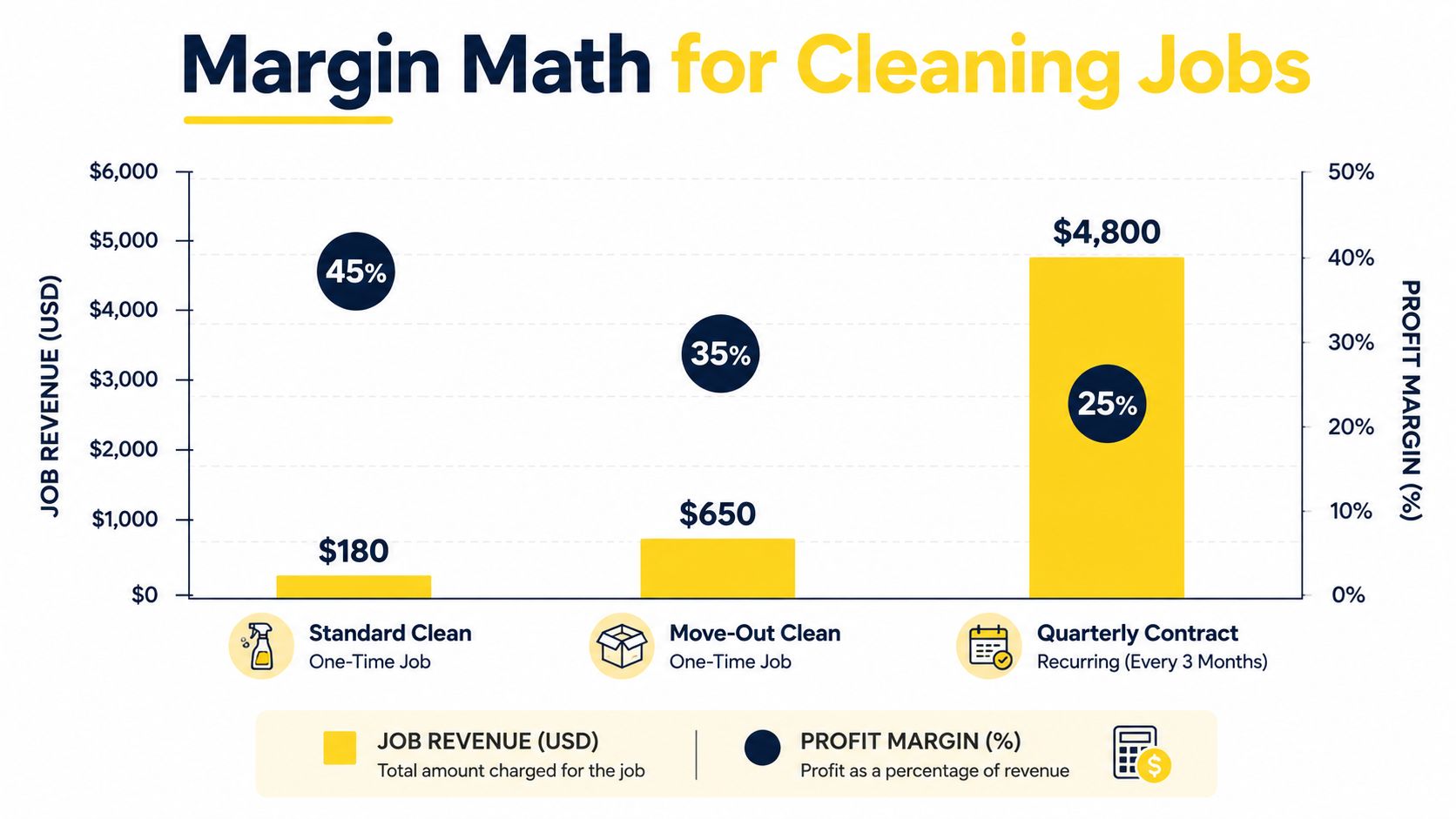
Using the published margin assumptions in the visual, a $180 standard clean at 45% margin leaves far less room for financing cost than a $4,800 quarterly contract at 25% margin does. That doesn't mean the smaller job can't be financed. It means the fee has to be tiny or the close-rate lift has to be real.
The same logic applies to the $650 move-out clean. That's usually the sweet spot where financing can rescue a deal that would otherwise die on price, without forcing you to stretch collections or discount too heavily. The problem is not the idea. It's the blended cost of fee plus discount.
| Job size | Avg ticket | Fee range | Min close-rate lift to break even |
|---|---|---|---|
| Standard clean | $180 | Low to moderate merchant fee | Must be meaningfully higher than baseline to justify cost |
| Move-out clean | $650 | Moderate merchant fee | Often easier to justify if financing rescues price-sensitive buyers |
| Quarterly commercial contract | $4,800 | Negotiated lender or program fee | Usually easier to absorb if the contract is sticky |
For small jobs, a 4% to 8% blended discount and financing cost can turn a winning job into a loser fast. Don't pretend volume fixes bad unit economics. If the close rate only nudges up a little, you're buying fake growth.
Use labor cost calculator logic here, not vanity math. Your real question is whether the incrementally booked revenue leaves enough after labor, scheduling, and financing cost. If it doesn't, drop the offer or restrict it to the jobs where the average ticket can carry the fee.
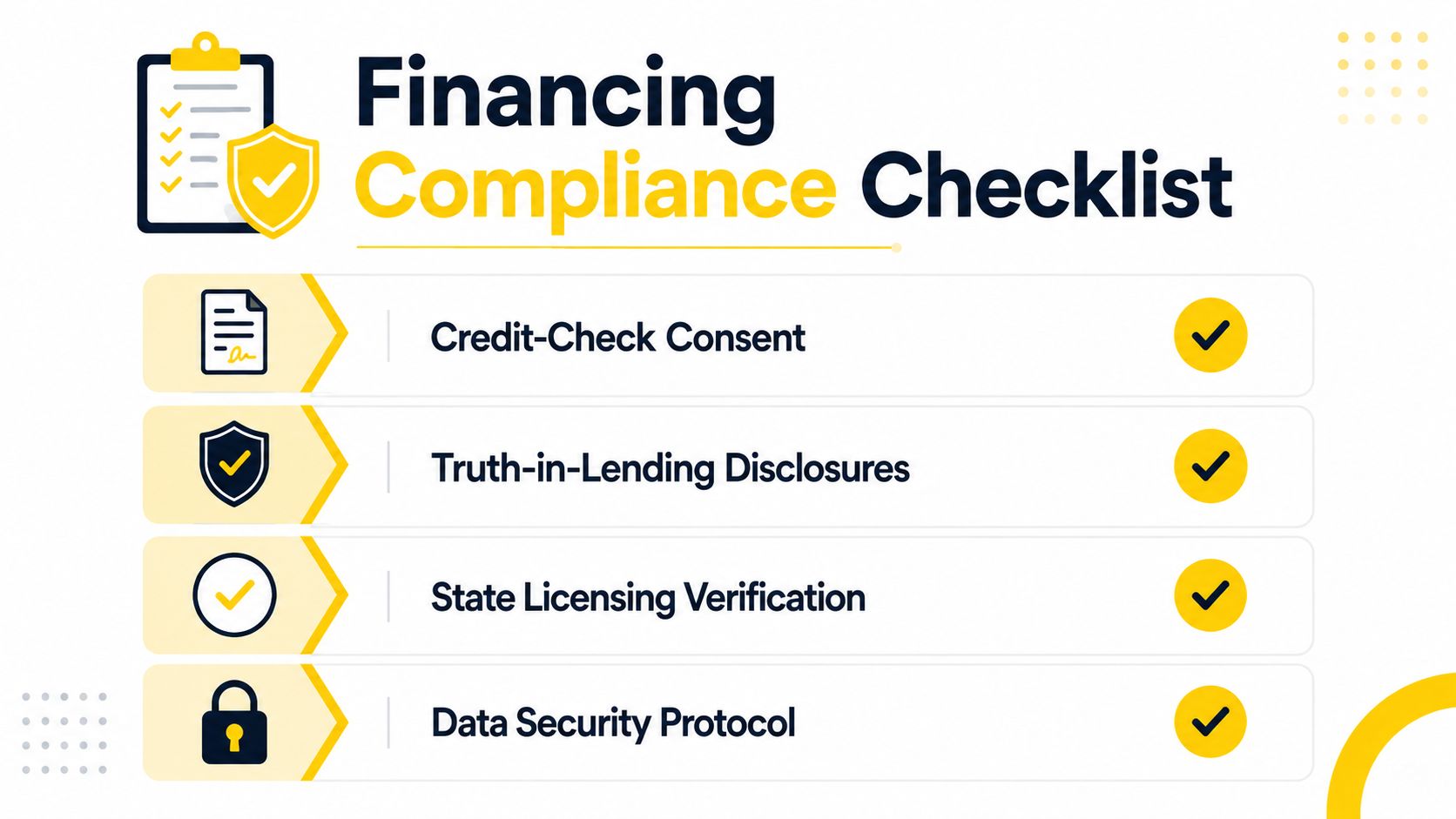
A clean quote can die the moment a customer thinks the payment setup is sketchy. If you roll out financing without handling disclosures, consent, and refund handling, you hand the buyer a reason to back out and you hand your business a support mess. Cleaning owners do not need to become lending lawyers, but they do need to know where the line sits.
Start by separating third-party financing from in-house lending. If a lender makes the credit decision and runs repayment, your job is to present the option clearly and move the customer into the lender's flow without confusion. If you are giving your own payment plan, you may be acting like a lender and could trigger state licensing or disclosure requirements. That is not a detail to freestyle.
The CFPB's BNPL report treats BNPL as fixed-installment credit, not a casual checkout label, and it shows how often customers use these products in point-of-sale flows for everyday spending (CFPB BNPL report). For your team, that means the offer belongs in the same bucket as any other financial product, with clear terms and clean records. If you present it like a discount code with payments attached, you are setting up confusion.
Get the documents right before the first customer sees the offer.
If the vendor says it handles some of this, verify every piece yourself. Vendors are happy to say they “cover compliance” until a customer disputes a term or asks for proof of consent. Your records need to stand on their own, because support tickets do not help when a regulator or customer wants documentation.
A lot of teams weaken financing before the customer even hears the terms. They hide behind phrases like “payment options” or “flexible arrangements” and hope the buyer figures it out. That wastes good leads. Say financing plainly when the price is first presented, especially on residential inbound calls and commercial proposals.
Keep the routine simple. The rep states the price, states the payment option right away, then asks whether the customer wants to see that path. No lecture, no pressure, no fake urgency. Follow-up SMS can repeat the same offer in one line, and the proposal email should use the same wording so the customer is not forced to decode three versions of the same deal.
Consistency matters because hesitation kills bookings. The customer should hear one clear message from call, estimate, and follow-up. If your team sounds uncertain, the buyer assumes the terms are weak. If your team sounds calm and specific, the offer feels normal.
For a cleaner-specific example of how fast estimate presentation can change close rates, see this case study on instant estimates driving sales.
A financing rollout should run like a program, not a one-time launch. If you don't watch the numbers, you'll keep a broken lender because the brochure looked good. Cleaning operators need a tighter scoreboard than that.
The main KPIs are straightforward, approval rate, funded rate, incremental bookings, repeat customer rate, and margin per booked job. If approval is weak, the offer is too hard. If funded rate is weak, the customer is dropping off after interest is shown or the application is too clunky. If bookings rise but margin falls, you bought revenue that doesn't pay for itself.
Merchant-facing survey data reported that financing contributes an average of 40% of annual gross merchant value (GMV), with 72% of merchants saying financing makes up 36% to 50% of annual GMV, and 45% reporting approval rates below 60% (ChargeAfter, via CFPB market report). That's a strong reminder that financing can become a major sales channel, but only if the operational side is working.
Use simple trigger logic.
The script matters here. A good rep says, “We can also show a payment plan if you'd rather spread it out,” then waits. A bad rep blurts out three half-sentences, sounds nervous, and kills the sale.
If you need help keeping the front end responsive, hiring matters too. A financing offer only works if someone can answer fast, qualify well, and follow up cleanly. That's where operational discipline, including better hiring and coverage through PipehireHRM.com, shows up in bookings instead of excuses.
A financing program is healthy when it books better jobs without making your office chaotic. If it creates more callbacks, more confusion, and thinner margin, cut it. The right setup should make the estimate easier to say yes to, not harder.
Company sales doubled after instant estimates
If you want financing to lift bookings, not just add another button to your proposal, build it into the way you estimate and follow up. Estimatty is built for that exact job, fast estimates, cleaner handoffs, and a sales flow that keeps the customer moving. Visit Estimatty and see how a tighter estimate-to-booking process can make customer financing work for your cleaning business.