October 25, 2026
Pressure Cleaning Prices in 2026: Rates by Job and Size
Compare pressure cleaning prices for homes and commercial jobs in 2026, with size bands, per-square-foot rates and sample estimates you can use.

Thursday, March 12, 2026
Discover how the applicant tracking system can transform hiring for your cleaning business. Save time and hire top cleaners faster with our guide.
.png)
Picture this: you post a job opening for a new cleaner and within days, your inbox is a disaster zone. Dozens, maybe even hundreds, of applications pile up—some great, some not-so-great, and many completely irrelevant. It’s a full-time job just to sort through them all.
That’s where an applicant tracking system (ATS) comes in. Think of it as your personal hiring command center. This software is built to automatically collect, scan, and organize every single application you receive, saving you from the chaos of a cluttered inbox and stacks of printed resumes.
For any cleaning business owner, hiring is a constant grind. You’re always on the lookout for reliable people. An applicant tracking system takes the messy, manual work of sifting through candidates and turns it into a clean, predictable process. It creates one central hub for every applicant, automatically scans their information for the skills and experience you’re looking for, and helps you see who your top contenders are at a glance.
This means you can finally stop wasting time on applicants who just aren't a fit. An ATS brings the same kind of order to your hiring that a tool like Estimatty brings to your sales process—it replaces guesswork and messy spreadsheets with a system you can actually depend on.
Just a few years ago, you’d only find this kind of software in the hands of massive corporations with deep pockets. That’s not the case anymore. Today, an applicant tracking system is a surprisingly affordable and essential tool for any cleaning business looking to grow. Modern systems are built for owners like you—they're easy to use and don't require a dedicated IT person to run.
The numbers tell the story. The global Applicant Tracking System market has already hit $3.17 billion and is expected to climb to $4.33 billion by 2030. This isn't just random growth; it’s fueled by the intense competition for good workers, a challenge every single cleaning business owner knows all too well.
An ATS ensures you never miss a great hire because their resume got buried in your email. It gives you a single, organized place for all your recruiting, helping you build a pipeline of talent you can draw from as your business grows.
At the end of the day, using an ATS is about building a stronger, more scalable business. When you can find and hire the right people faster, you can say "yes" to those big new contracts without panicking about having enough staff. While its main job is hiring, the positive effects are felt everywhere in your business.
It’s a lot like how a good CRM is essential for managing your clients. To get a better feel for the basics, this guide on an applicant tracking system for small business is a fantastic starting point. And if you're looking to get your client data just as organized, don't miss our guide on the best CRM for your cleaning business.
Here's the rewritten section, designed to sound completely human-written and natural.
When you're trying to grow your cleaning business, you quickly realize that not all hiring software is built the same. To actually get a handle on your hiring and stop the constant churn, you need something more than a glorified digital filing cabinet for resumes. You need features that directly solve the real-world headaches you face when trying to find reliable cleaners.
Let's break down the must-have features that will make a tangible difference in how you hire.
Imagine you post a job for a new cleaner and get 50 applications overnight. Buried in that pile is the perfect person with "3 years of commercial floor care" experience you desperately need. How do you find them without spending hours reading every single CV?
This is where resume parsing comes in. Think of it as a smart search engine for your applicant pool. The system automatically scans every resume submitted, looking for the specific keywords, skills, and qualifications you’ve told it are important.
It’s the difference between blindly digging through a haystack and using a powerful magnet to pull the needle right out. Instead of wasting time on unqualified applicants, you can instantly focus on the top contenders. Platforms like PipehireHRM use this technology to pinpoint the most promising candidates, so you’re only spending time on people who are actually a good fit.
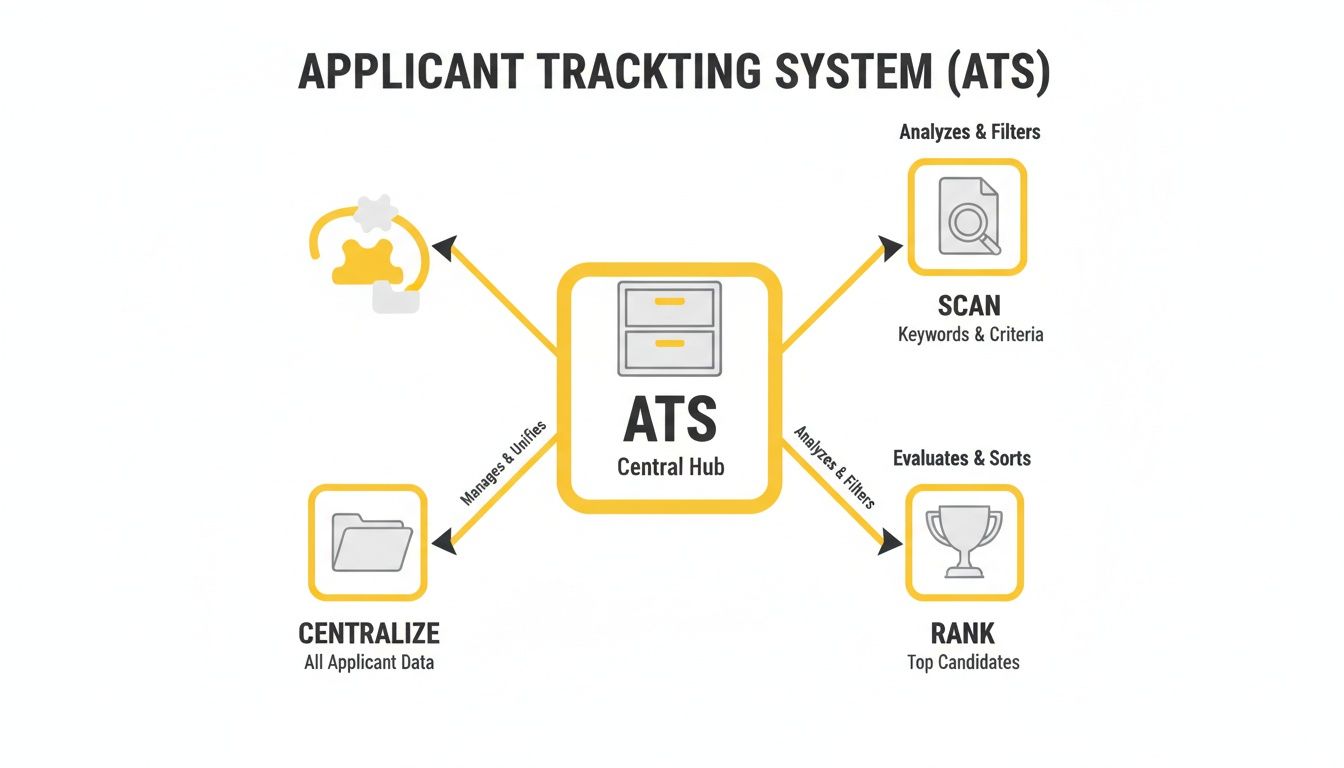
As you can see, these tools work together to take the most grueling part of the screening process completely off your plate.
Is there anything more frustrating than a great candidate simply not showing up for their interview? It’s a huge waste of time and throws your entire schedule off. An ATS with automated communication is your secret weapon against ghosting.
You can set up simple workflows to automatically:
This constant, professional contact does more than just remind people. It shows candidates you’re an organized, serious employer, which makes them far more likely to stay engaged. When you reduce no-shows, you fill positions faster and keep your cleaning crews fully staffed.
Manually posting your job opening on Indeed, then LinkedIn, then Glassdoor, then local job boards… it’s a mind-numbing task that can eat up half your day.
A top-tier ATS includes centralized job posting. You write your job description just once, and with a single click, the system blasts it out to dozens of job boards simultaneously. This gives your opening maximum exposure without all the tedious copy-and-pasting.
Even better, every application—no matter where it comes from—flows directly back into your ATS. Everything stays in one organized, easy-to-manage place. To get a better sense of how different business tools can connect, you can explore Estimatty's software integration capabilities.
Your hiring process is unique to your business. Maybe you require a practical skills test, a background check, and two rounds of interviews. A generic, one-size-fits-all process just won’t cut it.
That’s why a customizable hiring workflow is critical. A good ATS lets you build your own hiring pipeline, stage by stage. You can create custom steps like "Phone Screen," "Skills Test," "In-Person Interview," and "Offer Extended."
This allows you to move candidates from one stage to the next with a simple drag-and-drop. At a glance, you can see exactly where every applicant stands in your process, ensuring no one falls through the cracks and you maintain momentum.
When you have a flood of applicants, how do you decide who to interview first? Candidate ranking and scoring is a feature that uses your own criteria to automatically rank applicants from most to least qualified.
You can set up a "scorecard" based on must-haves:
The system then tallies the score for each applicant, presenting you with a clean, ranked list. This data-driven approach removes guesswork and personal bias, helping you focus your energy on the candidates who are statistically the best match for the job. It's about making smarter, faster decisions.
Seeing the difference side-by-side really puts the power of an ATS into perspective. Here’s a quick breakdown of how common hiring tasks change when you move from a manual process to an automated one.
Ultimately, adopting an ATS isn't just about getting organized. It's about reclaiming dozens of hours of administrative work so you can focus on interviewing the best people and growing your business.
Let's be real—an applicant tracking system does a lot more than just organize your inbox. Think of it as your secret weapon for growth, one that delivers tangible results you can see in your bottom line. For a cleaning business, the payoff comes in three key ways: you save a ton of time, you hire better people, and you lay the groundwork to expand your business without the usual growing pains.
Ever landed a huge new commercial contract that starts in two weeks? You're scrambling, trying to manually sift through a mountain of resumes, and you risk botching the whole deal. An ATS prevents what I call hiring "revenue leaks." It’s a lot like how Estimatty stops you from losing money on missed sales calls, but instead, it ensures you can staff up fast and never have to turn down a big opportunity.
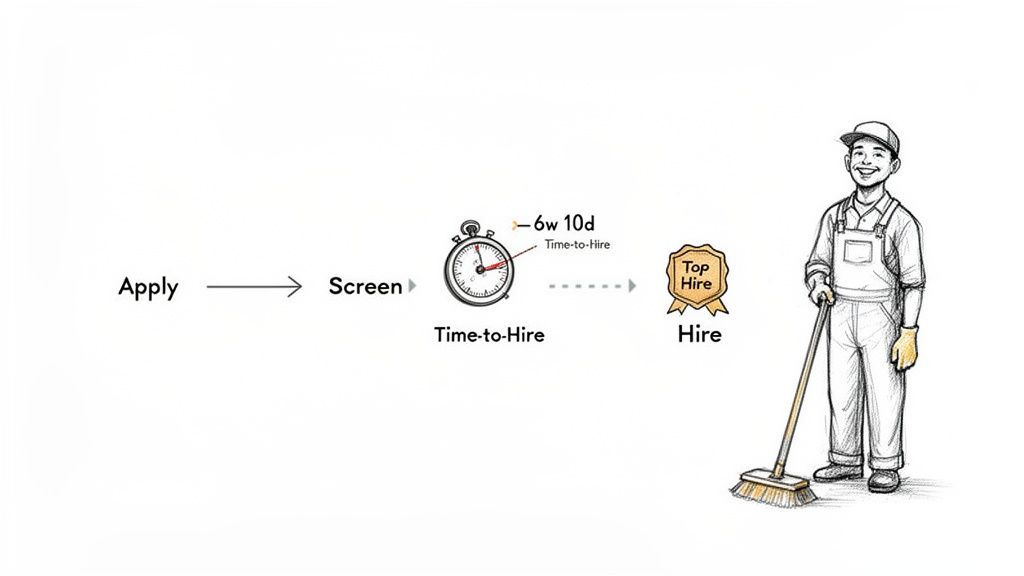
One of the biggest wins you’ll see is how quickly you can get a new cleaner from applicant to employee. With an applicant tracking system, we’ve seen cleaning businesses slash their hiring cycle from a painful six weeks down to just ten days. That kind of speed means you can say "yes" to growth without hesitating.
And this isn't just a hunch; the data backs it up. A solid 86% of recruiters confirmed their ATS directly cut down their time-to-hire. Some even chopped their average hiring cycle by as much as 60%. On top of that, an incredible 94% said it had a positive ripple effect across their entire hiring process.
Good cleaners have options. If your hiring process is slow, disorganized, and lacks communication, you look unprofessional. That’s how you lose great candidates to your competition. An ATS flips the script by automating communication, sending instant application confirmations and interview reminders that make you look like the well-oiled machine you are.
When applicants feel respected and kept in the loop, your brand’s reputation gets a major boost. This professional touch doesn't just reduce no-shows for interviews; it attracts higher-quality cleaners who want to work for an organized, modern company.
This better experience translates directly into better hires. In fact, 79% of teams using an ATS report a noticeable improvement in the quality of people they bring on board. By creating a smooth, professional journey from application to offer, you build a hiring machine that attracts and keeps the best talent. This is a huge strategic advantage, and it’s a critical piece of the puzzle if you're serious about long-term success. For more on this, check out our guide on how to grow a cleaning business.
Picking your first applicant tracking system can feel like a huge commitment, but it doesn’t have to be overwhelming. The secret is to break it down. Your goal is simple: find a tool that actually solves your real-world hiring headaches, not one that adds another layer of complexity to your day.
First, get crystal clear on your specific hiring needs. Are you constantly trying to staff up for the busy summer season? Do you juggle cleaning teams across a dozen different commercial properties? Pinpointing these pain points is the fastest way to filter out all the systems that just aren't built for a cleaning business like yours.
Before you even glance at a price tag, sit down and make a list of your non-negotiables. For a cleaning company, this list is going to look completely different from what a big tech firm needs. You have to prioritize features that match the reality of hiring and managing hourly employees.
Your checklist should absolutely include:
When you're talking to vendors, here's a killer question to ask: "What kind of support do you offer a business my size?" You need a real partner who understands your grind, not just a faceless software company that caters to giant corporations.
Once you know what you need, you can figure out what you can spend. But don't just look at the monthly fee. Think about the return on your investment. How much time will you get back each week? And more importantly, how much is a bad hire really costing you in lost clients and wasted training? The right applicant tracking system often pays for itself surprisingly fast.
As you start comparing your options, checking out a list of the best applicant tracking systems for small businesses can give you a solid head start. These guides are great for seeing how different platforms stack up on features and price.
Ultimately, the best system is the one that feels like it was made for your company. It should make hiring smoother, work well with your other tools, and give you back the time you need to actually grow the business. Speaking of tools working together, it's smart to see how automation can transform other parts of your operations, too. For a deeper look, check out our guide on scheduling software for your cleaning business.
Picking out the perfect applicant tracking system is a great first step, but the real magic happens when you actually put it to use. This is where your investment starts paying off, turning a piece of software into your company’s most valuable hiring asset. And the best part? You don't need to be a tech wizard to make it happen.
Modern, cloud-based systems are built for busy owners, not IT departments. If you can install the Estimatty widget on your website, you can handle this. The key is just to walk through it with a clear, step-by-step plan.
Your first job is to get your hiring process mapped out inside the ATS. Think through the entire journey an amazing cleaner takes, from the moment they apply to their first day on the team. This is your opportunity to build a consistent, repeatable process that saves you time and headaches down the road.
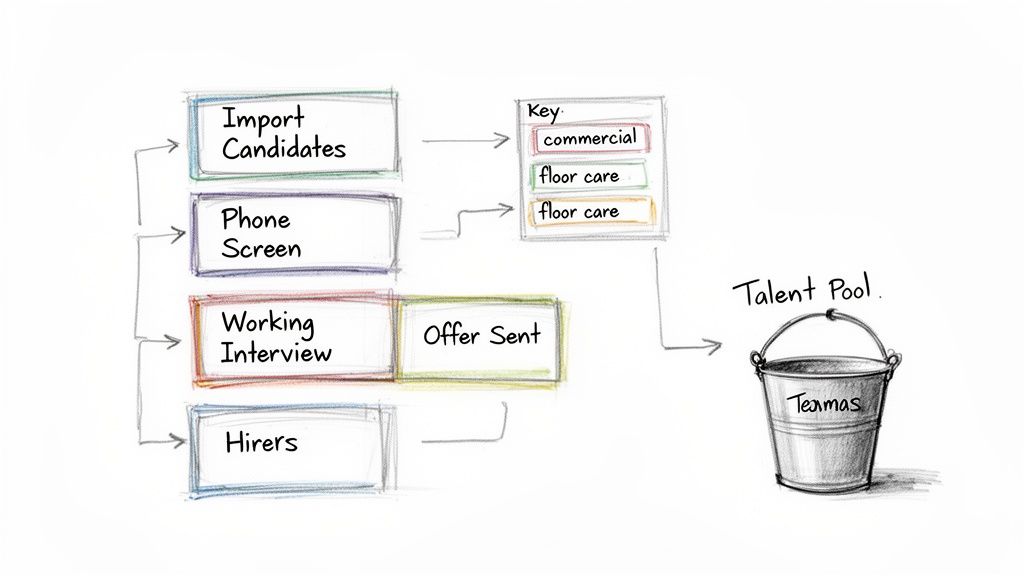
Start by defining the custom stages for your hiring pipeline. For a cleaning business, that usually looks something like this:
Getting this workflow customized gives you a clean, visual dashboard. With a single glance, you can see exactly where every applicant is in the process, making sure nobody slips through the cracks.
Once your workflow is in place, it’s time to build out your job templates. A well-written template is like a magnet for qualified cleaners, and it saves you from reinventing the wheel every time you have an opening.
An applicant tracking system completely changes the game for the candidate. By making applications simpler and communication faster, it creates the kind of positive, mobile-friendly experience that top talent now expects. For cleaning business owners, this means you’re far more likely to attract people who want quick feedback—a huge factor that leads to better hires for 79% of recruiters. While big corporations have known this for years, today’s systems finally make it affordable for small businesses, too.
Think like a job seeker. What specific terms would a skilled cleaner type into a search bar? Maybe "deep cleaning specialist," "commercial floor tech," or "residential housekeeper." Weaving these keywords directly into your templates is what gets your job posts seen by the right people.
This kind of automation is a game-changer for hiring, and it can be applied elsewhere in your business. If you're curious about other ways to get your time back, you might want to read our guide on how to automate customer service.
Here's a pro-tip: use your applicant tracking system to build a talent pool. Never just toss out the applications from promising people who weren't quite the right fit for the current job. Tag them in your system. The next time a position opens up, you'll have a ready-made list of warm leads to contact first.
Making the leap to new software always stirs up a few questions. Bringing an applicant tracking system into your cleaning business is a big move, and it's only natural to want all your concerns addressed before you commit. We've gathered the most common questions we hear from owners just like you, with straightforward answers to help you feel confident about your next step.
I hear this one all the time. There's a persistent myth that only massive corporations need—or can afford—this kind of hiring tech. The truth is, today’s systems are built specifically for small and growing businesses, making them a total game-changer for independent cleaning companies.
Think of it this way: just as Estimatty gives you the kind of sales automation that used to be reserved for huge enterprises, an applicant tracking system delivers the power of a full-blown HR department without the six-figure price tag. It handles the most time-consuming parts of hiring, like posting jobs and sifting through resumes, so you can get back to running your business. Many platforms, like those you’ll find on pipehirehrm.com, are even designed with the cleaning industry's unique needs in mind.
That’s a completely fair question, and it usually comes from a fear of older, less sophisticated software. The good news is that modern systems are much smarter. They're designed to understand context, not just keywords. A good ATS knows that "housekeeper," "residential cleaner," and "maid" are all referring to similar roles. You just need to set up your job posts with the right skills and experience you're looking for.
But here’s the most important thing to remember: the ATS doesn’t make the final call. You do. It simply acts as your personal recruiting assistant, organizing all the applicants and showing you the most qualified ones first. It saves you from the soul-crushing task of manually reviewing hundreds of resumes so you can spend your time actually talking to the best candidates.
The price tag on an applicant tracking system is more flexible than you might think, and you definitely don't need a huge budget. Most providers now offer affordable monthly subscriptions that can scale as your business grows. The cost is usually tied to something practical, like how many jobs you’re actively hiring for or your total number of employees.
For most small cleaning companies, you can find a plan that costs less per month than a single newspaper ad.
But don't just look at the price—think about the return you're getting. Consider the:
When you factor in the efficiency boost, a good system often pays for itself within just a few months.
Absolutely—and you should make this a key factor in your decision. The best applicant tracking systems are built to play nice with the other tools you rely on, like your payroll service, background check providers, and business calendar. You can see how different tools can work together by checking out the Estimatty blog.
This integration is what makes your entire operation run smoothly. Imagine clicking "Hired" in your ATS and having that person's info automatically pop up in your payroll system. No more double-data-entry, fewer mistakes, and a seamless process from applicant to employee. It’s similar to how Estimatty can sync with your CRM to automate your entire sales pipeline.
Ready to stop drowning in resumes and start building the best cleaning team in town? Estimatty uses powerful AI to automate your sales and estimates, giving you back the time you need to focus on strategic growth—like finding and hiring top-tier cleaners.
Discover how Estimatty can transform your sales process at https://www.estimatty.com