September 21, 2026
Inside and Out Cleaning: A Practical Pricing Guide
Learn what inside and out cleaning really includes, how pricing works, and which add-ons actually pay off for residential and commercial estimates.
Tuesday, March 24, 2026
Learn how to scale a service business with our guide to smart automation, strategic hiring, and systemized growth. Turn your cleaning company into an empire.

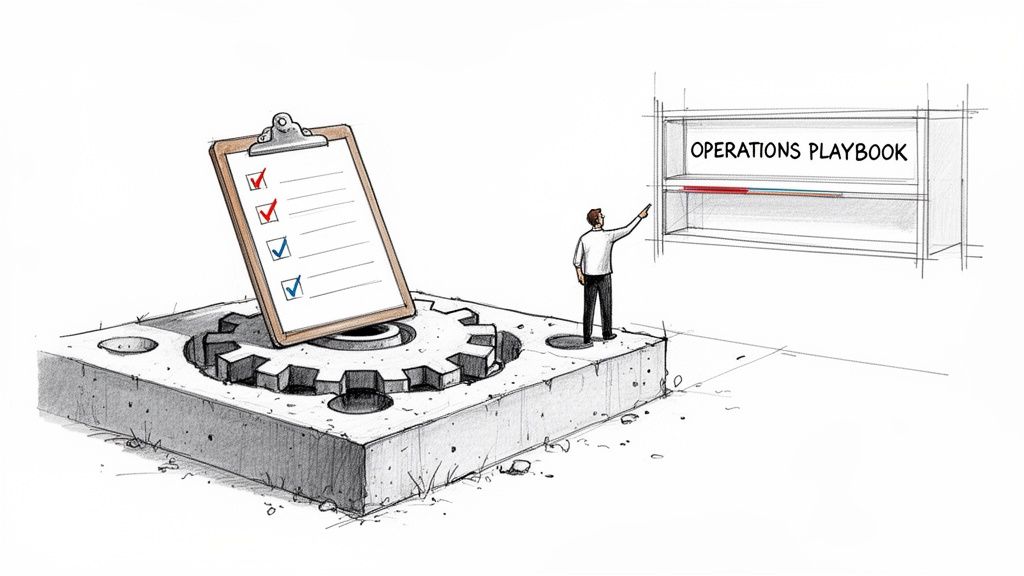
If you want to scale your service business, you have to make one fundamental change: you must stop being the master doer and start being the strategic owner. This means taking all that hard-earned expertise locked in your head and turning it into a bulletproof operational playbook. This is the only way your business can thrive and grow without you being there for every single decision.
Let’s try a little thought experiment. If you took a four-week vacation—completely unplugged—what would happen to your business? If the honest answer is "it would fall apart," then you don't own a business. You own a really demanding job.
That’s the trap so many of us fall into. We’re great at our craft, but we end up chained to the daily grind. Scaling is your escape route. It isn't about working twice as hard or trying to be in two places at once. It's about building a solid foundation of standard operating procedures (SOPs), defining who your ideal clients are, and setting a firm pricing structure that eliminates the guesswork and chaos.
Before you change a single thing in your business, you have to change your mindset. You must stop seeing yourself as an employee who gets paid for their time and start thinking like an entrepreneur who builds valuable assets. Your knowledge is an asset, but only if you can document it, package it, and teach it to someone else.
This is often the hardest leap to make, but it's non-negotiable. From now on, every choice you face should pass through a simple filter: "Will this make the business more or less dependent on me?"
The goal is to create a business that serves you, not the other way around. If everything grinds to a halt the second you step away, you haven't built a scalable company—you've just created a high-stress job for yourself.
To put this into perspective, here's a quick look at how your role and the business's potential change when you shift from doing the work to owning the system.
| Growth Limiter | Traditional Approach (Doing) | Scalable Approach (Owning) |
|---|---|---|
| Service Delivery | You are the primary service provider. Quality is tied to your personal effort. | You build and refine the service delivery system. Quality is tied to the process. |
| Time | You trade hours for dollars. Your income is capped by the clock. | You create systems that generate revenue. Income potential is uncapped. |
| Knowledge | It's all in your head. The business can't function without you. | It's documented in a playbook. The team is empowered to execute without you. |
| Problem Solving | You are the chief firefighter, solving every problem as it arises. | You create systems and train staff to handle issues, freeing you for high-level strategy. |
This table isn't just theory; it's the practical roadmap from being trapped in your business to working on your business.
Consistency is what separates the amateurs from the pros. Your clients deserve the same fantastic result whether you do the job or your tenth hire does. That’s simply impossible without rock-solid standardization.
Start by documenting your main service with an almost obsessive level of detail. If you run a cleaning company, for example, your playbook needs to be airtight.
This playbook is the single source of truth for your entire operation. It empowers your team, slashes errors, and makes sure the quality that built your reputation is delivered every single time. It's an essential part of learning how to grow a cleaning business beyond a one-person show.
Part of building this foundation also means knowing when to bring in outside help. For instance, if you're in a digital services field, you can scale your agency with trusted partners who handle specialized work, letting you focus on sales and client relationships. The same idea applies anywhere—find partners who can do non-essential tasks better and cheaper than you can.
If your service delivery is finally a well-oiled machine, it’s time to plug the single biggest profit leak I see in almost every service business: sloppy, inconsistent pricing. When you're just winging it, generating estimates based on "gut feelings," or giving every customer a different price, you're setting yourself up for unpredictable cash flow and a dead end.
To grow, you have to stop thinking like a freelancer and start pricing like a real business. That means ditching subjective, one-off "estimates" and embracing objective, data-driven "estimates." The distinction is everything. A subjective estimate is often just a guess; a standardized estimate is a profitable, repeatable calculation based on your actual numbers. It’s the only way to guarantee you’re making money on every single job.
Before you can name a profitable price, you have to know exactly what it costs you to keep the lights on. And I mean everything—this goes way beyond just the price of a bottle of cleaner or an employee’s hourly wage.
Your true operational cost, or break-even number, is the bedrock of your pricing. It’s what you need to make just to stay in business, whether you’re cleaning a house or doing paperwork.
Add all of this up for a typical month, then divide it by the total number of hours your team can actually bill out to clients. That gives you your break-even hourly rate. If you ever charge less than this, you are literally paying to work.
Once you have that break-even number, it’s time for the fun part: adding your profit. A healthy, growing service business should be aiming for a net profit margin of 15-25% or even higher. Simply add your target margin to your break-even rate, and you’ve got your final billable hourly rate.
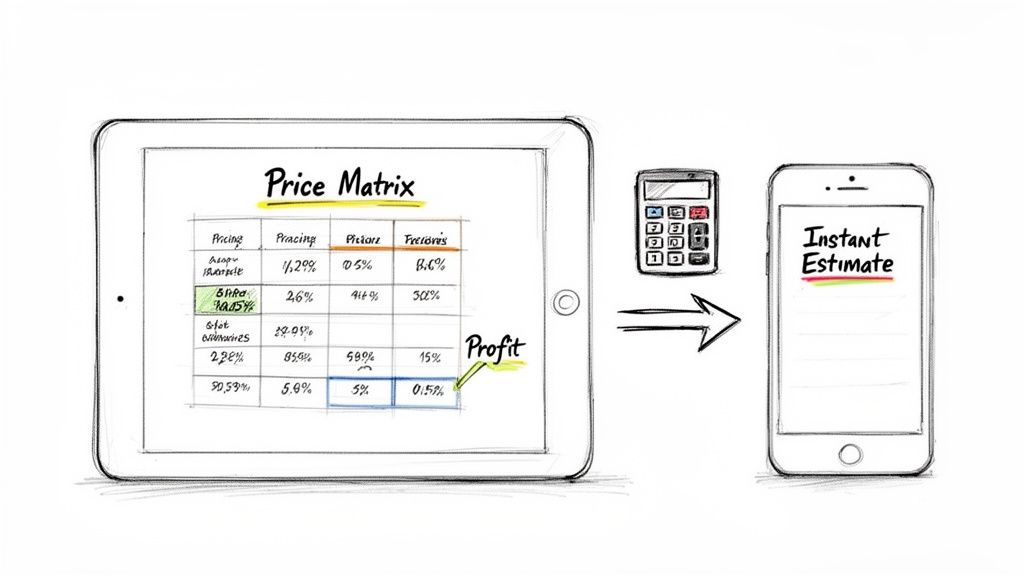
Now, you can build a pricing matrix. This is your company's playbook for generating fast, consistent estimates that anyone on your team can use. No more guesswork.
| Service Type | Rate Calculation Method | Example |
|---|---|---|
| Standard Clean | Per Bedroom/Bathroom Count | 2 Bed, 2 Bath = $150 |
| Deep Clean | Per Square Foot | 2,000 sq. ft. @ $0.15/sq. ft. = $300 |
| Move-Out Clean | Flat Rate + Add-ons | Base Price + Inside Oven + Windows |
A matrix like this ensures that whether a customer calls on a Monday morning or fills out a form late Saturday night, they get the same fair, profitable price. For a deeper dive into this, check out our guide on creating your own cleaning estimate calculator.
Having standard prices is a huge step, but automating the entire estimation process is what truly unlocks growth. Think about it: the global cleaning services market is massive, projected to jump from USD 451.63 billion in 2025 to USD 859.20 billion by 2034. It's a gold rush. Yet, most companies relying on manual callbacks and voicemails are losing a staggering 60-70% of their after-hours leads. You can explore more of this data in the latest cleaning market trends research.
Your inability to provide an instant answer is your competitor's biggest advantage. Every call that goes to voicemail is a lead you're handing to someone else.
This is where automation tools become your secret weapon. An AI-powered estimator like Estimatty acts as your 24/7 sales agent, living right on your website or answering your phone. Instead of a potential customer filling out a form and waiting for a callback, they get an instant, accurate estimate built from your own pricing matrix.
These tools do more than spit out a number. They engage customers, answer common questions, and capture all the important details, from square footage to special requests. We've seen business owners who add these no-code widgets to their sites report a 30-50% surge in qualified leads, simply because they removed the friction. This turns your website from a static brochure into a powerful machine that books jobs for you, even while you sleep.
Alright, you’ve hammered out your processes and your pricing is locked in. Now comes the biggest reality check on the path to scaling your business: you are the bottleneck. A business that hinges entirely on you is a job, not an asset. To truly understand how to scale a service business, you have to make the critical leap from doing the work to building a team that does the work for you.
This isn’t about just hiring some “help.” It’s about meticulously building a team of pros who become the face and force of your company. They are the ones who will deliver that consistent quality you’ve worked so hard to define, allowing you to finally break past the ceiling of your own time and energy.
Let’s be honest. Finding good, reliable people is often the single biggest headache for owners in the cleaning and service industries. Slapping a generic ad on a job board and crossing your fingers is a fast-track to frustration and a revolving door of new hires. You need to get smarter.
Think of it like marketing. You have an ideal customer, right? Well, you also need an ideal employee avatar. What makes them tick? Are they wired for details? Are they dependable? Do they genuinely care about making a customer happy? Your job description should be a magnet for this person, focusing on your company’s culture and vision, not just a dry list of duties.
And forget the general job sites where you're just a drop in the ocean. Go where the pros are. For a cleaning business, a niche platform like pipehirehrm.com is a game-changer. It's built specifically to connect you with experienced cleaning talent, which can cut your search time down dramatically and seriously upgrade the quality of your applicants. Once you have those candidates, you need a system to manage them. You can get a handle on this process by learning about the power of an applicant tracking system.
Getting someone to accept the job is just the first step. The first few weeks will make or break their future with you. If you just throw them in the deep end, expect mistakes, confusion, and a quick exit. A well-designed onboarding program, on the other hand, is your secret weapon for creating long-term all-stars.
This is where that operational playbook you built comes to life. Don't just hand it over; bring them into it.
The time you pour into training at the beginning pays for itself ten times over. A properly onboarded employee doesn't just make fewer mistakes—they deliver better service and feel bought into the company’s success.
Your goal isn't just to fill a role; it's to duplicate your standards of excellence. A strong onboarding process is how you turn a new hire into a valuable, long-term team member who actively contributes to your growth.
Nothing will cripple your growth faster than high turnover. The constant cycle of recruiting, hiring, and training is a massive drain on your money, time, and sanity. The secret to keeping great people isn't complicated: create a place they actually want to work.
Show them a future, not just a job. That new cleaner you just hired should be able to see a clear path to becoming a team lead, a trainer, or maybe even an operations manager down the road. When people see an opportunity for real advancement, their motivation and investment in your company’s success skyrockets.
At the end of the day, it comes down to culture. Recognize great work, publicly and privately. Celebrate team wins. And most importantly, listen to your people. A culture of respect and appreciation is infectious. Happy employees create happy customers, and happy customers are the fuel for a business that’s built to last.
Once you’ve locked in your processes and pricing, technology is what will actually let you scale. This isn't about just buying a bunch of software. It’s about building a smart, connected tech stack that automates the grunt work so you can grow your business without needing an army of office staff to keep up.
Think of it as creating a central nervous system for your company. Instead of juggling spreadsheets, sticky notes, and a dozen different inboxes, you'll have a single, unified system. Information flows seamlessly from one place to another, which slashes human error, frees you up for big-picture thinking, and gives your clients a seriously impressive, modern experience.
Automating your estimates is a game-changer, but it’s only the beginning. To truly hit that next level of growth, you need to plug that lead-gen machine into the rest of your operations. When your tools work together, you create a hands-off workflow that takes a customer from their first click all the way to their final payment.
Your core tech stack really comes down to a few key pieces:
The real magic happens when these tools are integrated. For instance, when an instant estimator like Estimatty captures a new lead, it can instantly create a new client file in your CRM and assign a follow-up task. This simple connection, often made with a tool like Zapier, gets rid of manual data entry and makes sure no lead ever slips through the cracks. For a deeper dive, check out this breakdown of the best cleaning business software on the market.
Let's be blunt: the service industry is facing a major labor crunch. If you're still relying on old-school methods, you're going to get left behind. Old-fashioned businesses that depend on a receptionist lose an estimated 50% of weekend and holiday calls straight to voicemail. That’s half your potential business, gone.
In a market expected to skyrocket from USD 418.7 billion in 2025 to USD 823.6 billion by 2035, leaving that much opportunity on the table is a surefire way to stall out.
This is where your technology becomes your secret weapon, supporting the team you're working so hard to build.
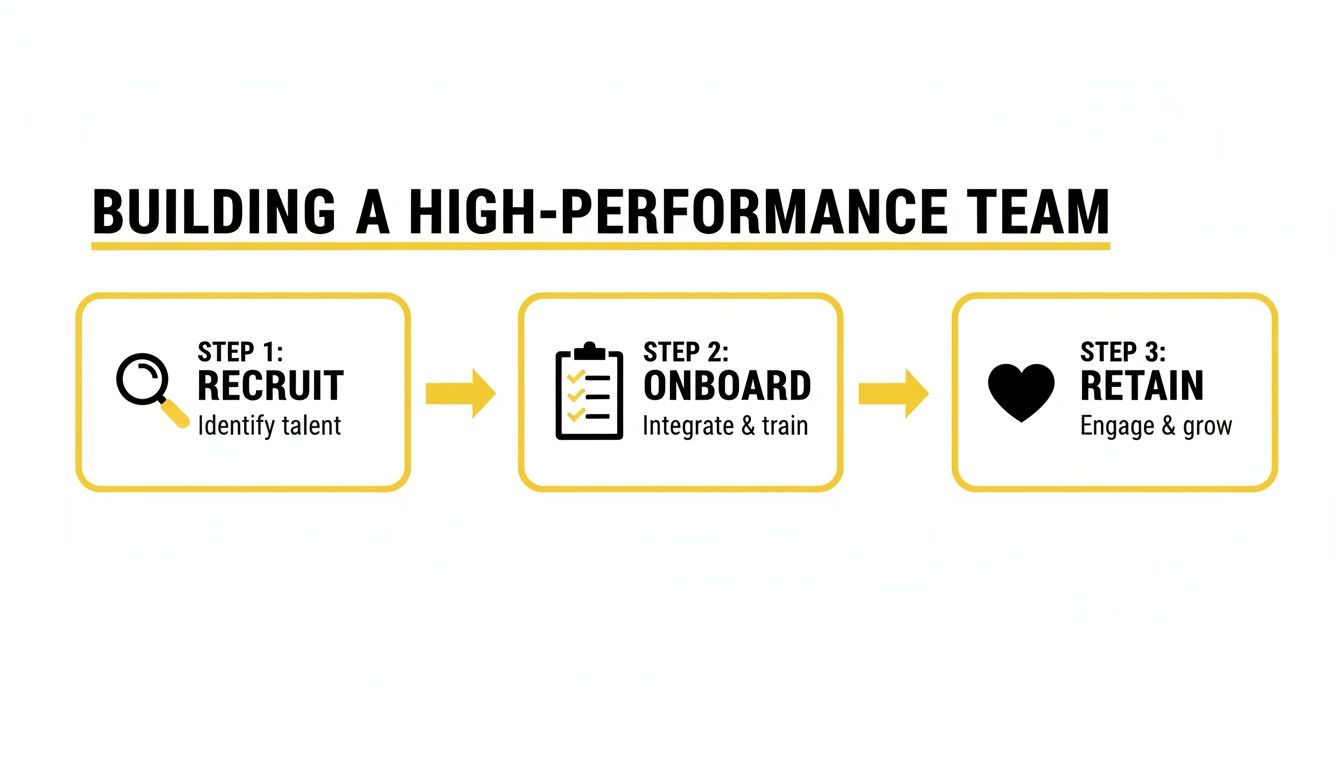
As you can see, your tech and your team have to grow together. One can't succeed without the other.
AI-powered estimators answer calls instantly, qualify leads 24/7, and send detailed estimates via email and SMS—converting 2x more inquiries without needing a human receptionist. Owners who adopt this tech often see a 40% jump in qualified leads, transforming solo operations into scalable empires.
As you roll out your new tech stack, make sure it’s empowering your team, not chaining them to a desk. It's crucial to pick solutions that give your staff members flexibility to work from anywhere. This is how you build a modern A-team and scale your operations without being tied to a single physical location.
Cloud-based CRMs, mobile-friendly scheduling apps, and modern communication systems let your managers and admin staff be just as effective from home as they are in the office.
This kind of flexibility isn't just a perk; it's a massive competitive advantage when you're trying to hire the best people. It lets you pull from a much larger talent pool and creates a more resilient, agile business that runs like clockwork, no matter where your team is.
Look, having the best systems and the most amazing team on the planet doesn't mean a thing if your phone isn't ringing. To truly scale your service business, you need a steady, predictable stream of new customers. And I'm not talking about boosting a Facebook post and crossing your fingers.
We need to build a real customer-getting machine. This is about creating a clear path that takes someone from "I think I have a problem" to "Wow, I need to book these guys now!" The goal is to make finding new leads just as systematic and reliable as the cleaning or service work you do every day.
For any local service business, the game is won or lost right in your own community. Your funnel begins with one simple objective: be the first and most trusted name someone sees when they search for your services online.
This all comes down to mastering local SEO. Your primary mission is to get your business featured in the Google "map pack"—that coveted block of three businesses that appears at the top of local search results.
Here's how we get you there:
Getting your local search dialed in means you're attracting people who are actively looking for a solution right now. These are the hottest leads you can get.
The best lead is always the one who comes looking for you. When you dominate local search, you stop chasing business and start attracting it. Your website becomes a magnet for inbound jobs.
Once you have that local foundation humming, you can start layering on other strategies. Targeted ads on Facebook and Instagram are fantastic for reaching specific types of homeowners or businesses based on their location, income, and interests.
This is where the magic really happens. A modern marketing funnel doesn't just generate "leads"—it generates sales. Every ad, every search result, every social media post should point a potential customer to one place: your 24/7 automated sales tool.
When someone clicks from Google or a Facebook ad, the last thing you want is for them to hit a dead end at a clunky "contact us" form. That's where momentum dies.
Instead, they land on a page where they get an instant, accurate price. Suddenly, your marketing ROI becomes crystal clear. You can track the exact dollars spent on an ad campaign to the number of estimates it generated and, ultimately, the jobs it booked.
For example, if you're trying to scale a cleaning business, breaking into the commercial market is a huge opportunity—it’s a sector projected to hit USD 442.09 billion by 2025, according to some commercial cleaning market's growth data. The old way of doing things, where you have to manually call back every lead for an estimate, means you’re likely losing 40% of those prospects right off the bat.
This is where AI tools change the game. With a tool like Estimatty's voice and web AI, leads are engaged immediately and can get an estimate in under 60 seconds. We’ve seen this simple shift boost booked jobs by 25-40%.
This direct connection turns your marketing from a guessing game into a measurable investment. You can see exactly which channels bring you the most profitable customers, allowing you to pour fuel on what’s working and kill what isn’t. You can dig deeper into this strategy in our guide to AI sales automation for cleaning services. A predictable marketing funnel feeding an automated sales engine isn't just a nice idea—it's the core of scalable, profitable growth.
You've built something solid. The phone is ringing, your schedule is full, but you're starting to feel the strain. It's that exciting, slightly terrifying moment where you know you're on the edge of something much bigger. So, how do you make the leap without stumbling? Let's tackle the questions that are probably keeping you up at night.
Forget about some magic revenue number. The real signal is when you hit your personal capacity, and the demand just keeps coming. Are you consistently turning down good, profitable jobs simply because you don’t have the hours in the day or hands on deck? That's your market screaming for more of what you offer.
But being busy isn't the only green light. The other crucial piece is having your core services dialed in. Could you hand a checklist to someone new and have them produce the same quality results you do? Once you can answer "yes" to that, you've moved beyond just being a person with a skill—you have a replicable system.
When your biggest headache shifts from finding new customers to figuring out how to serve the ones you have, it's go time. Your marketing is clearly working. Now, it's all about building the operational backbone to handle that demand without letting quality slip.
If your calendar is maxed out and you have a solid playbook for getting the work done right, you're ready. It's time to build the team and systems that will let you grow.
This one is easy, and I see it all the time: hiring more people before you’ve standardized your operations. It’s a classic trap. You feel overworked, so you think the answer is more bodies. But throwing people at a broken or non-existent system doesn't fix anything—it just multiplies the chaos.
This one mistake triggers a domino effect that can cripple your business.
Before you even think about hiring your tenth employee, you need to be absolutely certain your first and second hires are working from the exact same playbook. A huge part of that is locking in your pricing and profitability from the very start. Using a tool like Estimatty to automate your estimates ensures every single estimate is consistent, professional, and profitable from the moment a lead contacts you.
Of course. In fact, being a solo operator gives you a massive advantage. You have the perfect, low-pressure environment to build and perfect your systems before you have a payroll to manage. Think of it this way: every single task you do is a chance to document a process for your future team.
Start acting like the bigger company you want to become, even when it's just you.
By laying this groundwork while you're still solo, you stop working in your business and start working on it. When the time comes to hire, you won't just be giving someone a job; you'll be handing them a proven recipe for success. For more tips on building these systems, check out industry blogs like the one at estimatty.com/blog or find great hiring advice over at get.pipehirehrm.com/blog.
Ready to stop missing leads and start growing the smart way? Estimatty is your 24/7 AI sales agent, instantly engaging customers and sending perfect, profitable estimates every time. See how it can change your business at https://www.estimatty.com.