September 8, 2026
How Much Should a House Cleaning Cost in 2026
How Much Should a House Cleaning Cost. Learn how much a house cleaning should cost in 2026, with real pricing ranges by home size, service type, and tips

Friday, May 1, 2026
Launch and scale a profitable Airbnb cleaning service with our step-by-step playbook. Learn pricing, staffing, automation with Estimatty, and more.
.png)
You’re probably already seeing it. A host calls after a bad cleaner no-show. They need a same-day turnover. They’re stressed, the next guest is already asking about early check-in, and they’re willing to pay for someone who can solve the problem without drama.
That’s the entry point for a serious airbnb cleaning service.
Most residential cleaning companies look at short-term rentals and think “more laundry, more pressure, tighter timing.” That’s true. They also miss the bigger point. This isn’t standard house cleaning with a different label. It’s an operations business sitting inside a cleaning business. When you build it correctly, you get better margins, tighter client retention, and a service line that hosts depend on.
A lot of owners hesitate at the exact wrong moment. They see vacation rentals everywhere, but they don’t feel ready for fast turnovers, linen logistics, restocking, and host communication. That hesitation costs them good clients.
Hosts don’t buy a clean home. They buy reliability under pressure. They need someone who can reset a property fast, spot damage, restock basics, send proof, and leave the place guest-ready without hand-holding.

The biggest mindset shift is this. In short-term rentals, cleanliness isn’t a back-office task. It sits right in the middle of bookings, reviews, and repeat stays.
Research shows that 90% of guests using Booking.com and Airbnb cite cleanliness as a key factor when choosing where to stay, and properties with cleanliness ratings above 4.8 out of 5 receive 20% more bookings than lower-rated properties according to this Airbnb cleaning statistics roundup. When a host hires you, they’re not only paying for labor. They’re paying to protect occupancy.
That changes how you sell the service.
You’re not competing with a budget house cleaner who wipes counters and vacuums visible crumbs. You’re competing on confidence. The host wants to know that the unit will be reset correctly every time, especially when the schedule gets messy.
Practical rule: If a host has to inspect your work in person after every turnover, you’re still a cleaner. When they trust your system without showing up, you’ve become an operating partner.
Residential cleaning businesses already have a lot of the raw ingredients. You know how to staff crews, train on standards, manage supplies, and handle recurring service. What changes is the structure.
Airbnb work rewards companies that are strong in these areas:
The owners who win here stop thinking like maids and start thinking like micro-hospitality operators. That’s where the money is. Not in “adding Airbnb cleans” to the side of your business, but in building a specialized division with its own pricing, staffing, and workflow.
If you price an Airbnb turnover like a regular house clean, you’ll undercharge, overwork your team, and create resentment on both sides. A turnover has a deadline, staging requirements, restocking responsibility, and often a higher standard of visual presentation than an occupied home.
That’s why the service menu has to be explicit.
A proper turnover package needs defined deliverables. Hosts hate vague scope because vague scope becomes billing disputes.
My baseline turnover scope always includes:
That last piece matters more than many owners realize. Hosts don’t only want a cleaner. They want an extra set of trained eyes.
The market already treats this as premium work. Professional cleaners charge a 30-50% premium for short-term rental cleaning, with prices ranging from $150–$400 per turnover compared to $100–$180 for standard residential cleaning according to LeadDuo’s breakdown of Airbnb cleaning business pricing.
That premium exists for practical reasons:
If you need help building a margin-safe structure, this guide on how to price cleaning jobs is useful for mapping labor, add-ons, and service minimums.
Don’t overload hosts with too many packages. Keep the menu clean and operational.
| Sample Airbnb Turnover Pricing Model (2026) | ||
|---|---|---|
| Property Size | Base Turnover Rate | Suggested Add-ons |
| Studio or 1-bedroom | Entry-level turnover within your minimum | Laundry off-site, fridge reset, patio check |
| 2-bedroom | Mid-tier turnover rate | Restocking package, same-day priority, damage report photos |
| 3-bedroom | Premium turnover rate | Deep appliance clean, linen service, supply inventory check |
| 4-bedroom-plus | Custom turnover rate | Multi-bath reset, outdoor area refresh, team dispatch upgrade |
This table doesn’t force fake precision where your market may differ. It gives you a structure. The key is to build a base turnover rate and then layer add-ons that reflect real work.
A few add-ons consistently separate profitable Airbnb operators from busy-but-underpaid ones:
Cheap flat pricing attracts hosts who compare line items. Clear package pricing attracts hosts who care about smooth turnovers.
One more practical point. Keep your turnover menu narrow at first. It’s easier to add profitable extras later than to undo an underpriced package that trained clients to expect too much.
The biggest leak in most Airbnb cleaning businesses isn’t cleaning quality. It’s response time.
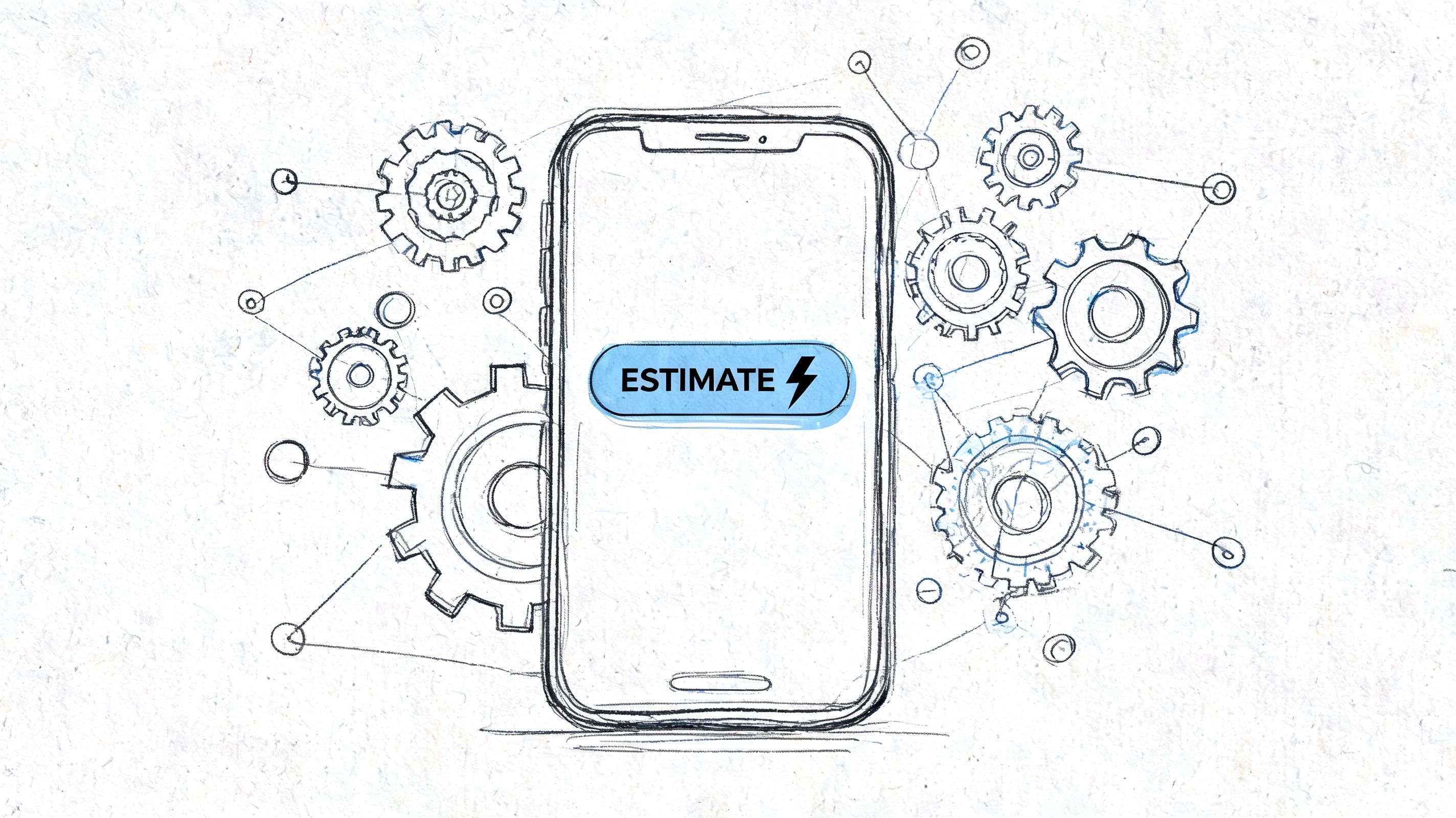
A host visits your site at night, fills out a form, and needs help for a same-day or next-day turnover. If your process depends on callbacks, manual follow-ups, and back-and-forth messages to collect property details, you’ll lose jobs to whoever answers first and looks organized.
Hosts want clarity fast. They usually need to know four things right away:
The market gap is clear. Hosts often struggle to get accurate, fast estimates for turnover cleaning, especially for urgent needs, and businesses that automate estimate delivery in under a minute can capture leads that slower competitors miss based on this review of the Airbnb cleaning opportunity.
That’s why I prefer estimates over open-ended “contact us” forms. A host with a checkout clock running doesn’t want a conversation first. They want progress first.
Your intake should feel more like dispatch than a generic lead form.
Ask for:
If you’re comparing platforms and trying to find the right cleaning software, look for tools that don’t stop at forms. You want estimate delivery, follow-up automation, and easy handoff into scheduling.
A strong estimate system should also send the prospect a summary by text or email, notify your team, and trigger your onboarding checklist.
Most owners write homepage copy like a residential maid service. That misses the host’s actual pain. Use language that reflects urgency and control.
Try this on your site:
Need a reliable Airbnb turnover team? Request an instant estimate, upload your property details, and get a fast next-step response for recurring or urgent cleanings.
For inquiry replies, keep it short:
If you want a deeper look at how AI-based intake can streamline this process, this article on AI estimates software for cleaning is worth reading.
Don’t “book now and figure it out later.” That approach creates missed expectations.
A clean onboarding packet should lock down:
Good onboarding shortens every future conversation. Great onboarding removes most of them.
An Airbnb division doesn’t scale because you found a few fast cleaners. It scales because you built a team that can follow a standard under time pressure.
That requires different hiring criteria than standard recurring house cleaning. You need people who can move quickly without getting sloppy, communicate clearly, and treat a turnover like a deadline-driven assignment instead of a flexible house clean.

Not every good house cleaner is a good turnover cleaner.
The best candidates usually show strength in three areas:
If you’re building a repeatable recruiting pipeline, platforms like pipehirehrm.com can help organize applicants and hiring stages. For a broader recruiting process, this piece on choosing an applicant tracking system is useful when you’re moving beyond ad hoc hiring.
Most training fails because owners only teach cleaning technique. Turnovers also require sequencing, communication, and judgment.
Train new hires in layers:
Give them room-by-room photo examples of what “finished” looks like. Don’t rely on verbal descriptions. Show the bed standard, towel fold, counter reset, remote placement, and restocked bathroom layout.
Teach them how to enter, assess, start linen handling, and divide tasks without standing around. A turnover crew should know the first moves automatically.
Require photos when something is damaged, missing, unusually dirty, or not guest-ready. Teach them the difference between “cleaned and fine” versus “cleaned but needs host attention.”
The best turnover cleaners don’t ask what to do every visit. They follow the standard, then report exceptions.
Your team loses money every time a cleaner has to leave for supplies, improvise with the wrong product, or text the office about missing basics.
Every turnover kit should be standardized. Mine would include:
Start with a lead-cleaner model. One person owns the property outcome. Helpers support the work, but the lead signs off on staging, photos, and final readiness.
That one decision solves a lot of confusion. Without an owner on site, everyone assumes someone else checked the shower corners, the fridge shelf, or the backup toilet paper. In this niche, assumptions create refunds and angry hosts.
A turnover starts before your team enters the property. The clean itself is only one part of the operation. The work is in sequence, timing, and proof.
Professional Airbnb cleaning operations function within a 4-hour turnover window, and the benchmark for efficiency is 0.5-1.5 hours of cleaning time per 1,000 sq ft according to this operational overview of Airbnb cleaning and management. That benchmark doesn’t mean rushing blindly. It means building a system where no one wastes motion.

A strong crew arrives with the property already loaded in the schedule, access confirmed, and notes visible on the job card. If you’re refining this part of operations, a practical guide to cleaning business scheduling can help tighten dispatch and reduce handoff issues.
The moment the team enters, they do three things fast. Open the property, assess condition, and start the linen process. Beds get stripped immediately. Trash gets identified. Obvious damage or unusual mess gets photographed before anything is moved.
Then the team splits by zone.
Airbnb’s cleaning baseline matters, but it shouldn’t be your whole system. Build your internal checklist around the required sequence, then add your property-specific standards on top.
The baseline is covered well in this professional deep cleaning checklist, and the structure is simple:
Those steps keep crews from doing sloppy out-of-order work, like sanitizing a surface and then tracking dust or debris back over it.
I prefer a consistent progression instead of “everyone clean whatever looks worst.”
The kitchen tends to hide the most guest-use evidence. Start dishwasher checks, wipe appliance fronts, clean counters, handle crumbs, inspect the fridge for leftovers, and reset coffee or amenity stations. If something in the kitchen is broken or heavily soiled, you want to know early.
Bathrooms get judged hard. Cleaners should handle fixtures, mirrors, toilets, tubs or showers, hair removal, and floor edges with no shortcuts. Then reset towels and guest consumables exactly to standard.
Once clean linen is ready, make beds tightly and consistently. Check under beds, open drawers only if your process requires lost-item checks, dust reachable surfaces, and straighten visual lines in the room.
Living spaces are where staging matters most. Remotes, cushions, throws, lighting, and floor finish all affect the final impression. This is also where crews often miss fingerprints on glass or smudges on switches.
Later in the process, a short visual reminder helps reinforce the sequence for new team members and leads.
Photo documentation and digital checklists are what separate repeatable operations from lucky ones. The source above notes that standardized digital checklists and photo documentation significantly reduce guest complaints and increase on-time turnover consistency. That matches what operators see in the field. People perform better when the finish line is visible and verified.
My final walkthrough always checks:
A turnover isn’t finished when the cleaning stops. It’s finished when the property is ready for a guest and the host has proof.
Most cleaning companies don’t struggle to get their first short-term rental client. They struggle at the handoff from one host to several. The systems that feel “good enough” with a small book of business collapse once multiple properties, cleaner shifts, and urgent changes start stacking up.
Scale comes from standardization.
Before you chase volume, make sure five things are fixed and documented:
If you want a useful framework for this stage, read how to scale a service business. The principles apply well to Airbnb divisions because complexity grows faster than owners expect.
The strongest growth usually comes from density, not sprawl. Add more units in the same service area before pushing far outward. Tight geography makes scheduling cleaner, staff backup easier, and supply management less chaotic.
A few practical moves help a lot:
Don’t ask after the first clean. Ask after the host has seen reliable execution several times. That’s when they trust you enough to refer another owner or property manager.
Multi-property clients care about fewer headaches. Sell standardized reporting, stable turnover execution, and one billing relationship. That’s a stronger value proposition than discounting.
When a turnover goes wrong, don’t leave it at “the cleaner missed it.” Identify the system miss. Was the checklist weak, the schedule too tight, the notes unclear, or the handoff incomplete?
Growth gets expensive when you scale exceptions instead of standards.
A few problems show up fast in this niche:
The solution isn’t more hustle. It’s documented process.
A scalable airbnb cleaning service runs on repeatable estimates, clean onboarding, trained leads, property-specific checklists, and a final proof system. That combination gives you something most local competitors never build. A business that hosts can rely on without supervision.
Once that happens, you stop chasing jobs one by one. Hosts start treating you like infrastructure.
If you want a faster way to handle incoming leads and deliver consistent estimates without phone tag, take a look at Estimatty. It helps cleaning businesses respond quickly, standardize pricing, and capture more booked work without adding admin chaos.