September 8, 2026
How Much Should a House Cleaning Cost in 2026
How Much Should a House Cleaning Cost. Learn how much a house cleaning should cost in 2026, with real pricing ranges by home size, service type, and tips

Thursday, May 7, 2026
A virtual assistant for cleaning business can streamline tasks, manage clients & scale operations. Boost efficiency and grow your company in 2026.
.png)
The call comes in while you're inside a bathroom finishing baseboards. Your phone vibrates in your apron. You glance at it, see an unknown number, and let it ring because the client in the next room is already asking whether you can add the oven.
That missed call is often a new customer who needed help right then. Not later that night. Not after you finish payroll. Right then.
That’s the trap in a growing cleaning company. The work that brings in revenue happens on-site, but the work that keeps revenue flowing happens in the background. Calls, emails, scheduling changes, estimate requests, reminders, invoicing, review follow-up, and repeat booking outreach all pile up in the same day. If you handle all of it yourself, growth stalls. If nobody owns it, leads go cold and existing clients feel ignored.
A lot of owners think they have a staffing problem when they really have an operations problem. They assume they need more cleaners first. In many cases, they need better support around the cleaners they already have.
The market is big enough to reward businesses that respond fast and stay organized. The global cleaning services market was valued at $375.32 billion in 2022 and is projected to reach $633.18 billion by 2030 according to There Is Talent’s cleaning business VA analysis. More demand sounds good, but it also means more inbound inquiries, more coordination, and more pressure to look professional at every touchpoint.
When owners feel buried, the pattern usually looks the same:
Practical rule: If your business depends on you answering every message personally, you don’t own a system yet. You own a job with extra paperwork.
In this context, a virtual assistant for cleaning business operations starts to matter. Not as a luxury. As a way to protect revenue.
Some owners use a human VA first. Others start by streamlining operations with AI automation and then layer in a person later. Either way, the objective is the same. Remove repetitive office work from the owner’s plate so the company can respond faster and run cleaner.
If you’re still patching things together with notes, texts, and a handful of apps, it’s worth reviewing the stack many small operators rely on in guides about apps for small business. The software matters, but software without ownership still leaves you doing dispatch, support, and sales by yourself.
When "virtual assistant" is mentioned, it often brings to mind one remote person answering emails. That’s too narrow.
In a cleaning company, a virtual assistant can be either a human remote operator or an AI-based assistant built to handle a defined part of the workflow. If you don’t separate those two, you’ll assign the wrong work to the wrong system.
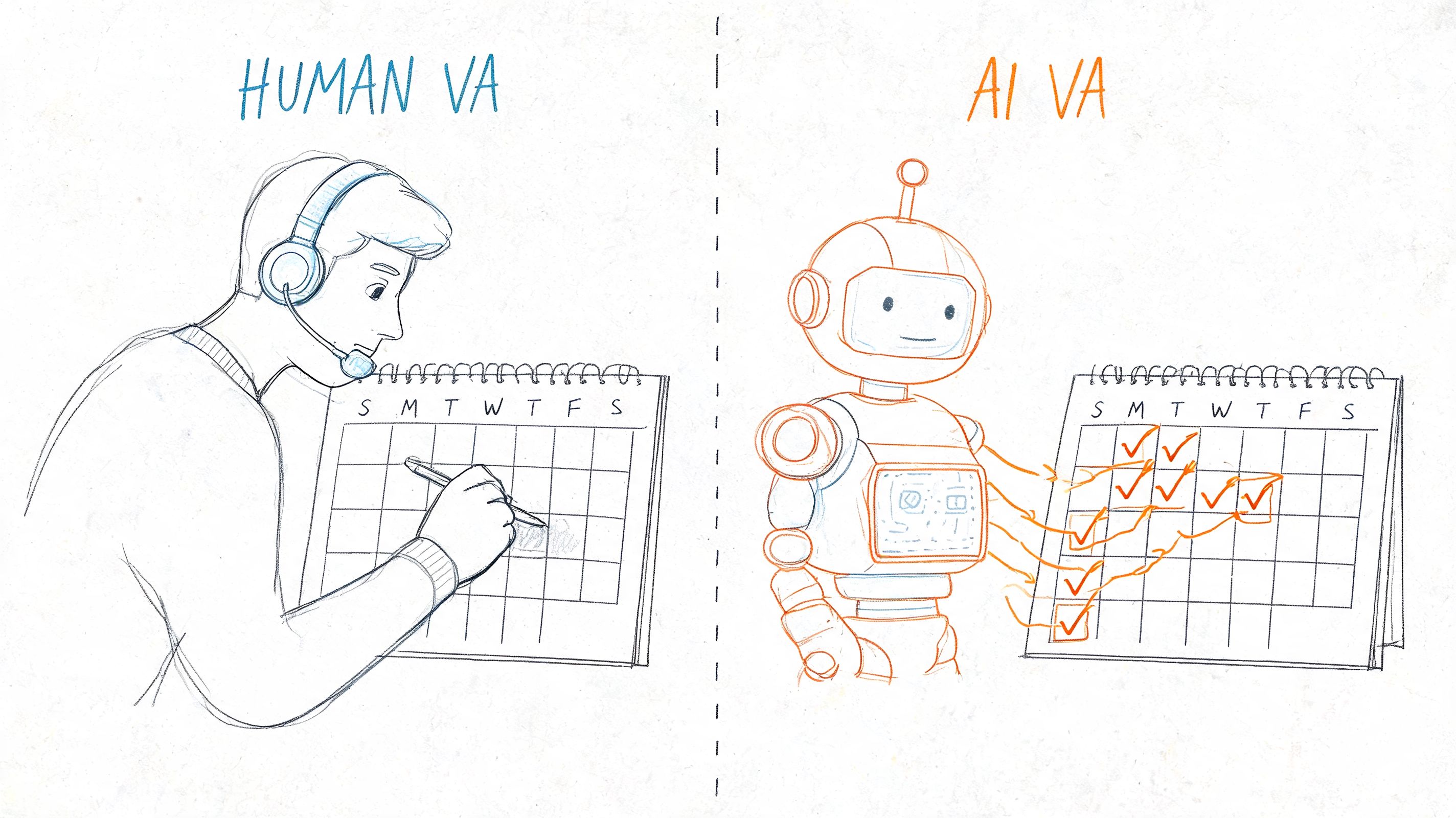
A human VA is your remote office manager, customer care rep, dispatcher, or admin lead. They work inside tools like Jobber, ZenMaid, Housecall Pro, Launch27, your inbox, your phone system, and your CRM.
They’re strong where context matters:
If you want a broad overview of common virtual assistant tasks, that list is useful. In cleaning, though, the role should be tied to revenue and retention, not just generic admin.
AI is best when speed and consistency matter more than judgment. It doesn’t need breaks, it doesn’t forget your pricing rules, and it doesn’t leave estimate requests sitting overnight.
For cleaning businesses, AI usually handles things like:
| Function | Human VA | AI assistant |
|---|---|---|
| Instant response to inquiries | Good during staffed hours | Best for round-the-clock speed |
| Basic estimate delivery | Can do it with rules | Best when pricing is standardized |
| FAQ handling | Good | Very good when questions are common |
| Complex objections | Best | Limited |
| Complaint resolution | Best | Weak |
A human VA is the office brain. AI is the front-desk engine.
That distinction matters because many owners hire a human assistant and expect instant, always-on coverage. That doesn’t happen unless someone is actively working the inbox, the phone, and the website at all hours. If you’ve ever looked into a virtual receptionist for small business, you’ve already seen this gap. Reception helps, but reception alone doesn’t solve the timing problem around estimates and follow-up.
The wrong setup creates another layer to manage. The right setup removes delay from the buying process.
Most VA articles stop at “they can answer emails.” That’s not enough. You need to know which tasks move revenue, tighten the schedule, and improve retention.
A website visitor looking for cleaning help usually wants a fast answer. If they hit a form and hear nothing for hours, many move on.
The first automation to build is immediate engagement. That can happen through web chat, voice intake, text response, or a structured form that starts the estimate process right away. The point isn’t novelty. The point is removing dead time between inquiry and response.
Faced with the top-of-funnel leak that happens while the owner is on jobs or off the clock, many owners start exploring AI sales automation for cleaning services, as this solution addresses the problem.
A cleaning business loses momentum when every estimate requires the owner to review details manually. Standard jobs should move through a defined pricing structure with clean handoff rules for exceptions.
Use automation to:
A practical follow-up message might look like this:
Hi Sarah, thanks for reaching out. Your estimate for biweekly house cleaning has been sent. If you'd like, reply here with your preferred day and we’ll help lock in the first visit.
That message is simple, but it keeps the conversation alive.
Admin work doesn’t just eat time. It creates route waste, overbooking, and underused crews.
By centralizing scheduling, client communication, and invoicing with a VA using platforms like Jobber or ZenMaid, cleaning businesses can free up 10+ hours weekly per team according to VA Masters’ breakdown of cleaning business VA workflows. Those recovered hours can support more service visits instead of disappearing into office coordination.
Customers don’t just judge the cleaning. They judge the experience around it.
A well-run VA system handles reminder messages, arrival windows, post-service check-ins, and review requests. That improves consistency and keeps complaints from sitting untouched in your inbox.
A human assistant should own the edge cases. If a customer says, “The kitchen looked great, but the upstairs bathroom was missed,” that needs a real person with authority and context.
The estimate step is one of the easiest places to surface add-ons. Inside fridge. Oven. Interior windows. Laundry room detail. Move-in extras. Office restocking. Whatever fits your service model.
This works best when you don’t force every prospect into a phone call. Offer the base service, present relevant add-ons, then let your assistant follow up with people who engaged but didn’t book.
Field-tested advice: Don’t ask a VA to “sell more.” Give them a short approved list of add-ons, the right timing, and clear language for when to offer each one.
Retention matters just as much. A VA can trigger reminder outreach for one-time customers, follow up after first cleans, and reconnect with clients who haven’t booked in a while. That’s where a virtual assistant for cleaning business growth stops being an admin hire and starts acting like a revenue system.
The best setup isn’t human or AI. It’s human and AI, with each doing the work it handles best.
A human assistant can calm down an upset client, rearrange tomorrow’s route, or catch a pricing exception. But human help has a limit that too many owners ignore. It isn’t instant at all hours.
Existing content on VAs for cleaning services often ignores the lead response bottleneck. Businesses lose leads during off-hours because human VAs still require manual intervention to generate estimates, which is the gap identified in this review of cleaning service VA limitations. That matters because prospects don’t care that your office opens at nine. They want an answer when they reach out.

Owners often hire one VA and expect three things at once:
That sounds reasonable until the assistant is in another conversation, off shift, or waiting for enough information to prepare an estimate. The system still depends on manual steps.
Here's the trade-off:
| Setup | What works | What fails |
|---|---|---|
| Human only | High-touch service, exceptions, relationship building | Slow after-hours response, estimate bottlenecks |
| AI only | Speed, consistency, nonstop availability | Weak empathy, limited handling of unusual situations |
| Hybrid | Speed first, human close and care | Requires clear process design |
The strongest workflow is simple.
AI captures the inquiry as soon as it arrives. It gathers service details, answers common questions, and provides an estimate when the request fits your pricing rules. It also records the information cleanly so nobody has to retype notes later.
That first step solves the delay problem. It also standardizes intake.
Once the prospect is warm, your human assistant takes over where judgment matters. They answer unusual questions, help with scheduling choices, handle concerns, and move the lead toward a booked visit.
That’s a better use of labor than paying someone to manually collect the same intake details over and over.
If you’re comparing systems that support this kind of workflow, tools discussed in guides on AI estimates software for cleaning are worth reviewing because they focus on speed at the exact point where many leads are lost.
The cost side is one reason this model is attractive. Hiring a virtual assistant can cut overhead by up to 70% compared to in-house staff, who can cost $45,000 to $60,000 annually, and some providers offer plans as low as $250 per month according to VAV Remote Workers’ 2026 cleaning business VA cost overview. That doesn’t mean every VA arrangement is perfect. It means the barrier to adding support is lower than most owners assume.
The mistake is thinking low cost automatically means high return. It doesn’t. Return comes from assigning the right layer of work to the right assistant.
A hybrid system wins when AI removes waiting and the human assistant removes friction.
That’s the model I recommend most often because it fixes both sides of the problem. It protects after-hours revenue and still gives customers a real person when they need one.
Most cleaning companies overcomplicate this. You don’t need a giant operations rebuild. You need a simple workflow, clear ownership, and the discipline to document how jobs move from inquiry to booking.
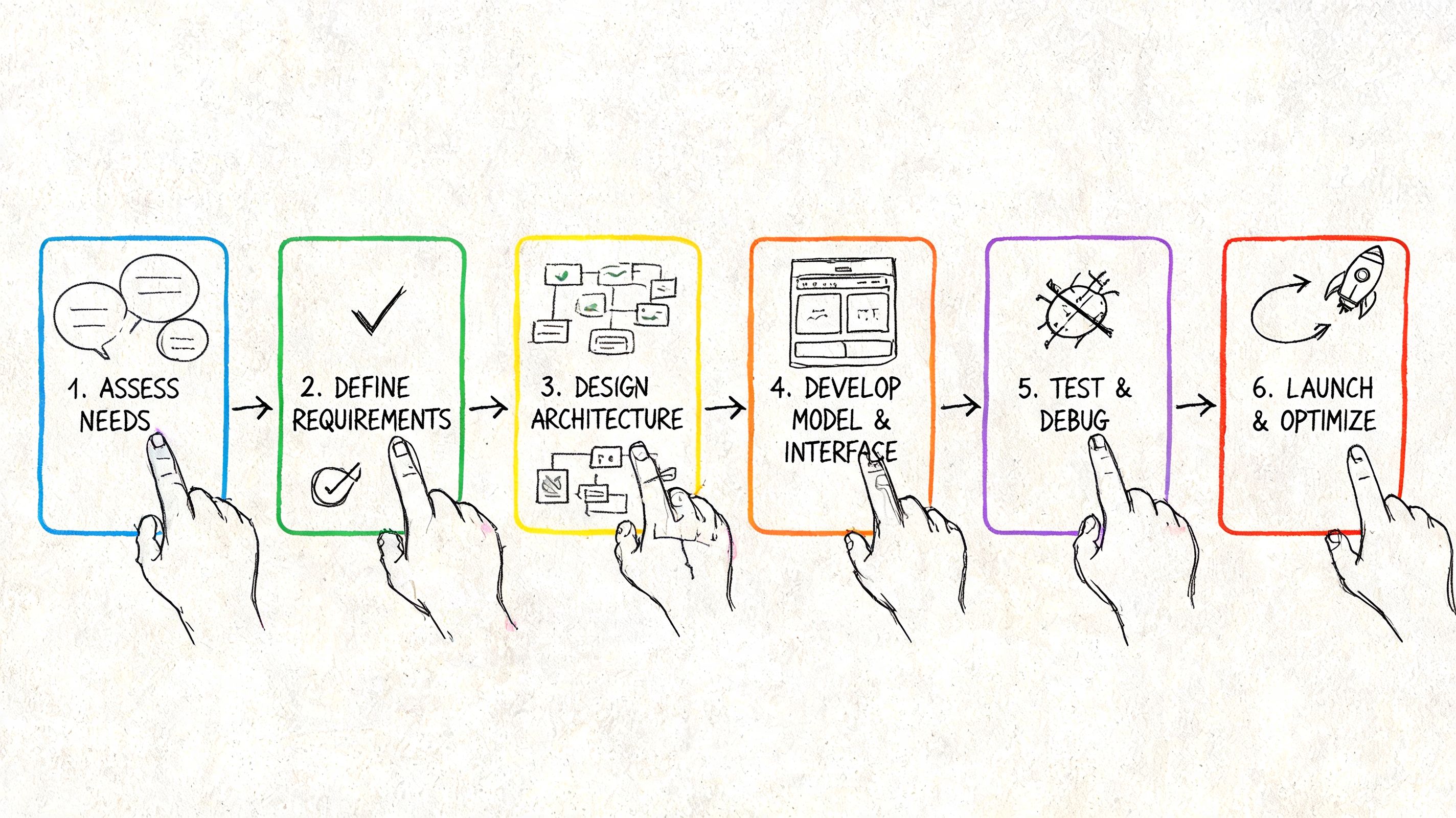
Start by dividing tasks into two buckets.
AI-first work includes immediate inquiry response, intake questions, basic FAQs, estimate delivery, and lead routing.
Human-first work includes objection handling, schedule exceptions, complaint resolution, follow-up on warm leads, and customer retention outreach.
If a task needs empathy or judgment, a person should own it. If it needs speed and consistency, automate it first.
A lot of bad VA hires happen because the owner posts for “general admin help.” That’s too vague.
Instead, hire for a role like:
For cleaning-specific recruiting support, some operators use pipehirehrm.com to structure hiring around actual workflow needs. If your market has a bilingual customer base, it can also make sense to look at providers offering Spanish-speaking Virtual Assistants so inbound leads don’t stall on a language mismatch.
Don’t get distracted by flashy demos. For a cleaning company, the tool needs to do a few practical things well:
If the software can’t connect to the rest of your system, it creates another admin job. If you're comparing setups, it helps to understand how AI connects with online booking software for cleaning business, because booking friction often shows up right after estimation.
Most owners onboard badly. They toss logins at the assistant, explain pricing once, and assume the rest will sort itself out.
It won’t.
Give your VA these documents before day one:
| Document | Why it matters |
|---|---|
| Pricing guide | Prevents inconsistent estimates |
| Service area map | Avoids bad-fit bookings |
| Scheduling rules | Defines who gets placed where and when |
| Complaint protocol | Keeps customer issues consistent |
| Template library | Speeds replies and protects brand tone |
One more useful walkthrough sits below. It’s worth watching if you want a visual on how to map an assistant-driven workflow.
Your VA system should move information automatically. A common setup includes your estimator, CRM, scheduling platform, phone system, and Zapier connections between them.
Keep the logic simple:
Hiring a virtual assistant can cut overhead by up to 70% compared to in-house staff, who can cost $45,000 to $60,000 annually, and plans can start as low as $250 per month according to the earlier-cited VAV Remote Workers cost overview. The key advantage, though, isn’t the hourly rate. It’s that you stop paying owner time to do receptionist and dispatcher work.
If you can’t measure it, you’ll start judging your assistant based on how busy they seem. That’s a bad management habit.
Track the system by outcomes. Not effort.
Ask whether the automation is reducing delay and increasing qualified opportunities.

Key indicators to review:
A human VA should improve movement through the pipeline and protect customer relationships.
Review:
Don’t build a complicated report nobody checks. Use one weekly scorecard with a small set of numbers and a few notes.
A simple version might include:
| KPI | Why it matters |
|---|---|
| New inquiries captured | Shows whether top-of-funnel leakage is shrinking |
| Estimates sent | Confirms intake is moving |
| Bookings won | Ties the system to revenue |
| Follow-ups completed | Shows whether warm leads are being worked |
| Repeat bookings created | Measures retention impact |
Owner check: If your VA is “doing a lot” but bookings, speed, and retention aren’t improving, the workflow is wrong. Fix the system before blaming the person.
For more ideas on process improvement, the blogs at Estimatty and Pipehire HRM are both useful reference points. One helps with estimation and booking flow. The other helps with the people side of scaling.
If your cleaning business is missing leads after hours, taking too long to send estimates, or relying too heavily on owner follow-up, Estimatty is built for that exact gap. It gives cleaning companies an AI-powered web and voice estimator that engages prospects instantly, delivers estimates fast, and helps your team turn more inquiries into booked jobs without adding office headcount.