October 10, 2026
How to Increase Qualified Leads for Cleaners
Learn how to increase qualified leads for your cleaning business. Discover AI estimators, speed-to-lead tactics, and scoring strategies that book more jobs.

Sunday, August 23, 2026
Master commercial cleaning lead generation with proven strategies. Profile ideal clients, build channels, optimize your estimator, and close more jobs.
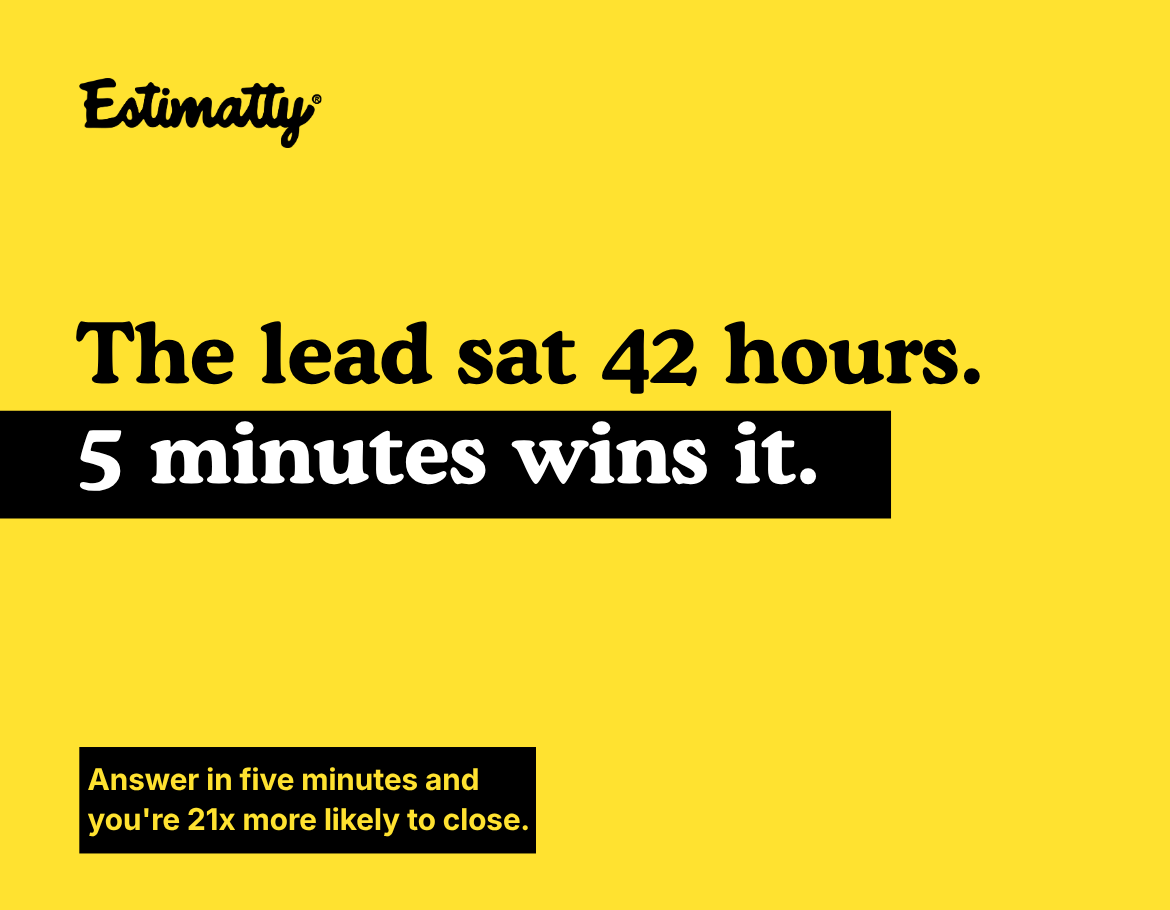
A commercial cleaning company can lose a qualified buyer before anyone on the team sees the inquiry. B2B sales teams have a median response time of around 42 hours, yet teams that respond within five minutes are reported to be about 21 times more likely to qualify a lead than slower responders (B2B lead conversion benchmarks). That gap changes the entire commercial cleaning lead generation strategy. Getting found matters, but responding instantly and producing a usable estimate matters just as much.
The U.S. commercial cleaning industry was valued at $117 billion in 2024, and the market is expected to continue growing over the next five years (State of the Market Commercial Cleaning Edition). Opportunity is everywhere, but opportunity doesn't pay your payroll. A reliable pipeline requires specific targeting, multiple acquisition channels, fast qualification, consistent estimates, and disciplined follow-up.
The $117 billion U.S. market rewards operators who respond first and estimate accurately. Established facility-service providers, regional janitorial firms, niche specialists, franchise operators, and smaller cleaning teams compete for the same buyers. A polished website cannot compensate for slow intake. The company that answers quickly, qualifies the facility, and sends a usable estimate often beats a better-known competitor.
The global commercial cleaning market is also expanding. Independent research estimates it at $72.4 billion in 2026, rising to $140.4 billion by 2035 at a 7.6% CAGR (commercial cleaning market data). Health concerns, specialized services, and outsourcing continue to create demand. They also increase search activity, referrals, and vendor comparisons.
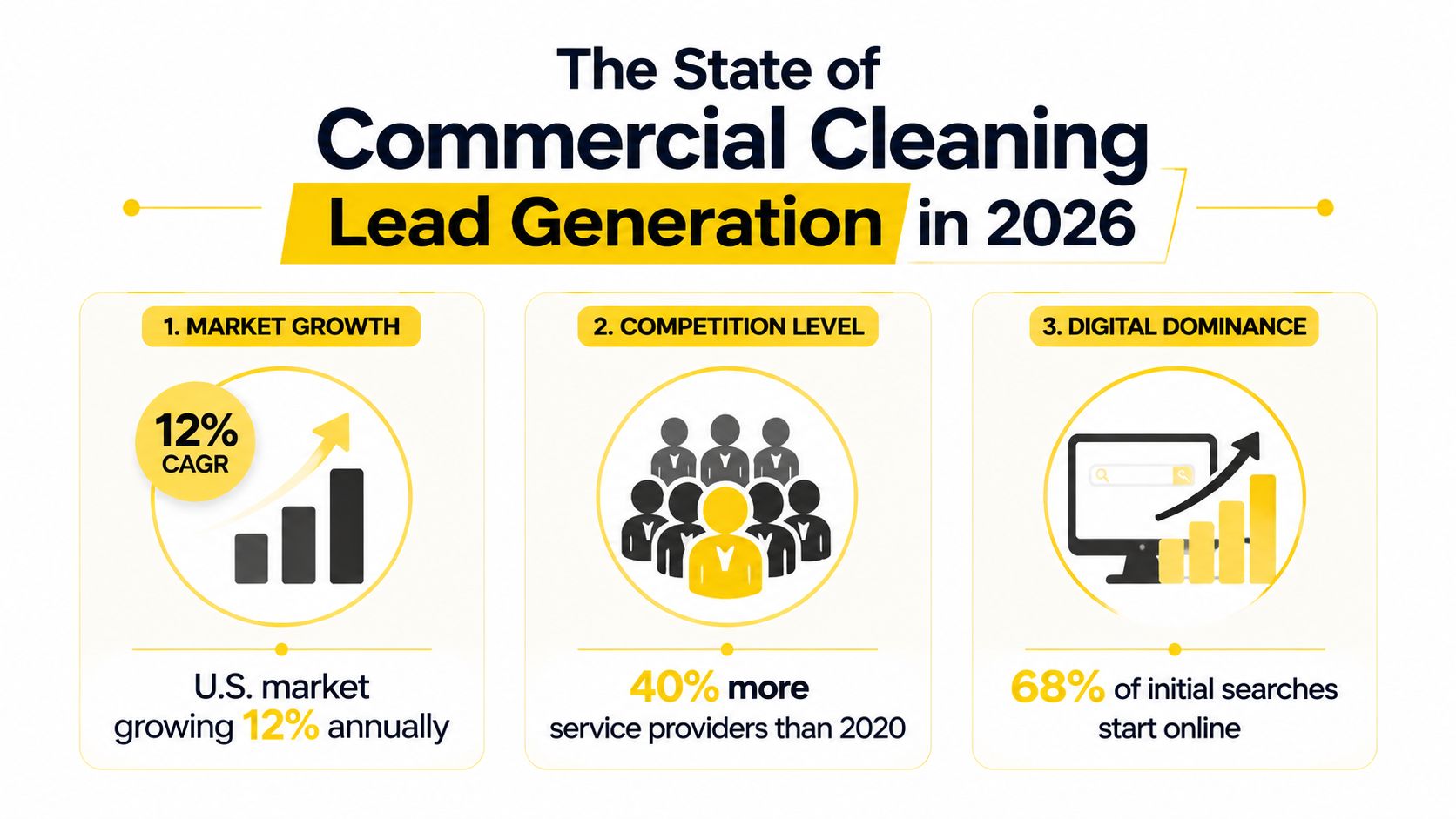
Commercial buyers now research cleaning providers before speaking with sales staff. One 2025 industry dataset found that 78% of cleaning companies relied on digital marketing, 65% reported that consumers search online before booking cleaning services, and 67% planned to increase digital marketing budgets (cleaning industry marketing statistics).
Those figures do not justify spending equally across every channel. Build a focused service page, maintain a credible Google Business Profile, collect relevant reviews, and connect every inquiry to an intake process that works outside office hours. Your website must explain the service quickly, function well on a phone, and offer an immediate next step. The broader lead generation system guide provides useful acquisition fundamentals, but commercial cleaning companies should configure each tactic around facility type, contract value, and available crews.
Response speed and estimating now belong in the same workflow. A lead that receives an instant acknowledgment but waits days for pricing is still at risk. Use automation to collect facility details, flag incomplete requests, and prepare an estimate for staff review while the prospect is still engaged.
Operator's rule: Do not buy more traffic until you know who answers each inquiry, which questions qualify it, and how quickly the prospect receives an estimate.
Paid campaigns can create demand quickly, but weak landing pages turn expensive clicks into poor-fit calls. Use this guide to ads for cleaning services, then connect each campaign to measurable intake, AI-assisted estimating, and follow-up.
The fastest way to waste a sales budget is to market to “businesses that need cleaning.” That audience is too broad to guide messaging, pricing, staffing, or prospecting. Commercial cleaning lead generation improves when you define the facilities your operation can serve profitably and repeatedly.
Start with the building, not the logo. Identify the facility types that fit your equipment, staffing model, schedule, insurance, and supervision capability. Offices, medical facilities, schools, warehouses, retail locations, hospitality properties, and multi-tenant buildings each create different access requirements, cleaning standards, inspection expectations, and decision-making processes.
Your ideal client profile should answer practical questions:
Don't ignore the details that disqualify prospects. A facility outside your service area, a buyer seeking residential work, or a building requiring capabilities you haven't documented can consume the same sales time as a serious opportunity. Put those filters into the first conversation and into your CRM.
Specialization matters because buyers want evidence that you understand their environment. A medical office prospect wants confidence around procedures, consistency, and documentation. A property manager wants dependable coverage across buildings, clear communication, and inspection-ready systems. A warehouse operator may care more about floor conditions, dust, safety, and operating schedules.
Once you choose a segment, make the website and outreach speak its language. Use separate pages for the facility types you want, show the services relevant to each one, and explain what the first walkthrough or assessment includes. Your brand should reinforce the same position, which is why this resource on branding for cleaning services fits into the profiling process.
Ask existing customers which buildings produce the cleanest operations and strongest retention. Look for patterns in access, scope clarity, travel time, staffing, complaint volume, and expansion potential. Your best niche isn't merely the one with the highest possible contract value. It's the one your company can serve consistently while protecting margin and reputation.
The useful profile is operational: it tells your marketer who to attract, your estimator what to ask, and your operations manager which opportunities to reject.
Inbound marketing works when each channel has a defined job. SEO captures existing intent, Google Business Profile supports trust, paid search creates immediate visibility, referrals transfer credibility, and content answers the questions buyers ask before contacting vendors. Combining everything without assigning priorities usually produces activity without a dependable pipeline.
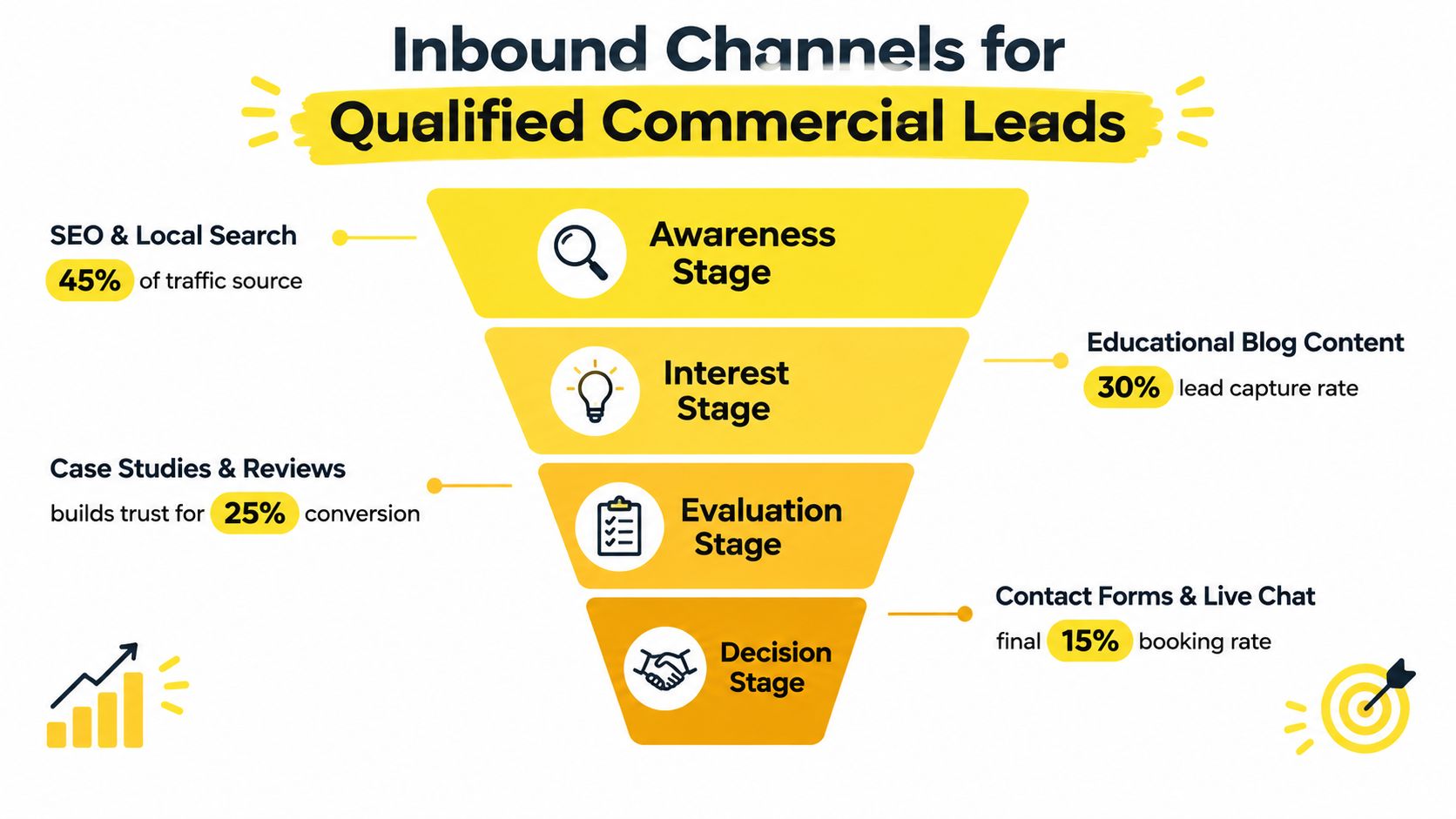
Create service and location pages for the work you want, such as office cleaning, medical office cleaning, warehouse cleaning, post-construction cleaning, and janitorial services for property managers. A page should explain the facility problem, service schedule, proof of process, service area, and next action. Don't build pages for niches your team can't staff.
Use Google Business Profile as a conversion layer, not just a directory listing. Keep services, contact information, photos, operating details, and service areas accurate. Ask satisfied commercial clients for reviews that identify the type of facility and the work performed, without disclosing confidential information. Specific reviews help a prospect recognize that your experience matches their building.
The benchmark data cited earlier shows that organic search is a major traffic source for cleaning-related service businesses, while mobile visits make up a substantial share of activity. That makes speed, readability, click-to-call access, and short forms basic requirements rather than design extras.
Paid search should target commercial intent, not every phrase containing “cleaning.” Separate campaigns by facility type and location, then use negative keywords to block residential services, employment searches, and unrelated cleaning requests. Send each ad to a matching landing page instead of a generic homepage.
Track calls, forms, booked walkthroughs, and signed contracts separately. A campaign that generates inquiries but no qualified estimates is not performing well, even if the click volume looks impressive. Social advertising can support awareness and retargeting, but don't give it the budget reserved for high-intent search until your tracking proves its value.
Read this SEO guide for cleaning services for a practical framework, and use Sibley Digital's web design guide for professional services when you need to improve the conversion path itself.
Ask current clients for introductions at moments when they've seen reliable service, such as after a successful inspection or a smooth expansion into another area. Develop partnerships with property managers, contractors, real estate professionals, and facility vendors who already work with your target buyers.
Content should help a decision-maker evaluate vendors. Publish cleaning checklists, walkthrough preparation guides, service-scope explanations, and comparisons between recurring and one-time work. Each article should point to a relevant service page or estimate request, not end with information alone.
A useful video can reinforce your funnel and show prospects how your process works.
Outbound works best when you choose accounts deliberately. Build a list of properties, companies, and facility contacts that fit your service profile, then organize outreach around a relevant operational reason. “We provide cleaning services” is forgettable. “We help multi-tenant office properties coordinate after-hours janitorial coverage” gives the buyer a reason to continue.
Use LinkedIn to identify property managers, facility directors, operations managers, and office administrators. Review the building portfolio, service area, recent moves, renovations, tenant changes, and hiring activity. A quick account note prevents generic outreach and helps you choose the correct decision-maker.
Email should be short and specific. A first message can follow this structure:
Hi [Name], I noticed you manage [facility or property type] in [area]. We handle [specific service] for similar commercial spaces and can assess [relevant cleaning concern]. Would a short conversation about your current coverage be useful?
Don't attach a long brochure. Ask one practical question, offer a clear next step, and make it easy to decline. Follow up with useful context rather than “just checking in.” Send a checklist, mention a service gap, or ask whether the current contract is being reviewed.
A small team can manage outbound with a simple workflow:
Networking still matters because local commercial contracts depend on trust and visibility. Attend chamber meetings, property-management gatherings, contractor events, and facility-focused business groups. Don't hand every person a sales pitch. Ask what buildings they manage, what vendor problems they see, and who handles cleaning decisions.
If your pipeline is healthy but your team can't consistently prospect, consider recruiting sales or operations support through pipehirehrm.com. Tie compensation to qualified meetings, completed walkthroughs, and profitable signed contracts, not raw contact volume. Your commission structure should reward revenue quality and retention.
For a broader framework on contractor acquisition, use this contractor lead generation resource and adapt it to commercial decision-makers.
Most cleaning companies don't have a lead problem. They have an intake problem. A prospect submits a form, reaches voicemail, or calls after hours, then waits while the owner finishes a job. By the time someone responds, the buyer may already be speaking with another vendor.
The response-time evidence is too strong to ignore. Businesses that contact inbound leads within five minutes are reported to be 21 times more likely to qualify the lead than companies that wait 30 minutes, and conversion rates were reported as eight times higher when the first attempt occurred within five minutes rather than later (InsideSales response-time research). Separate B2B benchmarks place median response time around 42 hours, while teams responding within five minutes were about 21 times more likely to qualify a lead (B2B lead response data).
A commercial estimator should collect enough information to determine fit and produce a starting estimate without turning the interaction into an interrogation. Ask about:
AI-powered web and voice estimating changes the economics of commercial cleaning lead generation. A tool such as Estimatty can engage website visitors or callers, capture details including square footage, surfaces, and urgency, apply configured pricing rules, and send an estimate by SMS or email. It can also notify the team and connect with a CRM or Zapier, so the inquiry doesn't sit in a form inbox.
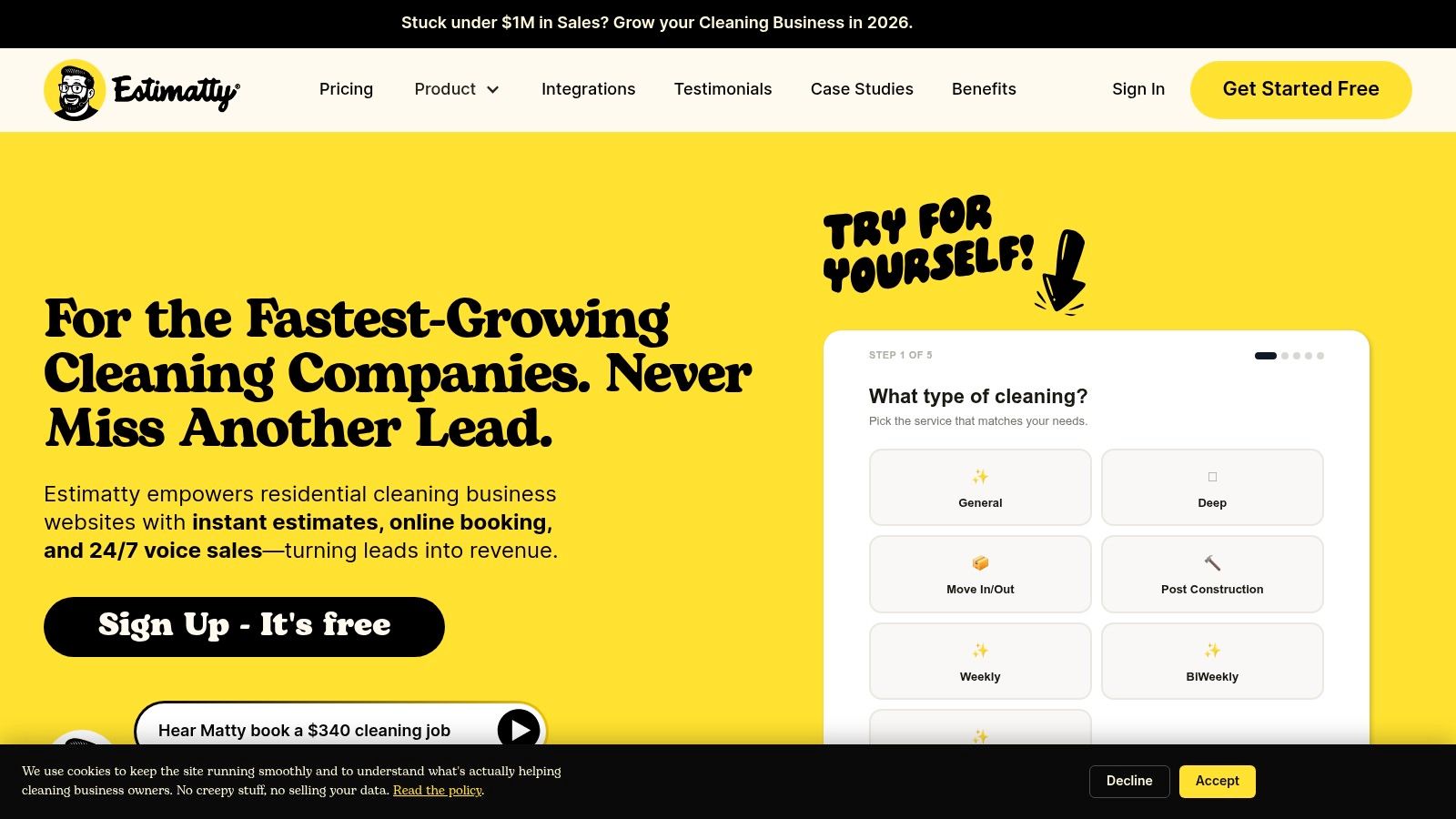
No-code setup is only useful if your pricing logic is accurate. Define service categories, frequency adjustments, add-ons, minimums, travel rules, and escalation conditions. Decide which requests can receive an immediate estimate and which require a human review, such as unusual floor care, regulated environments, or complex multi-building scopes.
The estimator shouldn't replace the walkthrough when a site visit is necessary. It should make the walkthrough more productive by capturing the buyer's basic requirements and giving your team context before the conversation. Prospects receive a fast starting point, while your sales staff can focus on scope validation and closing.
Use AI sales automation for cleaning services to think through the wider workflow. The winning combination is simple: instant engagement, short qualification, consistent estimating, and human follow-up when judgment is required.
An estimate creates a sales opportunity, not a contract. Commercial buyers may compare vendors, seek internal approval, and confirm that the proposed scope fits the facility. Your follow-up should remove uncertainty, clarify the next decision, and keep the opportunity active without pressuring the buyer.
Build every estimate for a quick review. List the facility assumptions, service frequency, included tasks, exclusions, expected start timing, communication process, and next action. Use estimate consistently while the scope still requires verification. State exactly what the walkthrough will confirm if site conditions could change the final price.
Use a defined sequence, with each contact serving a specific purpose:
Keep messages concise. A follow-up should move the conversation ahead, not restate the estimate. Log every contact attempt, response, objection, and next date in the CRM. If the record depends on someone's memory, the process will fail when that employee is busy or leaves.
Response speed belongs in the sales process, not just the marketing dashboard. Research covering 2.24 million sales leads found that companies attempting contact within an hour were nearly seven times as likely to qualify a lead as companies that waited longer. Companies waiting 24 hours or more were 60 times less likely to qualify than those responding during the first hour (lead response research summary). A local search study found that 59% of consumers expect a business response within 24 hours (2025 local search consumer behavior study).
AI estimating makes this standard practical after hours. Route an inquiry into an automated first response, capture the facility details needed for pricing, and send a consistent estimate when the request fits your rules. Escalate unusual floor care, regulated environments, or complex multi-building scopes to a person. The operating advantage comes from joining fast response with dependable estimating, then measuring both together.
Use one CRM and name each stage consistently. Separate lead source, qualified inquiry, booked walkthrough, sent estimate, won contract, lost opportunity, and disqualified request. Review performance weekly and change channel budgets monthly.
| Metric | Industry Benchmark | Target |
|---|---|---|
| Response time | Median B2B response time around 42 hours (B2B lead conversion benchmarks) | Respond immediately, with a five-minute operating standard |
| First-hour qualification | Contact within an hour is nearly seven times more likely to qualify than later contact | Route every inquiry to a live or automated first response |
| Lead expectation | 59% expect a response within 24 hours | Beat the expectation, including after hours |
| Lead-to-estimate conversion | No universal benchmark applies across facility types and scopes | Track by source, niche, and salesperson |
| Estimate-to-contract conversion | No universal benchmark applies across pricing and sales processes | Compare by segment and contract type |
| Cost per lead | Median B2B cost per lead reached $213 in early 2026 | Judge cost against qualified opportunities and contract economics |
| Average contract value | No single benchmark fits every market | Track recurring value by facility type |
| Source quality | No universal benchmark applies | Measure qualified inquiries and signed contracts by channel |
Do not divide spending equally across SEO, paid search, social media, referrals, events, and outbound because the list looks balanced. Fund channels that produce qualified commercial opportunities at an acceptable acquisition cost. Reserve resources for the systems that convert those opportunities.
Protect the operating basics first: website and landing-page improvements, Google Business Profile, review collection, CRM tracking, and response automation. Add paid search where demand is clear and your team can handle the inquiries. Invest in outbound after identifying the accounts and niches you want. Expand content once facility questions show which topics lead to real sales conversations.
Review every lost opportunity. Check the service area, response time, estimate clarity, scope fit, and follow-up record. Those findings matter more than traffic totals.
Estimatty gives commercial cleaning companies an AI-powered web and voice estimator that captures facility details, qualifies inquiries, and sends consistent estimates by SMS and email around the clock. Visit Estimatty to see how fast intake and automated estimating can reduce response delays in a commercial pipeline.