September 21, 2026
Inside and Out Cleaning: A Practical Pricing Guide
Learn what inside and out cleaning really includes, how pricing works, and which add-ons actually pay off for residential and commercial estimates.

Tuesday, May 12, 2026
Build winning cleaning service business plans with our 2026 guide. Learn to conduct market research and use AI like Estimatty to automate your estimates.
.png)
Most cleaning companies don't stall because the owner lacks hustle. They stall because the business lives in the owner's head.
That works when you're doing estimates between jobs, answering missed calls at night, and manually adjusting prices based on instinct. It stops working when you add a second crew, start serving different neighborhoods, or try to keep pricing consistent across residential and commercial work. At that point, the lack of a real plan creates familiar problems. Leads wait too long. Pricing drifts. Team members improvise. Margins get thinner even when revenue rises.
Good cleaning service business plans fix that. Not with a polished document you never open again, but with a working plan that guides estimates, hiring, scheduling, service design, and follow-up. The owners who scale well usually aren't the ones with the fanciest spreadsheet. They're the ones who decide early how the business will sell, deliver, and measure work, then they update that plan as reality changes.
The old version of business planning is too slow for a service business. A long document with three-year assumptions sounds responsible, but it often turns into fiction the minute labor availability changes, local competitors shift pricing, or your service mix starts moving toward recurring work.
A modern plan needs to be shorter, tighter, and tied to operations. Cleaning service experts recommend a 1 to 2 year planning horizon and an adaptive model built around SMART goals, including targets such as 90% customer retention in Year 1, according to Tailor Brands on cleaning service business planning. That's a much better fit for a business where route density, team reliability, and repeat clients drive the actual outcome.
Most generic templates overemphasize broad vision and underemphasize execution. They ask for market summaries and funding goals, but they don't force owners to answer the hard questions:
Practical rule: If your plan doesn't affect how you price, hire, schedule, and follow up this week, it isn't a real plan.
The strongest cleaning service business plans act like an operating manual. They define the lane you're in, the customers you're targeting, the services you'll push first, and the standards your team has to follow. They also leave room to change.
A useful structure is simple:
If you're thinking about expansion, this guide on how to scale a service business is useful because it pushes the same operational mindset. Growth only helps when the underlying system can support it.
The main change is mental. Stop treating the business plan like a startup requirement or loan document. Treat it like your control panel.
That means your plan should answer daily questions fast. Which leads fit your ideal client? Which services deserve promotion? When do you hire? When do you raise rates? What gets standardized, and what stays flexible? Owners who can answer those questions clearly usually grow with less chaos.
Most cleaning businesses write a mission that's too broad to be useful. "We provide quality cleaning at affordable prices" could describe almost anyone in your city. It doesn't help a customer choose you, and it doesn't help a manager make decisions.
Your vision and mission need to narrow the field. They should tell people what kind of company you're building, who it's for, and what you won't compromise on.

A strong cleaning brand usually stands on one clear promise, not five. In practice, that promise often falls into one of these buckets:
If you try to lead with all of them, none of them stand out.
Your vision is where you're going. Your mission is how you'll operate while getting there.
A useful vision sounds like this in plain language:
We want to become the most dependable recurring home cleaning company in our service area, known for consistent standards and fast response.
A useful mission sounds like this:
We deliver structured, easy-to-book cleaning services with clear estimates, reliable teams, and documented quality standards.
Those statements are simple on purpose. They help you decide who to hire, what to market, and which clients fit.
A good mission makes saying no easier. If a service line creates complexity without supporting your positioning, leave it out.
When I review cleaning service business plans, the best executive summaries aren't long. They answer five practical questions:
Who do you serve
Homeowners with recurring needs, property managers, offices, or a specific niche.
What do you sell
Not every possible cleaning task. Your core offer and your most important add-ons.
Why you win
Speed, consistency, specialization, convenience, or trust.
How you operate
Small local team, multi-crew setup, owner-operator model, or centralized dispatch.
What the next stage looks like
Usually more recurring accounts, tighter routes, better staffing stability, or expansion into nearby territory.
If your current brand feels generic, this article on branding for cleaning services is a practical next read. The strongest brands in this space aren't flashy. They're clear.
Your mission should show up in real decisions. Put it in hiring materials. Use it in onboarding. Check estimates, website copy, and service descriptions against it. If your stated identity says "premium and consistent" but your prices vary by whoever answers the phone, the mission isn't doing its job.
The cleaning industry is large enough that "there's opportunity" isn't useful advice. You need to know which opportunity is yours.
The broader tailwind is real. The global cleaning services market is projected to reach USD 481.75 billion in 2026, and 62% of bookings now happen through online platforms while 50% of owners use AI tools, according to Jobber's cleaning industry trends. That tells you two things. Demand is there, and buyers increasingly expect a smooth digital path from interest to estimate to booking.
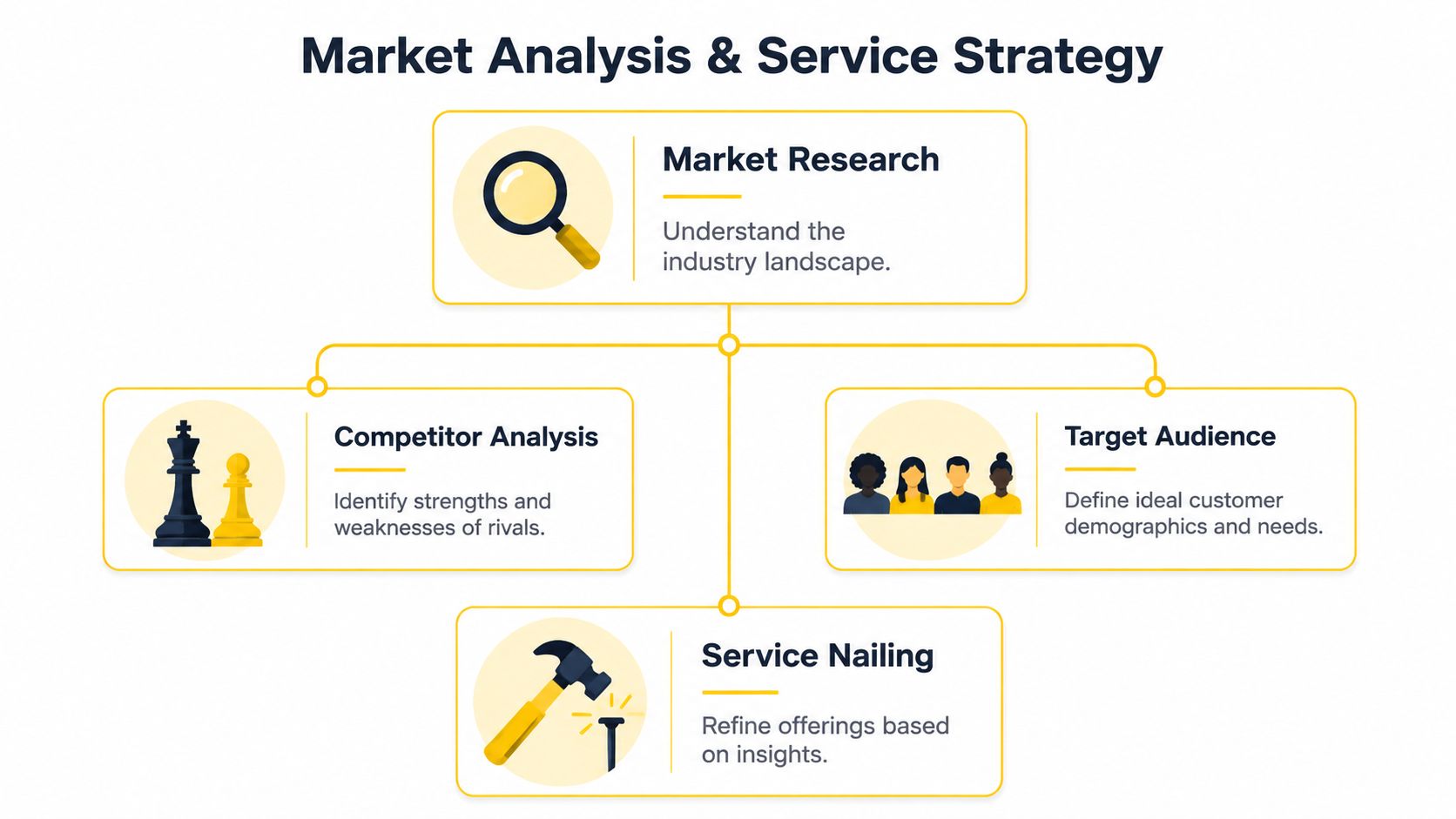
Forget broad demographic summaries for a moment. Look at your market the way a working owner should:
A local market review should include Google Business Profiles, review themes, website service menus, estimate forms, response speed, and whether competitors push one-time jobs or recurring plans.
If you're planning expansion beyond one town, this playbook for home service contractors is worth reading. The useful takeaway is that multi-town growth only works when service definitions, routing standards, and local positioning stay disciplined.
Many owners start by offering everything. That feels safe, but it usually creates scheduling problems, training complexity, and uneven margins.
A stronger service stack has three layers:
| Service Layer | Purpose | Example |
|---|---|---|
| Core offer | Predictable demand and repeatability | Recurring residential cleaning |
| Premium service | Higher ticket or specialized work | Deep cleans, post-construction cleanup |
| Add-ons | Margin support and upsell opportunities | Interior windows, oven cleaning, fridge cleaning |
The mistake is making the premium or add-on layer too broad too early. If your crews can't deliver the core service consistently, extra offerings only hide the operational weakness.
Different buyers care about different things.
For recurring residential clients, convenience and trust usually matter most. They want simple service packages, dependable timing, and low friction.
For commercial accounts, scope clarity and accountability matter more. They want documented tasks, clear communication, and confidence that work will be performed to spec.
For property managers or short-term rental operators, turnaround speed and reliability often matter more than polished branding.
Don't create services because competitors have them. Create services because a specific buyer will repeatedly pay for them and your team can deliver them cleanly.
A strong menu doesn't overwhelm the buyer. It organizes decisions.
Use these filters when shaping your offers:
If lead flow is the bigger issue right now, this guide on how to get more cleaning clients is helpful because it connects market positioning with actual demand generation.
The right market analysis doesn't end in a paragraph. It ends in a service list you can price, market, and deliver without confusion.
Many cleaning businesses don't have a sales system. They have a collection of activities. A few referrals, some Google reviews, occasional ads, and whoever happens to answer the phone handling estimates. That can produce revenue, but it doesn't produce consistency.
A real go-to-market plan connects visibility, response speed, pricing logic, and follow-up. That's the difference between getting inquiries and turning them into booked work.
Cleaning buyers usually don't want a long sales process. They want confidence, speed, and a clear next step.
The channels that tend to matter most are:
Paid traffic without a fast estimate flow often wastes money. If you're buying clicks, your sales process has to keep up. This article on ads for cleaning services is useful if you're trying to tighten that connection between spend and booked jobs.
Marketing amplifies what already exists. If your estimate process is inconsistent, more leads only create more inconsistent pricing.
The first fix is deciding how you'll price. Here's the practical trade-off.
| Pricing Model | Best For | Pros | Cons |
|---|---|---|---|
| Hourly | Variable jobs, early-stage operators | Simple to start, flexible for unusual scopes | Harder for customers to predict, easier to undercharge or overrun time |
| Flat-rate | Standardized residential packages | Easier to sell, easier to train around, more predictable customer experience | Requires accurate scope assumptions and discipline |
| Per square foot | Larger commercial or specialty spaces | Useful for structured commercial scopes | Can miss complexity if the site has unusual conditions |
| Custom scope estimate | High-variation or premium work | Fits specialized jobs with clear documentation | Slower to produce and harder to delegate |
For most companies trying to grow, flat-rate service packages with documented add-ons are easier to scale than pure hourly pricing. They also make it easier to train staff and spot revenue leaks.
A cleaning sales engine should do four things well:
That can include web forms, CRM automation, text follow-up, and AI-assisted intake. One example is Estimatty, which provides web and voice estimate automation for cleaning businesses, captures job details, and sends estimates by SMS or email. Used correctly, tools like that don't replace judgment. They standardize the first response so your team isn't reinventing pricing on every call.
If the buyer is ready now and you answer tomorrow, a competitor gets the job.
The highest-converting estimate flows are usually simple. They ask for enough information to price responsibly, but not so much that the buyer drops off. They also make the next action obvious.
Good flows usually include:
The owners who win here aren't always the ones with the biggest ad budget. They're the ones with the cleanest path from inquiry to estimate to booking.
Operations is where cleaning service business plans either become real or fall apart. You can market well and sell well, but if the service arrives late, misses details, or changes quality from crew to crew, growth turns into churn.
The pressure is even higher because staffing isn't easy right now. The U.S. cleaning industry faces 42% employee turnover, and 78% of companies report retention difficulties, according to RMS Cleaning industry statistics. That means your plan can't treat hiring like an afterthought. It has to define how you'll recruit, train, and keep people long enough to build consistency.
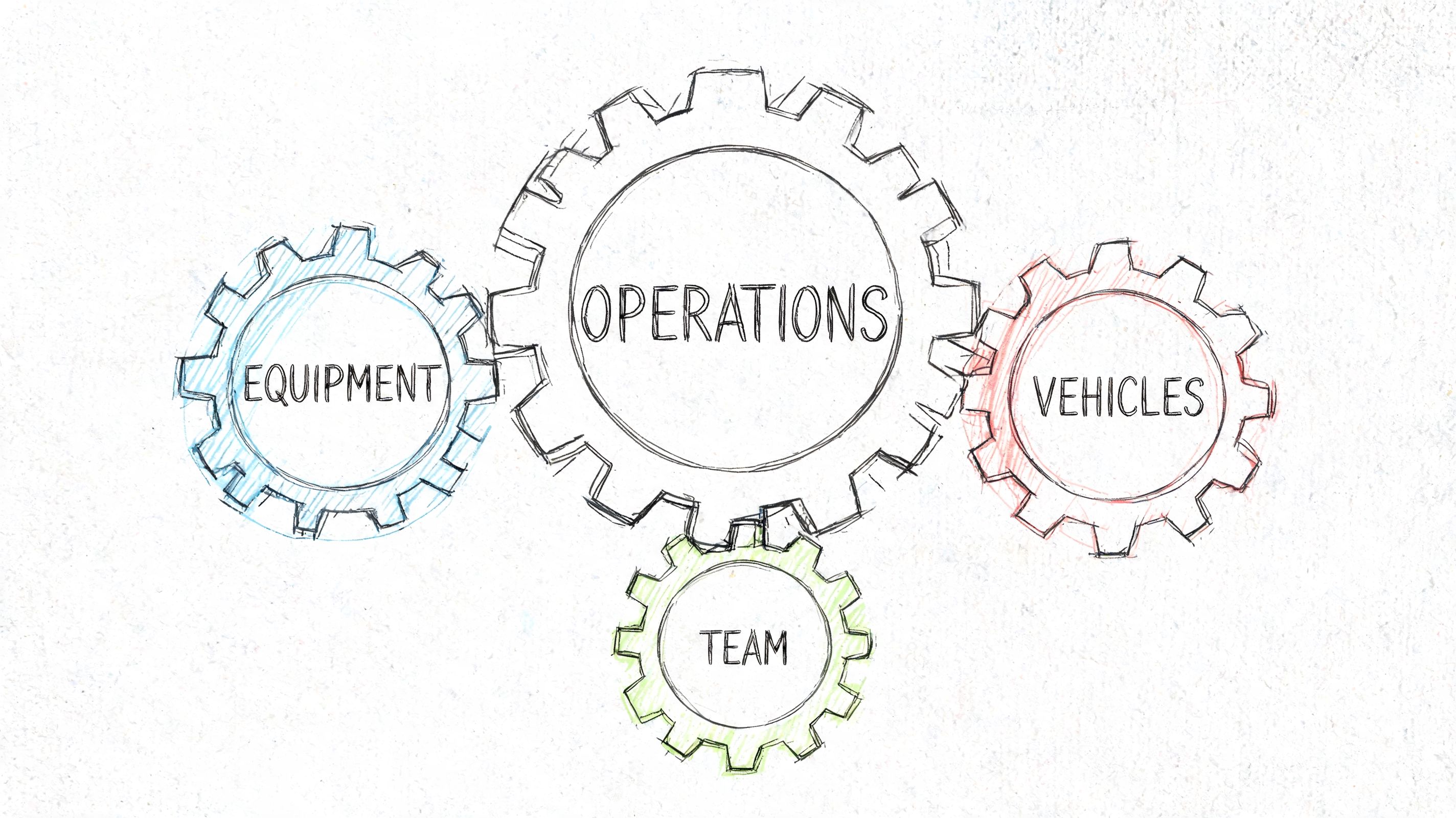
Owners often overfocus on supplies and underfocus on process. Supplies matter. Process matters more.
Your operations plan should standardize:
If these aren't written down, your team invents the process as they go.
A common mistake is hiring only for cleaning experience. Experience helps, but dependability and coachability usually matter more over time.
A better hiring plan includes:
If you need better structure for recruiting, an applicant tracking system for service businesses can help you create a repeatable pipeline instead of filling roles in a panic. For teams in this industry, platforms like pipehirehrm.com are also worth considering when you want a more focused approach to cleaning employee hiring and management.
The fastest route to uneven service is relying on "common sense." Every cleaner has different habits. SOPs create a shared standard.
Use SOPs for things like:
Room-by-room task sequences
This speeds training and cuts missed steps.
Product usage rules
Especially important when serving homes with sensitivities or commercial sites with strict requirements.
Client communication
Arrival notices, access issues, reschedule requests, and post-service follow-up should follow a script.
Supervisor review
Spot checks, photo documentation where appropriate, and escalation rules keep quality visible.
A stable team doesn't happen by accident. Owners keep good cleaners when the work is organized, expectations are clear, and daily friction stays low.
This part shouldn't be glamorous. It should be clean and complete.
Make sure your business plan addresses:
The best-run cleaning companies are often the least dramatic internally. Their crews know the job, managers know the standards, and clients get the same experience every time.
A financial section shouldn't be there to impress anyone. It should tell you whether the business model works.
Too many owners build cleaning service business plans around top-line hope. They forecast revenue growth, but they don't pressure-test labor, acquisition cost, or the hidden damage from underpricing. That's how a business can look busy and still stay fragile.

The most useful benchmark set here is straightforward. For sustainable growth, cleaning businesses should target an LTV/CAC ratio of at least 3:1, maintain gross margins of 85%+, and remember that time and labor are the single largest operational expense, based on Financial Models Lab's cleaning service KPI guidance.
That means your financial model needs to answer practical questions:
Start with operational reality, not wishful revenue.
Use this sequence:
| Financial Element | What to include | Why it matters |
|---|---|---|
| Startup costs | Equipment, supplies, insurance, branding, software, vehicle setup | Shows how much cash the business needs before steady operations |
| Monthly P&L projection | Revenue by service line, labor, supplies, overhead, marketing | Tells you whether pricing and staffing support profit |
| Cash flow forecast | Timing of collections and expenses | Prevents growth from creating a cash squeeze |
| KPI dashboard | CAC, LTV, gross margin, close rate, retention, labor efficiency | Lets you correct problems before they spread |
If you're pricing commercial work, this breakdown of commercial cleaning pricing strategies is a helpful companion because it pushes you to think beyond simple square footage and account for scope complexity.
A useful financial review also separates recurring clients from one-time jobs. One-time work can fill schedule gaps, but recurring work usually gives you better forecasting and staffing confidence.
Here's a quick visual refresher on how the core statements connect:
The biggest financial mistake in this industry is pricing from memory instead of measured labor reality. Owners remember the easy jobs and forget setup time, driving time, resets between jobs, supplies, and the jobs that took longer than expected.
Price only becomes strategy when you can explain where labor hours go and why the margin still holds.
If your estimates look competitive but your calendar is full and cash still feels tight, underpricing is usually part of the story. Fix the model before adding volume.
Most owners wait too long to automate. They assume systems come later, after the business gets bigger. In cleaning, that logic backfires. By the time you're overwhelmed, you've already trained customers and staff around slow, manual habits.
The scaling problem is usually simple. Leads arrive when nobody's available. Pricing depends on who answers. Follow-up slips when the team gets busy. Those small misses add up. Cleaning businesses can lose 25% of leads due to slow callbacks, and no-code AI tools that provide 24/7 coverage and instant estimates can reduce operational costs by up to 40% without adding staff, according to Aspire's guidance on starting and scaling a cleaning business.
You don't need to automate everything. Start with the points where growth usually creates friction:
That's where no-code workflows, CRM automations, and connected estimate tools do their best work. The goal isn't to remove people. It's to reserve people for exceptions, relationship-building, and closing.
For solo cleaners, automation protects opportunity. For multi-location operators, it protects standards.
If you're trying to grow recurring revenue, tools that model subscription value are useful alongside your estimate and CRM stack. A simple resource like the BlazeHive MRR calculator can help you think more clearly about what recurring accounts mean for stability and planning, especially if you're shifting away from one-time jobs.
The strongest systems usually share a few traits:
One pricing logic
Different channels shouldn't produce wildly different estimates.
One source of lead data
Re-entering information creates delays and mistakes.
One visible follow-up workflow
Leads shouldn't disappear because everyone assumed someone else replied.
Technology won't save a weak offer or poor service. It will expose both faster. But if your pricing, service menu, and operations are already disciplined, automation gives you room to grow without adding chaos.
If your current process still depends on missed calls, manual follow-up, and inconsistent pricing, Estimatty gives cleaning businesses a way to deliver instant web and voice estimates, capture lead details, and standardize the first step of the sales process without rebuilding the whole operation.