October 7, 2026
A Quote on Consistency and Success for Cleaning Businesses
Discover a powerful quote on consistency and success tailored for cleaning professionals, with practical tips to apply it to marketing and teams.

Thursday, April 9, 2026
Stop wasting money on an advertisement for cleaning service that doesn't book jobs. Create ads that convert & automate estimates for 24/7 growth.
.png)
You can spot the businesses wasting ad money fast. Their Google ad gets the click. Their Facebook ad gets the message. Their flyer gets the call. Then the lead hits a dead end.
Nobody answers after hours. The website has no pricing guidance. The prospect fills out a form and waits. By the time the owner responds, the homeowner has already booked someone else who made the next step easier.
That is why most advertisement for cleaning service campaigns underperform. The ad is rarely the whole problem. The handoff is.
The opportunity is big enough that weak positioning gets exposed quickly. The global cleaning services market was valued at USD 442.09 billion in 2025 and is projected to reach USD 770.76 billion by 2033, with North America holding a 31.85% revenue share in 2025, according to Grand View Research’s cleaning services market report. If you want a slice of a market that large, your ad cannot sound like every other cleaner in town.
Most cleaning ads fail before launch because the business behind them has not made three decisions.
If you serve everyone, your ad copy turns bland. “We clean homes and offices” is not positioning. It is a category label.
Pick a lane first:
Each lane needs different language. A homeowner wants relief. A property manager wants consistency. A facility manager wants fewer headaches.
Your USP should answer one question. Why should someone choose you instead of the five other cleaners they are comparing today?
Strong cleaning USPs usually come from one of these positions:
| Position | What it means in practice | Weak version | Strong version |
|---|---|---|---|
| Convenience | Fast estimates, simple scheduling, clear service tiers | “Easy booking” | “Get an estimate fast and book without waiting for a callback” |
| Reliability | Show-up standards, checklists, communication | “Dependable service” | “Consistent crews, documented scope, clear arrival windows” |
| Specialization | A clear niche and sharper message | “We do it all” | “Move-out cleaning for agents, landlords, and sellers” |
| Trust | Vetting, professionalism, and process | “We care” | “Clear scope, clear pricing, clear follow-up” |
A slogan is branding. A USP is a decision shortcut.
Tip: If your main selling point is “low prices,” your ad will attract shoppers who leave for the next lower price. If your selling point is convenience and consistency, you attract buyers who value staying power.
People do not buy cleaning. They buy a better week, a smoother turnover, a more presentable property, or one less operational issue.
That is why the offer needs to describe the outcome:
This positioning should also appear on your website. If your landing page still looks like a digital brochure, fix that before buying traffic. A practical place to start is this guide on building a better website for cleaning business.
This is the trade-off owners ignore. You cannot advertise speed if your process is slow. You cannot promote premium service if your follow-up is sloppy. You cannot promise clear estimates if every job gets priced from gut feel.
A useful outside reference is this proven paid advertising process from Ascendly Marketing. The reason it matters is clear. Paid ads only scale when the offer, landing page, and follow-up system work together.
If I were auditing your cleaning ads, I would check these five items before touching campaigns:
Weak positioning makes every channel expensive. Strong positioning makes every channel easier to optimize.
Good ads are built. They are not guessed.
Most owners obsess over the image and ignore the structure. The winning advertisement for cleaning service usually has five parts working together. Headline, visual, value proposition, offer, and call to action.
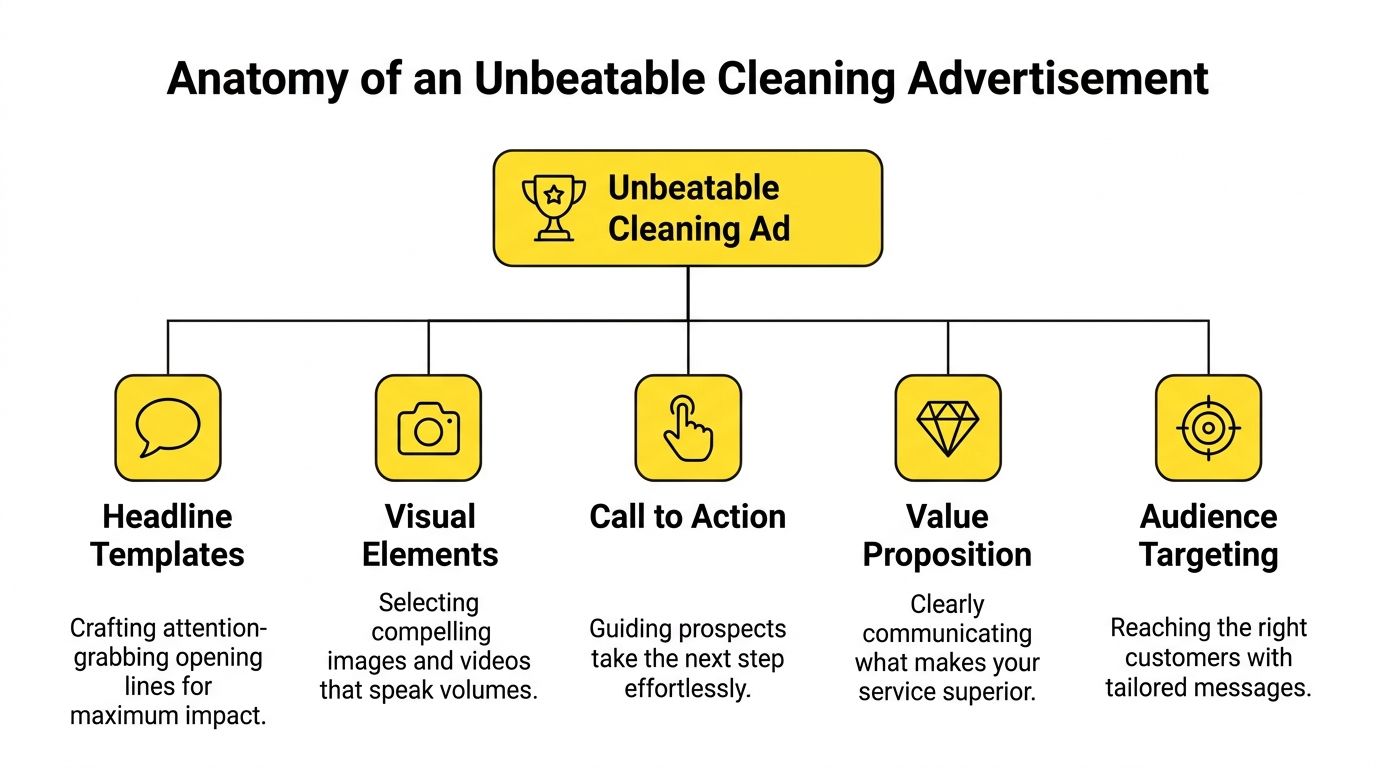
It must stop the scroll or hold the searcher long enough to earn the next line.
Most cleaning headlines fail because they are generic. “Professional Cleaning Services Near You” says nothing. Try formulas that connect service, audience, and benefit.
Use these templates:
The point is clarity, not cleverness.
Do not list mopping, dusting, and vacuuming first. Buyers assume you do those things. Use the body copy to describe what changes after they hire you.
Compare the difference:
| Weak copy | Better copy |
|---|---|
| We dust, mop, vacuum, and sanitize all major areas. | Come home to a reset space without spending your evening cleaning it yourself. |
| We offer office cleaning and janitorial services. | Keep your workplace presentable with a cleaning schedule your team can count on. |
| Call for a free quote today. | Check your service options and get an estimate without waiting on voicemail. |
There is another issue most cleaners miss. Pricing friction. Existing guidance pushes vague “free estimate” messaging, but a real gap in the market is pricing transparency. Homeowners value clarity and speed, and many ads still create friction by forcing people into a slow callback process, as noted in BA3 Digital Marketing’s piece on catchy house cleaning ads.
That is why “Get an Instant Estimate” often outperforms “Call for a Free Quote.” It lowers uncertainty.
Key takeaway: A cleaner ad reduces decision fatigue. It tells people what you do, who it is for, and how to move forward with less effort.
A cleaning ad does not need a gimmick. It needs a low-friction entry point.
Here are practical offer structures that work better than broad discounts:
Give buyers a simple choice.
This helps people self-select without a long back-and-forth.
This is strong for digital campaigns.
Example:
“Answer a few questions and get an estimate fast.”
It respects how people buy now. They want to know whether you fit before they commit to a call.
Commercial ads usually improve when the offer matches the use case.
Examples:
Weak CTAs ask for commitment too early. Strong CTAs ask for the next logical step.
Use CTAs like these:
Avoid these unless your phone coverage is airtight:
Those CTAs depend on human speed. Human speed is inconsistent.
A simple ad formula I use is this:
Headline
Result + audience + location
Body
Pain point + outcome + trust signal
Offer
Simple service tier or estimate-first step
CTA
Low-friction next action
Example for residential:
“Reliable house cleaning for busy homeowners in [City]. Get your time back with recurring or deep cleaning options and a simple estimate process. Check your service options.”
Example for commercial:
“Commercial cleaning for offices that need consistency. Clear scope, dependable scheduling, and professional follow-up for routine facility care. Request a fast estimate.”
Not every channel should carry the same message in the same format. Search, social, print, and phone-driven campaigns all attract different buyer behavior.
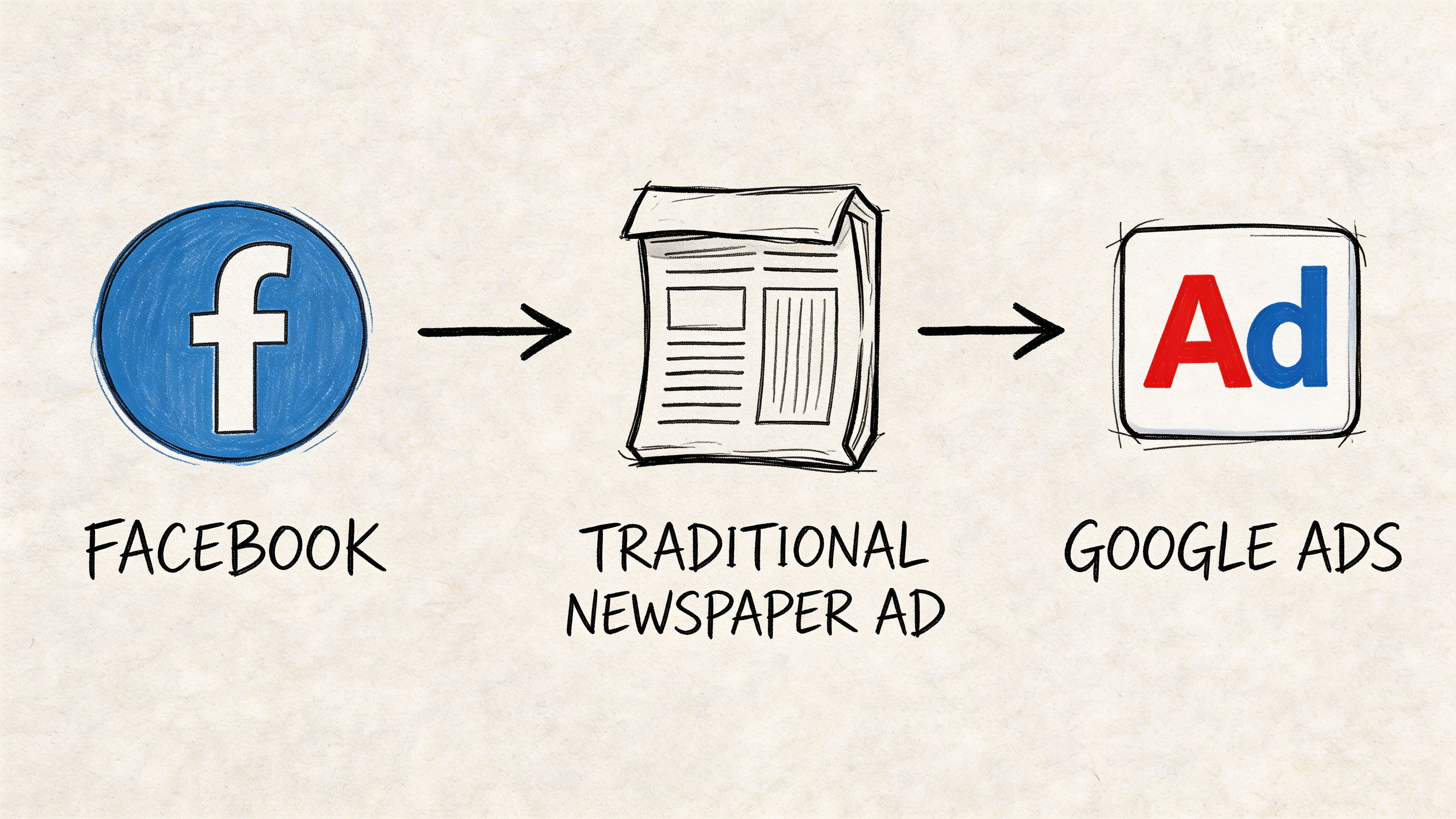
Google is for people already looking. That makes it your sharpest tool for immediate lead capture.
A proven approach is to target 3 to 5 core local keywords, use Local Service Ads for top placement, and supplement with standard PPC. Local Service Ads average $20 to $50 per lead, and the combined LSA plus PPC approach can increase call volumes by 20% to 30% by capturing both ready-to-book users and broader search demand, according to Janitorial Leads Pro’s guide on marketing commercial cleaning lead generation.
The practical split looks like this:
| Channel | Best use | What to say | Common mistake |
|---|---|---|---|
| Local Service Ads | Ready-to-book leads | Fast response, service area, trust | Running LSAs without a tight intake process |
| Google PPC | Niche services and service-specific searches | Match ad copy to exact service intent | Sending all traffic to the homepage |
| Branded search | Protecting your own name | Reinforce trust and easy next step | Ignoring competitors bidding on your brand |
A simple search ad structure:
If you want a deeper breakdown of campaign structure and landing pages, this article on Google Ads for cleaning business is worth reviewing.
Meta ads work when your creative and audience are tight. They are weaker than search for direct intent, but stronger for creating demand in targeted neighborhoods.
The best social ads for cleaners often lean on one of these angles:
Show transformation. Keep text minimal. The image does most of the selling.
Caption example:
“Busy week? Keep the weekend for yourself. Deep cleans and recurring service available in [service area]. Get an estimate.”
This is strong for residential.
Copy example:
“Less catch-up cleaning. More time back. Choose the service that fits your home and schedule.”
This works for commercial.
Copy example:
“Need consistent cleaning for your office or property? We provide scheduled service with clear scope and professional follow-up.”
Targeting should stay local and specific. Broad reach sounds attractive, but broad reach burns budget. Start with the neighborhoods, ZIP codes, and service types you want.
Print still works when it has a job. Its job is not to explain everything. Its job is to trigger the next step.
Most cleaning flyers fail because they are crowded. Use a tight front side and let the landing page do the heavy lifting.
A cleaner flyer layout:
Example:
“House cleaning for busy homes in [Neighborhood]. Clear service options. Easy estimate process. Scan to get started.”
Door hangers work well around active jobs. If you are already cleaning in a neighborhood, use that proximity. Nearby social proof beats generic distribution.
A number of ad campaigns fail after the phone rings. The owner answers between jobs, sounds rushed, and turns the call into a chaotic interview.
Use a short script instead:
Human speed is inconsistent. Channel strategy is important. Google produces high-intent urgency. Facebook often needs more education. Print usually needs stronger convenience cues. The channel changes the conversation, but the handoff still decides whether the lead becomes revenue.
A click is not the goal. A call is not the goal. A form fill is not the goal.
The goal is a booked job, and most cleaning businesses leak leads between inquiry and estimate.
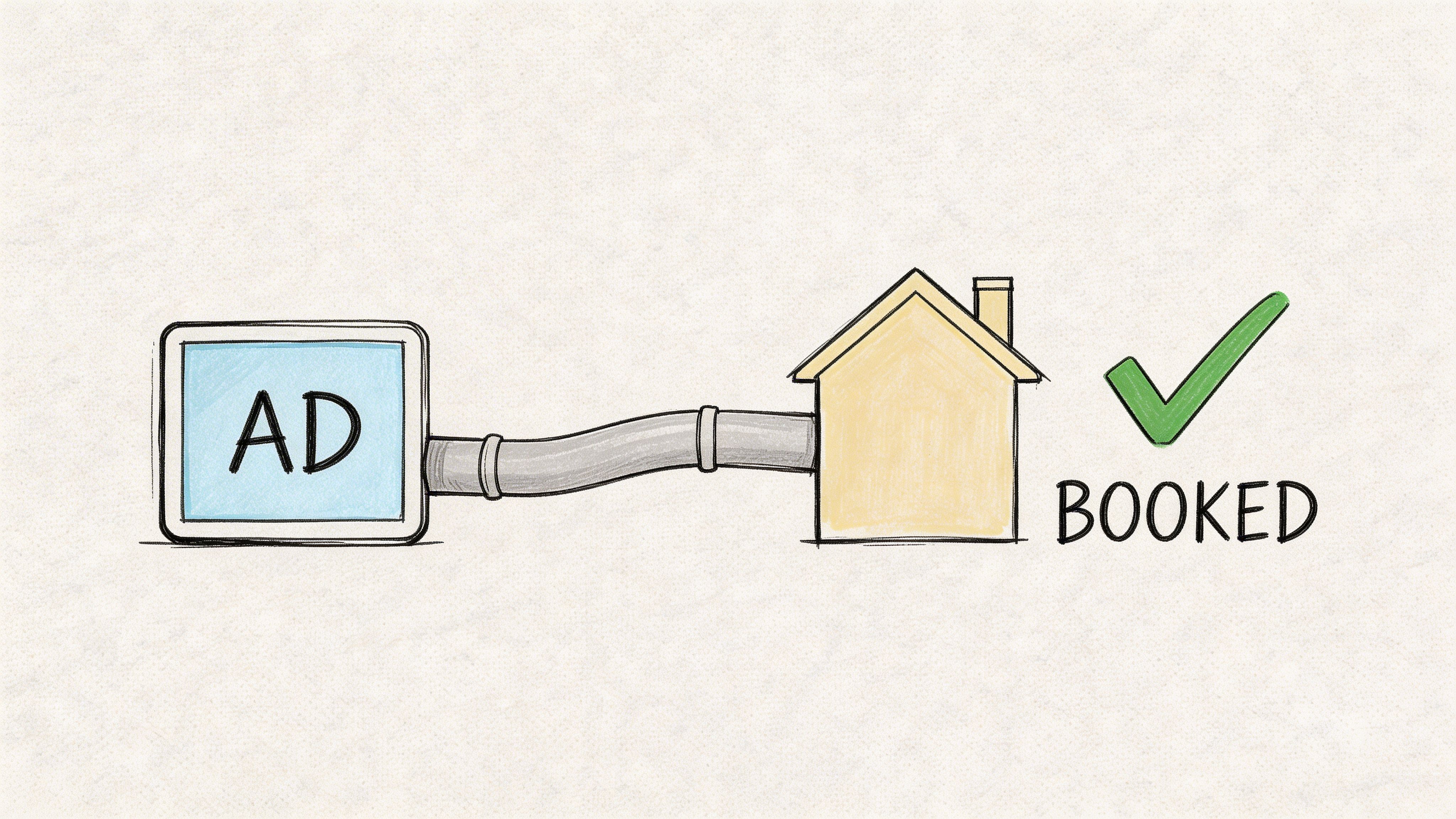
One overlooked failure in cleaning advertising is the gap between lead generation and booking. Recommendations for cleaners on Nextdoor increased in one year, yet many guides do not address how businesses handle inquiries after they come in. That creates lost revenue from after-hours leads and slow estimate turnarounds, as discussed in this video on the lead-to-booking gap.
The old model sounds normal:
That process breaks in three places.
First, response time. Most prospects contact multiple companies. The first business that reduces uncertainty usually wins.
Second, consistency. Manual estimates vary based on who answers, what they ask, and how they interpret the job.
Third, after-hours demand. Ads keep running when your office is closed.
Tip: If your ad says “contact us for a free estimate,” but your estimate process depends on someone checking voicemail later, your ad is asking for trust you have not earned yet.
A better system handles the first interaction instantly and gathers the exact information needed to price and qualify the job.
The engine should do four things well:
| Function | What it should capture | Why it matters |
|---|---|---|
| Lead intake | Contact details, service type, location | Prevents incomplete inquiries |
| Qualification | Size, rooms, surfaces, urgency, frequency | Improves estimate accuracy |
| Estimate delivery | SMS and email follow-up | Keeps momentum while attention is high |
| Team handoff | Internal alerts and lead details | Lets staff close, schedule, or clarify quickly |
For cleaning companies that want to automate this, AI sales automation for cleaning services is worth studying because it reframes advertising as a full sales process, not a traffic game.
A tool like Estimatty fits here as one option. It uses an AI web and voice estimator for cleaning businesses to gather job details, send estimates by SMS and email, and notify the team in real time. That changes the role of the ad. The ad no longer has to force an immediate phone conversation. It only has to start a guided estimate flow.
A short demo makes the point better than theory.
When owners fix this gap, three things often improve fast.
This is the hidden lever in advertisement for cleaning service campaigns. Better creative helps. Better targeting helps. But the business that answers instantly with a structured estimate process usually beats the business with the prettier ad.
Plenty of cleaners can tell you how many likes a post got. Fewer can tell you which ad turned into repeat revenue.
That difference matters. Well-optimized Google Ads for a cleaning service have achieved a 23% conversion rate in a documented case, where 139 ad clicks produced 32 booked jobs, according to this YouTube case study. That kind of result does not come from guesswork. It comes from tracking the whole path from click to booking.
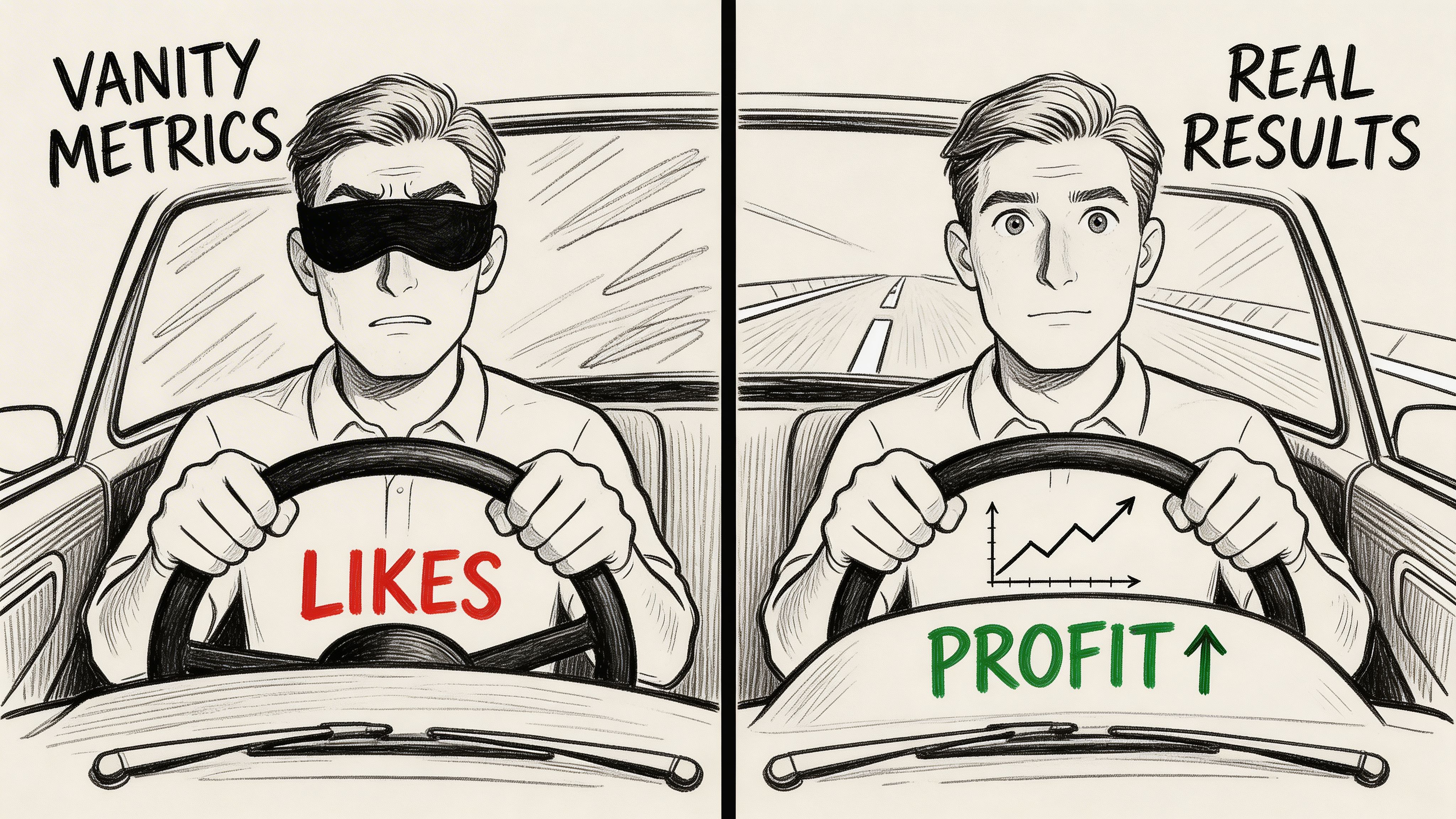
You do not need a giant dashboard. You need a short scoreboard.
Watch these metrics first:
If you are not separating channels cleanly, this guide to lead source tracking will help tighten the basics.
Owners hurt ad performance when they change five things at once. Then they have no idea what caused the result.
A cleaner testing process looks like this:
| Test item | Good test | Bad test |
|---|---|---|
| Headline | Change only the main promise | Rewrite the whole ad and landing page |
| Image | Swap one visual style | Change audience, offer, and image together |
| CTA | Test “Get an estimate” against “Check service options” | Test multiple CTA ideas across multiple channels at once |
Key takeaway: Test one variable at a time, then keep the winner and move to the next variable.
That is a good problem, but it is still a problem.
When ads and estimates start filling the calendar, capacity gets tight fast. If hiring is already messy, growth creates service issues. That is where a structured hiring pipeline matters. For staffing systems and recruiting process ideas, review pipehirehrm.com and the articles on get.pipehirehrm.com/blog.
Marketing should not outgrow operations. The handoff from lead generation to fulfillment has to stay clean on both sides.
Start with Google if you need near-term demand from people actively searching. Start with Facebook or Instagram if you have strong visuals, a narrow service area, and an offer that can interrupt attention. Many owners eventually use both, but search is often easier to validate first.
Running traffic to a weak next step. If your ad works but the prospect hits a slow form, a vague estimate process, or delayed follow-up, the campaign underperforms no matter how good the copy looks.
You do not need exact pricing in the ad. You do need pricing clarity. Service tiers, starting points, or an estimate-first process usually beat “call for free estimate” because they reduce friction.
Scale when one channel is producing booked jobs consistently and your team can handle the demand without lowering service quality. If fulfillment is shaky, scaling ad spend only amplifies the cracks.
Audit the middle. Check response speed, intake questions, estimate quality, and follow-up cadence. This is also a good time to review examples from cleaning business case studies to compare your process against businesses that tightened the handoff.
Refresh them when response drops, audience fatigue becomes obvious, or your offer changes. Do not refresh creative just because you are bored with it. Buyers are not seeing your campaign as often as you are.
If your ads are generating interest but not enough booked jobs, Estimatty gives cleaning businesses a way to automate the estimate step on web and voice, capture after-hours inquiries, and send consistent estimates by SMS and email without relying on slow manual follow-up.