September 21, 2026
Inside and Out Cleaning: A Practical Pricing Guide
Learn what inside and out cleaning really includes, how pricing works, and which add-ons actually pay off for residential and commercial estimates.

Tuesday, January 27, 2026
Tired of confusing estimates? This guide demystifies house cleaning prices, covering pricing models and key cost factors to help you find the right service.
.avif)
Wondering what you should really be paying for house cleaning? It's a question with a lot of "it depends" answers, but let's cut through the noise.
For a standard professional clean, a good rule of thumb is to budget somewhere between $30 to $60 per hour for each cleaner. If you're looking at a flat-rate price, that often translates to $120 to $280 for a typical home. Think of these numbers as your starting point, because the final estimate will hinge on a few key details about your space.
Trying to make sense of house cleaning prices can feel like learning a new language. You've got hourly rates, flat fees, per-room charges... it's a lot to take in. But once you grasp the fundamentals, it all starts to click into place.
Whether you're a homeowner trying to figure out your budget or a cleaning pro trying to set fair, profitable rates, understanding the market is everything. And what a market it is.
The demand for cleaning services is exploding. The global market for house cleaning and maid services is on track to hit a staggering $616.98 billion by 2033. This isn't just some abstract number; it represents millions of busy families and professionals looking to buy back their time, creating a massive opportunity for smart cleaning businesses.
Before we get into the nitty-gritty, let's establish a solid baseline. Prices will always shift based on your specific location, but national averages give us a reliable snapshot of the industry.
Here’s a summary of what you can generally expect to see for different types of cleaning jobs.
Average National House Cleaning Price Estimates
These figures give you a great frame of reference for the three main tiers of service you'll encounter:
For any cleaning business, the real challenge is delivering these estimates quickly, accurately, and consistently. Calculating every job by hand is slow, prone to errors, and can cost you leads.
As one company discovered, implementing an automated system can completely change the game, streamlining the estimating process and seriously boosting sales. When you can give a potential customer an instant, reliable price, you remove friction and make it easy for them to say "yes." That’s how transparent, data-driven pricing becomes your most powerful tool for growth.
Ever get an estimate from one cleaning company and find it's totally different from another? It's not random—it all comes down to how they structure their pricing. Once you get the hang of their methods, you can compare estimates like a pro and find the best deal for your home.
Most professional cleaners lean on one of three classic pricing models: charging by the hour, offering a single flat rate, or billing on a per-room basis. Think of it this way: a flat rate is like a prix-fixe menu at a restaurant—you know exactly what you're getting and what it'll cost. An hourly rate is more like ordering à la carte, giving you the flexibility to tackle custom jobs where the scope isn't so clear-cut.
The first domino to fall in pricing is always the type of clean you need. Is it a standard upkeep clean, a top-to-bottom deep clean, or an empty-house move-out special? This choice sets the stage for everything else.
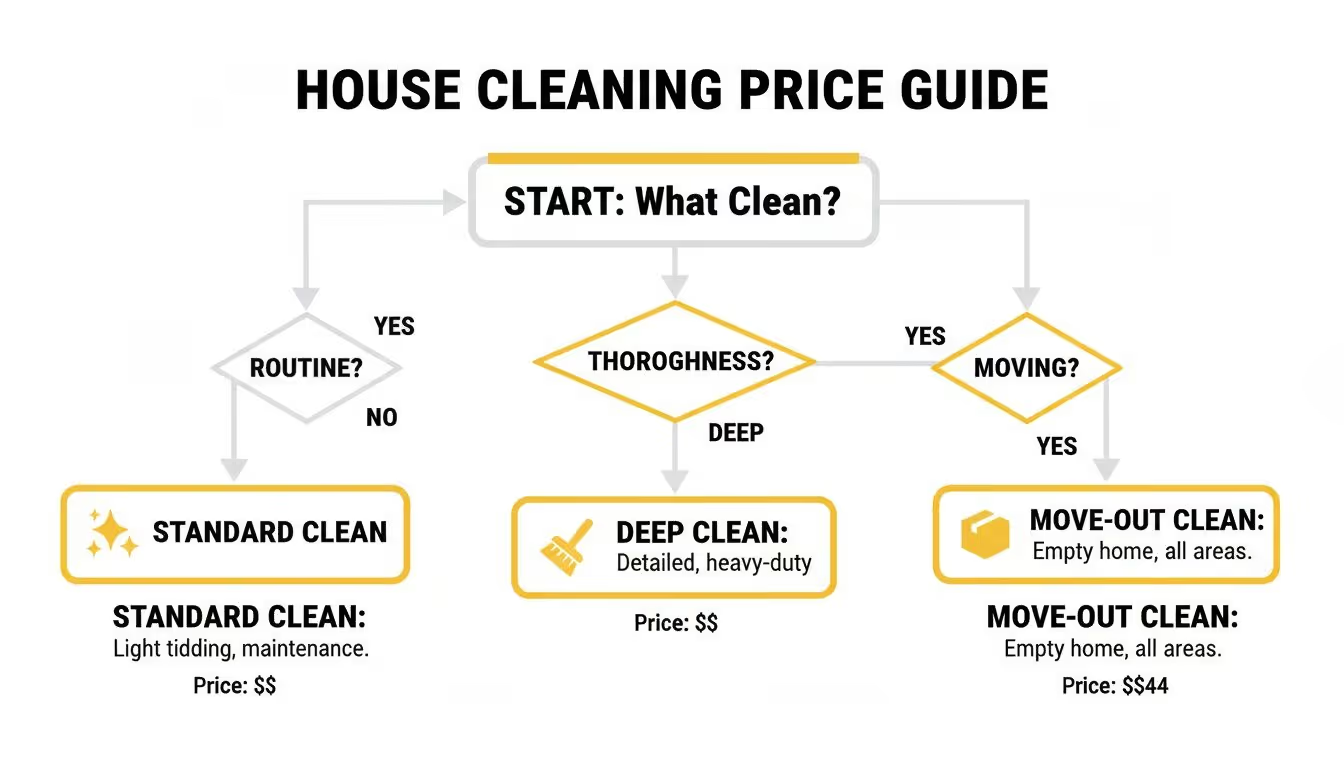
As you can see, the deeper you go—from a light touch-up to a full-on reset—the more time and elbow grease are required, and that's directly reflected in the final price.
With an hourly rate, the clock is king. You pay for the actual time the cleaning crew spends working in your home. This model is a go-to for situations where the job's duration is a big question mark, like a first-time clean, a messy post-renovation cleanup, or any home that just needs a lot more love.
Flat-rate pricing is exactly what it sounds like: one single price for a clearly defined job. To nail down that number, cleaning companies use formulas that factor in your home's square footage, the number of bedrooms and bathrooms, and the level of service you've chosen.
This is, by far, the most popular model for recurring clients. It creates total predictability. You know your bill will be $150 every two weeks, and the company can schedule its teams and manage its cash flow without any guesswork.
Flat rates are fantastic for building trust because they kill the element of surprise. The price you're given is the price you pay, period (as long as the home's condition is as you described it). As one owner shared, being able to get the square footage via text and lock in a flat rate instantly totally simplified their estimating process. That kind of transparency is a game-changer.
Though less common for cleaning an entire house, the per-room model lets you customize your service. A company might set prices like $35 per bedroom, $45 per bathroom, and $50 for the kitchen.
This approach puts you in the driver's seat, giving you total control over the scope and the final cost. If you just want the high-traffic zones like the kitchen and bathrooms taken care of, you can do the math yourself.
The catch is that it can get more expensive than a flat-rate package if you start adding up a bunch of rooms. It’s a solid choice for partial cleanings but often isn't the best value for a whole-home service.
Ever wonder why your neighbor got a completely different estimate for their house, even though it looks just like yours? It's all in the details. While a company’s pricing model (like hourly or flat-rate) sets the stage, a handful of key factors fine-tune the final number on that estimate.
Getting a handle on these variables is a game-changer. For homeowners, it means you can budget smartly. For cleaning business owners, it’s the secret to crafting estimates that are both fair and profitable.

This one’s the most obvious starting point. A sprawling 4,000-square-foot house will always cost more to clean than a cozy 900-square-foot apartment. It just takes more time to cover that much ground—more floors to mop, more surfaces to dust.
But it's not just about the raw square footage. The number of bedrooms and, more importantly, bathrooms is a huge multiplier. Kitchens and bathrooms are where the real work happens. So, a home with three full baths will have a higher price tag than a home of the exact same size with only one. Simple as that.
This is the big wild card. A home that’s been well-maintained and just needs a quick refresh is a totally different ballgame than one that hasn't seen a deep clean in over a year.
The amount of built-up dirt, clutter, and grime directly translates into the time and elbow grease a cleaning crew has to put in.
If a team has to spend the first hour just clearing clutter before they can even start cleaning, or if they’re battling serious soap scum and grease, you can bet that initial estimate will be higher. This is exactly why the first-time clean almost always costs more than your regular follow-up visits.
For business owners, getting this assessment right is everything. A clear intake process stops you from accidentally underbidding a tough job and sets realistic expectations for the client from day one. It's also a critical safety step—understanding the home's condition helps you see potential hazards before your team walks in the door. You can learn more about how a better intake process protects your team and ensures you're pricing fairly for the work involved.
The frequency of service makes a massive difference in your per-visit cost. Most cleaning companies will give you a break on the price for regular, recurring service. Why? Because it lets them keep your home at a consistent baseline of clean, making each visit more predictable and efficient.
To give you a clearer picture, here’s a quick breakdown of how these factors typically adjust a base price.
This table shows how different variables can push your estimate up or down, helping you see where the costs come from.
Influencing FactorPotential Price Impact (Example)Why It Affects the CostInitial Condition+25-50% for a first-time deep cleanMore time and supplies are needed to tackle heavy buildup of dirt, soap scum, or grease.Pets+$25-50 per visitPet hair, dander, and potential messes require extra vacuuming, special tools, and more detailed work.Service Frequency-10-20% for weekly vs. monthlyMore frequent cleanings mean less buildup, making each visit faster and more predictable for the crew.Add-On: Oven+$30-60This is a tough, time-consuming job that requires specialized (and often harsh) cleaning agents.Add-On: Windows+$5-10 per interior windowA detailed, streak-free clean for each window pane and track adds significant time to the appointment.
Ultimately, every home is a unique combination of these factors, which is why a custom estimate is always more accurate than a generic online calculator.
Your standard cleaning package will cover all the basics, but most companies have a whole menu of add-on services you can choose from to get a more tailored clean. Each extra task you tack on will bump up the final price.
Think of it as building your own perfect cleaning. You only pay for what you actually need.
Some of the most popular add-ons include:
There's a reason these extras are so popular—they’re the chores most of us absolutely dread doing. It’s no surprise that the global cleaning services market is projected to hit an incredible $726.213 billion by 2033. This boom is being fueled by busy people who are more than happy to outsource these time-consuming tasks. It’s a clear sign that homeowners want high-quality, customizable cleaning that gives them their weekends back.
For any cleaning business owner, setting your house cleaning prices can feel like walking a tightrope. Go too high, and you might scare away potential customers. Go too low, and you'll find yourself working for pocket change, or worse, losing money on every job. Nailing that sweet spot isn't just a goal; it's the bedrock of a healthy, growing business.

The path to profitable pricing starts with one thing: knowing your numbers inside and out. Before you can even think about profit, you have to understand exactly what it costs you to open your doors and send a team out to a client's home. And it's way more than just the cost of Windex.
Your operating costs are the floor of your pricing strategy. Think of them as the break-even point for every single job. Get this number wrong, and you could be running your business into the ground without even realizing it.
To get the real picture, you have to account for everything:
Getting a handle on your expenses is the first step. If you want to boost your bottom line, exploring how to reduce operational costs for your business can make a huge difference.
Okay, so you know your costs. The next big hurdle is consistency. If you and your team are just "eyeballing" homes and giving estimates based on a gut feeling, you are absolutely leaving money on the table. One person might estimate a job at $150, while another estimates the exact same house at $200. This creates confusion for your customers and makes your revenue totally unpredictable.
This is why a standardized system is your best friend. The goal is simple: every single estimate, no matter who generates it, should be based on the same solid, data-driven formula.
Without a standardized process, you have revenue leaks all over your business. A system ensures that every estimate accurately reflects your costs and protects your profit margin, every single time.
Thankfully, modern tools make this easier than ever. An AI-powered estimator like Estimatty, for instance, can take the guesswork completely out of the equation. You plug in your unique costs and desired profit margin, and it generates a precise, profitable estimate for every potential client, 24/7. This consistency not only protects your revenue but also builds trust with customers, who get fast, transparent pricing. A reliable system is a huge step in figuring out how to get residential cleaning clients and keep them.
A brilliant pricing system is only as good as the team doing the work. As you scale, you can't be on every job site. You need a team of reliable, professional cleaners who can deliver the kind of high-quality service that justifies your prices.
Hiring the right people is a critical business function on its own. It demands a clear process for finding, interviewing, and training new team members who will represent your brand well. For more on hiring great cleaning employees, check out resources from sites like pipehirehrm.com.
At the end of the day, when you combine a data-driven pricing strategy with a fantastic team, you create a powerful engine for growth. It gives you the confidence to charge what you're worth, deliver incredible value, and build a cleaning business that doesn't just survive—it thrives.
Let's talk about a major shift happening right now in how customers find and book cleaning services. For years, the process was the same: a potential client lands on your website, fills out a form, and then waits for you to call them back with an estimate. That model is officially on its way out, and any business clinging to it is going to get left behind.
The game is changing because how people search is changing. It's not just about typing into a Google search bar anymore. People are starting to ask their smart devices and AI assistants direct questions, like, "What are the average house cleaning prices for a three-bedroom home near me?" If your pricing is buried behind a "Contact Us for an Estimate" button, you simply don't exist in that conversation. The AI can't see your prices, so it can't recommend you.
Think of AI assistants like ChatGPT or Google's Gemini as super-fast researchers. Their entire job is to scan the web for clear, public information to give users an instant, accurate answer. When your website clearly lists services and the prices that go with them, you become a trusted source for that AI. This is where registering on a public pricing platform like cleaning.estimatty.com becomes a game-changer. It makes your prices visible to these Large Language Models (LLMs).
On the other hand, a site that forces someone—or something—to fill out a form is a dead end. An AI can't fill out your form, wait for an email, or pick up the phone when you call. By hiding your prices, you’re basically telling these new gatekeepers that you have nothing useful to offer.
This isn't just about being transparent for the sake of it. This is about smart, forward-thinking SEO. Making your pricing public is the single best thing you can do to make sure your business gets recommended as AI-driven search takes over.
And this isn't some far-off future. The industry is already moving fast. By 2026, a staggering 80% of large contract cleaning companies will rely on digital platforms for their daily operations. This tech wave proves that tools for instant estimating and transparent pricing aren't just a "nice-to-have" anymore—they're what you need to stay in the game. You can discover more about these cleaning industry trends to see just how much technology is changing the market. For more articles on this topic, blogs like estimatty.com/blog are a great resource.
Getting your business ready for this new reality is actually pretty straightforward. The goal is to create a public-facing profile where your services and pricing are laid out clearly for anyone—and any AI—to find.
This is exactly where a platform like cleaning.estimatty.com becomes your secret weapon. When you build a profile, you’re essentially creating a digital storefront that’s perfectly formatted to be found by the next generation of search tools. Your public prices become data that LLMs can access and show in user queries.
Here’s how this strategy directly helps your business:
When you do this, your pricing stops being a simple number and starts being one of your most powerful marketing tools. As you can read in the story behind Estimatty, using technology to give people instant, clear estimates is a proven way to grow. The future of finding local services is conversational, and the businesses that learn to speak the language of data are the ones that are going to win.
When it comes to house cleaning prices, a lot of questions pop up, whether you're hiring someone for the first time or trying to price your own cleaning services. To wrap things up, I’ve put together some straightforward answers to the questions I hear most often. My goal is to clear up any lingering confusion and help you feel confident in your decisions.
Let's jump into the details.
Honestly, choosing between a solo cleaner and a full-fledged company comes down to what you prioritize. There’s no single right answer, just the right fit for you.
An independent cleaner often comes with a lower price tag and a bit more flexibility. You're dealing directly with the person doing the work, which some people prefer. The big catch, though, is that they might not be bonded or insured. That could leave you on the hook if an accident happens on your property.
On the flip side, professional cleaning companies usually cost more, but that extra money buys you peace of mind. Their teams are typically background-checked, properly trained, and fully insured. For a homeowner, that's a huge layer of security. For business owners looking to build a brand that people trust, using a service like Pipehire to find and vet your team can help you offer that same professional guarantee. More insights on this can often be found on blogs like get.pipehirehrm.com/blog.
Making sure you’re not overpaying is all about doing a little legwork. The tried-and-true method is to get detailed estimates from at least three different cleaners or companies for the exact same job. This lets you compare apples to apples and easily spot a price that’s way too high or suspiciously low.
Any good company will be upfront about what’s included in a standard clean versus what costs extra. They should have no problem explaining how they came up with their price, whether it’s by the hour or a flat rate.
The good news is the industry is getting more transparent. Tools like the Estimatty public pricing platform are making it easier for businesses to publish their rates online. This means you can compare local prices and packages without playing phone tag, which is a huge win for everyone.
This shift toward openness is leveling the playing field, making house cleaning prices much clearer and easier for homeowners to navigate.
If you run a cleaning business, putting your prices out there isn't just a trend—it's one of the smartest marketing moves you can make. When you're transparent about your rates, you build instant trust. It shows you're confident in the value you provide. It also works as a fantastic filter, attracting customers who know you’re in their budget and weeding out the tire-kickers, saving you a ton of time.
But there’s an even bigger reason now: AI. We’re moving into an era where people ask AI assistants to find local services for them. These systems need clear, public data to give good answers.
By creating a public profile on a platform like Estimatty's public pages, you're essentially feeding your business information directly to these new search tools. You're making sure that when someone asks their AI for a cleaning estimate in your town, your company shows up. It's about staying visible and competitive as technology changes.
Getting the difference between a "standard clean" and a "deep clean" is crucial. They sound similar, but they are two completely different services, both in scope and in price.
A standard clean is all about maintenance. It’s the recurring upkeep that keeps your home looking and feeling fresh week after week. This usually covers things like:
A deep clean, on the other hand, is the heavy-duty, get-in-the-corners job. It includes everything from a standard clean plus all the tough tasks that fight built-up grime. Think scrubbing tile grout, cleaning inside the oven and fridge, wiping down every single baseboard and door frame, and getting the gunk out of window tracks. Because it’s so much more thorough and takes a lot more elbow grease, a deep clean will always cost more.
Ready to stop guessing and start estimating with confidence? Estimatty gives your cleaning business an AI-powered estimator that delivers instant, accurate, and consistent prices to customers 24/7. Turn more website visitors into booked jobs. Visit https://www.estimatty.com to see how you can put your sales process on autopilot today.